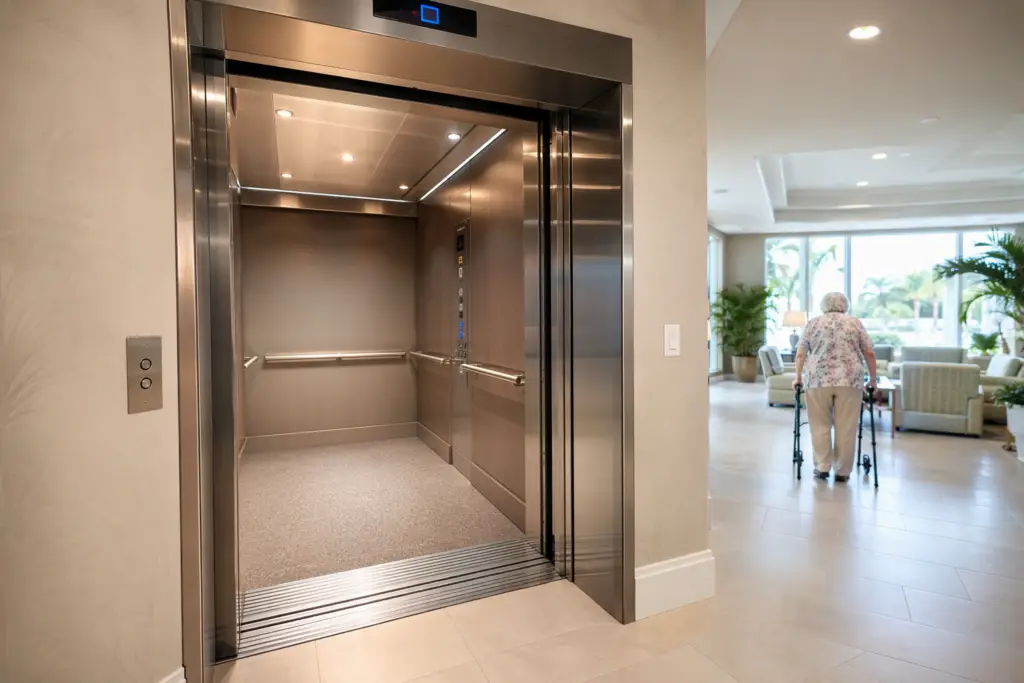
Motion Elevator: Complete FAQ Guide for Florida Property Owners
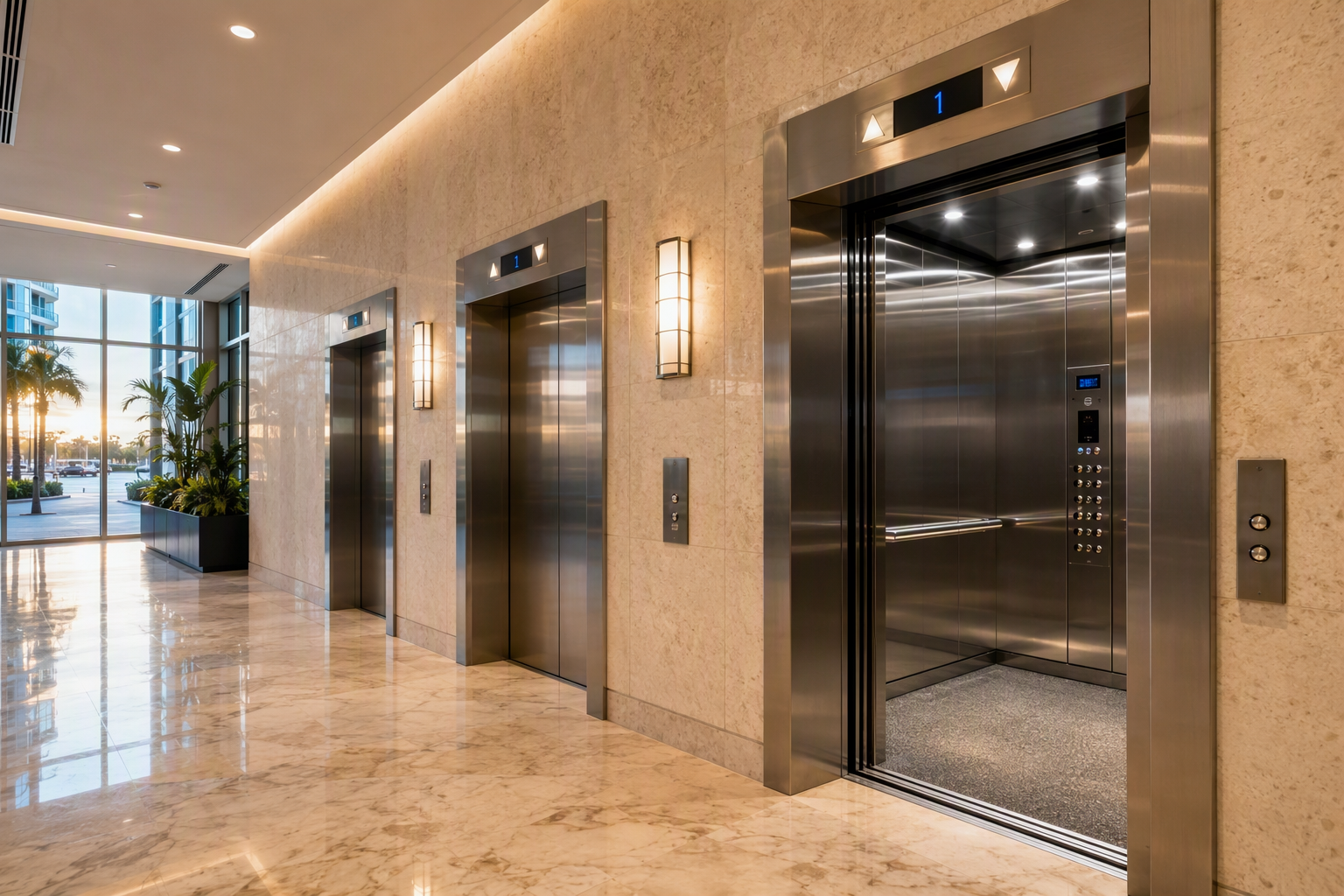
Understanding motion elevators — how they work, what keeps them safe, and what Florida law requires of building owners — is essential for anyone operating a commercial, residential, or mixed-use property in Pompano Beach or Sarasota. This comprehensive FAQ hub covers every aspect of motion elevator systems, from drive technology and compliance obligations to maintenance intervals and local enforcement. Each answer is grounded in verified code language and Florida regulatory requirements.
What Is a Motion Elevator?
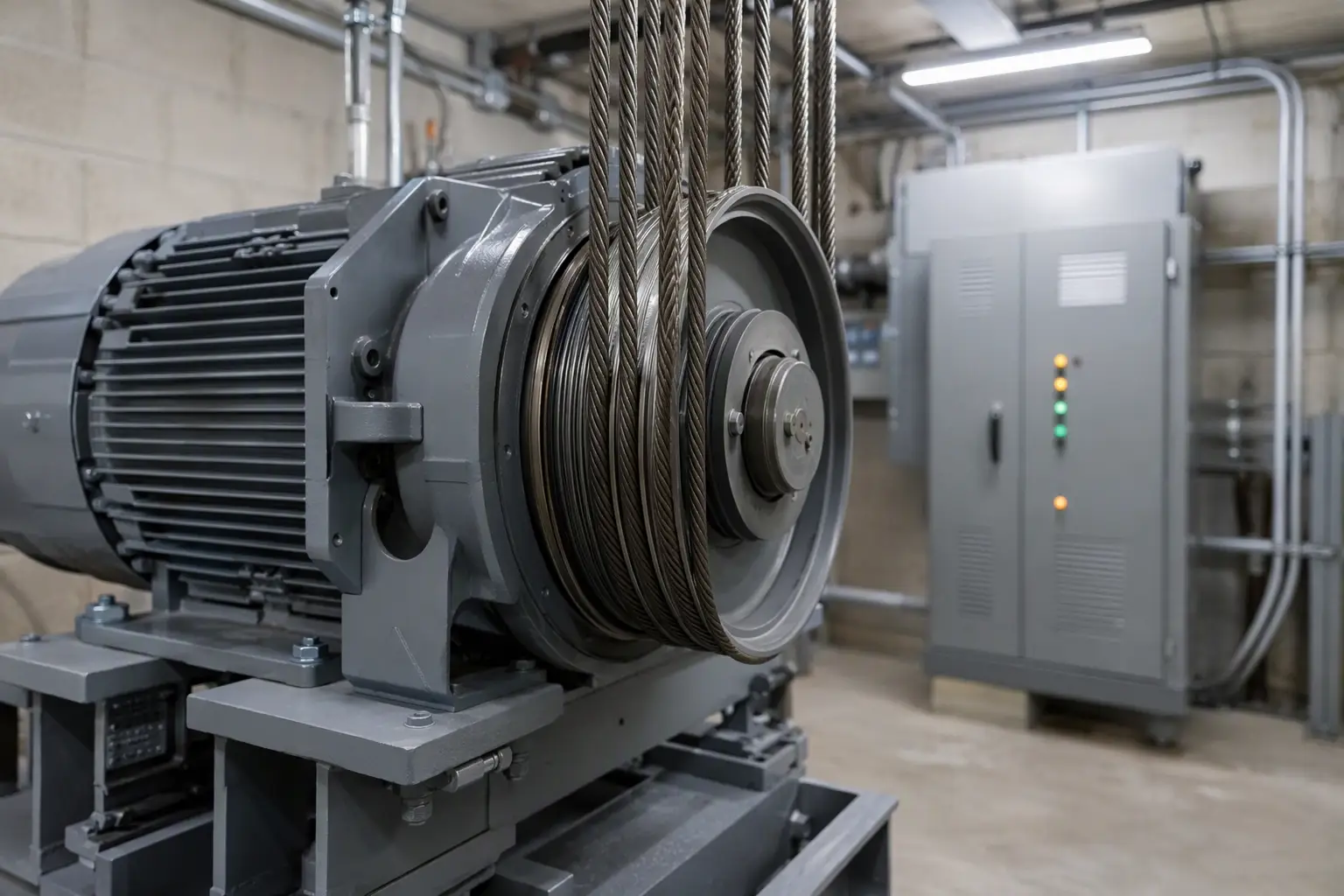
A motion elevator is a power-driven lifting device that transports passengers or cargo vertically between two or more landings inside a hoistway using a mechanical drive system regulated by safety codes and state law.
The term “motion elevator” is commonly used to describe any modern vertical transportation unit whose movement is initiated and controlled electronically or electro-hydraulically, as opposed to manually operated platforms. In Florida, all such conveyances covered under Chapter 399, Florida Statutes (the Elevator Safety Act), must meet the requirements of the ASME A17.1/CSA B44 Safety Code for Elevators and Escalators — specifically the 2019 edition, which Florida adopted effective December 31, 2023.
Motion elevators include traction (geared and gearless), hydraulic (conventional and holeless), and machine-room-less (MRL) systems. Each uses a distinct drive mechanism but shares the same fundamental safety obligation: reliable, code-compliant operation that protects passengers at every landing.
How Does a Traction Motion Elevator Work?
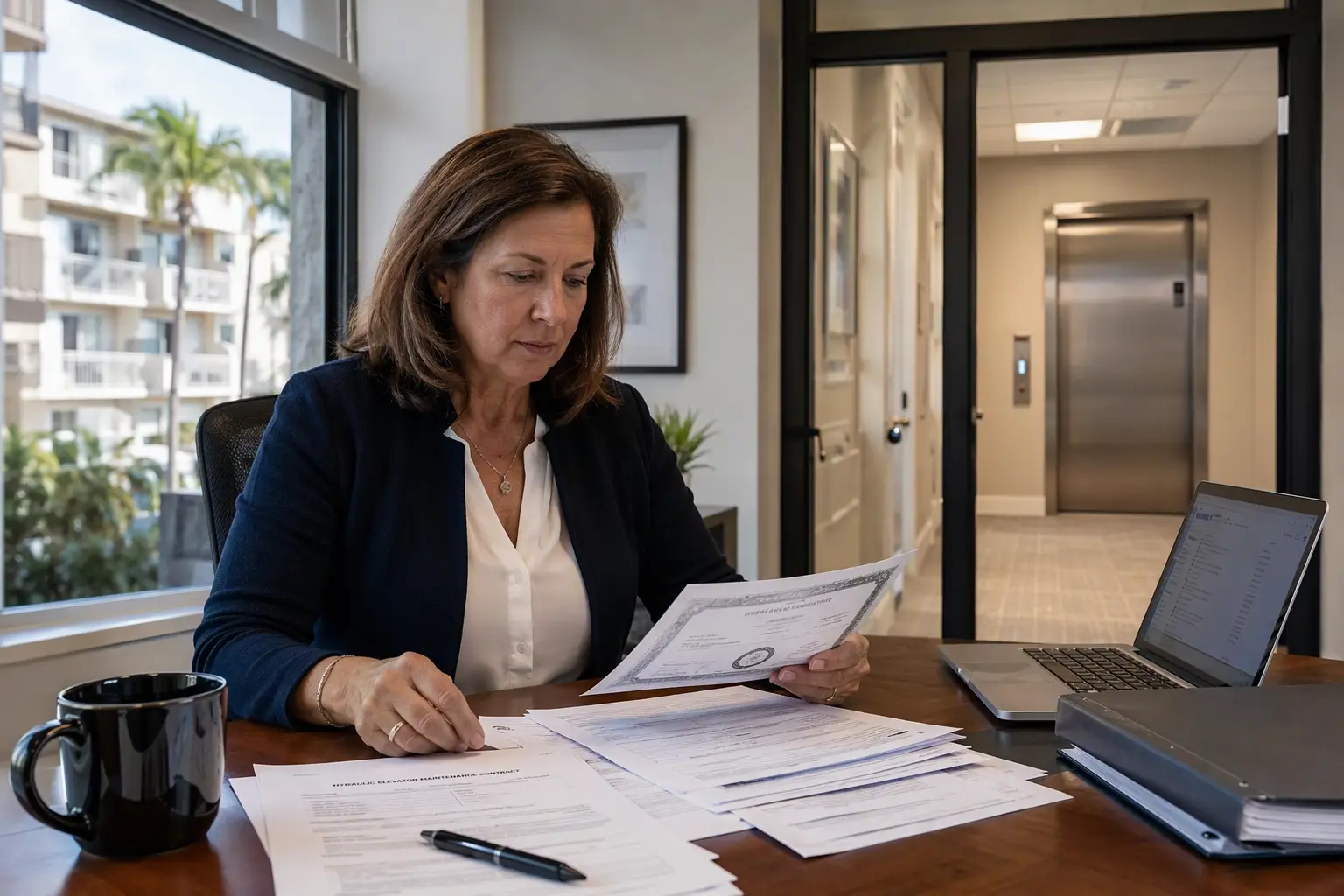
A traction elevator moves the cab by passing steel hoist ropes or belts over a drive sheave connected to an electric motor, with a counterweight on the opposite end to reduce energy consumption.
Geared traction systems use a gearbox between the motor and sheave, making them well-suited for mid-rise buildings. Gearless traction systems connect the motor directly to the sheave, enabling smoother, faster travel ideal for high-rise applications. In both cases, the motion control system — often a variable-voltage, variable-frequency (VVVF) drive — regulates acceleration and deceleration to produce the smooth ride passengers expect.
Under ASME A17.1, traction elevators require safeties, speed governors, and buffers as primary overspeed and overtravel protection devices. Florida’s adopted 2019 edition of ASME A17.1 applies these requirements to all new traction installations in Pompano Beach, Sarasota, and across the state.
How Does a Hydraulic Motion Elevator Work?
A hydraulic elevator raises the cab by pumping fluid into a cylinder beneath or alongside it, and lowers it by releasing the fluid back into a reservoir under controlled valve action.
Conventional hydraulic systems use an in-ground cylinder that can extend to a depth equal to the total rise. Holeless hydraulic designs use twin side cylinders or telescoping units that eliminate the need for a pit below the cylinder, making them popular for low-rise buildings where underground boring is impractical — common in many Sarasota and Pompano Beach commercial retrofits.
Because hydraulic fluid is under pressure, leak detection and environmental containment are important maintenance considerations. Florida’s warm climate also affects fluid viscosity, meaning hydraulic systems require periodic fluid analysis and adjustment to maintain consistent motion quality throughout the year.
What Is a Machine-Room-Less (MRL) Motion Elevator?
An MRL elevator places the drive machinery inside the hoistway or at the top of the shaft, eliminating the dedicated machine room traditionally required above the elevator pit.
MRL systems use compact permanent-magnet motors and belt or flat-rope hoist technology. The absence of a machine room reduces construction costs and frees valuable floor area, making MRL elevators increasingly popular for new mid-rise construction in Florida. However, maintenance access requires specialized tools and training because technicians must access drive components from within the hoistway.
Under ASME A17.1-2019, MRL elevators must meet specific hoistway clearance and emergency access requirements. Axxiom Elevator Florida is familiar with these MRL-specific code provisions and serves building owners in both Pompano Beach and Sarasota who need MRL installation, maintenance, or modernization services.
What Are the Florida Inspection Requirements for Motion Elevators?
Florida requires every motion elevator covered by Chapter 399 to undergo an annual inspection by a certified elevator inspector, unless a specific statutory exemption applies.
Under Chapter 399, Florida Statutes, inspections must be performed by a certified elevator inspector who has no employment, association, or conflict of interest with the permit holder or the building owner. One statutory exemption applies to elevators that are not escalators or dumbwaiters, serve only two adjacent floors, and are covered by a service maintenance contract — such elevators are exempt from the annual inspection while that contract remains in effect.
In Pompano Beach, the Broward County Building Code Division enforces Florida’s elevator law through its own elevator inspectors. In Sarasota, the Florida Department of Business and Professional Regulation (DBPR), Division of Hotels and Restaurants, Bureau of Elevator Safety serves as the primary regulatory authority. Building owners should confirm current jurisdiction-specific procedures with the applicable local authority having jurisdiction (AHJ).
Florida’s certificate of operation is valid for no more than two years, and it can only be renewed following a current satisfactory inspection. Operating on an expired certificate violates state law and exposes the owner to enforcement action.
What Is a Florida Certificate of Operation for a Motion Elevator?
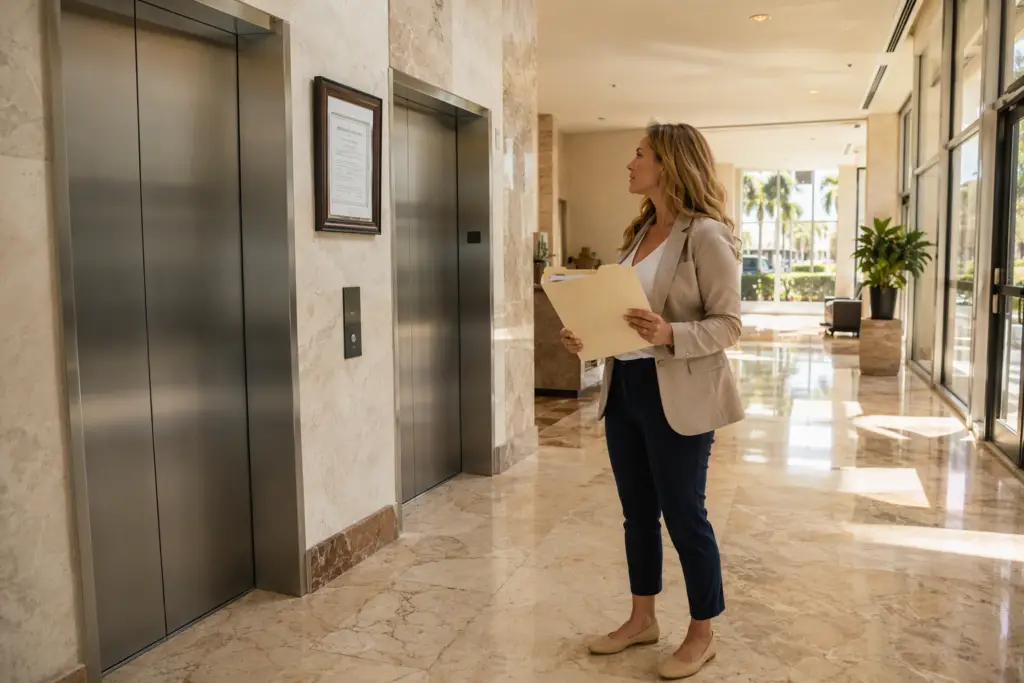
A Florida certificate of operation is the official state authorization that confirms a motion elevator has passed inspection and is legally permitted to operate, and it must be posted visibly inside the elevator cab.
Under Chapter 399, the certificate must be displayed in a conspicuous location inside the elevator in a frame with a transparent cover. Once issued, the elevator owner becomes responsible for safe operation, proper maintenance, timely inspection, and correction of any code deficiencies — responsibilities that cannot be delegated away by hiring a contractor.
A Florida certificate of operation is valid for a maximum of two years. Renewal requires a current satisfactory inspection. Building owners who allow their certificate to lapse are operating outside the law regardless of how well-maintained the equipment may be.
What Permits Are Required Before Installing or Altering a Motion Elevator in Florida?
A state permit applied for by a registered elevator company is required before any motion elevator is installed or significantly altered in Florida — work cannot legally begin without it.
Under Chapter 399, Florida Statutes, only a company registered with the Florida DBPR Bureau of Elevator Safety may apply for this permit. Florida registered elevator companies must renew their registration annually and maintain general liability insurance. All new conveyance installations in Florida must be performed by such a registered company.
Before a newly installed elevator is placed in passenger service, it must be inspected by a certified elevator inspector who has no conflict of interest with the permit holder or the owner. This pre-use inspection is separate from the ongoing annual inspection cycle and is a hard prerequisite to obtaining the initial certificate of operation.
Axxiom Elevator Florida, operating in Pompano Beach and Sarasota, works with building owners and general contractors to coordinate permit applications, inspections, and certificate issuance for new and altered motion elevator systems.
Who Is Qualified to Maintain or Repair a Motion Elevator in Florida?
In Florida, only a certified elevator technician holding a state-issued elevator certificate of competency is authorized to construct, install, maintain, or repair a motion elevator.
Under Chapter 399, a Florida elevator certificate of competency expires after one year and is renewed with proof of eight hours of continuing education. Certified elevator technicians must also register with the state annually and carry general liability insurance. Hiring an unqualified individual or uncertified company to service a motion elevator exposes the building owner to liability and potential shutdown orders.
Building owners in Sarasota and Pompano Beach should verify that any elevator service provider — including technicians dispatched for routine maintenance — holds a current, valid Florida elevator certificate of competency before allowing work to begin.
What Does ADA Require for Motion Elevators in Public Buildings?
The Americans with Disabilities Act (ADA) requires that motion elevators serving public accommodations and commercial facilities meet specific dimensional, control, and signage standards to ensure access for people with disabilities.
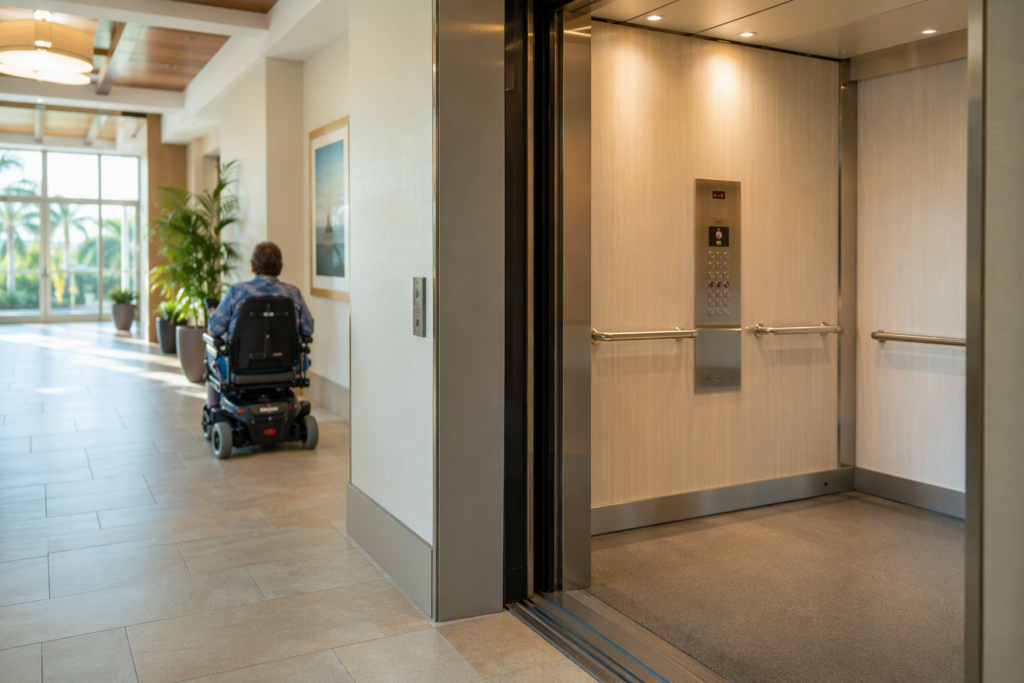
ADA-compliant elevators must provide minimum cab dimensions sufficient for wheelchair access, hall call buttons at accessible heights, interior cab controls with raised and Braille characters, audible and visual floor indicators, and door reopening devices that respond to obstructions without requiring contact. The ADA Standards for Accessible Design reference elevator provisions that align closely with ASME A17.1 requirements.
For existing buildings undergoing alterations, the ADA requires that the altered element — including elevators — be made compliant to the extent that is readily achievable. Florida building owners planning motion elevator modernizations in Pompano Beach or Sarasota should evaluate ADA compliance as part of the scope before work begins, since alterations can trigger compliance upgrades.
What Are the Most Common Motion Elevator Safety Devices and What Do They Do?
Motion elevators rely on a layered system of safety devices — including governors, safeties, buffers, door interlocks, and emergency lowering systems — each designed to protect passengers from a distinct failure mode.
| Safety Device | Type of Elevator | Primary Function | ASME A17.1 Applicability |
|---|---|---|---|
| Speed Governor | Traction | Triggers car safety if cab exceeds rated speed | Yes — required by ASME A17.1 |
| Car Safety (Safeties) | Traction | Clamps guide rails to stop runaway cab | Yes — required by ASME A17.1 |
| Oil Buffers | Traction & Hydraulic | Absorbs kinetic energy at terminal landings | Yes — required by ASME A17.1 |
| Door Interlocks | All Types | Prevents movement unless hoistway doors are fully closed and locked | Yes — required by ASME A17.1 |
| Pressure Relief Valve | Hydraulic | Prevents cylinder overpressure if pump malfunctions | Yes — required by ASME A17.1 |
| Rupture Valve | Hydraulic | Stops uncontrolled descent if the main line breaks | Yes — required by ASME A17.1 |
| Emergency Lighting | All Types | Illuminates cab during power failure | Yes — required by ASME A17.1 |
| Two-Way Communication | All Types | Allows trapped passengers to reach emergency services | Yes — and ADA-required in public buildings |
Each of these devices must be tested and verified functional during periodic inspections. Under Florida’s adopted ASME A17.1-2019, specific test intervals and acceptance criteria apply to each device type. Axxiom Elevator Florida conducts full safety device testing as part of its preventive maintenance and inspection support services in Pompano Beach and Sarasota.
What Should a Building Owner Do Immediately If a Motion Elevator Malfunctions?
If a motion elevator malfunctions, the building owner or manager should take immediate steps to protect passengers, secure the equipment, and fulfill any legal reporting obligations under Florida law.
- Ensure all passengers are safely removed from the elevator cab — contact emergency services if anyone is trapped and cannot exit safely without assistance.
- Place the elevator out of service by switching it to independent service or secured shutdown mode, and post clear signage at each landing indicating the elevator is not in operation.
- Contact a Florida-registered elevator company and certified elevator technician to assess the malfunction before the elevator is returned to service.
- Document the malfunction in writing, including the date, time, nature of the problem, any passengers involved, and the steps taken.
- Determine whether the malfunction constitutes an elevator accident under Florida law — under Chapter 399, Florida Statutes, the certificate of operation holder must report any elevator accident to the state within five working days.
- Do not return the elevator to service until the certified technician has completed repairs, documented the corrective action, and confirmed the unit meets applicable code requirements.
How Often Should a Motion Elevator Be Maintained?
Motion elevators should receive preventive maintenance at regular intervals — typically monthly or quarterly depending on usage, building type, and manufacturer recommendations — to sustain safe, code-compliant operation between annual inspections.
Preventive maintenance tasks typically include lubrication of guide rails and moving components, inspection of hoist ropes or belts for wear, testing of safety circuits and door operators, verification of leveling accuracy, and hydraulic fluid checks on hydraulic systems. The specific scope and frequency of maintenance should be defined in a written service maintenance agreement between the building owner and a Florida-registered elevator company.
It is worth noting that Florida law recognizes a specific maintenance-related exemption from annual inspection: elevators (other than escalators or dumbwaiters) that serve only two adjacent floors and are covered by a service maintenance contract are exempt from the annual inspection requirement while the contract remains in effect. This underscores the regulatory value Florida places on documented, ongoing maintenance programs.
Axxiom Elevator Florida provides structured preventive maintenance programs for motion elevators throughout Pompano Beach and Sarasota, designed to align with both manufacturer specifications and Florida regulatory requirements.
What Is Motion Elevator Modernization and When Is It Needed?
Motion elevator modernization is the process of replacing aging mechanical, electrical, or control components with current-generation equipment to restore safe performance, improve energy efficiency, and achieve code compliance.
Modernization is distinct from routine maintenance. It typically involves replacing the drive system, controller, door operators, fixtures, or hoist ropes — or a combination of these. Buildings that have had elevators in service for several decades often find that original components are no longer manufactured, making parts procurement difficult and downtime costly.
Under Florida law, any alteration to a motion elevator requires a state permit applied for by a Florida-registered elevator company before work begins. Following the alteration, the elevator must pass a satisfactory inspection before a new or renewed certificate of operation is issued. A thorough modernization scope should also evaluate ADA compliance, since alterations can trigger ADA upgrade obligations.
Common modernization triggers include frequent entrapments, inconsistent leveling, outdated relay-logic controllers, worn hoist ropes, or the inability to obtain parts for existing equipment. Building owners in Sarasota and Pompano Beach can consult Axxiom Elevator Florida for an assessment of whether modernization or continued maintenance is the appropriate path for their specific equipment.
What Is the Difference Between a Motion Elevator and a Platform Lift?
A motion elevator moves people inside an enclosed cab within a fully enclosed hoistway, while a platform lift — including vertical platform lifts and inclined stairway chairlifts — moves people on an open platform along a guided track without a traditional hoistway.
Platform lifts and vertical platform lifts are governed by different sections of ASME A17.1 and are generally limited to shorter travel distances. They are often used where full elevator installation is impractical due to space or structural constraints. Under Florida law, stairway chairlifts and wheelchair lifts in private residences do not require a Florida certificate of operation — but commercial vertical platform lifts do fall under Chapter 399 and require permits, inspections, and certificates.
For ADA purposes, platform lifts may be used as an accessible route alternative to elevators only in specific, defined circumstances outlined in the ADA Standards for Accessible Design. Building owners should not assume a platform lift satisfies the same accessibility obligations as a full motion elevator without reviewing the applicable ADA criteria for their building type and use.
What Are the Energy Efficiency Considerations for Motion Elevators in Florida?
Motion elevator energy consumption is a significant operational cost, and modern drive technologies — particularly variable-frequency drives and regenerative drives — can substantially reduce energy use compared to older systems.
Gearless traction elevators with permanent-magnet motors are among the most energy-efficient motion elevator designs available, consuming less energy per trip than older geared traction or hydraulic systems. Regenerative drives capture energy during braking and return it to the building’s electrical grid, further reducing net consumption. Hydraulic systems, while reliable and cost-effective for low-rise applications, generally consume more energy per trip than modern traction alternatives.
Florida’s warm climate means elevator machine rooms and control panels require adequate ventilation and sometimes cooling, adding to overall energy demand. When planning a modernization or new installation in Pompano Beach or Sarasota, building owners should evaluate the lifecycle energy cost of the selected system, not only the upfront equipment cost.
What Role Does the Florida DBPR Bureau of Elevator Safety Play in Motion Elevator Regulation?
The Florida Department of Business and Professional Regulation (DBPR), Division of Hotels and Restaurants, Bureau of Elevator Safety is the state agency responsible for administering the Elevator Safety Act, including licensing, permits, inspections, and enforcement for most elevators in Florida.
Under Chapter 399, Florida Statutes and the implementing rules in Chapter 61C-5, Florida Administrative Code, the Bureau oversees the certification of elevator inspectors and technicians, approves elevator company registrations, and processes permit applications for new installations and alterations. The Bureau adopted ASME A17.1-2019 as the applicable technical standard for Florida, effective December 31, 2023.
In Pompano Beach, the Broward County Building Code Division holds delegated authority to enforce Florida’s elevator law through its own inspectors. In Sarasota, the DBPR Bureau of Elevator Safety serves as the primary AHJ. Building owners should direct compliance questions to the appropriate local or state authority for their jurisdiction.
The Florida State Fire Marshal and the Florida Building Commission are not the elevator regulator — the Fire Marshal has access to DBPR’s emergency elevator access registry, and the Building Commission adopts the Florida Building Code, but neither agency administers Chapter 399.
What Happens During a Florida Motion Elevator Inspection?
A Florida motion elevator inspection involves a certified elevator inspector systematically testing every major system and safety device on the conveyance against the requirements of ASME A17.1-2019 and Chapter 399 to determine whether a certificate of operation can be issued or renewed.
Inspection scope typically includes verification of all safety devices (governor, safeties, buffers, door interlocks), cab interior condition and lighting, control system function, leveling accuracy, hoist rope or hydraulic system condition, pit condition and lighting, machine room access and equipment condition, and posted certificate of operation status. The inspector documents findings and either clears the elevator for a new certificate or identifies deficiencies requiring correction before the certificate can be issued.
Under Florida law, a certified elevator inspector performing the inspection must have no employment, association, or conflict of interest with the permit holder or the elevator owner. Once a satisfactory inspection result is achieved, the certificate of operation is issued and must be posted inside the elevator cab in a frame with a transparent cover. The certificate is valid for no more than two years from issuance.
Can a Motion Elevator Be Shut Down by Florida Authorities?
Yes — Florida authorities have the power to order a motion elevator out of service if it presents an imminent danger to public safety or is operating without a valid certificate of operation.
Under Chapter 399, Florida Statutes, the Bureau of Elevator Safety and authorized local AHJs may place a motion elevator out of service when inspections reveal conditions that pose an immediate safety risk or when the building owner is operating on an expired certificate of operation. In Pompano Beach, the Broward County Building Code Division has authority to enforce these provisions locally.
Once an elevator is placed out of service, it may not be returned to operation until the deficiencies are corrected, a satisfactory inspection is completed, and a new certificate of operation is issued. Building owners who receive an out-of-service order should immediately engage a Florida-registered elevator company to identify and correct the cited deficiencies.
What Is an Elevator Accident Under Florida Law and What Must Be Reported?
Under Florida law, an elevator accident that results in injury must be reported by the certificate of operation holder to the state within five working days of the occurrence.
Under Chapter 399, Florida Statutes, the obligation to report rests with the certificate of operation holder — typically the building owner or property manager. The report must be submitted within five working days. Failure to report a qualifying accident in the required timeframe may constitute an additional violation of Florida law separate from the accident itself.
Building owners should maintain clear internal protocols for documenting any incident involving their motion elevator, even those that do not initially appear to involve injury, because the determination of whether an event qualifies as a reportable accident may require legal or regulatory guidance. Consulting with a Florida-registered elevator company promptly after any incident is a prudent first step.
How Do Motion Elevator Costs Compare Across System Types?
Motion elevator costs vary significantly by drive type, travel height, cab configuration, and building conditions — and understanding these variables helps building owners budget realistically for new installations, modernizations, or ongoing maintenance.
| System Type | Typical Application | Key Advantages | Key Considerations | Relative Installation Complexity |
|---|---|---|---|---|
| Hydraulic (Conventional) | Low-rise, 2–5 floors | Lower upfront cost, simpler machine room | In-ground cylinder boring required; fluid management | Moderate |
| Hydraulic (Holeless) | Low-rise, 2–4 floors, retrofits | No underground boring; adaptable to existing structures | Slightly higher equipment cost than conventional hydraulic | Moderate |
| Geared Traction | Mid-rise, 5–12 floors | Higher speed than hydraulic; established technology | Requires overhead machine room; gearbox maintenance | High |
| Gearless Traction | High-rise, 10+ floors | Smooth, high-speed operation; energy efficient | Highest equipment cost; requires overhead clearance | High |
| Machine-Room-Less (MRL) | Mid-rise, 4–20+ floors | No machine room; saves floor area; energy efficient | In-hoistway maintenance access; specialized service tools | High |
Beyond installation, building owners should budget for annual maintenance contracts, periodic modernization of aging components, and the costs associated with inspection and certificate renewal. In Florida, all installation and alteration work must be performed by a registered elevator company, which affects contractor selection and bidding. Axxiom Elevator Florida serves property owners in Pompano Beach and Sarasota across all of these system types.
What Should Florida Property Owners Look for When Selecting a Motion Elevator Service Company?
Florida property owners should verify that any elevator service company holds current state registration with the DBPR Bureau of Elevator Safety, employs certified elevator technicians with valid certificates of competency, and maintains the general liability insurance required by Chapter 399.
Beyond legal requirements, building owners should look for a company with demonstrated experience across the specific drive type in their building — hydraulic, traction, or MRL — since each system has distinct maintenance and troubleshooting requirements. A company that offers structured preventive maintenance agreements, transparent documentation, and familiarity with the local AHJ (Broward County Building Code Division for Pompano Beach properties, and DBPR for Sarasota properties) will be better positioned to keep a building’s compliance documentation current.
Axxiom Elevator Florida serves commercial and residential property owners throughout Pompano Beach and Sarasota, providing motion elevator maintenance, inspection support, modernization planning, and compliance guidance under Florida’s Chapter 399 framework and ASME A17.1-2019 standards.
Contact Axxiom Elevator Florida for a free elevator assessment at 954-970-0020.
Need elevator service you can rely on? Axxiom Elevator Florida is ready to help.