Elevator Modernization and Upgrades Florida Senior Living and Assisted Living Facilities Need to Meet Accessibility and Safety Codes
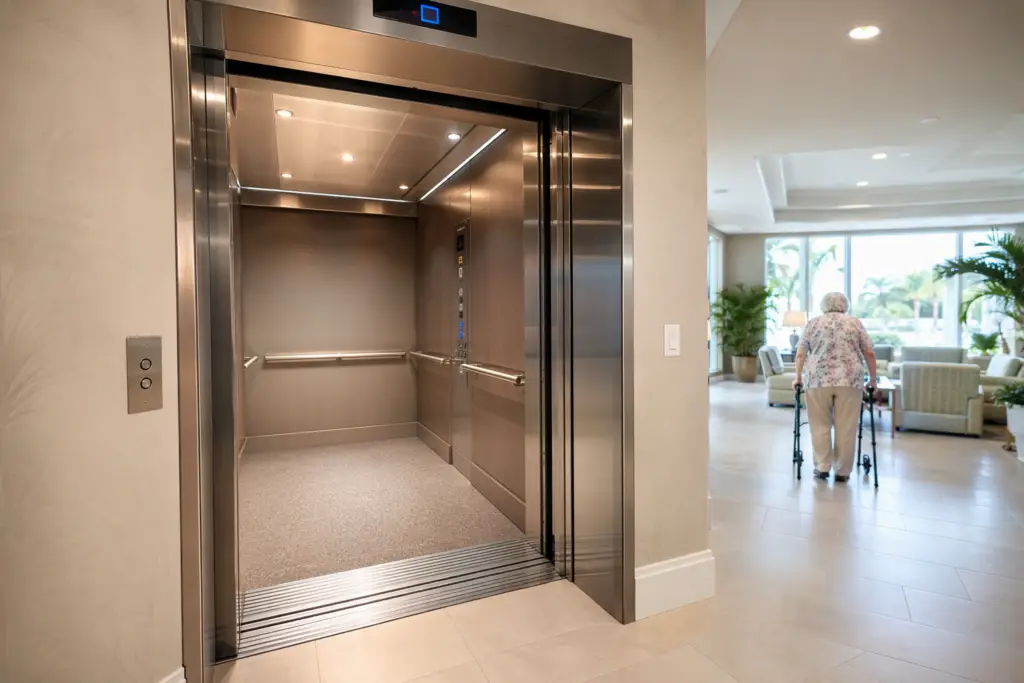
Florida’s senior living and assisted living communities rely on elevators every hour of every day — for residents using wheelchairs, walkers, and mobility aids, and for staff transporting medications, linens, and equipment. When an elevator fails an inspection or lags behind code, the consequences go beyond a citation: residents may lose safe access to dining, therapy, and common areas. Understanding exactly which modernization upgrades Florida healthcare facilities need — and which agencies enforce them — protects residents, reduces liability, and keeps a facility’s certificate of operation current.
What Are the Core Accessibility Requirements Florida Assisted Living Facilities Must Meet?
The two primary frameworks governing elevator accessibility in Florida senior living facilities are the Americans with Disabilities Act (ADA) and the ASME A17.1 Safety Code for Elevators and Escalators, adopted in Florida as the 2019 edition through Chapter 61C-5, Florida Administrative Code, and effective December 31, 2023.
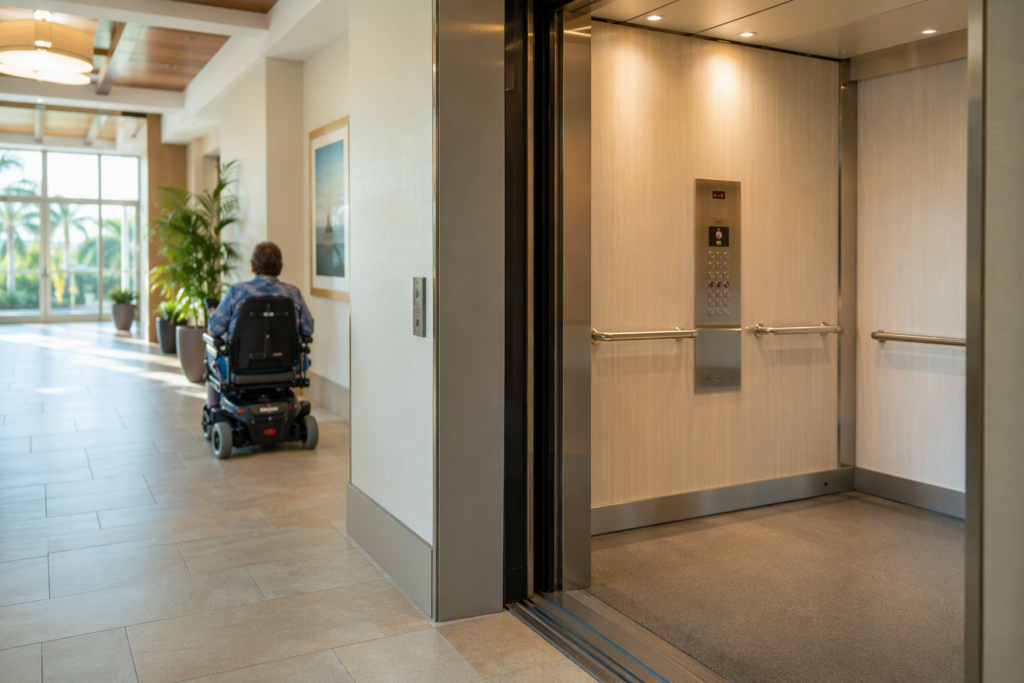
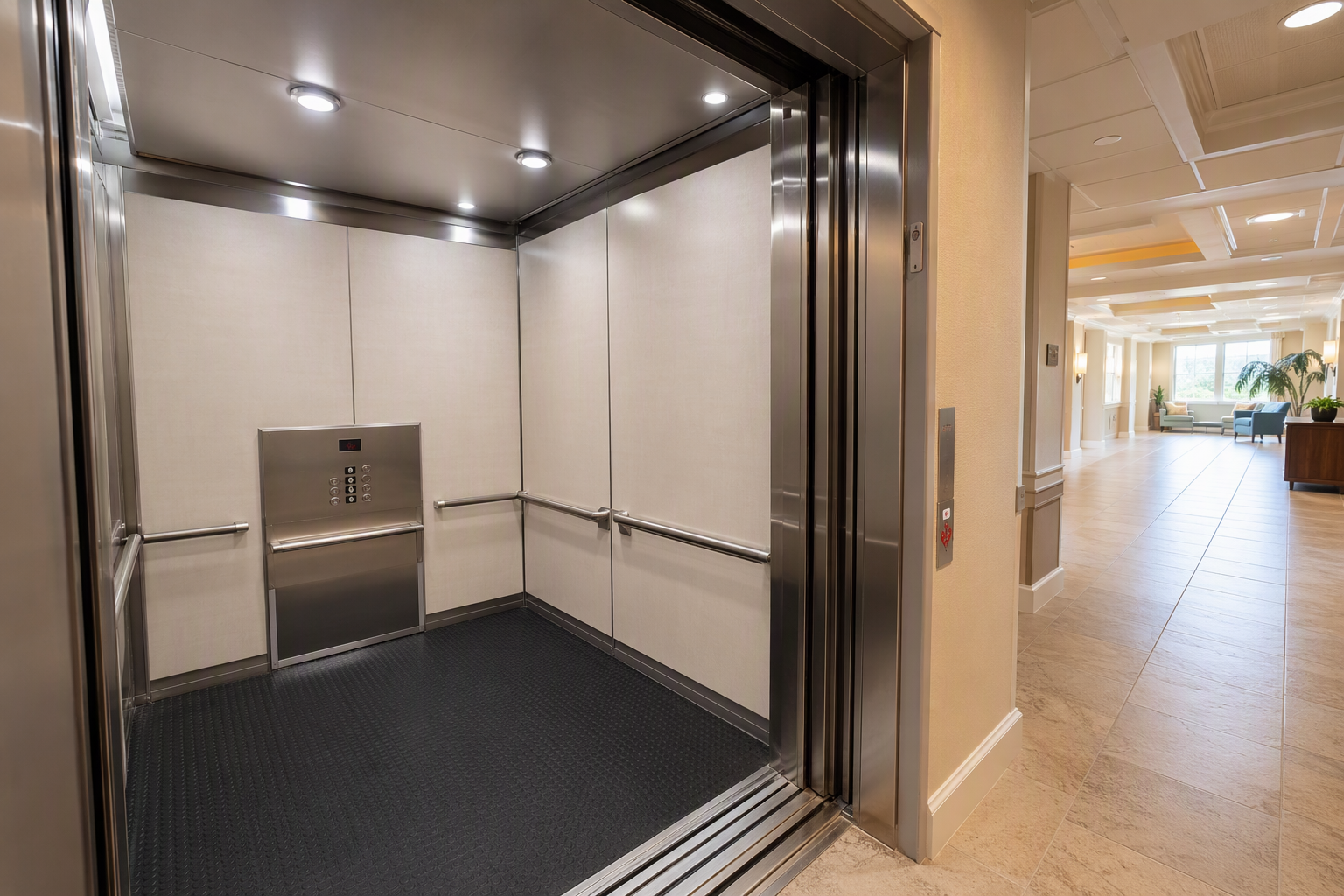
Under the ADA, elevators serving public or common-use floors in multi-story facilities must provide accessible cab dimensions, door widths sufficient for wheelchair passage, Braille and raised-character floor markings, audible signals at each floor, and accessible control panels mounted at a height usable from a seated position. For assisted living facilities where virtually all residents may use mobility aids, these are not optional refinements — they are baseline requirements.
ASME A17.1-2019 adds specific mechanical and operational standards: door reopening devices sensitive to contact and presence, emergency two-way communication systems, leveling accuracy, and lighting levels inside the cab. Modernization projects that bring older equipment into alignment with both frameworks are among the most impactful investments a senior living operator can make.
Which Florida State Agency Regulates Elevator Safety in Senior Living Buildings?
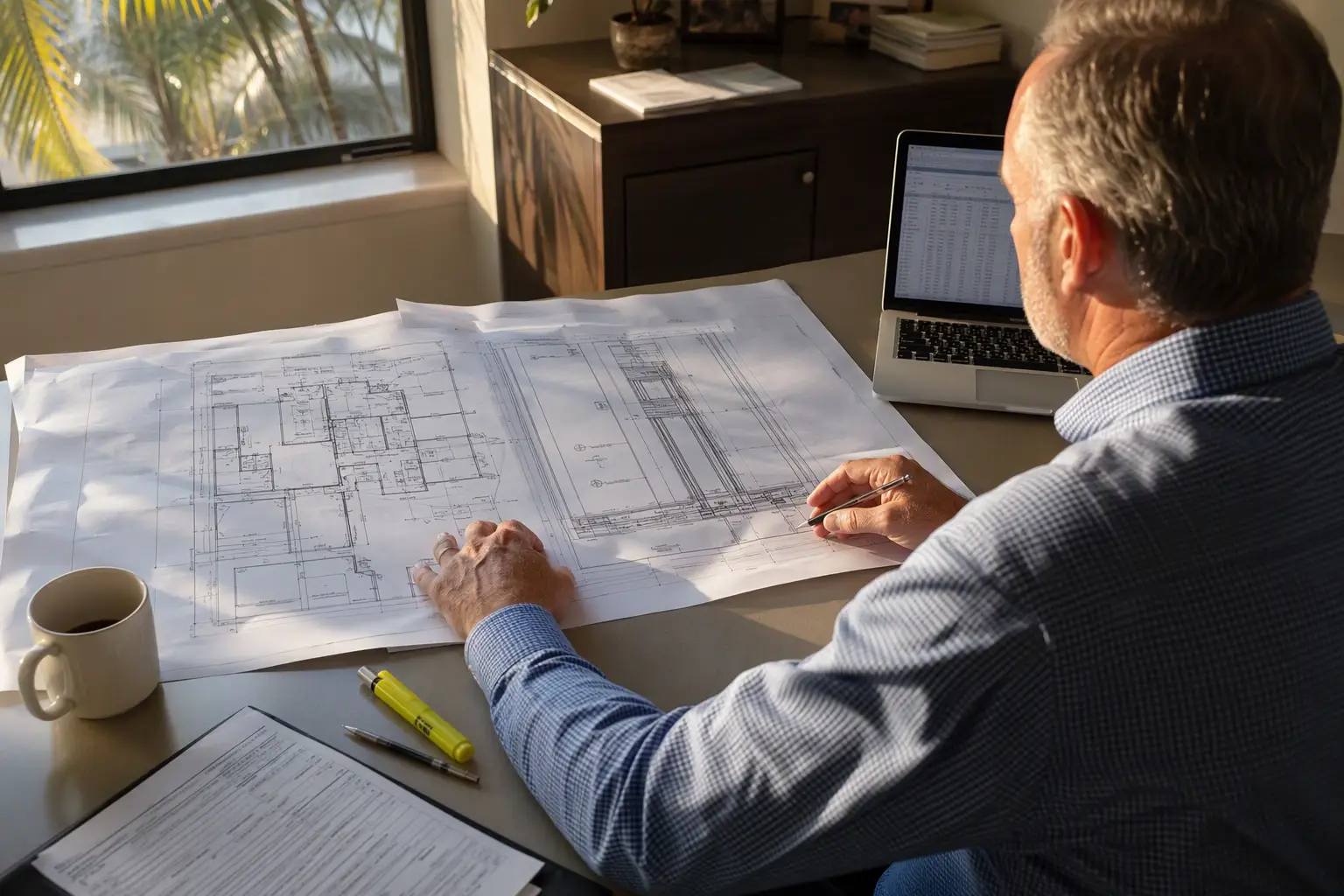
In Florida, elevator safety is governed by the Florida Department of Business and Professional Regulation (DBPR), Bureau of Elevator Safety, under Chapter 399, Florida Statutes (the Elevator Safety Act) and Chapter 61C-5, Florida Administrative Code.
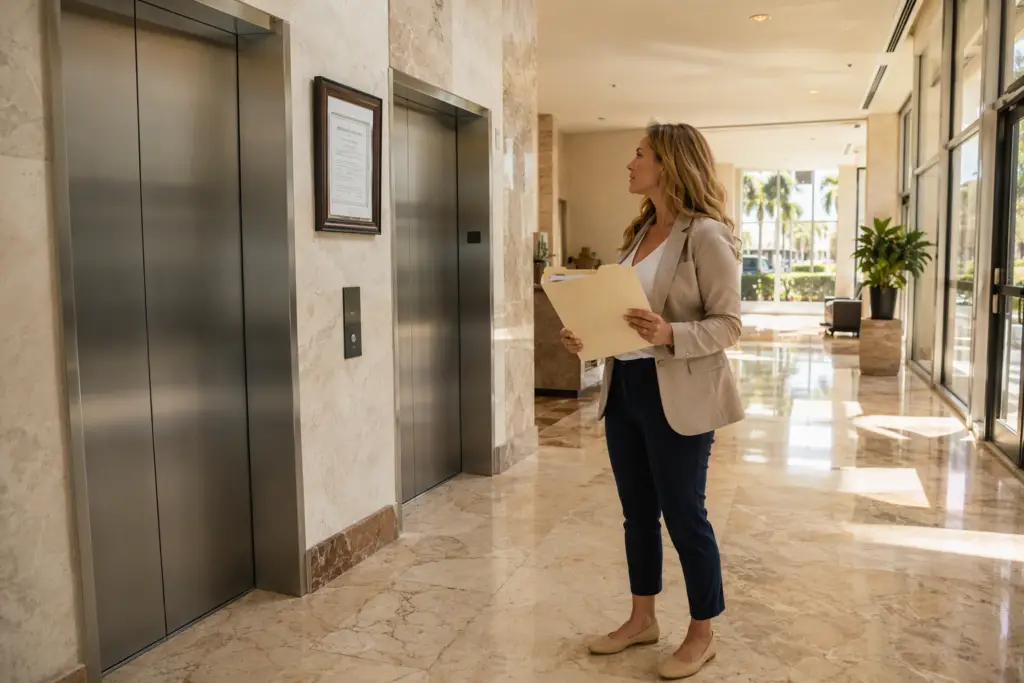
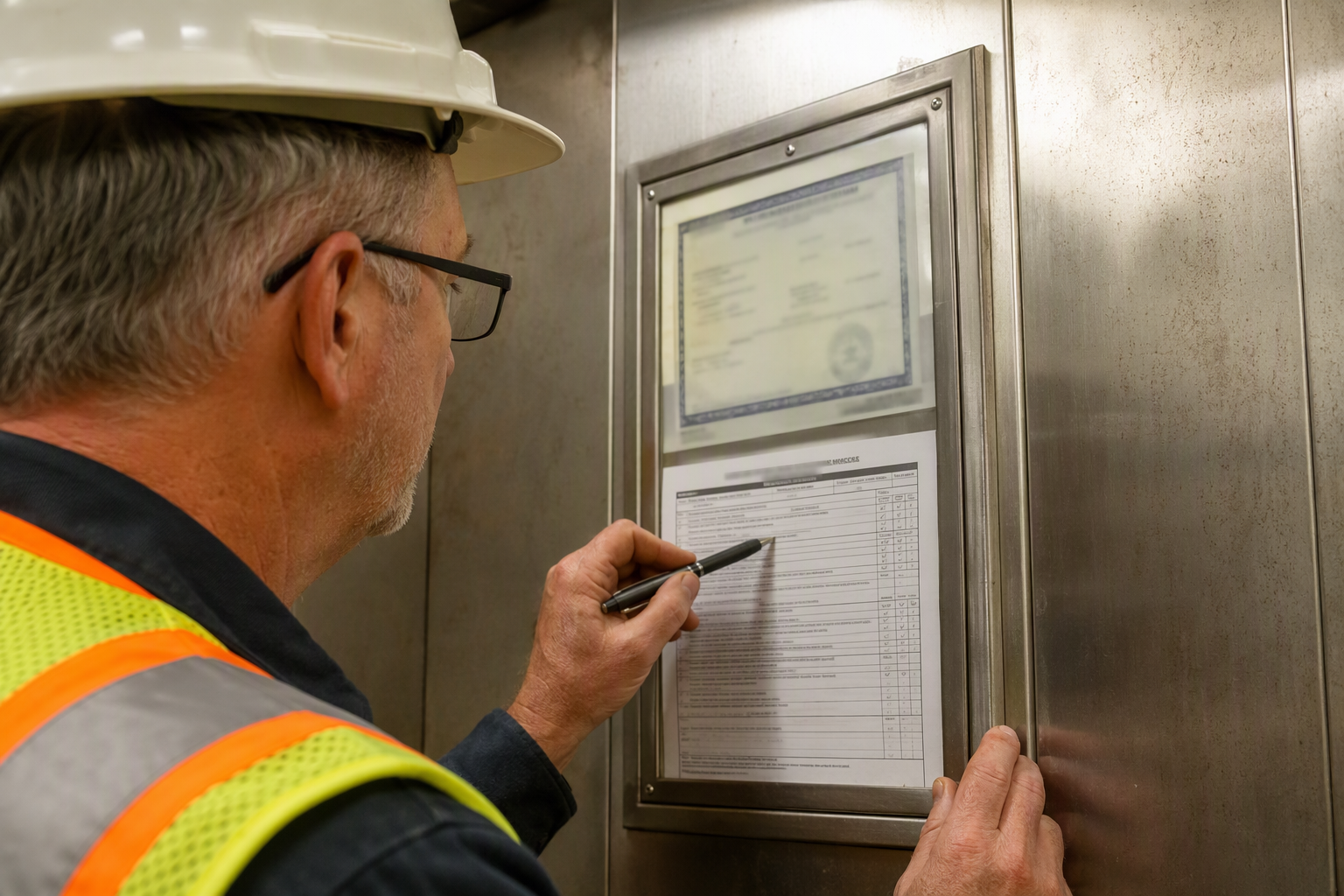
Facilities in Pompano Beach fall under the jurisdiction of the Broward County Building Code Division, which enforces Chapter 399 through its own certified elevator inspectors. Facilities in Sarasota work with state-certified inspectors operating under DBPR authority. In both markets, every covered elevator must hold a valid certificate of operation, which must be posted in a conspicuous location inside the cab in a frame with a transparent cover. A Florida certificate of operation is valid for no more than two years and can only be renewed following a satisfactory inspection. Operating on an expired certificate is a violation of state law.
Before any modernization or alteration begins, a state permit — applied for by a registered elevator company — is required. Axxiom Elevator Florida is registered to pull permits and perform work under Florida law, so facility administrators do not need to navigate that process independently.
What Specific Elevator Upgrades Do Florida Senior Living Facilities Most Commonly Need?
Based on the requirements of ASME A17.1-2019 and the ADA, the following upgrades are most frequently needed in Florida assisted living and senior living facilities:
- Door reopening devices: Older infrared edges or contact-only reversals must be upgraded to presence-detection systems that reopen doors when a person or mobility device is sensed in the door path — critical for slow-moving residents.
- Cab and door dimensions: ADA guidelines specify minimum clear floor space and door width. Cabs that predate these requirements may require structural cab modifications or replacement.
- Accessible control panels: Controls must be within reach ranges usable from a seated position, with Braille and raised characters on all buttons and floor indicators.
- Emergency two-way communication: ASME A17.1-2019 requires a hands-free, two-way communication system inside the cab — voice-only intercoms without video or auto-answer capability may no longer meet current standards.
- Cab lighting upgrades: Minimum illumination levels are specified; aging fluorescent fixtures are frequently replaced with LED systems that meet code and reduce maintenance costs.
- Leveling accuracy: Imprecise leveling creates a trip hazard at the threshold — especially dangerous for residents using walkers or wheelchairs. Modernized drive systems and landing controls correct this.
- Handrails: Interior grab rails on at least one cab wall are an ADA accessibility feature often absent in older equipment.
- Emergency power and ARO systems: Automatic Rescue Operation (ARO) features return the elevator to the nearest floor and open doors during a power failure — essential in a facility where residents cannot evacuate via stairs.
- Signal and audio upgrades: Audible floor announcements and visual hall lanterns aid residents with vision or hearing impairments.
How Often Must Elevators in Florida Senior Living Facilities Be Inspected?
Under Chapter 399, Florida Statutes, every elevator covered by Florida law must be inspected annually by a certified elevator inspector — or by an inspector from a county or municipality operating under a state contract. The certificate of operation issued after a satisfactory inspection is valid for no more than two years. Facilities should not wait for a renewal deadline; proactive maintenance and periodic internal assessments between required inspections help catch wear before it becomes a code deficiency.
Before any newly modernized conveyance is placed back into service, it must be inspected by a certified elevator inspector who has no employment relationship, association, or conflict of interest with the permit holder or the facility owner. Axxiom Elevator Florida coordinates this independent inspection as part of the modernization closeout process.
What Is the Difference Between Modernization and Full Elevator Replacement in a Healthcare Setting?
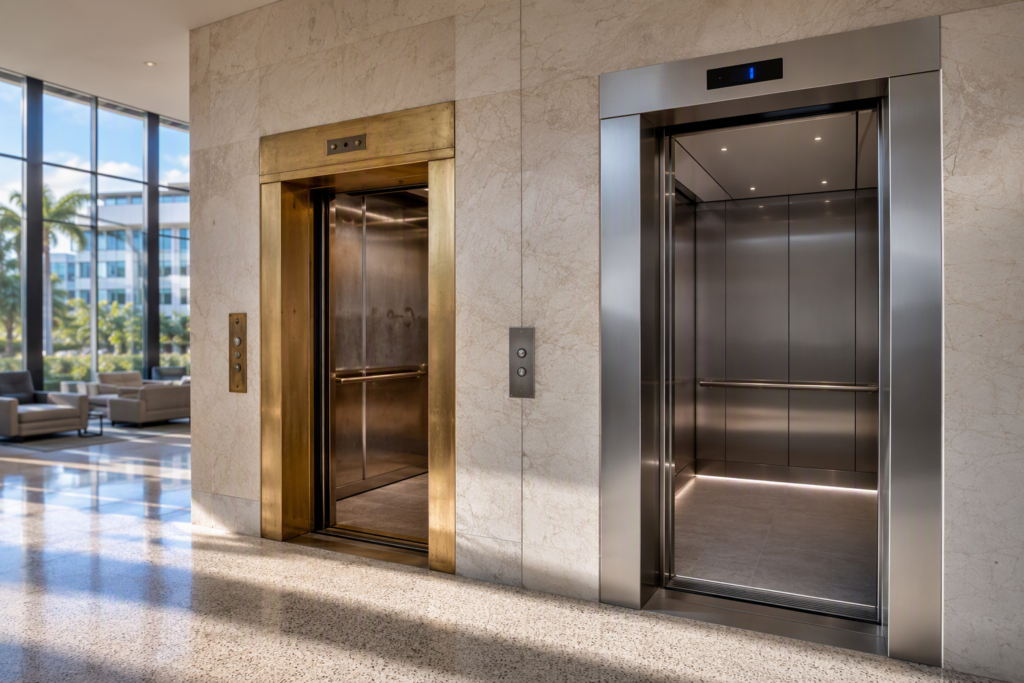
Modernization refers to replacing or upgrading specific components — controls, drive systems, door operators, cab interiors, communication systems — while retaining the existing hoistway, machine room, and structural elements. Full replacement removes and rebuilds the entire system. For most Florida senior living facilities with elevators installed between the 1980s and early 2000s, modernization delivers the code compliance and reliability improvements needed without the cost or disruption of full replacement.
The right scope depends on equipment age, the extent of code gaps identified during a professional assessment, and the facility’s operational tolerance for downtime. Axxiom Elevator Florida conducts detailed assessments to help facility administrators and maintenance directors understand exactly what is required versus what is optional — so capital budgets are allocated accurately.
Does a Modernization Project Require a Florida State Permit?
Yes. Under Chapter 399, Florida Statutes, a state permit must be applied for by a registered elevator company before any installation or alteration of a conveyance. This applies to both full replacements and component-level modernizations that constitute an alteration under the code. Operating an altered elevator without the required permit and subsequent inspection is a statutory violation. Axxiom Elevator Florida, as a registered Florida elevator company, handles permit applications directly, ensuring the process complies with DBPR requirements and applicable local authority requirements in Broward County and Sarasota.
What ADA Requirements Apply Specifically to Senior Living and Assisted Living Elevators?
The ADA applies to the common-use and public-use areas of assisted living facilities, which are considered places of public accommodation or commercial facilities depending on their structure. Elevator requirements under the ADA include:
- Hall call buttons located at accessible heights with visual indicators
- Audible and visible floor designation signals inside and outside the cab
- Braille and raised-character floor designations on both jambs at each hoistway entrance
- Car control panels with controls positioned within accessible reach ranges and identified with Braille and raised characters
- Door reopening devices sensitive to both contact and detection in the door opening
- Interior cab dimensions providing adequate maneuvering space for a standard wheelchair
- A handrail on at least one interior wall
- Emergency communication systems operable without voice where needed
Facilities undergoing renovation have clear ADA obligations to bring altered elements into compliance. Unaltered legacy equipment in older buildings may be evaluated under the readily achievable barrier removal standard, but any modernization project triggers full ADA compliance for the altered elements.
How Long Does an Elevator Modernization Take in an Occupied Senior Living Facility?
Project duration varies by scope. A targeted upgrade — door operator replacement, control system modernization, or cab interior refresh — may take days to a few weeks per elevator. A full drive and control modernization on an older hydraulic or traction unit typically takes longer. In occupied senior living and assisted living buildings, scheduling is critical: facilities with a single elevator may need to arrange temporary resident access accommodations. Multi-elevator buildings allow phased modernization that keeps at least one cab in service throughout. Axxiom Elevator Florida works with facility administrators on phasing plans designed around resident needs and operational schedules.
What Happens If a Florida Assisted Living Facility Operates an Elevator With an Expired Certificate of Operation?
Operating an elevator on an expired certificate of operation is a direct violation of Chapter 399, Florida Statutes. Regulatory consequences can include stop-use orders, which immediately shut down the elevator — an outcome far more disruptive in a senior living facility than in a commercial office building. Beyond regulatory risk, an expired certificate and deferred maintenance create documented liability exposure in the event of a resident injury. Under Florida law, once a certificate of operation is issued, the elevator owner is responsible for safe operation, proper maintenance, inspection, and correction of any code deficiencies identified during an inspection.
Questions Your Inspector Will Ask
Florida certified elevator inspectors are thorough. Senior living and assisted living facility administrators should be prepared to address the following during any inspection:
- Is the current certificate of operation posted inside the cab in a transparent-covered frame?
- When was the last annual inspection completed, and is the report available for review?
- Has the elevator been altered since the last permit was pulled? If so, was the required state permit obtained?
- Is there a current maintenance service contract in place, and does it document monthly and periodic tasks?
- Are door reopening devices functioning properly — tested for both contact and presence detection?
- Does the emergency two-way communication system connect to a continuously monitored location?
- Are cab lighting levels adequate and functioning?
- Is the elevator leveling accurately to each floor without a noticeable threshold gap?
- Have any elevator accidents or incidents occurred since the last inspection? If so, was the required report filed with the state within five working days?
- Are all posted safety notices current and legible?
How Should a Florida Senior Living Facility Plan and Budget for Elevator Modernization?
A structured approach reduces surprises and helps facility leadership align capital expenditure with regulatory timelines:
- Commission a professional condition assessment — have a registered elevator company document the current state of each elevator against ASME A17.1-2019 and ADA requirements, identifying deficiencies, remaining useful life of components, and any open permit issues.
- Prioritize safety-critical and code-required items — door reopening systems, emergency communication, leveling, and lighting deficiencies that affect resident safety and certificate of operation status come first.
- Develop a phased modernization plan — for multi-elevator facilities, sequence work to maintain elevator availability for residents, particularly those with mobility limitations.
- Confirm permit requirements with your elevator company — any alteration requires a state permit; include permit fees and inspection scheduling in the project timeline.
- Engage independent inspection early — coordinate the post-modernization inspection by a certified elevator inspector with no conflict of interest well before the desired return-to-service date.
- Update maintenance contracts — ensure the service agreement covers all newly modernized components and reflects current code requirements.
- Document everything — retain permits, inspection reports, and maintenance logs; inspectors and regulators will ask for these records.
Axxiom Elevator Florida supports facilities through each of these steps, from initial assessment and permit application through post-modernization inspection coordination and ongoing maintenance in Pompano Beach, Sarasota, and throughout Florida.
Are There Specific Elevator Standards for Life Safety and Fire Service Access in Florida Senior Living Buildings?
Yes. The ASME A17.1 Safety Code for Elevators and Escalators includes requirements for fire service access operation — a standardized mode that allows emergency responders to take manual control of an elevator, return it to the designated level, and use it for firefighting access. In senior living and assisted living facilities, where residents may be unable to evacuate via stairwells, elevator fire service operation is a critical life safety feature. Older control systems may lack full Phase I and Phase II fire service operation capability required by current code editions. Modernization projects in healthcare settings should specifically evaluate fire service operation compliance alongside accessibility upgrades.
The Occupational Safety and Health Administration (OSHA) also establishes workplace safety requirements relevant to elevator machine rooms and maintenance operations — matters that affect elevator technicians and facility maintenance staff rather than residents directly, but which a responsible facility must address during any modernization project.
Contact Axxiom Elevator Florida for a free elevator assessment at 954-970-0020.
Need elevator service you can rely on? Axxiom Elevator Florida is ready to help.