Axxiom Elevator Florida: Complete FAQ Guide to Elevator Service, Compliance & Safety in Florida
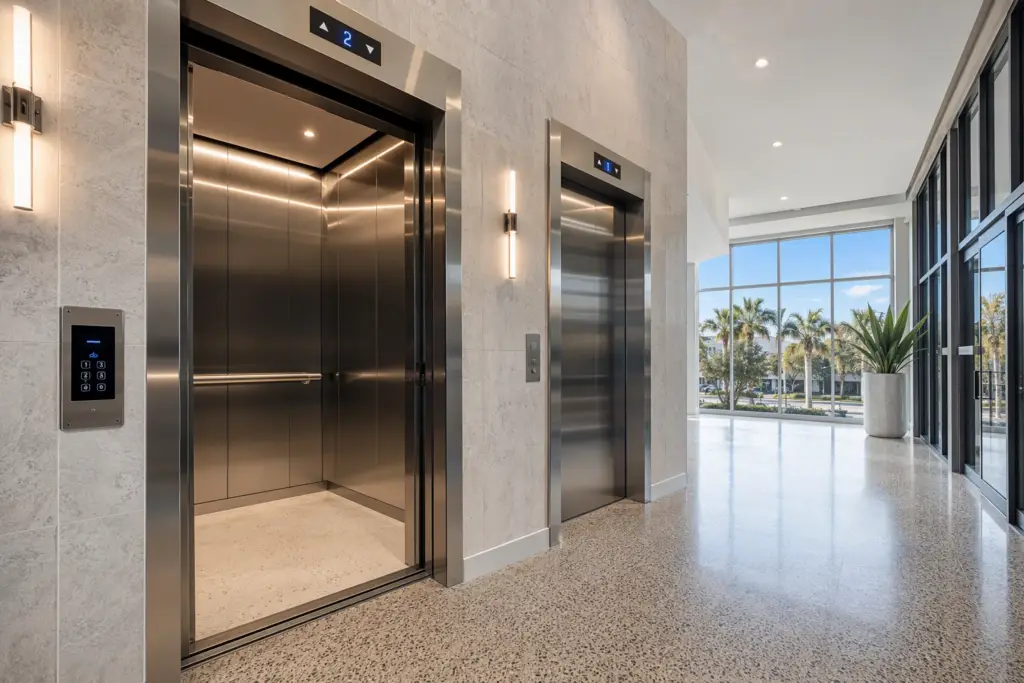
Axxiom Elevator Florida is a registered elevator company operating in Pompano Beach and Sarasota, FL, delivering elevator installation, maintenance, modernization, and code compliance services. This FAQ hub answers the most important questions building owners, property managers, and facility directors ask about elevator service, Florida regulatory requirements, and what to expect from a qualified elevator contractor in 2026.
What is Axxiom Elevator Florida and what services does it provide?
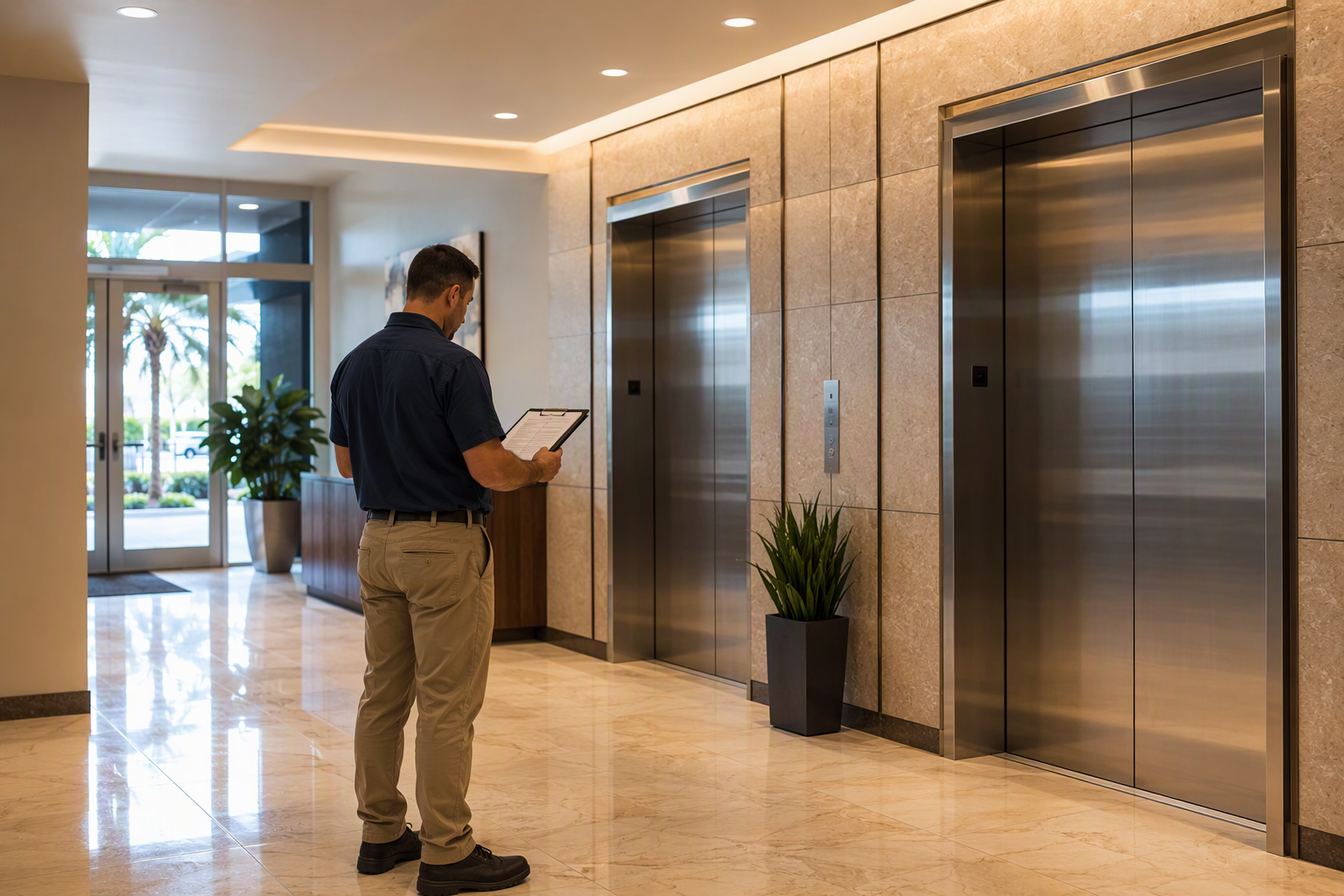
Axxiom Elevator Florida is a Florida-registered elevator service company offering installation, preventive maintenance, repair, modernization, and compliance consulting for commercial and residential conveyances in Pompano Beach and Sarasota.
The company works with a broad range of conveyance types covered under Florida’s Chapter 399 Elevator Safety Act, including traction elevators, hydraulic elevators, dumbwaiters, escalators, moving walks, wheelchair lifts, and stairway chairlifts. Axxiom Elevator Florida’s technicians hold Florida elevator certificates of competency, as required by state law, and the company maintains the registration and general liability insurance mandated by Florida for all registered elevator companies.
Serving both the Broward County market — where Pompano Beach is located — and the Sarasota market on the Gulf Coast, Axxiom Elevator Florida provides services calibrated to Florida’s adopted code edition, which is ASME A17.1/CSA B44, 2019 edition, effective December 31, 2023, under Chapter 61C-5, Florida Administrative Code.
Which Florida agency regulates elevators, and what law governs them?
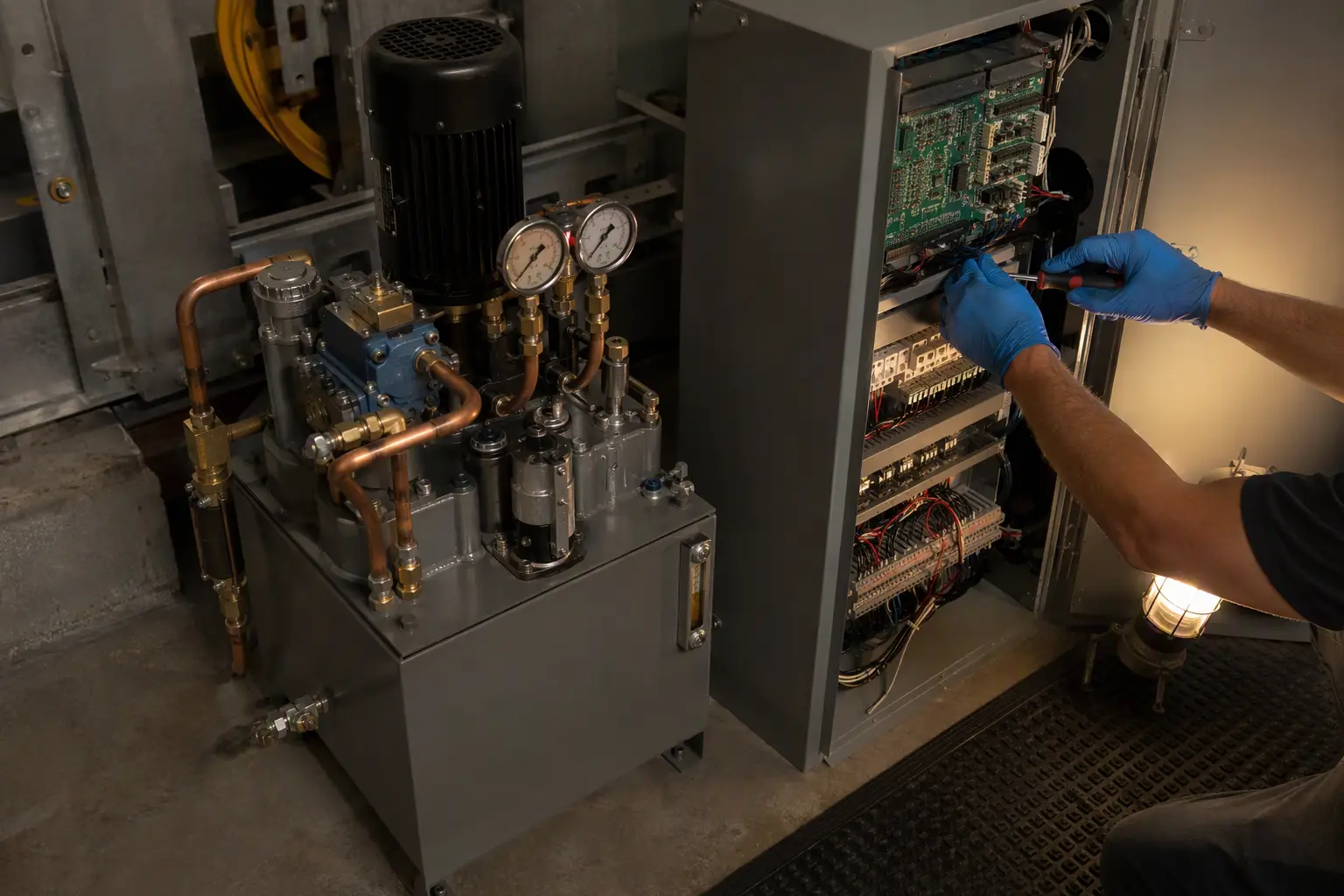
Elevators in Florida are regulated by the Florida Department of Business and Professional Regulation (DBPR), Division of Hotels and Restaurants, Bureau of Elevator Safety, under Chapter 399, Florida Statutes (the Elevator Safety Act).
The Bureau of Elevator Safety oversees permitting, certification of elevator companies and technicians, inspection programs, and enforcement statewide. The implementing rules appear in Chapter 61C-5, Florida Administrative Code, which adopts the ASME A17.1-2019 safety code with certain exclusions — for example, private residence elevators and marine elevators are excluded from the adopted code’s scope.
In Pompano Beach, the local authority having jurisdiction (AHJ) is the Broward County Building Code Division, which enforces Chapter 399 through its own certified elevator inspectors. In Sarasota, the DBPR Bureau of Elevator Safety retains primary oversight. Understanding which AHJ applies to a specific property is a foundational step before any installation or major alteration project, and Axxiom Elevator Florida assists clients in navigating both state and local requirements.
How often are elevators required to be inspected in Florida?
Florida requires every elevator or other conveyance covered by Chapter 399 to be inspected annually by a certified elevator inspector, with one specific exemption available for qualifying low-rise, service-contract-covered elevators.
The annual inspection must be performed by a certified elevator inspector who holds a qualified elevator inspector (QEI) credential in good standing. Inspectors must also register annually with the state and demonstrate eight hours of continuing education.
There is one statutory exemption: an elevator that is not an escalator or dumbwaiter, serves only two adjacent floors, and is covered by a service maintenance contract is exempt from the annual inspection requirement while that contract remains in effect. For most multi-floor commercial and residential buildings, however, the annual inspection is mandatory and non-negotiable.
A Florida certificate of operation — the document that authorizes legal elevator operation — is valid for no more than two years. Renewal requires a current satisfactory inspection. Operating on an expired certificate of operation violates Florida law and exposes building owners to significant liability.
What is a Florida certificate of operation and where must it be displayed?
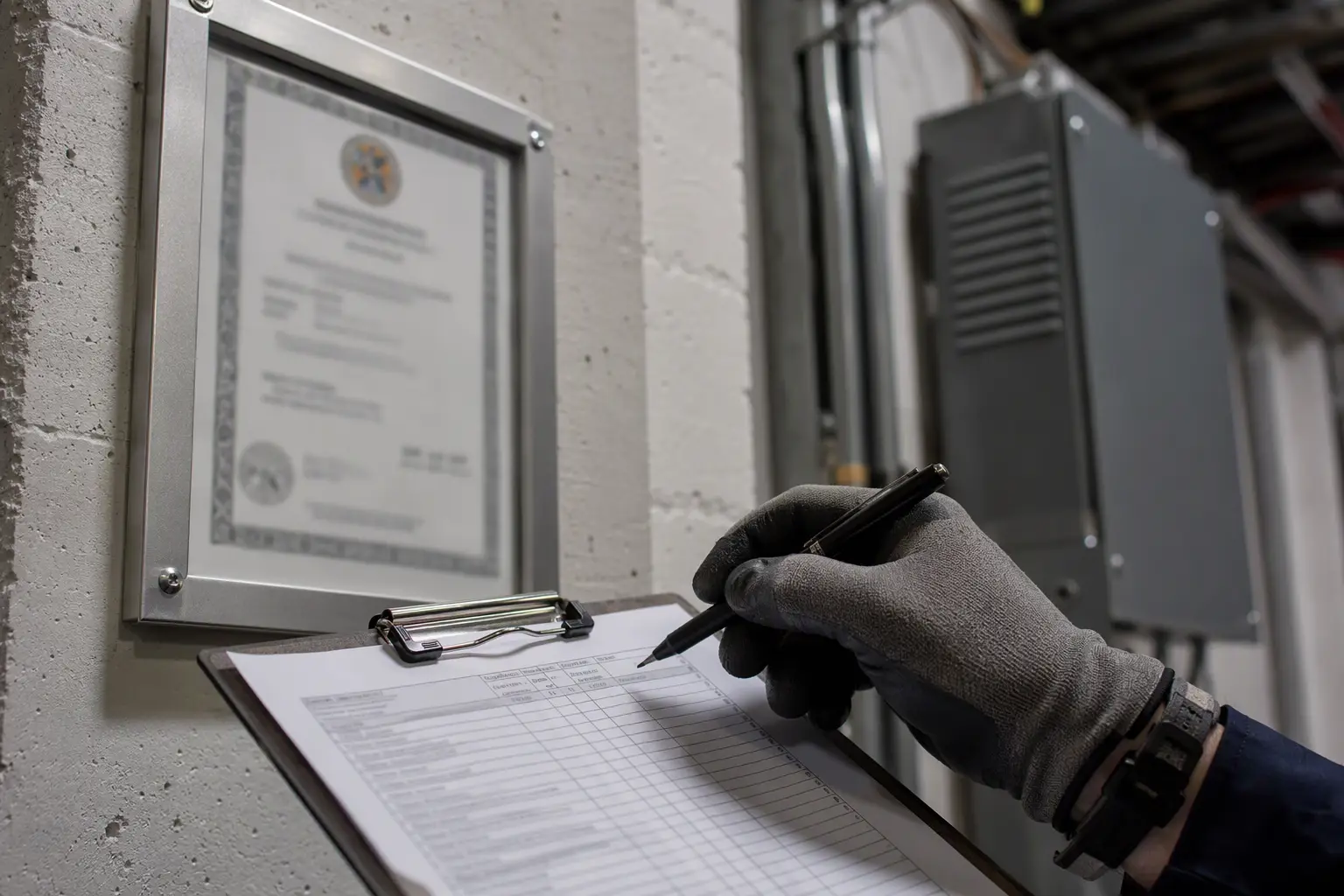
A Florida certificate of operation is the state-issued permit that authorizes a specific conveyance to operate legally, and it must be posted inside the elevator cab in a conspicuous location in a frame with a transparent cover.
The certificate of operation is issued by the DBPR Bureau of Elevator Safety after a satisfactory inspection by a certified elevator inspector. It is valid for no more than two years and may only be renewed when the conveyance has a current satisfactory inspection on file. Operating without a posted, valid certificate violates Chapter 399, Florida Statutes.
Once a certificate of operation is issued, the elevator owner — not the contractor or inspector — bears responsibility for safe operation, proper maintenance, timely inspection, and correction of any code deficiencies identified. This owner-responsibility framework means that property managers and building owners must maintain active service contracts and inspection records at all times.
What permits are required before installing or altering an elevator in Florida?
A state permit, applied for by a registered elevator company on behalf of the owner, is required before any conveyance is installed or altered in Florida.
The permit application process is administered through the DBPR Bureau of Elevator Safety. Only a Florida-registered elevator company may apply for the permit — individual building owners cannot self-permit elevator work. This requirement underscores why selecting a properly registered contractor is critical from the very first planning stage of a project.
Before a newly installed conveyance is placed into service, it must be inspected by a certified elevator inspector who has no employment relationship, association, or conflict of interest with the permit holder or the property owner. This independence requirement is a hard statutory rule under Chapter 399 and is designed to ensure objective third-party verification of safety compliance before the public uses the equipment.
Axxiom Elevator Florida manages the permit application process for clients in Pompano Beach and Sarasota, coordinating with the DBPR and, where applicable, the Broward County Building Code Division as the local AHJ.
What qualifications must Florida elevator technicians hold?
Florida requires elevator technicians to hold a state-issued elevator certificate of competency before they may construct, install, maintain, or repair conveyances.
The certificate of competency is issued by the DBPR and expires after one year. Renewal requires proof of eight hours of continuing education. Technicians must also register with the state annually and carry general liability insurance. These requirements apply to every technician performing hands-on elevator work — not just supervisors or project leads.
Axxiom Elevator Florida employs technicians who maintain their certificates of competency and annual registrations in compliance with Florida law, ensuring that every service visit is performed by a state-authorized professional.
What should a building owner do immediately after an elevator accident in Florida?
The certificate of operation holder must report any elevator accident to the DBPR Bureau of Elevator Safety within five working days under Chapter 399, Florida Statutes.
Responding to an elevator accident correctly involves several sequential actions. Follow this protocol:
- Ensure all passengers are safe; call emergency services immediately if anyone is injured.
- Take the elevator out of service and secure it against further operation by placing it in a non-operational mode or locking the machine room.
- Document the incident with photographs, witness statements, and a written description of the event and conditions.
- Notify the DBPR Bureau of Elevator Safety in writing within five working days, as required by Chapter 399.
- Contact a Florida-registered elevator company to perform a thorough inspection and identify the mechanical or code-related cause before the elevator is returned to service.
- Retain all inspection records, maintenance logs, and service reports, as these will be relevant to any regulatory review or liability proceeding.
- Do not return the elevator to service until a certified elevator inspector has cleared it and, if a new certificate of operation is required, that certificate has been issued.
Does the Americans with Disabilities Act apply to elevators in Florida?
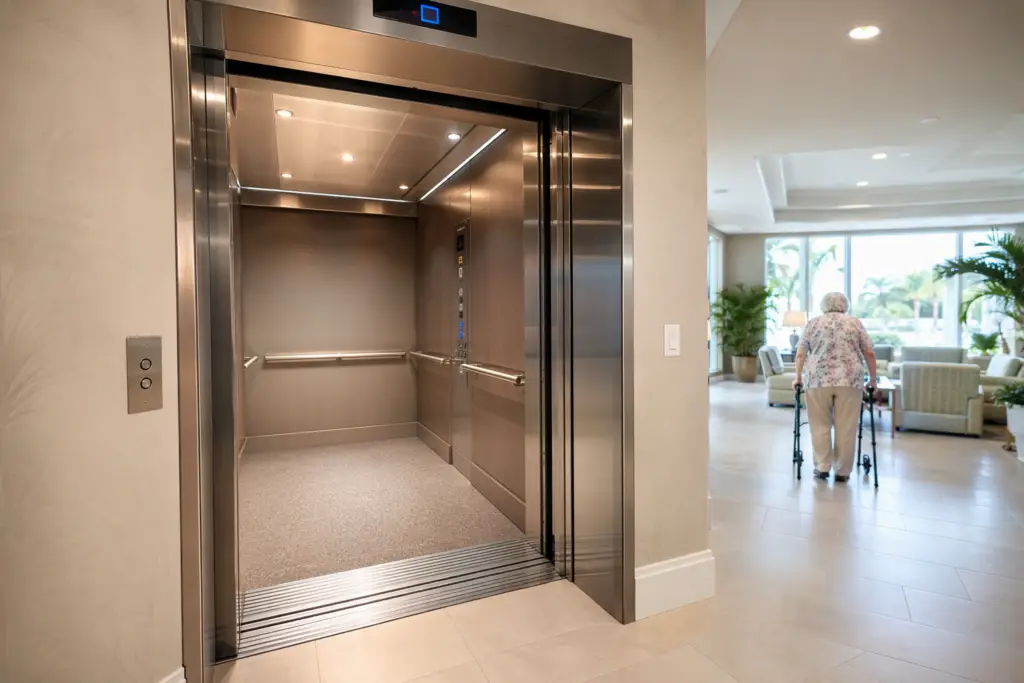
Yes — the Americans with Disabilities Act (ADA) imposes accessibility requirements on elevators in most commercial and public-accommodation buildings, regardless of state law.
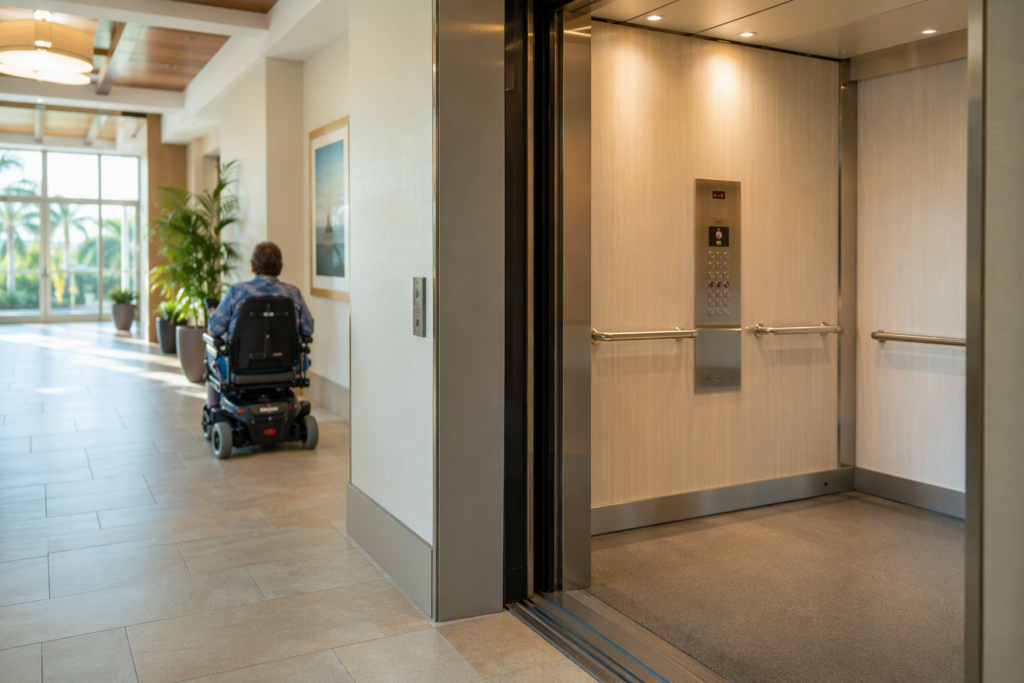
The ADA requires that elevators in facilities subject to the law meet specific standards for cab dimensions, door width and timing, control panel height and Braille markings, audible signals, and floor designations. Buildings that undergo alterations triggering a path-of-travel obligation must bring vertical accessibility into compliance as part of the project scope.
Existing buildings are subject to a “readily achievable” barrier removal standard, while new construction must meet full ADA Standards for Accessible Design from day one. Florida’s adopted ASME A17.1-2019 code addresses the mechanical and structural aspects of elevator safety, while the ADA separately governs accessibility features — and both sets of requirements apply simultaneously.
Axxiom Elevator Florida evaluates elevators for ADA compliance as part of its comprehensive assessment services, helping property owners in Pompano Beach and Sarasota identify accessibility gaps before they become enforcement issues.
What is the ASME A17.1 Safety Code and why does it matter in Florida?
The ASME A17.1/CSA B44 Safety Code for Elevators and Escalators is the primary technical standard governing the design, construction, installation, operation, inspection, testing, maintenance, alteration, and demolition of elevators and related conveyances in the United States and Canada.
Florida adopted the 2019 edition of ASME A17.1/CSA B44 effective December 31, 2023, through Chapter 61C-5, Florida Administrative Code. This means that all elevator work performed in Florida — from new installations to alterations and ongoing maintenance — must conform to the 2019 edition’s technical requirements, with the exclusions noted in state rules for private residence and marine elevators.
ASME A17.1-2019 covers a wide range of technical topics: safety devices and buffers, hoistway construction, machine room requirements, door systems, car and counterweight requirements, driving machines and sheaves, electrical equipment, and inspection and test protocols. For existing installations that predate the 2019 edition, ASME A17.3, the Safety Code for Existing Elevators and Escalators, provides the applicable retrofit and alteration standards.
Are residential elevators in Florida required to have a certificate of operation?
No — elevators, stairway chairlifts, and wheelchair lifts in private residences are exempt from the Florida certificate of operation requirement under Chapter 399, Florida Statutes.
This exemption means that residential conveyances do not go through the same state permitting and annual inspection cycle that commercial and multifamily elevators do. However, the exemption does not mean residential elevators are unregulated at the design and installation stage — Florida Building Code requirements and manufacturer specifications still apply, and safe installation and maintenance practices remain essential for occupant safety.
Property owners considering a home elevator, stairway chairlift, or residential wheelchair lift in Pompano Beach or Sarasota should still work with a knowledgeable contractor who understands the applicable installation standards and can ensure the equipment is properly maintained over time.
What is elevator modernization and when should a building owner consider it?
Elevator modernization is the process of upgrading older elevator systems — including controls, drive systems, cab interiors, door operators, and safety devices — to meet current code requirements and improve performance, reliability, and energy efficiency.
Modernization is typically warranted when one or more of the following conditions exist: the elevator’s control system uses obsolete technology with no available replacement parts; the equipment no longer meets current ASME A17.1-2019 or ADA requirements; ride quality and reliability have declined; maintenance costs have escalated significantly; or the elevator’s energy consumption is disproportionately high relative to current efficient systems.
Any modernization that constitutes an “alteration” under Florida law requires a state permit applied for by a registered elevator company before work begins. The scope of the alteration determines which current code requirements become applicable to the modernized system — a critical consideration during project planning that Axxiom Elevator Florida works through with clients before any contract is signed.
How do preventive maintenance contracts protect building owners?
Preventive maintenance contracts reduce the risk of unexpected failures, support compliance with Florida’s inspection requirements, and in qualifying cases provide a statutory exemption from the annual inspection mandate.
Under a properly structured service maintenance contract, a registered elevator company performs scheduled lubrication, adjustment, cleaning, component testing, and safety device verification at defined intervals. This systematic approach catches developing problems before they become outright failures, extends equipment service life, and creates a documented maintenance record that is valuable during regulatory inspections and, if necessary, legal proceedings.
Florida’s statutory two-floor exemption from the annual inspection requirement — available only when the elevator is not an escalator or dumbwaiter, serves two adjacent floors, and is covered by a service maintenance contract — illustrates the legislature’s recognition that active maintenance contracts provide meaningful safety assurance. Building owners should confirm with their elevator contractor that any maintenance contract they sign is structured to meet the requirements of Chapter 399 if they intend to rely on this exemption.
What is the difference between an elevator inspection and an elevator test?
An elevator inspection is a visual and operational examination of a conveyance’s components and safety systems, while an elevator test involves the physical operation of specific safety devices under controlled conditions to verify they function within code-specified parameters.
ASME A17.1-2019 defines both inspection and test procedures, specifying which items must be examined visually, which must be operated under no-load or full-load conditions, and how frequently each category of test must be performed. Common tests include the governor and safeties test, which verifies that the overspeed governor and car safety device will stop a car traveling faster than the rated speed, and the buffer test, which confirms that buffers will absorb the energy of a descending car or counterweight.
Florida’s annual inspection requirement encompasses both visual inspection and the applicable tests required under the adopted code. The certified elevator inspector performing the inspection must document findings and test results, and any deficiencies identified must be corrected by the elevator owner before the certificate of operation is renewed.
What are the most common elevator code violations found in Florida buildings?
Common deficiencies identified during Florida elevator inspections include expired or improperly displayed certificates of operation, non-functional or missing safety devices, door timing that falls outside ASME A17.1-2019 parameters, inadequate machine room conditions, and ADA non-compliance in cab controls and signage.
Below is a comparison of typical deficiency categories and their regulatory implications:
| Deficiency Category | Applicable Standard | Regulatory Consequence | Typical Corrective Action |
|---|---|---|---|
| Expired certificate of operation | Chapter 399, Florida Statutes | Violation of state law; elevator must be taken out of service | Schedule inspection; renew certificate before resuming operation |
| Certificate not posted / missing transparent frame | Chapter 399, Florida Statutes | Inspection deficiency; noted on inspection report | Post certificate in approved frame with transparent cover |
| Door reversal device failure | ASME A17.1-2019 | Immediate safety hazard; out-of-service order possible | Repair or replace door operator and safety edge/light curtain |
| Emergency lighting / communication inoperable | ASME A17.1-2019 / ADA | Inspection deficiency; ADA complaint risk | Replace batteries, repair wiring, test two-way communication |
| ADA control panel non-compliance | ADA Standards for Accessible Design | Civil rights complaint; barrier removal obligation | Modernize or retrofit control panel to ADA height and Braille requirements |
| Governor/safeties test overdue | ASME A17.1-2019 | Inspection deficiency; certificate renewal risk | Schedule and complete required periodic test with certified inspector |
| Machine room temperature out of range | ASME A17.1-2019 | Inspection deficiency; equipment damage risk | Repair HVAC; install dedicated cooling/ventilation for machine room |
What should building owners look for when selecting an elevator service company in Florida?
Building owners should verify that any elevator contractor they consider is registered with the Florida DBPR, employs technicians holding valid Florida certificates of competency, and maintains the general liability insurance required by state law.
Beyond the basic legal requirements, meaningful selection criteria include the company’s familiarity with the adopted ASME A17.1-2019 code, demonstrated experience with the specific type of conveyance in the building (traction, hydraulic, escalator, lift), responsiveness to service calls and emergencies, and transparent documentation practices for maintenance logs and inspection records.
Registered elevator companies in Florida must renew their registration annually and demonstrate ongoing insurance compliance. Owners should ask to see current registration documentation and confirm the company’s standing with the DBPR Bureau of Elevator Safety before signing any service or installation contract.
Axxiom Elevator Florida maintains all required state registrations and insurance, and serves clients across Pompano Beach and Sarasota with the full scope of services required to keep conveyances in lawful, safe operation under Florida law.
How does elevator service in Pompano Beach differ from other Florida markets?
In Pompano Beach, elevator enforcement is handled locally by the Broward County Building Code Division, which enforces Chapter 399 through its own certified elevator inspectors — making the local AHJ an active participant in the inspection and compliance process, rather than relying solely on the state DBPR.
This means that building owners in Pompano Beach may interact with Broward County elevator inspectors for their required annual inspections and permit reviews, in addition to maintaining compliance with state DBPR requirements. Contractors working in Pompano Beach must be familiar with Broward County’s local processes and timelines, which can differ procedurally from purely state-administered markets.
Axxiom Elevator Florida’s established presence in Pompano Beach includes familiarity with Broward County Building Code Division processes, ensuring that clients receive guidance that accounts for the local AHJ’s role in permits, inspections, and certificate of operation issuance.
What role does OSHA play in elevator safety for workers in Florida?
The Occupational Safety and Health Administration (OSHA) sets worker safety standards that apply to elevator construction and maintenance work, distinct from the building-code requirements that govern the elevator equipment itself.
OSHA standards address the safety of elevator mechanics and construction workers performing installation, maintenance, repair, and modernization tasks — covering fall protection, lockout/tagout energy control procedures, confined space entry protocols, and scaffolding requirements in hoistways. These federal worker protection rules apply alongside Florida’s elevator safety code and are not displaced by state law.
Building owners and facility managers should be aware that their contractors bear primary responsibility for OSHA compliance during service and construction activities. When evaluating elevator service companies, confirming that the company maintains documented safety programs consistent with OSHA requirements is a reasonable and appropriate due-diligence step.
How long does a new elevator installation typically take in Florida?
The timeline for a new elevator installation in Florida depends on the type of conveyance, building construction status, permit processing time with the DBPR or local AHJ, equipment manufacturing and delivery lead times, and the complexity of the installation itself.
From a regulatory standpoint, the permit must be applied for and approved before any installation work begins. Once installation is complete, the conveyance must be inspected by a certified elevator inspector with no conflict of interest with the permit holder or owner before it can be placed into service. The inspection and certificate of operation issuance add time to the overall project schedule and must be planned into the project timeline from the outset.
Permit processing times vary by jurisdiction — Broward County Building Code Division timelines may differ from state DBPR timelines for Sarasota properties. Axxiom Elevator Florida advises clients to engage the contractor early in the design phase so that permit applications can be submitted promptly and equipment procurement can be aligned with realistic permit and inspection schedules.
What is elevator entrapment and how should building staff respond?
Elevator entrapment occurs when one or more passengers are trapped inside an elevator cab that has stopped between floors or failed to open its doors, and it requires a prompt, coordinated response by trained building staff and qualified elevator technicians.
Building staff should follow this protocol when entrapment is reported:
- Establish two-way voice communication with the trapped passengers using the elevator’s in-cab emergency communication system to assess their condition and reassure them that help is on the way.
- Call emergency services (911) immediately if any passenger reports a medical emergency, injury, or extreme distress.
- Contact the building’s elevator service provider to dispatch a certified technician for the rescue.
- Instruct passengers to remain calm and stay inside the car — do not attempt to force open the doors or climb out of the car, as this creates serious fall and entrapment hazards.
- Keep communication open with passengers until the technician arrives and confirms it is safe to proceed with the rescue.
- Allow only the qualified elevator technician to perform the rescue operation — building staff and fire personnel should coordinate with the technician, not attempt independent mechanical interventions.
- After rescue, take the elevator out of service and do not return it to operation until a certified technician has identified and corrected the cause of the stoppage.
What documentation should building owners maintain for elevator compliance in Florida?
Florida elevator owners should maintain a complete documentation file that includes the current certificate of operation, all inspection reports, maintenance logs, permit records, and any correspondence with the DBPR Bureau of Elevator Safety or the local AHJ.
Specifically, the certificate of operation must be posted inside the cab at all times in a frame with a transparent cover. Behind the scenes, owners should retain copies of every inspection report — including those that identify deficiencies — along with documentation showing when and how each deficiency was corrected. Maintenance logs generated under a service contract should record every service visit, the work performed, parts replaced, and the technician’s certificate of competency number.
Accident reports submitted to the DBPR within the required five-working-day window should be retained permanently. These records collectively demonstrate that the owner has met the Chapter 399 obligation of ensuring safe operation, proper maintenance, and correction of code deficiencies — and they are the first documents requested in any regulatory investigation or civil litigation following an elevator incident.
How can building owners in Sarasota and Pompano Beach get started with Axxiom Elevator Florida?
Building owners and property managers in Sarasota and Pompano Beach can engage Axxiom Elevator Florida to perform a comprehensive elevator assessment, review current compliance status, and develop a service plan tailored to the specific equipment and regulatory requirements of their property.
A thorough assessment typically covers the current certificate of operation status and expiration date, inspection history and any open deficiencies, maintenance contract adequacy relative to Chapter 399 requirements, equipment condition against ASME A17.1-2019 benchmarks, and ADA accessibility compliance in cab controls, signage, and door operation. The assessment provides building owners with a clear, prioritized picture of what their elevators need — whether that is routine maintenance, targeted repairs, modernization, or simply a permit renewal — and allows Axxiom Elevator Florida to develop a service approach that keeps the property in full compliance with Florida law.
Contact Axxiom Elevator Florida for a Free Elevator Assessment
Whether your building is in Pompano Beach or Sarasota, keeping your elevators legally compliant, mechanically sound, and accessible is not optional — it is a legal obligation under Chapter 399, Florida Statutes, and a core responsibility to everyone who uses your building. Axxiom Elevator Florida’s team of state-certified elevator professionals is ready to assess your conveyances, identify compliance gaps, and implement a maintenance and inspection program that meets Florida’s requirements under ASME A17.1-2019 and the ADA.
Call Axxiom Elevator Florida today for a free elevator assessment: 954-970-0020
Serving Pompano Beach, Sarasota, and surrounding communities throughout Florida.