Elevator Requirements for Florida Warehouses and Industrial Buildings with Freight Elevators or VRCs
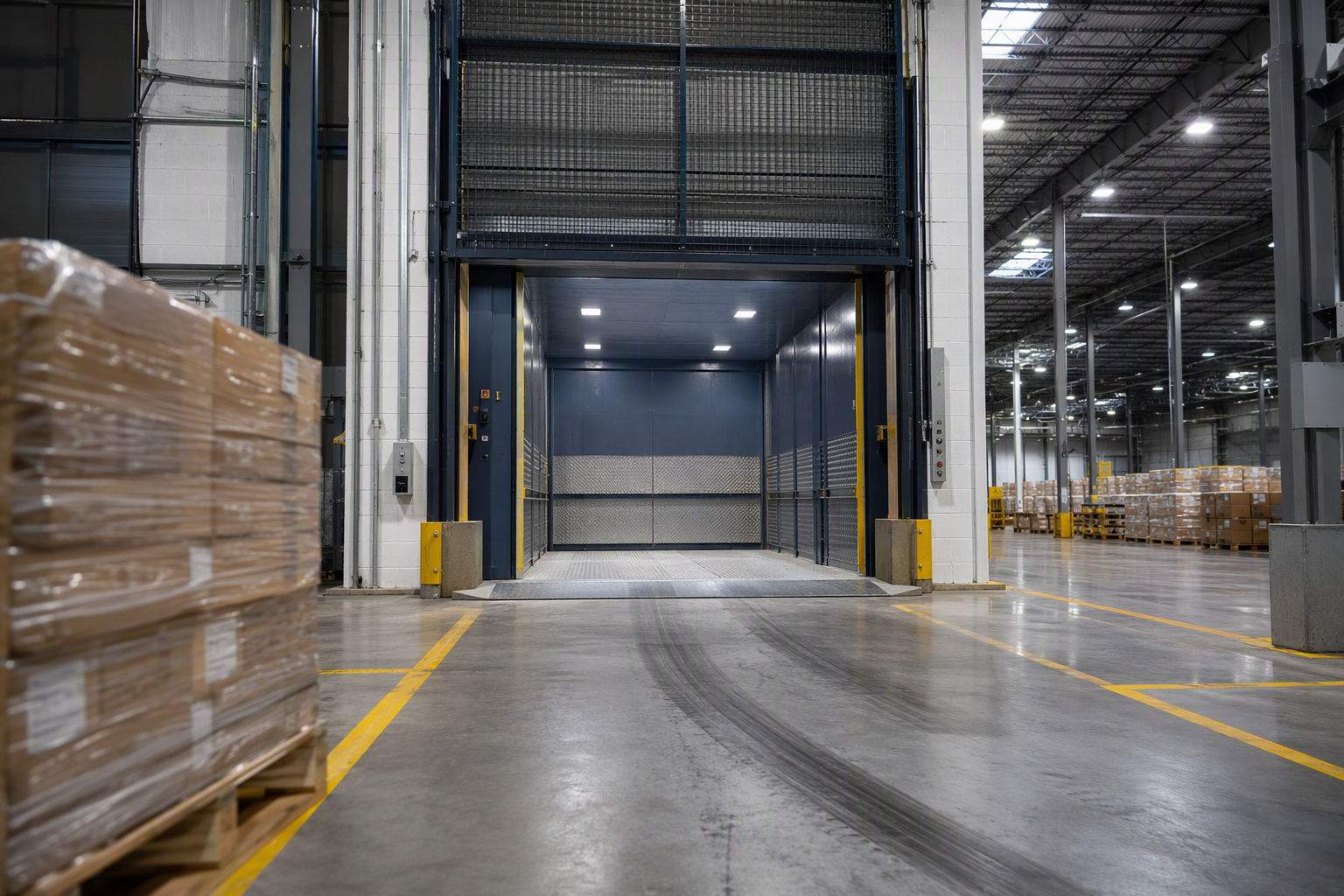
Florida warehouses, distribution centers, and industrial facilities operate in a compliance environment that is often more complex than it first appears. Whether a facility uses a traditional freight elevator to move palletized loads between floors or relies on a vertical reciprocating conveyor (VRC) to transfer goods through a mezzanine opening, distinct regulatory frameworks apply — and the consequences of non-compliance range from operational shutdowns to serious liability exposure. This page breaks down exactly what applies, what inspectors check, and how to keep industrial vertical transport equipment operating legally in Florida in 2026.
—
What Florida Law Governs Freight Elevators in Warehouses and Industrial Buildings?
Freight elevators in Florida warehouses are regulated under Chapter 399, Florida Statutes (the Elevator Safety Act), enforced by the Florida Department of Business and Professional Regulation (DBPR), Division of Hotels and Restaurants, Bureau of Elevator Safety. The implementing technical rules are found in Chapter 61C-5, Florida Administrative Code, which adopts the ASME A17.1/CSA B44 Safety Code for Elevators and Escalators, 2019 edition, effective December 31, 2023.
Under this framework, any freight elevator covered by Chapter 399 requires:
- A state permit — applied for by a registered elevator company — before installation or alteration begins.
- A post-installation inspection by a certified elevator inspector who has no conflict of interest with the permit holder or owner, before the elevator is placed in service.
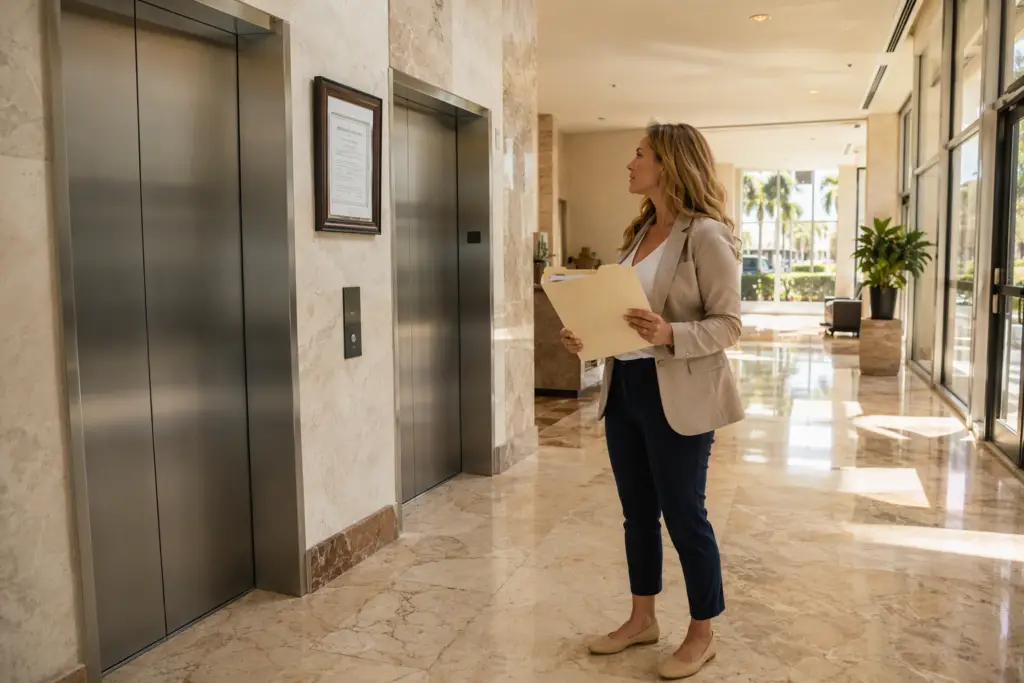
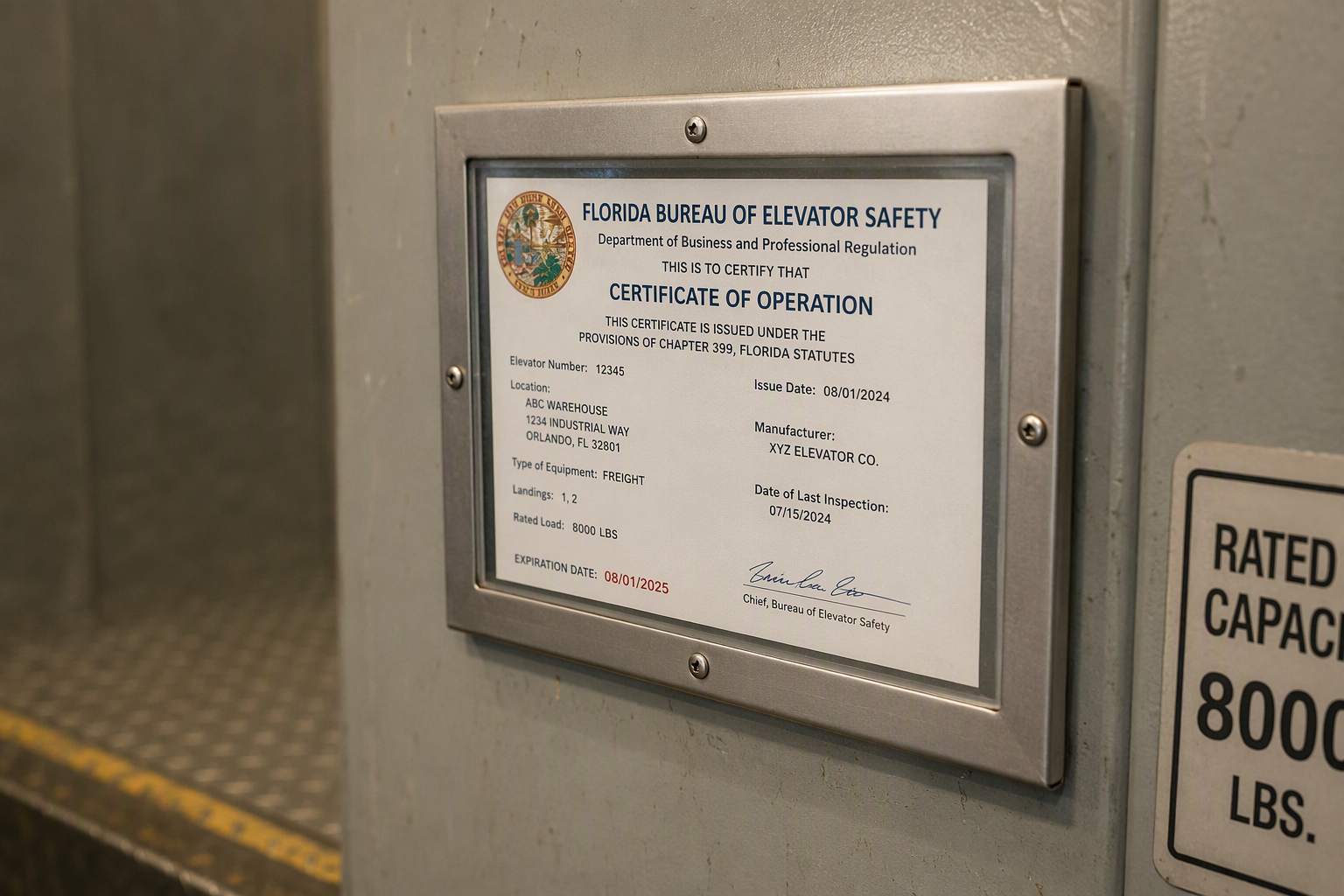
- A valid Florida certificate of operation, renewed on a cycle not to exceed two years, posted in a conspicuous location on the elevator in a frame with a transparent cover.
- Annual inspection by a certified elevator inspector (or by a county or municipality operating under a contract with the state).
- All installation, maintenance, and repair work performed by a Florida-registered elevator company using certified elevator technicians.
Once a certificate of operation is issued, the elevator owner assumes full responsibility for safe operation, proper maintenance, and correction of any code deficiencies identified during inspections.
—
Are Vertical Reciprocating Conveyors (VRCs) Regulated as Elevators in Florida?
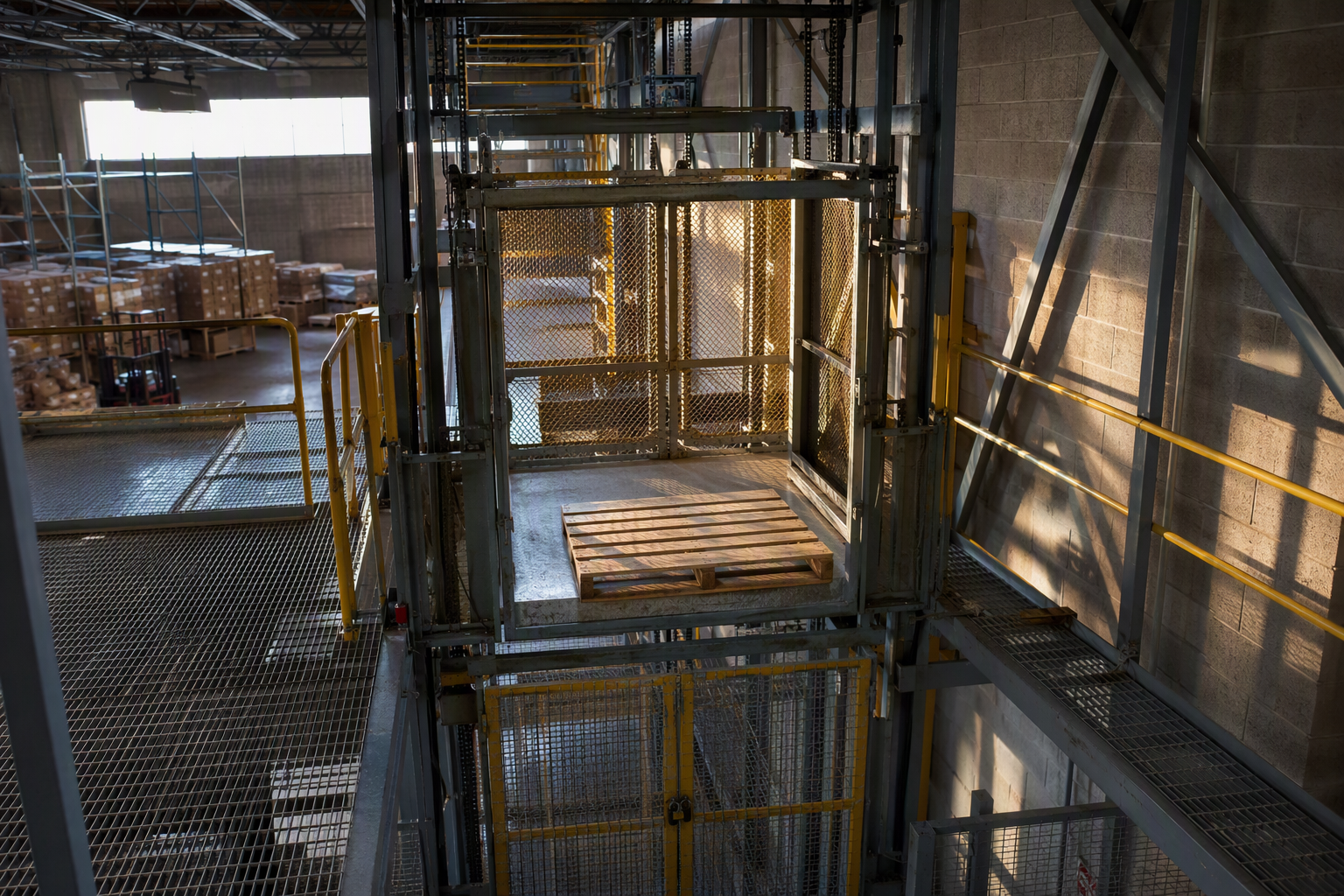
VRCs are not elevators under ASME A17.1 and are generally not regulated under Chapter 399, Florida Statutes. However, they are not regulation-free. VRCs used in Florida warehouses and industrial facilities are subject to:
- ASME B20.1, Safety Standard for Conveyors and Related Equipment — governs mechanical design, guarding, and safe operation of VRCs as material-handling equipment.
- OSHA General Industry Standards (29 CFR Part 1910) — covers machine guarding, powered industrial equipment, and related hazards that apply directly to VRC installations in Florida industrial settings.
- Florida Building Code — structural penetrations, mezzanine openings, and guarding requirements for VRC installations are reviewed by local building departments under the Florida Building Code. Facilities in Pompano Beach fall under the Broward County Building Code Division, which enforces Florida’s elevator law through its own inspectors; facilities in Sarasota fall under the Sarasota County or City of Sarasota building authority, as applicable.
The practical distinction matters: a VRC may avoid DBPR certificate-of-operation requirements, but it still requires proper engineering, guarding, and OSHA-compliant operation. Facilities that try to classify a true freight elevator as a VRC to avoid state oversight face serious risk, since DBPR and local AHJs (authorities having jurisdiction) evaluate the actual function and design of the equipment.
Axxiom Elevator Florida helps warehouse and industrial clients in Pompano Beach and Sarasota correctly classify their vertical transport equipment from the start, avoiding costly reclassification orders down the line.
—
What Does ASME A17.1-2019 Require Specifically for Freight Elevators?
The ASME A17.1 Safety Code for Elevators and Escalators includes dedicated provisions for freight elevators that differ from passenger elevator requirements. Key areas that apply to Florida warehouse and industrial installations include:
- Rated load and platform area: Freight elevators must be designed, installed, and labeled for a specific rated load. Overloading is a code violation and an OSHA hazard.
- Class of loading: ASME A17.1 defines loading classes for freight elevators (general freight loading, motor vehicle loading, industrial truck loading, etc.). The correct class must match actual warehouse operations.
- Hoistway enclosure and doors: Freight hoistways must be fully enclosed, with self-closing and self-locking hoistway doors that meet code-specified strength and interlock requirements.
- Safety devices: Code-required safeties, buffers, governors, and interlocks must be installed and function correctly.
- Capacity signage: Rated load placards must be conspicuously posted inside the car.
- Inspection and testing intervals: Periodic inspections and safety tests must be documented in accordance with the adopted code cycle.
—
Do ADA Requirements Apply to Freight Elevators in Florida Industrial Facilities?
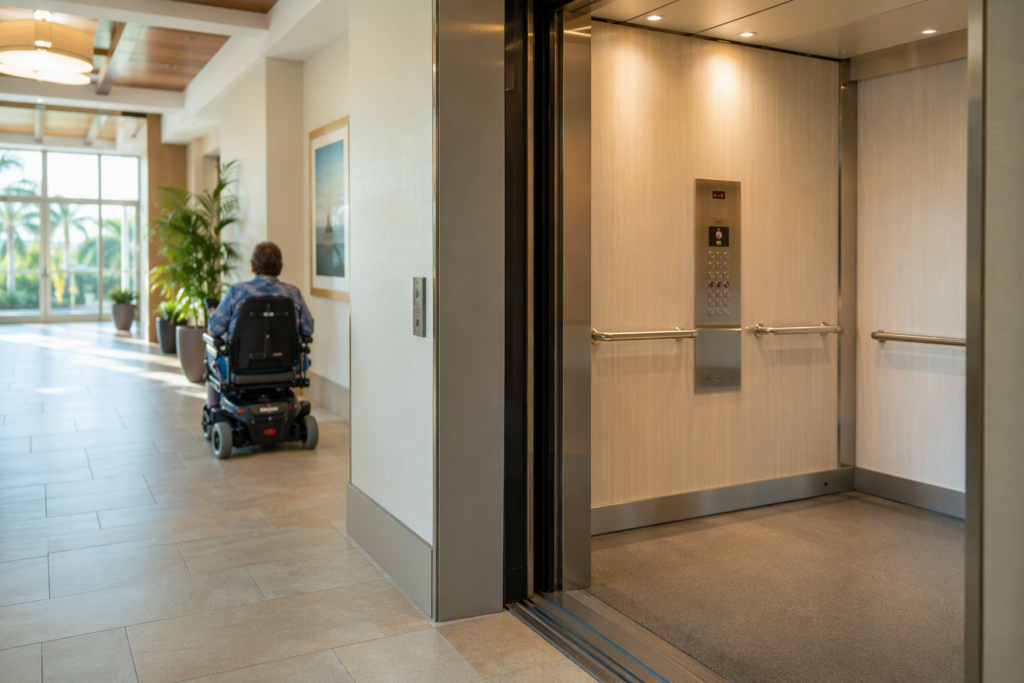
The Americans with Disabilities Act (ADA) requires that new construction and alterations to places of public accommodation and commercial facilities comply with ADA Standards for Accessible Design. For industrial and warehouse facilities that qualify as commercial facilities under the ADA, elevators intended for employee or public use must meet ADA accessibility requirements, including cab dimensions, control panel heights, door timing, and audible/visual signals.
Freight elevators used exclusively for materials — not by employees as a primary means of vertical travel — may qualify for the freight elevator exception under ADA Standards. However, this exception is narrow and fact-specific. If employees routinely use a freight elevator to travel between floors, ADA accessibility features are typically required. Facilities undergoing new construction or significant alteration in Pompano Beach or Sarasota should have their elevator scope reviewed against current ADA Standards before permits are pulled.
—
What Are the Certificate of Operation Requirements for Industrial Elevators in Florida?
Every freight elevator covered by Chapter 399, Florida Statutes, must hold a valid Florida certificate of operation. Key requirements facility managers must understand:
- A certificate of operation is valid for no more than two years.
- Renewal requires a current satisfactory inspection — operating on an expired certificate violates state law.
- The certificate must be posted in a conspicuous location on the elevator in a frame with a transparent cover.
- Any elevator accident must be reported to the state by the certificate of operation holder within five working days.
Facilities in Pompano Beach operate under the oversight of the Broward County Building Code Division, which enforces Chapter 399 through its own elevator inspectors. Facilities in Sarasota operate under DBPR Bureau of Elevator Safety oversight, coordinated with local building authorities.
—
What Permits Are Required Before Installing or Modifying a Freight Elevator in Florida?
Before any freight elevator is installed or altered in a Florida warehouse or industrial building, a state permit must be applied for by a Florida-registered elevator company. This is a hard requirement under Chapter 399, Florida Statutes — no registered company means no permit, and no permit means work cannot legally proceed.
The process follows these steps:
- Engage a Florida-registered elevator company to review the project scope and confirm classification of the equipment (freight elevator vs. VRC).
- The registered elevator company submits permit applications to the DBPR Bureau of Elevator Safety (and to the local AHJ if applicable, such as Broward County Building Code Division for Pompano Beach projects).
- Installation or alteration work is performed exclusively by certified elevator technicians employed by or contracted through the registered company.
- Upon completion, a certified elevator inspector with no conflict of interest with the permit holder or owner conducts the acceptance inspection.
- A satisfactory inspection result allows the certificate of operation to be issued before the elevator is placed in service.
Axxiom Elevator Florida handles permit applications, code-compliant installation coordination, and inspection readiness for warehouse and industrial clients throughout Pompano Beach, Sarasota, and the surrounding Florida markets.
—
What OSHA Requirements Apply to Freight Elevators and VRCs in Florida Warehouses?
OSHA general industry standards under 29 CFR Part 1910 apply to freight elevators and VRCs operated in Florida warehouses and industrial facilities as places of employment. Relevant OSHA requirements address:
- Machine guarding for VRC moving parts and pinch points.
- Lockout/tagout procedures during maintenance of powered vertical transport equipment.
- Powered industrial truck (forklift) interaction with freight elevator loading areas.
- Employee training for safe loading and operation of freight elevators.
- Housekeeping and clear access in elevator and VRC landing areas.
OSHA and DBPR/ASME requirements run in parallel — satisfying one does not excuse non-compliance with the other. Florida facility safety managers should address both regulatory tracks when auditing their vertical transport compliance program.
—
How Often Must Freight Elevators in Florida Warehouses Be Inspected?
Chapter 399, Florida Statutes, requires every elevator or other conveyance covered by the Act to be inspected annually by a certified elevator inspector, or by a county or municipality operating under contract with the state. A limited exemption exists: an elevator that is not an escalator or dumbwaiter, serves only two adjacent floors, and is covered by a service maintenance contract is exempt from the annual inspection requirement while that contract remains in effect. Most multi-floor warehouse freight elevators will not qualify for this exemption.
Beyond the annual inspection, ASME A17.1-2019 requires periodic safety tests at defined intervals — including governor and safety tests and other functional examinations — that must be completed and documented by qualified personnel. Letting either the annual inspection or required periodic tests lapse puts the certificate of operation at risk.
—
Questions Your Inspector Will Ask
Florida-certified elevator inspectors and DBPR representatives routinely raise the following questions when evaluating freight elevators in warehouse and industrial facilities. Facility managers and safety officers should be prepared to answer all of them before an inspection date:
- Is the current certificate of operation posted on the elevator in a transparent-covered frame, and is it within its two-year validity period?
- Has the elevator been inspected annually by a certified elevator inspector, and are the inspection records on file?
- Have all required periodic safety tests under ASME A17.1-2019 been completed and documented?
- Were all installation and alteration permits applied for by a Florida-registered elevator company prior to work beginning?
- Is the rated load placard posted inside the car, and does it match the class of loading actually in use?
- Are all hoistway door interlocks and self-locking mechanisms functioning correctly?
- Have any code deficiencies identified in prior inspections been corrected, and is documentation available?
- Have any elevator accidents or incidents occurred, and were they reported to the state within five working days?
- For VRC installations: Is ASME B20.1-compliant guarding in place at all landing levels, and are OSHA lockout/tagout procedures documented?
- Is the elevator being maintained under a service contract with a Florida-registered elevator company using certified technicians?
—
What Happens If a Florida Warehouse Operates a Freight Elevator on an Expired Certificate?
Operating a freight elevator on an expired certificate of operation is a direct violation of Chapter 399, Florida Statutes. Consequences can include enforcement action by the DBPR Bureau of Elevator Safety, orders to cease elevator operation, and exposure to liability in the event of an incident. Certificate renewal requires a current satisfactory inspection, so a lapsed inspection program and an expiring certificate must both be addressed together — one cannot be fixed without the other.
Axxiom Elevator Florida assists Pompano Beach and Sarasota warehouse operators in tracking certificate expiration dates, scheduling inspections well in advance of deadlines, and coordinating any corrective work required to achieve a satisfactory inspection result.
—
How Should a Warehouse or Industrial Facility Choose a Qualified Elevator Service Provider in Florida?
Under Chapter 399, Florida Statutes, all installation, maintenance, and repair work on covered elevators must be performed by a Florida-registered elevator company. Facilities should verify:
- The company is currently registered with the DBPR and maintains required general liability insurance.
- Technicians working on the equipment hold a current Florida elevator certificate of competency, renewed annually with proof of continuing education.
- The company has documented experience with freight elevator and industrial vertical transport applications, not only passenger elevator service.
- The company can coordinate permit applications, inspection scheduling, and code compliance documentation on the facility’s behalf.
Axxiom Elevator Florida serves warehouse and industrial clients across Pompano Beach, Sarasota, and Florida markets with code-compliant freight elevator service, maintenance programs, and full permit-through-certificate support.
—
Take the Next Step Toward Full Compliance
Florida’s regulatory framework for freight elevators and industrial vertical transport equipment is exacting — and the gap between a compliant facility and an enforcement action is often a missed inspection, an expired certificate, or work performed without a proper permit. Warehouse and industrial operators in Pompano Beach, Sarasota, and across Florida cannot afford to leave these details to chance.
Contact Axxiom Elevator Florida for a free elevator assessment and let a Florida-registered elevator company review your freight elevator compliance status, identify any certificate, inspection, or permit gaps, and develop a clear path to full compliance under Chapter 399, Florida Statutes, and ASME A17.1-2019.
Call Axxiom Elevator Florida today:
Need elevator service you can rely on? Axxiom Elevator Florida is ready to help.