How to Renew an Expired Elevator Certificate of Operation in Pompano Beach, Florida
An expired certificate of operation is one of the most urgent compliance issues a building owner or property manager in Pompano Beach can face. Florida law requires that every elevator in public or commercial use hold a valid certificate before the conveyance is operated. Once that certificate lapses, continued operation exposes the building owner to fines, liability, and mandatory shutdown orders. This guide walks through every step of the renewal process, the regulations that govern it, and what property owners should expect in 2025 and 2026.
What Governs Elevator Certificates of Operation in Florida?
Elevator regulation in Florida operates under a dual framework. At the state level, the Florida Department of Business and Professional Regulation (DBPR), through its Division of Hotels and Restaurants, administers elevator safety under Florida Statutes Chapter 399. At the federal technical level, Florida adopts the ASME A17.1 Safety Code for Elevators and Escalators and ASME A17.3 Safety Code for Existing Elevators and Escalators as the baseline technical standards for construction, installation, and maintenance requirements.
In Pompano Beach specifically, the local Authority Having Jurisdiction (AHJ) — Broward County’s Building Division — may coordinate with the state on permitting and plan review, but the certificate of operation itself is a state-issued document administered through DBPR. Property owners should interface with both the DBPR and Broward County when their certificate has lapsed.
Workplace safety obligations for elevator equipment also fall under federal OSHA standards, particularly for elevator service employees performing maintenance or modernization work on the equipment during the renewal process.
What Is a Certificate of Operation and Why Does It Expire?
A certificate of operation (sometimes called a certificate of inspection) is the document issued by the DBPR confirming that an elevator has passed a required periodic inspection and is legally authorized to carry passengers or freight. Florida Statutes Chapter 399 requires that these certificates be renewed annually through a state-approved inspection. The certificate expires on a fixed date, and operating an elevator without a valid certificate — even for a single day — is a violation of Florida law.
Certificates typically lapse for one of several reasons: the annual inspection was not scheduled in time, the elevator failed inspection and violations were not corrected before the expiration date, administrative paperwork was not submitted correctly, or the property changed ownership without a transfer of compliance documentation.
How Do I Renew an Expired Certificate of Operation Step by Step?
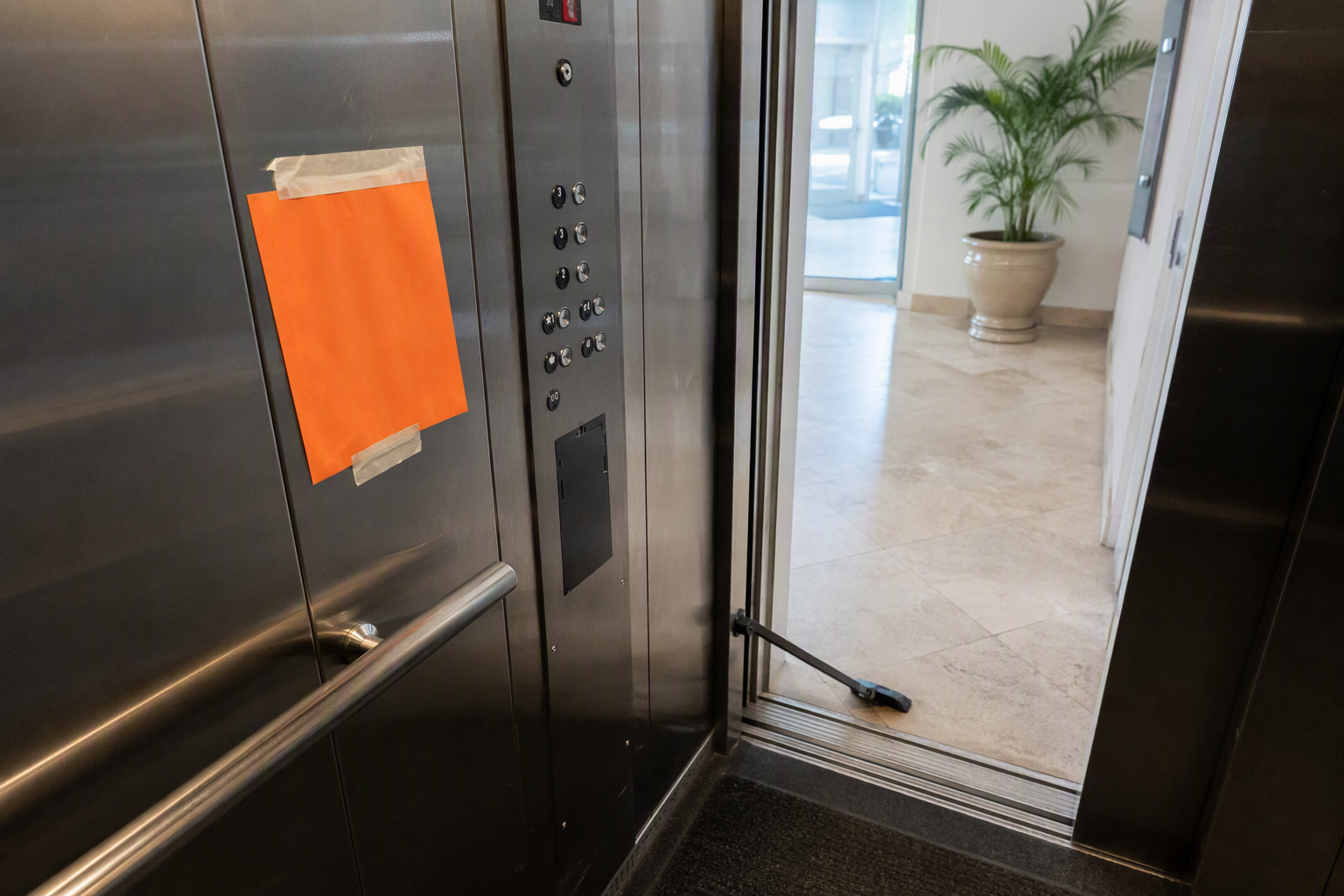
- Take the elevator out of service immediately. Once a certificate has expired, continued passenger operation is prohibited under Florida law. Post an “Out of Service” notice on the elevator and restrict access to prevent unauthorized use and reduce liability exposure.
- Review the previous inspection report. Obtain the most recent inspection report from the DBPR or your records. Identify any violations or deficiencies that were cited. These must be corrected before a re-inspection can result in certificate issuance.
- Engage a Florida-licensed elevator contractor. Corrections to cited violations must be performed by a contractor licensed under Florida Chapter 399. A qualified contractor will assess the equipment, perform necessary repairs or modernization work, and document all corrective actions.
- Schedule a re-inspection with a Florida-licensed elevator inspector. Contact a DBPR-licensed third-party elevator inspection company or the DBPR directly to schedule an inspection. The inspector must be licensed under Florida law and authorized to perform certificate-of-operation inspections.
- Pass the inspection. The inspector will evaluate the elevator against the applicable ASME A17.1 and ASME A17.3 standards and Florida-specific requirements. All previously cited deficiencies must be resolved. New deficiencies discovered during this inspection must also be addressed, potentially requiring a second re-inspection.
- Submit the renewal application and fee to the DBPR. Following a successful inspection, submit the completed renewal application to the Florida DBPR along with the applicable inspection report and renewal fee. The DBPR processes the application and issues the updated certificate of operation.
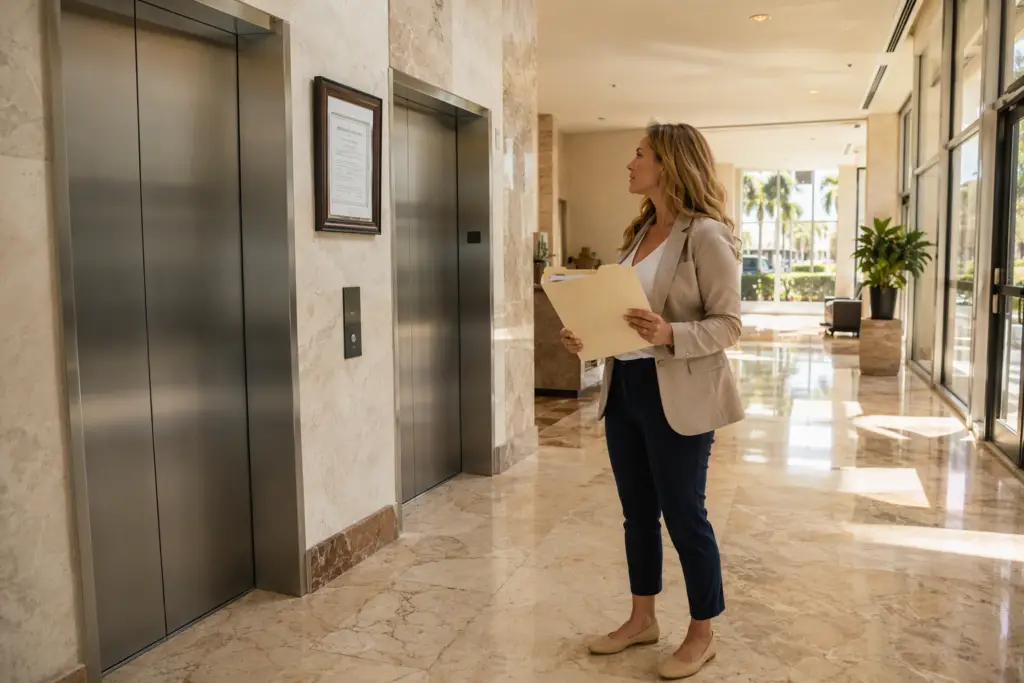
- Receive and post the certificate. Once the DBPR issues the renewed certificate, it must be posted in or near the elevator as required by Florida law. The elevator may resume normal operation only after this certificate is posted and valid.
- Notify Broward County if required. Depending on the specific circumstances — particularly if violations required permitted repair or replacement work — notify the Broward County Building Division and close out any required permits.
How Long Does the Renewal Process Take After Expiration?
The timeline for renewing an expired certificate depends on several variables and cannot be stated as a fixed number of days. The primary factors that determine duration include the severity and number of outstanding violations, the availability of parts or components needed for repairs, the contractor’s scheduling capacity, and the DBPR’s current processing times for inspection scheduling and application review.
Minor administrative lapses — where the elevator is mechanically sound and only paperwork is overdue — may resolve relatively quickly once an inspection is scheduled and completed. More complex situations involving multiple mechanical violations, required component replacements, or disputes over code applicability can extend the process significantly. Property owners should anticipate and plan for a minimum of several weeks in most cases involving any corrective work.
What Does It Cost to Renew an Expired Certificate of Operation?
Renewal costs in Pompano Beach and throughout Florida vary based on elevator type, the extent of required repairs, the inspection fee charged by the licensed inspector or inspection company, and the DBPR renewal filing fee. The DBPR publishes its fee schedule, and building owners should consult the DBPR website or contact the agency directly for current fee amounts, as fee schedules are subject to legislative change.
Beyond the state fee, the largest cost variables are typically: contractor labor for corrective repairs, parts or components requiring replacement to meet current ASME A17.3 requirements for existing elevators, third-party inspection fees, and any required permit fees through Broward County. Older elevators with deferred maintenance histories tend to carry higher remediation costs than well-maintained equipment experiencing only an administrative lapse.
What Violations Commonly Prevent Certificate Renewal?
Certain deficiency categories frequently appear in Florida elevator inspections and are among the most common reasons certificates cannot be renewed without remediation. These include:
- Safety device failures: Malfunctioning door interlocks, broken governor mechanisms, or non-functional emergency stopping systems are automatic re-inspection triggers under ASME A17.1.
- Code upgrade requirements: Older elevators may be required to retrofit certain components to meet updated ASME A17.3 retroactive safety requirements that apply to existing installations.
- Emergency communications: Failure of the in-car emergency phone or communication system is a common violation, and requirements have been reinforced under both ASME standards and ADA accessibility mandates.
- Lighting and signage deficiencies: Inadequate cab lighting, missing floor designations, or improper emergency lighting are frequently cited items.
- Hydraulic system issues: For hydraulic elevators common in low-rise Pompano Beach commercial buildings, oil leaks, pressure relief valve malfunctions, and deteriorating hydraulic lines are significant inspection failure points.
- Machine room conditions: Improper storage in machine rooms, inadequate lighting, or blocked access — all violations of ASME requirements — can result in inspection failure even when the elevator mechanism itself is sound.
Are There Penalties for Operating an Elevator with an Expired Certificate in Pompano Beach?
Yes. Under Florida Statutes Chapter 399, operating a conveyance without a valid certificate of operation exposes the owner or operator to civil penalties assessed by the DBPR. Beyond state penalties, operating an uncertified elevator creates significant premises liability exposure. If a passenger is injured on an elevator that lacked a valid certificate, the absence of the certificate is a direct indicator of negligence in any subsequent civil litigation. Insurance carriers may also deny coverage for incidents occurring during a period of certificate lapse. Broward County code enforcement may separately cite properties for maintaining non-compliant elevator equipment visible to building inspectors.
Does ADA Compliance Affect the Renewal Process?
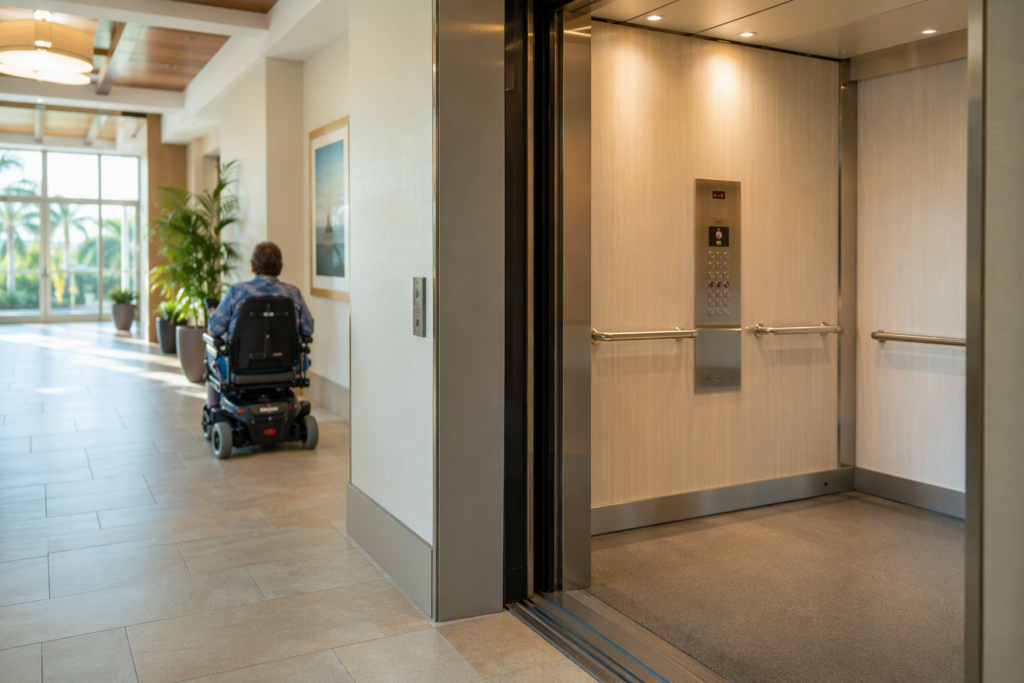
The Americans with Disabilities Act (ADA) establishes accessibility requirements for elevators in public accommodations and commercial facilities. While ADA compliance is technically a separate legal obligation from the Florida DBPR certificate of operation, the two intersect during renovation or modernization projects. When corrective work required for certificate renewal involves alterations to the elevator cab, controls, or related equipment, ADA requirements for accessible design — including control height, braille markings, audible signals, and door timing — may be triggered for the altered elements. Building owners pursuing certificate renewal who also need to modernize equipment should evaluate both frameworks simultaneously to avoid a second round of costly modifications.
What Is the Difference Between a Renewal Inspection and a Routine Annual Inspection?
A routine annual inspection occurs before the certificate expires as part of regular compliance maintenance. The renewal inspection following an expiration is substantively similar in scope — the inspector evaluates the same mechanical, safety, and code compliance elements — but it carries higher stakes because the elevator is already out of compliance. In some cases, an inspector performing a post-expiration inspection may apply heightened scrutiny, particularly if the lapse was prolonged or if there is evidence of deferred maintenance. The documentation submitted to the DBPR following a post-expiration inspection must also clearly reflect that all previously cited violations have been resolved.
Can a Property Owner Operate the Elevator While Awaiting Re-inspection?
No. Florida law does not provide a grace period for operating an elevator with an expired certificate while a re-inspection is pending. The elevator must remain out of service until the new certificate is issued. Some property managers confuse the inspection appointment date with authorization to resume service — this is incorrect. The elevator may only resume operation after the certificate is in hand and properly posted. Property managers of multi-story buildings in Pompano Beach should communicate the timeline clearly to tenants and, where necessary, make reasonable accommodations for residents or tenants who depend on elevator access, particularly under ADA obligations for accessible facilities.
How Does Elevator Age Affect the Renewal Process in Pompano Beach?
Pompano Beach has a substantial inventory of mid-century and older commercial and residential buildings, and the elevators in these properties are frequently subject to retroactive requirements under ASME A17.3, which establishes safety requirements for existing installations. As editions of A17.3 are updated and adopted in Florida, older elevators may be required to retrofit components they were not originally built with — such as car door restrictors, firefighters’ emergency operation updates, or seismic provisions where applicable. Building owners whose elevators are 15 years old or older should treat any certificate renewal process as an opportunity to conduct a full compliance gap analysis, since an inspector may cite retroactive requirements that were not enforced in prior inspection cycles.
What Industry Trends Are Affecting Elevator Certificate Compliance in 2025 and 2026?
Several trends are shaping how property owners and elevator service providers approach certificate compliance heading into 2026:
Increased inspection scrutiny: Florida’s DBPR has been modernizing its inspection tracking and enforcement systems. Property owners who have historically relied on informal relationships with inspectors or loose scheduling practices are finding that enforcement is more consistent and documentation requirements are more rigorous.
Aging elevator inventory: A significant portion of Florida’s commercial elevator stock is reaching age milestones at which retroactive code upgrades become unavoidable. This trend is particularly visible in coastal communities like Pompano Beach, where building stock skews older and deferred maintenance has been common.
Connected elevator monitoring: Remote monitoring technology is increasingly being adopted by building owners and elevator service contractors. Systems that provide real-time alerts on equipment performance and maintenance needs reduce the risk of unexpected failures that lead to failed inspections or certificate lapses.
Supply chain normalization: Following extended lead times for elevator components in prior years, parts availability has generally improved entering 2025–2026, which should reduce the timeline for completing corrective repairs required during the renewal process.
ADA enforcement awareness: Building owners are increasingly aware that accessibility deficiencies on elevator equipment can draw separate regulatory attention from the DBPR process. The convergence of ASME code compliance and ADA accessibility in elevator modernization projects is driving more comprehensive scope in remediation work.
How Can Axxiom Elevator Florida Help with Certificate Renewal in Pompano Beach?
Axxiom Elevator Florida provides data-driven elevator services across Florida, including the Pompano Beach and Broward County market. When a certificate of operation has expired, building owners benefit from working with a service provider that understands both the DBPR renewal process and the technical requirements of ASME A17.1 and A17.3 as adopted in Florida.
Axxiom Elevator Florida approaches certificate renewal engagements by first conducting a thorough assessment of the elevator’s current condition against all applicable code requirements, then developing a prioritized remediation plan that addresses inspection-critical items first to minimize the out-of-service period. The team coordinates directly with licensed inspectors and assists with the DBPR documentation process to support an efficient renewal outcome.
For property owners navigating the renewal process for the first time, or those dealing with complex violation histories on older equipment, working with a knowledgeable Florida elevator contractor can reduce the time the elevator sits out of service and minimize the risk of a second failed inspection.
Quick Reference: Key Terms in Florida Elevator Certificate Renewal
| Term | Definition in Florida Context |
|---|---|
| Certificate of Operation | State-issued document from DBPR authorizing elevator operation after passing a required periodic inspection under Florida Statutes Chapter 399 |
| DBPR | Florida Department of Business and Professional Regulation — the state agency that issues, tracks, and enforces elevator certificates of operation |
| AHJ (Authority Having Jurisdiction) | Local government body (e.g., Broward County Building Division) with authority over permitting and code enforcement for elevator work |
| ASME A17.1 | ASME Safety Code for Elevators and Escalators — applies to new installations and is the primary technical standard adopted in Florida |
| ASME A17.3 | ASME Safety Code for Existing Elevators and Escalators — establishes retroactive safety requirements for existing elevator installations |
| Violation / Deficiency | A condition identified during inspection that does not meet applicable code requirements; must be corrected before a certificate is issued or renewed |
Summary: What Every Pompano Beach Property Owner Should Know
Renewing an expired elevator certificate of operation in Pompano Beach is a mandatory, multi-step process governed by Florida state law and administered by the DBPR. The elevator must be taken out of service immediately upon expiration, all violations must be corrected by a licensed Florida elevator contractor, a licensed inspector must confirm compliance, and the DBPR must issue the renewed certificate before the elevator returns to service. The applicable technical benchmarks are the ASME A17.1 and A17.3 codes, and accessibility requirements under the ADA may also be implicated if modernization work is performed. Proactive maintenance and annual inspection scheduling remain the most effective strategies for avoiding certificate lapses and their associated costs and liability exposure.
Get Your Elevator Back in Compliance
An expired certificate of operation creates real legal, financial, and safety risk for Pompano Beach property owners. Axxiom Elevator Florida’s team provides a structured, code-informed approach to getting elevators through the Florida DBPR renewal process efficiently and correctly.
Contact Axxiom Elevator Florida for a free elevator assessment — call today.
Need elevator service you can rely on? Axxiom Elevator Florida is ready to help.