How Do I Choose Between Keeping My Old Elevator Controller or Replacing It During a Modernization?
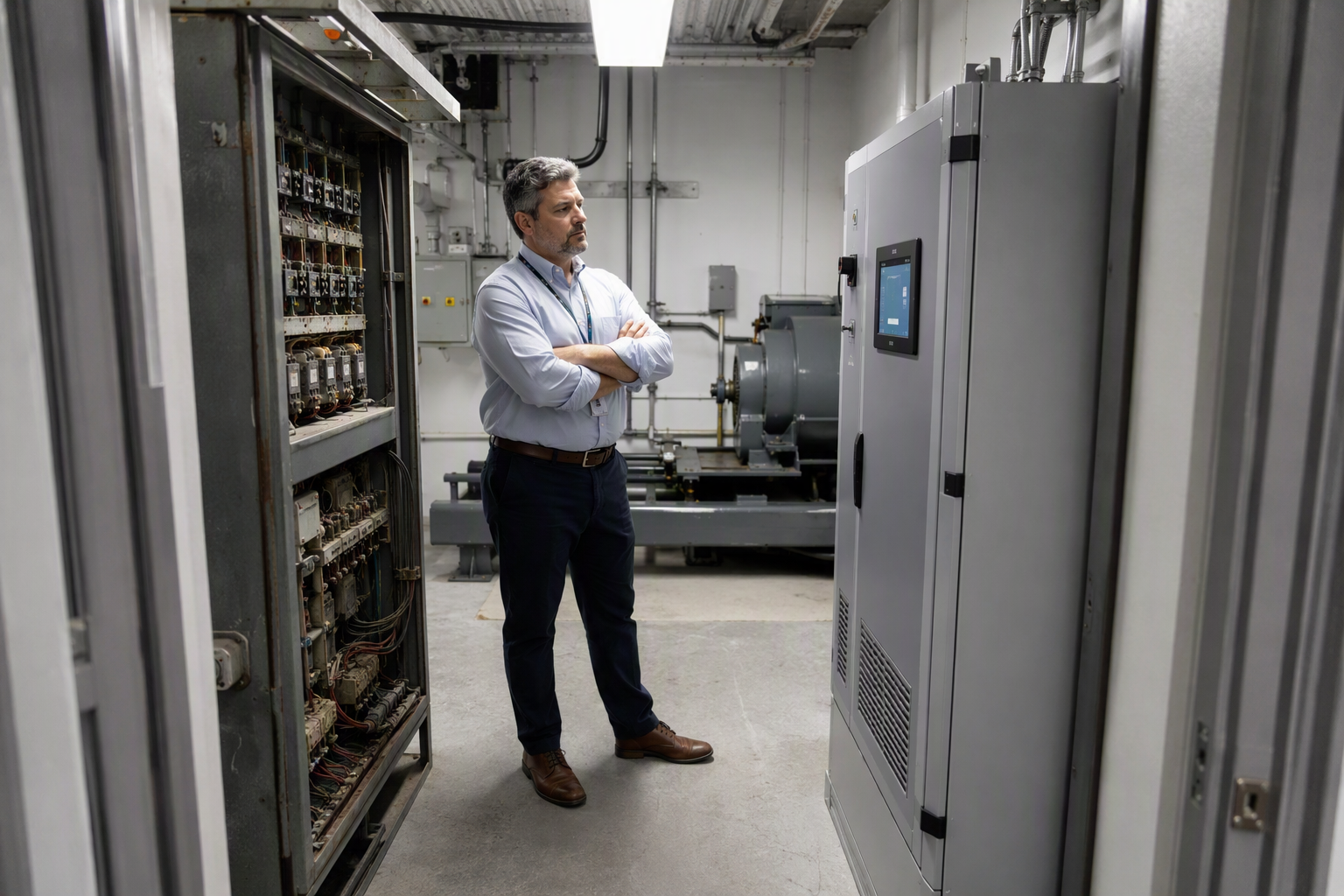
Deciding whether to keep or replace an elevator controller is one of the most consequential choices a building owner faces during a modernization project. The controller is the brain of any elevator system — it governs motion, safety circuits, door operation, dispatching, and communication with every other component. Making the wrong call can result in persistent reliability problems, failed inspections, hidden liability, and escalating costs. This FAQ hub page covers every dimension of that decision, from compliance to cost to timeline, so building owners and facility managers in Pompano Beach, FL and Sarasota, FL can make a fully informed choice.
What Exactly Does an Elevator Controller Do, and Why Does It Matter So Much?
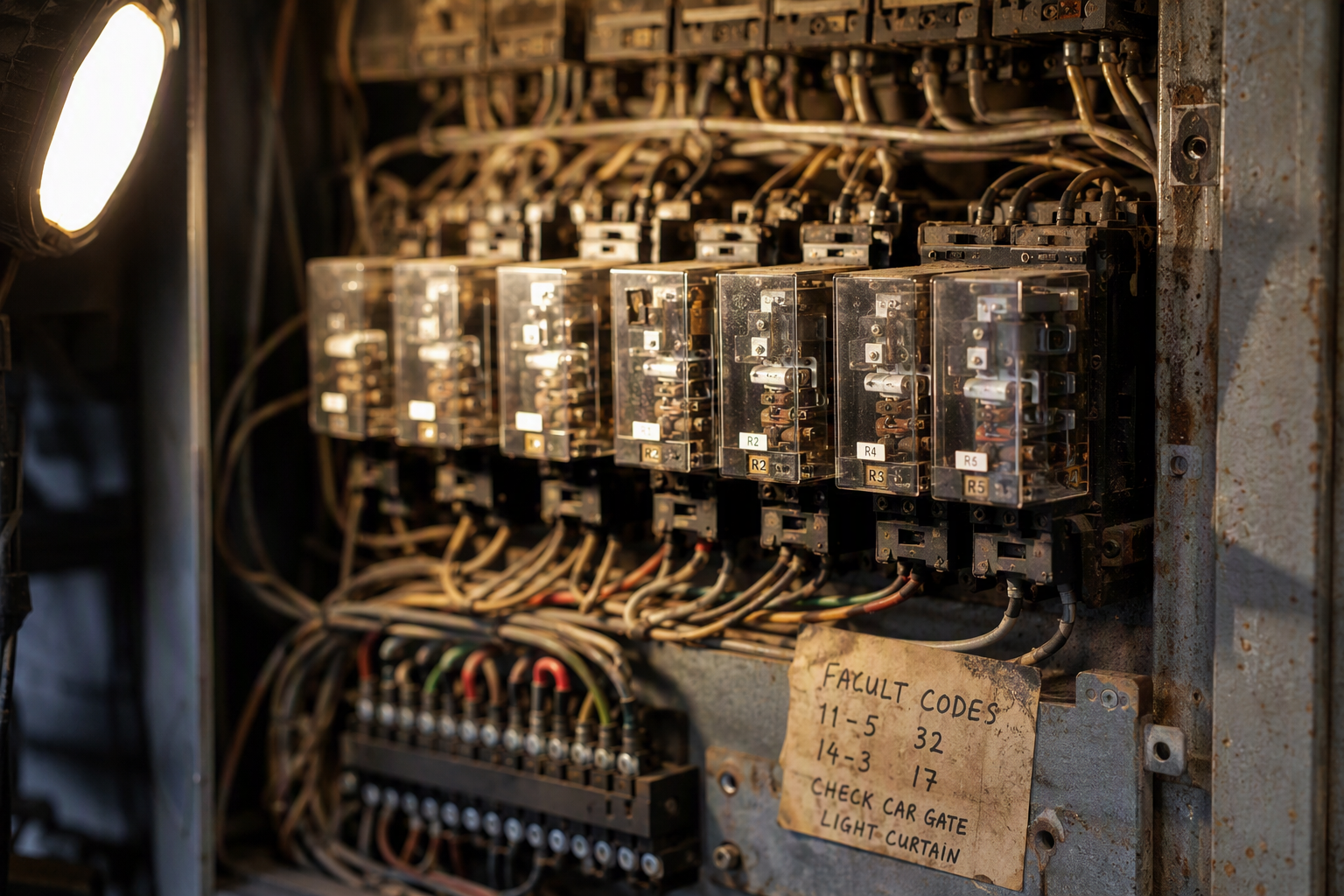
The elevator controller is the central processing and relay system that governs every operational function of the elevator, from floor-to-floor travel logic and speed profiling to door timing, safety chain monitoring, and fault diagnostics.
Modern solid-state controllers manage drive systems, emergency lighting, two-way communication, and energy optimization simultaneously. Legacy relay-logic controllers, by contrast, operate through electromechanical relays that are prone to wear, difficult to diagnose, and increasingly impossible to source for repair. When a controller fails or behaves erratically, every downstream component — doors, drive, safeties — can be affected. This is why its condition and compatibility sit at the center of every modernization decision.
What Are the Most Common Signs That an Elevator Controller Should Be Replaced?
A controller should be replaced when it shows recurring faults, when manufacturer support has ended, when replacement parts are no longer available through standard supply channels, or when it cannot communicate with modern code-required safety and monitoring systems.
Specific warning signs include: nuisance tripping of safety relays, erratic leveling, doors that open mid-travel, inability to interface with current fire service or emergency lowering requirements, persistent fault codes that technicians cannot clear, and heat-related failures. Controllers that use older relay logic panels without programmable logic controller (PLC) architecture are particularly vulnerable because each relay represents an individual point of failure. When a building’s maintenance logs show the same controller component being serviced repeatedly within a short window, that pattern signals systemic decline rather than isolated incidents.
When Is It Acceptable to Keep the Existing Controller During Modernization?
Retaining an existing controller is acceptable when it is manufacturer-supported, fully functional, code-compliant under both ASME A17.1 Safety Code for Elevators and Escalators and applicable Florida requirements, and when a qualified elevator professional confirms it can integrate reliably with new drive, cab, and safety components.
This scenario most commonly applies to controllers that are less than roughly ten to fifteen years old, still listed by the manufacturer’s active support program, and already equipped with programmable solid-state architecture. A partial modernization — for example, replacing the drive unit, cab interior, and doors while retaining a functioning modern controller — can be a legitimate cost-management strategy when the controller itself is not the source of problems. However, this determination should never be made without a professional condition assessment, because compatibility between a retained controller and new components must be verified at the engineering level.
What Does ASME A17.1 and A17.3 Require Regarding Controller Compliance in Florida?
Under the ASME A17.1 Safety Code for Elevators and Escalators (new installations) and ASME A17.3 Safety Code for Existing Elevators and Escalators (existing equipment), controllers must meet specific safety circuit, wiring, grounding, and protective device standards.
Florida adopts the ASME elevator codes through the Florida Building Code and enforces them through the Bureau of Elevator Safety within the Florida Department of Business and Professional Regulation (DBPR). When a modernization triggers a code upgrade evaluation, the Authority Having Jurisdiction (AHJ) — in most Florida counties the local building department or the state elevator safety office — will review whether the retained or replaced controller meets the applicable edition of ASME A17.1 or A17.3. If an existing controller cannot meet those requirements, replacement is not optional. Building owners in Pompano Beach and Sarasota should confirm which code edition their AHJ is enforcing in 2026 before finalizing any modernization scope.
How Does ADA Compliance Factor Into the Controller Decision?
Under the Americans with Disabilities Act (ADA), elevator controls, hall call signals, and door timing must meet specific accessibility standards, and a controller modernization or replacement is a triggering opportunity to bring these elements into full compliance.
If a building is undergoing alterations that affect primary function areas, ADA requires that the path of travel — including the elevator — be made accessible to the extent that the cost of the accessibility upgrades does not exceed a defined percentage of the overall project cost. Controller replacement often governs door-open timing, voice annunciator integration, and car call button logic — all of which have direct ADA implications. Retaining an old controller that cannot support ADA-required door timing or accessible communication features may expose a building owner to ongoing civil liability even after a modernization project is otherwise complete.
What Is the Typical Lifespan of an Elevator Controller?
The functional lifespan of an elevator controller depends heavily on its technology type, operating environment, and maintenance history, though relay-logic controllers generally have a shorter effective service life than modern solid-state or PLC-based systems.
Solid-state and microprocessor-based controllers can remain viable for many years when properly maintained, but manufacturer support — including access to firmware updates, technical documentation, and spare parts — often ends well before the physical hardware fails. Once a manufacturer discontinues support for a controller platform, the risk profile changes fundamentally: a single failed circuit board or logic card with no available replacement can take an elevator out of service indefinitely. In Florida’s humid coastal climate, particularly in markets like Pompano Beach and Sarasota, corrosion and heat stress can accelerate component degradation and shorten realistic service life further.
How Do I Evaluate Whether Parts Are Still Available for My Existing Controller?
Parts availability should be assessed by contacting the original equipment manufacturer (OEM) directly, checking with independent elevator parts suppliers, and consulting a qualified elevator modernization contractor who can research current supply chain status for the specific model.
Critical components to verify include: main logic boards, relay assemblies (if applicable), door operator interface cards, drive interface modules, and safety relay boards. If the OEM has issued an end-of-life notice for a controller platform, third-party suppliers may still carry some components, but quality and lead times become unpredictable. A controller for which no new or certified remanufactured parts can be reliably sourced is a business continuity risk, particularly in high-traffic buildings such as hotels, medical offices, and residential high-rises common in both Pompano Beach and Sarasota.
What Are the Main Cost Drivers When Comparing Controller Retention vs. Replacement?
The primary cost factors include the upfront cost of a new controller and installation labor, the ongoing maintenance and emergency repair cost of retaining an aging unit, potential downtime costs if the old controller fails, and any compliance-related penalties or required upgrades that retention would still trigger.
| Factor | Retain Existing Controller | Replace Controller |
|---|---|---|
| Upfront Cost | Lower (no hardware purchase) | Higher (new hardware + installation) |
| Ongoing Maintenance Cost | Potentially higher (aging parts, emergency calls) | Lower (modern diagnostics, warranty coverage) |
| Parts Availability Risk | High if OEM support ended | Low (current manufacture, active support) |
| Code Compliance (ASME A17.1/A17.3) | Risky if unit predates current code editions | Full compliance with current edition |
| ADA Compatibility | May not support required features | Supports ADA door timing, annunciators, etc. |
| Remote Monitoring Capability | Typically unavailable on older units | Standard on modern controllers |
| Energy Efficiency | No improvement | Improved through modern drive integration |
| Expected Reliability After Modernization | Uncertain — existing failure patterns may persist | High — new baseline established |
| Inspection Risk | Possible AHJ flags on aging components | Clean inspection record from day one |
| Long-Term Scalability | Limited (no firmware updates, no new features) | High (updateable, expandable platform) |
Building owners should evaluate total cost of ownership over a five-to-ten-year horizon rather than focusing solely on upfront expenditure. An aging controller that generates two or three emergency service calls per year, each requiring extended diagnostics and specialty parts sourcing, can quickly erode any cost savings realized by avoiding replacement.
Does Replacing Just the Drive but Not the Controller Create Compatibility Problems?
Yes — mismatched controller-to-drive communication protocols are among the most common causes of post-modernization performance problems, and any partial modernization plan that combines components from different technology generations must be carefully engineered for compatibility.
Modern variable-frequency drives (VFDs) communicate with controllers using specific serial or digital protocols. An older controller designed for an analog or relay-interface drive may not natively communicate with a new VFD without a custom interface or translator module — and those workarounds can introduce their own reliability and diagnostic challenges. Axxiom Elevator Florida evaluates component-level compatibility as part of its modernization assessment process, ensuring that any combination of retained and replaced components is validated before work begins.
How Does the Florida Bureau of Elevator Safety Inspection Process Affect the Controller Decision?
Florida’s Bureau of Elevator Safety, operating under the DBPR, requires that all elevator modernization work be permitted, inspected, and approved by a licensed elevator inspector, and any non-compliant controller identified during that process must be brought into compliance or replaced before the elevator can return to service.
When a modernization permit is pulled in Florida — required for any work that alters the elevator’s operational, structural, or safety systems — the scope of that permit triggers a review of the entire installation against the applicable code edition. A controller that was previously accepted under an older code edition may face scrutiny when modernization work restarts the inspection cycle. Building owners who are planning modernizations in Broward County (Pompano Beach) or Sarasota County should consult with their elevator contractor and the local AHJ early in the planning process to understand exactly what the inspection will cover relative to the controller.
What Is the Step-by-Step Process for Evaluating Whether to Keep or Replace a Controller?
A structured evaluation process reduces the risk of making a costly assumption in either direction and ensures that the decision is grounded in objective technical and compliance data.
- Collect controller documentation: Gather the original installation records, maintenance logs, fault history, and manufacturer model and serial number information for the existing controller.
- Contact the OEM: Verify whether the controller model is still actively supported, whether firmware updates are available, and whether all critical spare parts remain in production or available through authorized channels.
- Commission a condition assessment: Engage a qualified elevator modernization contractor — such as Axxiom Elevator Florida — to perform a hands-on physical inspection of the controller, reviewing relay condition, board integrity, wiring insulation, terminal connections, and overall thermal history.
- Review the maintenance and fault log: Analyze service records for patterns of recurring faults. Isolated incidents differ from systemic component failure patterns.
- Verify code compliance: Confirm with the local AHJ which edition of ASME A17.1 or A17.3 is being enforced and whether the existing controller meets its requirements — particularly safety circuit and wiring standards.
- Assess ADA compatibility: Determine whether the existing controller can support ADA-required door timing, hall signals, and car communication features for the modernized installation.
- Evaluate component integration: If other components (drive, door operator, safety devices) are being replaced, verify at the engineering level that the existing controller can communicate reliably with all new components without custom workarounds.
- Calculate total cost of ownership: Model the five-to-ten-year cost of retention (including likely emergency service calls, parts sourcing difficulty, and potential downtime) against the upfront and long-term cost of replacement.
- Make a documented recommendation: Based on all of the above, the elevator contractor should provide a written recommendation with supporting rationale that the building owner can retain for project records and insurance purposes.
How Long Does a Controller Replacement Add to a Modernization Project Timeline?
Controller replacement typically adds time to a modernization project for programming, testing, and inspection, but this additional time is generally offset by reduced risk of post-completion callbacks and failed inspections that a problematic retained controller might cause.
A new controller must be programmed and parameterized for the specific elevator installation — floor heights, door timing, safety circuit configuration, dispatch logic, and fire service protocols — before it can be tested. In Florida, the completed installation must then pass a witnessed inspection by a licensed elevator inspector before the elevator returns to service. These steps take time, but they also provide a clean starting point. Retaining a controller that then causes post-modernization problems can ultimately result in longer total downtime than a proper replacement would have required.
What Role Does Remote Monitoring and Diagnostics Play in the Controller Decision?
Modern elevator controllers support real-time remote monitoring and diagnostic connectivity, which can dramatically reduce response time for faults and allow proactive maintenance — capabilities that most legacy controllers cannot provide.
Remote monitoring systems allow elevator service companies to receive fault alerts, review fault history, and in some cases perform diagnostic functions without dispatching a technician to the site. For building owners in Pompano Beach and Sarasota who manage properties with limited on-site maintenance staff, this capability has practical operational value. A legacy controller with no network connectivity or diagnostic output leaves technicians troubleshooting with limited information, increasing both labor time and the likelihood of misdiagnosis. When evaluating the controller decision, the availability of remote monitoring on a replacement unit is a legitimate factor in the long-term value calculation.
What Are the Energy Efficiency Implications of Controller Replacement?
Replacing an older controller in conjunction with a modern variable-frequency drive system can reduce elevator energy consumption by optimizing motor control, reducing standby power draw, and enabling features such as sleep mode and regenerative braking on traction systems.
Older controllers paired with older motor starters or single-speed motors consume significantly more energy than modern VFD-based systems with regenerative capability. While energy savings alone rarely justify a complete controller replacement, they represent a meaningful secondary benefit when replacement is warranted on other grounds. Florida building owners pursuing LEED certification or green building goals for their Pompano Beach or Sarasota properties may also find that documented energy improvements from elevator modernization contribute to their sustainability metrics.
Can a Retained Controller Affect My Building’s Insurance Coverage or Liability Exposure?
Yes — retaining a controller that has documented failure history, is past manufacturer end-of-life, or cannot support current code-required safety functions may affect an insurer’s assessment of risk and could be cited in liability proceedings if an incident occurs.
Insurance underwriters for commercial real estate increasingly evaluate elevator maintenance records and equipment condition as part of property risk assessment. A modernization project that leaves an obsolete controller in place — particularly one with a documented fault history — may not achieve the liability risk reduction that building owners expect from a modernization investment. Building owners should consult with their insurance broker about how the controller decision may affect their coverage terms and consult with legal counsel about their duty-of-care obligations under Florida premises liability standards.
What Questions Should I Ask an Elevator Contractor Before Deciding?
Building owners should ask any prospective elevator contractor a specific set of technical and compliance questions before accepting a recommendation on controller retention or replacement.
Key questions include: Is the existing controller manufacturer actively supporting this model with parts and documentation? Can you provide written confirmation of compatibility between the retained controller and all new modernization components? Which edition of ASME A17.1 or A17.3 does the local AHJ enforce, and does the existing controller comply? Does the existing controller support ADA-required door timing and communication functions? What is the realistic total cost of ownership over five years if we retain versus replace? What warranty coverage comes with a new controller installation? How will the modernization scope change the inspection requirements, and what is the expected permit and inspection timeline with the local AHJ?
Axxiom Elevator Florida provides detailed written assessments covering all of these dimensions as part of its modernization planning services for building owners in Pompano Beach and Sarasota.
Are There Situations Where Replacing the Controller Is Required by Law, Not Just Recommended?
Yes — controller replacement can be legally required when an existing controller fails to meet ASME A17.1 or A17.3 safety requirements, when the AHJ determines that modernization work triggers a code upgrade to the controller, or when the controller cannot support mandatory safety devices required by the applicable code edition.
Florida’s enforcement of the ASME elevator codes means that the AHJ has authority to require that any component — including the controller — be brought into compliance as a condition of approving a modernization permit. This is not discretionary: if the inspector determines that the retained controller cannot support required safety circuit architecture, grounding standards, or mandatory safety features under the current code edition, the permit will not be closed and the elevator will not return to legal operation until compliance is achieved. This reality underscores why the code compliance analysis must be completed before, not after, finalizing modernization scope and budget.
How Do I Choose the Right Replacement Controller for My Elevator?
Selecting the right replacement controller requires matching the controller’s architecture and feature set to the specific elevator type, drive system, building use, and code requirements — a decision that should be made by a qualified elevator modernization contractor, not based on catalog browsing alone.
Key selection criteria include: compatibility with the planned or existing drive system and drive communication protocol; support for all required safety relay and safety circuit configurations under ASME A17.1; door operator interface compatibility; support for Florida-required fire service recall and emergency operation modes; ADA-compatible door timing and communication outputs; remote monitoring and diagnostic connectivity; and manufacturer reputation for long-term parts and software support. The controller manufacturer’s technical support responsiveness and documentation quality also matter significantly for long-term maintainability. Axxiom Elevator Florida works with building owners to specify and install controllers that meet both current code requirements and the practical operational needs of the specific building.
What Happens If I Defer the Controller Decision and Continue Operating?
Deferring the controller decision when an elevator is already showing signs of controller-related problems is a risk management decision with potentially significant consequences, including unplanned downtime, failed inspections, AHJ notices of violation, and in the most serious cases, safety incidents.
Florida elevator law requires that elevators be maintained in safe operating condition at all times. If a state elevator inspector or a licensed elevator inspector identifies a controller-related safety deficiency during a periodic inspection, the elevator can be taken out of service immediately through a violation tag until the deficiency is corrected. For buildings that depend on elevator access — particularly those serving residents or patients with mobility impairments — unplanned shutdowns create both operational and legal exposure. Proactive modernization planning that resolves the controller question on the building owner’s timeline is always preferable to emergency replacement driven by an AHJ enforcement action.
How Can Axxiom Elevator Florida Help Me Make This Decision?
Axxiom Elevator Florida provides comprehensive elevator modernization assessments for building owners in Pompano Beach and Sarasota, including controller condition evaluation, code compliance review, component compatibility analysis, and written modernization recommendations.
The assessment process covers every factor discussed in this guide: OEM support status, parts availability, fault history analysis, ASME A17.1 and A17.3 compliance verification, ADA compatibility review, and total cost of ownership modeling for both retention and replacement scenarios. Axxiom Elevator Florida’s team is positioned to coordinate with the local AHJ in Broward and Sarasota counties to confirm permit and inspection requirements before any scope is finalized, reducing the risk of mid-project surprises. For building owners who have been told by another contractor to simply retain or simply replace the controller without a thorough written assessment, a second opinion from Axxiom Elevator Florida can provide the objective basis needed to make a sound decision.
What Should I Do Immediately If My Elevator Controller Is Already Failing?
If an elevator controller is actively failing — producing recurring faults, causing erratic behavior, or triggering safety circuit shutdowns — the building owner should take immediate steps to protect building occupants and document the situation for regulatory and insurance purposes.
- Take the elevator out of service: If the controller is causing unpredictable behavior, remove the elevator from service immediately to prevent potential occupant injury. Post clear signage at all landings.
- Contact your elevator service contractor: Notify Axxiom Elevator Florida or your contracted elevator service provider immediately. Describe the fault symptoms, frequency, and any error codes displayed.
- Do not attempt to reset and continue operating: Repeatedly resetting a failing controller without diagnosing and resolving the root cause is a safety and liability risk. Each reset that allows an unsafe condition to continue represents a decision point with legal implications.
- Document all fault events: Record the date, time, fault code (if displayed), and circumstances of each failure event. This log is essential for the service contractor’s diagnosis, for insurance purposes, and for potential regulatory review.
- Notify the AHJ if required: Under Florida elevator regulations, certain safety-related shutdowns may trigger notification obligations. Confirm with your elevator contractor whether the specific circumstances require AHJ notification.
- Obtain a written assessment: Request a written condition assessment and recommendation from your elevator contractor documenting the cause of failure, the code compliance status of the controller, and the recommended corrective action.
- Plan emergency or expedited modernization: If controller replacement is indicated, work with your contractor to develop an expedited scope, permit, and installation plan that minimizes total elevator downtime.
Need elevator service you can rely on? Axxiom Elevator Florida is ready to help.