Elevator Service Response Time Requirements for Hotel & Hospitality Properties in Florida
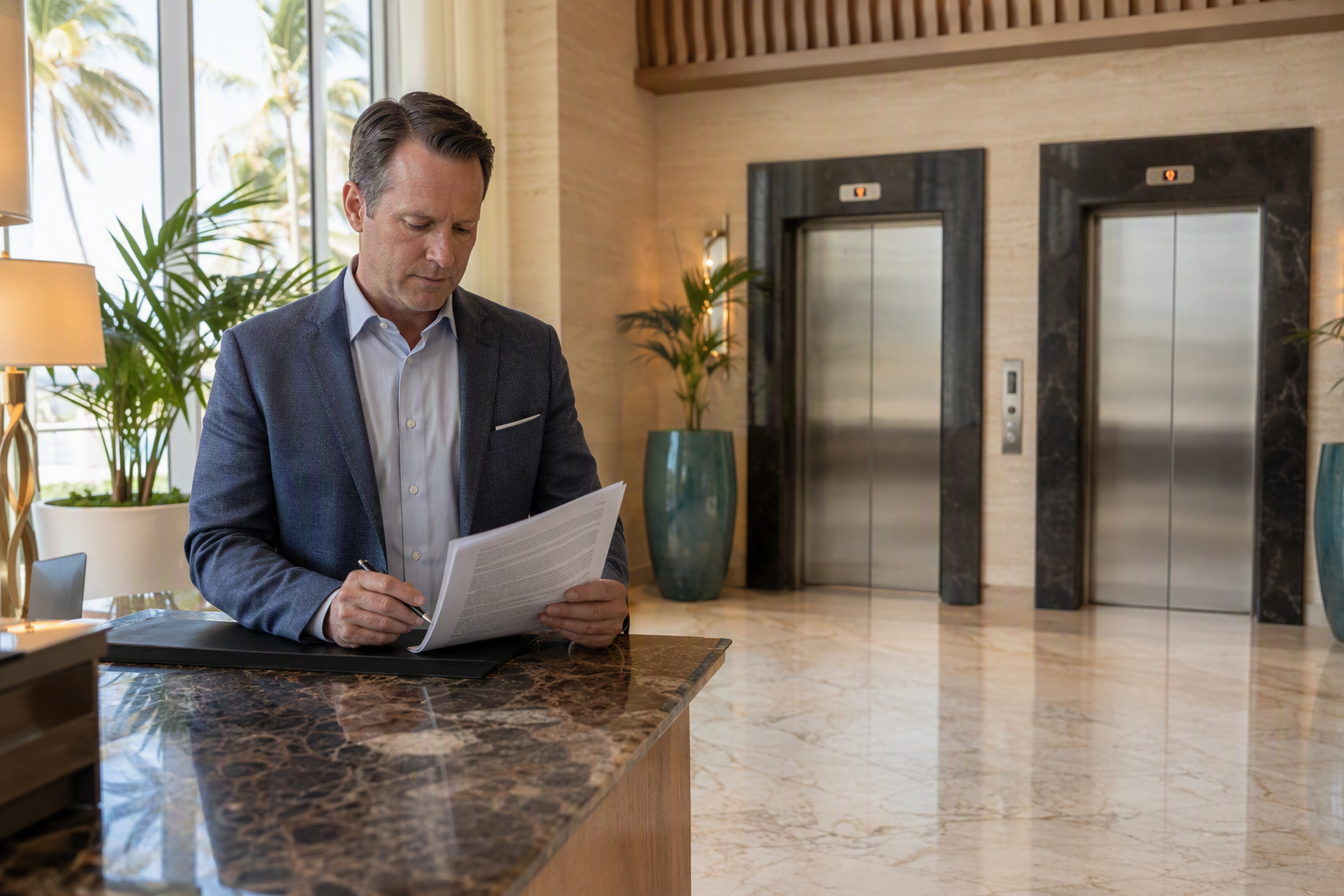
When guests arrive at a hotel in Pompano Beach or Sarasota, a stopped elevator is more than an inconvenience — it is a potential ADA compliance issue, a liability exposure, and a guest-experience failure that can surface instantly in online reviews. The response-time clause in your elevator maintenance contract is one of the most consequential service terms you will negotiate. This page walks hospitality property managers and owners through what to require, what Florida law mandates, and how to evaluate a service provider’s commitments before signing.
What Response Time Should a Hotel Require in an Elevator Maintenance Contract?
There is no single statutory number embedded in Florida elevator law that dictates a maximum emergency response window for private maintenance contracts. What exists is a framework of safety obligations — under the ASME A17.1 Safety Code for Elevators and Escalators and Florida’s adoption of those standards — that collectively make prolonged elevator outages a regulatory and legal risk. Within that framework, hospitality operators should evaluate contract language on three distinct timeframes:
- Emergency (entrapment or complete outage): A response commitment that minimizes guest entrapment duration and restores service or safely evacuates passengers. The shorter this window, the stronger the protection for guests and the property.
- Priority repair (non-entrapment outage during business hours): A timeframe for dispatching a technician when an elevator is out of service but passengers are not trapped.
- Scheduled preventive maintenance visits: The frequency at which a certified technician performs inspections and maintenance to keep the elevator within code compliance.
Axxiom Elevator Florida works with hospitality clients across Pompano Beach and Sarasota to structure contract language that addresses all three tiers — because a contract that only defines emergency response leaves significant operational gaps.
What Does Florida Law Require for Elevator Inspections and Maintenance?
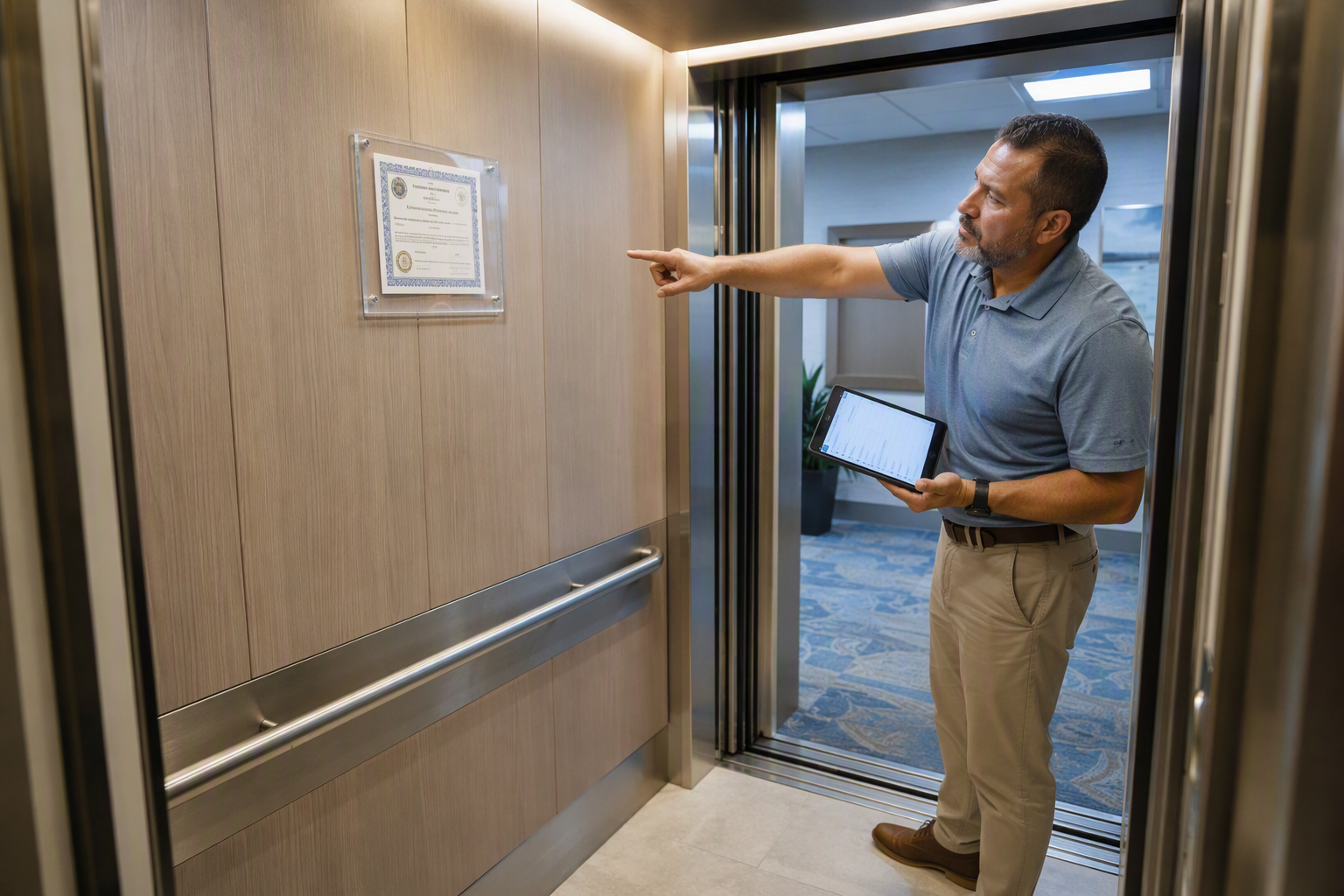
Florida’s elevator safety program is administered under Chapter 399 of the Florida Statutes and implemented by the Florida Department of Business and Professional Regulation (DBPR). Key requirements for hospitality property owners include:
- Annual inspections: All conveyances subject to Chapter 399 must be inspected at intervals required by Florida statute. Operating a conveyance without a valid Certificate of Operation is a violation.
- Certified elevator contractors: Only licensed elevator contractors may perform maintenance, repair, or alteration work on elevators in Florida. Verify that any service provider holds the appropriate Florida state license.
- Compliance with ASME A17.1: Florida has adopted ASME standards by reference. The ASME A17.1 Safety Code for Elevators and Escalators governs design, construction, installation, operation, and maintenance requirements.
- ASME A17.3 for existing installations: Older hotel elevators must meet the ASME A17.3 Safety Code for Existing Elevators and Escalators, which addresses retroactive safety requirements that may affect your property’s compliance posture in 2026.
Because hospitality properties serve the general public around the clock, the DBPR and the local Authority Having Jurisdiction (AHJ) treat elevator outages at hotels with heightened scrutiny compared to private office buildings.
How Does ADA Compliance Affect a Hotel’s Elevator Obligations?
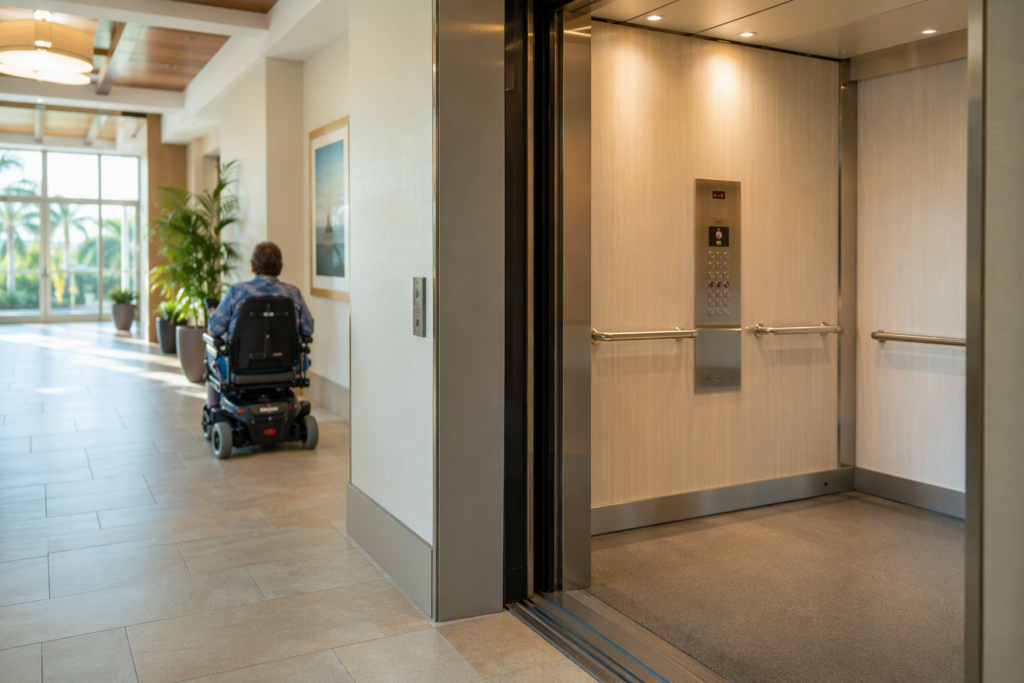
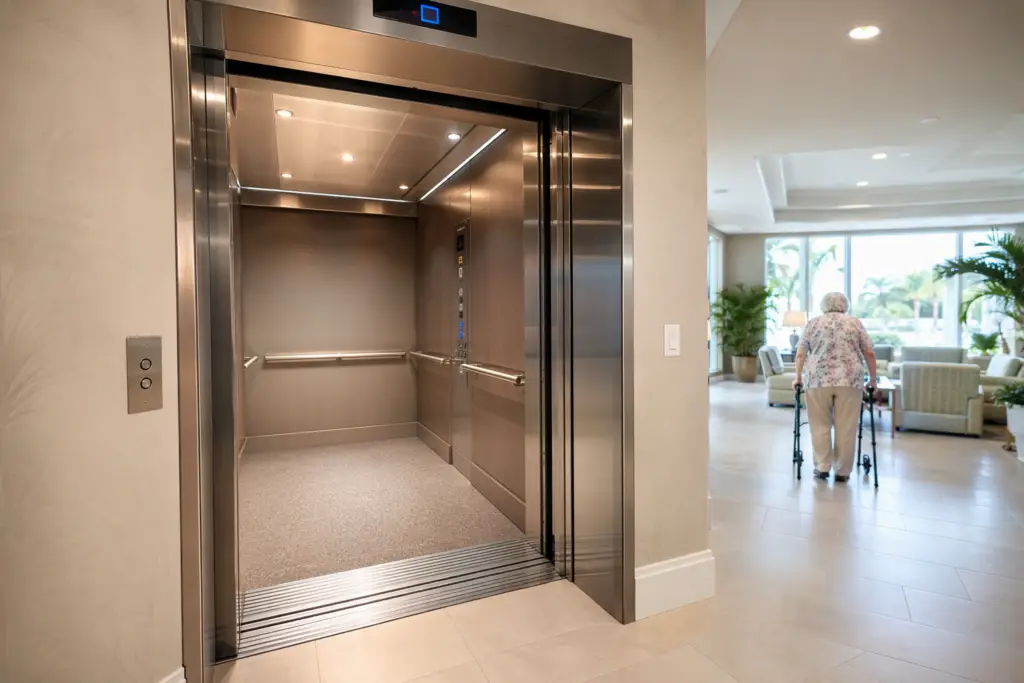
The Americans with Disabilities Act (ADA) requires that elevators in multi-story places of public accommodation — which includes virtually every hotel — remain accessible to guests with disabilities. A prolonged elevator outage can constitute a failure to provide accessible service, exposing the property to civil complaints and potential litigation. Key ADA considerations for hospitality operators include:
- Elevator controls must meet ADA reach-range and signage standards at all times.
- When an elevator is out of service, hotels must evaluate whether an accessible alternative route exists — and document that evaluation.
- Maintenance contracts should require the service provider to restore ADA-compliant operation as a priority, not simply restore mechanical function.
An elevator maintenance agreement that does not distinguish between “mechanically operational” and “ADA compliant” leaves a coverage gap that hospitality properties in Florida cannot afford to ignore.
What Contract Language Specifically Protects a Hotel’s Interests?
Beyond response-time windows, hospitality property managers should scrutinize the following contract elements:
- Defined scope of emergency: Does the contract define what constitutes an “emergency” call versus a “routine” call? Ensure passenger entrapment, complete outage, and door malfunction are all classified as emergencies.
- After-hours and holiday coverage: Hotels operate every day of the year. Confirm whether the quoted response time applies on weekends and holidays or only during standard business hours.
- Parts availability commitments: A technician who arrives promptly but cannot source parts for days creates the same extended outage as a slow response. Ask how the provider stocks common parts for your elevator model.
- Loaner or temporary service provisions: For high-rise properties with multiple elevator banks, ask whether the provider can offer temporary service solutions during extended repairs.
- Documentation and reporting: Florida’s DBPR may request maintenance records during inspections. The contract should obligate the provider to supply written service records after every visit.
- Escalation procedures: What happens if the first-dispatched technician cannot resolve the issue? A tiered escalation clause protects the property from indefinite single-technician troubleshooting.
What Is the Difference Between Preventive Maintenance and Full-Service Contracts?
Hotel managers evaluating elevator contracts typically encounter two broad structures:
- Preventive maintenance (PM) agreements: Cover scheduled inspections and lubrication but exclude parts and repair labor. Response time guarantees may be absent or limited. These agreements carry lower monthly costs but expose the property to unpredictable repair invoices and potentially slower emergency response.
- Full-service (comprehensive) agreements: Cover preventive maintenance, parts, labor, and emergency response within defined timeframes. These agreements provide more predictable budgeting and typically include stronger response-time commitments.
For hospitality properties in high-traffic Florida markets like Sarasota and Pompano Beach — where seasonal tourism intensifies elevator usage — the operational risk profile of a PM-only contract often outweighs the cost savings.
How Many Maintenance Visits Per Year Should a Hotel Elevator Receive?
Maintenance visit frequency is governed by a combination of the ASME A17.1 Safety Code for Elevators and Escalators, Florida’s statutory inspection requirements, and the elevator’s duty classification. High-use hotel elevators — which may cycle thousands of times per day in peak season — may require more frequent preventive maintenance visits than the statutory annual inspection alone. A qualified service provider will assess the specific duty cycle and usage patterns of each unit and recommend a maintenance schedule that keeps the elevator within code and minimizes unplanned downtime.
What OSHA Requirements Apply to Hotel Elevator Maintenance Workers?
When evaluating a service provider, hospitality operators should confirm that the contractor’s technicians work in compliance with OSHA standards governing confined space entry, lockout/tagout procedures, and fall protection. A provider whose technicians work outside OSHA compliance creates liability exposure for the property owner as well as the contractor. Ask any prospective maintenance company to confirm their safety program and incident record before executing a contract.
How Should a Hotel Evaluate Multiple Elevator Service Bids?
Comparing elevator maintenance proposals requires looking beyond the monthly price. A structured evaluation approach protects the property from selecting a low-cost provider that underdelivers on response time and code compliance:
- Confirm the bidding company holds a current Florida elevator contractor license issued by the DBPR.
- Review the contract’s definition of “emergency response” and verify it covers all scenarios relevant to hotel operations, including entrapment, door failure, and complete outage.
- Ask specifically whether response-time commitments apply 24 hours a day, seven days a week, including Florida state holidays.
- Request a sample maintenance log from a comparable property to assess documentation quality.
- Ask how the provider handles ASME A17.3 retrofit requirements for older elevator installations and whether compliance costs are included in the contract or billed separately.
- Confirm whether the contract includes a clause specifying that all work will maintain compliance with the applicable edition of ASME A17.1 and ADA standards.
- Request references from other hospitality properties in Florida — preferably in comparable markets such as Sarasota or Pompano Beach — where seasonal demand creates similar operational pressures.
What Are the Consequences of an Elevator Outage at a Florida Hotel?
An unplanned elevator outage at a Florida hotel carries compounding consequences that extend well beyond the immediate inconvenience:
- Regulatory risk: The DBPR has authority to issue stop-use orders and civil penalties for unsafe or non-compliant conveyances operating without a valid Certificate of Operation.
- ADA exposure: Guests with disabilities denied elevator access may file complaints with the U.S. Department of Justice under the ADA.
- Reputational damage: In the hospitality sector, guest reviews on travel platforms are immediate and lasting. A single elevator outage during peak season can generate negative reviews that affect future booking rates.
- Personal injury liability: Elevator malfunctions that injure guests expose the property owner to premises liability claims. Documented evidence of a compliant maintenance contract and prompt response history is a critical defense element.
Axxiom Elevator Florida helps hospitality clients in Pompano Beach and Sarasota structure maintenance agreements that create a documented compliance record — one that serves as both a regulatory defense and an operational quality standard.
Questions Your Inspector Will Ask
When a Florida DBPR elevator inspector visits a hotel property, the following questions are likely to arise. Property managers should be prepared with documentation and clear answers:
- Is the Certificate of Operation current and posted? Florida requires a valid certificate for each conveyance in operation.
- Who is the licensed elevator contractor of record for this property? The DBPR will verify the contractor’s Florida license status.
- Are maintenance records available for review? Inspectors may request logs of all preventive maintenance visits, repairs, and emergency service calls.
- Have any alterations been made to the elevator since the last inspection? Alterations trigger ASME A17.1 compliance review and may require a new permit and inspection.
- Are all safety devices — including door interlocks, governor, and buffers — functioning per ASME standards? Inspectors test these systems directly.
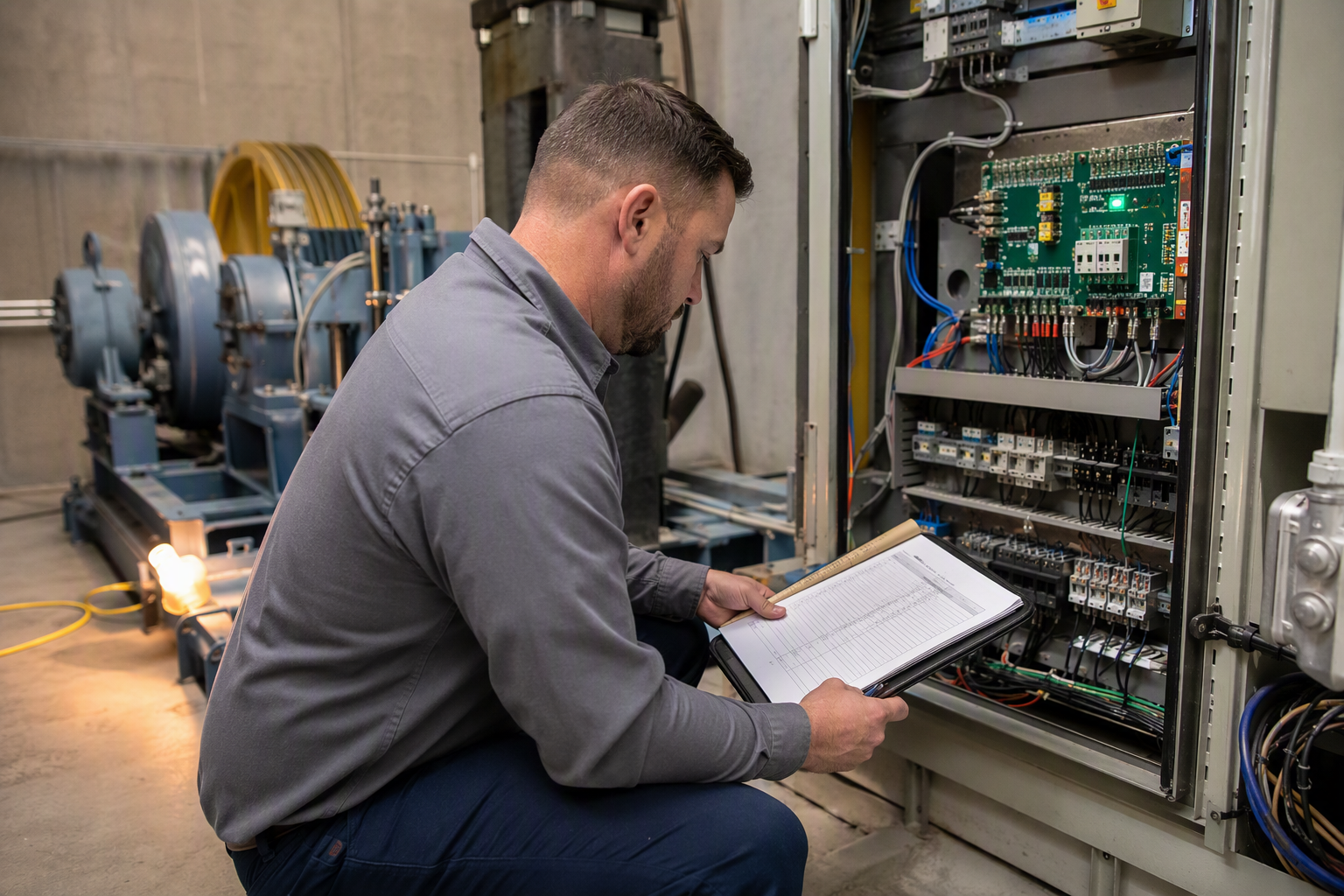
- Is the machine room access restricted and properly maintained? ASME A17.1 specifies machine room conditions including lighting, temperature, and access control.
- Have any ASME A17.3 retroactive requirements been identified and addressed? For older hotel installations, inspectors will assess whether required upgrades have been completed.
- Is there documentation of how entrapment calls are handled and how quickly technicians respond? While not always a formal inspection checklist item, documented emergency response procedures support the property’s safety record.
Why Do Florida’s Hospitality Markets Create Unique Elevator Service Demands?
Hotels in markets like Sarasota and Pompano Beach face seasonal demand swings that push elevators through duty cycles far exceeding what a typical office building experiences. During peak tourism months, a mid-size hotel elevator may operate continuously throughout daylight hours and into the night, accumulating wear that accelerates the need for both scheduled maintenance and responsive emergency service. A maintenance contract calibrated for low-use occupancies will not provide adequate protection for a Florida resort or beachfront hotel property. Axxiom Elevator Florida structures maintenance programs with Florida’s hospitality demand patterns in mind, ensuring that elevator systems serving high-traffic properties receive service intervals appropriate to their actual usage.
What Should a Hotel Do Immediately When an Elevator Goes Out of Service?
- Ensure no passengers are trapped. If entrapment is suspected, do not attempt rescue without a licensed technician — call the elevator service provider’s emergency line immediately.
- Post clear, visible signage directing guests to alternative accessible routes in compliance with ADA obligations.
- Contact the licensed elevator maintenance contractor using the emergency contact specified in the service agreement.
- Log the date, time, and nature of the outage in the property’s maintenance records.
- Notify front desk and management staff so guest communications remain consistent and accurate.
- If the elevator is not restored within a timeframe that leaves accessible routes inadequate for guests with disabilities, consult with legal counsel regarding ADA notification obligations.
- Once service is restored, obtain a written service report from the technician documenting the cause, repair performed, and parts replaced.
- File the service report with the property’s elevator maintenance records in the format required for DBPR review.
Elevator maintenance contracts in the hospitality sector require more precision and more comprehensive coverage than contracts written for lower-risk occupancy types. Florida’s regulatory environment — combining DBPR oversight, ASME standards, and federal ADA requirements — creates a compliance framework that makes poorly drafted service agreements a genuine operational liability for hotel and resort operators.
Axxiom Elevator Florida serves hospitality properties across Pompano Beach, Sarasota, and surrounding Florida markets, providing certified elevator maintenance, inspection support, and contract consulting for properties that cannot afford elevator downtime.
Ready to Review Your Elevator Maintenance Contract?
Contact Axxiom Elevator Florida for a free elevator assessment. Our licensed team will evaluate your current service agreement, identify compliance gaps, and recommend a maintenance program calibrated to your property’s specific duty cycle and Florida regulatory requirements.
Call Axxiom Elevator Florida today:
Need elevator service you can rely on? Axxiom Elevator Florida is ready to help.