Elevator Service in Pompano, FL | Axxiom Elevator Florida
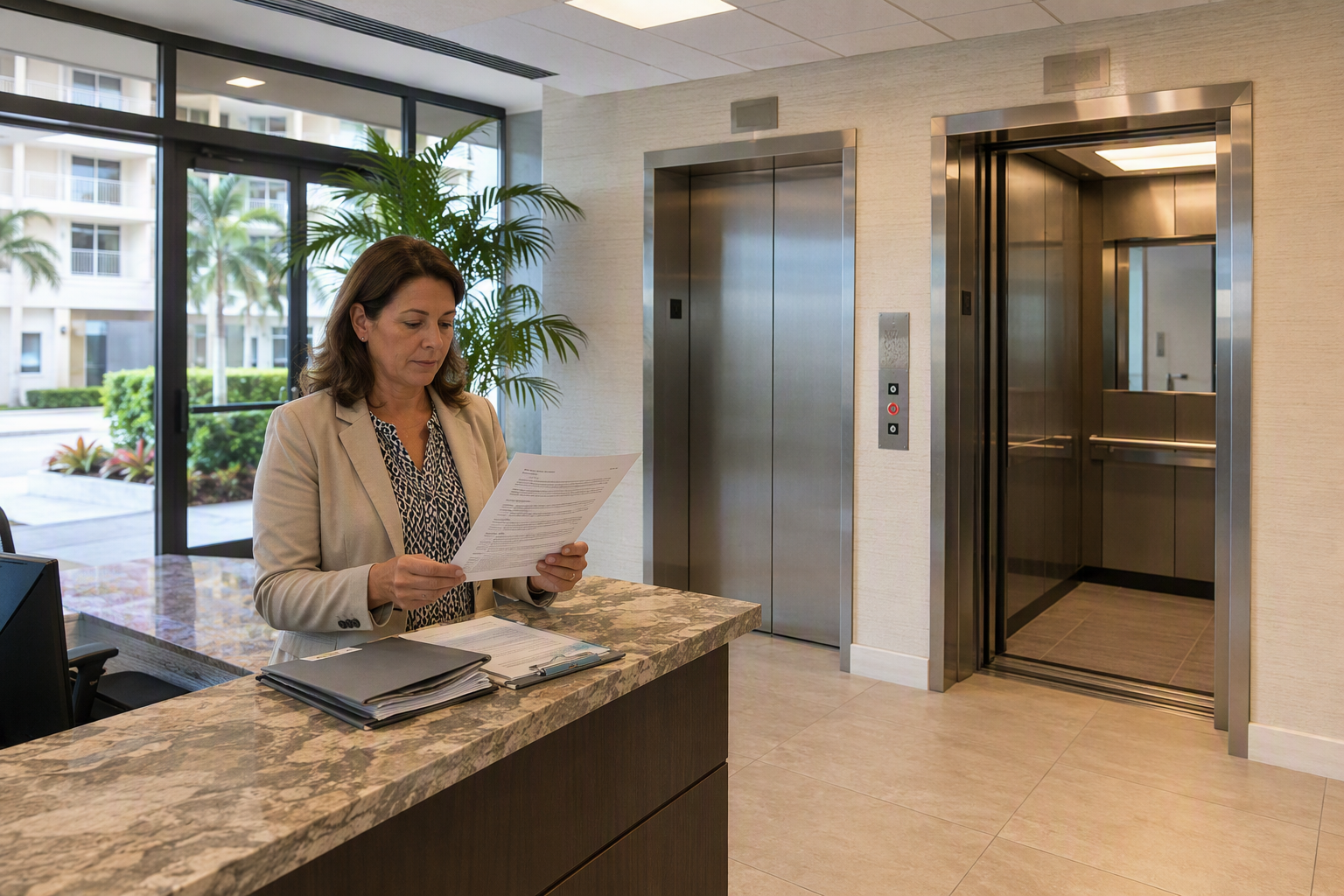
Choosing the right elevator service contract is one of the most consequential facility decisions a Pompano, FL building owner or property manager can make. The contract type determines not only maintenance costs but also code compliance standing under Florida statutes and federal standards including the ASME A17.1 Safety Code for Elevators and Escalators. Axxiom Elevator Florida helps property owners throughout Pompano and Broward County evaluate both contract structures honestly — matching the right service model to each building’s real needs.
—
What Is a Full Maintenance Elevator Contract?
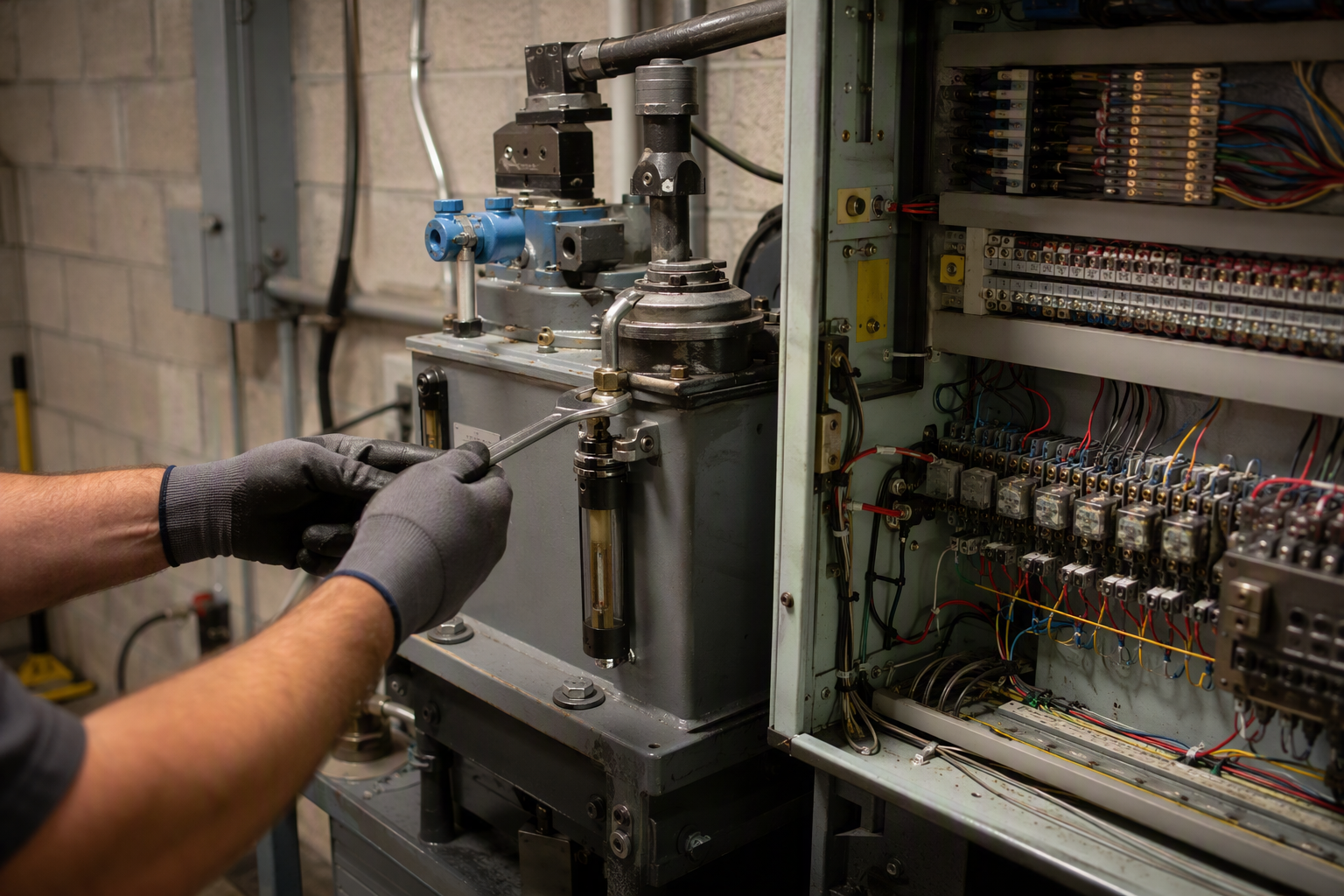
A full maintenance contract, sometimes called a “comprehensive” or “full coverage” contract, bundles routine preventive maintenance, lubrication, adjustments, labor, and most parts replacements into a single recurring fee. When a component fails — whether a door operator, relay board, or hydraulic pump seal — the service provider absorbs the repair cost as part of the agreement.
Pros of Full Maintenance Contracts:
- Budget predictability: Monthly costs are fixed, eliminating surprise invoices for component failures.
- Comprehensive protection: Major mechanical and electrical repairs are typically included, reducing exposure to large, unplanned expenses.
- Vendor accountability: The service company has a financial incentive to perform thorough preventive work, because neglect increases their own repair costs.
- Simplified compliance management: Routine maintenance required under ASME A17.1 and ASME A17.3 Safety Code for Existing Elevators and Escalators is folded into one service relationship.
- Emergency callback inclusion: Most full maintenance agreements include callback service when an elevator goes out of service between scheduled visits.
Cons of Full Maintenance Contracts:
- Higher base cost: Monthly fees are meaningfully higher than oil and grease contracts, which can feel excessive on newer, reliable equipment.
- Exclusions buried in contract language: Major modernization components, proprietary parts, and certain high-cost items are frequently carved out — owners must read contracts carefully.
- Long-term lock-in risk: Multi-year terms can reduce leverage if service quality declines.
—
What Is an Oil and Grease Elevator Contract?
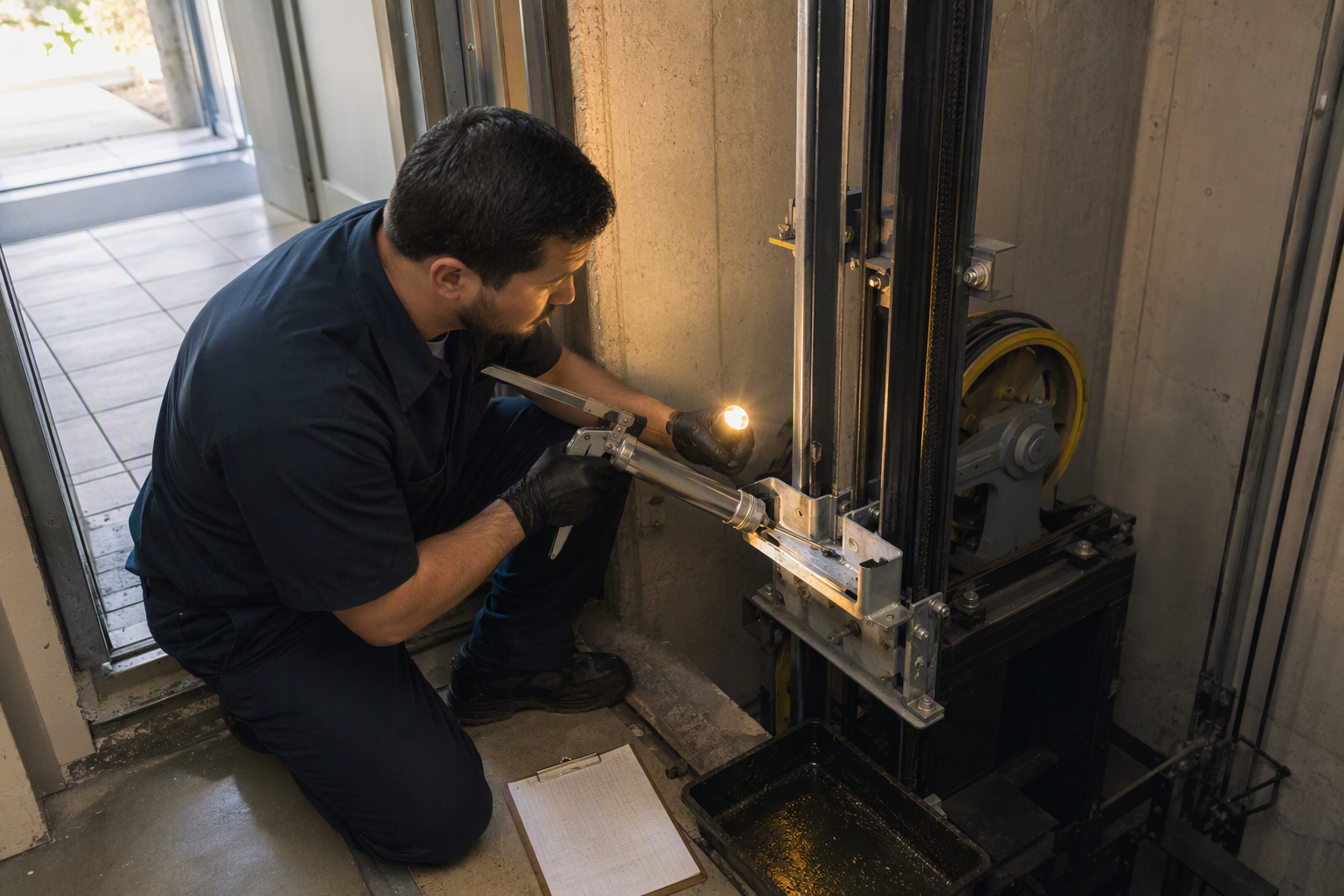
An oil and grease contract — also called a lubrication-only or “oiling and adjusting” contract — covers scheduled visits during which a technician lubricates moving parts, inspects safety devices, and makes minor adjustments. Parts and labor for any repairs that arise are billed separately at time-and-material rates.
Pros of Oil and Grease Contracts:
- Lower monthly cost: The base contract fee is substantially less than a full maintenance agreement.
- Appropriate for new equipment: Elevators still under manufacturer warranty may rarely need covered repairs, making the higher full maintenance premium difficult to justify.
- Flexibility: Owners retain the ability to solicit competitive bids for each repair job.
Cons of Oil and Grease Contracts:
- Unpredictable repair costs: A single door operator replacement or controller board failure can generate an invoice that exceeds an entire year of saved premiums.
- Technician incentive mismatch: When repairs are billed separately, some providers have less financial motivation to catch developing issues early.
- Compliance gaps: Owners must track and fund all additional work required for Florida inspections independently.
- Budget variance: Commercial property budgets and HOA reserve studies become difficult to model accurately.
—
Which Contract Type Is Required by Florida Law?
Florida does not mandate a specific contract structure. However, Florida law does require that elevator equipment be maintained in safe operating condition and pass periodic inspections administered through the Florida Department of Business and Professional Regulation (DBPR). Maintenance obligations under ASME A17.1 — adopted as the reference standard for elevator safety in Florida — require that equipment be properly lubricated and adjusted at appropriate intervals. Either contract type can satisfy this requirement, provided the work is actually performed and documented. The contract type does not determine compliance; the quality and completeness of the maintenance performed does.
—
How Does Florida’s Inspection Schedule Affect My Contract Choice?
Florida requires periodic safety inspections of elevator equipment, with certificates of operation issued by DBPR-licensed inspectors. Elevators that fail inspection due to deferred maintenance or missing repairs create immediate liability for building owners. Under an oil and grease contract, the owner bears responsibility for funding any corrective repairs identified during inspection. Under a full maintenance contract, many of those corrective items fall within the service company’s scope. Building owners with aging equipment — particularly traction elevators or older hydraulic units — often find that inspection-driven repair surprises make full maintenance contracts the financially safer choice. The ASME A17.3 standard provides guidance on existing installations relevant to Florida’s adopted codes.
—
What Should I Do If My Elevator Goes Out of Service?
- Ensure all passengers have safely exited the cab and the elevator is taken out of service.
- Post clear “Out of Service” signage at all landings to prevent further use.
- If passengers are trapped, contact emergency services (911) immediately — do not attempt to force doors open.
- Notify your elevator service provider and reference your contract type to understand what callback labor is covered.
- Document the time, symptoms, and any error codes displayed on the controller for the responding technician.
- Confirm whether a DBPR-required inspection or test will be needed before the elevator returns to service following significant repairs.
- Review the incident report once repairs are complete and retain documentation for your compliance file.
—
Does ADA Compliance Affect My Elevator Maintenance Contract?
Yes, indirectly. The Americans with Disabilities Act (ADA) requires that elevators serving the public remain accessible and operational. Extended downtime on equipment that provides the only accessible route to upper floors can create ADA liability exposure. Full maintenance contracts, because they typically include callback service and faster access to covered repairs, can help minimize downtime and reduce that legal risk. Building owners in Pompano’s commercial and mixed-use properties should factor ADA accessibility obligations into their contract-type decision.
—
Which Buildings in Pompano, FL Benefit Most from Full Maintenance Contracts?
Full maintenance contracts tend to deliver the greatest value for:
- Older equipment — elevators more than ten to fifteen years old where component failures become more frequent.
- High-traffic buildings — commercial office towers, hotels, healthcare facilities, and retail centers along the Pompano Beach corridor where downtime directly impacts revenue or patient care.
- HOAs and residential condominiums — where reserve budgets are fixed and large unexpected invoices are disruptive to the association’s finances.
- Buildings with single-elevator access — where any downtime creates an immediate ADA and tenant relations problem.
Oil and grease contracts may be more appropriate for new installations still under warranty, low-traffic buildings with simple, modern equipment, or owners who maintain substantial capital reserves and prefer to self-insure repair risk.
—
How Should I Evaluate Elevator Service Contract Proposals in Pompano, FL?
- Read the exclusions list: Every full maintenance contract has one. Understand exactly which parts and repair categories are carved out before signing.
- Confirm DBPR licensing: Florida law requires elevator contractors to hold state licensure. Verify the provider’s credentials through DBPR before entering any agreement.
- Request a written maintenance log format: Documentation of each visit is essential for inspection compliance and liability protection.
- Ask about emergency availability: Understand how after-hours and weekend callback service is structured under both contract types.
- Assess the provider’s Florida-specific experience: Contractors familiar with Broward County authorities having jurisdiction (AHJs) and DBPR inspection processes can navigate compliance more efficiently.
- Compare multi-year versus annual terms: Longer terms may reduce monthly costs but reduce flexibility if the relationship underperforms.
—
Why Choose Axxiom Elevator Florida for Elevator Service in Pompano?
Axxiom Elevator Florida is a certified elevator service company serving Pompano Beach and the broader Broward County market. The company provides both full maintenance and oil and grease contract options, giving building owners an honest comparison rather than a one-size recommendation. Axxiom’s service area includes commercial office properties, residential condominiums, healthcare facilities, hospitality properties, and retail buildings throughout South Florida. Emergency callback service is available for contract clients when elevators go out of service. All work is performed in accordance with Florida-adopted ASME standards and DBPR requirements. Axxiom Elevator Florida operates exclusively in Florida and brings specific knowledge of local inspection processes, Broward County building departments, and the coastal environment’s effect on elevator equipment.
—
Schedule a Free Consultation
Not sure whether a full maintenance or oil and grease contract is right for your Pompano, FL property? Axxiom Elevator Florida offers a no-obligation consultation to review your equipment, usage patterns, and budget — and provide a straight answer. Contact the team today at to get started.
Need elevator service you can rely on? Axxiom Elevator Florida is ready to help.