How Much Does It Cost to Install a New Elevator in a Commercial Building in Florida?
Commercial elevator installation is one of the most significant capital investments a Florida building owner or property manager will make. The price tag varies widely based on technical specifications, building conditions, code compliance requirements under ASME A17.1 Safety Code for Elevators and Escalators and ADA accessibility standards, and the local permitting environment in Florida counties. This FAQ hub answers the most important questions commercial decision-makers are researching in 2026, covering costs, timelines, compliance, equipment types, and how to choose the right installation partner in markets like Pompano Beach and Sarasota.
What Is the Typical Cost Range to Install a Commercial Elevator in Florida?
Commercial elevator installation in Florida generally ranges from approximately $75,000 at the low end for a basic hydraulic unit to well above $300,000 for a high-rise traction system with premium finishes, structural modifications, and full code compliance work.
That range reflects the enormous variability in commercial projects. A two-stop hydraulic elevator serving a small medical office building is a fundamentally different project from a 10-stop geared traction elevator installed in a mid-rise hotel. Core cost drivers include elevator type, travel distance, number of landings, cab dimensions, machine room requirements, structural hoistway construction, local labor rates, and permit fees assessed by Florida’s Division of Hotels and Restaurants or county-level building departments.
Florida’s subtropical climate also introduces considerations that do not apply in northern states — moisture management in hoistway construction, corrosion-resistant finishes on hydraulic cylinders, and humidity-rated electrical components — all of which affect material selection and final cost.
What Are the Main Types of Commercial Elevators and How Do Their Costs Compare?
The three primary commercial elevator types — hydraulic, geared traction, and machine-room-less (MRL) traction — each carry different installation cost profiles, energy footprints, and long-term maintenance obligations.
| Elevator Type | Typical Application | Approximate Installation Range | Machine Room Required? | Max Practical Travel |
|---|---|---|---|---|
| Hydraulic (in-ground or holeless) | Low-rise, 2–5 stops | $75,000 – $150,000+ | Yes (adjacent) | ~50 ft |
| Geared Traction | Mid-rise, 5–15 stops | $150,000 – $250,000+ | Yes (overhead) | ~250 ft |
| Gearless Traction | High-rise, 15+ stops | $200,000 – $350,000+ | Yes (overhead) | Virtually unlimited |
| Machine-Room-Less (MRL) | Mid-rise, 4–20 stops | $150,000 – $275,000+ | No | ~250 ft |
Note: Ranges above are general market estimates for Florida commercial projects in 2026 and reflect installation only. They do not include optional cab upgrades, specialty finishes, or post-installation maintenance contracts. Actual bids will vary. Contact a certified contractor for a project-specific quote.
What Specific Factors Drive Up the Cost of Elevator Installation in a Commercial Building?
Beyond elevator type, the single largest cost variable is often the condition and configuration of the existing building — particularly whether a hoistway already exists, what structural reinforcement is needed, and how accessible the installation site is.
Key cost drivers include:
- Hoistway construction: If no hoistway exists, concrete or steel shaft construction alone can add tens of thousands of dollars to a project budget.
- Number of stops and travel height: Each additional landing adds equipment, wiring, door operators, and labor.
- Cab size and weight capacity: Freight elevators or oversized passenger cabs require larger hydraulic cylinders or heavier counterweight systems.
- Cab finishes: Standard painted steel vs. stainless steel, glass panels, custom lighting, and flooring all affect cost.
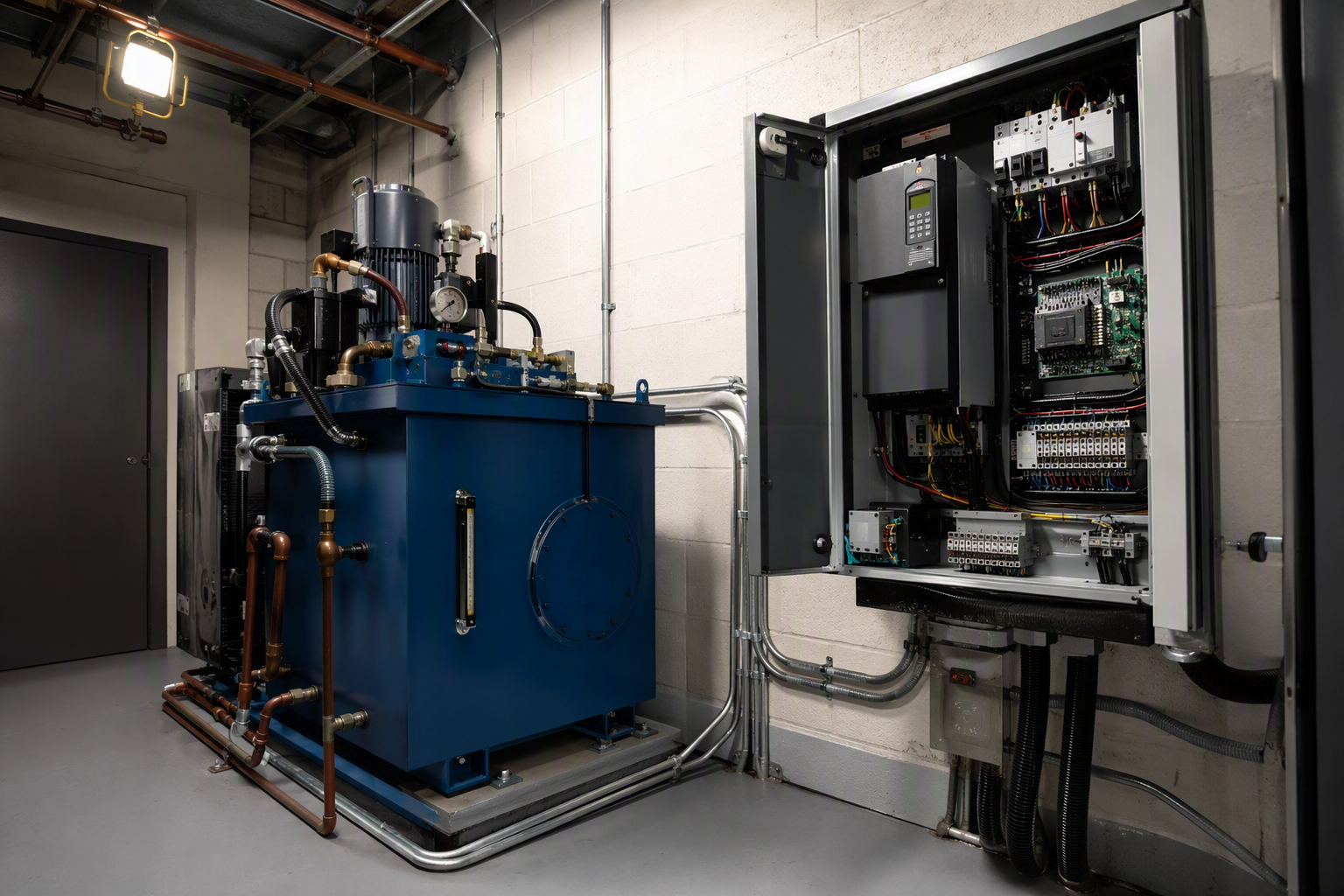
- Machine room requirements: Building a dedicated, climate-controlled machine room is a significant construction cost for hydraulic and traction systems.
- Electrical infrastructure: Commercial elevators require dedicated 3-phase power circuits; older buildings often need electrical panel upgrades.
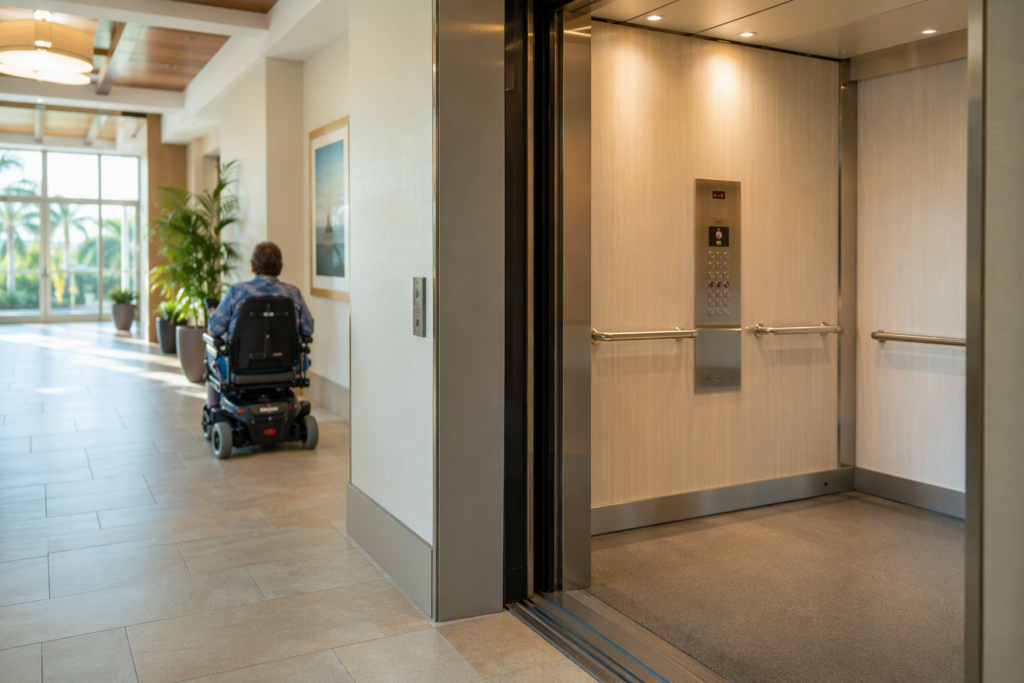
- ADA compliance modifications: Ensuring hall call button heights, braille signage, door dwell times, and cab dimensions meet ADA standards adds detail work that affects both cost and timeline.
- Local permit fees: Florida counties and municipalities assess permit fees that vary considerably across Broward County (Pompano Beach) and Sarasota County.
How Do Florida Building Codes and Regulations Affect Installation Costs?
Florida elevator installations must comply with both the ASME A17.1 Safety Code for Elevators and Escalators and Florida Statute Chapter 399, which governs elevator safety and inspection requirements statewide — and compliance with these standards is non-negotiable and directly affects design, materials, and labor costs.
Florida adopted its elevator safety requirements under Chapter 399, Florida Statutes, administered through the Florida Department of Business and Professional Regulation (DBPR). The code aligns closely with ASME A17.1 and mandates specific requirements for hoistway construction, safeties, buffers, governor systems, fire service operation, and phase 1 and phase 2 firefighters’ service — all of which are engineered into the equipment cost.
For commercial properties serving the public, ADA Title III accessibility requirements apply. These include minimum cab dimensions, leveling accuracy (within ½ inch of the landing), accessible controls, audible signals, and tactile markings. Non-compliance exposes commercial building owners to civil litigation and federal enforcement, so ADA-compliant design should be treated as a baseline requirement rather than an upgrade.
Florida’s coastal environment — particularly in markets like Pompano Beach — also prompts inspectors to scrutinize corrosion protection measures, which can influence material specification costs during plan review.
What Does the Commercial Elevator Installation Process Look Like Step by Step?
A commercial elevator installation follows a structured multi-phase process from initial engineering and permitting through final state inspection and certificate of operation.
- Site Assessment and Feasibility Study: A qualified elevator contractor evaluates the building’s structural capacity, existing shaft conditions, electrical systems, and space availability to determine what elevator types are feasible.
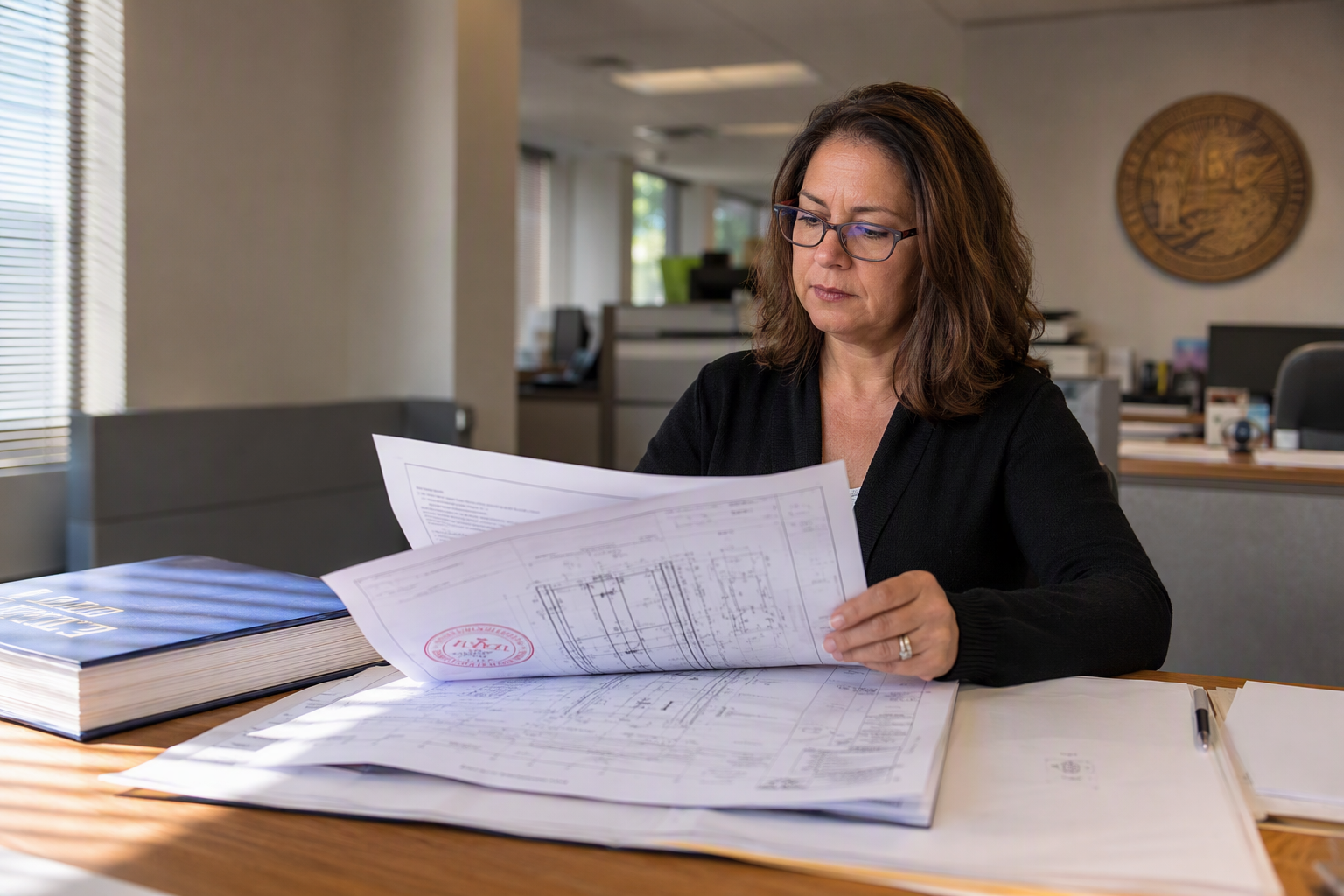
- Equipment Selection and Engineering Design: Based on the assessment, an engineer produces stamped drawings specifying the elevator type, capacity, speed, hoistway dimensions, machine room layout, and electrical requirements.
- Plan Submission and Permit Approval: Drawings are submitted to the local building department and to the Florida DBPR elevator safety program. Both must approve plans before installation begins.
- Hoistway and Civil Work: General contractors build or modify the hoistway, pit, and machine room per the approved drawings. Electrical trades run dedicated circuits and install disconnect switches.
- Equipment Delivery and Installation: Elevator mechanics install the rails, buffers, safeties, drive system, cab, doors, controls, and wiring per ASME A17.1 specifications.
- Contractor Testing and Inspection Readiness: The installing contractor conducts full load tests, safety device tests, and operational checks before calling for inspection.
- State Inspection: A Florida-licensed elevator inspector performs the acceptance inspection, witnessing required tests including governor and safety tests, buffer tests, and firefighters’ service operation.
- Certificate of Operation Issuance: Upon passing inspection, the DBPR issues a Certificate of Operation, which must be posted in the elevator cab. The elevator is then legally available for public use.
- Ongoing Maintenance Contract Execution: Florida law requires periodic inspections. Owners typically engage a certified maintenance contractor immediately upon receiving the certificate.
How Long Does It Take to Install a Commercial Elevator in Florida?
From signed contract to final state inspection, a typical commercial elevator installation in Florida takes anywhere from four months to over a year depending on permitting timelines, equipment lead times, and the extent of structural work required.
Permitting is frequently the longest phase. Florida county building departments and the DBPR elevator program each conduct separate plan reviews, and comment cycles can extend the permitting phase by weeks or months on complex projects. Equipment manufacturing lead times for custom-specified traction systems can add additional months, particularly for high-capacity or specialty units. Owners and property managers planning a new installation should build generous schedule contingency into their project timelines and discuss realistic milestones with their elevator contractor early in the process.
Are There Additional Costs Beyond the Base Installation Price?
Yes — the base installation quote rarely captures all project-related costs, and commercial buyers should budget for permitting fees, structural and civil work, electrical upgrades, ADA signage, ongoing maintenance, and annual inspection fees.
Additional cost categories to plan for include:
- Hoistway construction by general contractor (often bid separately from elevator equipment and installation)
- Electrical panel upgrades and dedicated circuit installation
- Architect and structural engineer fees for stamped drawings required by the DBPR
- Florida DBPR permit and inspection fees
- ADA-compliant signage, braille buttons, and visual/audible signal devices
- Pit waterproofing and sump pump systems — especially relevant in Florida’s high water-table environments
- Annual maintenance contracts — typically billed monthly or quarterly
- Annual state inspection fees under Florida Statute Chapter 399
What Is the Cost of Elevator Installation for ADA Compliance in a Commercial Building?
When an elevator is installed specifically to achieve ADA accessibility compliance — such as during a renovation triggering the “path of travel” obligation under Title III — the elevator equipment cost is the same as any commercial installation, but design requirements and documentation obligations add scope and cost to the project.
Under ADA Title III, commercial facilities undergoing alterations must ensure the path of travel to the altered area is accessible, and elevators are often the only feasible solution in multi-story buildings. ADA 2010 Standards for Accessible Design specify minimum cab interior dimensions, door width minimums (typically 36 inches clear), floor leveling accuracy, and the full suite of accessible control requirements. Engaging an elevator contractor and architect familiar with these requirements from project inception avoids costly redesigns during plan review.
How Does Hydraulic Elevator Installation Differ from Traction in a Florida Commercial Context?
Hydraulic elevators use a fluid-driven piston system suited to low-rise buildings with a machine room at the base, while traction elevators use steel ropes and a counterweighted drive system suited to mid- and high-rise applications — and each system has distinct implications for Florida soil conditions, energy consumption, and long-term maintenance costs.
In-ground hydraulic systems require boring a cylinder hole into the earth. Florida’s high water table and sandy soil conditions in coastal markets like Pompano Beach can complicate in-ground installations and increase the risk of cylinder corrosion over time, which is why holeless hydraulic systems have become increasingly common in Florida low-rise commercial projects. Traction and MRL systems avoid underground components entirely, making them inherently more compatible with Florida coastal environments for buildings of appropriate height.
Energy consumption is also a meaningful long-term cost consideration. Hydraulic systems consume power only when moving upward, while regenerative-drive traction systems can return energy to the building’s electrical grid during downward travel — a feature worth evaluating over a multi-decade ownership horizon.
What Questions Should You Ask Elevator Installation Contractors Before Signing a Contract?
Asking the right questions before signing protects the building owner from scope gaps, permit delays, and post-installation disputes.
- Is your company licensed under Florida Statute Chapter 399 to perform elevator installation in this county?
- Will your quote include stamped engineering drawings, or are those billed separately?
- Who handles permit submission to the local building department and DBPR — your company or the owner?
- What is the equipment manufacturing lead time for the specified unit, and how does that affect the project schedule?
- Does your contract define what structural and civil work is excluded and who is responsible for coordinating it?
- What warranty does the manufacturer provide on the drive system, and what does your labor warranty cover?
- What does an ongoing maintenance agreement cost, and is it required to keep the warranty valid?
- Can you provide references from comparable commercial installations in Florida?
Axxiom Elevator Florida serves commercial clients in Pompano Beach and Sarasota and is available to walk prospective clients through these questions in the context of a specific project assessment.
How Much Do Annual Elevator Inspections and Maintenance Cost in Florida?
Annual state inspection fees under Florida Statute Chapter 399 vary by jurisdiction, and commercial maintenance contracts vary by elevator type, number of units, and service scope — but maintenance is a mandatory and ongoing cost of elevator ownership that should be budgeted from day one.
Florida requires periodic inspections of all elevators under ASME A17.1 and state statutes. Routine maintenance agreements for commercial elevators generally cover preventive maintenance visits, lubrication, adjustment, and emergency service calls. Comprehensive agreements that include parts and callbacks provide more cost predictability than basic lubrication-only contracts, which can result in unpredictable repair invoices between scheduled visits. Building owners should evaluate total cost of ownership — not just installation price — when selecting equipment and service providers.
Is It Cheaper to Modernize an Existing Elevator or Install a New One?
In most cases, modernizing a structurally sound existing elevator is significantly less expensive than full replacement, but new installation may be the only viable option when the existing cab, hoistway, or mechanical components are beyond economical repair.
Modernization typically involves replacing the control system, drive, door operators, and cab interior while reusing the existing hoistway structure and rails. This can dramatically extend equipment life and bring an older elevator into compliance with current ASME A17.1 and ADA requirements at a fraction of new installation cost. However, if the existing hoistway dimensions are non-compliant with current code, the rails are beyond service life, or the hydraulic cylinder is failing, the calculus shifts toward new installation. A detailed condition assessment by a qualified elevator contractor is the only reliable way to make this determination for a specific unit.
What Are the Consequences of Installing or Operating an Elevator Without Proper Florida Permits?
Operating a commercial elevator in Florida without a valid Certificate of Operation is a violation of Florida Statute Chapter 399 and can result in mandatory shutdown orders, fines, and significant liability exposure for the building owner.
Florida inspectors have authority to post “out of service” orders on elevators operating without valid certificates, including elevators that have not passed their required periodic inspection. For commercial properties, a shutdown order means elevator access is lost — a serious operational and liability event in buildings serving the public, including those with tenants or customers who rely on elevator access for ADA compliance. Permitting and inspection are not optional bureaucratic steps; they are legal prerequisites for lawful elevator operation in Florida.
How Do You Choose the Right Elevator Installation Company in Florida?
The right installation partner is one that holds all required Florida licenses, demonstrates familiarity with DBPR plan review processes in your specific county, and can provide documented references from comparable commercial projects.
Florida requires elevator contractors to be licensed through the DBPR. Beyond licensure, commercial buyers should evaluate a contractor’s experience with the specific elevator type being specified, their relationships with equipment manufacturers, and their capacity to manage both the elevator scope and coordination with the general contractor on civil and electrical work. Local market knowledge matters — an elevator contractor familiar with Broward County or Sarasota County plan review processes will navigate permitting more efficiently than an out-of-area firm encountering local requirements for the first time.
Axxiom Elevator Florida operates in both the Pompano Beach and Sarasota markets, providing commercial clients in those areas with locally experienced installation and service support.
What Building Types in Florida Most Commonly Require New Commercial Elevator Installation?
New commercial elevator installation is most frequently required in multi-story office buildings, medical facilities, hotels and hospitality properties, retail centers, mixed-use developments, and multifamily residential buildings above a threshold height that triggers ADA or code obligations.
Medical office buildings present a particularly specific set of requirements — larger cab dimensions to accommodate gurneys and medical equipment, heavier capacity ratings, and often stringent infection control requirements for cab finishes. Hotels and hospitality properties frequently prioritize aesthetic cab designs alongside reliability. Retail and mixed-use developments in growing Florida markets often require multiple elevator units to handle high traffic volumes across multiple floors. Each building type carries distinct engineering, code, and design considerations that affect final cost.
Can a Commercial Building in Florida Be Exempt from Elevator Requirements?
Certain low-rise commercial buildings may qualify for exemptions from elevator requirements under ADA and Florida Building Code, but the exemptions are narrowly defined and should be evaluated by a qualified accessibility consultant or attorney, not assumed.
Under ADA Title III, the general rule is that elevators are required in multi-story commercial facilities, but there is a limited exemption for buildings under three stories or with fewer than 3,000 square feet per floor, provided the facility is not a shopping center, shopping mall, professional office of a health care provider, or a terminal or station used for specified transportation. Florida’s accessibility code may impose additional requirements that supersede the federal exemption floor. Building owners should obtain a formal legal or accessibility opinion before concluding an elevator is not required — the cost of a missed obligation far exceeds the cost of early consultation.
What Technology Options Are Available for New Commercial Elevator Installations in 2026?
Modern commercial elevator technology available in 2026 includes destination dispatch control systems, regenerative drive units, remote monitoring via IoT-connected controllers, and touchless or smartphone-integrated call systems.
Destination dispatch systems — where passengers enter their destination floor before entering the cab — improve traffic efficiency in high-volume commercial buildings by grouping passengers heading to the same floor, reducing travel time and energy consumption. Remote monitoring systems allow elevator service contractors to receive real-time fault alerts, often enabling proactive maintenance before a shutdown occurs. These technologies carry a premium over basic installations but offer tangible operational benefits over the life of the equipment. Building owners evaluating technology options should discuss traffic analysis and return-on-investment considerations with their elevator contractor during the design phase.
How Does Building Height and Number of Stops Affect the Final Installation Price?
Each additional floor and stop in a commercial elevator installation adds measurable cost through additional rail sections, landing assemblies, door operators, wiring runs, and labor hours — making travel height and stop count two of the most direct and predictable cost multipliers in any project.
A two-stop installation and a five-stop installation using the same drive system can differ substantially in total project cost because every landing requires its own door frame, door operator, hoistway entrance assembly, hall call station, and associated wiring. The elevator controller must also be specified for the number of landings, and larger control systems are more expensive. For buildings where future floors may be added, contractors can sometimes pre-wire and pre-specify controllers for additional stops at a modest incremental cost during initial installation — a detail worth discussing during the design phase.
What Financing or Funding Options Exist for Commercial Elevator Installation in Florida?
Commercial elevator installations are typically financed through conventional commercial loans, equipment financing arrangements, or — in specific cases involving accessibility improvements — through SBA programs or tax incentive provisions under the federal tax code.
The IRS Disabled Access Credit (Section 44 of the Internal Revenue Code) provides a tax credit to eligible small businesses that incur expenses to comply with the ADA. The Section 190 deduction allows businesses to deduct costs of removing architectural barriers. These provisions do not cover the full cost of a commercial elevator installation, but they can provide meaningful tax benefit for projects driven by accessibility compliance. Building owners should consult a qualified tax advisor to determine eligibility and applicable limits, as these programs have conditions and caps that vary by project and entity type.
How Should a Commercial Building Owner in Pompano Beach or Sarasota Start the Elevator Installation Process?
The practical starting point is a professional site assessment by a licensed Florida elevator contractor who can evaluate building conditions, identify the viable equipment options, provide a realistic cost range, and outline the permitting path specific to the local jurisdiction.
Before requesting quotes, building owners benefit from having basic building information available: the number of floors and desired stops, the approximate square footage of the footprint, any existing shaft or machine room space, the building’s electrical service capacity, and any known ADA compliance gaps. This information allows a contractor to provide a meaningfully scoped preliminary estimate rather than a generic range. In markets like Pompano Beach and Sarasota, local knowledge of county building department processes and Florida DBPR regional operations can meaningfully affect project timelines.
Axxiom Elevator Florida provides commercial site assessments for clients in Pompano Beach and Sarasota, helping building owners understand the full scope and cost of a new installation before committing to a project budget.
What Ongoing Obligations Does a Florida Commercial Building Owner Have After Elevator Installation?
After installation and issuance of a Certificate of Operation, Florida commercial building owners are responsible for maintaining a valid certificate, ensuring periodic inspections occur on the schedule required by Florida Statute Chapter 399, posting the certificate in the cab, and maintaining the elevator in safe operating condition under the applicable ASME A17.1 maintenance standards.
Florida law places the maintenance obligation on the building owner or their designated representative. Engaging a qualified elevator maintenance contractor immediately after installation — and ensuring that contractor remains licensed and active — is the most practical way to meet this obligation. Maintenance records should be retained and made available to inspectors upon request. Owners who self-manage their properties should establish calendar reminders for annual inspection renewal dates to avoid operating on a lapsed certificate.
Axxiom Elevator Florida provides ongoing maintenance services for commercial elevators in Pompano Beach and Sarasota, supporting owners through every phase of elevator ownership from installation through long-term upkeep.
Need elevator service you can rely on? Axxiom Elevator Florida is ready to help.