Elevator Maintenance and Inspection Requirements for Apartment Buildings and Multifamily Properties in Florida
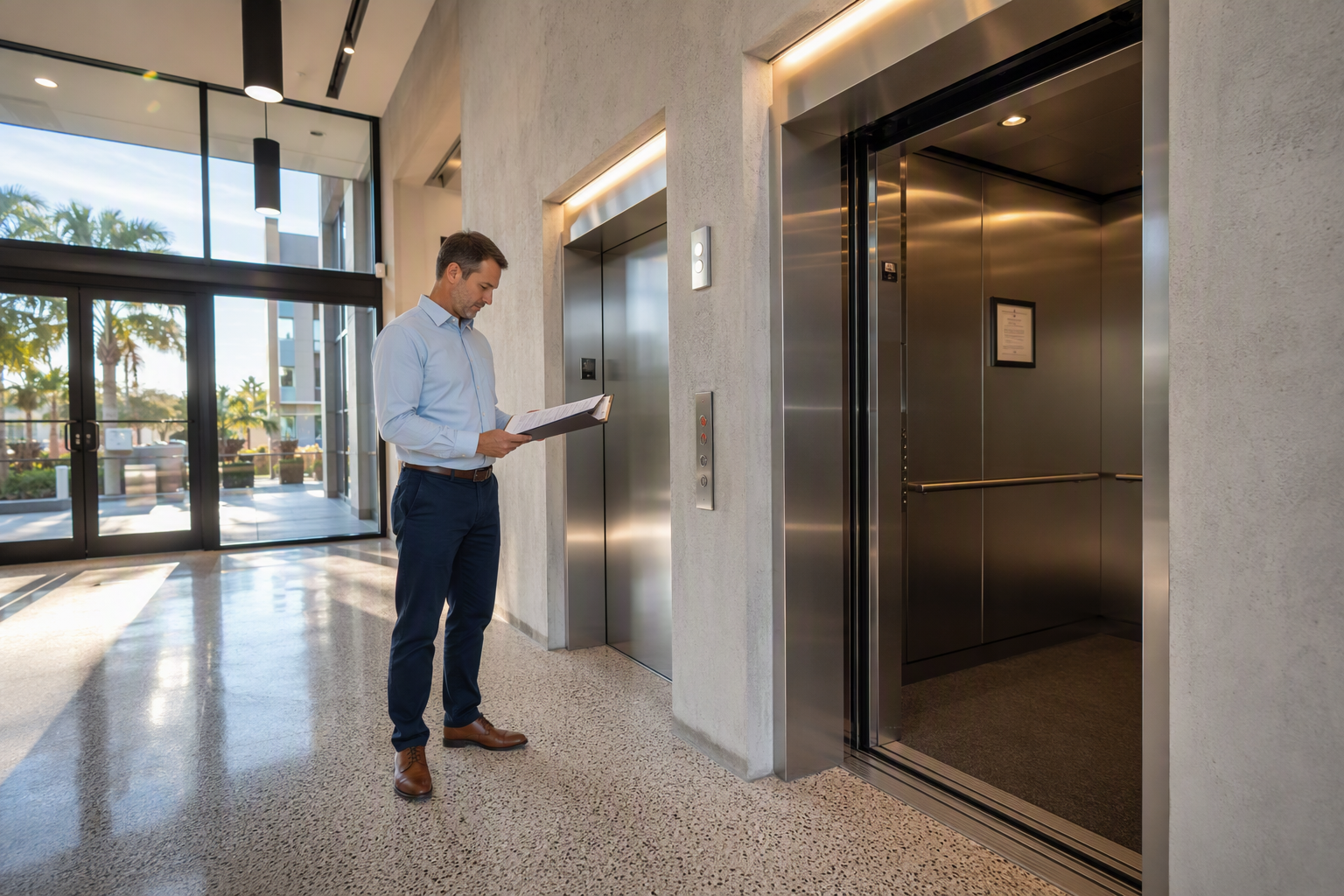
Florida apartment owners, property managers, and HOA boards overseeing multifamily communities face a layered set of elevator compliance obligations. Understanding each layer — from state-mandated inspections to federal accessibility rules — is essential to protecting residents, limiting liability, and avoiding costly shutdowns. This guide covers every major requirement and common question property professionals ask when managing elevator compliance in Florida markets including Pompano Beach and Sarasota.
—
What Are the Core Legal Requirements for Elevators in Florida Apartment Buildings?
Florida regulates elevators under Chapter 399 of the Florida Statutes and the Florida Building Code, which adopts the ASME A17.1 Safety Code for Elevators and Escalators as the baseline technical standard. Every elevator in a multifamily residential building must:
- Be registered with the Florida Department of Business and Professional Regulation (DBPR), Division of Hotels and Restaurants, which oversees elevator safety in the state.
- Undergo periodic inspections performed by a licensed elevator inspector authorized under Florida law.
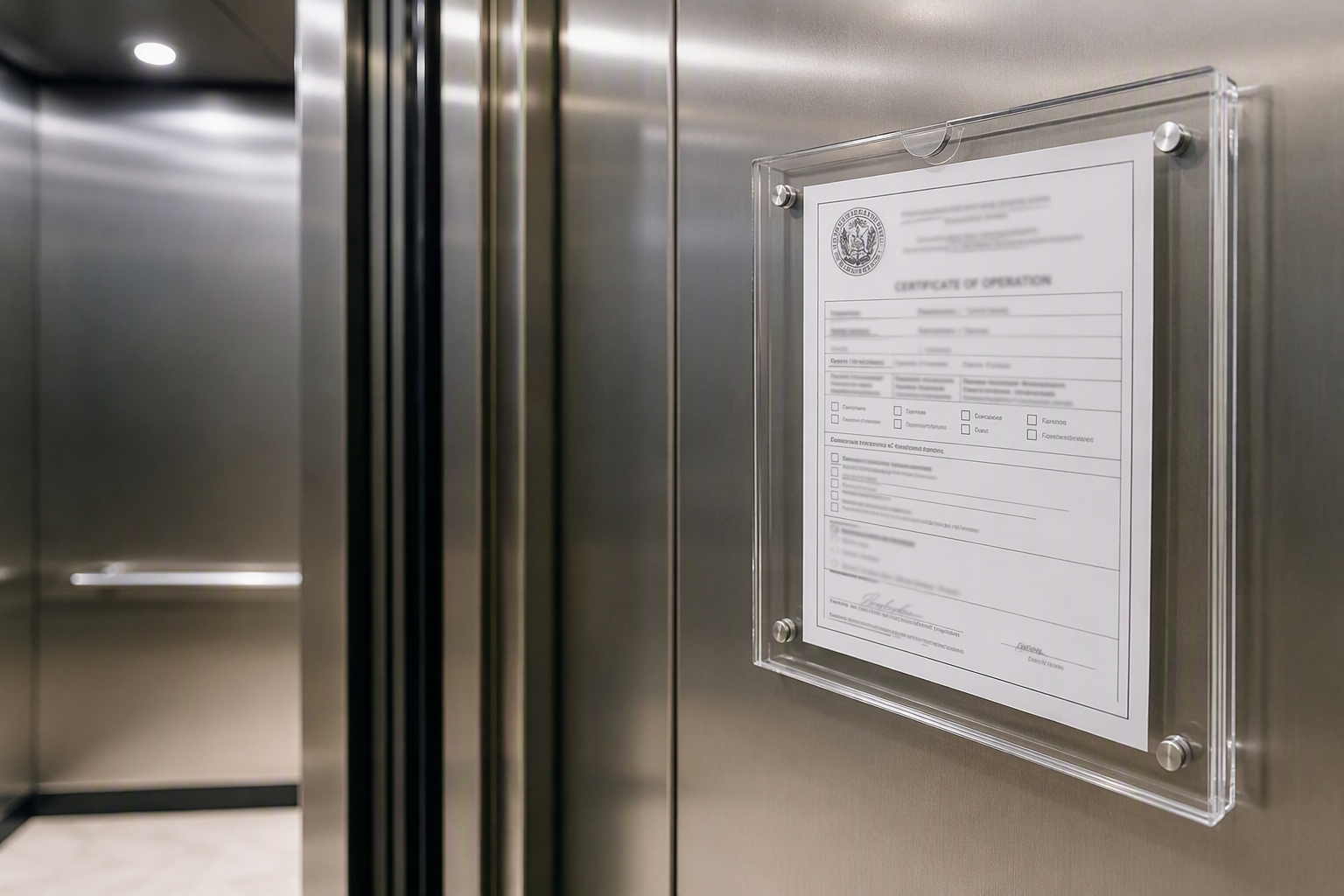
- Maintain a valid certificate of operation posted inside the elevator cab or on file with building management.
- Comply with applicable editions of ASME A17.1 and, where applicable, ASME A17.3 for existing installations.
- Meet ADA accessibility standards for all elevators serving public and common-use areas of multifamily properties covered under the Fair Housing Act and ADA Title III, where applicable.
The 2026 compliance landscape reflects ongoing code updates. Property owners should confirm with a qualified elevator service company — such as Axxiom Elevator Florida — which edition of ASME A17.1 their jurisdiction has formally adopted, as local amendment timelines can vary between counties.
—
How Often Are Elevator Inspections Required in Florida Multifamily Properties?
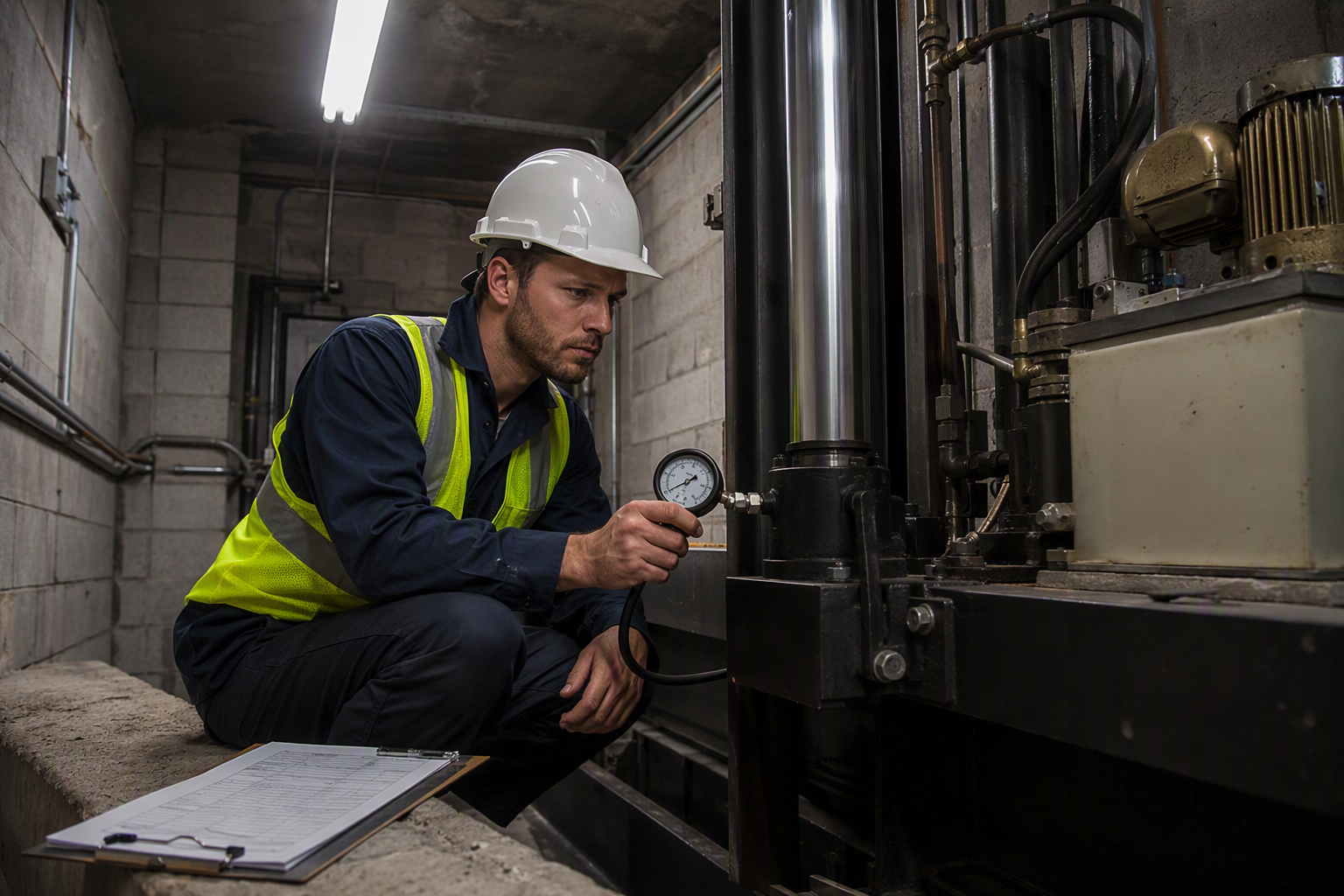
Florida requires periodic inspections of elevators in residential and commercial buildings. The standard inspection cycle for most traction and hydraulic elevators in apartment buildings is annual, though the exact interval can depend on the elevator type, its age, its use classification, and the jurisdiction. After each inspection, the property receives either a certificate of operation (if the unit passes) or a violation notice requiring corrective action within a specified timeframe.
In addition to state-mandated inspections, the ASME A17.1 Safety Code for Elevators and Escalators outlines periodic test requirements — including Category 1 and Category 5 tests for hydraulic elevators and Category 1, 3, and 5 tests for electric traction elevators — each on distinct intervals. These tests go beyond visual inspection and include functional, load, and safety-system testing. Property owners should be aware that missing a Category 5 test (required every five years for many systems) can trigger a compliance violation even if annual inspections have been completed.
—
What Maintenance Practices Are Required Between Inspections?
Inspection is a checkpoint — maintenance is the ongoing practice that determines whether an elevator passes. The ASME A17.1 Safety Code requires that elevators be maintained in a safe operating condition at all times, and Florida statute reinforces that the building owner is ultimately responsible for ensuring this standard is met.
A compliant maintenance program for a multifamily elevator typically includes:
- Lubrication of moving components on a schedule consistent with the manufacturer’s specifications.
- Inspection and adjustment of door operating mechanisms, interlocks, and safety edges.
- Testing of safety devices including governors, safeties, buffers, and emergency lighting.
- Monitoring and adjustment of leveling accuracy (critical for ADA compliance and trip-hazard prevention).
- Review and documentation of all maintenance activities in a permanent logbook maintained on site or in a digital system.
- Prompt response to callback events — any reported malfunction should be addressed and documented before the unit is returned to service.
Axxiom Elevator Florida works with multifamily property owners in Pompano Beach and Sarasota to develop structured maintenance programs that satisfy both ASME standards and Florida DBPR documentation requirements.
—
What ADA Requirements Apply to Elevators in Apartment Buildings?
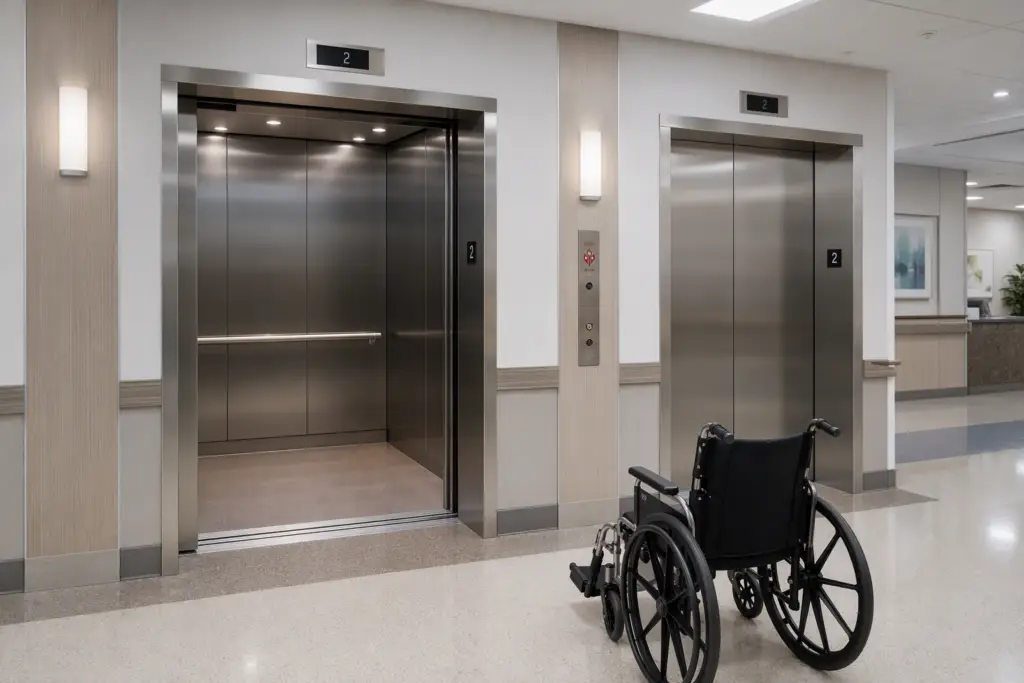
The Americans with Disabilities Act and the Fair Housing Act both impose accessibility requirements that affect elevators in multifamily settings. While the ADA primarily governs public accommodations and commercial facilities, buildings with four or more units and an elevator are subject to Fair Housing Act design and construction requirements that mandate accessible routes — including accessible elevators — throughout common areas.
ADA Standards for Accessible Design specify requirements for:
- Minimum cab dimensions to accommodate wheelchair users.
- Braille and raised character floor designations on hall and car operating panels.
- Audible and visible signals indicating floor arrival and direction of travel.
- Door reopening devices that function without contact (for a minimum duration defined in the standards).
- Handrail placement within the cab where applicable.
- Leveling accuracy — the cab must stop within a defined tolerance of the landing to prevent a trip hazard for wheelchair users.
Any elevator modernization or significant alteration in a covered building must be brought into full compliance with current ADA Standards as a condition of the permit. Existing installations may be subject to barrier-removal obligations if removal is “readily achievable.”
—
What Are the Consequences of Non-Compliance for Florida Apartment Building Owners?
Failure to maintain a valid certificate of operation or to correct cited violations within the required timeframe can result in an elevator being placed out of service by the state. For a multifamily property, an elevator shutdown creates immediate operational and habitability concerns — particularly in high-rise buildings where elevator access is essential for residents with mobility limitations.
Beyond shutdown orders, non-compliant building owners may face:
- Civil penalties assessed by the Florida DBPR.
- Increased liability exposure in personal injury litigation if an incident occurs on a non-compliant elevator.
- ADA complaints or Fair Housing Act complaints if accessibility features are deficient.
- Difficulty obtaining or maintaining property insurance coverage.
—
What Is the Difference Between a Maintenance Contract and an Inspection?
These two services serve distinct compliance functions and should not be confused. A maintenance contract is an agreement between a property owner and a licensed elevator service company covering the ongoing upkeep of the elevator equipment. An inspection is a periodic examination conducted by a licensed elevator inspector — who may or may not be affiliated with the maintenance contractor — to verify that the elevator is safe and code-compliant.
Florida allows the building owner to hire separate firms for maintenance and inspection, or in some cases the same firm may perform both. However, the inspector must hold the appropriate Florida license regardless of affiliation. Axxiom Elevator Florida maintains the credentials required to support both maintenance programs and to assist property owners in coordinating required inspections.
—
What Should Apartment Building Owners Do When an Elevator Fails Inspection?
- Review the inspection report carefully. Identify whether each cited deficiency is classified as an immediate safety hazard requiring shutdown or a non-immediate violation with a correction deadline.
- Take the elevator out of service if required. If the inspector issues an out-of-service order, the elevator must not be used until corrections are verified. Post appropriate notices for residents.
- Contact a licensed elevator contractor immediately. Engage a qualified service company to assess the violations and provide a written repair scope and timeline.
- Document all repairs. Ensure the contractor provides written documentation of every repair made, including parts replaced, tests performed, and technician information.
- Schedule a re-inspection. Once repairs are complete, arrange for a follow-up inspection by a licensed inspector to verify compliance and reinstate the certificate of operation.
- Notify your insurance carrier. Inform the property insurer of the violation, the repair, and the re-inspection outcome as required by your policy terms.
- Update maintenance records. File all inspection reports, repair documentation, and re-inspection certificates in the building’s permanent elevator records.
—
How Do Elevator Requirements Differ for High-Rise Versus Low-Rise Multifamily Buildings in Florida?
The ASME A17.1 code and Florida statute apply to all elevator installations regardless of building height, but high-rise buildings — generally defined under the Florida Building Code as buildings with an occupied floor more than 75 feet above the lowest fire department vehicle access point — carry additional requirements. These may include firefighters’ emergency operation (Phase I and Phase II), specific fire recall provisions, and in some jurisdictions, seismic and wind-load provisions that affect equipment room and hoistway design.
Low-rise multifamily buildings with hydraulic elevators face their own specific maintenance considerations, including annual oil-level checks, periodic testing of lowering valves, and for older units, underground oil-leak monitoring or tank replacement obligations under environmental regulations. Property owners in Pompano Beach and Sarasota should confirm with their service provider which specific code provisions apply to their installation type.
—
What Is Involved in an Elevator Modernization for an Older Apartment Building?
Many multifamily buildings in Florida have elevator equipment that is decades old. Modernization — which can range from control system upgrades to full cab renovation and drive replacement — triggers compliance requirements under both ASME A17.1 and ADA Standards. Any alteration to a major component generally requires a permit, an inspection of the altered work, and in many cases brings the altered system up to current code provisions.
Property owners considering modernization should evaluate:
- The age and remaining serviceable life of the existing equipment.
- Availability of replacement parts for legacy systems.
- Energy efficiency improvements available through modern drive and control technology.
- ADA compliance gaps that modernization can address.
- The permit and inspection process required by the local jurisdiction and Florida DBPR.
—
Questions Your Inspector Will Ask
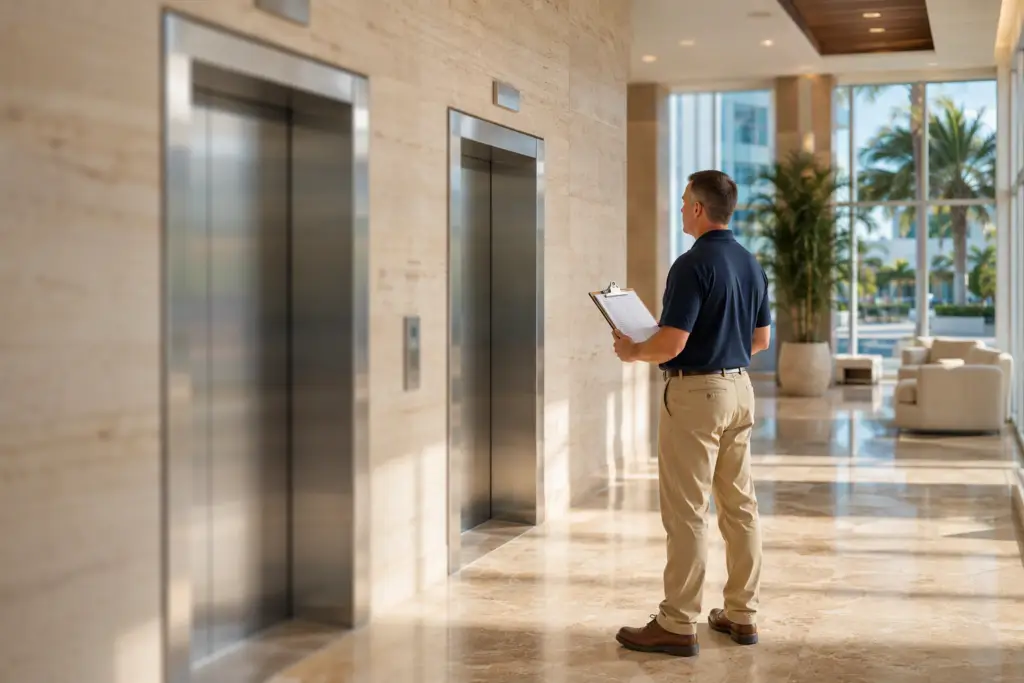
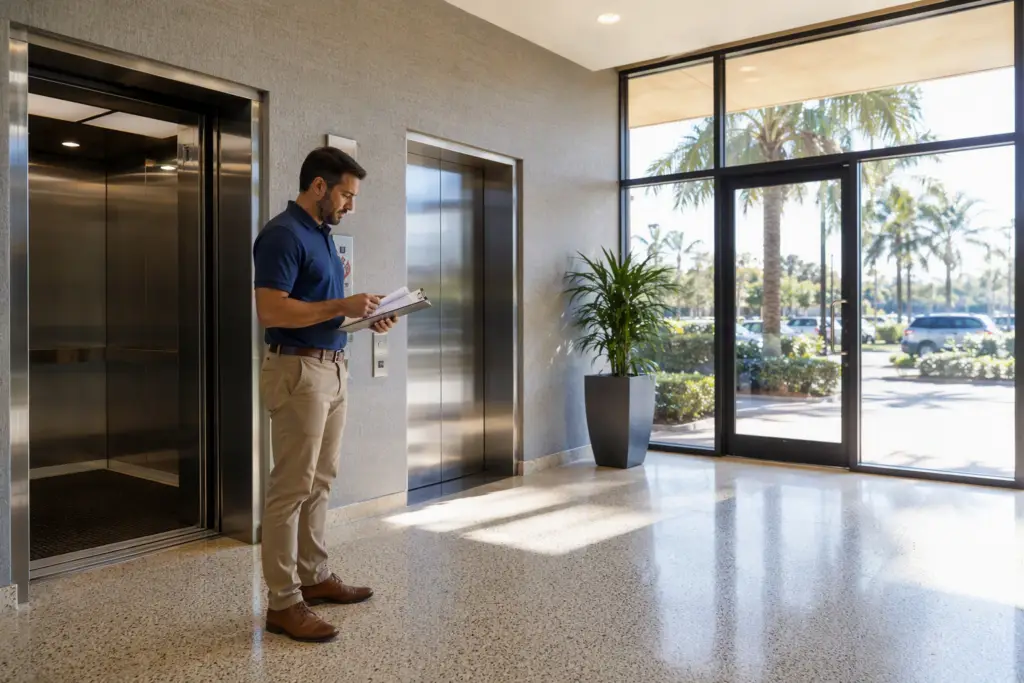
When a licensed elevator inspector arrives at a Florida apartment building, property managers and owners should be prepared to address the following:
- “Is the maintenance logbook current and on site?” Inspectors expect to review a documented maintenance history. Gaps in the log are themselves a compliance issue.
- “When was the last Category 5 (or equivalent periodic) test performed?” This test is required on a multi-year cycle and must be documented with a signed test report.
- “Are all safety devices — including door interlocks, governors, and buffers — functional and within adjustment?” The inspector will test these directly.
- “Is the elevator leveling within the ADA-specified tolerance?” Leveling accuracy is measured during the inspection and must meet the standard in effect for the installation.
- “Is the machine room secured against unauthorized access and free of storage?” ASME A17.1 prohibits storing materials in machine rooms and requires controlled access.
- “Is the emergency lighting and emergency communication system functional?” Both must be tested at each inspection.
- “Has the oil containment system (for hydraulic units) been inspected for leaks?” Environmental compliance for hydraulic oil is part of the overall compliance picture.
- “Is the certificate of operation posted and current?” The certificate must be visible inside the cab or documented per DBPR requirements.
—
How Can Multifamily Property Owners in Pompano Beach and Sarasota Stay Ahead of Compliance Deadlines?
Proactive compliance management is the most effective way to avoid unplanned shutdowns, costly emergency repairs, and regulatory penalties. Property owners benefit from working with a service partner who tracks inspection cycles, Category test due dates, and code update timelines on their behalf.
Axxiom Elevator Florida supports apartment building owners and property managers across Pompano Beach, Sarasota, and surrounding Florida markets with structured maintenance programs designed around the specific requirements of each installation. From documenting routine maintenance to coordinating required periodic tests, a well-managed service relationship ensures that no compliance deadline is missed and that the elevator is ready to pass inspection when the inspector arrives.
Elevator compliance in multifamily housing is not a one-time event — it is an ongoing operational commitment that protects residents, preserves asset value, and demonstrates the duty of care that Florida property law and federal accessibility standards demand.
—
Get a Free Elevator Assessment for Your Florida Property
Whether your apartment building is in Pompano Beach, Sarasota, or anywhere in Florida, staying compliant with ASME A17.1, ADA, and Florida state elevator requirements starts with understanding exactly where your equipment stands today.
Contact Axxiom Elevator Florida for a free elevator assessment — call today.
Need elevator service you can rely on? Axxiom Elevator Florida is ready to help.