How to Budget for Elevator Maintenance and Repairs: A Complete Guide for Property Managers

Elevator budgeting is one of the most consequential — and most frequently underestimated — line items in any property management operating plan. A missed maintenance payment can cascade into a state violation, an extended shutdown, and liability exposure that far exceeds the cost of proactive service. This hub page answers the twenty most important questions property managers in Florida ask when preparing their annual elevator budget, covering everything from compliance codes to vendor selection to long-term capital planning.
What should be included in an annual elevator maintenance budget?
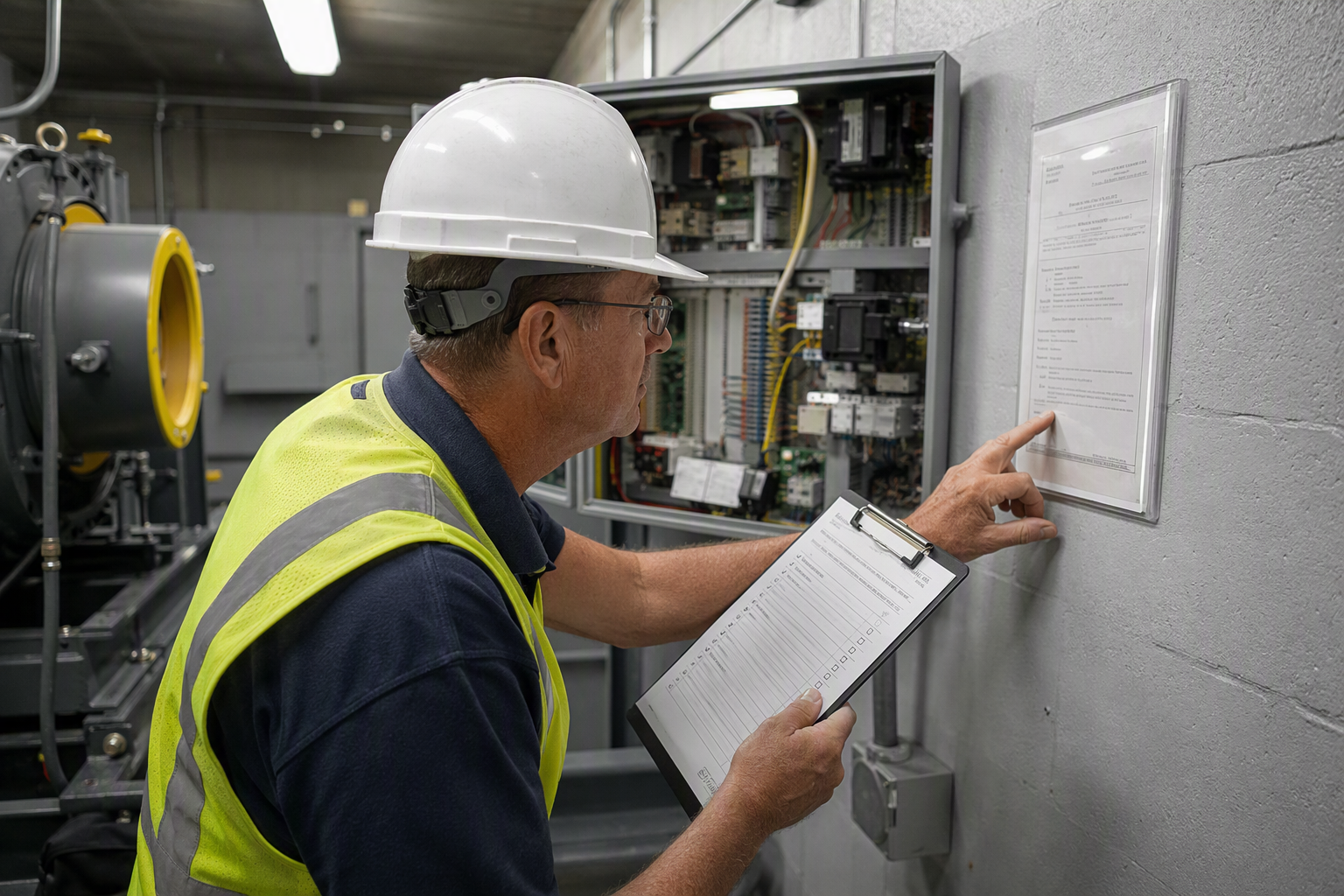
A complete annual elevator maintenance budget must include four distinct cost categories: a preventive maintenance contract, mandatory inspection and permit fees, a parts and emergency repair reserve, and a long-term capital replacement fund.
Each of these categories serves a different financial function. The preventive maintenance contract covers scheduled lubrication, adjustment, cleaning, and minor parts replacement that keeps the elevator running within manufacturer tolerances and code compliance. Inspection and permit fees are non-negotiable regulatory costs set by the Florida Department of Business and Professional Regulation (DBPR) and local authority having jurisdiction (AHJ). The emergency repair reserve addresses unplanned failures — motor overloads, door malfunctions, hydraulic leaks — that fall outside routine contract scope. Finally, the capital replacement fund acknowledges that major components such as controllers, hydraulic pumps, traction machines, and cab interiors have defined useful lives, and their eventual replacement must be anticipated before they fail.
Property managers who omit any of these four categories will either face mid-year budget overruns or defer critical work that compounds future costs. A well-structured budget treats all four as fixed obligations, not discretionary line items.
What are the mandatory elevator inspection requirements in Florida?
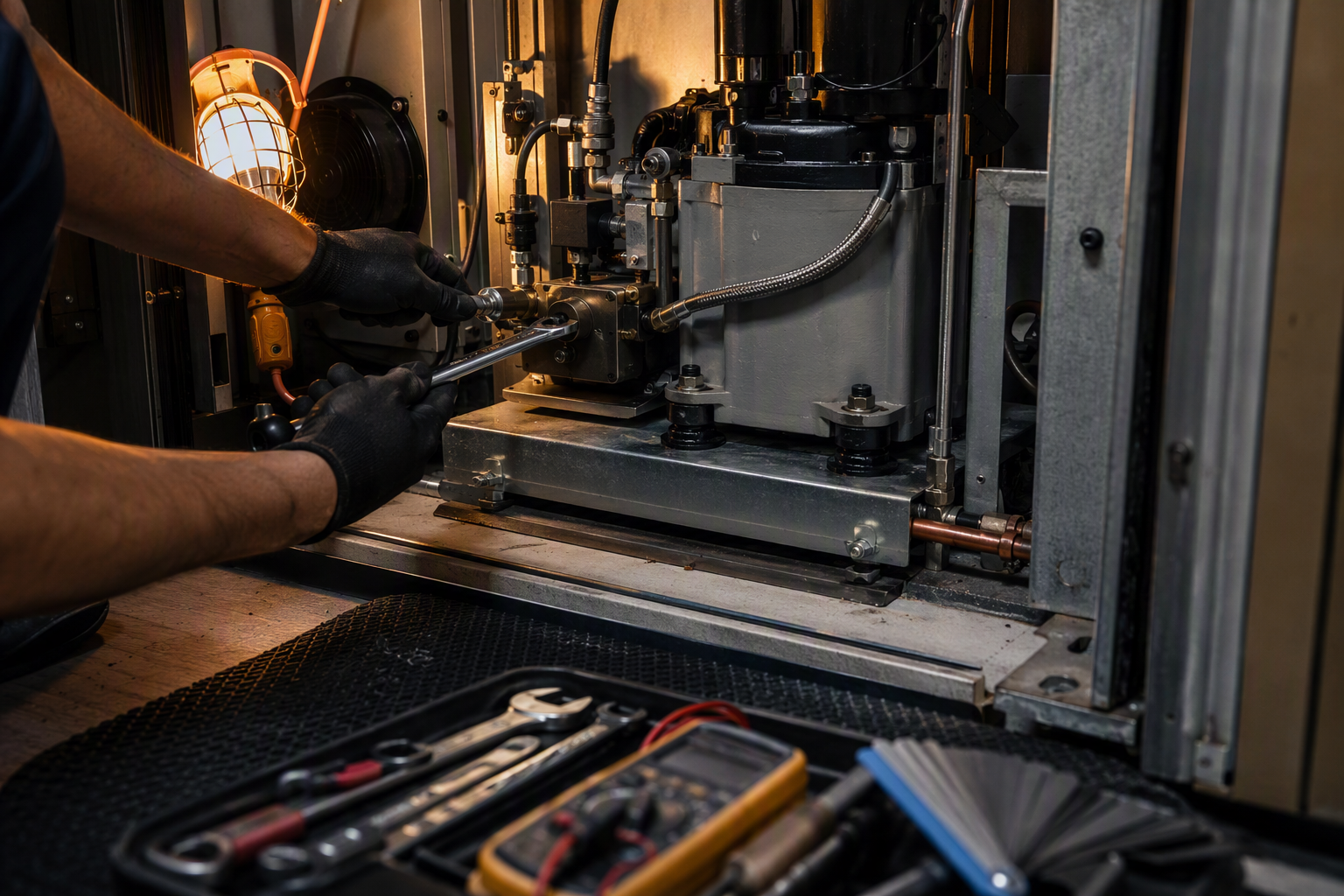
In Florida, all elevators are subject to mandatory periodic inspections under state authority, and property managers must budget for both the inspection fees and any violation-correction costs identified during those inspections.
Florida’s elevator safety program is administered under Chapter 399, Florida Statutes, and the associated administrative rules. Inspections must be performed by licensed elevator inspectors, and certificates of operation must be renewed on the schedule established by the DBPR. Failure to obtain a current certificate of operation is a violation that can result in the elevator being posted out of service — a significant operational and liability event for any property.
The technical standard governing elevator safety in Florida, as in most U.S. jurisdictions, is the ASME A17.1 Safety Code for Elevators and Escalators. This code establishes minimum requirements for construction, installation, operation, inspection, testing, maintenance, alteration, and repair. Property managers should confirm with their service contractor which edition of ASME A17.1 is currently adopted by their local AHJ, as Florida municipalities may be on different edition cycles. Budget planning for 2026 should include a review of the current adopted edition with the service provider.
Accessibility compliance under the Americans with Disabilities Act (ADA) is a separate but related compliance obligation. Elevator cab dimensions, door timing, floor leveling accuracy, and control panel heights must all meet ADA standards. Deficiencies identified in an accessibility audit can generate additional remediation costs that belong in the budget.
How does elevator age affect annual maintenance and repair costs?
Older elevators consistently generate higher annual maintenance and repair costs than newer units because aging components fail more frequently, require more labor-intensive service, and increasingly rely on hard-to-source parts.
An elevator installed within the last ten years on a modern controller platform will typically demand less corrective maintenance than a unit installed twenty or thirty years ago. The older unit may have relay-logic controls, outdated hydraulic systems with petroleum-based fluid, or mechanical components that are no longer manufactured to original specifications. Parts availability directly affects both repair time and cost — when a part must be custom-fabricated or sourced from specialty suppliers, labor and material costs increase significantly.
Property managers should request an age-and-condition assessment from their service contractor as the foundation of any realistic budget. A reputable elevator company will document the remaining useful life of major components and flag items approaching end-of-life so that replacements can be planned and funded proactively rather than reactively. Axxiom Elevator Florida performs this type of assessment as part of its property evaluation process for clients in Pompano Beach and Sarasota.
What is the difference between a full-service maintenance contract and a parts-and-labor contract?
A full-service maintenance contract covers preventive maintenance, most parts, and labor for covered repairs under a single fixed fee, while a parts-and-labor (or oil-and-grease) contract covers only the technician’s time during scheduled visits, leaving all parts and corrective repair costs as additional expenses.
For budget planning purposes, the contract type chosen has a major impact on how costs are structured. Under a full-service contract, the property manager can predict monthly cash outflows with reasonable certainty — the contractor absorbs the risk of parts costs for covered items. Under a parts-and-labor contract, the monthly fee is lower but variable repair costs can produce large, unpredictable invoices.
Neither contract type is universally superior. A newer elevator with low failure history may cost less to maintain under a parts-and-labor arrangement. An aging elevator with a track record of recurring issues is almost always more economically managed under a full-service contract, where the service company has a contractual incentive to perform thorough preventive maintenance to avoid absorbing frequent repair costs. Property managers should compare total projected annual cost — not just monthly fee — when evaluating contract structures.
Key exclusions to verify in any contract include: major modernization work, cab interior refurbishment, vandalism damage, and repairs necessitated by misuse. These items typically fall outside even full-service contract scope and require separate budget allocation.
How should property managers calculate an emergency repair reserve?
An emergency repair reserve should be calculated based on the elevator’s age, usage level, and maintenance history, with the reserve sized to cover at least one significant unplanned repair event per year without disrupting operating cash flow.
The nature of emergency repairs varies widely. A door operator failure on a moderately used residential elevator represents a different cost exposure than a hydraulic cylinder replacement on a high-use commercial unit. Property managers who have access to maintenance logs and prior repair invoices can use historical data to establish a credible reserve figure. Those without that history should ask their service contractor to recommend a reserve amount based on the contractor’s direct knowledge of the equipment’s current condition.
It is worth noting that safety-critical failures may trigger requirements under the Occupational Safety and Health Administration (OSHA) standards for equipment safety and worker protection, particularly in commercial settings. Property managers should ensure that their emergency response protocol — and the associated budget authority — allows for immediate contractor dispatch when a safety hazard is identified.
What major capital replacement items should property managers plan for over a five-year horizon?
Over a five-year capital planning horizon, property managers should evaluate the remaining useful life of the elevator controller, traction machine or hydraulic power unit, door operators, cab interior, and any components that the ASME A17.1 inspection or state inspection identifies as approaching end-of-service condition.
| Component | Approximate Useful Life | Replacement Driver | Budget Planning Note |
|---|---|---|---|
| Elevator Controller (relay logic) | 25–35 years | Parts obsolescence, code compliance | High priority if relay-logic; microprocessor retrofit often required |
| Elevator Controller (microprocessor) | 20–30 years | Technology obsolescence, parts availability | Plan replacement before diagnostics software becomes unsupported |
| Hydraulic Power Unit | 20–30 years | Fluid leaks, motor wear, efficiency | Submersible units may require tank inspection and seal replacement |
| Traction Machine (geared) | 30–40 years | Gear wear, oil contamination | Budget for oil analysis and worm gear inspection annually |
| Traction Machine (gearless) | 40+ years | Sheave wear, bearing condition | Longer life but high replacement cost when needed |
| Door Operators | 15–25 years | Mechanical wear, safety code updates | Door issues are leading cause of service calls; budget proactively |
| Hoist Ropes (traction elevators) | 5–15 years (usage-dependent) | Wear, corrosion, code-required testing | Annual inspection; replace per ASME A17.1 criteria |
| Hydraulic Cylinder (underground) | 25–40 years | Corrosion, environmental regulations | Florida environmental rules may require PVC liner or replacement |
| Cab Interior and Fixtures | 15–20 years | Aesthetic wear, ADA compliance | Coordinate with property renovation cycles |
| Emergency Lighting and Communication | 10–15 years | Code-required reliability | Test annually; ASME A17.1 requires functional emergency phone |
This table should serve as a starting framework only. Actual replacement timelines depend on installation conditions, usage intensity, and maintenance history. Property managers should work with their elevator service company to build a component-by-component capital replacement schedule tailored to the specific equipment on their property.
How does elevator usage volume affect maintenance frequency and cost?
Higher usage volume accelerates component wear and increases the frequency of required maintenance visits, meaning properties with elevators serving large populations or operating around the clock should budget for more service intervals than low-use residential units.
A single-elevator residential condominium in Sarasota serving twenty-five units has a fundamentally different maintenance profile than a high-rise commercial building in Pompano Beach with multiple elevator banks and continuous daytime traffic. Door operators, guide shoes, roller guides, and hoist ropes all experience wear that correlates directly with the number of starts and door cycles per day. Many commercial maintenance contracts account for this by tying service visit frequency to usage parameters — typically measured in starts per day or hours of operation.
Property managers should disclose accurate usage data to their service contractor when negotiating contracts. Understating usage may result in a lower contract price but ultimately produces inadequate service coverage and accelerated component failure.
What Florida-specific regulations should property managers account for in their elevator budget?
Florida property managers must account for state-mandated inspection cycles under Chapter 399, Florida Statutes, local AHJ permit and certificate-of-operation fees, and environmental regulations that affect hydraulic elevator cylinder handling and fluid disposal.
Florida’s climate presents additional maintenance considerations that are less relevant in other states. High humidity, salt air in coastal areas such as Pompano Beach, and extreme heat accelerate corrosion on exposed metal components, hydraulic fittings, and electrical connections. Maintenance contracts serving Florida properties should explicitly address corrosion prevention measures, including the inspection and treatment of pit areas where moisture accumulation is common.
Underground hydraulic cylinders in Florida are subject to environmental oversight because petroleum-based hydraulic fluid leaks represent a groundwater contamination risk. Property managers with older hydraulic elevators should budget for cylinder inspection and, where warranted, conversion to above-ground or PVC-lined cylinder configurations. This is a significant capital cost that requires advance planning.
The ASME A17.1 Safety Code for Elevators and Escalators provides the technical foundation for both routine maintenance standards and the requirements triggered when alterations are made to existing equipment. Any modernization project — even a controller replacement — may trigger a full or partial code upgrade under the alteration provisions of A17.1, generating additional compliance costs that belong in the capital budget.
How should property managers evaluate and compare elevator service vendors?
Property managers should evaluate elevator service vendors on the basis of state licensure, local technician availability, contract transparency, parts sourcing capability, and demonstrated familiarity with the specific elevator brands and models installed on the property.
Florida requires elevator contractors to be licensed through the DBPR. Verifying a contractor’s active license status is a non-negotiable first step before signing any service agreement. Beyond licensure, property managers should assess:
- Whether the contractor’s technicians are familiar with the specific elevator make and model on the property — service quality varies significantly by equipment type and technician training.
- The contractor’s parts inventory and sourcing relationships — a technician who must wait days for a common part represents an unacceptable service risk.
- The clarity and completeness of the proposed maintenance contract — covered components, exclusion lists, response definitions, and renewal terms should all be explicit.
- The contractor’s inspection documentation practices — property managers need clear, written records of every service visit for compliance and liability purposes.
- Local presence — a contractor with technicians based in or near Pompano Beach or Sarasota can respond more effectively than a national company routing calls through a remote dispatch center.
Axxiom Elevator Florida serves property managers throughout Pompano Beach and Sarasota as a state-licensed elevator contractor with the technical capability to service a wide range of elevator types and manufacturers.
What documentation should property managers maintain for elevator compliance and budgeting purposes?
Property managers should maintain a complete elevator file containing the current certificate of operation, all inspection reports and correction orders, maintenance service records, test reports, and the original installation documentation or most recent modernization drawings.
This documentation serves multiple functions simultaneously: it demonstrates regulatory compliance to inspectors and auditors, provides the data foundation for accurate budget forecasting, and creates the paper trail necessary for insurance claims and liability defense. An elevator that cannot produce a continuous maintenance record is a liability exposure regardless of its actual mechanical condition.
Maintenance service records should capture the date of each visit, the technician who performed the work, the specific tasks completed, any parts replaced, and any items noted for future attention. This last category — deferred items — is particularly important for budget planning, as it converts the service contractor’s field observations into a prioritized list of upcoming expenditures.
How should property managers approach budgeting for elevator modernization projects?
Elevator modernization should be budgeted as a discrete capital project with a defined scope, timeline, and funding source — separate from the annual operating maintenance budget — and should be triggered by a combination of equipment age, parts availability, code compliance requirements, and reliability history.
A typical modernization may involve replacing the controller, upgrading the drive system, installing new door operators, and updating the cab interior. Each of these components can be addressed individually or as part of a comprehensive modernization depending on the property’s capital constraints and the condition of existing equipment. Partial modernization can extend equipment life meaningfully while managing cost, but it must be approached carefully to ensure that the retained components are compatible with the upgraded ones and that the resulting system meets current code requirements.
Because modernization triggers alteration provisions under the ASME A17.1 Safety Code for Elevators and Escalators, property managers should engage their service contractor early in the planning process to understand which code upgrades the project will require. Unanticipated code-mandated upgrades are a common source of budget overruns on modernization projects.
What role does preventive maintenance play in reducing total elevator ownership cost?
Consistent preventive maintenance is the single most effective strategy for reducing total elevator ownership cost because it extends component life, prevents failure-mode damage to secondary components, maintains code compliance, and reduces the frequency and severity of emergency repairs.
The relationship between maintenance quality and equipment longevity is well-established in elevator engineering. Components that are properly lubricated, adjusted, and cleaned operate within designed tolerances and wear at predictable rates. Components that are neglected operate outside tolerances, generate secondary wear in connected components, and fail unpredictably — often at times and in ways that cause consequential damage. A door that closes with excessive force because its operator is out of adjustment will eventually damage the door sill, the car door panel, and potentially the safety circuit wiring — turning a low-cost adjustment into a multi-component repair.
For property managers focused on total cost of ownership, the budget argument for a comprehensive preventive maintenance contract is straightforward: the incremental cost of thorough preventive maintenance is consistently lower than the avoided cost of the reactive repairs it prevents.
How does ADA compliance affect elevator maintenance budgets?
ADA compliance requirements can generate maintenance and modification costs that property managers must budget for separately, particularly when elevator leveling accuracy, door timing, control panel configurations, or tactile signage fall out of compliance.
The Americans with Disabilities Act establishes specific technical requirements for elevators in public accommodations and commercial facilities. Among the maintenance-relevant requirements are: elevator car leveling must be accurate to within a defined tolerance so that wheelchair users can enter and exit safely; door reopening devices must function reliably; audible and visual floor indicators must operate correctly; and emergency communication systems must be accessible to individuals with hearing impairments.
Routine maintenance should include verification of ADA-related functions at every service visit. When an elevator modernization is planned, the project scope should include a full ADA compliance review to ensure that the updated equipment meets current standards. Failure to address ADA deficiencies exposes the property owner to complaint investigations and potential legal action, which represent costs far exceeding the investment in proactive compliance.
What should property managers do immediately if an elevator fails or is taken out of service?
When an elevator fails or must be taken out of service, property managers should follow a specific sequence of actions to protect building occupants, fulfill regulatory obligations, and initiate the repair process efficiently.
- Ensure no persons are trapped in the elevator. If entrapment has occurred, contact emergency services (911) immediately — do not attempt a non-professional rescue.
- Post clear, visible out-of-service signage at all elevator landings to prevent further use.
- Contact the elevator service contractor to report the failure and initiate a service dispatch.
- If the failure involves a safety device, door circuit, or other safety-critical system, do not restore power to the elevator until a licensed technician has inspected and cleared the equipment.
- Notify building management, tenants, and relevant property staff of the outage and estimated restoration timeline as soon as information is available from the service contractor.
- Document the failure event, including date, time, nature of the reported problem, and any witness accounts, for the maintenance file and potential insurance or regulatory purposes.
- Upon restoration of service, obtain written documentation from the service contractor confirming the nature of the repair, parts replaced, and the technician’s assessment of equipment readiness.
- Review the incident against the maintenance record to determine whether a pattern of related failures suggests a need for additional preventive measures or capital investment.
How can property managers use maintenance history data to improve budget accuracy?
Maintenance history data — including service visit records, parts replacement logs, and repair invoices — provides the most reliable foundation for building an accurate elevator budget because it converts historical patterns into defensible forward projections.
A property manager reviewing three to five years of maintenance records can identify recurring failure modes, quantify annual parts and labor costs, and project component replacement timing based on actual wear rates rather than generic estimates. This level of specificity allows for more accurate reserve calculations and more productive conversations with service contractors about contract scope and pricing.
Property managers inheriting a building without maintenance records should prioritize obtaining a full condition assessment from a qualified elevator contractor as the first step in establishing a budget baseline. Axxiom Elevator Florida provides detailed condition assessments for properties in Pompano Beach and Sarasota, giving property managers the documented foundation they need to build credible, defensible elevator budgets from the ground up.
How should property managers budget differently for traction elevators versus hydraulic elevators?
Traction and hydraulic elevators have distinctly different maintenance profiles and capital replacement cost structures, and property managers should apply separate budget templates to each type rather than using a one-size-fits-all approach.
Traction elevators — which use a counterweighted cab suspended by steel hoist ropes over a drive sheave — require regular inspection and eventual replacement of hoist ropes, guide rails, roller guides or guide shoes, brakes, and the traction machine itself. The machine room equipment is accessible and generally serviceable, but the hoist rope replacement in particular represents a significant planned capital cost that must be anticipated in the five-year plan. Under the ASME A17.1 Safety Code for Elevators and Escalators, hoist rope condition criteria are specifically defined and inspectors will flag ropes that meet rejection criteria.
Hydraulic elevators use a fluid-powered cylinder and piston to raise and lower the cab. Maintenance priorities for hydraulic systems include fluid quality and level, pump and motor condition, valve operation, and cylinder integrity. In Florida, the environmental implications of hydraulic fluid and the condition of underground cylinders add dimensions to the maintenance and capital budget that do not apply to traction systems. Property managers with hydraulic elevators in coastal Florida properties should budget for more frequent cylinder and fitting inspections due to the corrosive effects of salt air and humidity.
What questions should property managers ask when soliciting elevator maintenance contract proposals?
When soliciting maintenance contract proposals, property managers should ask a defined set of questions to ensure that competing bids are structured comparably and that contract terms adequately protect the property’s interests.
Recommended questions include:
- What specific components and systems are covered under this contract, and what is explicitly excluded?
- How many preventive maintenance visits per year are included, and what tasks are performed at each visit?
- How are emergency service calls handled, and what defines an emergency under the contract terms?
- What is the process for addressing items noted during maintenance visits that require additional work or parts beyond the contract scope?
- How are contract price escalations handled at renewal, and is there a cap on annual increases?
- What documentation will be provided after each service visit, and in what format?
- Is the contractor licensed by the Florida DBPR, and can they provide current license documentation?
- Does the contractor have experience with this specific elevator brand and model, and are parts for this equipment readily available?
- What is the contractor’s protocol when a state inspection results in a correction order?
- What are the contract’s termination provisions if service quality is unsatisfactory?
How should multi-elevator properties approach portfolio-level elevator budgeting?
Properties with multiple elevators should develop a portfolio-level budget that consolidates individual unit budgets, identifies shared cost efficiencies, and staggers major capital replacements to avoid simultaneous large expenditures across multiple units.
A multi-elevator property — whether a large residential high-rise in Pompano Beach or a commercial campus in Sarasota with multiple buildings — benefits from treating the elevator portfolio as an integrated asset pool. This approach allows the property manager to negotiate volume pricing with a single service contractor, coordinate inspection scheduling to minimize administrative overhead, and prioritize capital investment toward the units in worst condition rather than applying uniform spending across all units.
Staggering major capital replacements is a particularly important portfolio management strategy. If three elevators are approaching controller end-of-life simultaneously, budgeting for all three replacements in the same fiscal year may be financially untenable. A phased replacement schedule, informed by a condition assessment of each unit, allows the property to spread capital expenditures over multiple budget cycles while still addressing the highest-risk equipment first.
How can property managers plan for code-driven upgrade costs triggered by building renovations?
Building renovation projects can trigger mandatory elevator code upgrades that property managers must anticipate and budget for, because alterations to an elevator or its environment often require bringing related systems into compliance with the current edition of applicable codes.
The alteration provisions of the ASME A17.1 Safety Code for Elevators and Escalators specify which changes to an elevator or its installation constitute an alteration requiring code compliance review. Separately, building renovations that change occupancy classification, add floors, or alter means of egress may indirectly trigger elevator-related requirements under the Florida Building Code or local AHJ rules.
Property managers planning significant building renovations should consult with their elevator service contractor during the early design phase — not after construction documents are complete — to identify any elevator code upgrade obligations the project will trigger. Early identification allows the cost to be incorporated into the renovation budget and the work to be coordinated with construction sequencing, avoiding the significantly higher cost of addressing elevator compliance as an afterthought.
ADA accessibility upgrades triggered by renovation projects are a particularly common source of unanticipated elevator costs. Under the ADA, certain renovation scopes require the path of travel to the renovated area to be made accessible, which can include elevator modifications. Property managers should have this analysis performed by a qualified professional before finalizing renovation budgets.
What are the signs that an elevator’s maintenance costs are trending beyond normal and warrant capital intervention?
When annual corrective repair costs consistently approach or exceed the cost of a major modernization component, when recurring failures involve the same system repeatedly, or when parts availability deteriorates significantly, these are signals that capital intervention is more economical than continued reactive maintenance.
Property managers should track the ratio of corrective repair spending to preventive maintenance contract cost on an annual basis. When corrective spending consistently exceeds the contract cost, the maintenance strategy is no longer cost-effective and a capital solution — whether targeted component replacement or comprehensive modernization — deserves financial analysis. A reputable elevator service company will provide the property manager with an honest assessment of this crossover point rather than continuing to collect repair revenue on equipment that would be better served by replacement.
Additional warning signs include: increasing callback frequency for the same fault codes; technician reports of controller behavior that suggests imminent failure; hydraulic fluid consumption that indicates a slow but active leak; and hoist rope or brake inspections that show wear approaching rejection criteria. Each of these is a measurable indicator that should trigger a capital planning conversation rather than another corrective repair invoice.
Axxiom Elevator Florida works with property managers across Pompano Beach and Sarasota to interpret maintenance data, identify these inflection points early, and develop capital planning recommendations that align with both equipment needs and property budget cycles.
How should property managers structure their elevator budget presentation for ownership or board approval?
An elevator budget presented to ownership or a board should be organized by cost category, supported by documentation from the service contractor, and framed around the property’s compliance obligations and liability exposure — not just the mechanical service costs.
Budget presentations that frame elevator maintenance solely as a mechanical cost often face pushback from boards seeking to cut operating expenses. A more effective framing connects each budget line to its corresponding compliance obligation, liability exposure, or asset preservation purpose. Regulatory compliance costs — inspection fees, certificate renewals, correction order remediation — should be presented as non-discretionary. Preventive maintenance contract costs should be presented alongside the projected cost of the deferred maintenance scenario. Capital replacement reserves should be presented with a multi-year schedule that demonstrates the consequence of underfunding.
Supporting the budget with documentation from the service contractor — condition assessment reports, component age and wear data, inspection records — gives ownership concrete evidence that the budget figures are grounded in the actual condition of the equipment rather than generic estimates. This documentation also protects the property manager professionally by demonstrating that budget recommendations were based on qualified expert input.
Ready to Build a More Accurate Elevator Budget?
Elevator budgeting is more precise — and more defensible — when it starts with a professional assessment of the actual equipment on the property. Axxiom Elevator Florida provides comprehensive elevator assessments for property managers throughout Pompano Beach and Sarasota, covering equipment condition, code compliance status, component remaining useful life, and capital replacement forecasting.
A property manager who understands exactly what their elevators need — and when — can present a credible budget, avoid costly surprises, and demonstrate to ownership that the property’s vertical transportation assets are being managed professionally.
Contact Axxiom Elevator Florida for a free elevator assessment.
Call us today at to schedule your property evaluation and get the documentation you need to budget with confidence.
Need elevator service you can rely on? Axxiom Elevator Florida is ready to help.