Who Should I Contact for Emergency Elevator Repair in Sarasota? A Complete FAQ Guide
For emergency elevator repair in Sarasota, FL, your first call should be to a certified, locally stationed elevator service company that carries 24/7 response capability, current Florida Department of Business and Professional Regulation (DBPR) licensure, and technicians trained to ASME A17.1 standards. Axxiom Elevator Florida serves Sarasota property owners with rapid-response emergency repair, full compliance support, and experienced field technicians ready to mobilize when your elevator fails.
Who should I contact for emergency elevator repair in Sarasota, FL?
Contact a Florida-licensed, IUEC-certified elevator service company like Axxiom Elevator Florida that offers 24/7 emergency dispatch and maintains technicians in the Sarasota area.
When an elevator fails unexpectedly — whether it’s a passenger entrapment, door malfunction, electrical fault, or hydraulic failure — every minute counts. You need a company that already knows Sarasota’s building stock, has relationships with local AHJs (Authorities Having Jurisdiction), and can dispatch a qualified technician within a predictable response window.
Do not call a general contractor, building maintenance company, or out-of-state elevator firm. Florida Statute 399 governs elevator safety and requires that all service work be performed by licensed elevator contractors. Violations can result in shutdown orders, fines, and liability exposure for the property owner.
What counts as a true elevator emergency in Sarasota?
An elevator emergency is any condition that traps passengers, creates an immediate safety hazard, or causes the unit to operate outside its designed safety parameters under ASME A17.1 Safety Code for Elevators and Escalators.
Based on 15-plus years in the field, I classify elevator emergencies into three tiers:
- Life-Safety Critical: Passenger entrapment, free-fall or uncontrolled movement, smoke or fire detected in the hoistway, elevator pit flooding, visible electrical arcing.
- Operational Failure: Doors that will not open or close properly, elevator stuck between floors with no passengers, complete loss of drive power, control system lockout.
- Compliance-Triggered: Safety device trips (governor, safeties, buffers), failed inspection that results in a shutdown tag, hydraulic fluid leaks exceeding threshold volumes.
All three tiers require immediate professional response. Never attempt to reset safeties or manually operate a stalled cab without a licensed technician present — this is both a Florida regulatory violation and an OSHA hazard under general industry standards found at OSHA.gov.
What should I do immediately when my elevator breaks down in Sarasota?
Follow a structured emergency protocol to protect passengers, prevent further damage, and preserve your liability protection before the technician arrives.
- Communicate with trapped passengers. Use the elevator’s two-way emergency communication system (required under ASME A17.1 Section 2.27.1) to confirm whether anyone is in the cab. Reassure them that help is on the way and instruct them to remain calm and seated if possible.
- Call 911 if there is a medical emergency. If a trapped passenger reports chest pain, difficulty breathing, or injury, contact emergency services immediately before calling the elevator company.
- Do not attempt manual rescue without trained personnel. Unlocking elevator doors and manually releasing the brake requires specific tools and knowledge. Improper action can cause the cab to move unexpectedly, resulting in serious injury or death.
- Post a visible “Out of Service” sign on all landings. Prevent additional users from attempting to call the elevator on other floors while it is disabled.
- Call your certified elevator contractor immediately. Provide the building address, elevator ID number (found on the certificate of inspection), the nature of the problem, and whether passengers are trapped.
- Notify your building manager or property management company. Document the time of failure and all communications for your records.
- Do not attempt to reset circuit breakers or safety devices yourself. Wait for the licensed technician to inspect and clear the fault before restoring power.
- After the repair, request a written service report. This documentation supports your compliance records under Florida DBPR requirements.
How quickly should a Sarasota emergency elevator technician arrive?
Industry best practice and most service contracts specify a response window of 2 to 4 hours for non-entrapment emergencies, and under 60 minutes for confirmed passenger entrapment situations.
In Sarasota’s market, actual response times depend heavily on whether the elevator company has locally stationed technicians or relies on dispatching crews from Tampa or Fort Lauderdale. A company operating out of a distant regional hub can quote 24/7 service but routinely deliver 4- to 6-hour response windows — which is unacceptable for an entrapment scenario.
When evaluating your elevator service contract, always ask: “Where is the nearest technician physically located?” Axxiom Elevator Florida maintains technicians with direct Sarasota-area coverage, which meaningfully compresses response windows compared to competitors dispatching from outside the region.
What are the legal requirements for elevator maintenance in Sarasota, FL?
Florida Statute Chapter 399 mandates that all conveyance equipment be inspected annually by a licensed inspector and maintained by a licensed elevator contractor, with records available to the Florida DBPR upon request.
Key compliance benchmarks for Sarasota property owners in 2026 include:
- Annual certificate of inspection — required for continued legal operation.
- Five-year full-load safety test for hydraulic elevators, including pressure relief valve testing.
- Governor and safety device testing per ASME A17.1 Safety Code for Elevators and Escalators testing intervals.
- Emergency lighting and two-way communication system verification at each maintenance visit.
- ADA compliance review for cab dimensions, door timing, and control panel height — see ADA.gov for the full standards.
A licensed elevator company must pull permits for most repair work. Any company that offers to perform repairs “off the books” to save money is exposing your property to regulatory action and voiding your insurance coverage.
How much does emergency elevator repair typically cost in Sarasota?
Emergency elevator repair in Sarasota generally ranges from $350 to $2,500+ for the initial service call and diagnosis, with major component repairs or replacements ranging from $2,000 to $25,000 depending on elevator type and part availability.
| Repair Type | Typical Cost Range | Average Downtime | Notes |
|---|---|---|---|
| Emergency service call + diagnosis | $350 – $750 | 2 – 6 hours | After-hours rates typically 1.5x–2x standard labor |
| Door operator repair / replacement | $800 – $3,500 | 4 – 12 hours | Most common emergency repair call type |
| Control board / MCSS replacement | $3,000 – $12,000 | 1 – 5 days | Parts availability varies by elevator age |
| Hydraulic pump / valve unit repair | $2,500 – $8,000 | 1 – 3 days | Environmental compliance required for fluid disposal |
| Traction motor or drive replacement | $5,000 – $25,000 | 3 – 10 days | Lead times on VFD drives can extend downtime |
| Safety device reset (governor, safeties) | $500 – $2,000 | 2 – 8 hours | May require follow-up load test |
| Emergency lighting / phone system repair | $250 – $900 | 1 – 4 hours | Code-required — cannot defer |
The single best way to reduce emergency repair costs is a proactive maintenance agreement. Properties on a structured maintenance plan average significantly lower annual repair spending because technicians catch wear indicators — brake lining thickness, door clutch wear, buffer condition — before they cascade into emergencies.
Does Sarasota have specific elevator inspection requirements I should know about?
Yes — Florida’s elevator inspection program, administered through the DBPR Division of Hotels and Restaurants, requires annual third-party inspections and immediate reporting of safety device activations, keeping Sarasota properties subject to both state and local enforcement.
Sarasota County and the City of Sarasota building departments coordinate with DBPR inspectors as the local AHJ. If your elevator receives a shutdown order, you must obtain a repair permit, complete the work, and pass a re-inspection before returning the unit to service. This process can take days or weeks if you are not working with a contractor who maintains active permit relationships with local offices.
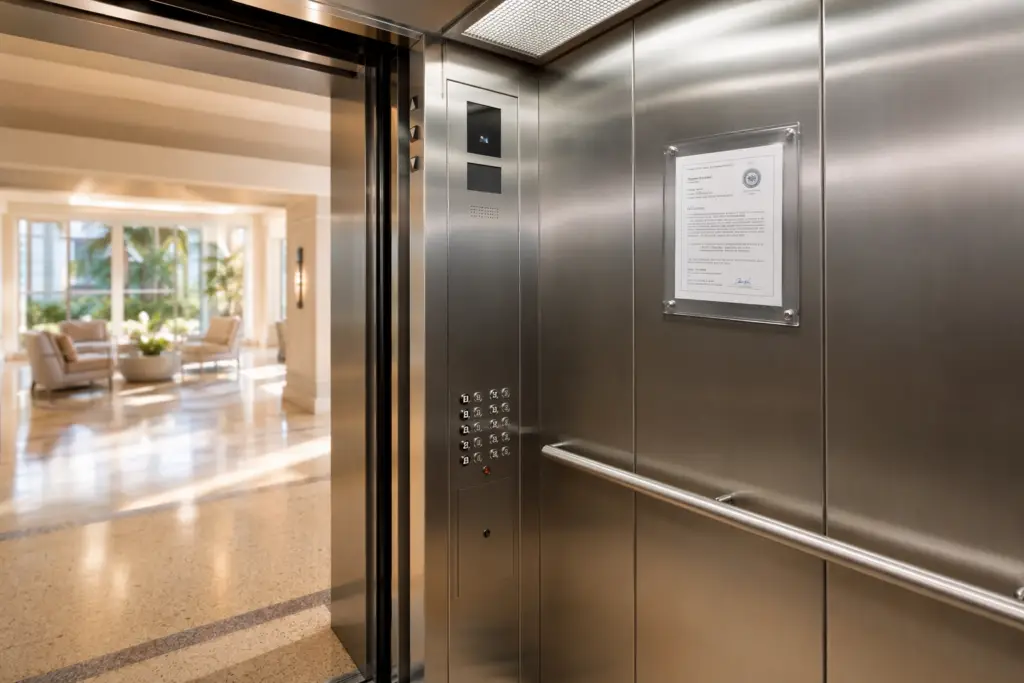
Certificates of inspection must be posted inside the elevator cab. Operating an elevator without a current, valid certificate is a violation that can result in fines up to $1,000 per day under Florida Statute 399.10.
What is the difference between a full-service maintenance contract and a basic maintenance agreement?
A full-service (comprehensive) maintenance contract covers labor and most parts for both scheduled maintenance and emergency repairs under a flat monthly fee, while a basic (oil and grease) agreement covers only scheduled lubrication and adjustment visits, leaving repair costs entirely at the owner’s expense.
For Sarasota properties with high-use elevators — commercial buildings, condominiums, healthcare facilities, hotels — a full-service agreement is almost always the more economical choice over a 3- to 5-year horizon. Emergency repair markups on parts and after-hours labor under a basic contract can easily exceed the annual premium difference between the two contract types after a single major failure.
Always review these specific contract provisions before signing: parts exclusion lists, callback response time guarantees, after-hours labor rate caps, and modernization credit terms. Axxiom Elevator Florida provides transparent contract terms for both Sarasota and Pompano Beach clients, with clearly defined response windows and no hidden callback fees.
What certifications should an emergency elevator technician in Sarasota have?
At minimum, any technician performing emergency elevator repair in Sarasota must hold a Florida Elevator Certificate of Competency and membership or training through IUEC (International Union of Elevator Constructors) or equivalent certification demonstrating ASME A17.1 proficiency.
When a technician arrives at your property, you are legally entitled to ask to see:
- Florida DBPR elevator contractor license (company license number)
- Personal identification
- Current QEI (Qualified Elevator Inspector) credentials if the technician is performing inspection functions
- Proof of general liability and workers’ compensation insurance
Never allow an unlicensed individual to perform elevator work on your property, regardless of how minor the repair appears. Insurance carriers and Florida DBPR take an uncompromising position on this point, and property owners can be held directly liable for resulting injuries.
How do I know if my elevator situation is an emergency or can wait for a scheduled repair?
Any condition involving passenger safety, code-mandated safety device activation, or loss of primary conveyance in an ADA-required accessible building is an emergency; cosmetic issues, minor door delays, and non-safety indicator lights can typically wait for a scheduled visit.
Use this decision framework:
- Call immediately (emergency line): Trapped passengers, burning smell, elevator moving with doors open, hydraulic fluid visible outside the pit, control system failure leaving unit energized but unresponsive.
- Call within 2–4 hours (urgent but not life-safety): Complete unit shutdown with no passengers involved, door system failure preventing operation, loss of elevator phone/intercom.
- Schedule next available appointment: Slow door operation (within tolerance), minor leveling issues, interior lighting flickering, worn cab finishes, non-critical indicator light faults.
If you are uncertain, always err toward the emergency call. A legitimate elevator company will triage your situation over the phone and advise appropriately — no reputable contractor will dispatch an emergency crew for a non-emergency just to collect after-hours rates.
Can my building manager or maintenance staff perform temporary elevator repairs?
No — Florida law prohibits non-licensed individuals from performing any mechanical, electrical, or safety-related work on elevator equipment, regardless of how minor the task appears.
This prohibition includes resetting safety circuits, manually operating car gates or hoistway doors, adjusting door timing controls, and lubricating drive components. Property managers who allow or instruct maintenance staff to perform these tasks expose themselves and their employers to DBPR enforcement action, OSHA citation under standards referenced at OSHA.gov, and civil liability in the event of injury.
The only legitimate non-licensed action is placing an “Out of Service” barrier and calling your licensed elevator contractor.
How does elevator age affect emergency repair frequency and cost in Sarasota?
Elevators over 20 years old experience emergency repair calls at a rate approximately 3 to 4 times higher than elevators under 10 years old, and parts obsolescence significantly increases both cost and downtime for aging equipment.
Florida’s coastal environment compounds this issue. Sarasota’s humidity, salt air exposure, and temperature cycling accelerate corrosion of electrical contacts, motor windings, and hydraulic seals. Equipment that might last 25 to 30 years in an inland climate may begin showing accelerated failure rates at 15 to 18 years in coastal Sarasota installations.
If your elevator is more than 20 years old and experiencing repeat emergency calls, it is worth requesting a modernization assessment alongside each repair visit. In many cases, a targeted modernization of the controller, door system, or drive unit eliminates the most common failure modes without the cost of full cab replacement.
What should I expect during an emergency elevator repair service visit?
Expect the technician to arrive, perform a safety assessment, diagnose the fault using code-compliant procedures, either complete the repair on-site or clearly communicate what parts and timeline are required, and provide written documentation before leaving.
A properly executed emergency service visit follows this sequence:
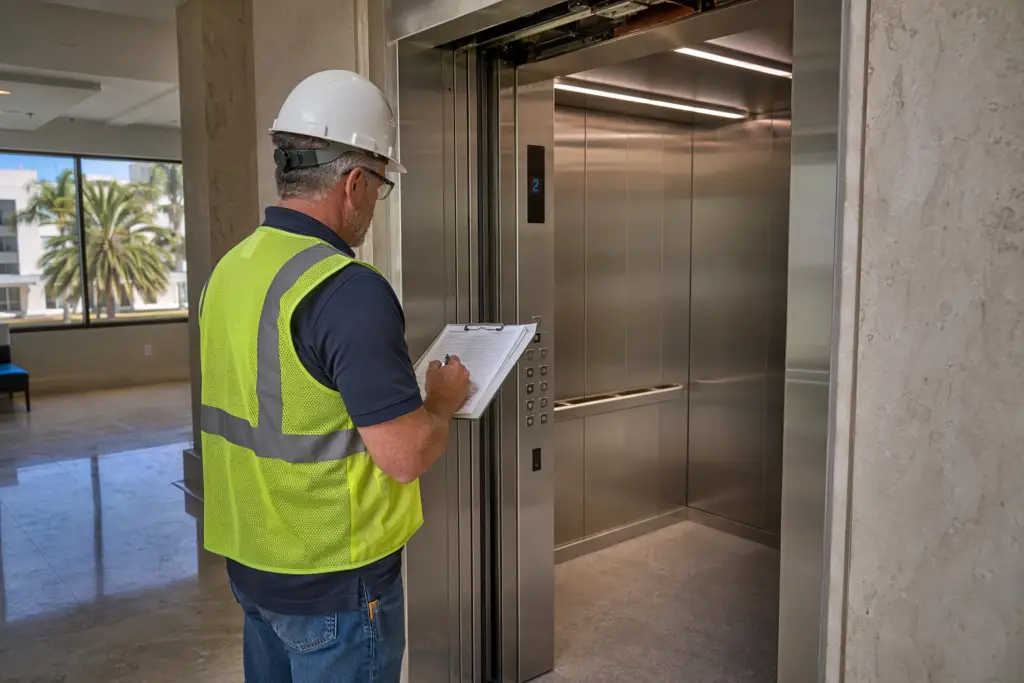
- Technician checks in with building management and reviews any reports of passenger entrapment or prior symptoms.
- Safety lockout/tagout (LOTO) procedures are applied per OSHA and ASME A17.1 requirements before any inspection begins.
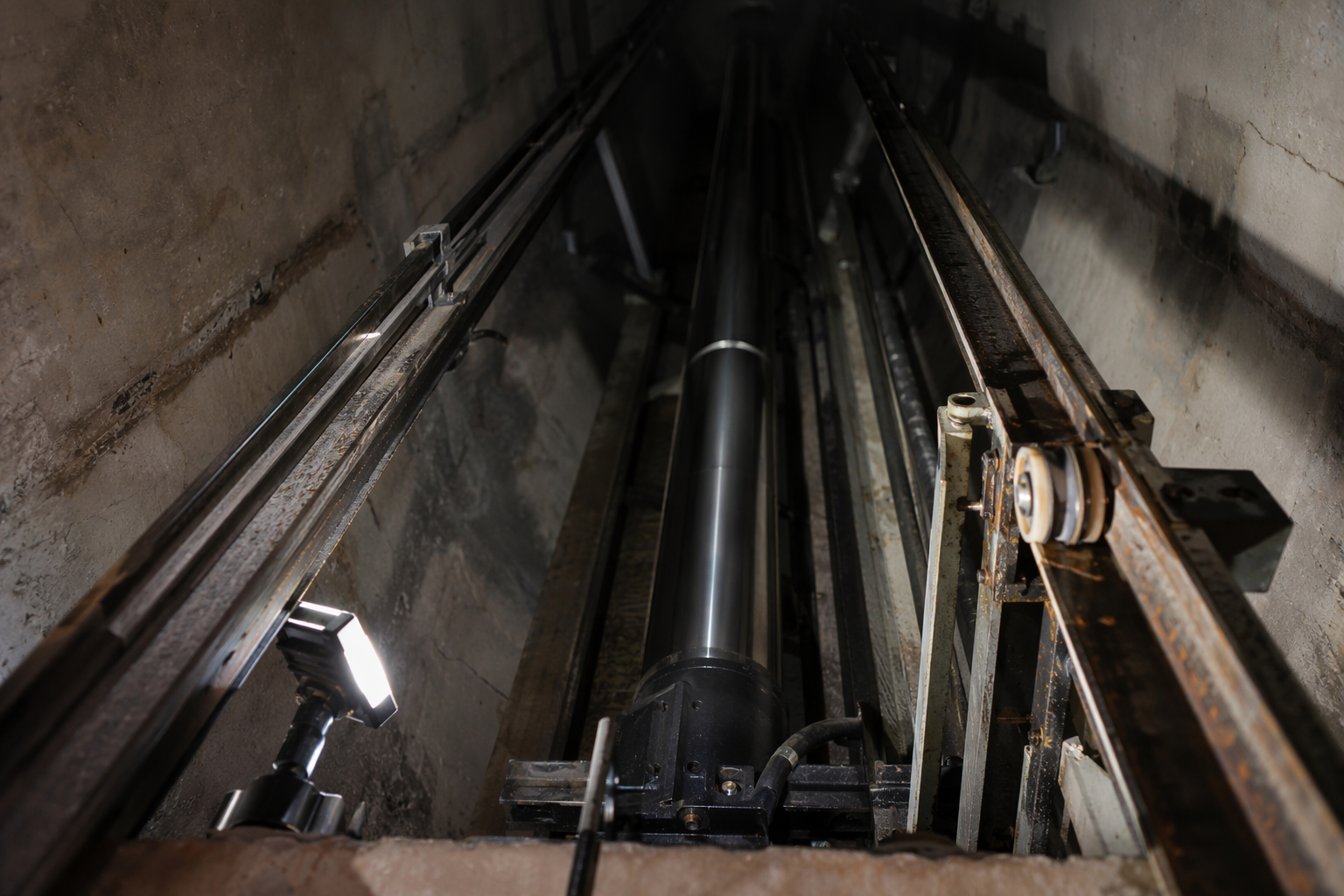
- Hoistway, machine room, and pit are visually inspected for immediate hazards.
- Fault codes are retrieved from the elevator controller and interpreted against manufacturer diagnostics.
- Root cause is identified — not just the symptom that triggered the call.
- Repair is performed if parts are available; temporary measures are implemented only if they maintain code compliance.
- Post-repair testing is conducted through a minimum of 5 full-cycle test runs before the elevator is returned to service.
- A written service report is provided documenting findings, work performed, parts replaced, and any recommended follow-up items.
Is my elevator covered by insurance for emergency repairs in Sarasota?
Most commercial property insurance policies cover elevator emergency repairs caused by sudden and accidental breakdown under equipment breakdown coverage, but routine maintenance failures and gradual deterioration are typically excluded.
Review your policy for “boiler and machinery” or “equipment breakdown” endorsements — these are the policy sections most likely to provide coverage for elevator failures. You will almost always be required to demonstrate that the elevator was under a documented maintenance program at the time of failure to support a claim.
This is another reason why detailed service records matter. Axxiom Elevator Florida provides maintenance logs and service reports formatted to support insurance documentation requirements for both Sarasota and Pompano Beach properties.
What elevator brands and types does Axxiom Elevator Florida service in Sarasota?
Axxiom Elevator Florida services all major elevator manufacturers and types commonly found in Sarasota’s commercial, residential, and hospitality building inventory.
Sarasota’s building stock includes a mix of:
- Hydraulic elevators — Common in 2- to 6-story commercial and residential buildings. Brands serviced include Otis, Thyssen, Dover, Savaria, and US Elevator.
- Traction elevators (geared and gearless) — Found in mid- and high-rise condominiums along the Sarasota waterfront and in larger commercial buildings.
- MRL (Machine Room-Less) traction elevators — Increasingly common in new construction since the early 2000s; require specific drive and rope expertise.
- LiftMaster and residential platform lifts — Found in private residences and low-rise ADA applications.
- Dumbwaiters and service lifts — Common in Sarasota’s restaurant and hotel sector.
How do I compare elevator service companies before an emergency happens in Sarasota?
Evaluate elevator service companies on five criteria before an emergency occurs: Florida licensure verification, local technician presence, documented response time commitments, contract transparency, and verifiable references from Sarasota-area properties.
Do this due diligence now, not at 2:00 AM when your elevator is down. Verify any contractor’s Florida DBPR license at the state licensing portal. Ask specifically how many technicians the company has stationed in Sarasota County versus how many are dispatched from other markets. Request a sample service contract and review the callback response language carefully — vague language like “prompt response” or “best efforts” has no enforceable meaning.
Ask for references from at least three Sarasota-area commercial or multi-family properties and follow up with actual phone calls. A company with genuine local presence will have no trouble providing these.
What ADA requirements apply to elevators in Sarasota commercial buildings?
Under the Americans with Disabilities Act, elevators serving buildings with more than three stories or more than 3,000 square feet per floor must meet accessibility standards covering cab dimensions, door timing, control panel heights, and tactile signage as detailed at ADA.gov.
Key ADA elevator requirements relevant to Sarasota commercial properties include:
- Minimum cab inside dimensions of 80 inches deep by 68 inches wide (for center-opening doors)
- Door reopening device that does not require contact, maintaining for 20 seconds minimum
- Call buttons a minimum of ¾ inch in their smallest dimension, located 35–54 inches above the floor
- Raised and Braille floor designations on both jambs at 60 inches above the finished floor
- Audible and visual floor indicators in the cab
ADA compliance failures discovered during an emergency repair visit must be reported and addressed. Ignoring documented ADA deficiencies after they have been identified creates escalating legal exposure for property owners and operators.
What causes the most common elevator emergencies in Sarasota?
Door system failures account for approximately 60% of all emergency elevator calls in coastal Florida markets, followed by hydraulic system faults, electrical control failures, and environmental damage from heat and humidity.
In 15-plus years of field experience, the recurring root causes I see most often in Sarasota specifically are:
- Door operator and clutch wear — Accelerated by high use cycles in residential and hospitality buildings. Sarasota’s condo and resort market sees extremely high door cycle counts.
- Hydraulic seal and valve degradation — Coastal humidity and temperature swings accelerate seal deterioration. Annual hydraulic fluid analysis is a worthwhile addition to any maintenance program.
- Corrosion on pit electrical components — Sarasota pit environments can be challenging; any history of pit flooding makes this risk significantly higher.
- Power quality issues — Sarasota’s storm activity, particularly during hurricane season (June through November), creates voltage spikes and surges that damage control boards and VFD drives.
- Deferred maintenance cascade failures — Properties that delay routine maintenance to cut costs consistently experience the most severe and expensive emergency events.
How often should elevators in Sarasota be professionally maintained to minimize emergencies?
For commercial and multi-family residential elevators in Sarasota, monthly maintenance visits are the industry-recommended interval, with quarterly supplemental inspections for high-traffic and high-cycle installations.
The ASME A17.1 code framework does not prescribe specific maintenance intervals, but it does require that maintenance be performed at intervals sufficient to keep the equipment in safe operating condition — a standard that DBPR inspectors apply when evaluating maintenance records during inspections. In practice, for Sarasota’s environment and building types, monthly service is the defensible baseline. High-traffic buildings — hotels, hospitals, condominiums with 100+ units — benefit from bi-monthly or monthly enhanced service protocols.
Properties serviced by Axxiom Elevator Florida in Sarasota receive documented maintenance reports after every visit, giving owners clear evidence that they are meeting the “sufficient interval” standard Florida regulators look for.
What should I do after the emergency elevator repair is complete?
After an emergency repair, obtain a written service report, update your maintenance records, assess whether the failure indicates a broader maintenance deficiency, and confirm that all safety tests required before return to service have been completed and documented.
Specifically, take these steps post-repair:
- Confirm the technician has completed and signed a written service report noting root cause, corrective action, and any open items requiring follow-up.
- Update your elevator log book — Florida DBPR may request this during the next annual inspection.
- Ask your technician directly: “Is this failure a symptom of a larger maintenance issue?” A trustworthy contractor will give you an honest answer even if it means recommending additional investment.
- If the repair required any safety device reset, confirm that a post-repair test sequence was completed before passengers were allowed back in the cab.
- Notify your insurance carrier if the repair cost exceeds your equipment breakdown deductible.
- Schedule your next preventive maintenance visit before leaving the current service appointment, especially if the unit was overdue.
Contact Axxiom Elevator Florida for Emergency Elevator Repair in Sarasota
When your elevator fails in Sarasota, you need a certified technician with local knowledge, proper licensure, and a genuine commitment to getting your equipment safely back in service — not a call center in another state and a technician who has never worked in your building.
Axxiom Elevator Florida provides emergency elevator repair, preventive maintenance, modernization, and compliance support for commercial, residential, and hospitality properties throughout Sarasota and Pompano Beach, FL. Our IUEC-certified technicians are trained to ASME A17.1 Safety Code for Elevators and Escalators standards and operate in full compliance with Florida Statute Chapter 399 and ADA accessibility requirements.
Contact Axxiom Elevator Florida for a free elevator assessment.
Call us now:
Available for emergency response across Sarasota, FL and Pompano Beach, FL.