Best Elevator Maintenance Company in Sarasota, FL: Complete FAQ Guide
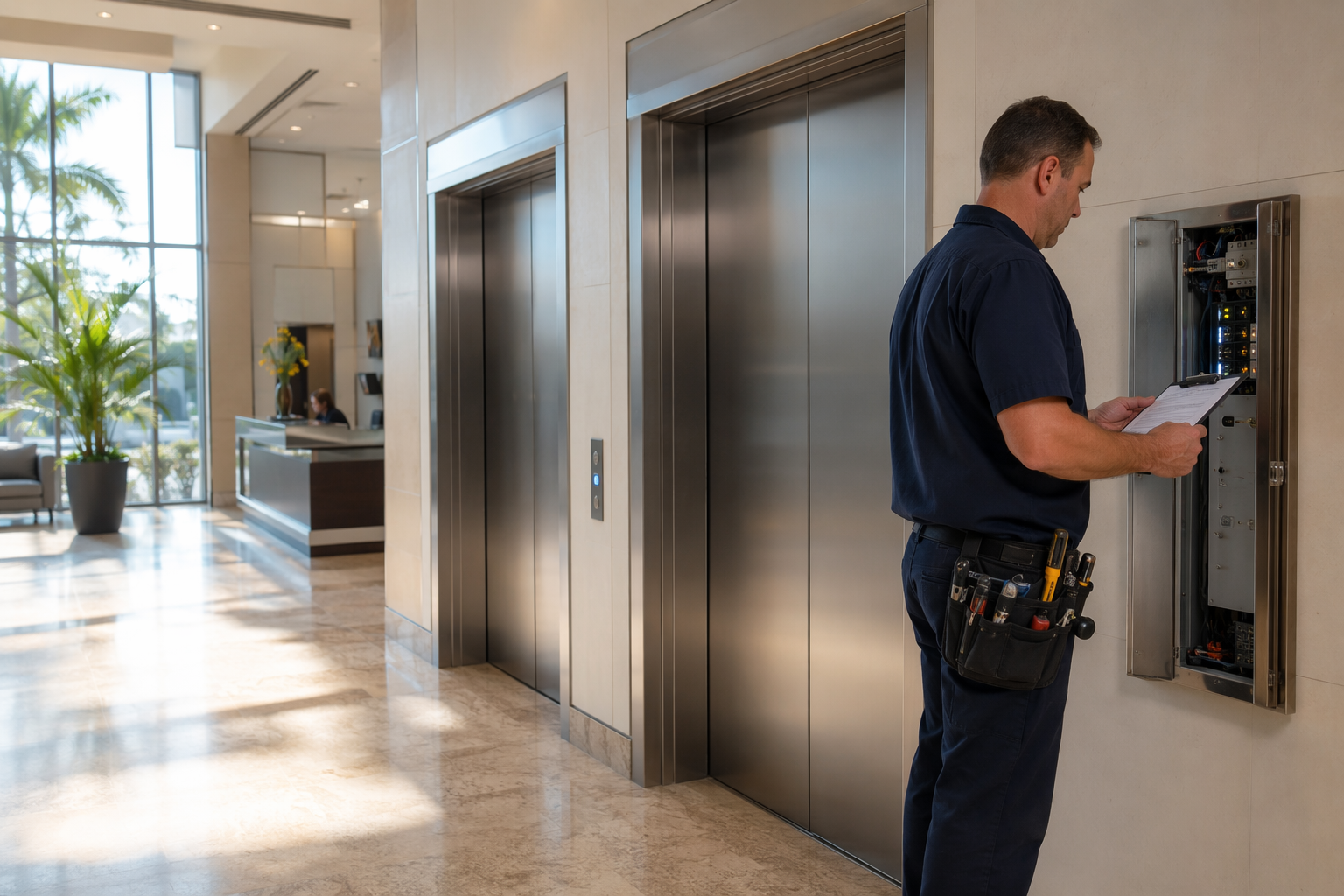
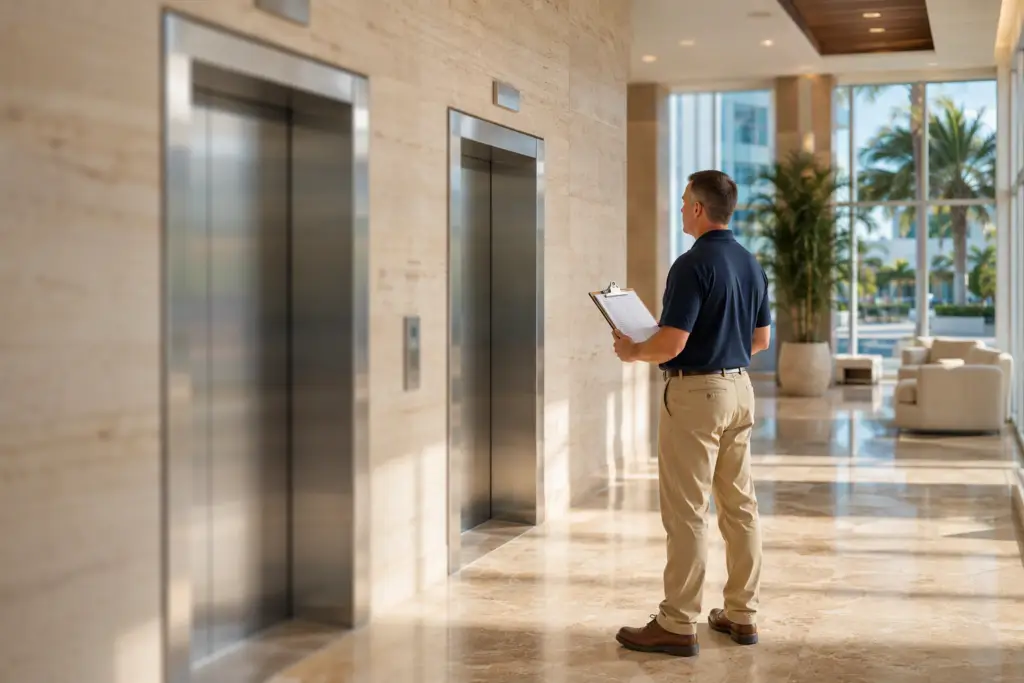
After more than 15 years working on hydraulic lifts, traction elevators, and commercial vertical transport systems across Florida, I’ve seen what separates a genuinely reliable elevator maintenance company from one that simply shows up when something breaks. In Sarasota’s growing commercial and residential market, the stakes are high — a poorly maintained elevator isn’t just an inconvenience, it’s a liability. This FAQ hub covers every question building owners, property managers, and HOAs ask me about elevator maintenance, compliance, and vendor selection in Sarasota.
What makes Axxiom Elevator Florida the best elevator maintenance company in Sarasota?
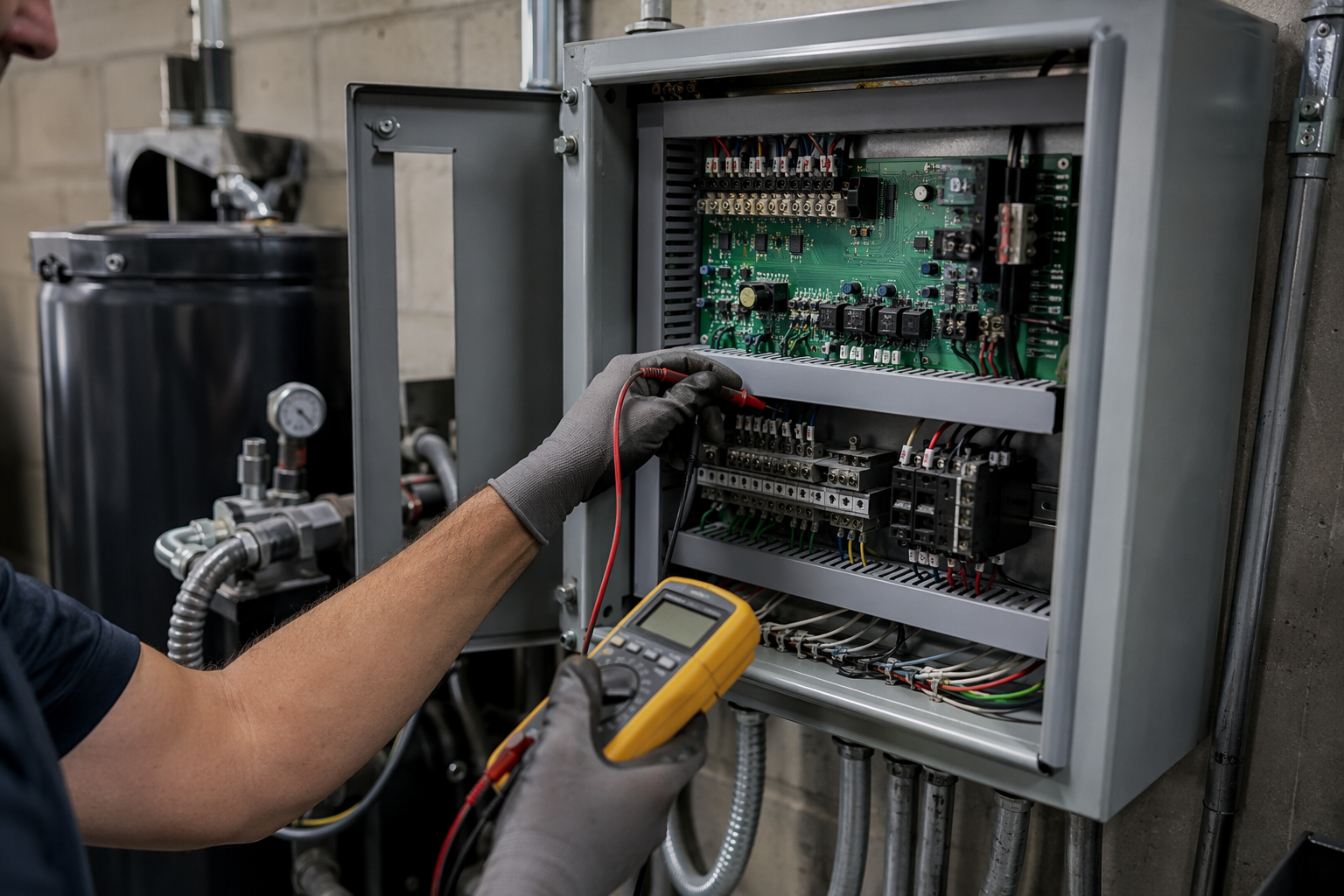
Axxiom Elevator Florida stands out because it combines IUEC-certified technicians, full ASME A17.1 compliance expertise, 24/7 emergency response, and locally rooted service across Sarasota — without the inflated overhead of a national chain.
Most national elevator companies route service calls through regional dispatch centers, which means your building could wait hours — sometimes days — for a technician. As someone who has worked both corporate and independent service channels, I can tell you the difference is felt immediately when a resident is trapped or a commercial building loses vertical access. Axxiom Elevator Florida operates with local Sarasota technicians, meaning response times are faster and technicians know the building stock, permit history, and inspection timelines specific to Sarasota County.
Beyond speed, what matters is certification. Every Axxiom technician holds IUEC (International Union of Elevator Constructors) credentials and is trained on the current 2019 edition of ASME A17.1/CSA B44 Safety Code for Elevators and Escalators, which is the governing standard for all elevator work performed in Florida as of 2026.
How often should elevators be inspected in Sarasota, Florida?
Under Florida Statute 399 and ASME A17.1, elevators in Sarasota must receive a full safety inspection at least once every 12 months, with periodic maintenance checks recommended every 1 to 3 months depending on usage volume.
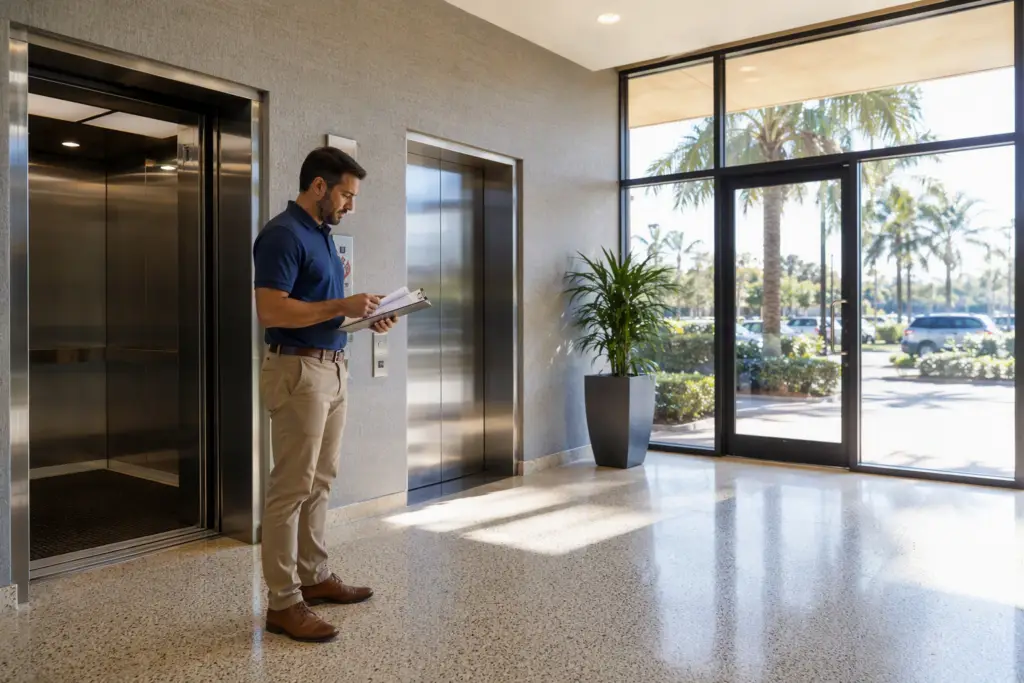
Florida’s Bureau of Elevator Safety, operating under the Department of Business and Professional Regulation (DBPR), enforces annual inspection mandates for all public-use elevators statewide. This applies to commercial buildings, multi-family residential properties, hotels, healthcare facilities, and any elevator accessible to the public. The inspection must be performed by a Florida-licensed elevator inspector, and the resulting certificate must be posted inside the elevator cab.
However, annual inspections alone are not sufficient to prevent breakdowns or ensure rider safety. Based on my field experience, I recommend the following maintenance schedule by building type:
| Building Type | Elevator Usage Level | Recommended Maintenance Frequency | State Inspection Minimum |
|---|---|---|---|
| Single-family residential | Low (1–10 trips/day) | Every 6 months | Annual (if public-accessible) |
| Small commercial (2–5 floors) | Moderate (50–150 trips/day) | Every 3 months | Annual |
| Mid-rise office or condo | High (150–500 trips/day) | Monthly | Annual |
| Hospital / healthcare facility | Very High (500+ trips/day) | Monthly or bi-monthly | Annual + ASME Category 1 & 5 |
| Hotel / hospitality | High (varies by season) | Monthly (peak season bi-weekly) | Annual |
What is included in a professional elevator maintenance contract in Sarasota?
A comprehensive elevator maintenance contract in Sarasota should include scheduled lubrication, safety device testing, controller and drive inspections, cab interior checks, door operator adjustments, and coordination of the annual state inspection — all documented per ASME A17.1 requirements.
Not all maintenance contracts are created equal. In my experience, the lowest-bid contracts almost always exclude the components that fail most often — door operators, hydraulic seals, and safety governors. When reviewing any maintenance agreement, building owners should look for explicit coverage of the following:
- Lubrication of guide rails, gibs, and moving mechanical parts
- Testing of safety devices including governors, buffers, and safeties
- Inspection and adjustment of door operators and car door hangers
- Controller and drive unit diagnostics
- Emergency lighting and phone system testing per ADA Standards for Accessible Design
- Pit inspection including sump pump, lighting, and stop switch verification
- Hydraulic fluid level and seal integrity checks (for hydraulic elevators)
- Written service reports submitted within 48 hours of each visit
Axxiom Elevator Florida’s maintenance agreements include all of the above in a flat-rate structure, so there are no surprise invoices when a door sensor needs adjustment mid-contract.
How much does elevator maintenance cost in Sarasota in 2026?
In Sarasota, elevator maintenance contracts typically range from $150 to $600 per month depending on elevator type, age, number of stops, and service level, with hydraulic elevators generally costing less to maintain than MRL traction units.
Cost is the most frequently misunderstood aspect of elevator maintenance. Property managers often chase the lowest monthly rate without accounting for exclusions, call fees, and parts markups. Here’s a realistic breakdown of what Sarasota building owners should expect to pay in 2026:
| Service Tier | Monthly Cost Range | What’s Typically Included | Best For |
|---|---|---|---|
| Lubrication & Inspection Only | $150 – $250/mo | Basic lube, visual inspection, no parts | Low-use residential elevators |
| Full Maintenance (Parts Excluded) | $250 – $400/mo | All labor, no parts or callbacks | Small commercial buildings |
| Comprehensive Full-Service | $400 – $600/mo | Labor + most parts + callbacks included | Mid-rise, HOAs, hospitality |
| Premium Managed Maintenance | $600+/mo | All-inclusive + remote monitoring + priority dispatch | Hospitals, Class A commercial |
Annual state inspection fees in Florida are separate and typically run $200 to $500 depending on the elevator type and local inspector availability. Always verify whether your maintenance company coordinates and includes the state inspection in their contract pricing.
What Florida regulations govern elevator maintenance and safety?
Elevator maintenance in Florida is governed primarily by Florida Statute Chapter 399, which mandates licensing, permitting, and annual inspections administered by the Florida Department of Business and Professional Regulation (DBPR) Bureau of Elevator Safety.
Florida Statute 399 requires that any person or company performing elevator maintenance, repair, or installation in the state hold a valid Florida Elevator Company Certificate of Authorization. Individual technicians must hold a Florida Elevator Certificate of Competency or work under direct supervision of a certified mechanic. As of 2026, the DBPR also requires that all elevators comply with the ASME A17.1 safety code edition adopted by the state at time of installation, with retrofit requirements triggered by major modifications.
For ADA compliance — particularly relevant in Sarasota’s commercial and healthcare sectors — elevator dimensions, control button heights, and auditory signals must conform to ADA Standards for Accessible Design, Sections 407–408. Non-compliant elevators can expose building owners to federal civil rights complaints and significant fines.
What is the difference between elevator maintenance and elevator repair?
Elevator maintenance is scheduled, preventive service designed to keep equipment operating safely and extend component life, while elevator repair is reactive work performed after a component fails — and repairs almost always cost significantly more than prevention.
In my 15 years of field experience, the buildings that have the fewest emergency calls and the lowest total elevator costs are those on structured maintenance programs, not those who call for service only when something breaks. A worn door clutch caught during a quarterly maintenance visit costs $80–$150 to adjust. That same clutch, if ignored, causes a door strike, damages the hanger assembly, and triggers a building shutdown — a repair bill that can easily reach $1,500 to $3,500 plus lost revenue from elevator downtime.
How do I verify that an elevator maintenance company is licensed in Florida?
You can verify any elevator company’s Florida licensure by searching the DBPR’s online license verification portal at myfloridalicense.com, where all valid Elevator Company Certificates of Authorization are publicly listed.
Before signing any maintenance contract in Sarasota, request the company’s Florida Elevator Company Certificate of Authorization number and verify it directly on the Florida DBPR License Verification portal. Also confirm that individual technicians assigned to your building hold current Florida Elevator Certificate of Competency credentials. Hiring an unlicensed company can void your building’s insurance coverage and expose you to personal liability in the event of an incident.
Axxiom Elevator Florida holds all required Florida state certifications and can provide certificate numbers upon request before any contract is signed.
What are the most common elevator problems in Sarasota’s climate?
Sarasota’s subtropical humidity, salt air proximity, and seasonal heat create specific elevator vulnerabilities including hydraulic seal degradation, controller board corrosion, door operator swelling, and accelerated lubricant breakdown — all of which require climate-adapted maintenance protocols.
This is one area where local expertise matters enormously. National elevator companies use standardized maintenance protocols designed for temperate climates. In Sarasota, we deal with ambient temperatures that regularly exceed 90°F in machine rooms, salt-laden air that corrodes electrical contacts within 18–24 months if not treated, and humidity levels that cause wooden door sills and cab finishes to swell and bind. Technicians who’ve worked the Sarasota market long-term know to apply dielectric grease to controller connections, use higher-viscosity hydraulic fluid during summer months, and inspect door tracks monthly during rainy season. These aren’t standard procedures in a national service manual — they’re field-developed best practices.
What should I do immediately if an elevator in my Sarasota building breaks down?
If an elevator breaks down in your Sarasota building, follow these steps immediately to protect rider safety, meet legal obligations, and initiate the fastest possible repair response.
- Check for trapped passengers first. Use the emergency phone inside the cab to communicate with anyone who may be inside. Do not attempt to manually open doors without a qualified technician present.
- Contact your elevator maintenance provider’s 24/7 emergency line and report the exact nature of the malfunction, elevator ID number, and last known floor position.
- Post “Out of Service” signage at all landings immediately to prevent additional riders from attempting to use the elevator.
- Do not allow unauthorized personnel to attempt repairs. Florida Statute 399 prohibits unlicensed individuals from performing any elevator work, including emergency resets.
- Document the incident with a written log entry including date, time, reported symptoms, and any passengers affected. This is essential for insurance and regulatory purposes.
- Notify the Florida DBPR Bureau of Elevator Safety if the malfunction resulted in injury, entrapment exceeding one hour, or a free-fall incident.
- Do not return the elevator to service until a licensed technician has cleared it in writing and the service report is on file.
How long does elevator maintenance take per visit?
A standard elevator maintenance visit in Sarasota typically takes between 2 and 4 hours for a single-unit commercial elevator, though this varies based on elevator age, type, number of stops, and any items flagged from the previous visit.
Beware of any maintenance company that completes a “full inspection” in under an hour. Properly lubricating guide rails, testing all safety devices, running door cycle counts, checking controller diagnostics, and inspecting the pit and machine room cannot be done responsibly in 45 minutes. Written service reports should detail every component inspected, every measurement recorded, and every adjustment made — not just a signature on a generic checklist.
What is ASME A17.1 and why does it matter for Sarasota elevators?
ASME A17.1, published by the American Society of Mechanical Engineers, is the primary safety code governing elevator design, installation, inspection, testing, and maintenance in the United States, and Florida law requires all elevators to comply with the edition adopted at their time of installation.
The ASME A17.1/CSA B44 Safety Code is updated on a cycle basis, and the 2019 edition is currently the most widely enforced version in Florida as of 2026. Key provisions relevant to Sarasota building owners include:
- Category 1 and Category 5 testing requirements for hydraulic and traction elevators
- Safety device testing intervals (governors, safeties, buffers)
- Door reopening device performance standards
- Emergency lighting and communication requirements
- Firefighters’ emergency operation standards
When an elevator undergoes significant modification — a new controller, cab replacement, or hydraulic system upgrade — the DBPR may require the unit to be brought into compliance with the current ASME edition, not just the edition in force when it was originally installed. This is a critical point for owners of older Sarasota buildings considering modernization projects.
How do I compare elevator maintenance companies in Sarasota?
When comparing elevator maintenance companies in Sarasota, evaluate their state licensure, technician certifications, contract exclusions, average response time, local references, and whether they offer written documentation of every service visit — not just the lowest monthly price.
Here is a practical comparison framework I recommend to every building manager I work with:
| Evaluation Criteria | What to Ask | Red Flag |
|---|---|---|
| State Licensure | “Provide your FL Certificate of Authorization number.” | Hesitation or inability to provide on request |
| Technician Certification | “Are your techs IUEC-certified or Florida-licensed?” | “Our techs are trained in-house only” |
| Response Time | “What is your guaranteed emergency response time in Sarasota?” | No written SLA or “we’ll get there as soon as possible” |
| Contract Transparency | “What is specifically excluded from this contract?” | No exclusion list provided in writing |
| Local References | “Can you provide 3 Sarasota-area references?” | Only out-of-market references offered |
| Service Documentation | “Will we receive a written report after every visit?” | “We keep records internally” with no client copy |
| Annual Inspection Coordination | “Do you coordinate and attend the Florida DBPR inspection?” | Leaves this to building owner to manage alone |
Does ADA compliance apply to elevators in Sarasota commercial buildings?
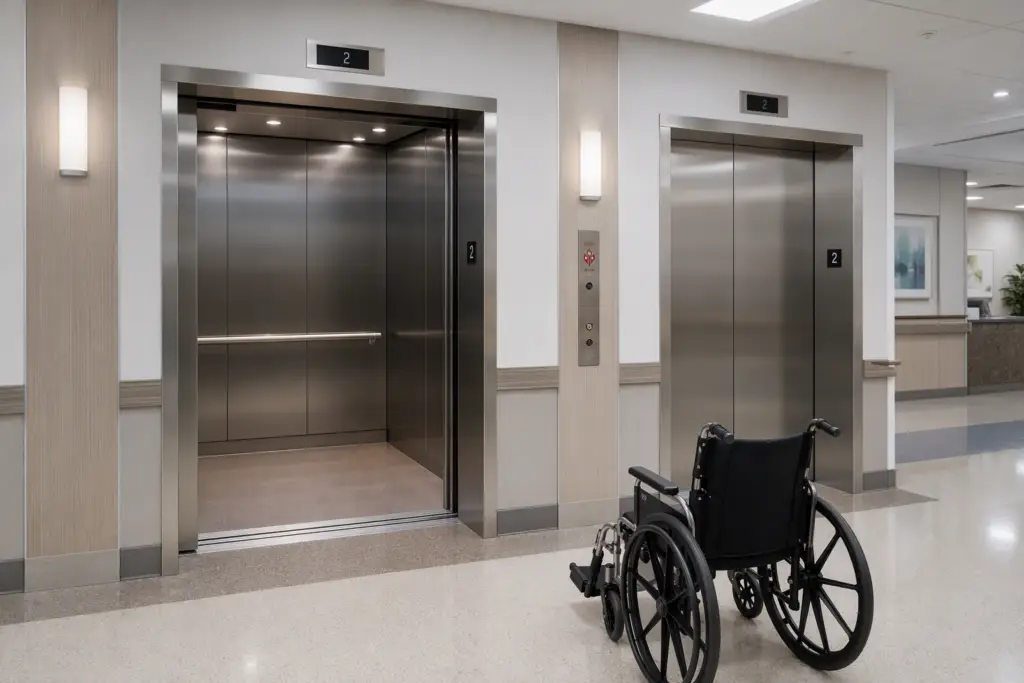
Yes — the Americans with Disabilities Act requires that elevators in most commercial facilities and multi-story buildings accessible to the public meet specific dimensional, operational, and signage standards under ADA Standards Sections 407 and 408.
ADA elevator requirements relevant to Sarasota properties include minimum car dimensions of 80 inches deep by 68 inches wide for most configurations, door clear opening widths of at least 36 inches, call button placement between 15 and 48 inches above the floor, Braille and raised character floor designations, and auditory floor announcement systems. Failure to comply exposes building owners to complaints filed with the Department of Justice and potential civil litigation. For full standards, refer to ADA.gov’s 2010 Standards for Accessible Design.
How long does elevator modernization take in Sarasota?
Elevator modernization projects in Sarasota typically take between 4 and 12 weeks depending on scope — a controller replacement may take 1–2 weeks while a full cab and drive system overhaul can require 8–12 weeks including permitting and DBPR inspection scheduling.
Florida’s permitting process for elevator modernization requires a DBPR permit application, approved plans, and a post-completion inspection before the unit can return to service. In Sarasota, DBPR inspection scheduling can add 2–4 weeks to a project timeline depending on inspector availability, so building owners should plan for elevator downtime and arrange temporary accessibility alternatives — particularly for ADA-protected residents or tenants — during the modernization period.
What is the average lifespan of an elevator in Florida?
With proper maintenance, most commercial elevators in Florida have a functional lifespan of 20 to 30 years before major modernization is required, while residential elevators often last 15 to 25 years depending on usage and maintenance consistency.
Sarasota’s climate conditions can accelerate component aging by 15–25% compared to temperate regions if maintenance is deferred. The components that most commonly trigger early modernization include hydraulic cylinders (corrosion from ground moisture), relay-based controllers (replaced with solid-state systems for reliability and parts availability), and cab enclosures (deterioration from humidity and UV exposure in skylight-equipped cabs). A well-documented maintenance history is the single most valuable asset when a building owner is evaluating whether to modernize or replace an aging elevator system.
What is a Category 5 elevator test and do Sarasota buildings need one?
A Category 5 test is a full-load safety test required by ASME A17.1 for hydraulic and traction elevators on a defined cycle — typically every 5 years for hydraulic units in Florida — and it is mandatory for all applicable elevators in Sarasota regardless of maintenance history.
The Category 5 test involves running the elevator at full rated capacity while deliberately activating safety devices to verify they function correctly under real load conditions. This is not a routine maintenance check — it requires a licensed inspector present, advance DBPR notification in some cases, and formal documentation filed with the state. Many building owners are unaware their elevator is overdue for a Category 5 test until a state inspection flags the deficiency. Axxiom Elevator Florida tracks Category 1 and Category 5 test due dates for all client elevators and provides advance notice at least 90 days before a test is required.
Can I switch elevator maintenance companies mid-contract in Sarasota?
Yes, you can switch elevator maintenance companies in Sarasota, but you should review your existing contract’s termination clause — typically requiring 30 to 90 days written notice — and ensure the incoming company performs a thorough acceptance inspection before assuming responsibility.
The acceptance inspection is critical. When a new maintenance company takes over an elevator, they need to document the current condition of every major component — hydraulic seals, controller boards, door operators, rope or chain condition, safety devices — so there is no ambiguity about pre-existing deficiencies versus issues that develop under their watch. Any reputable company should perform this inspection at no charge as part of onboarding. Always obtain the inspection report in writing before your prior contract expires.
What emergency response time should I expect from a Sarasota elevator maintenance company?
For entrapment situations, a Sarasota elevator maintenance company should guarantee a technician on-site within 2 hours or less — anything beyond 4 hours for an occupied building represents an unacceptable standard of service.
Florida law does not specify a mandatory emergency response time for elevator companies, but ASME A17.1 establishes expectations for building owner responsibilities in entrapment situations, and many insurance carriers set their own response time requirements in building policies. Get any emergency response commitment in writing as part of your maintenance contract, including what constitutes an “emergency,” how after-hours calls are handled, and whether there are additional fees for weekend or holiday dispatch. Axxiom Elevator Florida provides 24/7/365 emergency response with technicians based locally in Sarasota, targeting a 90-minute or better on-site response time for entrapment calls.
Are residential elevators in Sarasota required to be maintained by a licensed company?
Florida Statute 399 exempts private residence elevators that serve only a single-family home from mandatory state inspections, but any elevator accessible to more than one household — including HOA-managed or condo building elevators — falls under full regulatory requirements.
This is a commonly misunderstood exemption. If you own a single-family home with a personal elevator, you are technically not required by Florida law to use a licensed elevator company for maintenance. However, from a liability and safety standpoint, I strongly recommend licensed service regardless. The moment that elevator is used by a guest, caregiver, or any non-family member, premises liability exposure applies. For any multi-unit residential building in Sarasota — condos, townhome communities, assisted living facilities — full Florida Statute 399 requirements apply without exception.
What questions should I ask before signing an elevator maintenance contract in Sarasota?
Before signing any elevator maintenance contract in Sarasota, you should ask specifically about contract exclusions, parts coverage, response time guarantees, technician certification levels, inspection coordination, and early termination terms — in writing.
Here is the complete checklist I give to every new property manager I work with:
- What specific components and repairs are excluded from this contract?
- Is the annual DBPR inspection included, or is that a separate fee?
- What is the guaranteed emergency response time for entrapment calls?
- Are technicians employed directly by your company or subcontracted?
- What certifications do the technicians assigned to my building hold?
- Will I receive a written service report within 48 hours of every visit?
- How are Category 1 and Category 5 test due dates tracked and communicated?
- What is the contract term and what are the early termination penalties?
- Do you carry general liability and workers’ compensation insurance in Florida?
- Can you provide three references from comparable Sarasota-area buildings?
Ready to Work with the Best Elevator Maintenance Company in Sarasota?
Contact Axxiom Elevator Florida for a free elevator assessment. Our IUEC-certified technicians serve Sarasota and Pompano Beach with fully documented maintenance programs, 24/7 emergency response, and complete ASME A17.1 and Florida Statute 399 compliance management — all under transparent, flat-rate contracts with no hidden fees.
📞 Call us today:
Whether you manage a two-stop commercial elevator in downtown Sarasota or a multi-unit residential tower on the waterfront, Axxiom Elevator Florida has the local expertise, state certifications, and climate-adapted protocols to keep your vertical transportation running safely, reliably, and in full regulatory compliance in 2026 and beyond.