Elevator Maintenance Contracts: How to Know If Yours Covers Everything or If You Are Being Underserved
Elevator maintenance contracts vary dramatically in scope, language, and value. A building owner or property manager who cannot distinguish a full-coverage agreement from a bare-minimum contract risks unexpected repair costs, failed inspections, tenant safety incidents, and regulatory penalties. This FAQ hub page answers every critical question about elevator maintenance contract coverage, Florida-specific compliance requirements, and the warning signs that a service provider is not delivering adequate care.
What should a comprehensive elevator maintenance contract always include?
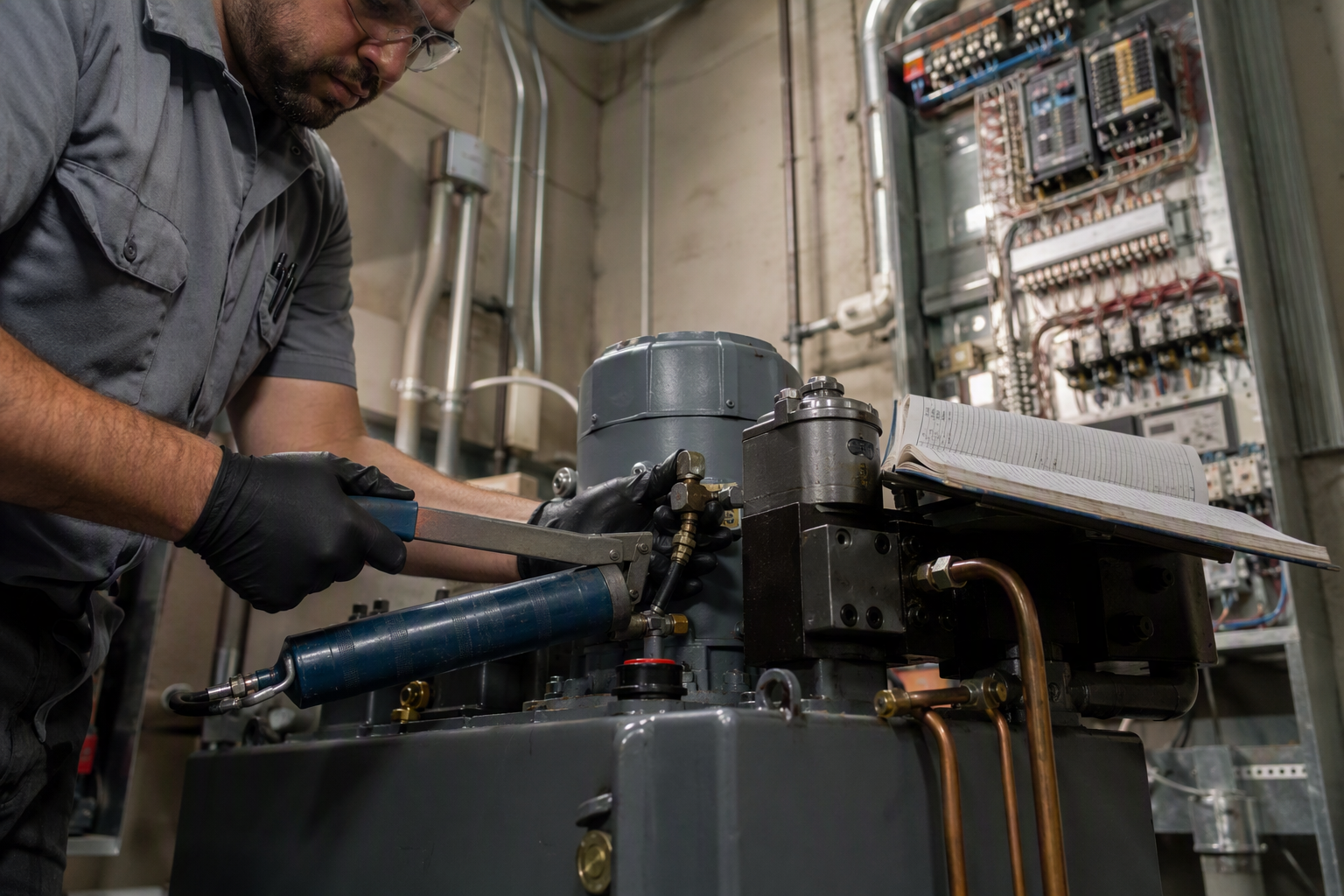
A comprehensive elevator maintenance contract must include scheduled preventive maintenance visits, lubrication and adjustment of all mechanical components, door operation checks, safety device testing, emergency callback service, and documented compliance with applicable codes.
At minimum, the agreement should spell out the frequency of maintenance visits, the exact list of components covered, what constitutes an “excluded” repair, and how the contractor handles code-mandated periodic tests. Contracts that use vague language such as “routine maintenance as needed” without defined visit schedules or component lists are a red flag. A well-structured contract references ASME A17.1 Safety Code for Elevators and Escalators as the technical baseline for all maintenance tasks performed.
What is the difference between a full-maintenance contract and an oil-and-grease contract?
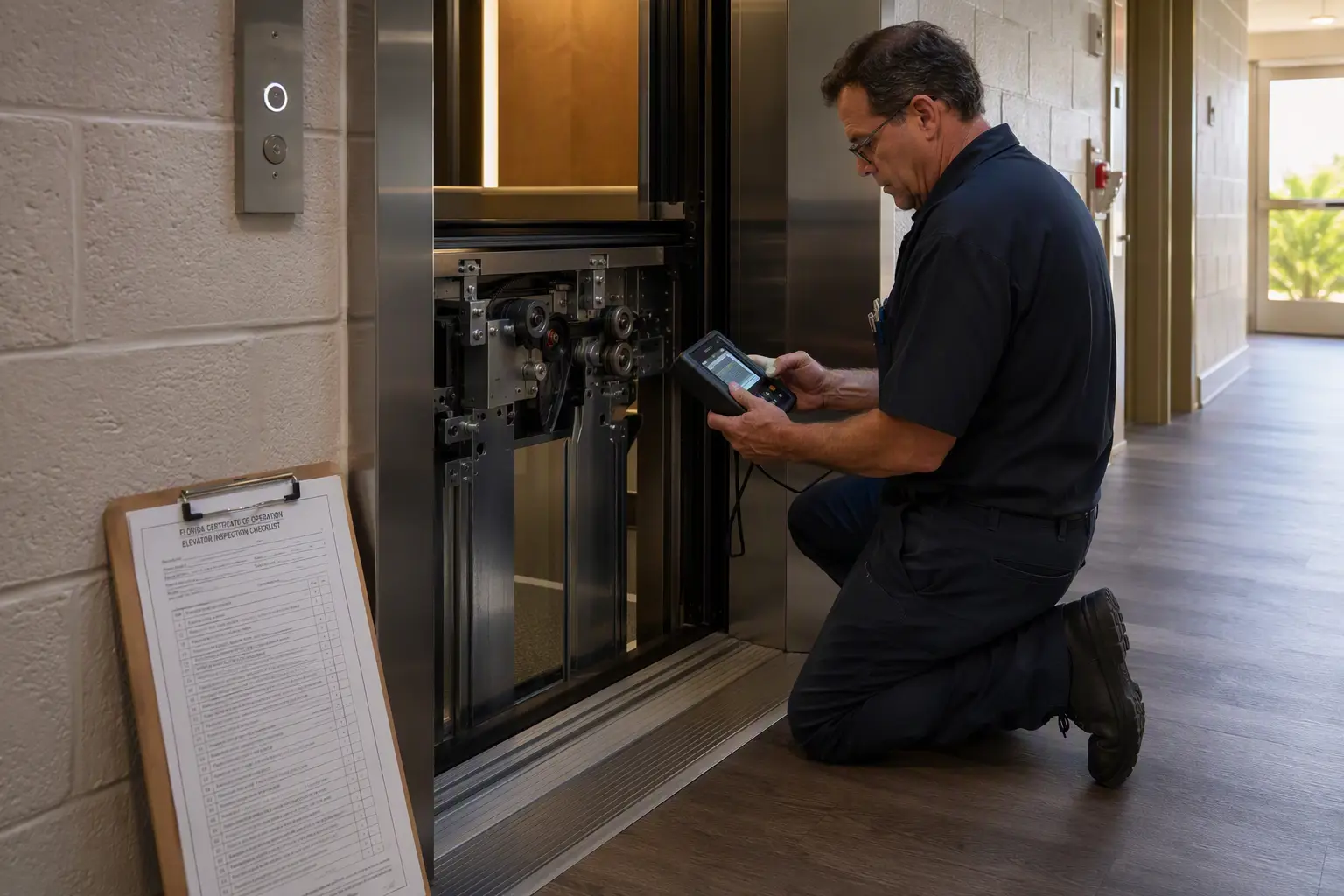
A full-maintenance contract covers parts, labor, repairs, and preventive service, while an oil-and-grease contract covers only basic lubrication and visual inspection — leaving the building owner responsible for all repair costs.
Oil-and-grease agreements are the most common source of bill shock in the elevator industry. A property manager who signs this type of contract believing it is comprehensive will discover that virtually every corrective repair — a worn door clutch, a failing controller board, a defective safety switch — is billed separately at premium rates. Full-maintenance contracts, by contrast, bundle most or all parts and labor into the monthly fee. When comparing proposals, building owners should require that each contract type be explicitly labeled and that exclusions be listed in plain language, not buried in appendices.
How often should a maintenance technician visit my elevator under a proper contract?
For most commercial elevators, a properly structured maintenance contract should provide at minimum monthly maintenance visits, with higher-traffic installations warranting more frequent service.
The ASME A17.1 Safety Code for Elevators and Escalators does not prescribe a universal monthly minimum for maintenance visits, but it does define routine maintenance as an ongoing obligation and sets mandatory periodic test intervals that require technician presence. Florida’s elevator safety program, administered through the Department of Business and Professional Regulation (DBPR), reinforces these standards at the state level. Contracts specifying quarterly-only visits for high-use commercial elevators almost certainly represent underservice. Axxiom Elevator Florida structures maintenance schedules based on equipment type, usage volume, and manufacturer recommendations rather than a one-size-fits-all calendar.
What periodic safety tests are required by code, and should my contract cover them?
Florida-regulated elevators are subject to mandatory periodic tests — including five-year full-load safety tests and annual inspections — and a properly written maintenance contract should address how the contractor supports or performs these tests.
Under ASME A17.1, traction elevators must undergo a Category 5 (full-load, full-speed) safety test every five years and a Category 1 test annually. Hydraulic elevators follow separate test schedules defined in the same code. Many contracts quietly exclude these mandatory periodic tests, meaning the building owner receives a separate invoice when compliance requires them. Before signing any agreement, property managers should ask: “Are Category 1 and Category 5 tests included, or are they billed additionally?” The answer determines a significant portion of the true five-year cost of the contract.
How does Florida state law affect what my elevator maintenance contract must cover?
Florida law requires all elevator contractors to be licensed through the state’s DBPR, and elevators must pass annual inspections conducted by a licensed elevator inspector — compliance with these requirements should be reflected in any reputable maintenance contract operating in the state.
Florida Statutes Chapter 399 governs elevator safety in the state and establishes the framework under which elevator contractors, inspectors, and building owners operate. A maintenance contract that does not acknowledge the contractor’s licensure obligations or that is silent on how annual inspection preparation is handled should raise immediate concerns. In markets such as Pompano Beach and Sarasota, where Axxiom Elevator Florida operates, building owners should verify that their service provider holds a current state contractor certificate and that the contract language aligns with Florida’s inspection cycle requirements.
What components should be explicitly listed as covered in my elevator maintenance contract?
A thorough maintenance contract should explicitly name the mechanical, electrical, and safety components covered rather than using general umbrella terms that create ambiguity during service calls.
| Component Category | Examples of Items to Be Covered | Often Excluded in Low-Tier Contracts |
|---|---|---|
| Door Systems | Door operators, gibs, rollers, clutches, safety edges | Door hanger replacement, car door panels |
| Drive System | Motor, drive sheave lubrication, brake adjustment | Motor rewinding, gearbox overhaul |
| Controller & Electrical | Relay inspection, selector adjustments, wiring checks | Circuit boards, selector tape/encoder replacement |
| Hydraulic System | Fluid level, valve adjustment, pump inspection | Jack replacement, fluid environmental remediation |
| Safety Devices | Governor testing, buffer inspection, car safety | Governor replacement, safeties rebuild |
| Cab & Fixtures | Button functionality, lighting, phone communication | Interior refurbishment, ceiling replacement |
| Code Compliance Tests | Annual Category 1 test preparation | Category 5 five-year test, witnessing fees |
Building owners should request a component-by-component breakdown when comparing proposals. If a contractor refuses to provide this level of specificity in writing, that reluctance itself is informative.
What are the clearest warning signs that I am being underserved by my current elevator contractor?
The clearest warning signs include infrequent technician visits, recurring breakdowns on the same components, failed annual inspections, surprise repair invoices for items that seem routine, and difficulty reaching the contractor during emergencies.
Additional indicators of underservice include technician visits that last only a few minutes without documentation, the absence of written maintenance logs, a contractor who cannot produce proof of licensure on request, and a pattern of recommending parts replacements on equipment that has recently been serviced. Building owners in Pompano Beach and Sarasota who notice these patterns should request a formal contract review and consider obtaining a second opinion from a certified service provider such as Axxiom Elevator Florida.
What questions should I ask before signing an elevator maintenance contract?
Before signing, building owners should ask specific questions about visit frequency, parts coverage, exclusion clauses, emergency response protocols, compliance test inclusion, and the contractor’s Florida licensure status.
Recommended questions to ask any prospective contractor:
- How many maintenance visits per year are included, and what tasks are performed at each visit?
- Is a detailed written log provided after every visit?
- Which specific parts are covered under the contract, and which are excluded?
- Are Category 1 and Category 5 tests included in the contract price?
- What is the process for emergency callback, and how is it documented in the agreement?
- Is your company licensed under Florida’s DBPR elevator contractor requirements?
- How are obsolete or discontinued parts handled when repairs are needed?
- Does the contract include ADA-related adjustments for door timing and leveling accuracy?
Any contractor unable or unwilling to answer these questions clearly in writing should be evaluated with caution.
How does ADA compliance factor into elevator maintenance obligations?
Under the Americans with Disabilities Act (ADA), elevators in public accommodations and commercial facilities must meet specific accessibility standards, and ongoing maintenance is essential to keeping those standards continuously met.
ADA Standards for Accessible Design specify requirements for door reopening devices, leveling accuracy (within one-half inch of the landing), timing of door operations, audible and visual signals, and accessible control panel height and labeling. A maintenance contract that does not include door timing adjustments, leveling checks, and audible/visual signal testing leaves the building owner exposed to ADA complaints and potential litigation. Maintenance providers should treat ADA-related operational parameters as non-negotiable components of every service visit, not optional add-ons.
What does “callback service” mean, and what level of callback coverage is adequate?
Callback service refers to unscheduled service visits required when an elevator malfunctions between scheduled maintenance visits, and an adequate contract should include callback coverage with clearly defined response terms.
Contracts vary widely on callback language. Some agreements include unlimited callbacks at no additional charge; others limit callbacks to a set number per year or charge overtime rates for after-hours responses. Building owners should look for contracts that specify: whether callbacks are included or billed separately, whether after-hours and weekend responses are covered, and how long the contractor is obligated to respond. Vague language such as “reasonable response” without a defined timeframe is insufficient for properties with elderly residents, medical facilities, or high occupancy where elevator outages create immediate hardship.
How should I evaluate the maintenance documentation and reporting my contractor provides?
A reputable elevator contractor should provide written service reports after every visit documenting the tasks performed, components inspected, adjustments made, any deficiencies found, and recommended corrective actions.
Maintenance records serve multiple critical purposes: they demonstrate due diligence in the event of a liability claim, provide the basis for predicting upcoming capital expenditures, support the annual inspection process, and allow building owners to verify that contractual obligations are being fulfilled. Property managers should maintain a file of all service reports and cross-reference them with the contracted scope of work at least annually. If a contractor provides only verbal updates or generic one-line receipts, the documentation standard is inadequate.
Are there specific considerations for older elevators or obsolete equipment?
Elevators with obsolete controllers, discontinued parts, or aging hydraulic systems require maintenance contracts with explicit provisions for how parts sourcing and modernization recommendations will be handled.
A common underservice scenario occurs when a contractor continues to maintain aging equipment without disclosing that critical parts are no longer manufactured or that the equipment no longer meets current ASME A17.1 safety requirements. Building owners with elevators more than two decades old should ensure their maintenance agreement includes a written obligation for the contractor to notify them in advance when parts become unavailable or when a code-required upgrade is approaching. Proactive disclosure is a mark of a service provider focused on the building owner’s long-term interest rather than short-term billing.
What is the difference between a maintenance contract and a modernization proposal, and can I be pressured into unnecessary upgrades?
A maintenance contract covers ongoing upkeep of existing equipment, while modernization involves capital replacement of major components — and a trustworthy contractor will clearly distinguish between necessary code upgrades and elective improvements.
Building owners should be cautious of contractors who regularly recommend expensive modernizations without providing written justification tied to a specific code requirement, documented failure, or end-of-service-life condition. Legitimate modernization triggers include mandatory retrofits required by current editions of ASME A17.1 or state enforcement actions, repeated failures of a specific major component, or parts obsolescence. When a modernization is genuinely warranted, a credible contractor will provide a written needs assessment separate from the maintenance contract.
How do I compare elevator maintenance contract proposals from multiple vendors?
Comparing proposals requires normalizing each bid against the same scope of work — visit frequency, covered components, exclusions, test inclusions, and callback terms — rather than comparing monthly prices alone.
A low monthly fee on an oil-and-grease contract will almost always result in higher total five-year costs than a full-maintenance contract with a higher monthly rate. To make a valid comparison, build a spreadsheet with the following columns for each proposal: monthly fee, number of annual visits, parts coverage (list specific inclusions and exclusions), callback terms, periodic test inclusion, and estimated out-of-pocket costs for likely excluded repairs based on the equipment’s age and condition. This normalized comparison reveals the true cost of each proposal and makes it easier to evaluate value rather than sticker price.
What workplace safety regulations apply to elevator maintenance work, and should my contract reference them?
Elevator maintenance technicians must comply with OSHA standards for general industry and construction, and a professional maintenance contractor operates in full compliance with these workplace safety requirements without exception.
OSHA regulations governing lockout/tagout procedures, confined space entry, and electrical safety are directly applicable to elevator service work. Building owners are not expected to monitor technician OSHA compliance in detail, but they should be aware that a contractor operating without safety protocols creates liability exposure for the property. A simple question — “Does your company have a written safety program for elevator maintenance operations?” — can help screen for professionalism. Reputable contractors will answer affirmatively and be willing to describe their safety practices.
How do I handle a contract that is mid-term but appears to be underserving my property?
Building owners who identify underservice mid-contract should document deficiencies in writing, formally notify the contractor of the service gaps, and review the contract’s dispute resolution and termination provisions before taking further action.
Recommended steps for addressing mid-contract underservice:
- Compile all service reports from the current contract period and identify visits that were missed, late, or underdocumented.
- List specific contractual obligations that appear to have been unfulfilled, citing the relevant contract language.
- Send a formal written notice to the contractor identifying the deficiencies and requesting a written response within a defined timeframe.
- Request a meeting to review the maintenance log and confirm the contractor’s plan to fulfill outstanding obligations.
- If the contractor fails to respond adequately, consult the contract’s termination clause and any applicable notice periods.
- Contact the Florida DBPR to verify the contractor’s licensure status and to understand options for filing a complaint if warranted.
- Obtain a second-opinion assessment from a qualified elevator service company to document the current condition of the equipment.
What should I expect during a contract transition when switching elevator service providers?
During a provider transition, building owners should obtain a complete equipment condition report from the incoming contractor, transfer all maintenance records from the outgoing provider, and ensure there is no gap in coverage during the changeover period.
A professional incoming contractor such as Axxiom Elevator Florida will conduct a thorough assessment of the equipment before assuming the service agreement, documenting the current state of all major components, identifying any deferred maintenance, and establishing a baseline for the new contract period. This assessment protects both parties by creating a clear record of conditions at the time of transition, preventing disputes about pre-existing issues that arise after the new contract begins. Building owners should never allow an outgoing contractor to retain maintenance records — all logs are the building owner’s property.
Are there special maintenance considerations for elevators in coastal Florida markets like Pompano Beach or Sarasota?
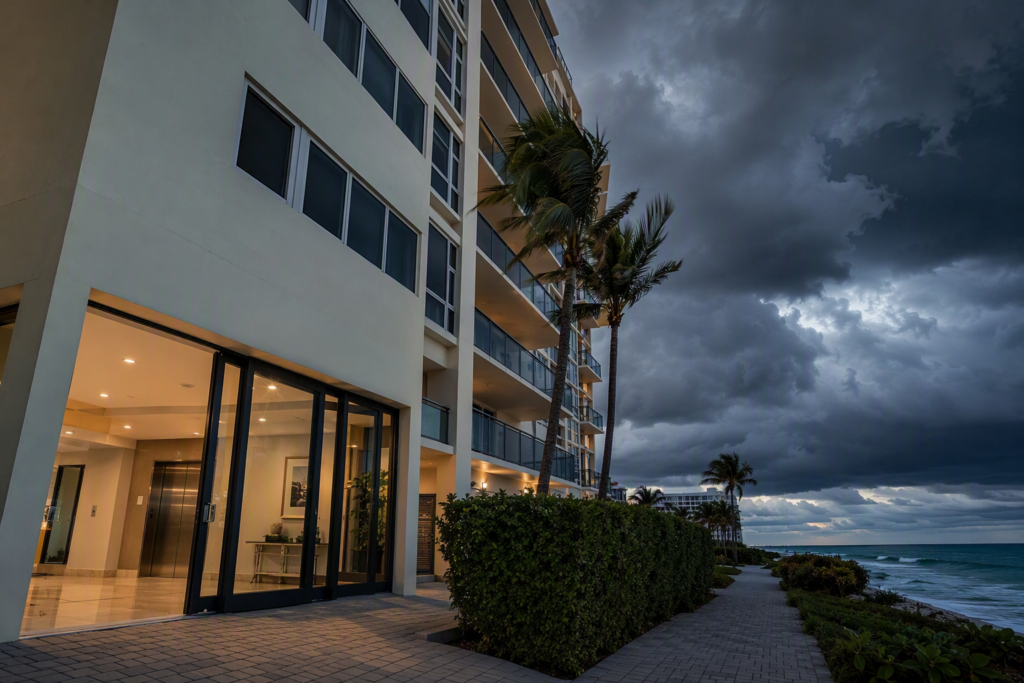
Coastal environments in Florida introduce accelerated corrosion, humidity challenges, and salt air exposure that require maintenance protocols specifically adapted to these conditions rather than generic inland-market service practices.
Elevators in coastal markets like Pompano Beach and Sarasota are subject to environmental stressors that accelerate wear on electrical connections, mechanical components, and hydraulic systems. A maintenance contract designed for these conditions should include corrosion-resistant lubrication practices, more frequent inspection of electrical terminations, and heightened attention to pit drainage and moisture intrusion. Axxiom Elevator Florida’s service operations in both Pompano Beach and Sarasota are structured with awareness of local environmental conditions that affect elevator reliability and component longevity.
How can I verify that my elevator contractor is properly licensed in Florida?
Florida elevator contractor licenses are issued and tracked by the Department of Business and Professional Regulation (DBPR), and building owners can verify any contractor’s license status directly through the DBPR’s online licensing portal at no cost.
A valid Florida elevator contractor license is a baseline requirement, not a differentiator — it is the minimum legal standard for performing elevator maintenance and repair work in the state. Building owners should verify licensure before executing any maintenance contract and should re-verify at each contract renewal. In addition to company licensure, technicians performing certain categories of work may be required to hold individual certifications. Any contractor who is reluctant to provide license numbers or who discourages license verification should not be awarded a maintenance contract.
What does a best-in-class elevator maintenance relationship look like on an ongoing basis?
A best-in-class elevator maintenance relationship is characterized by proactive communication, detailed written documentation after every visit, advance notice of upcoming mandatory tests and code changes, transparent recommendations, and a contractor who treats the building owner as a long-term partner rather than a billing account.
Beyond the contractual minimums, the highest-quality service relationships include annual or semi-annual reviews where the contractor presents the building owner with a condition report and a forward-looking capital plan. This allows property managers to budget for upcoming modernization needs, plan for mandatory periodic tests, and avoid emergency expenditures. Axxiom Elevator Florida approaches client relationships in Pompano Beach and Sarasota with this long-term partnership model, providing the documentation and communication standards that allow property owners to manage their elevator assets with confidence rather than uncertainty.
How do I know when it is time to move from a maintenance contract to a full modernization?
The transition from maintenance to modernization is warranted when repair costs routinely exceed the value delivered by maintenance, when parts are no longer available, when the equipment fails to meet current ASME A17.1 safety standards, or when the elevator can no longer reliably serve the building’s occupancy needs.
Building owners sometimes remain in maintenance cycles on equipment that has exceeded its useful service life, either because the contractor has not communicated the situation clearly or because the capital expenditure is being deferred. A responsible contractor will provide an honest written assessment when maintenance is no longer the economically or safety-sound choice, and will separate that recommendation from any financial incentive to sell a modernization package. When a building owner receives a modernization recommendation, requesting a written analysis that compares the five-year cost of continued maintenance versus modernization — including reduced downtime and improved energy efficiency — is entirely reasonable and should be welcomed by any credible service provider.
Get a Free Elevator Maintenance Contract Assessment
If there is any uncertainty about whether a current elevator maintenance contract is delivering the coverage, compliance support, and service quality a property deserves, the right step is a professional review. Contact Axxiom Elevator Florida for a free elevator assessment — serving property owners and managers in Pompano Beach, FL and Sarasota, FL with certified elevator maintenance, inspections, and compliance support aligned with ASME A17.1, ADA, and Florida state requirements.
Call today: