Elevator Modernization vs. Repair: How to Know Which Your Elevator Needs
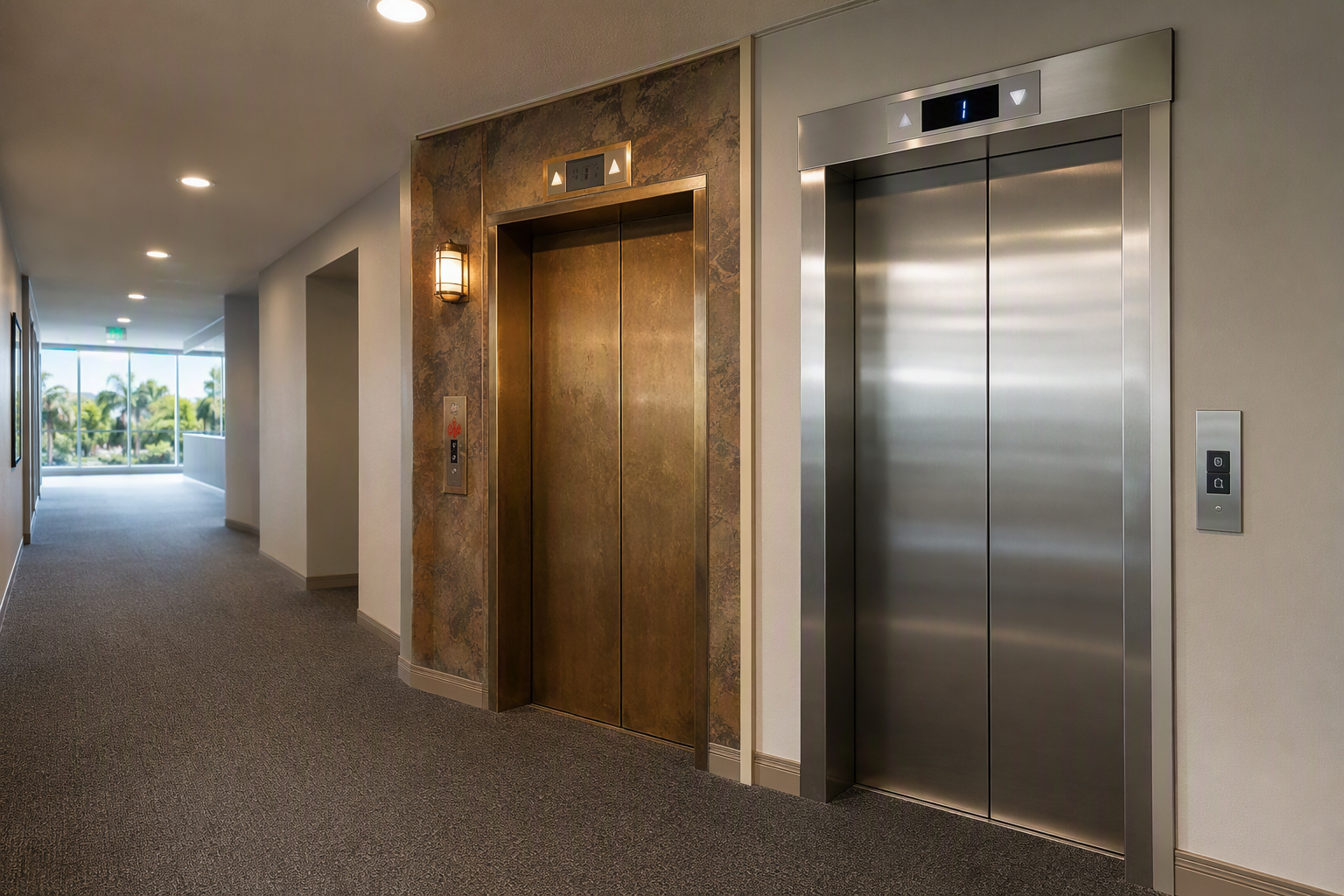
Building owners and facility managers in Pompano Beach and Sarasota face this decision more often than they expect. An elevator that still runs is not necessarily an elevator that should simply be repaired again. The sections below address every dimension of the modernization-versus-repair question, from compliance codes and part availability to cost benchmarking and the step-by-step assessment process.
What Is the Core Difference Between Elevator Repair and Elevator Modernization?
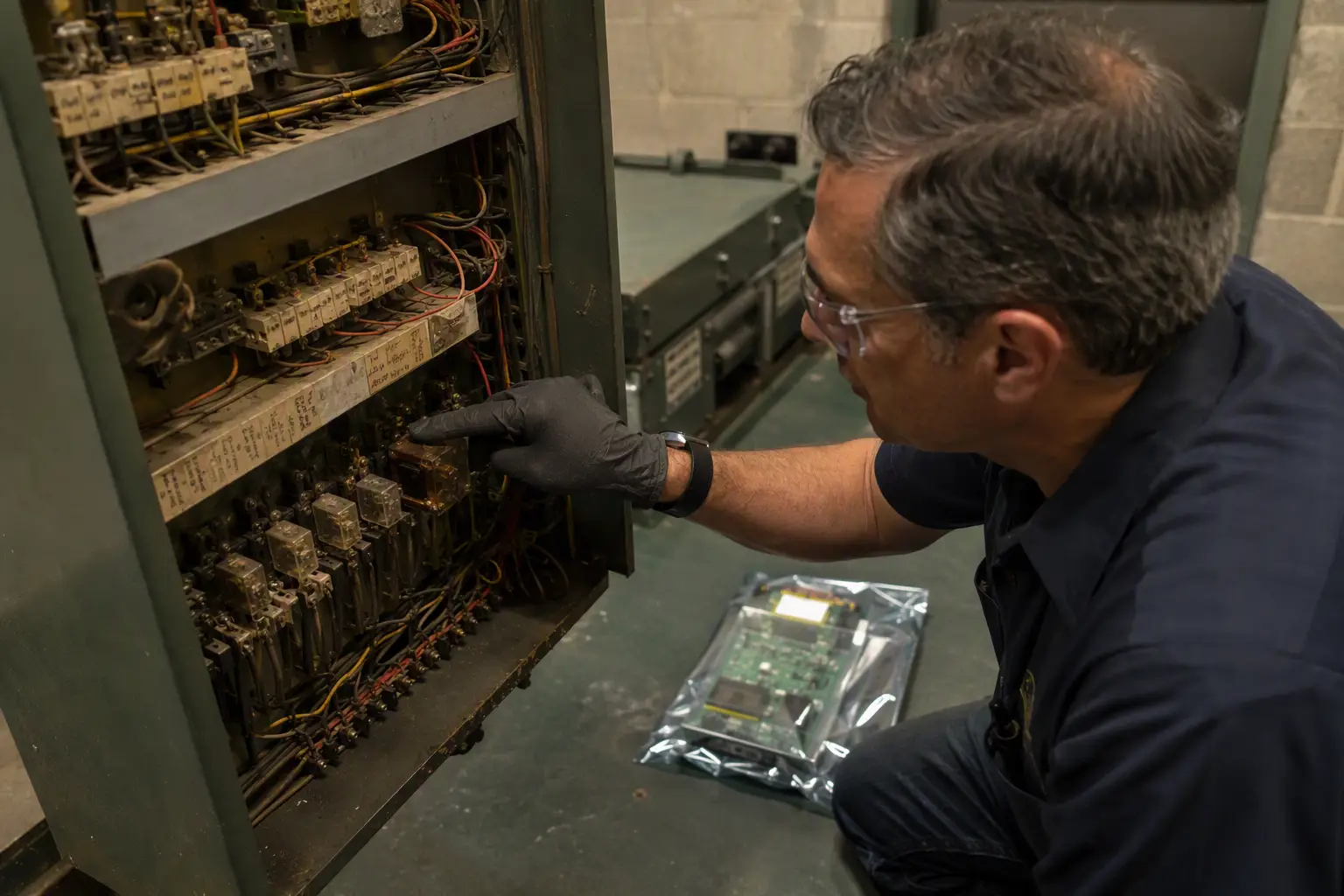
Repair restores a specific failed component to working condition, while modernization replaces entire subsystems — controls, drives, cab interiors, door operators, or safety devices — to bring the elevator up to current performance, efficiency, and code standards.
A repair might mean replacing a worn door hanger roller or a failed contactor. Modernization means upgrading the entire motor control system from relay logic to a solid-state or microprocessor-based controller, or replacing a DC drive with a modern variable-voltage variable-frequency (VVVF) drive. The scope is fundamentally different: repair is reactive and component-specific, while modernization is proactive and system-wide.
Modernization projects can range from a single-subsystem upgrade (such as replacing only the controller) to a full gut renovation of everything except the hoistway structure itself. Florida building owners should work with a certified elevator contractor to identify which scope is appropriate before committing to either path.
What Are the Most Reliable Signs That an Elevator Needs Modernization Rather Than Repair?
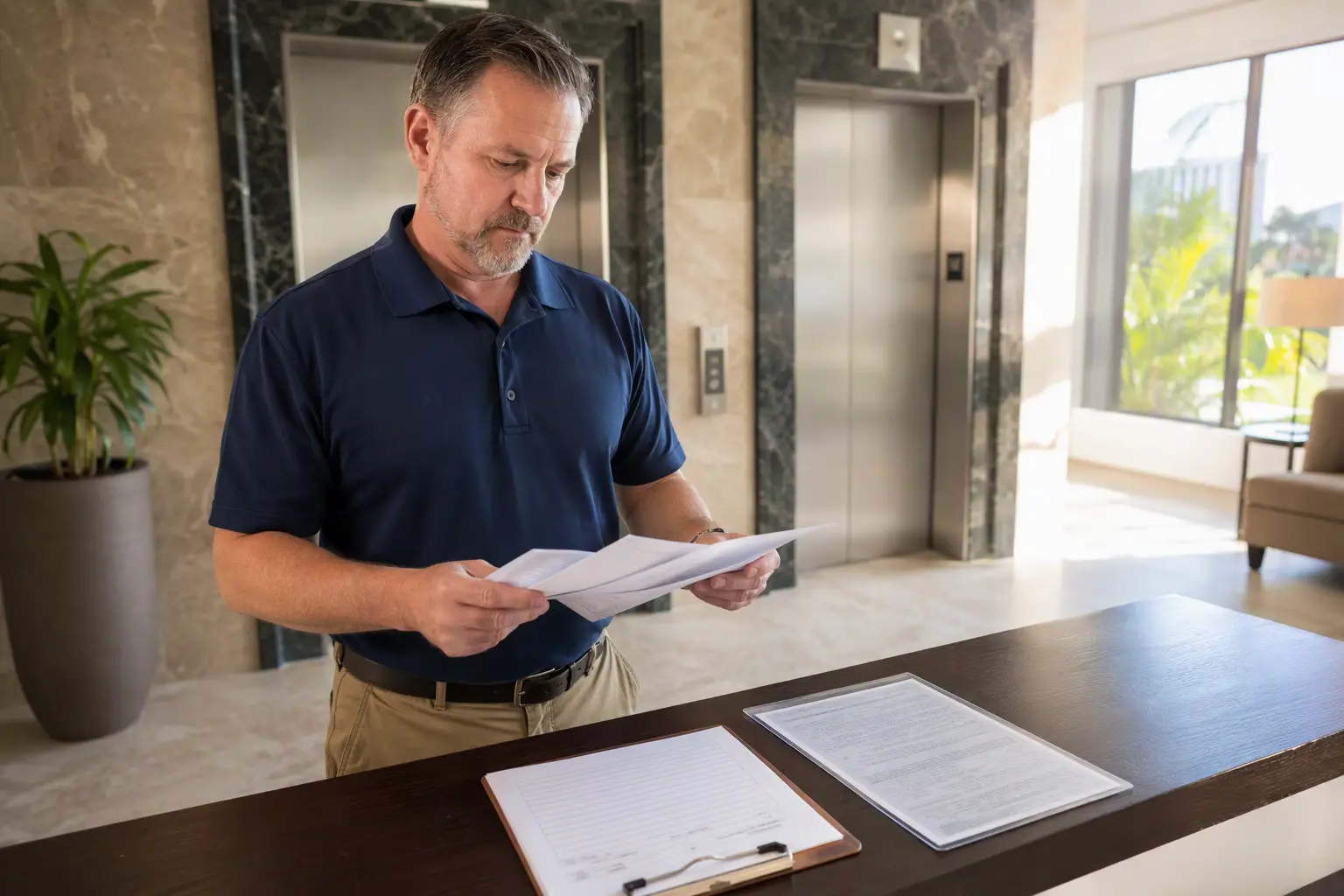
The clearest signs include repeated breakdowns on the same subsystem, inability to source replacement parts, persistent code violations cited by the Florida Department of Business and Professional Regulation (DBPR), ADA accessibility deficiencies, and energy consumption that is disproportionately high relative to newer equipment.
A single breakdown is almost always a repair situation. A pattern of breakdowns — especially when the same relay, circuit board, or mechanical assembly keeps failing — signals that the underlying technology has reached the end of its service life. When a technician has to fabricate a part or source it from salvage because the original manufacturer no longer produces it, the system is telling building owners it has outlived its supply chain.
Code violations are another definitive trigger. Florida elevator inspections conducted under authority delegated through the DBPR can produce violation notices that require corrections within defined timeframes. When the corrections required involve features that are integral to an obsolete design — rather than isolated components — modernization is the code-compliant path forward.
How Does Florida’s Elevator Inspection Process Identify Modernization Needs?
Florida elevator inspections follow the ASME A17.3 Safety Code for Existing Elevators and Escalators for existing installations and generate a written inspection report that flags safety deficiencies, which may require modernization when deficiencies cannot be corrected through component-level repair.
The Florida DBPR Bureau of Elevator Safety oversees elevator inspection and permitting statewide. Inspectors assess structural, mechanical, and electrical conditions against applicable code editions. When an inspection finds that a safety device — such as a governor, safeties, or door protection system — does not meet current code and cannot be retrofitted with a compliant component, the only path to continued legal operation is modernization of that subsystem.
Owners should request a copy of every inspection report and compare successive reports. A trend of accumulating violations — even minor ones — is a strong modernization indicator, because it reflects systemic deterioration rather than isolated component failure.
Which ASME Codes Apply to Elevator Modernization in Florida in 2026?
New elevator installations and modernizations in Florida are governed by ASME A17.1 Safety Code for Elevators and Escalators, while existing elevators are evaluated against ASME A17.3 Safety Code for Existing Elevators and Escalators.
When a modernization permit is filed in Florida, the modernized subsystems must comply with the edition of ASME A17.1 that the local authority having jurisdiction (AHJ) has adopted. This is an important practical point: once a modernization permit is pulled, the upgraded components must meet current-code requirements, not the requirements that were in place when the elevator was originally installed. Building owners who delay modernization may find that the eventual project scope — and cost — is larger than it would have been years earlier, because more components will require upgrading to reach compliance with a more current code edition.
ASME A17.3 establishes the minimum safety requirements that existing elevators must maintain between modernizations. When an existing elevator cannot meet A17.3 requirements through repair alone, modernization under A17.1 becomes mandatory.
How Does ADA Compliance Factor Into the Modernization Decision?
The Americans with Disabilities Act (ADA) requires elevators in multi-story facilities to meet specific accessibility standards for call buttons, door timing, leveling accuracy, cab dimensions, and audible signals, and non-compliance can expose building owners to legal liability and federal enforcement action.
ADA elevator requirements include precise cab leveling within a defined tolerance at each floor, accessible car controls at specified heights, adequate door reopening timing, and audible or visual floor announcement systems. Many elevators installed before ADA technical standards were finalized do not meet these requirements as originally built.
When a building owner is already committing to a repair project that involves the control system or door operator, the incremental cost of bringing those subsystems into ADA compliance during the same mobilization is almost always lower than returning to the site for a second project. This “repair trigger” logic — using a planned repair as the opportunity to modernize — is one of the most cost-effective strategies available to Florida building owners.
What Is the Typical Service Life of Elevator Components, and When Do They Cross Into Modernization Territory?
Different elevator subsystems have different service lives, and modernization becomes the appropriate response when a subsystem has reached or exceeded its expected useful life and is experiencing repeated failures.
| Component / Subsystem | Typical Service Life Range | Common Modernization Trigger | Repair vs. Modernize Signal |
|---|---|---|---|
| Relay / Drum Controller | 20–30 years | Parts obsolete; repeated relay failures | Modernize when parts are unavailable |
| Solid-State / Microprocessor Controller | 15–25 years | Circuit board failures; software no longer supported | Modernize when manufacturer support ends |
| DC Drive Motor System | 25–40 years | Brush replacement frequency; armature wear | Modernize to VVVF when energy costs are high |
| Door Operator | 15–25 years | Repeated door entrapments; cam-and-follower failures | Modernize when safety device upgrades are required |
| Cab Interior / Finishes | 10–20 years | Structural damage; non-ADA-compliant fixtures | Modernize when ADA compliance is required |
| Hydraulic Power Unit | 15–25 years | Seal failures; submersible pump obsolescence | Modernize when underground cylinder risk exists |
| Hoist Ropes / Sheaves | 6–12 years (ropes) | Wire breaks; sheave groove wear | Repair (replacement) — rarely requires full modernization |
| Safety / Governor Assembly | Life of installation | Governor overspeed test failure; parts obsolete | Modernize when code-compliant replacement unavailable |
Note: Service life ranges reflect general industry guidance and vary significantly based on maintenance history, usage intensity, and environmental conditions. Figures are qualitative benchmarks, not manufacturer warranties. Building owners should consult a licensed Florida elevator contractor for a site-specific assessment.
How Do Recurring Repair Costs Factor Into the Modernization Decision?
When cumulative annual repair costs approach or exceed a significant fraction of the modernization project cost over a rolling multi-year period, modernization typically delivers better total cost of ownership even before factoring in energy savings and reduced downtime.
Building owners often fall into a pattern of approving individual repair invoices without tracking cumulative annual spend on a specific elevator. A useful exercise is to pull maintenance records and repair invoices for the preceding three to five years and calculate the total. When that total — adjusted for the likely trajectory of increasing failure frequency — is compared against a modernization estimate and the resulting reduction in service calls, many owners find modernization is the more economical choice within a five-to-ten-year horizon.
Energy efficiency is a related financial factor. Older DC motor systems and relay controllers consume substantially more electricity than modern VVVF drives with regenerative capabilities. Over the operational life of a modernized system, energy savings can contribute meaningfully to offset the modernization investment, particularly in Florida’s climate where building systems run year-round.
What Happens If a Building Owner Continues Repairing an Elevator That Should Be Modernized?
Continuing to repair an elevator that has crossed into modernization territory exposes building owners to escalating repair costs, extended downtime during part sourcing, regulatory enforcement action, ADA liability, and — most critically — elevated risk of a safety incident.
The regulatory consequence is particularly significant in Florida. The DBPR has authority to order an elevator taken out of service if it cannot be maintained in a safe operating condition. An elevator that is out of service in a multi-story building immediately creates ADA accessibility issues for tenants or guests with mobility limitations, potentially triggering federal complaints under the Americans with Disabilities Act.
From a safety standpoint, aging relay logic controllers and worn mechanical safety devices do not fail gradually in ways that are always predictable. The risk profile of a significantly over-age system is categorically different from that of a well-maintained, modern installation. Building owners in Pompano Beach and Sarasota who are uncertain about where their elevator stands should schedule a professional assessment rather than waiting for a regulatory notice.
What Is the Step-by-Step Process for Determining Whether an Elevator Needs Repair or Modernization?
A structured assessment process, conducted by a licensed Florida elevator contractor, is the most reliable method for making this determination accurately.
- Gather documentation: Collect the elevator’s original installation records, all inspection reports from the Florida DBPR, maintenance logs, and all repair invoices from the past five or more years.
- Identify the controller type and vintage: Determine whether the elevator uses relay logic, solid-state, or microprocessor controls, and identify the manufacturer and model year.
- Assess parts availability: Contact the controller and drive manufacturer — or have the elevator contractor do so — to confirm whether replacement parts are still produced and available through normal supply channels.
- Review open violations: Identify any outstanding violations or conditions noted in the most recent inspection report and evaluate whether each can be corrected with a discrete repair or requires subsystem replacement.
- Evaluate ADA compliance: Measure leveling accuracy, call button heights, door timing, and audible/visual signal functionality against current ADA standards.
- Calculate cumulative repair spend: Total all repair and unscheduled service costs for the preceding three to five years to establish an annualized baseline.
- Request a modernization scope and estimate: Have a qualified elevator contractor prepare a written scope of work for modernization, broken down by subsystem, with associated permitting requirements.
- Compare total cost of ownership: Model the cost of continuing repairs against the cost of modernization plus the projected reduction in service calls and energy costs over a five-to-ten-year horizon.
- Make the decision with legal and risk counsel if warranted: If ADA liability or DBPR enforcement is a factor, involve legal counsel in the final decision-making process.
- Engage a licensed Florida elevator contractor to file the modernization permit: All modernization work in Florida requires permits filed with the DBPR and inspections by a licensed elevator inspector before the modernized elevator returns to service.
Does Elevator Modernization Require Permits in Florida?
Yes — elevator modernization in Florida requires a permit filed with the Florida DBPR Bureau of Elevator Safety before work begins, and a final inspection by a licensed elevator inspector before the modernized elevator is returned to public use.
This is a non-negotiable legal requirement, not an administrative formality. Work performed without a permit exposes the building owner and the contractor to regulatory penalties and can result in the elevator being ordered out of service until proper permitting and inspection are completed. Any contractor offering to perform modernization work without pulling a permit should be considered a serious red flag.
The permitting process also triggers a review of the proposed scope against the current adopted edition of ASME A17.1. This is how Florida ensures that modernized elevators meet current safety standards rather than the standards of the original installation decade.
What Elevator Subsystems Are Most Commonly Modernized in Florida Buildings?
The most commonly modernized subsystems in Florida are motor controls and drives, door operators, cab interiors and fixtures, and hydraulic power units — often because these components reach end-of-life simultaneously in buildings where the elevator fleet has never been systematically updated.
In Florida’s coastal markets, including Pompano Beach, the combination of high humidity, salt air exposure, and heavy usage in residential high-rises accelerates wear on door operators and electrical components. In Sarasota’s mixed commercial and residential building stock, older hydraulic elevators with underground cylinders are a frequent modernization candidate because of environmental and code concerns related to the cylinder and fluid containment.
Controller modernization from relay logic to microprocessor-based systems is almost universally beneficial when the old controller is more than roughly 25 years old, because modern controllers provide diagnostic data, remote monitoring capability, and significantly improved dispatching efficiency that older relay systems cannot deliver.
How Long Does an Elevator Modernization Project Typically Take?
The duration of an elevator modernization project depends on the scope of work, part lead times, permitting timelines, and building-specific access factors, and can range from a few weeks for a single-subsystem upgrade to several months for a comprehensive modernization.
Part lead times are one of the most variable factors, particularly for custom-configured controllers and drive systems. Building owners planning a modernization project should discuss lead times with their contractor before finalizing the project timeline, and should plan for alternative arrangements — such as temporary accessibility accommodations under the ADA — during the period when the elevator is out of service.
Permitting timelines through the Florida DBPR can also affect project scheduling. Experienced elevator contractors who work regularly in Florida markets know the permitting process and can build realistic timelines that account for review periods. Axxiom Elevator Florida works with building owners in Pompano Beach and Sarasota to develop project schedules that minimize operational disruption.
Can a Partial Modernization Be Done Instead of a Full Modernization?
Yes — partial or phased modernization, in which only specific subsystems are upgraded in a given project, is a legitimate and commonly used approach that allows building owners to address the highest-priority deficiencies first while managing capital expenditure over time.
A typical phased approach might prioritize the controller and door operator in year one — because these subsystems have the greatest impact on reliability and safety — and defer cab interior renovation or fixture upgrades to a subsequent project. This approach is valid as long as each phase is properly permitted and inspected, and as long as the deferred subsystems remain in code-compliant condition in the interim.
Building owners should be aware, however, that a phased approach can sometimes result in higher total costs than a comprehensive modernization done in a single mobilization, because contractor setup, permitting, and inspection costs are incurred multiple times. A licensed elevator contractor can help model both scenarios to determine the most cost-effective approach for a specific building.
What Are the Energy Efficiency Benefits of Elevator Modernization?
Modernizing an older drive system to a variable-voltage variable-frequency (VVVF) drive with regenerative capability can deliver meaningful reductions in elevator energy consumption, which is particularly relevant in Florida where buildings operate year-round in a high-energy-demand environment.
Regenerative drives capture the energy generated when an elevator descends with a heavy load or ascends with a light load — conditions that cause the motor to act as a generator — and feed that energy back into the building’s electrical system rather than dissipating it as heat through resistors. In older systems, this energy is wasted entirely. The efficiency gains from this technology are real and measurable, though the exact figures depend on the specific installation, usage patterns, and duty cycle.
For building owners in Florida’s hot climate, there is an additional benefit: modern drive systems generate significantly less heat in the machine room than older DC systems with resistance grids. Reduced machine room heat lowers cooling loads and can extend the life of other electrical equipment in the space.
How Does the Age of a Hydraulic Elevator Affect the Modernization Decision Differently Than a Traction Elevator?
Hydraulic elevators, particularly those with in-ground cylinders, face unique modernization considerations related to cylinder integrity, environmental regulations, and fluid containment that do not apply to traction elevators.
Older single-bottom hydraulic cylinders installed without protective liners can corrode over time, creating the risk of hydraulic fluid leaking into the surrounding soil — an environmental liability for the building owner. Modern hydraulic systems use corrosion-resistant cylinders with secondary containment, submersible power units, and biodegradable or less-toxic hydraulic fluids. When an older hydraulic elevator’s cylinder reaches a point where its integrity is uncertain, modernization of the power unit and cylinder assembly is both a code and an environmental responsibility issue.
Traction elevators face different aging issues centered primarily on the controller, drive, ropes, and machine. The structural components of a traction installation — the hoistway, guide rails, and machine beams — typically have very long service lives and rarely require replacement during modernization, which makes the per-component analysis more straightforward.
What Questions Should a Building Owner Ask an Elevator Contractor Before Deciding on Modernization?
Building owners should ask about parts availability for the current system, the specific code deficiencies that cannot be corrected by repair, the exact subsystems included in the modernization scope, permitting requirements, expected downtime, and how the project will be phased if a single mobilization is not feasible.
Additional questions worth asking include whether the proposed controller is proprietary or open-architecture, because proprietary controllers can create vendor lock-in that limits future maintenance options. Building owners should also ask whether the modernization scope includes upgrades to address any open ADA deficiencies, since missing that opportunity during a planned project is a costly oversight.
A reputable contractor will provide answers in writing, including a detailed scope of work, not just a summary price. The scope of work should identify each subsystem being replaced or upgraded, the code basis for required changes, and the manufacturer and model of the proposed replacement equipment. Axxiom Elevator Florida provides building owners in Pompano Beach and Sarasota with transparent, detailed assessments to support informed decision-making.
Are There Any OSHA Requirements That Factor Into the Elevator Modernization Decision?
While OSHA primarily governs the safety of workers who install, maintain, and repair elevators rather than the equipment standards themselves, OSHA requirements for machine room safety, electrical hazard protection, and lockout/tagout procedures are relevant to the condition of aging elevator equipment.
Older relay controllers with exposed live buss work, inadequate guarding, or deteriorated insulation may create machine room conditions that do not meet current OSHA electrical safety standards. During a modernization, these conditions are corrected as a natural byproduct of installing modern equipment with current safety standards built in. Building owners who have concerns about machine room safety conditions should raise them with their elevator contractor as part of the modernization assessment.
How Should Building Owners in Pompano Beach and Sarasota Find a Qualified Elevator Modernization Contractor?
In Florida, elevator contractors must hold a valid certificate of competency issued through the Florida DBPR, and building owners should verify this credential — along with the contractor’s experience with the specific type of elevator being modernized — before awarding any modernization contract.
Beyond licensure, building owners should look for contractors who demonstrate familiarity with the Florida DBPR permitting process, have established relationships with equipment manufacturers, and can provide references from comparable modernization projects in the region. A contractor who works regularly in the local market will also be familiar with the specific authority having jurisdiction and inspection process in Broward County (Pompano Beach) and Sarasota County.
Axxiom Elevator Florida serves building owners throughout Pompano Beach and Sarasota, providing certified elevator assessments, modernization planning, permitting support, and ongoing maintenance for a wide range of elevator types and vintages.
What Documentation Should a Building Owner Retain After an Elevator Modernization Is Completed?
After modernization, building owners should retain the approved permit, the final inspection certificate issued by the Florida DBPR, the contractor’s written scope of work and equipment specifications, all manufacturer documentation for installed equipment, and updated maintenance records.
This documentation serves multiple purposes. The Florida DBPR requires that current inspection certificates be posted in or adjacent to the elevator. Equipment documentation is essential for future maintenance technicians who need to service the modernized system. In the event of a future code inspection, having complete records of the modernization scope and the code edition under which it was permitted allows the building owner to demonstrate compliance with confidence.
Building owners should also confirm with their contractor that as-built drawings — reflecting any changes made to the elevator from its original configuration — have been updated and are included in the project documentation. Accurate as-built records are a critical resource for any future repair or additional modernization work.
What Is the Best Way to Get Started With an Elevator Modernization Assessment in Florida?
The best starting point is to schedule a professional on-site assessment by a licensed Florida elevator contractor who can evaluate the current condition of the equipment, review inspection history, and provide a written recommendation addressing both the repair and modernization options with their respective implications.
Building owners in Pompano Beach and Sarasota who are uncertain whether their elevator needs repair or modernization should not attempt to make this determination based solely on the symptom they are experiencing. A door that repeatedly fails to close, for example, might be a sign of a worn door operator that needs replacement, or it might be a symptom of a controller that is sending incorrect timing signals — two very different scopes of work with very different cost and compliance implications.
A qualified assessment puts the decision on a factual foundation: documented equipment condition, parts availability, inspection history, code compliance status, and total cost of ownership modeling. That foundation allows building owners to make a confident, defensible decision — whether the answer is a targeted repair, a partial modernization, or a comprehensive system upgrade.
Ready to Know for Certain? Get a Professional Elevator Assessment.
If your elevator is showing signs of age, recurring failures, or has not been comprehensively evaluated in recent years, a professional assessment is the right next step. Axxiom Elevator Florida serves building owners and property managers throughout Pompano Beach and Sarasota with certified elevator assessments, modernization planning, and full-service elevator maintenance.
Contact Axxiom Elevator Florida for a free elevator assessment: