Elevator Service in Pompano, FL | Axxiom Elevator Florida
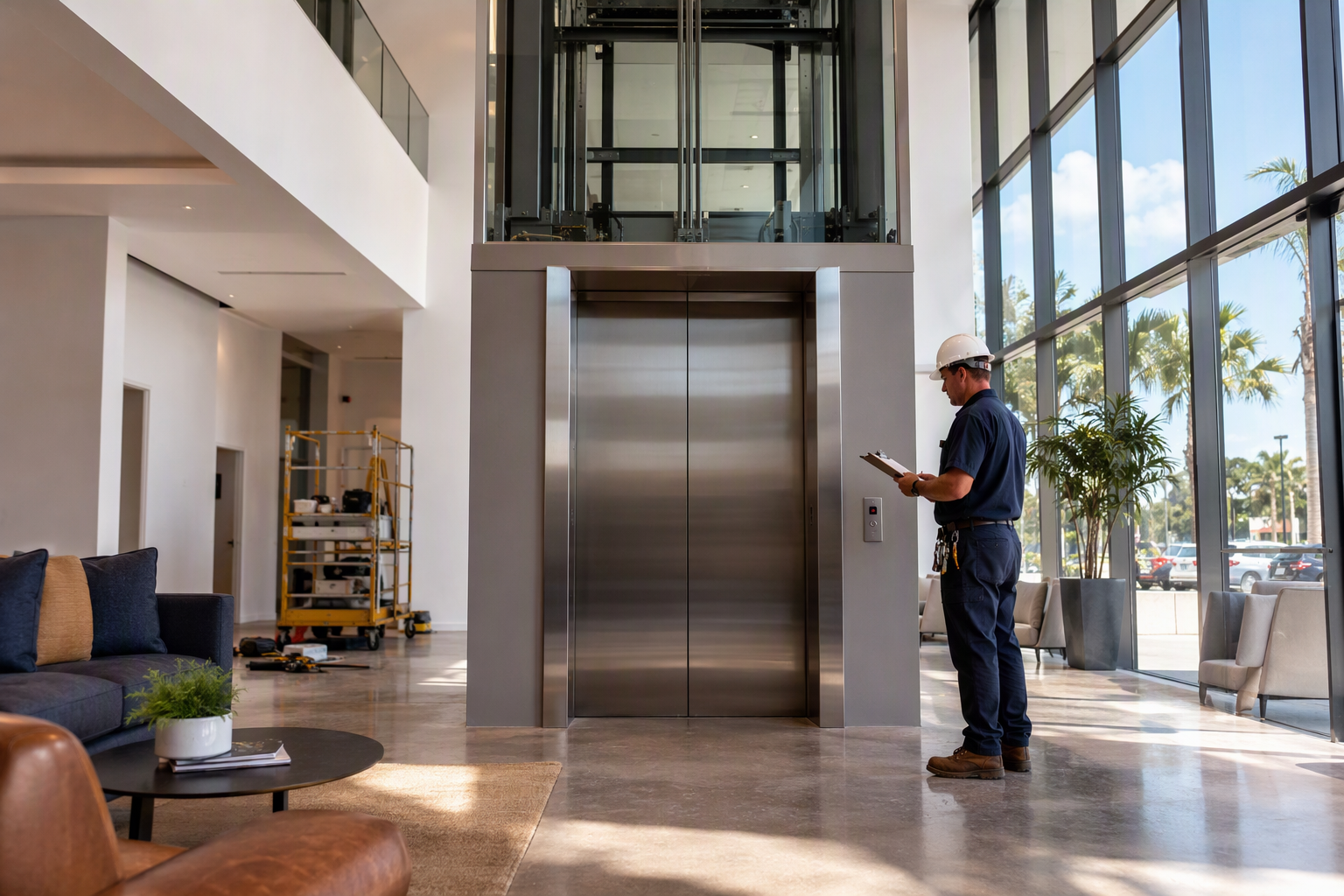
Commercial elevator installation in Pompano Beach is a multi-phase process governed by Florida’s Chapter 399, Florida Statutes (Elevator Safety Act), and administered locally by the Broward County Building Code Division. Understanding each phase — from design and permitting through construction, inspection, and certification — helps building owners set realistic schedules and avoid costly delays.
What Are the Main Phases of a Commercial Elevator Installation in Pompano Beach?
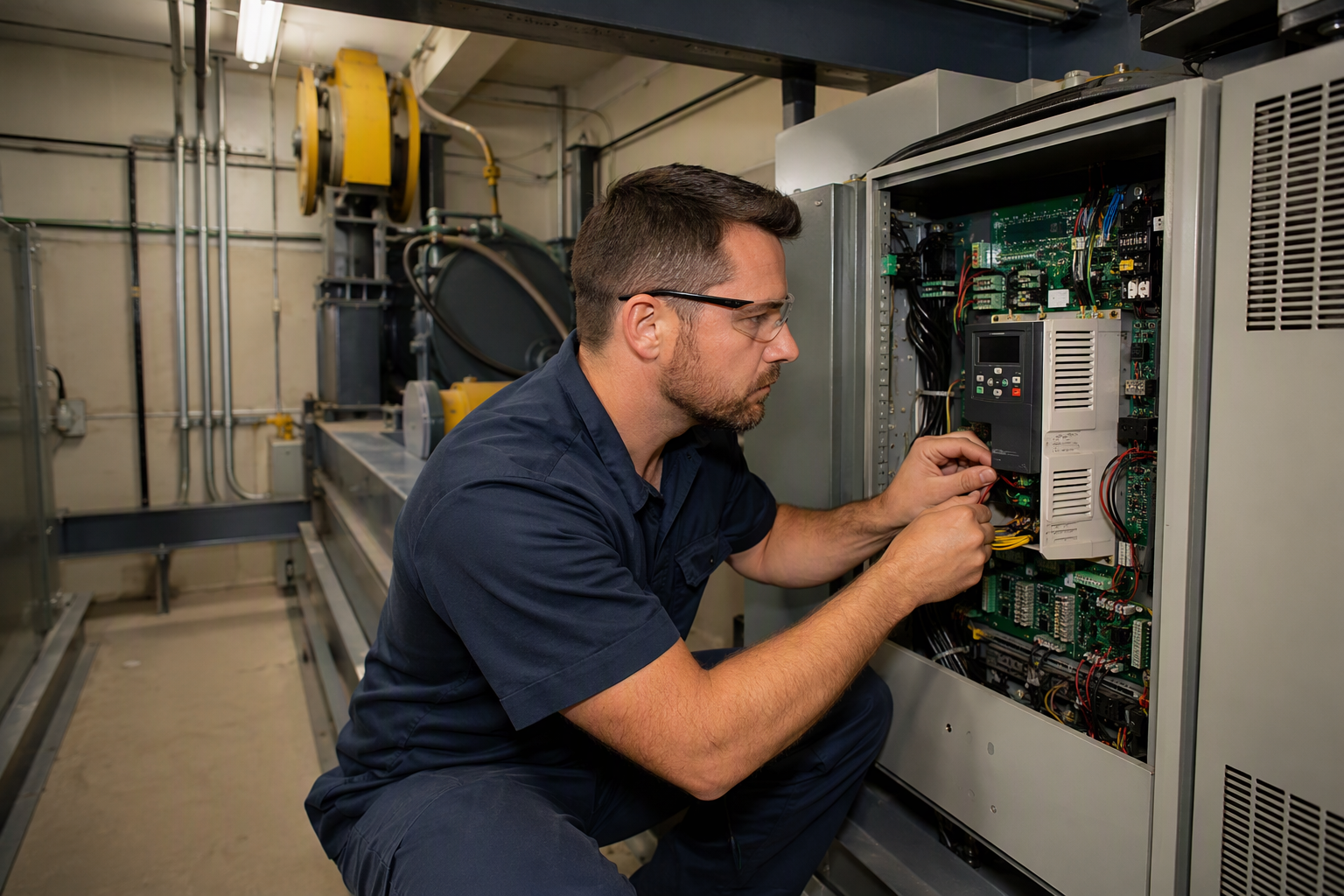
A new commercial elevator installation moves through several distinct phases, each with its own dependencies and timelines:
- Needs assessment and equipment selection: The building owner works with a registered elevator company to determine the right equipment type, capacity, speed, and configuration for the structure and its occupants.
- Engineering and design: Drawings and specifications are prepared to meet the ASME A17.1/CSA B44 Safety Code for Elevators and Escalators (2019 edition, effective in Florida as of December 31, 2023) and the requirements of Chapter 61C-5, Florida Administrative Code.
- State permit application: Under Florida law, a registered elevator company must apply for a state permit before any installation begins. Work cannot legally start until this permit is issued.
- Local permitting with Broward County: The Broward County Building Code Division enforces Florida’s elevator law through its own inspectors. Building permits and plan reviews at the county level must be coordinated alongside the state permit process.
- Equipment procurement and delivery: Commercial elevator components are often manufactured to order. Lead times for equipment can extend the overall project schedule significantly, particularly for custom cab finishes, drive systems, or high-capacity freight configurations.
- Hoistway and pit construction: General contractors prepare the hoistway, machine room (if applicable), and pit to the specifications required by the elevator installer and the adopted code.
- Elevator installation: A Florida-certified elevator technician — one who holds a valid elevator certificate of competency issued by the state — performs the installation. All installation work must be carried out by a registered elevator company.
- Pre-inspection preparation and testing: The installing company conducts thorough testing before scheduling the official inspection.
- State-required inspection: Before a new conveyance can be placed into service, it must be inspected by a certified elevator inspector who has no employment, association, or conflict of interest with the permit holder or the owner.
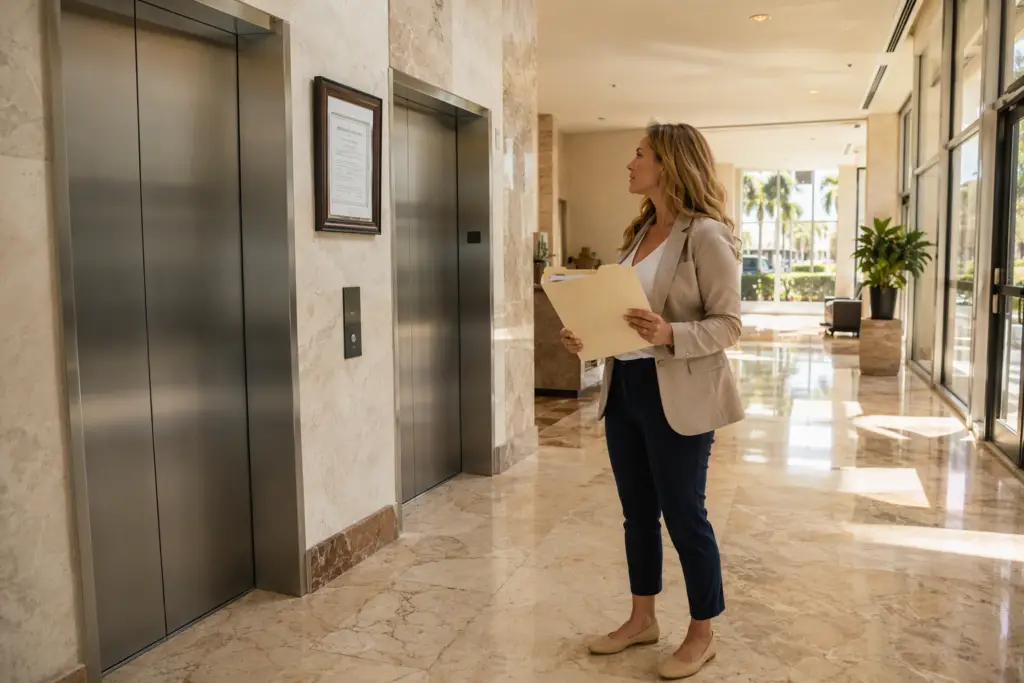
- Certificate of operation issued: Once the elevator passes inspection, a Florida certificate of operation is issued. This certificate must be posted in a conspicuous location inside the elevator in a frame with a transparent cover before the elevator is open for use.
How Long Does Each Phase Typically Take?
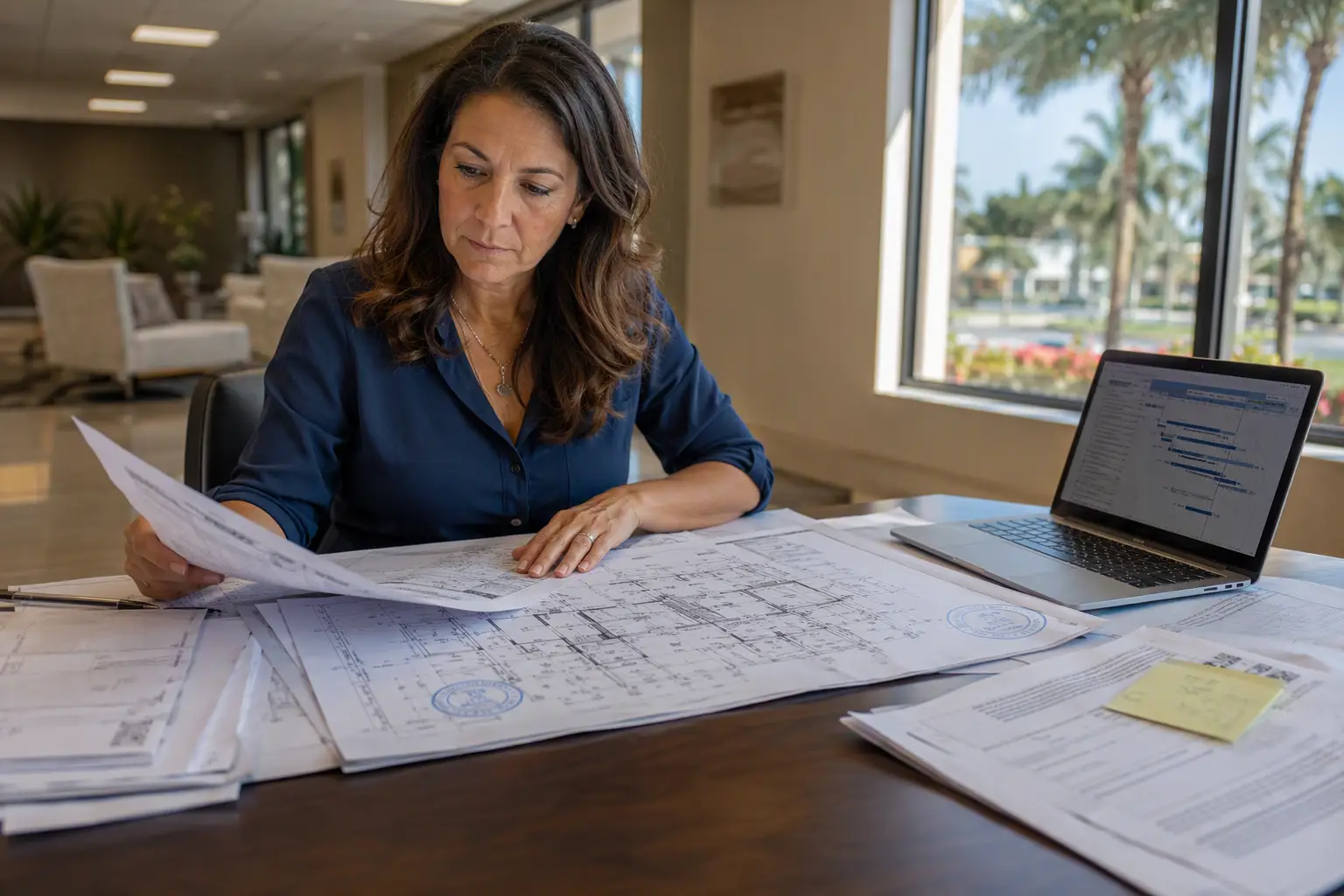
No two commercial projects in Pompano Beach are identical, but building owners can anticipate that each phase adds to the overall schedule. Permit review timelines vary based on submission completeness and agency workload. Equipment lead times fluctuate with manufacturer capacity and supply chain conditions. Hoistway construction pace depends on the general contractor’s schedule and coordination with other trades. Inspection scheduling is subject to the availability of certified elevator inspectors working under the Broward County Building Code Division. When all phases are carefully coordinated, straightforward installations in smaller commercial buildings can be completed more quickly than complex, multi-stop projects in high-rise structures. Building owners should plan conservatively and build contingency time into project schedules.
What Florida Regulatory Requirements Affect the Installation Timeline?
Florida’s regulatory framework introduces several mandatory checkpoints that directly affect how long an installation takes:
- A state permit, applied for by a registered elevator company, is required before any installation begins — this is a hard stop under Chapter 399, Florida Statutes.
- All installation work must be performed by a registered elevator company using certified elevator technicians who hold a current Florida elevator certificate of competency.
- Before the elevator is placed into service, a certified elevator inspector with no conflict of interest must inspect the completed installation.
- The Broward County Building Code Division serves as the local authority having jurisdiction (AHJ) for Pompano Beach, coordinating inspections and enforcement of state elevator law at the county level.
- Once a certificate of operation is issued, it is valid for no more than two years and may only be renewed following a current satisfactory inspection. Operating on an expired certificate violates state law.
- Florida-registered elevator companies must maintain current state registration and general liability insurance — selecting a company that is not in good standing can halt a project mid-installation.
Does ADA Compliance Add to the Project Timeline?
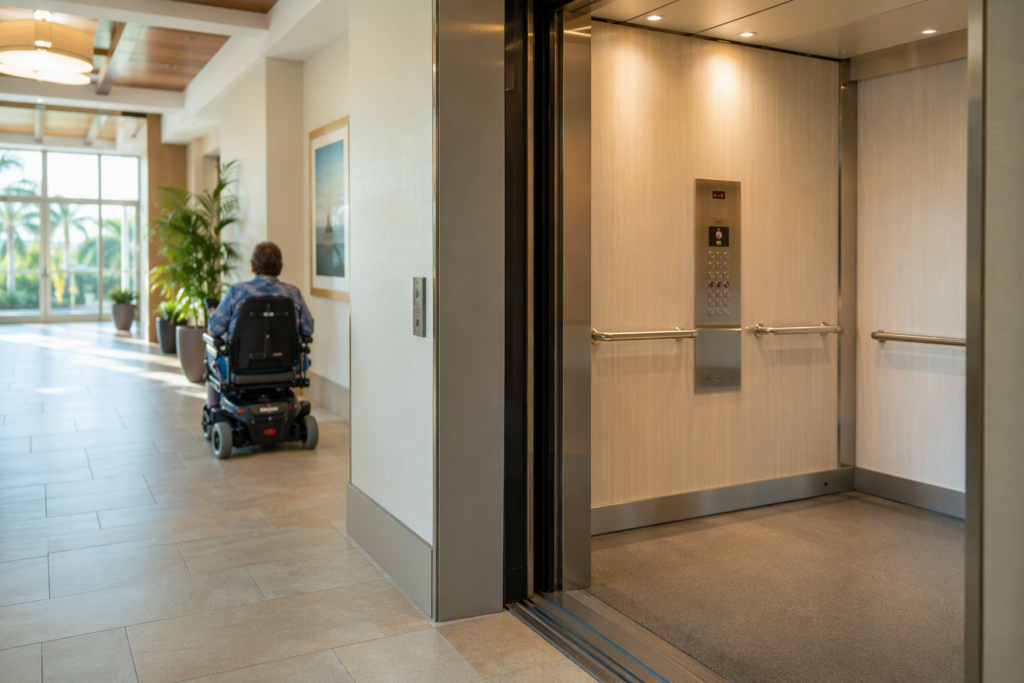
Commercial buildings subject to the Americans with Disabilities Act (ADA) must ensure that newly installed elevators meet federal accessibility requirements, including cab dimensions, door width, control panel height, and signage standards. ADA compliance reviews are typically integrated into the design and plan-review phase rather than added at the end, but any design revisions required to meet accessibility standards can extend the permitting and construction timeline. Axxiom Elevator Florida incorporates ADA requirements into the project scope from the outset to minimize the risk of late-stage corrections.
What Factors Can Delay a Commercial Elevator Installation in Pompano Beach?
Several factors commonly extend installation timelines in the Pompano Beach market:
- Incomplete permit submissions: Missing drawings, specifications, or required documentation cause plan-review rejections and resubmission cycles.
- Equipment lead times: Custom or specialty elevator equipment may require extended manufacturing and shipping time.
- Hoistway readiness: If the hoistway, pit, or machine room is not constructed to specification before the elevator contractor arrives, the installation schedule shifts accordingly.
- Inspection scheduling backlogs: High construction activity in Broward County can affect the availability of certified elevator inspectors for final inspections.
- Code deficiencies discovered during inspection: If items do not meet the ASME A17.1/CSA B44 (2019 edition) or Chapter 61C-5 requirements, corrections must be completed and re-inspection scheduled before the certificate of operation is issued.
- Change orders: Scope changes after installation begins can require amended permits, revised inspections, and additional lead time for replacement components.
What Ongoing Compliance Obligations Follow Installation?
After a certificate of operation is issued, the elevator owner assumes responsibility for safe operation, proper maintenance, inspection, and timely correction of any code deficiencies under Florida law. Key ongoing obligations include:
- Annual inspection by a certified elevator inspector, unless the elevator qualifies for an exemption (for example, a non-escalator, non-dumbwaiter conveyance that serves only two adjacent floors and is covered by a service maintenance contract).
- Renewal of the certificate of operation — valid for no more than two years — only upon a current satisfactory inspection.
- Posting the current certificate of operation in a conspicuous location inside the elevator cab in a frame with a transparent cover.
- Reporting any elevator accident to the state within five working days.
Does Axxiom Elevator Florida Handle Commercial Elevator Projects Throughout Pompano Beach and Broward County?
Axxiom Elevator Florida serves commercial property owners, building managers, contractors, and developers throughout Pompano Beach and the broader South Florida market, including Broward County and the surrounding region. The company is a Florida-registered elevator company, meaning it meets the state’s requirements to apply for permits, employ certified elevator technicians, and oversee installations under Chapter 399. Familiarity with the Broward County Building Code Division’s processes — the local authority having jurisdiction for Pompano Beach — helps facilitate smoother permitting and inspection coordination on commercial projects of all scales.
What Should Building Owners Do Before Starting an Elevator Installation Project?
- Define the building’s traffic requirements, intended use, and any accessibility or specialty needs before engaging an elevator company.
- Confirm that the elevator company is currently registered with Florida’s Bureau of Elevator Safety under the Florida Department of Business and Professional Regulation (DBPR) and carries the required general liability insurance.
- Coordinate with the general contractor to ensure the hoistway, pit, and machine room will be ready in alignment with the elevator installation schedule.
- Request a full project timeline that accounts for state permitting, local Broward County plan review, equipment lead times, installation, and final inspection.
- Plan for occupancy requirements — the elevator cannot legally be used until a Florida certificate of operation is in hand and properly posted.
- Establish a maintenance plan from day one, since ongoing compliance obligations begin the moment the certificate of operation is issued.
Schedule a free consultation with Axxiom Elevator Florida at 954-970-0020.
Need elevator service you can rely on? Axxiom Elevator Florida is ready to help.