Elevator Code Violation Penalties: What Building Owners Must Know
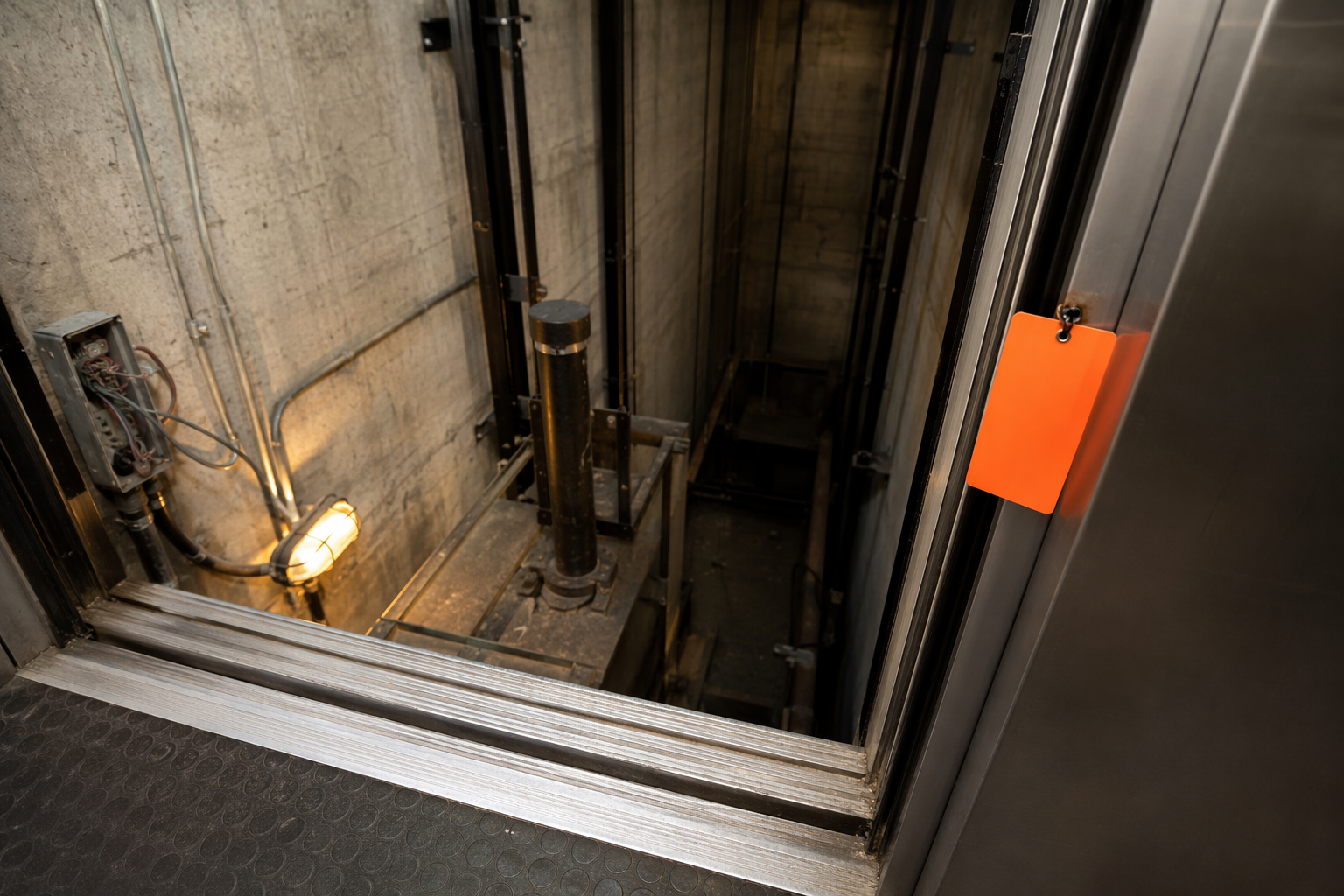
Elevator code violations are among the most consequential compliance failures a building owner or property manager can face. Unlike many building code infractions that allow extended correction windows, elevator violations carry the potential for immediate out-of-service orders, tenant liability exposure, and escalating daily penalties. Understanding how the penalty system works — and what drives enforcement — is essential for anyone responsible for a vertical transportation asset in Florida.
—
What Are Elevator Code Violations?
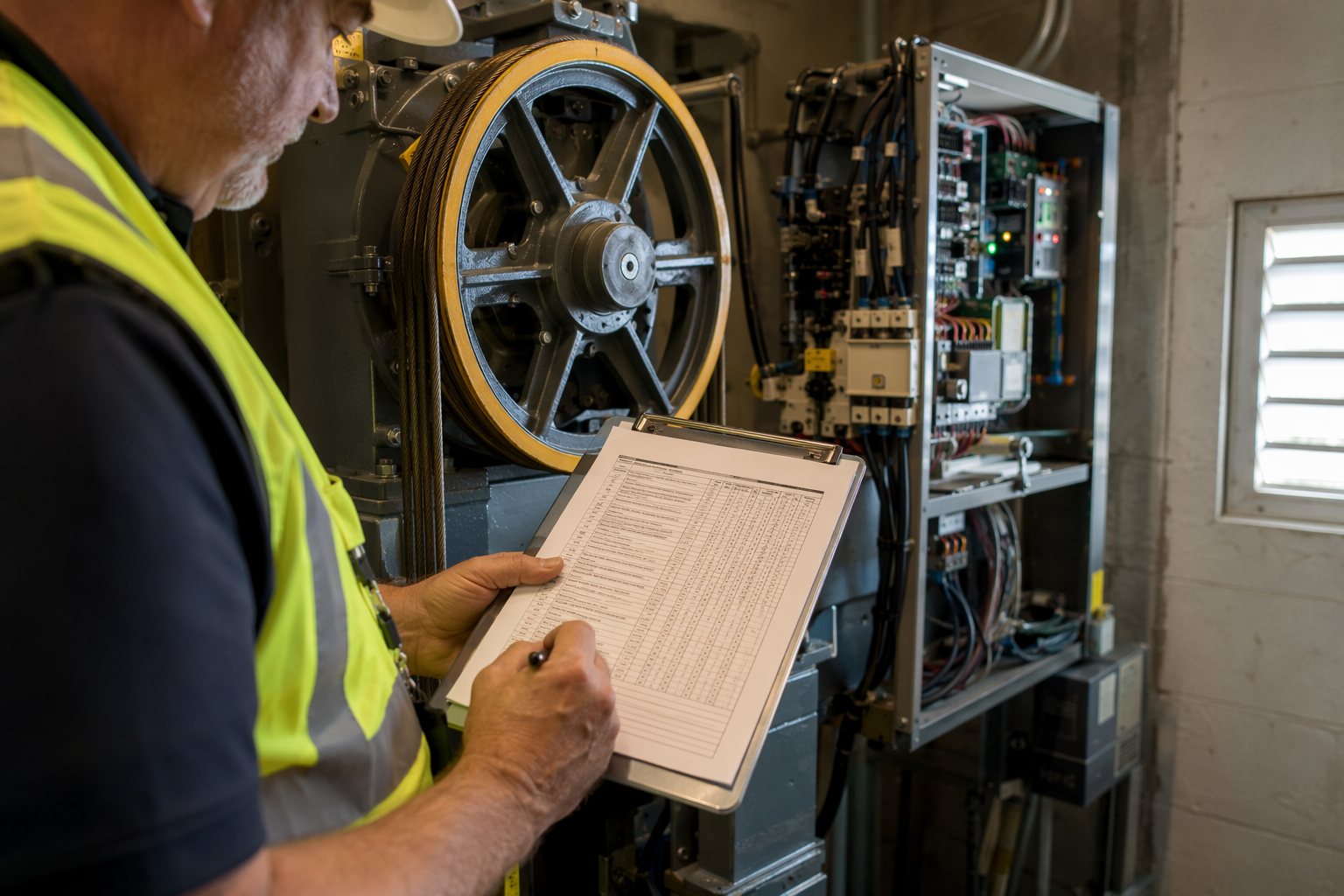
An elevator code violation occurs when an elevator, escalator, or other conveyance fails to meet the standards set by applicable safety codes and state regulations. In the United States, the primary technical standard governing elevator safety is the ASME A17.1 Safety Code for Elevators and Escalators, which is adopted — in whole or in part — by most states, including Florida, as the basis for their regulatory requirements.
Violations typically fall into several categories:
- Operational deficiencies: Equipment that does not perform within specified tolerances for leveling, door operation, or speed.
- Safety device failures: Non-functioning or bypassed safeties, governors, buffers, or interlocks.
- Inspection and permit lapses: Operating an elevator without a current certificate of operation or without completing required periodic inspections.
- Structural and mechanical deterioration: Worn ropes, corroded components, or degraded hydraulic systems that fall below code minimums.
- Accessibility non-compliance: Failure to meet requirements under the Americans with Disabilities Act (ADA) for vertical accessibility in public accommodations.
—
How Are Elevator Code Violation Penalties Determined?

Penalty severity is driven by several intersecting factors. Regulatory authorities — typically a state’s Department of Business and Professional Regulation or a designated elevator safety bureau — assess violations based on the nature of the deficiency, the risk it poses to the public, and whether the violation represents a first offense or a pattern of non-compliance.
Key factors that influence penalty outcomes include:
- Severity classification: Violations categorized as immediately dangerous to life typically result in an immediate out-of-service order, while lesser deficiencies may carry a correction timeline before monetary penalties attach.
- Duration of non-compliance: Many jurisdictions impose fines that accrue daily from the point of notice. A violation left unresolved for weeks can multiply in financial exposure rapidly.
- Repeat violations: Prior enforcement history is a significant aggravating factor. A building with a documented record of the same deficiency will face steeper fines than a first-time violation of equal technical severity.
- Lack of a current inspection certificate: Operating without a valid certificate of operation is often treated as a standalone violation, independent of any physical equipment deficiency, because it indicates the elevator has not been verified as safe by a licensed inspector.
- Failure to respond to notice: Ignoring a correction order escalates enforcement substantially. Authorities can seek injunctive relief and additional administrative sanctions when building owners do not acknowledge or act on violation notices.
—
What Happens Immediately After a Violation Is Cited?
What to Do Immediately When Your Elevator Receives a Violation Notice
- Secure the violation notice and document the citation date. The clock for daily penalty accrual — if applicable — typically begins at the date of notice, not the date you respond. Knowing the exact start date is critical for calculating exposure.
- Determine the violation classification. Contact the issuing authority to confirm whether the citation is an immediately dangerous condition requiring shutdown, or a deficiency with a structured correction timeline.
- Take the elevator out of service if ordered. Continuing to operate an elevator under a shutdown order dramatically increases both regulatory penalties and civil liability if an incident occurs.
- Engage a licensed elevator contractor promptly. In Florida, only licensed elevator contractors are authorized to perform corrective work on conveyances. Document the date you contacted a contractor as evidence of good-faith action.
- Obtain a written scope of repair. A formal assessment that identifies corrective measures creates a paper trail demonstrating compliance intent, which can mitigate penalties in some jurisdictions.
- Schedule re-inspection. Once corrective work is complete, request re-inspection from the authority having jurisdiction (AHJ) to obtain clearance and restore the elevator to service.
- File for a variance or extension if warranted. If parts or lead times make rapid correction impossible, many jurisdictions allow variance petitions. Filing one formally can pause or limit daily penalty accrual while demonstrating good faith.
- Maintain all documentation. Retain invoices, inspection reports, contractor communications, and authority correspondence. This documentation is essential if penalties are disputed.
—
What Is the Role of ASME A17.1 in Florida Elevator Enforcement?
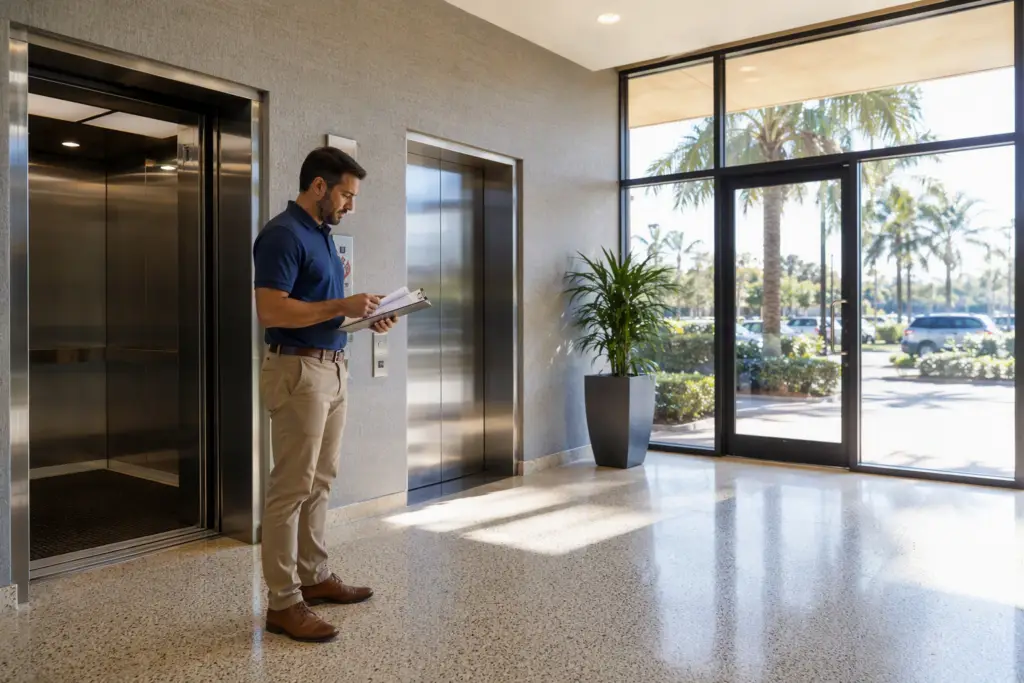
The ASME A17.1 Safety Code for Elevators and Escalators establishes the minimum technical requirements for elevator design, installation, operation, testing, and inspection. Florida’s elevator safety program references this standard as the technical benchmark against which equipment is evaluated during inspections. When an inspector identifies a condition that deviates from ASME A17.1 requirements, that deviation becomes the basis of the violation citation.
The ASME A17.1 code is updated on a regular cycle, and states adopt newer editions on their own legislative timelines. This means that an elevator installed and certified under one code edition may become non-compliant when a newer edition is adopted — particularly for components related to safety devices, door operation, and seismic requirements. Building owners should be aware of which edition of the ASME code their state or jurisdiction has adopted, as compliance obligations are tied to that adopted edition rather than the most recently published one.
Inspection intervals under ASME A17.1 vary by elevator type and use. Passenger elevators in high-occupancy buildings are generally subject to more frequent inspection requirements than freight or private residence elevators. Missing a required inspection interval — even without any underlying equipment deficiency — can itself constitute a violation.
—
How Do ADA Violations Interact With Elevator Code Penalties?
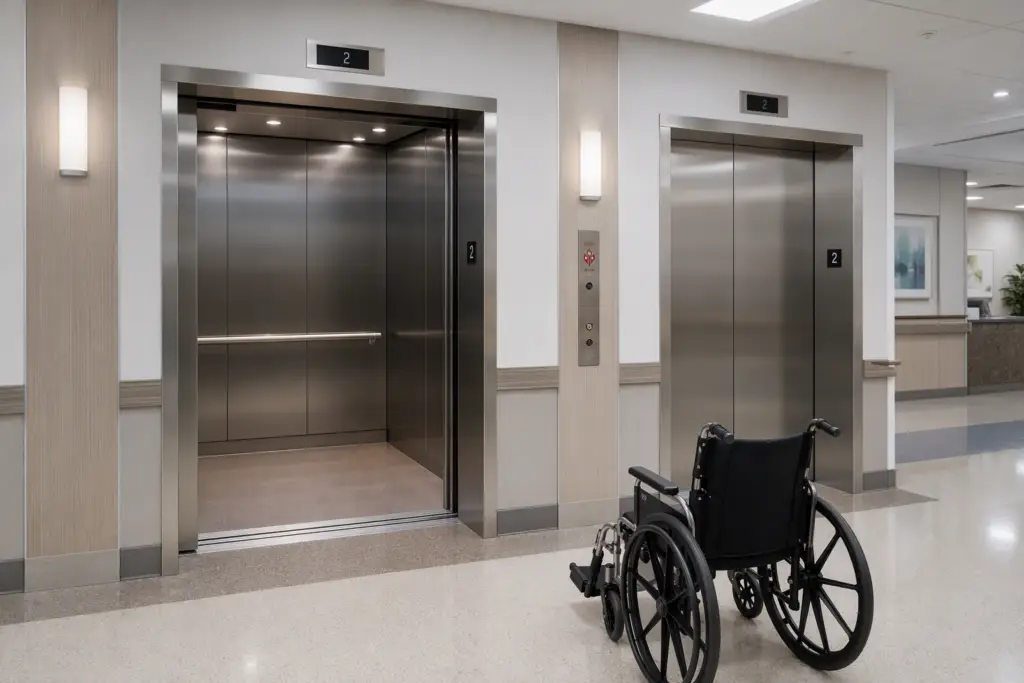
The Americans with Disabilities Act imposes accessibility requirements that intersect with elevator code compliance in important ways. Buildings that serve the public and have multiple stories are generally required to provide accessible vertical transportation. An elevator that is non-operational, improperly maintained, or configured in a way that prevents access for persons with disabilities can trigger ADA enforcement actions that are separate from — and in addition to — state elevator code penalties.
ADA enforcement can result from complaints filed directly with the U.S. Department of Justice or through private litigation. While the ADA itself does not prescribe a specific fine schedule for elevator-related violations in the same manner as state administrative codes, civil litigation arising from accessibility failures can carry substantial financial consequences, including damages, attorney fees, and injunctive relief requiring facility modifications.
For building owners, the practical takeaway is that an elevator that is out of service for an extended period due to a code violation may simultaneously create an ADA compliance gap — compounding regulatory exposure across two distinct legal frameworks.
—
What Role Does OSHA Play in Elevator Violations?
The Occupational Safety and Health Administration (OSHA) has jurisdiction over elevator safety in workplace environments, particularly for freight elevators and construction hoists used by workers. OSHA’s General Duty Clause requires employers to provide a workplace free from recognized hazards, and elevator deficiencies in workplace settings can be cited under this provision even when they do not directly violate a specific OSHA elevator standard.
In construction contexts, OSHA’s standards for material hoists, personnel hoists, and construction elevators are detailed and strictly enforced. Violations in these categories can result in significant per-violation and per-day penalties under OSHA’s civil penalty structure, which was updated through the Federal Civil Penalties Inflation Adjustment Act. Building owners and general contractors who operate or permit the use of non-compliant conveyances in workplace settings should treat OSHA enforcement risk as a distinct and serious exposure layer.
—
What Factors Make Florida Elevator Compliance Particularly Complex?
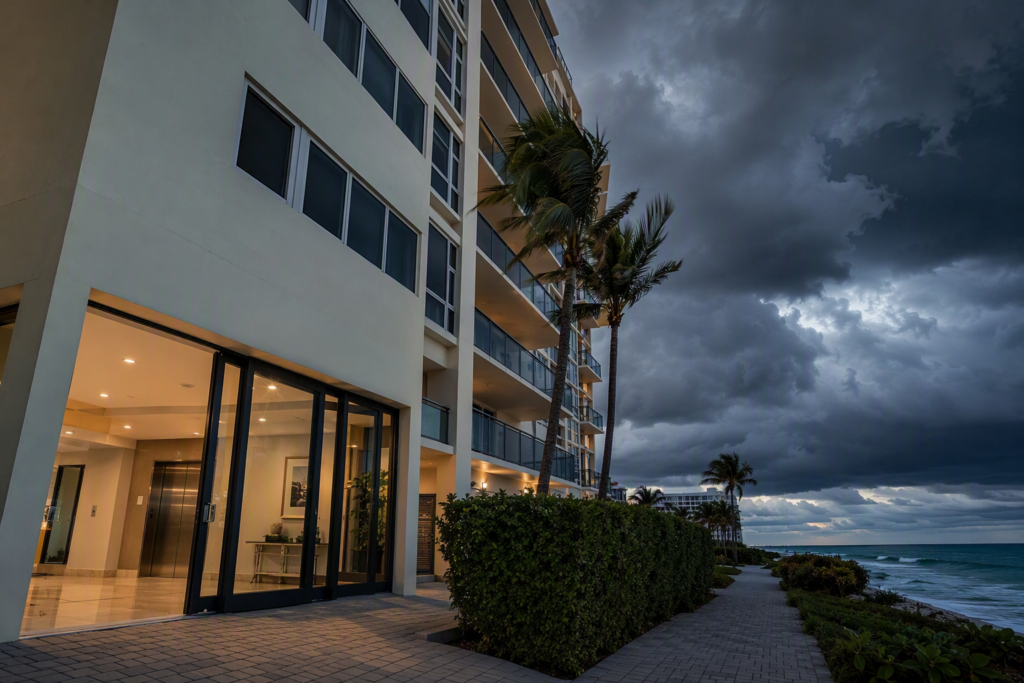
Florida’s climate and building stock create compliance challenges that are not as pronounced in other states. High humidity, salt air in coastal zones, and extreme temperature cycling accelerate corrosion in elevator pits, door mechanisms, and hydraulic systems. Equipment that meets code requirements when installed can deteriorate more rapidly in Florida’s environment than in drier, cooler climates — meaning inspection intervals must be treated as minimums rather than sufficient maintenance schedules in their own right.
Additionally, Florida’s large inventory of condominium towers, hospitality properties, and healthcare facilities creates a high density of elevator assets subject to public use, which generally triggers more rigorous inspection and enforcement standards. Properties that serve vulnerable populations — including assisted living facilities and hospitals — face heightened scrutiny because elevator failures in those environments carry elevated risk of injury.
—
How Do Penalties Escalate Over Time?
The escalation mechanics of elevator code penalties are designed to incentivize rapid correction rather than gradual response. When a building owner receives a violation notice and fails to act within the correction window, several escalation triggers can activate:
- Daily accrual of administrative fines: Many jurisdictions impose per-day fines that continue to accumulate until the violation is resolved and re-inspection confirms compliance. The longer the delay, the larger the total financial exposure.
- Referral to legal enforcement: Unresolved violations can be referred to state attorneys or administrative law judges, transforming a compliance matter into a formal legal proceeding with its own costs and risks.
- Increased insurance liability: An elevator operating under a known, documented violation creates a liability environment that property and casualty insurers may treat as a material breach of policy conditions. A claim arising from an incident while a violation is outstanding may face coverage challenges.
- Reputational and tenant impact: In commercial and multifamily properties, elevator violations become a matter of public record and can affect tenant relations, lease negotiations, and property valuations.
—
What Is a Variance or Compliance Timeline Extension?
When a building owner cannot achieve full compliance within the standard correction window — due to parts availability, contractor scheduling, or the scope of required work — most state elevator regulatory programs offer a formal variance or extension process. Filing for a variance does not eliminate the violation, but it signals to the authority having jurisdiction that the owner is actively pursuing correction and provides a documented record of good-faith compliance effort.
Variance applications typically require a description of the violation, an explanation of why immediate correction is not feasible, a proposed timeline for achieving compliance, and evidence of steps already taken. Authorities evaluate variance requests based on the safety risk of continued operation and the credibility of the proposed correction plan. For immediately dangerous conditions, variances are rarely granted without an accompanying commitment to take the elevator out of service during the extension period.
—
How Do Elevator Code Violations Affect Property Transactions?
Open elevator code violations can materially affect commercial and residential property transactions. During due diligence, buyers and their counsel routinely request elevator inspection certificates, maintenance records, and any open enforcement actions. An unresolved violation introduces uncertainty about the cost and timeline of correction, which buyers typically seek to price into the transaction or resolve as a closing condition.
For sellers, having unresolved violations at the time of listing creates negotiation leverage for buyers and can delay or complicate closings. Proactively resolving open violations before listing — and obtaining a current certificate of operation — is a straightforward way to remove that transactional friction.
—
What Are the 2025–2026 Trends in Elevator Code Enforcement?
The elevator safety regulatory environment is evolving in several meaningful directions that building owners should monitor heading into 2026:
Increased digitization of inspection records: Regulatory agencies are moving toward digital inspection management systems that make violation histories more transparent and searchable. This reduces the ability of building owners to treat past violations as private matters and increases the importance of clean compliance records.
Modernization pressure on aging equipment: As the installed base of older elevator equipment ages, regulators are increasingly focused on whether legacy equipment can be maintained in compliance with current code editions. Older hydraulic systems and pre-digital control packages face growing scrutiny during inspections.
Heightened ADA enforcement activity: Accessibility enforcement has been a growing priority at both the federal and state levels, and elevator-related ADA complaints appear to be tracking higher as advocacy organizations become more active. Building owners with accessible route obligations tied to elevator service should treat ADA compliance as an active, ongoing responsibility rather than a one-time certification.
Supply chain normalization and its limits: While global supply chains have stabilized from their pandemic-era disruptions, certain elevator components — particularly those for older or discontinued equipment platforms — remain subject to long lead times. This makes proactive parts management and maintenance planning more important than ever for avoiding situations where a failed component results in an extended out-of-service condition and compounding penalties.
—
How Can Building Owners Proactively Avoid Elevator Code Violations?
Avoidance is substantially less costly than remediation. The most effective approaches to keeping elevators out of violation status include:
- Maintaining a current, documented maintenance contract with a licensed elevator contractor that specifies inspection intervals aligned with the ASME A17.1 requirements adopted in your jurisdiction.
- Tracking certificate of operation expiration dates and initiating re-inspection well in advance of expiration to avoid lapses.
- Responding immediately to any inspector findings identified during routine inspections, rather than treating minor deficiencies as low priority.
- Keeping maintenance records organized and accessible so that any enforcement inquiry can be responded to with complete documentation.
- Budgeting for modernization of aging components before they reach a failure state that triggers emergency enforcement action.
—
Why Work With a Data-Driven Elevator Service Provider?
Not all elevator service providers approach compliance with the same rigor. Axxiom Elevator Florida positions itself as a data-driven partner for building owners navigating Florida’s elevator regulatory environment. Rather than offering generic maintenance packages, Axxiom Elevator Florida’s approach emphasizes detailed assessment of actual equipment condition, alignment with the ASME code standards applicable in a given jurisdiction, and documentation practices that support building owners in demonstrating compliance to regulatory authorities.
For property managers, condominium associations, healthcare facilities, and commercial building owners throughout Florida, having a service partner who understands the specific interplay between state enforcement, ASME A17.1 requirements, and ADA obligations is a meaningful risk management advantage. Axxiom Elevator Florida brings that technical focus to every assessment and service engagement.
—
Frequently Asked Questions About Elevator Code Violation Penalties
What is the most common reason an elevator receives a code violation in Florida?
The most frequently cited causes of elevator violations include expired certificates of operation, door safety device deficiencies, and failures of leveling accuracy. Door-related issues are particularly common because door mechanisms are subject to constant use and are sensitive to wear, adjustment drift, and environmental factors such as humidity and debris accumulation — all of which are prevalent in Florida’s climate.
Can a building owner appeal an elevator code violation penalty?
Yes. Most state elevator regulatory programs include a formal administrative appeals process. A building owner who believes a violation was cited in error, or who disputes the penalty amount, has the right to request an administrative hearing. Engaging a licensed elevator contractor to provide a technical assessment supporting the appeal is typically advisable, as the dispute often turns on technical interpretation of the applicable code provision.
How long does a building owner typically have to correct an elevator violation?
Correction timelines vary by jurisdiction and violation severity. Conditions classified as immediately dangerous to life may require the elevator to be taken out of service immediately, with correction completed before return to service. Less severe deficiencies may carry correction windows measured in days or weeks. The specific timeline is set by the authority having jurisdiction and should be treated as a hard deadline.
Does a minor maintenance issue count as a code violation?
Whether a maintenance condition rises to the level of a code violation depends on whether it represents a deviation from the applicable ASME A17.1 standard or state regulation. Some conditions that building owners might regard as routine maintenance issues — such as leveling accuracy outside specified tolerances or door closing force exceeding code limits — are, in fact, code violations and will be cited as such by a licensed inspector.
What happens if an elevator injury occurs while a known violation is outstanding?
An injury occurring while a documented code violation is unresolved significantly increases the building owner’s civil liability exposure. The existence of a prior violation notice is strong evidence that the owner had actual knowledge of a dangerous condition and failed to act. This can support claims for enhanced or punitive damages in civil litigation, in addition to regulatory enforcement consequences.
Are condominium associations responsible for elevator code compliance?
Yes. Condominium associations, as the entities responsible for common element maintenance, bear the compliance obligation for elevators serving common areas. This includes maintaining current certificates of operation, ensuring required inspections are performed, and funding corrective work when violations are cited. Individual unit owners are generally not responsible for common element elevators, but the association’s compliance failures affect the entire building population.
Can an elevator be grandfathered out of new code requirements?
Grandfathering provisions vary by code edition and jurisdiction. Some requirements under the ASME A17.1 Safety Code for Elevators and Escalators apply retroactively to existing installations upon adoption by a jurisdiction, while others apply only to new installations or major alterations. Building owners should not assume that older equipment is exempt from newly adopted provisions without confirming the specific application rules in their jurisdiction.
How do I know if my elevator’s certificate of operation is current?
In Florida, the certificate of operation is issued by the state and must be posted in or near the elevator for passenger conveyances. The certificate includes an expiration date. Building owners and property managers should verify that the posted certificate reflects a current, unrevoked certification and note the expiration date to schedule timely re-inspection.
What is the difference between an elevator violation and an elevator deficiency noted on an inspection report?
An inspection report may document conditions across a spectrum — from observations requiring monitoring, to deficiencies requiring correction within a specified timeline, to violations requiring immediate action or out-of-service designation. The distinction is important: a deficiency noted for future correction does not always carry the same immediate penalty exposure as a formal violation citation, but failure to correct a documented deficiency by the specified deadline typically converts it to a formal violation with penalty implications.
How does Axxiom Elevator Florida help building owners manage violation risk?
Axxiom Elevator Florida supports building owners through detailed equipment assessments that identify conditions before they become formal violations, documentation practices that support compliance demonstrations to regulatory authorities, and technical expertise aligned with the ASME A17.1 requirements applicable in Florida jurisdictions. The goal is to position building owners to meet their compliance obligations proactively rather than reactively responding to enforcement action.
—
Get Ahead of Elevator Code Violations Before They Become Penalties
Elevator code violations are manageable when identified early — and costly when they escalate into enforcement action, shutdown orders, or civil liability. Axxiom Elevator Florida provides detailed, data-driven elevator assessments designed to surface compliance gaps before a state inspector does.
Contact Axxiom Elevator Florida for a free elevator assessment: