ADA Elevator Requirements for Healthcare Buildings in Florida
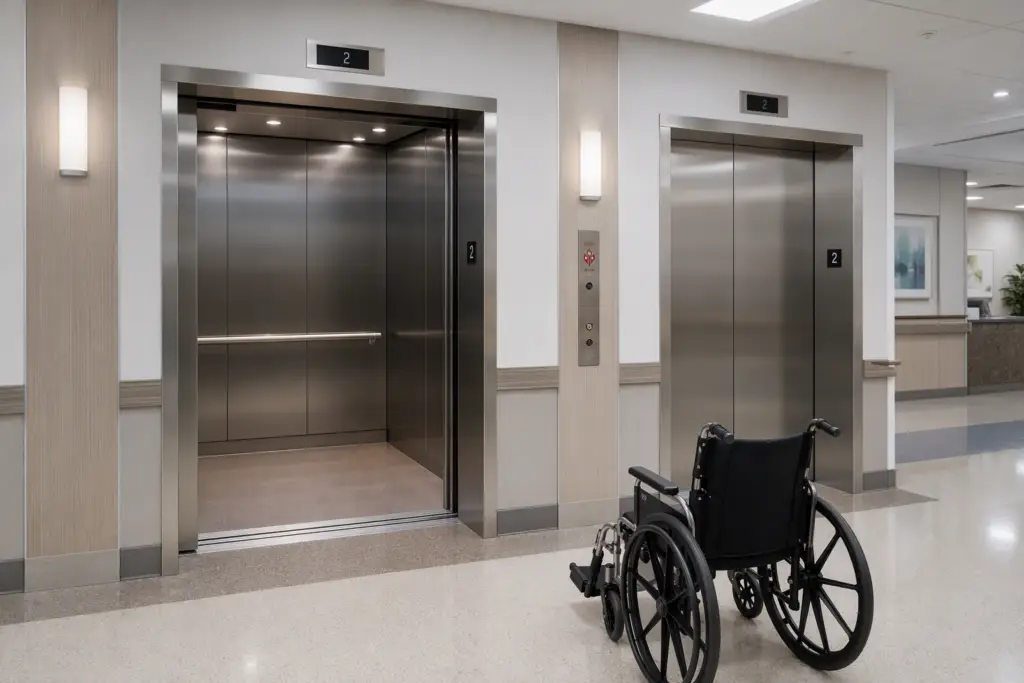
Hospitals, outpatient clinics, assisted living facilities, and medical office buildings face a layered compliance landscape that goes well beyond standard commercial elevator requirements. A non-compliant elevator in a healthcare setting does not just create a legal liability — it creates real barriers for patients using wheelchairs, staff transporting gurneys, and visitors with mobility limitations. This guide covers every dimension of ADA elevator compliance that healthcare facility managers in Pompano Beach, Sarasota, and across Florida need to understand in 2026.
What Are the Core ADA Elevator Requirements for Healthcare Buildings?
Under the ADA Standards for Accessible Design, any multi-story healthcare facility must provide at least one accessible elevator serving each floor unless a specific exemption applies. The standards set minimum requirements across several categories:
- Cab interior dimensions: A minimum clear floor area sufficient to accommodate a wheelchair user and allow proper turning — the ADA specifies clear interior dimensions that allow at least a 60-inch turning radius alongside a companion.
- Door clear width: At least 36 inches of clear door opening width is required; many healthcare applications require wider openings to accommodate hospital beds and stretchers.
- Door timing: Doors must remain open long enough for a person using a mobility device to enter and exit — the ADA establishes minimum timing requirements measured from the moment the door begins to close.
- Call buttons and controls: Hall call buttons must be located at a compliant height (centerline at 42 inches above the floor), and car operating panel buttons must be within the reach range of a seated user.
- Floor level indicators: Visual and audible signals are required to indicate the floor the car has reached and the direction of travel.
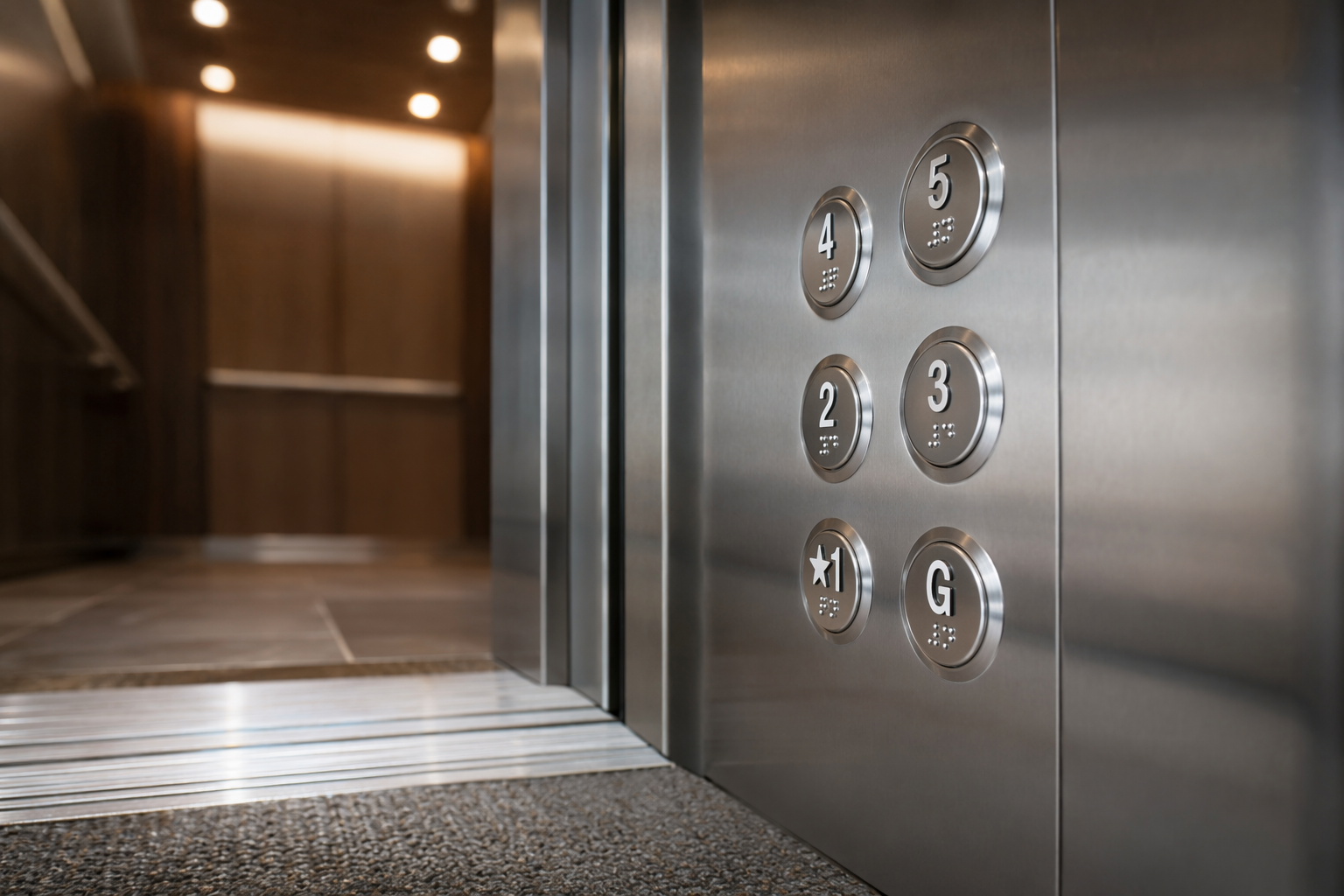
- Braille and raised characters: All control buttons must include raised characters and Braille designations.
- Leveling: The elevator must level within one-half inch of the landing to prevent trip hazards — critical for wheelchairs, walkers, and gurneys.
- Emergency communication: A two-way communication system must be provided inside the cab and must be usable without voice communication for individuals who are deaf or hard of hearing.
These ADA provisions work in parallel with ASME A17.1 Safety Code for Elevators and Escalators, which governs mechanical and structural safety, and Florida-specific requirements enforced by the Florida Department of Business and Professional Regulation (DBPR).
Does ASME A17.1 Apply to Hospital Elevators in Florida?
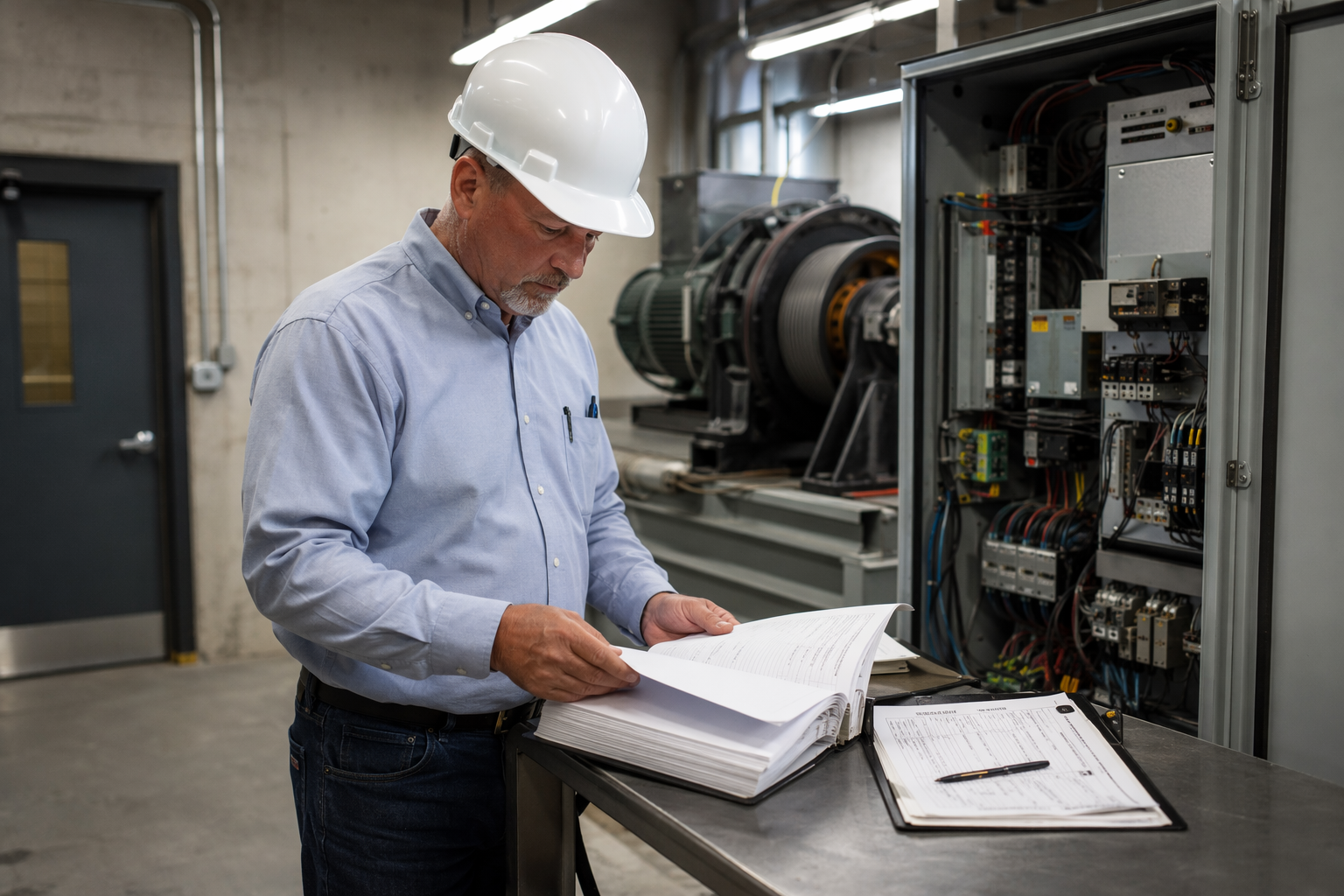
Yes. Florida has adopted the ASME A17.1 Safety Code for Elevators and Escalators as its technical standard for elevator construction, installation, alteration, and maintenance. For healthcare facilities, ASME A17.1 requirements layer on top of ADA accessibility mandates and include:
- Periodic inspection and testing intervals that facility operators are legally required to meet
- Requirements for firefighters’ emergency operation (Phase I and Phase II) — essential in multi-floor hospital buildings
- Seismic provisions applicable to Florida construction zones
- Specific provisions for hospital-use elevators, including requirements for stretcher-capacity cars in buildings where patient transport between floors is required
Axxiom Elevator Florida performs inspections and maintenance that align with both ASME A17.1 and ADA standards, helping healthcare clients in Pompano Beach and Sarasota maintain continuous compliance.
Are There Special Elevator Requirements Unique to Hospitals and Medical Facilities?
Beyond standard ADA and ASME compliance, healthcare buildings often face additional regulatory and operational requirements:
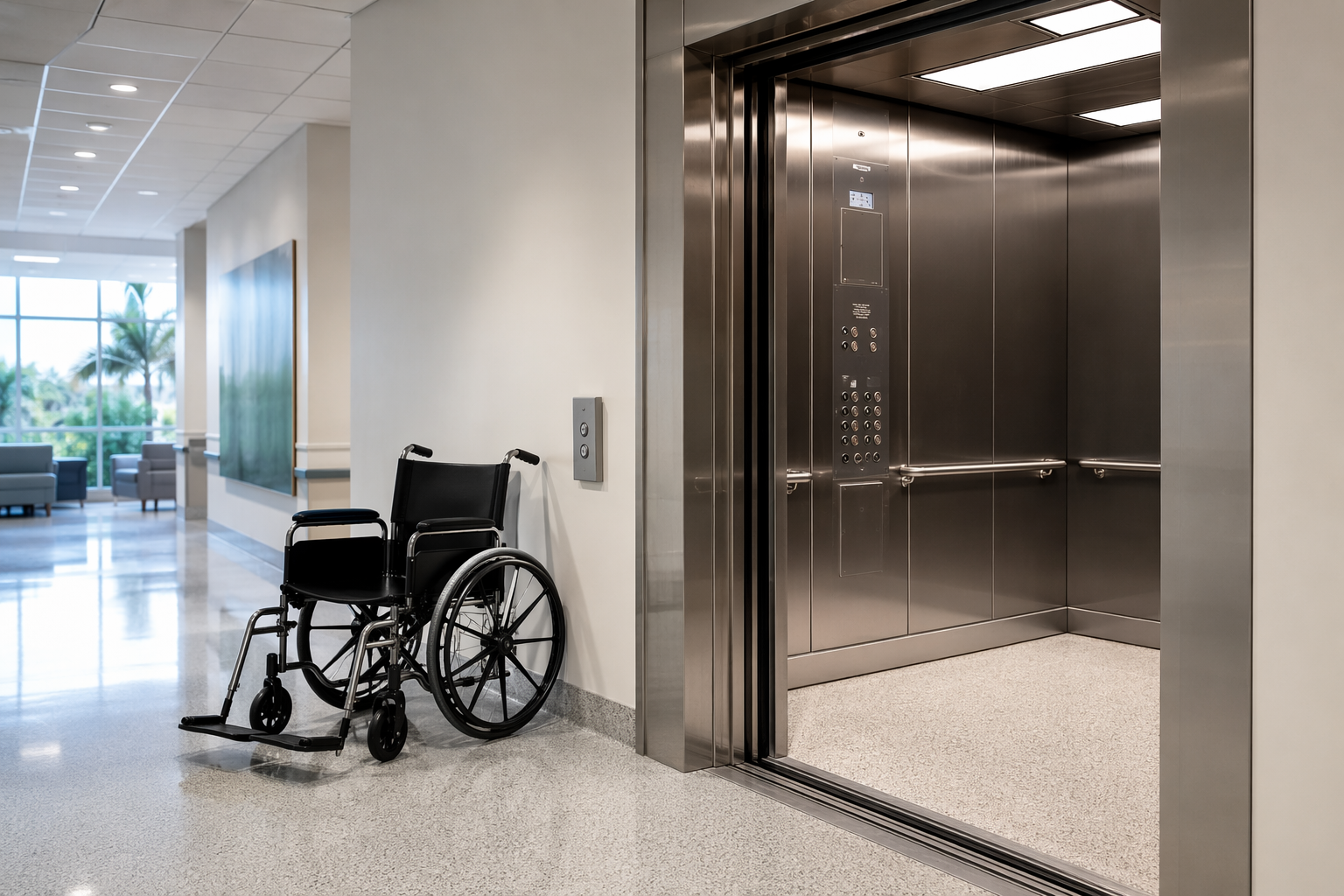
- Stretcher-accessible elevators: The Florida Building Code and facility accreditation bodies such as The Joint Commission frequently require that multi-story healthcare facilities include at least one elevator car large enough to accommodate a standard hospital stretcher with attendants.
- Infection control: Elevator interior surfaces, handrails, and control panels in healthcare settings must be cleanable and resistant to repeated disinfectant use — a factor that affects equipment specification during modernization projects.
- Redundancy and uptime: Patient-care facilities are typically expected to maintain elevator availability at all times; planned maintenance windows must be coordinated carefully to avoid service disruptions.
- Emergency power: Elevators in healthcare facilities are often connected to emergency generator circuits so they remain operational during power outages — a requirement that must be verified and tested regularly.
- HIPAA-adjacent considerations: While HIPAA itself does not regulate elevators, facility managers should note that cab camera and intercom systems installed for ADA emergency communication must be managed in a way that is consistent with overall patient privacy policies.
What Happens If a Healthcare Facility Fails an ADA Elevator Inspection?
Non-compliance can carry serious consequences for healthcare operators:
- Civil complaints filed with the U.S. Department of Justice under Title III of the ADA
- Private lawsuits from patients, visitors, or employees who were denied accessible service
- Findings during accreditation surveys that can affect a facility’s ability to operate or receive Medicare and Medicaid reimbursements
- Violations cited by Florida DBPR elevator inspectors, which can result in an elevator being taken out of service
Proactive assessments — like the free elevator assessments offered by Axxiom Elevator Florida — are a cost-effective way to identify and remediate gaps before a formal inspection occurs.
How Does a Healthcare Facility Bring a Non-Compliant Elevator into ADA Compliance?
The process for achieving compliance typically follows these steps:
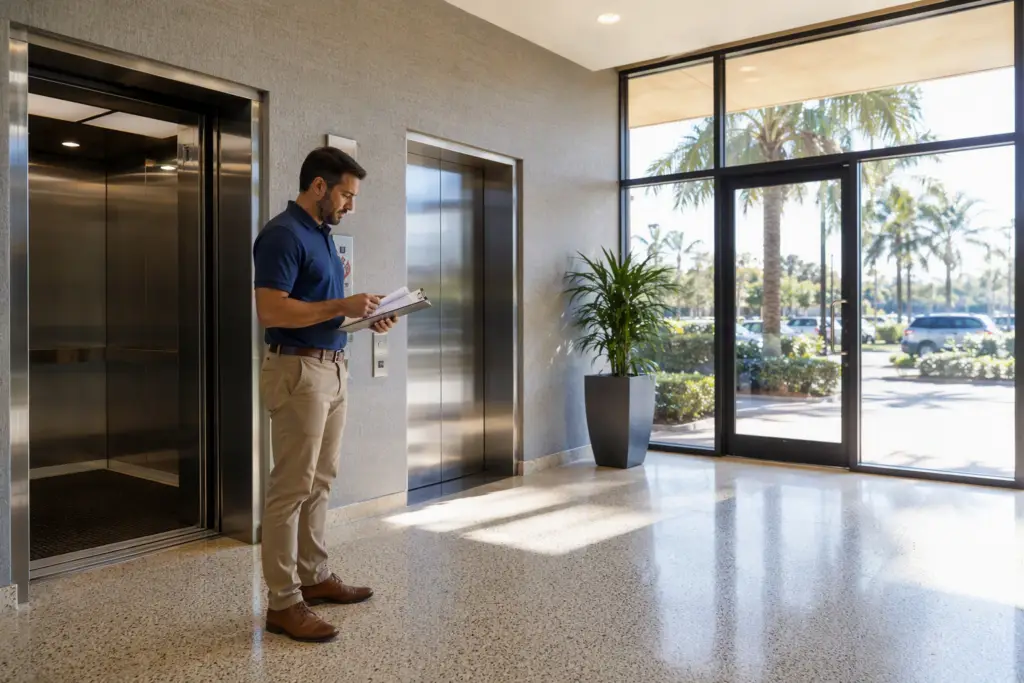
- Schedule a comprehensive elevator assessment with a qualified elevator service company to document the current condition of every elevator in the facility against ADA and ASME A17.1 standards.
- Prioritize deficiencies by severity — items that create immediate barriers to access or safety hazards should be addressed first.
- Obtain required permits through the Florida DBPR and the applicable local building department before beginning any alteration work.
- Complete repairs or modernization according to the approved scope — this may include replacing call buttons, upgrading cab interiors, reprogramming door timing, or installing new communication systems.
- Schedule a third-party inspection with a Florida-licensed elevator inspector to verify the completed work meets all applicable standards.
- Obtain and post the updated certificate of operation as required by Florida law.
- Establish a preventive maintenance contract to maintain compliance on an ongoing basis and avoid future lapses.
What Is the Difference Between ADA New Construction Requirements and Barrier Removal Obligations?
The ADA creates distinct obligations depending on whether a building is new, undergoing renovation, or an existing facility with no planned alterations:
- New construction: Full compliance with all ADA elevator standards is required from the time of construction for any multi-story healthcare building where an elevator is provided.
- Alterations: When a healthcare facility undertakes a renovation that affects the area of primary function — such as a patient care floor — the path of travel to that area, including elevators, must be brought into compliance to the extent that the cost of doing so does not exceed a defined threshold (expressed as a percentage of the overall alteration cost under ADA guidance).
- Existing facilities: Title III of the ADA requires that existing public accommodations remove barriers to access where doing so is “readily achievable” — meaning easily accomplishable without significant difficulty or expense.
Healthcare facility managers should document their barrier removal efforts and maintain records of the analyses used to determine what was and was not readily achievable.
How Often Do Healthcare Elevators in Florida Need to Be Inspected?
Florida requires periodic inspections of all elevators by licensed inspectors in accordance with the ASME A17.1 Safety Code for Elevators and Escalators. The specific intervals for routine inspections and periodic tests are defined within the code and enforced by the Florida DBPR. Healthcare facilities must ensure their elevators hold a current, valid certificate of operation — which is issued only after a satisfactory inspection. Facilities with elevators that serve intensive patient-care areas should track inspection expiration dates carefully, as an expired certificate means the elevator cannot legally operate.
What Questions Will Your Inspector Ask During a Healthcare Elevator Inspection?
Questions Your Inspector Will Ask
Florida DBPR elevator inspectors and ADA compliance auditors typically focus on the following areas when evaluating a healthcare facility’s elevators. Facility managers should be prepared to answer — and document — each of the following:
- Is the current certificate of operation posted inside the cab and up to date?
- Do all hall call buttons meet the required mounting height and activation force?
- Are car operating panel buttons within the reach range of a seated wheelchair user?
- Do all buttons feature raised characters and Braille designations?
- Is the door reopening device functional and free of obstruction?
- What is the current door dwell time, and does it meet the minimum ADA requirement?
- Does the elevator level within one-half inch of the landing at each floor?
- Is the two-way emergency communication system operational, and does it function without requiring voice communication?
- Are visual and audible floor indicators functional at every landing?
- Has Phase I and Phase II firefighters’ emergency operation been tested within the required interval?
- Is there at least one elevator car in the facility with interior dimensions sufficient to accommodate a standard hospital stretcher?
- Are maintenance records current and available for review?
- Is emergency lighting in the cab functional?
- Does the facility have a preventive maintenance contract in place with a qualified elevator service provider?
How Much Does ADA Elevator Compliance Work Cost for a Healthcare Facility?
The cost of bringing a healthcare elevator into ADA compliance varies significantly based on the nature and number of deficiencies identified, the age and type of equipment, and whether work requires a full modernization or targeted repairs. Minor items — such as replacing non-compliant signage or adjusting door timing — are typically low-cost. Larger scope work such as cab dimension modifications, complete control system upgrades, or emergency communication system replacements represents a more substantial investment. A professional elevator assessment is the most reliable starting point for any accurate cost projection, as it identifies exactly what work is required before any estimates are developed.
Does the ADA Apply to Private Healthcare Facilities as Well as Public Hospitals?
Yes. The ADA applies to private healthcare entities as “places of public accommodation” under Title III, as well as to state and local government-operated healthcare facilities under Title II. This means that private medical offices, outpatient surgery centers, rehabilitation facilities, and assisted living communities are all subject to ADA elevator requirements — not only publicly operated hospitals. In Florida, these obligations are enforced in parallel with the Florida Building Code and the DBPR’s elevator safety program.
How Can Axxiom Elevator Florida Help Healthcare Facilities Stay Compliant?
Axxiom Elevator Florida serves healthcare clients in Pompano Beach, Sarasota, and throughout Florida with elevator maintenance, modernization, and compliance assessment services. The Axxiom Elevator Florida team works alongside facility managers to evaluate existing equipment against current ADA standards and ASME A17.1 requirements, develop remediation plans, and coordinate the permitting and inspection process required under Florida law.
Healthcare operators who want to understand their current compliance posture — before an inspector, accreditation surveyor, or legal complaint forces the issue — should begin with a professional elevator assessment. Axxiom Elevator Florida offers free elevator assessments to healthcare facilities across its service areas, providing a clear picture of what is compliant, what needs attention, and how to prioritize next steps.
Schedule Your Free Healthcare Elevator Assessment Today
Elevator compliance in a healthcare setting is not optional — it protects patients, staff, and the facility’s ability to operate. Whether you manage a hospital in Pompano Beach, an assisted living community in Sarasota, or a multi-site medical group anywhere in Florida, Axxiom Elevator Florida is ready to help you evaluate your current compliance status and develop a clear path forward.
Contact Axxiom Elevator Florida for a free elevator assessment:
Need elevator service you can rely on? Axxiom Elevator Florida is ready to help.