How Much Does Elevator Maintenance Cost? Complete 2026 Pricing Guide
After 15 years working on elevators across Florida — from luxury condominiums on the Sarasota waterfront to busy commercial towers in Pompano Beach — I’ve answered this question hundreds of times. The truth is, elevator maintenance pricing isn’t one-size-fits-all. But this guide gives you every cost variable, benchmark number, and compliance factor you need to make a smart decision in 2026.
What Is the Average Annual Cost of Elevator Maintenance?
The average annual elevator maintenance cost in Florida ranges from $3,000 to $8,000 per elevator under a full-service contract, with basic oil-and-grease contracts starting as low as $1,500 per year.
This wide range exists because no two elevators are the same. A two-stop hydraulic elevator in a small medical office is fundamentally different from a high-rise traction elevator making 400 trips per day. Key variables include the type of elevator (hydraulic vs. traction), number of stops, age of the unit, call volume, and most importantly — the type of maintenance contract you choose.
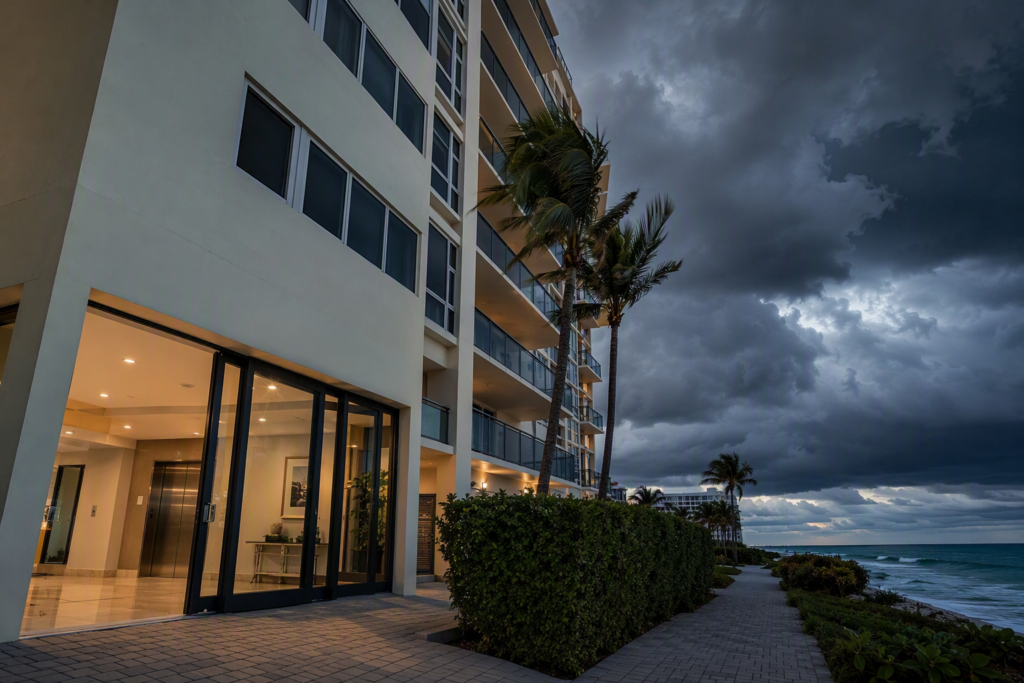
In Florida markets like Pompano Beach and Sarasota, coastal environmental factors (humidity, salt air corrosion) can also accelerate component wear, making proactive maintenance even more critical — and potentially affecting your annual costs if deferred.
What Are the Different Types of Elevator Maintenance Contracts and What Do They Cost?
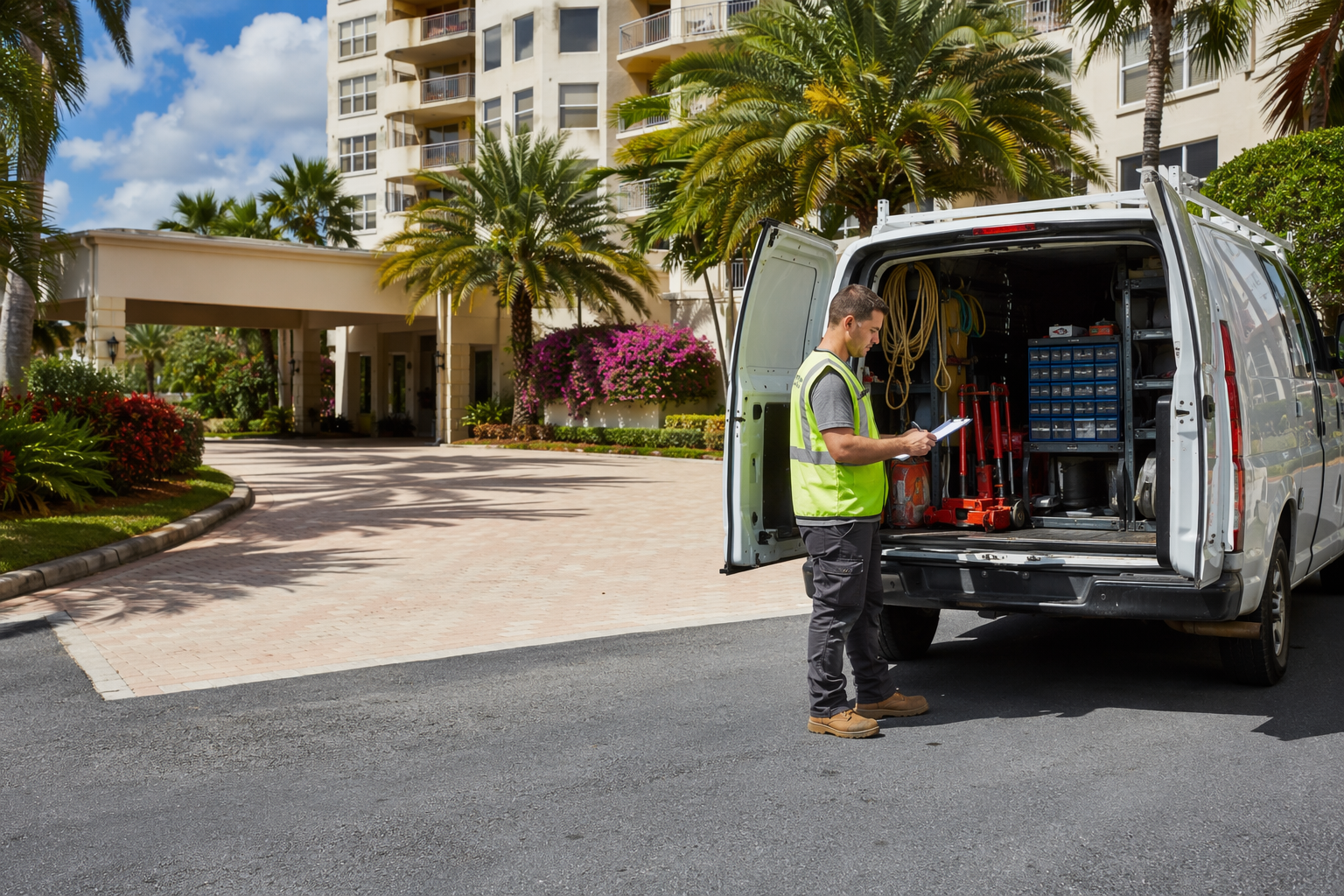
There are three primary elevator maintenance contract types: oil-and-grease (basic), full-service, and full-maintenance, with costs increasing substantially as coverage expands.
Understanding contract tiers is the single most important factor in budgeting for elevator maintenance. Here’s a breakdown of what each covers and what you should expect to pay in 2026:
| Contract Type | What’s Covered | Typical Annual Cost (FL) | Best For |
|---|---|---|---|
| Oil & Grease (Basic) | Lubrication, minor adjustments, visual inspections | $1,500 – $2,800/year | Low-traffic, newer elevators |
| Full-Service | All above + labor for repairs, some parts included | $3,000 – $5,500/year | Mid-rise commercial buildings |
| Full-Maintenance (Comprehensive) | All above + most parts, callbacks, 24/7 emergency coverage | $5,500 – $10,000+/year | High-traffic, high-rise, healthcare |
| Time & Materials (No Contract) | Pay per visit — no routine included | $150–$300/hour + parts | Rarely recommended; highest long-term cost |
One thing I always tell building managers: the cheapest contract is rarely the cheapest option. An oil-and-grease contract that excludes parts and labor can expose you to $4,000–$15,000 in surprise repair bills that a comprehensive plan would have absorbed. Axxiom Elevator Florida offers tiered maintenance plans customized to your building’s specific elevator type, usage pattern, and budget — so you’re never paying for coverage you don’t need or going without coverage you do.
How Does Elevator Type Affect Maintenance Cost?
Hydraulic elevators are generally less expensive to maintain annually than traction (cable-driven) elevators, but each type has unique cost considerations tied to its mechanical components and Florida-specific requirements.
Hydraulic elevators use a fluid-driven piston system. They have fewer moving parts, but they require periodic hydraulic fluid changes, underground cylinder inspections (per ASME A17.1 standards), and leak-detection testing mandated under Florida’s environmental regulations. Annual maintenance for a standard hydraulic unit runs $1,800–$4,500.
Traction elevators — including machine-room-less (MRL) variants — use steel cables, sheaves, and counterweights. They have more mechanical complexity, meaning higher labor hours during inspections. Annual maintenance costs range from $3,500–$8,000+. High-rise traction elevators with sophisticated controls can exceed $10,000 annually in comprehensive contracts.
Pneumatic vacuum elevators, increasingly popular in residential settings in Sarasota, typically cost $1,200–$2,500 per year to maintain due to their simpler mechanics — but fewer certified technicians are trained to service them properly.
What Florida State Regulations Govern Elevator Maintenance?
Florida elevator maintenance is regulated under Florida Statutes Chapter 399 and must comply with the ASME A17.1 Safety Code for Elevators and Escalators, enforced by the Florida Department of Business and Professional Regulation (DBPR).
Florida law requires that all elevators used by the public be inspected at least once every six months. Annual safety inspections must be performed by a licensed elevator inspector, and the Certificate of Operation must be posted inside the elevator at all times. Failure to comply can result in fines, mandatory shutdown, and serious liability exposure for building owners.
In Pompano Beach (Broward County) and Sarasota, local code enforcement authorities work alongside state inspectors to enforce these requirements. Building owners should budget for state inspection fees separately from maintenance contracts — these typically range from $150 to $500 per inspection depending on jurisdiction.
The 2026 edition of ASME A17.1/CSA B44 includes updated requirements for emergency lighting, seismic considerations, and remote monitoring that affect both maintenance scope and cost. Make sure your service provider is current on these code changes.
How Often Does an Elevator Need Maintenance Visits?
Most commercial elevators in Florida require a minimum of quarterly maintenance visits to remain compliant with ASME A17.1 and to prevent the component failures that lead to costly emergency service calls.
The frequency of maintenance visits should be proportional to usage. Industry benchmarks suggest:
- Low-traffic elevators (under 50 trips/day): Quarterly visits minimum
- Medium-traffic elevators (50–200 trips/day): Monthly or bi-monthly visits
- High-traffic elevators (200+ trips/day): Monthly visits, some requiring bi-weekly
Healthcare facilities, senior living communities, and hotels typically require the most frequent service intervals. In my experience, buildings that defer to only semi-annual visits on high-traffic units end up spending 40–60% more on reactive repairs over a five-year period compared to those on monthly schedules.
What Factors Drive Up Elevator Maintenance Costs?
Age of the elevator, callback frequency, parts obsolescence, number of stops, and coastal environmental conditions are the primary factors that push maintenance costs above average.
Here’s what I look at when assessing a unit that’s coming in over budget:
- Elevator age: Units over 20 years old cost 30–50% more to maintain due to parts scarcity and increased wear rates.
- Number of stops: Every additional floor adds mechanical complexity. A 10-stop elevator costs significantly more to maintain than a 2-stop unit.
- Callback history: Frequent emergency service calls signal a systemic issue. Each callback typically costs $200–$600 if not covered under contract.
- Salt air exposure: Coastal Florida properties — particularly in Pompano Beach oceanfront buildings — experience accelerated corrosion on cables, pulleys, and control panels. This is a very real cost driver that inland building managers often underestimate.
- Outdated controls: Legacy relay-logic control systems are expensive to maintain and repair due to part scarcity. Microprocessor-based replacements cost $8,000–$25,000 but dramatically reduce ongoing maintenance expenses.
What Does a Routine Elevator Maintenance Visit Include?
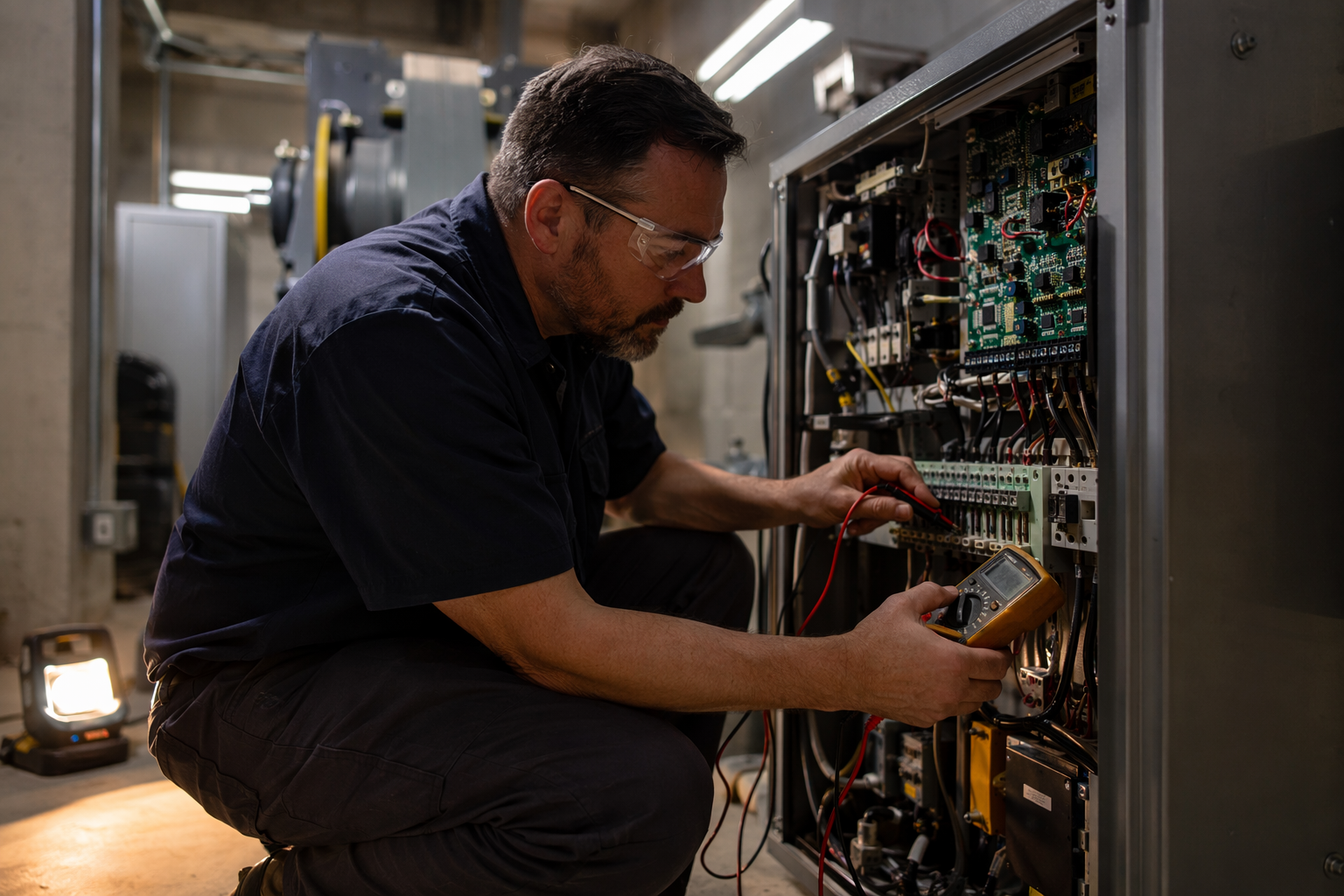
A standard preventive maintenance visit by a certified technician covers lubrication of moving components, safety device testing, door operation adjustment, control system diagnostics, and a documented inspection report.
During a typical quarterly visit, a technician should perform the following tasks as outlined in ASME A17.1 maintenance requirements:
- Lubricate guide rails, gibs, and rope sheaves
- Test and adjust door open/close forces and timing
- Inspect and test all safety devices including overspeed governors and buffers
- Check hydraulic fluid levels and inspect for leaks (hydraulic units)
- Test emergency lighting and phone communication systems
- Inspect machine room temperature and humidity conditions
- Review and log all findings in a maintenance record (required by Florida law)
Any reputable service provider — including the team at Axxiom Elevator Florida — will leave behind a written service report after every visit. If your current provider doesn’t, that’s a significant red flag.
How Much Do Common Elevator Repairs Cost Without a Maintenance Contract?
Without a maintenance contract, individual elevator repair costs in Florida range from $300 for minor door adjustments to $25,000+ for major component replacements like hydraulic cylinders or traction machine overhauls.
Here are real-world repair cost benchmarks from 2025–2026 Florida market data:
| Repair Type | Estimated Cost (Parts + Labor) | Covered Under Full Maintenance? |
|---|---|---|
| Door operator adjustment/replacement | $300 – $2,500 | Usually Yes |
| Hydraulic fluid replacement | $400 – $1,200 | Usually Yes |
| Control board replacement | $2,500 – $8,000 | Sometimes (check exclusions) |
| Hydraulic cylinder replacement | $10,000 – $30,000 | Rarely (usually excluded) |
| Traction machine overhaul | $8,000 – $20,000 | Rarely |
| Rope replacement (traction) | $3,000 – $7,000 | Sometimes |
| Emergency phone system update | $500 – $1,500 | Sometimes |
| Governor/safety device repair | $1,500 – $5,000 | Usually Yes |
Is Elevator Maintenance Tax Deductible for Commercial Building Owners?
Yes — elevator maintenance costs for commercial properties are generally deductible as ordinary business expenses under IRS guidelines, and certain modernization projects may qualify for Section 179 or bonus depreciation treatment.
Routine maintenance and repair expenses are typically fully deductible in the year incurred. However, major modernization projects (new controls, cab refurbishment, hydraulic cylinder replacement) may be classified as capital improvements and must be depreciated over time. Always consult a CPA familiar with commercial real estate for your specific situation. In 2026, bonus depreciation rules are continuing to phase down from 100%, so the timing of major elevator projects matters from a tax perspective.
How Does ADA Compliance Affect Elevator Maintenance Costs?
Maintaining ADA elevator compliance adds incremental cost to your maintenance program but protects you from federal penalties and discrimination lawsuits that can far exceed any maintenance investment.
Under the Americans with Disabilities Act, elevators in most multi-story commercial buildings must meet specific standards including minimum cab dimensions (at least 68″ x 51″ for most new installations), Braille and tactile floor indicators, audible floor announcements, and proper door timing and re-opening mechanisms.
ADA-compliant maintenance checks should include:
- Verifying door re-opening device sensitivity is within specifications
- Testing audible signal systems for proper volume and function
- Confirming Braille and raised character signage is intact and correctly positioned
- Checking that leveling accuracy is within ±½ inch at each landing
ADA remediation for non-compliant elevators can cost $5,000–$50,000 depending on scope. Preventive maintenance that catches compliance drift early is far more cost-effective than reactive ADA corrections under legal pressure.
What Is the Cost of Elevator Modernization vs. Continued Maintenance?
When an elevator exceeds 25–30 years in age or begins generating repair bills over $5,000 annually, modernization (typically $30,000–$100,000+) often delivers a better 10-year total cost of ownership than continuing to maintain an aging system.
This is one of the most important conversations I have with building owners. The break-even point depends on your current maintenance spend, callback frequency, parts costs, and energy consumption. Modern traction drives and variable-frequency-drive (VFD) systems can reduce energy consumption by 30–50%, generating meaningful utility savings alongside reduced repair costs.
A phased modernization approach — starting with controls, then the drive system, then cab and fixtures — can spread costs over 3–5 years while progressively reducing maintenance burden. Axxiom Elevator Florida provides detailed modernization assessments that show side-by-side cost projections to help building owners make data-driven decisions.
How Do I Evaluate and Compare Elevator Maintenance Vendors?
When comparing elevator service vendors, evaluate contractor licensing (Florida DBPR), IUEC or comparable technician certification, contract exclusion clauses, guaranteed response times, and local parts availability.
Florida law requires elevator contractors to be licensed by the Florida DBPR. Always verify licensure before signing a contract. Beyond licensing, here’s what to compare:
- Response time guarantees: What is the contractual response time for entrapments and emergency calls? Industry standard is 2–4 hours; some vendors guarantee under 2 hours.
- Exclusions list: Read every exclusion in your contract. Some “full maintenance” contracts exclude major components like cylinders, ropes, and control boards — making them effectively basic contracts with premium pricing.
- Technician credentials: Are technicians IUEC (International Union of Elevator Constructors) certified? This matters for code compliance and technical competency.
- Parts inventory: Does the contractor maintain local parts inventory? A vendor who orders parts from out of state adds 3–7 days to every repair timeline.
- Documentation: Will you receive digital service records? This is critical for Florida state inspection compliance and liability protection.
What Is the Cost of an Elevator Safety Inspection in Florida?
Mandatory Florida elevator safety inspections cost between $150 and $500 per inspection, with the state requiring inspections every six months for public-use elevators under Florida Statutes Chapter 399.
These fees are paid to the licensed third-party inspector or the Florida DBPR and are separate from your maintenance contract. Some full-service contracts include coordination with inspectors but do not cover the inspection fee itself — clarify this with your provider. Failed inspections that require re-inspection incur additional fees and can result in elevator shutdown until deficiencies are corrected.
Building owners in Pompano Beach and Sarasota should budget $300–$1,000 per elevator annually for combined state and local inspection fees, depending on the number of inspections required and any local jurisdiction surcharges.
Can I Reduce Elevator Maintenance Costs Without Cutting Corners on Safety?
Yes — strategic choices including remote monitoring technology, proactive maintenance scheduling, energy-efficient modernization, and bundling multiple elevators under a single contract can meaningfully reduce your per-elevator maintenance cost without compromising safety or compliance.
Specific cost-reduction strategies that I recommend to building managers:
- Remote monitoring: IoT-based elevator monitoring systems can detect anomalies before they become failures, reducing emergency callback rates by 20–40%. Monthly monitoring subscriptions typically run $50–$150 per elevator.
- Multi-unit discounts: Buildings with two or more elevators should always negotiate a per-unit discount. Vendors save on travel time; you should share in those savings — expect 10–20% off per-unit pricing.
- Predictive maintenance scheduling: Aligning maintenance visits with actual usage patterns rather than arbitrary calendar intervals optimizes technician time and extends component life.
- Staff training: Basic operator training for building staff (e.g., recognizing door misalignment, proper emergency phone use) can reduce unnecessary service calls that count against you if you have a callback limit in your contract.
What Happens If I Don’t Maintain My Elevator Regularly?
Neglecting elevator maintenance results in progressive mechanical failure, state-mandated shutdown, escalating repair costs, and significant legal liability — all of which far exceed the cost of any maintenance contract.
In Florida, an elevator that fails its six-month inspection must be taken out of service until all deficiencies are corrected. For a multi-tenant commercial building or condominium, an elevator shutdown can trigger tenant complaints, ADA claims, and lease termination rights. Beyond legal exposure, deferred maintenance has a compounding cost effect: a $200 door adjustment deferred for 6 months can become a $2,500 operator replacement and a $500 emergency callback within a year.
From a liability standpoint, Florida courts have found building owners negligent in elevator injury cases when maintenance records were incomplete or service intervals were not followed. Proper documentation of all maintenance visits is not just good practice — it is your primary defense in litigation.
How Much Does Emergency Elevator Service Cost in Florida?
Emergency elevator service calls in Florida typically cost $200–$600 for standard business-hours responses and $400–$1,200 for after-hours, weekend, or holiday callbacks when not covered under a maintenance contract.
Entrapment response — when a passenger is trapped in a stopped elevator — requires the fastest possible response and is non-negotiable from a safety and liability perspective. Florida law requires that any elevator that traps a passenger must be responded to immediately. Most comprehensive maintenance contracts include unlimited callbacks at no additional cost, which is one of the strongest financial arguments for upgrading from a basic service tier.
How Does Building Type Affect Elevator Maintenance Costs?
Healthcare facilities, hotels, and high-density residential buildings face the highest elevator maintenance costs due to extended operating hours, heavier usage cycles, and stricter regulatory requirements.
Here’s a general cost comparison by building type for Florida properties in 2026:
| Building Type | Typical Annual Maintenance Cost Per Elevator | Key Cost Drivers |
|---|---|---|
| Small Office (2–4 stops) | $1,800 – $3,500 | Low traffic, simple controls |
| Mid-Rise Condo/Apartment | $3,000 – $5,500 | After-hours coverage, resident expectations |
| High-Rise Commercial | $5,000 – $10,000+ | High traffic, complex controls, multiple units |
| Hospital/Healthcare | $6,000 – $14,000+ | 24/7 operation, patient safety standards |
| Hotel/Hospitality | $4,500 – $9,000 | Guest experience, continuous operation |
| Retail/Shopping Center | $3,500 – $6,500 | Public use, freight elevator demands |
What Should I Look For in an Elevator Maintenance Contract in Florida?
A sound Florida elevator maintenance contract must clearly define the scope of covered services, parts inclusion/exclusion, response time guarantees, inspection coordination, price escalation terms, and contract exit provisions.
Never sign a maintenance contract without reviewing these specific clauses:
- Parts exclusion list: Know exactly what is and isn’t covered. “Full maintenance” means different things to different vendors.
- Price escalation: Many multi-year contracts include automatic CPI-tied price increases. Cap clauses at 3–5% annually are industry-reasonable; anything higher deserves negotiation.
- Termination clause: Avoid contracts with 90-day or shorter termination notice windows paired with significant early termination penalties. 30-day termination with reasonable notice is a fair standard.
- Response time guarantees: Contractual response times for emergencies and entrapments should be clearly stated with remedies if they’re not met.
- Proprietary parts restrictions: Some manufacturers use proprietary components that lock you into single-vendor service. Understand whether your elevator uses open-architecture or proprietary controls before signing any long-term agreement.
How Do Local Service Providers in Pompano Beach and Sarasota Compare to National Elevator Companies?
Local certified elevator contractors typically offer faster response times, more personalized service, and more transparent contract terms than large national firms, often at competitive or lower price points for standard commercial elevators.
National elevator companies have advantages in parts infrastructure and 24/7 call centers, but they often route service calls through regional dispatch centers that can mean longer wait times for Florida properties outside major metros. In Pompano Beach and Sarasota specifically, working with a locally headquartered certified contractor means your technician knows your building, your elevator’s history, and your local code enforcement contacts — all of which have real value when you’re facing an inspection deadline or an emergency callback at 11 PM on a Saturday.
Axxiom Elevator Florida is locally operated and serves both Pompano Beach and Sarasota markets with certified IUEC technicians who maintain relationships with state and local inspectors — a meaningful advantage when inspection scheduling and code interpretation questions arise.
What Is the Total Cost of Elevator Ownership Over 10 Years?
Over a 10-year period, total elevator ownership costs — including maintenance contracts, repairs, inspections, and potential partial modernization — typically range from $40,000 to $120,000 per elevator depending on age, type, and usage intensity.
Breaking this down for a typical mid-rise Florida commercial elevator over 10 years:
- Maintenance contracts: $30,000–$55,000 (full-service, $3,000–$5,500/year)
- State and local inspection fees: $3,000–$10,000
- Non-contract repairs: $5,000–$20,000
- Partial modernization (controls/drive at year 6–8): $15,000–$40,000
- Total estimated 10-year cost: $53,000–$125,000 per elevator
When building owners try to cut costs by selecting the cheapest maintenance tier, they typically shift expenses from predictable maintenance contract costs to unpredictable emergency repair costs — a tradeoff that almost always costs more over a decade. Proper lifecycle planning, which Axxiom Elevator Florida provides as part of its elevator assessment service, helps building managers budget accurately and avoid financial surprises.
Contact Axxiom Elevator Florida for a Free Elevator Assessment
Whether you’re in Pompano Beach or Sarasota, our IUEC-certified technicians will evaluate your elevator system, review your current maintenance contract, and provide a transparent, no-obligation cost analysis — so you know exactly what you’re paying for and what you should be paying instead.
Stop guessing about elevator maintenance costs. Get real numbers from certified professionals who know Florida code, know coastal elevator challenges, and have been maintaining elevators across South and Central Florida for years.
📞 Call Axxiom Elevator Florida today:
Free assessments available for commercial, residential, and multi-family buildings throughout Pompano Beach FL and Sarasota FL. No obligation. No pressure. Just honest answers from experienced elevator professionals.
References & Code Sources: ASME A17.1/CSA B44 Safety Code for Elevators and Escalators | ADA.gov — Americans with Disabilities Act | Florida Statutes Chapter 399 — Elevators | Florida Department of Business and Professional Regulation (DBPR). Pricing data reflects 2025–2026 Florida market rates and is subject to change based on equipment specifications and local market conditions.
Need elevator service you can rely on? Axxiom Elevator Florida is ready to help.