Elevator Modernization ROI Statistics for Healthcare Facilities
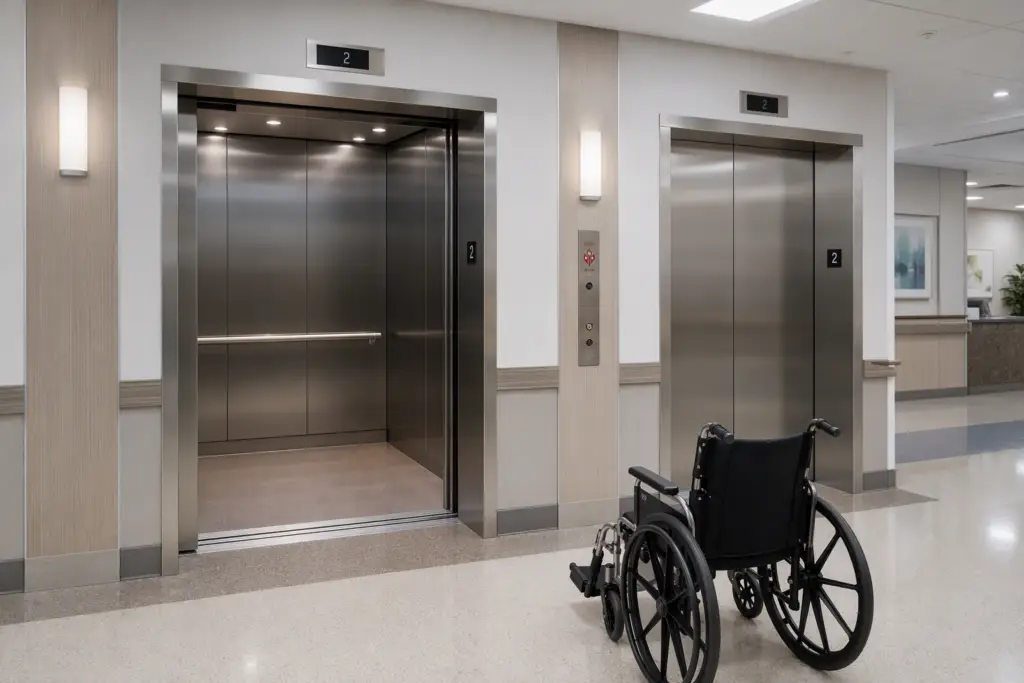
Healthcare facilities depend on vertical transportation more critically than almost any other building type. A failed elevator in a hospital does not simply inconvenience an office worker — it can delay a patient transfer, strand a wheelchair user, or interrupt the delivery of medication. For facility managers in Pompano Beach, FL, Sarasota, FL, and across Florida, understanding the return on investment from elevator modernization is essential for budget planning, compliance management, and patient safety assurance.
This guide covers the compliance requirements, financial considerations, operational benefits, and strategic questions that healthcare facility directors need answered before initiating a modernization project.
What Is the ROI of Elevator Modernization in a Healthcare Setting?
The return on investment from elevator modernization in healthcare settings is multi-dimensional. Unlike a purely commercial office building where elevator downtime is a productivity inconvenience, hospitals and medical facilities experience cascading operational impacts when elevators fail or underperform.
The ROI case for healthcare elevator modernization rests on several qualitative and quantitative pillars:
- Reduced unplanned downtime: Aging elevator components are more prone to failures. Modernization replaces outdated controllers, motors, and safety systems with current technology, reducing the frequency of emergency service calls and unplanned outages.
- Lower maintenance costs: Older elevator systems often require proprietary replacement parts that are increasingly scarce and expensive. Modernized systems use current-generation components that are more widely available and easier to service.
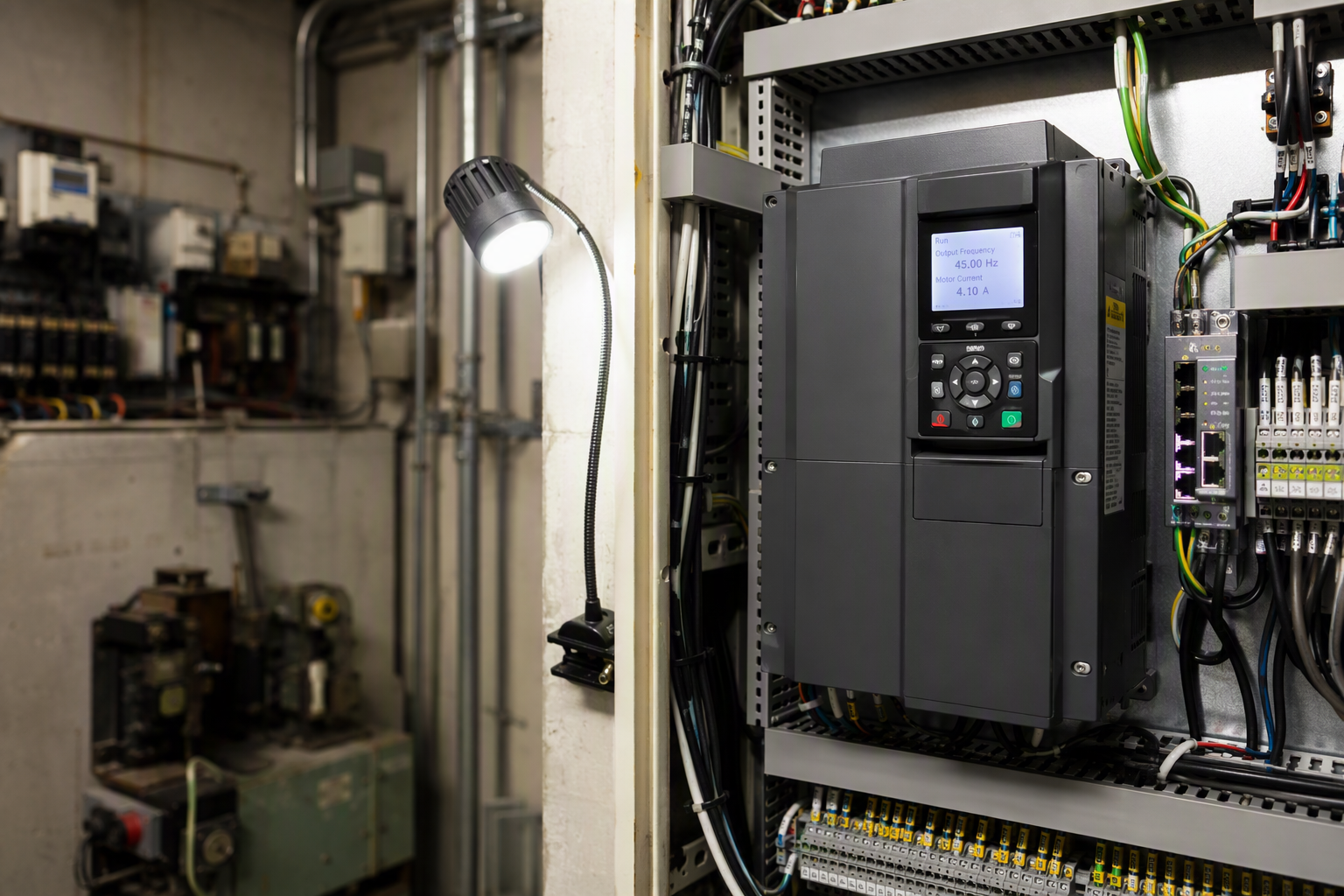
- Energy savings: Modern elevator drive systems, particularly variable-frequency drives (VFDs) and regenerative drives, consume significantly less energy than older relay-based or hydraulic systems.
- Extended equipment life: A properly planned modernization can extend the service life of elevator infrastructure by a substantial period, deferring the far greater capital expense of full replacement.
- Compliance avoidance costs: Staying ahead of code requirements eliminates fines, forced shutdowns, and emergency remediation costs that arise when inspectors cite non-compliant equipment.
- Improved patient and staff experience: Faster, quieter, and more reliable elevators reduce friction throughout the care environment — a factor that connects to patient satisfaction scores and staff retention.
Axxiom Elevator Florida works with healthcare facility managers in Pompano Beach and Sarasota to evaluate existing equipment condition and identify which modernization scope delivers the strongest return for each facility’s specific age, usage profile, and compliance status.
What Compliance Codes Govern Elevator Modernization in Florida Healthcare Facilities?
Healthcare facility elevators in Florida are subject to overlapping layers of safety and accessibility code requirements. Understanding these is not optional — it is a prerequisite for any modernization project.
ASME A17.1 Safety Code for Elevators and Escalators
The foundational standard governing elevator design, installation, inspection, and maintenance in the United States is the ASME A17.1 Safety Code for Elevators and Escalators. Florida adopts and enforces editions of this code through the Florida Department of Business and Professional Regulation. When a facility modernizes an elevator, the scope of work triggers code compliance requirements for all affected systems. Facility managers should confirm which edition of ASME A17.1 applies to their jurisdiction at the time of permit issuance, as Florida may reference a specific adopted edition.
ADA Accessibility Requirements
The Americans with Disabilities Act (ADA) establishes accessibility requirements that are especially critical in healthcare settings, where a large portion of building occupants — patients, visitors, and staff — may have mobility limitations. Elevator cab dimensions, door timing, floor leveling accuracy, button height, and auditory signals must all meet ADA standards. Modernization projects that touch these elements must bring them into full compliance.
NFPA and Fire/Smoke Control Integration
Healthcare facilities must also comply with fire protection codes that govern elevator recall and firefighter service operations. Modernization projects must ensure that fire recall systems are correctly integrated with the building’s fire alarm infrastructure per applicable NFPA standards.
CMS and Joint Commission Environment of Care Standards
Hospitals seeking or maintaining Centers for Medicare & Medicaid Services (CMS) certification and Joint Commission accreditation are evaluated on their Environment of Care program, which encompasses vertical transportation. Equipment that is out of compliance or poorly maintained creates survey risk. Modernization is a proactive tool for maintaining compliant status.
How Does Elevator Age Affect ROI Calculations for Hospitals?
Elevator age is one of the most important variables in modernization ROI analysis. Systems operating well beyond their intended design life accumulate several compounding cost burdens:
- Older relay-logic controllers are no longer manufactured, making repairs dependent on salvaged parts or custom fabrication at premium cost.
- Hydraulic systems installed before modern environmental standards may use fluids that require special handling and disposal.
- Wiring, contactors, and motor windings in aging systems are more prone to intermittent failures — the hardest and most expensive category of elevator problem to diagnose and resolve.
- Outdated door operators and door detection systems are responsible for a disproportionate share of entrapment incidents and injury claims.
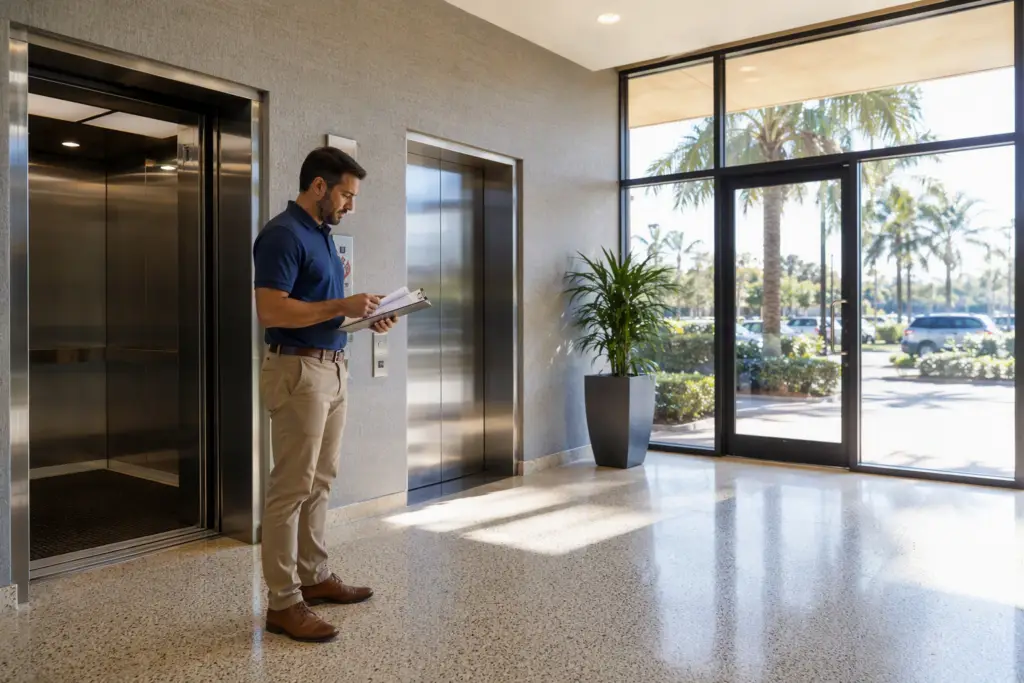
A thorough condition assessment — like the free elevator assessments offered by Axxiom Elevator Florida — identifies which components are approaching end of useful life and models the cost trajectory of continued maintenance versus modernization investment.
What Should a Healthcare Facility Expect During a Modernization Project?
Planning and communication are especially critical in healthcare environments because elevator outages directly affect patient care logistics. A structured modernization process for a hospital or medical building typically follows these steps:
- Condition assessment and scope definition: A qualified elevator professional inspects all major systems — controller, machine, ropes or hydraulics, cab, doors, and safety devices — and produces a documented condition report.
- ROI and compliance analysis: The assessment findings are used to model the cost of ongoing maintenance versus modernization, and to identify which code requirements will be triggered by the planned scope.
- Permitting: A modernization permit is pulled from the appropriate Florida authority having jurisdiction (AHJ). Work cannot begin legally without a valid permit.
- Outage scheduling: In healthcare facilities, elevator outages must be coordinated around shift changes, procedure schedules, and patient census levels. Multi-car installations can often be modernized sequentially to maintain capacity.
- Installation and testing: Modernization work is performed by licensed elevator mechanics. Upon completion, all safety devices are tested per ASME A17.1 requirements.
- State inspection and certificate of operation: Florida law requires a state inspection and issuance of a new certificate of operation before the modernized elevator is returned to service.
- Documentation delivery: Updated maintenance records, wiring diagrams, and warranty documentation are provided to facility management.
How Does Modernization Affect Energy Costs in a Medical Facility?
Energy consumption is a meaningful component of the ROI case for elevator modernization in healthcare, where elevators operate at high duty cycles around the clock. Modern variable-frequency drive (VFD) motor controls and LED cab lighting reduce electrical consumption compared to older systems. Regenerative drive systems can return energy to the building’s electrical grid during descent operations. Because hospitals operate continuously, the cumulative energy savings across a year of operation can be substantial — though the specific savings depend on elevator type, usage intensity, and local utility rates.
What Are the Risks of Deferring Elevator Modernization in a Healthcare Facility?
Deferred modernization carries real and escalating risks for healthcare operators:
- Regulatory shutdown: Florida elevator inspectors have authority to shut down elevators that fail inspection. A hospital elevator placed out of service without a modernized replacement creates an immediate operational crisis.
- Increased liability exposure: An elevator entrapment, door-related injury, or leveling failure in a healthcare setting involving a patient or visitor carries significant liability implications.
- Emergency repair premiums: Unplanned emergency repairs on obsolete systems cost considerably more than planned modernization work and frequently result in extended downtime while parts are sourced.
- Accreditation risk: Joint Commission surveyors and CMS inspectors evaluate the condition and maintenance records of patient care infrastructure, including elevators. A documented pattern of failures or deferred maintenance can create findings that jeopardize accreditation status.
How Does ADA Compliance Factor Into Healthcare Elevator Modernization ROI?
ADA compliance is not merely a legal checkbox — it has direct operational and reputational value for healthcare facilities. Patients and visitors with disabilities must be able to access all floors of a medical building independently and safely. An elevator that fails to meet ADA standards for door timing, cab leveling, or auditory and visual signals creates barriers that expose the facility to complaints and legal action under federal disability law. Modernization that restores full ADA compliance eliminates that exposure and improves the patient experience for the facility’s most vulnerable users.
What Is the Difference Between Partial and Full Elevator Modernization in a Hospital?
Healthcare facility budgets rarely permit full elevator replacement across an entire fleet simultaneously. Partial modernization — sometimes called a targeted or phased modernization — allows a facility to prioritize the highest-impact components within a defined budget cycle.
Common partial modernization scopes include:
- Controller modernization: Replacing an aging relay or solid-state controller with a modern microprocessor-based control system. This alone can dramatically improve reliability, dispatching efficiency, and diagnostic capability.
- Door operator modernization: Upgrading door operators and detection systems reduces door-related entrapments and service calls — one of the leading sources of elevator complaints in high-traffic healthcare environments.
- Drive system modernization: Replacing an older motor-generator set or hydraulic pump with a VFD or updated hydraulic power unit improves energy efficiency and reduces mechanical wear.
- Cab renovation: Updating interior finishes, flooring, lighting, and call fixtures improves the patient and staff experience and can restore ADA compliance for cab-level elements.
Axxiom Elevator Florida can help healthcare facility managers in Sarasota and Pompano Beach structure a phased modernization plan that addresses the most critical compliance and reliability gaps first while managing capital expenditure across budget years.
How Long Does Healthcare Elevator Modernization Take?
Project duration varies based on scope, the number of elevators being modernized, and the facility’s scheduling constraints. A controller and drive modernization on a single elevator can often be completed within one to two weeks. A full cab-and-machine-room modernization will take longer. In multi-elevator hospital banks, sequential scheduling allows the facility to maintain service on other cars while work proceeds — a planning approach that Axxiom Elevator Florida helps healthcare clients structure from the outset of a project.
Questions Your Inspector Will Ask
When a Florida elevator inspector visits a healthcare facility — whether for a routine periodic inspection or a post-modernization acceptance inspection — the following questions and documentation requests are common. Facility managers should be prepared to answer them:
- “Where is the current certificate of operation?” Florida law requires a valid certificate to be posted in or near the elevator. Inspectors verify its currency.
- “Can you produce the maintenance records for the past 12 months?” ASME A17.1 requires that maintenance records be maintained. In a healthcare survey context, these records also demonstrate due diligence to accreditation bodies.
- “When was the last Category 1 and Category 5 test performed?” ASME A17.1 specifies required periodic testing intervals for elevator safety devices. Category 5 tests (full load, full speed safety tests) are required on a defined cycle and must be documented.
- “Has any modernization work been performed since the last inspection?” Any significant alteration triggers a permit and re-inspection requirement. Uninspected alterations are a code violation.
- “Is the firefighter’s emergency operation functioning?” Phase I and Phase II firefighter service is tested and must be operational per ASME A17.1 and local fire codes.
- “Are door reopening devices functioning correctly?” Door safety devices are inspected and tested at every periodic inspection. Non-functioning devices are a citation item.
- “Is the machine room access secure and properly climate-controlled?” Inspectors check that machine rooms meet ASME A17.1 environmental and access requirements.
- “Are all required safety test labels and inspection tags properly posted?” Missing documentation is a common and easily avoided citation.
How Should a Healthcare Facility Choose an Elevator Modernization Contractor in Florida?
Vendor selection for healthcare elevator modernization involves considerations beyond lowest bid:
- Florida licensure: Elevator contractors and mechanics in Florida must hold appropriate state licenses. Verify licensure status before awarding any contract.
- Healthcare experience: Work in active healthcare environments requires coordination, infection control awareness, and sensitivity to patient care priorities that general commercial elevator work does not.
- Permitting capability: The contractor must be capable of pulling and managing permits through the Florida AHJ and coordinating the state inspection process.
- Ongoing maintenance capacity: A contractor who can also perform ongoing maintenance after modernization provides continuity and accountability for the work performed.
- Local presence: For facilities in Sarasota and Pompano Beach, a locally based contractor provides faster response and familiarity with local inspection authorities.
Why Do Healthcare Facilities in Sarasota and Pompano Beach Choose Axxiom Elevator Florida?
Healthcare facility managers throughout Florida rely on Axxiom Elevator Florida for elevator modernization because the company combines certified technical expertise with a service model designed for the demanding environment of medical facilities. Axxiom Elevator Florida is a Florida-certified elevator service company serving the Sarasota and Pompano Beach markets, providing modernization planning, permit management, installation, and ongoing maintenance under one accountable relationship. The company’s approach prioritizes compliance, documentation, and minimizing disruption to patient care operations during modernization projects.
Take the Next Step Toward a Safer, More Efficient Healthcare Facility
Elevator modernization is one of the highest-impact capital investments a healthcare facility manager can make — reducing maintenance costs, ensuring compliance, improving patient safety, and extending infrastructure life. The first step is understanding your equipment’s current condition and compliance status.
Contact Axxiom Elevator Florida for a free elevator assessment. Call us today at to schedule a no-obligation evaluation of your healthcare facility’s elevator systems in Sarasota, Pompano Beach, or anywhere in Florida.
Need elevator service you can rely on? Axxiom Elevator Florida is ready to help.