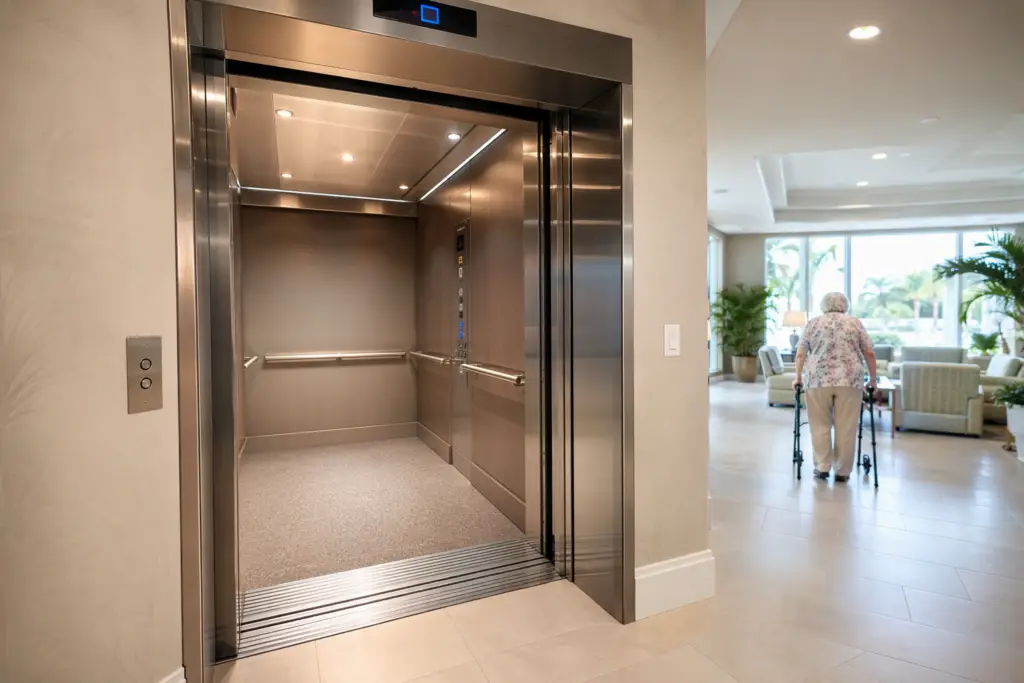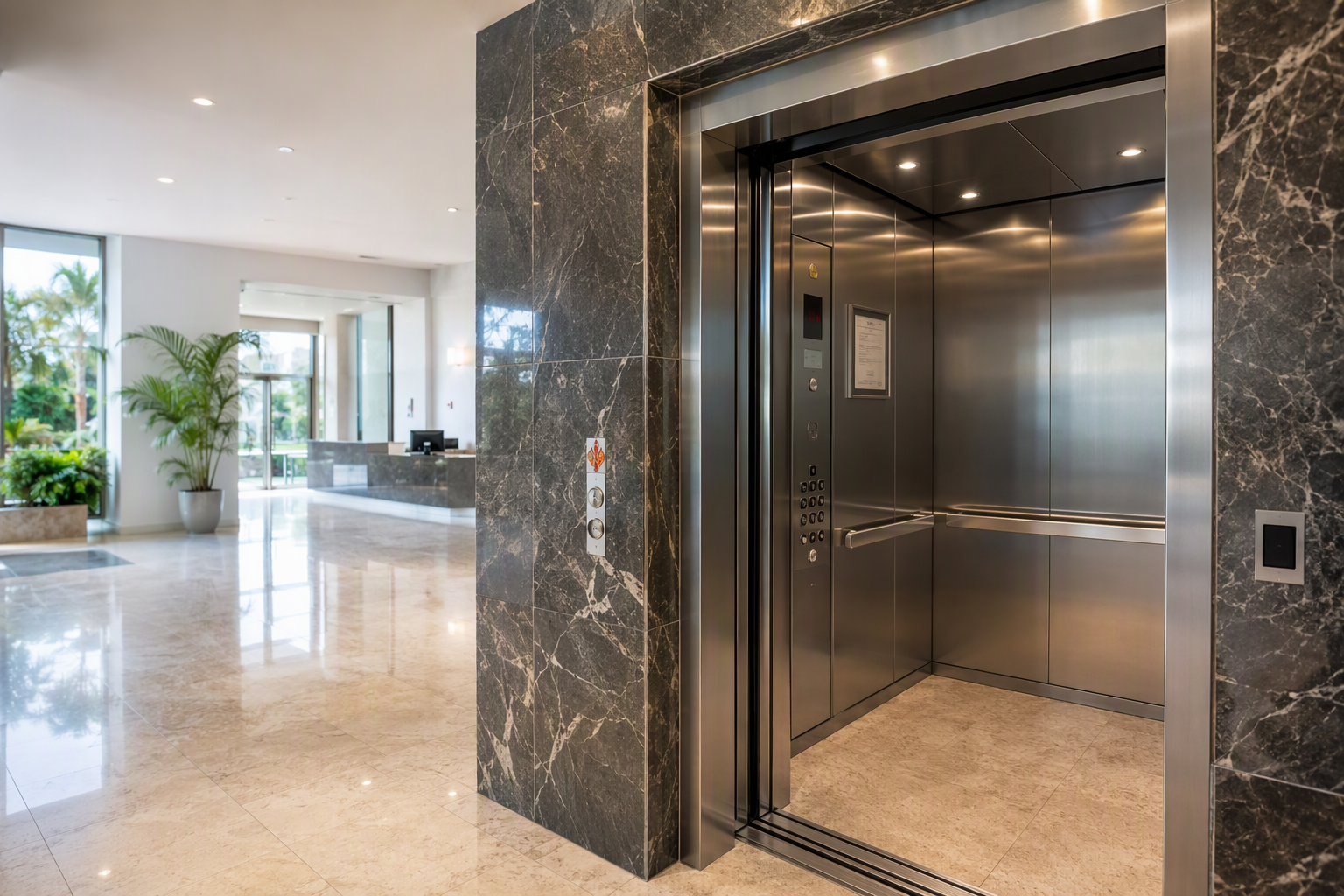
For building owners in Pompano Beach, navigating the elevator permitting and inspection process for the first time can feel complex. Florida’s elevator safety framework is layered — involving state statute, adopted codes, and local enforcement through Broward County. This guide walks through every stage of the process, answers the most common questions, and helps building owners understand exactly what is required before a new elevator can legally be placed into service.
What Is the Governing Authority for Elevator Permits in Pompano Beach?
Pompano Beach is located in Broward County, which operates under Florida’s statewide elevator safety framework established by Chapter 399, Florida Statutes (the Elevator Safety Act). The primary state regulator is the Florida Department of Business and Professional Regulation (DBPR), Division of Hotels and Restaurants, Bureau of Elevator Safety.
At the local level, the Broward County Building Code Division enforces Florida’s elevator law (Chapter 399) through its own certified elevator inspectors. Pompano Beach building owners should expect to coordinate with both the state DBPR and the Broward County Building Code Division as part of the first-time permitting and inspection process.
The technical standard Florida has adopted is the ASME A17.1/CSA B44 Safety Code for Elevators and Escalators, 2019 edition, which became effective in Florida on December 31, 2023, and governs design, installation, and inspection requirements for new conveyances. Additional requirements under Chapter 61C-5, Florida Administrative Code (Florida Elevator Safety Code) also apply.
What Steps Are Required to Permit and Inspect a New Elevator for the First Time?
- Engage a Florida-registered elevator company. All new elevator installations in Florida must be performed by a company registered with the DBPR. The registered company — not the building owner — is responsible for applying for the installation permit before any work begins.
- Obtain the state installation permit. The registered elevator company applies to the DBPR for a permit to install the conveyance. Work cannot legally begin until this permit is issued. Attempting to install without a permit violates Chapter 399, Florida Statutes.
- Complete installation using certified elevator technicians. Only certified elevator technicians who hold a Florida elevator certificate of competency may construct or install conveyances. These technicians must be registered with the state annually.
- Schedule the post-installation inspection. Once installation is complete, a certified elevator inspector must inspect the conveyance before it is placed into service. Florida law requires that this inspector have no employment, association, or conflict of interest with the permit holder or the building owner.
- Pass the inspection. The inspector evaluates the installation against the ASME A17.1-2019 Safety Code and applicable Florida rules. In Broward County, this inspection is typically conducted by the Broward County Building Code Division’s elevator inspectors.
- Receive the certificate of operation. Once the inspection is satisfactory, the DBPR issues a certificate of operation. This certificate is valid for no more than two years.
- Post the certificate inside the elevator. Florida law requires the certificate of operation to be posted in a conspicuous location inside the elevator, in a frame with a transparent cover.
- Assume ongoing owner responsibilities. Once the certificate of operation is issued, the building owner becomes responsible for the elevator’s safe operation, proper maintenance, regular inspection, and prompt correction of any code deficiencies.
How Do Broward County’s Inspection Requirements Compare to State-Only Requirements?
| Requirement | Florida State (DBPR) | Broward County (Local AHJ) |
|---|---|---|
| Installation Permit Authority | DBPR issues state permit; required before installation | Broward County Building Code Division also enforces locally |
| Inspector Qualification | Certified elevator inspector; no conflict of interest with permit holder or owner | Broward County uses its own certified elevator inspectors under the state framework |
| Adopted Technical Standard | ASME A17.1/CSA B44, 2019 edition (effective December 31, 2023) | Same — enforces Florida’s adopted code |
| Certificate of Operation | Issued by DBPR; valid up to 2 years | Coordinated through Broward County process |
| Annual Inspection Requirement | Required annually for most covered conveyances | Enforced locally by Broward County inspectors |
| Certificate Posting | Must be posted in a conspicuous location in a framed, transparent-cover enclosure | Same requirement applies locally |
| Accident Reporting | Owner must report accidents to the state within 5 working days | Local notification may also apply |
Note: Building owners in Pompano Beach should confirm current local procedural requirements directly with the Broward County Building Code Division, as local coordination steps may evolve.
What Does the Certificate of Operation Mean for Building Owners?
The certificate of operation is the legal authorization to operate a conveyance in Florida. Under Chapter 399, Florida Statutes, operating an elevator on an expired certificate of operation is a violation of state law. Key facts every Pompano Beach building owner must understand:
- The certificate is valid for no more than two years.
- Renewal requires a current satisfactory inspection — an elevator that fails inspection cannot be renewed until deficiencies are corrected.
- The certificate must be visibly posted inside the elevator at all times in a framed, transparent-cover enclosure.
- Responsibility for maintaining the certificate, scheduling inspections, and correcting deficiencies rests with the building owner once the certificate is issued.
Who Is Allowed to Inspect a New Elevator in Florida?
Florida law sets specific independence requirements for post-installation inspections. The inspector must:
- Hold a certified elevator inspector credential in good standing.
- Be registered with the DBPR annually and demonstrate eight hours of continuing education.
- Carry general liability insurance.
- Have no employment, association, or conflict of interest with the permit holder or the building owner.
This independence requirement means that the company that installed the elevator cannot also perform the first-time post-installation inspection. In Broward County, the Broward County Building Code Division’s certified inspectors typically fulfill this role for new installations.
Are Any Elevators Exempt from Florida’s Permit and Inspection Requirements?
Florida’s exemptions are narrow. Under Chapter 399, Florida Statutes:
- Private residence elevators, stairway chairlifts, and wheelchair lifts in private residences do not require a Florida certificate of operation.
- Two-floor elevators (not escalators or dumbwaiters) that serve only two adjacent floors and are covered by a service maintenance contract are exempt from the annual inspection requirement while the service contract remains in effect — but the initial post-installation inspection and certificate of operation are still required.
- Marine elevators also have specific exclusions under the adopted code.
Building owners in Pompano Beach who believe their conveyance may qualify for an exemption should verify eligibility with the DBPR or with a knowledgeable elevator service provider before assuming an exemption applies.
What Is the Ongoing Inspection and Maintenance Obligation After the First Certificate Is Issued?
Once the first certificate of operation is in hand, the building owner’s compliance obligations do not end. Florida requires:
- Annual inspection by a certified elevator inspector for most conveyances covered by Chapter 399.
- Certificate renewal every two years, conditioned on a satisfactory inspection.
- Prompt correction of any code deficiencies identified during inspections.
- Accident reporting to the state within five working days of any elevator accident.
- Service maintenance contracts — while not universally mandated, a maintenance contract from a registered elevator company is essential for compliance with the two-floor exemption and for keeping the elevator in safe operating condition consistent with the ASME A17.1-2019 Safety Code for Elevators and Escalators.
What Are the Compliance Risks of Operating Without a Valid Certificate of Operation?
| Risk Category | Consequence |
|---|---|
| Legal Violation | Operating on an expired certificate violates Chapter 399, Florida Statutes |
| Enforcement Action | DBPR and Broward County may order the elevator taken out of service |
| Liability Exposure | Injuries occurring on a non-compliant elevator create significant owner liability |
| Insurance Risk | Property and liability insurers may deny claims for incidents involving non-permitted equipment |
| Tenant and Occupant Impact | Forced shutdown disrupts building operations and may violate ADA access obligations |
| ADA Compliance | Removal from service may trigger obligations under the Americans with Disabilities Act if the elevator is a required accessible route |
How Does ADA Compliance Relate to the Permitting and Inspection Process?
While Florida’s elevator permitting and inspection process is governed by the DBPR and Chapter 399, elevators in commercial buildings that serve as accessible routes must also comply with the Americans with Disabilities Act (ADA). ADA requirements address cabin dimensions, door timing, control height, and accessibility features. These are separate from the state’s operational certificate but are typically reviewed during the design and permitting phase through the Florida Building Code process.
Building owners should confirm that their elevator installer and plan reviewer have addressed both Chapter 399 compliance and ADA accessibility requirements before construction begins to avoid costly retrofits after installation.
What Should Building Owners Look for When Choosing an Elevator Service Company in Pompano Beach?
| Selection Factor | What to Verify |
|---|---|
| State Registration | Company must be registered with DBPR annually as a Florida elevator company |
| Technician Credentials | Technicians must hold a current Florida elevator certificate of competency |
| Insurance | Company must maintain general liability insurance as required by state law |
| Code Knowledge | Familiarity with ASME A17.1-2019 and Chapter 61C-5, Florida Administrative Code |
| Local AHJ Familiarity | Experience working with Broward County Building Code Division processes |
| Independent Service Model | Independent companies are not tied to a single manufacturer, allowing broader service capability |
| Permit Application Support | Company should handle the DBPR permit application process on the owner’s behalf |
| Ongoing Maintenance | Ability to provide service contracts that satisfy Florida’s annual inspection and two-floor exemption requirements |
Axxiom Elevator Florida is an independent elevator service provider operating throughout Florida, including Pompano Beach and Broward County. As an independent company, Axxiom Elevator Florida serves building owners without manufacturer affiliation restrictions, providing permit coordination support, maintenance programs, and guidance on DBPR compliance requirements from initial installation through ongoing certificate renewal.
What Happens If an Elevator Fails Its First Inspection?
If a newly installed elevator does not pass its post-installation inspection, the conveyance cannot be placed into service and no certificate of operation will be issued. The steps that follow are:
- The inspector documents the deficiencies that must be corrected.
- The registered elevator company that performed the installation is responsible for correcting all noted deficiencies.
- A re-inspection is scheduled once corrections are complete.
- The building owner should work closely with the installation company to understand the correction timeline and any impact on occupancy or building operations.
- Only after a satisfactory inspection result can the certificate of operation be issued and the elevator placed into lawful service.
Choosing a well-qualified registered elevator company with strong familiarity with the ASME A17.1-2019 Safety Code and Florida’s requirements significantly reduces the risk of first-inspection failures.
Does OSHA Play Any Role in Elevator Permitting in Florida?
The Occupational Safety and Health Administration (OSHA) governs worker safety during elevator construction and maintenance activities rather than the permitting and inspection of the finished conveyance for public or occupant use. Elevator technicians working on new installations must comply with applicable OSHA standards for construction site safety. Building owners generally do not interact directly with OSHA during the permitting and certificate-of-operation process, but employers of elevator technicians and construction site managers should be aware of their obligations.
Quick-Reference Checklist for Pompano Beach Building Owners
| Stage | Action Required | Responsible Party |
|---|---|---|
| Pre-Installation | Engage a DBPR-registered elevator company | Building owner selects; company must be state-registered |
| Pre-Installation | State installation permit obtained from DBPR | Registered elevator company applies |
| Installation | Work performed only by certified elevator technicians | Registered elevator company |
| Post-Installation | Independent post-installation inspection | Certified inspector with no conflict of interest (typically Broward County) |
| Post-Inspection | Certificate of operation issued and posted inside elevator | DBPR issues; building owner posts in required frame |
| Ongoing | Annual inspection and certificate renewal every two years | Building owner responsible |
| Ongoing | Service maintenance contract maintained | Building owner engages registered service company |
| Ongoing | Accidents reported to state within 5 working days | Certificate of operation holder |
Why Work With an Independent Elevator Service Provider Like Axxiom Elevator Florida?
Large manufacturer-affiliated elevator companies often prioritize their proprietary equipment and may not provide the same level of flexibility or responsiveness that independent building owners in Pompano Beach need. Axxiom Elevator Florida, as an independent service provider, works across multiple elevator systems and helps building owners navigate Florida’s regulatory requirements without manufacturer-driven limitations.
For first-time installations, the permitting pathway involves multiple touchpoints — DBPR registration verification, Broward County coordination, ASME A17.1-2019 code compliance, and ongoing certificate management. Axxiom Elevator Florida helps building owners understand each step, identify the right questions to ask their installation contractor, and structure maintenance agreements that protect their investment and keep their certificate of operation current.
Take the Next Step Toward Full Compliance
Permitting and inspecting a new elevator in Pompano Beach involves multiple regulatory layers — state DBPR requirements, Broward County enforcement, ASME code compliance, and ongoing certificate management. Getting it right from the start protects building owners from legal violations, liability exposure, and costly re-inspections.
Contact Axxiom Elevator Florida for a free elevator assessment. The Axxiom Elevator Florida team helps Pompano Beach and Broward County building owners understand their permitting obligations, evaluate their current compliance status, and establish maintenance programs that keep their elevators operating legally and safely.
Call Axxiom Elevator Florida today: 954-970-0020
Need elevator service you can rely on? Axxiom Elevator Florida is ready to help.