How Long Does Elevator Modernization Take & Will My Building Lose Elevator Service?
Elevator modernization is one of the most significant infrastructure decisions a building owner or property manager will make. From mid-rise condominiums in Sarasota to commercial towers in Pompano Beach, understanding the realistic timeline, the planned downtime, and the compliance requirements involved helps stakeholders plan effectively and avoid costly surprises. This comprehensive FAQ covers every aspect of the modernization process — from initial assessment through final inspection.
What Is Elevator Modernization and How Does It Differ from Routine Maintenance?
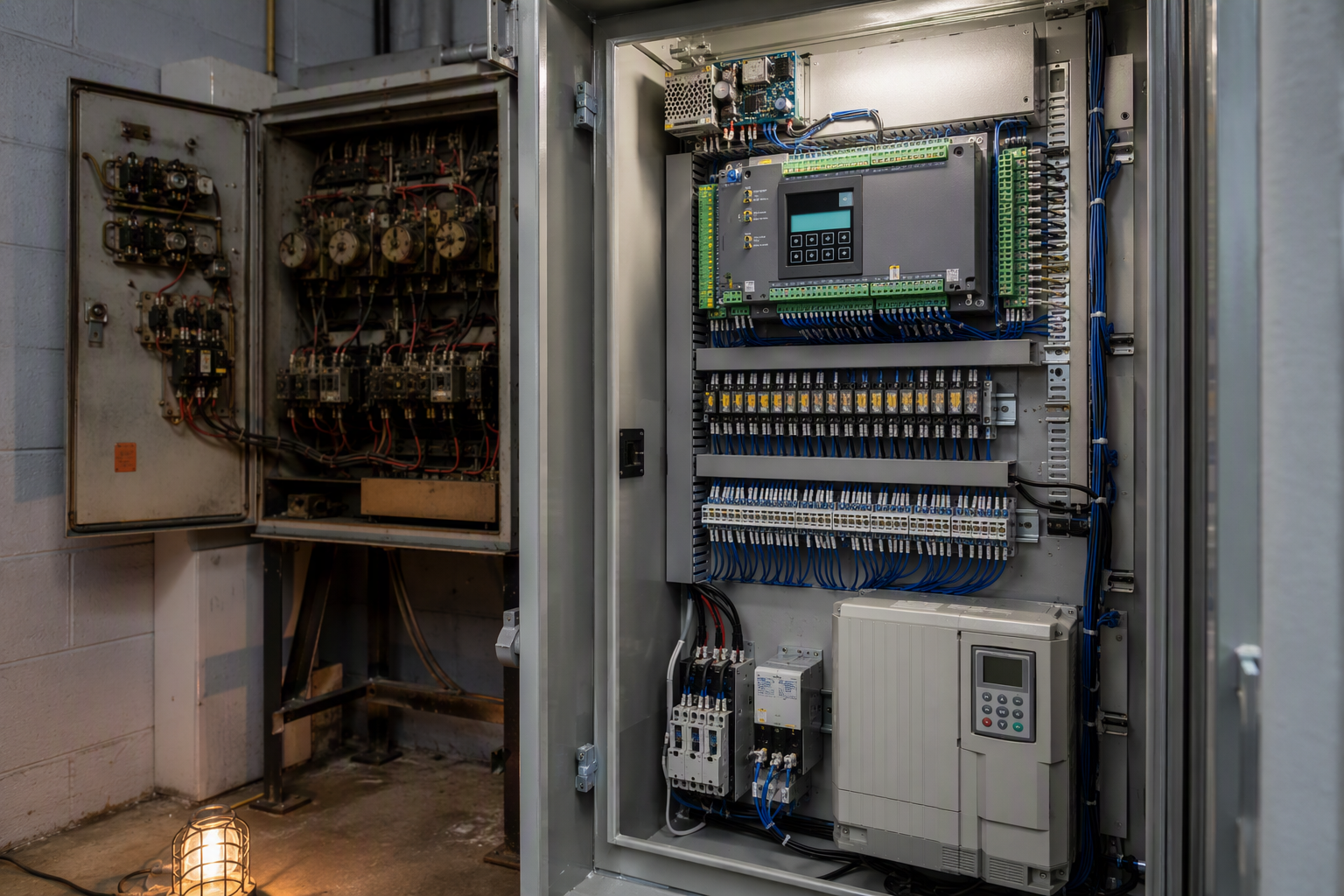
Elevator modernization is the partial or complete replacement of an elevator’s mechanical, electrical, and control systems to extend service life, improve performance, and bring the unit into compliance with current codes — while routine maintenance is the ongoing inspection and adjustment of existing components to keep a functioning system operational.
Modernization may involve replacing the controller, drive system, cab interior, door operators, safety devices, or the entire machine room assembly. It is not a repair; it is a capital improvement project. Routine maintenance, by contrast, addresses lubrication, minor adjustments, worn components, and safety inspections on equipment that is otherwise structurally sound and code-compliant.
Property managers often confuse the two because both involve elevator technicians and downtime. The key difference is scope: modernization resets the useful life of the elevator and triggers a full code review under the ASME A17.1 Safety Code for Elevators and Escalators, whereas routine maintenance operates within the parameters of the existing installation.
How Long Does a Full Elevator Modernization Project Actually Take?
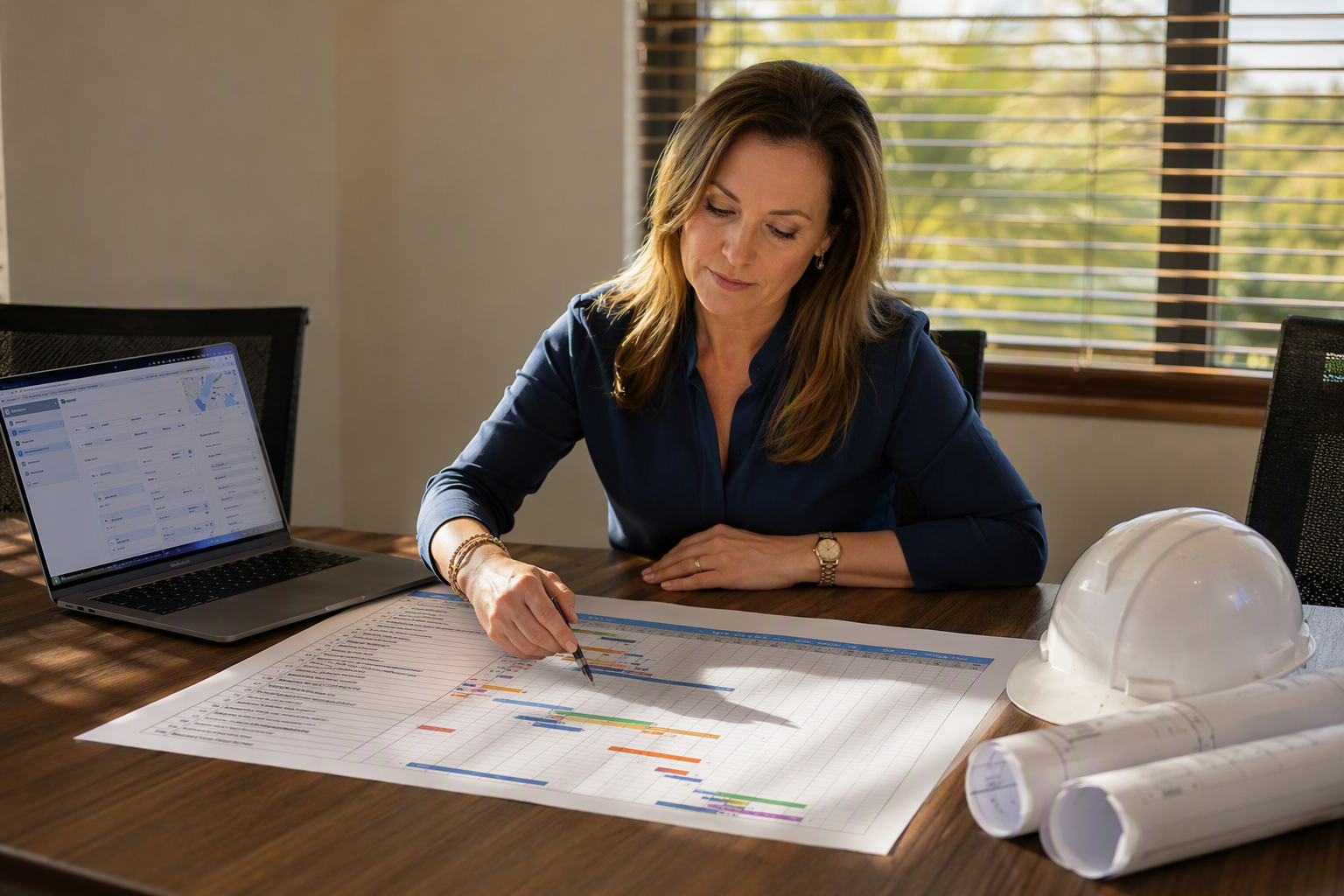
A full elevator modernization project generally takes between two and eight weeks per elevator, with the exact duration depending on scope, parts availability, building access, and permitting timelines in the local jurisdiction.
A cosmetic modernization — cab interior refurbishment, new lighting, updated fixtures — may be completed in as little as two to five business days. A mid-range modernization covering the controller, door operator, and cab finishes typically runs two to four weeks. A comprehensive overhaul replacing the machine, controller, drive, roping, cab, and safety systems can extend to six to ten weeks, particularly when custom components must be fabricated or ordered from overseas suppliers.
Permitting and inspection scheduling add time that many property managers do not initially budget. In Florida, elevator work requires permits from the Florida Department of Business and Professional Regulation (DBPR), and inspection scheduling depends on state inspector availability in each county. Projects in Broward County (Pompano Beach) and Sarasota County should account for permitting lead times when building the project schedule.
Supply chain conditions also affect timelines. Solid-state controllers, variable-frequency drives, and hydraulic power units are manufactured to order in many cases. Axxiom Elevator Florida works with building owners in Pompano Beach and Sarasota to conduct advance planning that accounts for lead times before the elevator goes out of service.
Will My Building Be Without Elevator Service During Modernization?
Yes, some planned downtime is unavoidable during elevator modernization, but experienced contractors use phased scheduling, off-hours work, and multi-car sequencing to significantly reduce the impact on building occupants.
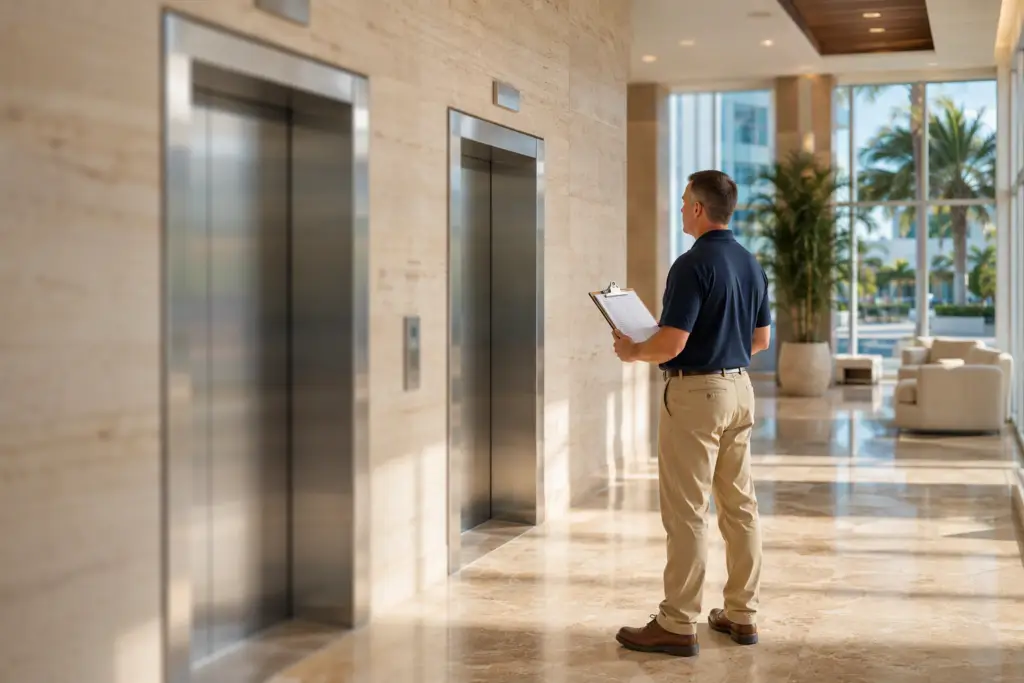
In a single-elevator building, complete downtime during the active construction phase is the norm. However, skilled contractors can often perform preparatory work — demolition, rough-in, equipment staging — during hours when the building is least occupied, compressing the period when the elevator is fully unusable.
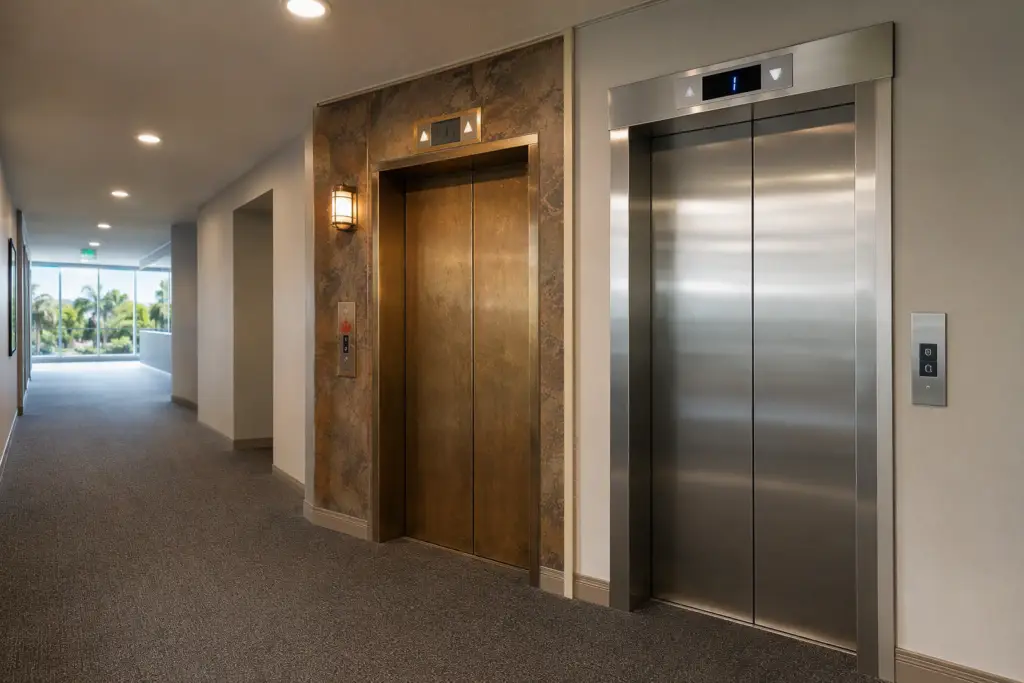
In buildings with two or more elevators, a professional modernization contractor will sequence the project so that at least one elevator remains operational at all times whenever practical and code-compliant to do so. This requires careful coordination between the contractor, building management, and the permitting authority.
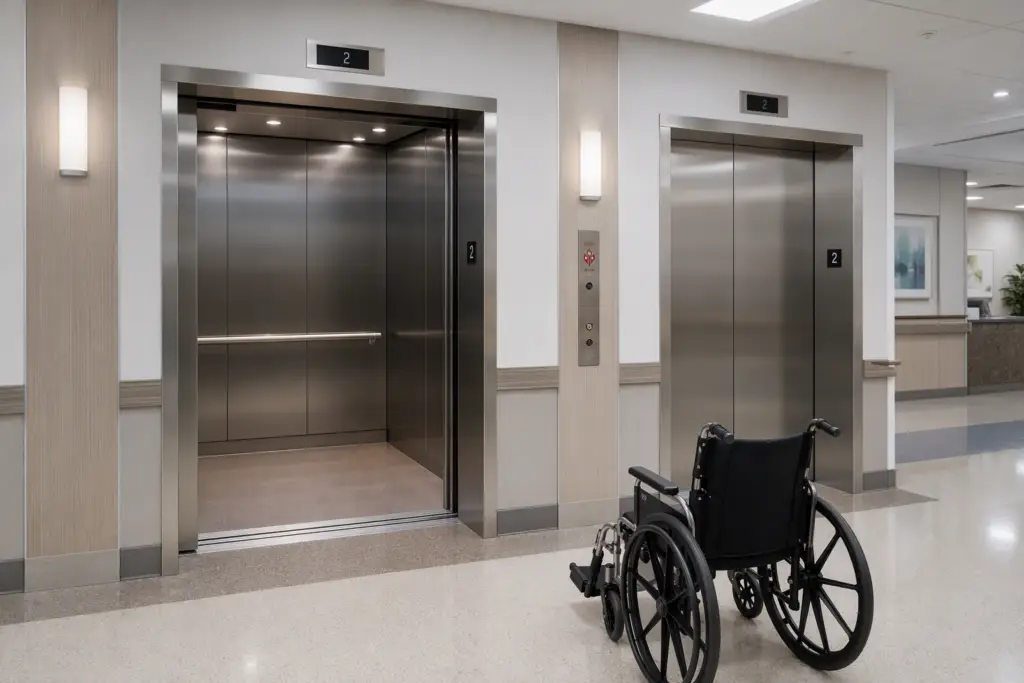
Buildings with ADA-protected tenants or residents must give particular attention to accessibility continuity. Under the Americans with Disabilities Act (ADA), building owners have ongoing obligations to ensure accessible routes are maintained. Legal counsel and the modernization contractor should discuss accessibility accommodation plans before work begins.
What Factors Have the Biggest Impact on Modernization Timeline?
The five factors with the greatest impact on modernization timeline are project scope, equipment lead times, permit approval speed, building access constraints, and the discovery of unforeseen conditions during demolition.
Understanding these variables upfront allows property managers to build realistic schedules and communicate accurately with tenants and occupants.
- Scope of work: A cosmetic refresh and a full traction machine replacement are fundamentally different projects. Clearly defined scopes prevent scope creep and schedule slippage.
- Parts and equipment lead times: Custom controllers, specialty cab materials, and hydraulic components can have lead times ranging from several weeks to several months depending on the manufacturer and current supply conditions.
- Permit approval speed: Florida requires elevator permits under Florida Statutes Chapter 399, and permit processing timelines vary by county and inspector workload.
- Building access: Machine room access, hoistway dimensions, freight elevator or loading dock availability, and building security protocols all affect how efficiently materials can be moved and work performed.
- Unforeseen conditions: Asbestos-containing materials in older machine rooms, deteriorated hoistway structures, or non-standard original installations can add significant time and cost when discovered during demolition.
What Are the Main Components Typically Replaced During Modernization?
The most commonly replaced components during elevator modernization include the controller, drive system, door operators, cab interior and lighting, signal fixtures, roping, buffers, and safety devices — with the specific combination depending on equipment age, condition, and compliance gaps.
Below is a reference table showing typical modernization component categories, their general service life, and the primary code driver for replacement:
| Component | Typical Service Life | Primary Replacement Driver | Relevant Standard |
|---|---|---|---|
| Relay-Logic Controller | 20–30 years | Parts obsolescence, energy efficiency | ASME A17.1 |
| Drive System (DC/AC) | 20–35 years | Energy code, reliability | ASME A17.1 |
| Door Operators | 15–25 years | Reliability, door safety code requirements | ASME A17.1 |
| Hydraulic Power Unit | 20–30 years | Leak prevention, energy efficiency | ASME A17.1 / Florida DBPR |
| Cab Interior & Lighting | 15–25 years | Aesthetics, LED energy standards | ADA, local codes |
| Signal Fixtures & Buttons | 15–25 years | ADA compliance (Braille, height) | ADA |
| Wire Rope / Roping | 10–20 years | Safety, wear limits | ASME A17.1 |
| Buffers & Safety Devices | 20–30 years | Safety code compliance | ASME A17.1 |
| Emergency Communication | 10–15 years | ADA two-way communication requirement | ADA / ASME A17.1 |
Note: Service life figures represent general industry ranges based on published code guidance and equipment manufacturer data; actual service life varies significantly based on usage intensity, maintenance history, and environmental conditions.
What Code Requirements Trigger a Mandatory Modernization in Florida?
In Florida, elevator modernization is triggered by mandatory compliance upgrades required by the ASME A17.1 Safety Code for Elevators and Escalators, Florida Statutes Chapter 399, and Florida Administrative Code Rule 61C-5, which collectively govern when older elevator equipment must be upgraded to meet current safety standards.
Florida adopts editions of ASME A17.1 through the DBPR, and when a new edition is adopted, certain retroactive requirements may apply to existing installations — particularly around door safety, seismic provisions where applicable, and emergency communication. Property owners are advised to consult with a licensed elevator contractor to understand which specific requirements apply to their installation’s vintage.
ADA compliance is a parallel but distinct obligation. Under the ADA, buildings subject to Title II or Title III requirements must ensure elevator cab controls, signage, and emergency communication systems meet accessibility standards. Modernization projects present the optimal opportunity to address ADA gaps because the elevator is already out of service and components are already being replaced.
What Are the Steps in a Typical Elevator Modernization Project?
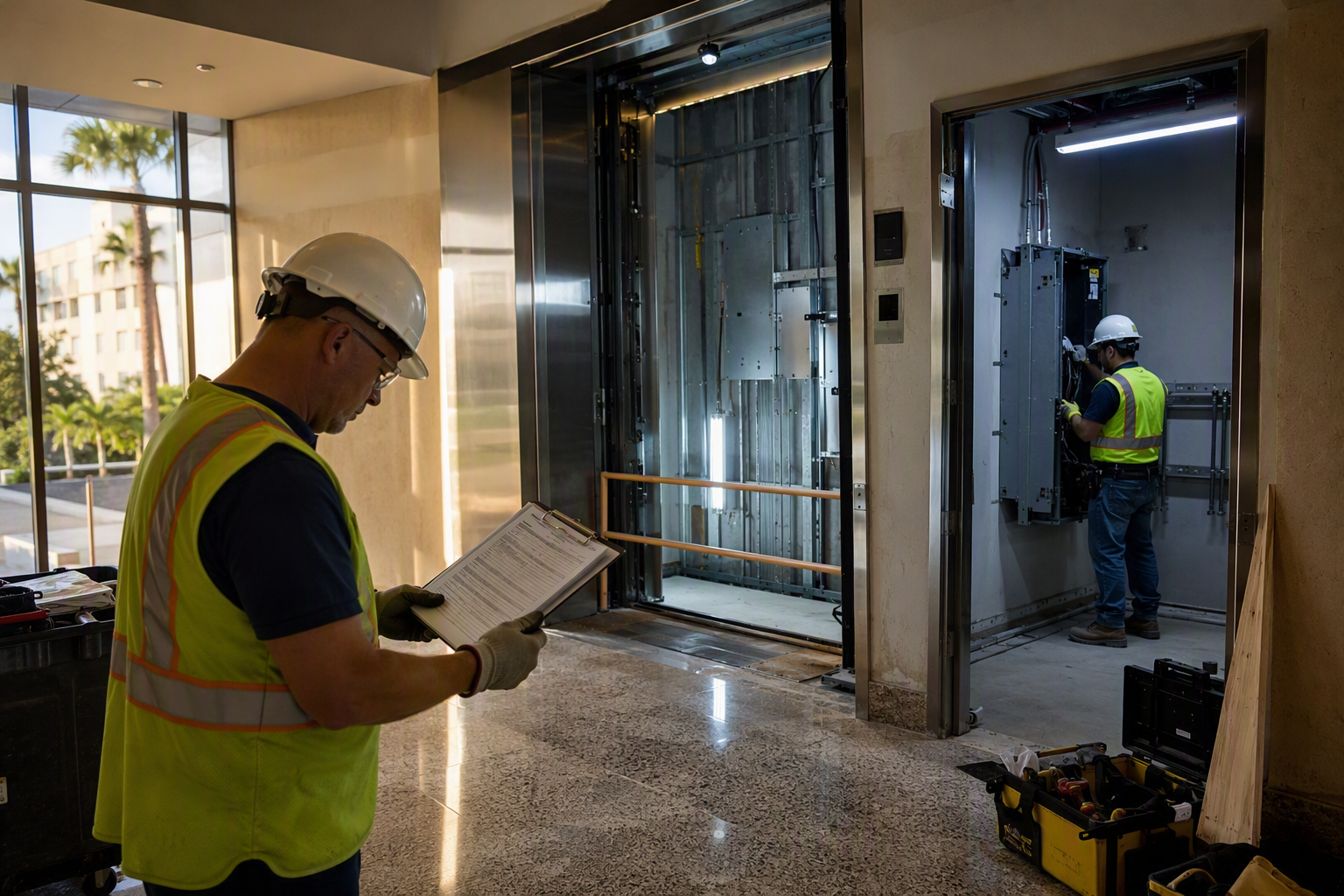
A typical elevator modernization follows a structured sequence from initial assessment through final state inspection and return to service.
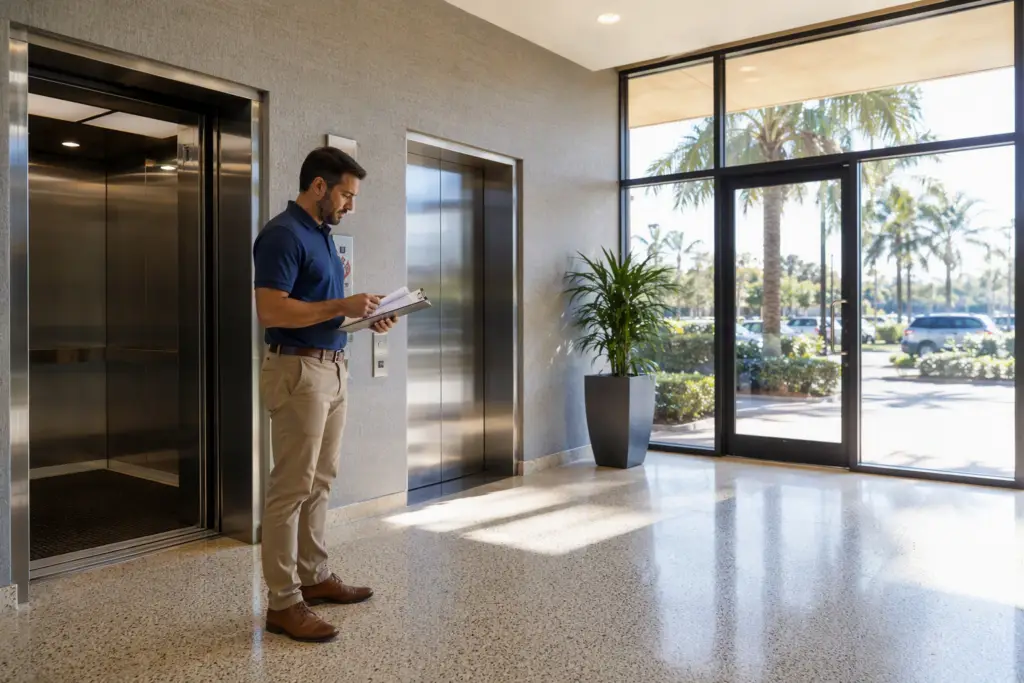
- Initial Condition Assessment: A licensed elevator contractor performs a detailed inspection of the existing installation, documenting equipment age, condition, code compliance gaps, and operational deficiencies.
- Scope Development and Specification: Based on the assessment, a modernization scope is written specifying every component to be replaced or upgraded, materials, finishes, and compliance requirements.
- Permit Application: The contractor submits permit applications to the Florida DBPR and, where required, the local building department. Drawings and specifications may be required.
- Equipment Procurement: Components with long lead times — controllers, drives, cab materials — are ordered while the permit is being processed to compress the overall schedule.
- Pre-Modernization Tenant Notification: Building management notifies occupants, particularly ADA-protected residents or tenants, of the downtime schedule, alternative access routes, and expected return-to-service date.
- Demolition and Removal: Existing equipment identified in the scope is removed. Hazardous material surveys should be completed before this phase in older buildings.
- Installation: New equipment, wiring, cab components, and safety devices are installed per the approved drawings and manufacturer specifications.
- Contractor Acceptance Testing: The contractor performs a full battery of operational and safety tests prior to calling for the state inspection.
- Florida DBPR State Inspection: A state-licensed elevator inspector performs the official acceptance inspection. Any deficiencies identified must be corrected before the elevator returns to service.
- Return to Service and Documentation: Upon passing inspection, the elevator is returned to service and the owner receives updated inspection certificates, as-built documentation, and updated maintenance records.
How Should Building Managers Communicate Modernization Downtime to Tenants and Residents?
Effective tenant communication during elevator modernization requires advance written notice, clear information about the duration and phasing of downtime, and a designated point of contact for questions and accommodation requests.
Best practice is to provide written notice at least 30 days before modernization begins for residential buildings, and as early as possible for commercial properties where elevator access may affect business operations. Notice should include the planned start date, the expected downtime duration, which elevator(s) are affected, which alternative elevators or accessible routes will remain available, and who tenants should contact with concerns.
For buildings with tenants protected under the ADA or Florida’s Fair Housing Act, property managers should proactively reach out to individuals with mobility limitations to discuss accommodation needs before the outage begins.
How Does Elevator Modernization Affect Property Value and Operating Costs?
Elevator modernization typically reduces energy consumption, lowers maintenance costs, decreases unplanned downtime, and supports higher property valuations — all of which contribute positively to a building’s net operating income.
Modern variable-frequency drives and regenerative drive technology consume significantly less energy than the DC motor systems installed in elevators built several decades ago. LED cab lighting reduces energy consumption compared to incandescent or fluorescent fixtures. These energy improvements are quantifiable on utility bills over time.
Maintenance costs tend to decline after modernization because replacement parts for current-generation equipment are readily available, while parts for legacy relay-logic controllers or DC motors can be difficult or impossible to source, leading to extended outages and premium pricing for fabricated components.
Commercial lenders, insurers, and appraisers increasingly evaluate elevator system age and condition as part of building assessments, particularly for properties over 20 stories or in markets where elevator reliability directly affects occupancy.
What Is the Difference Between a Partial and a Full Elevator Modernization?
A partial modernization replaces selected subsystems — most commonly the controller, door operator, or cab interior — while leaving other components in place, whereas a full modernization replaces all major mechanical, electrical, and cab systems in a single project.
Partial modernization is appropriate when specific systems are failing or non-compliant but the overall installation is otherwise sound and relatively current. It typically costs less upfront and causes less downtime but may not address all compliance gaps and may require another modernization in fewer years.
Full modernization is generally more cost-effective over the long term for installations approaching or beyond 25 to 30 years of age because it resets the entire useful life of the elevator, eliminates multiple service contracts on obsolete components, and addresses all outstanding code compliance items in a single project cycle.
How Do Multi-Elevator Buildings Manage Service Continuity During Modernization?
In multi-elevator buildings, service continuity is managed through phased scheduling, where elevators are modernized sequentially so that at least one cab remains operational throughout the project whenever code and project conditions permit.
Project sequencing requires careful coordination between the contractor and building management. Factors that influence phasing include: which elevators serve which floors, whether any elevators are dedicated to freight or service use, the physical capacity of the remaining operational elevators to handle increased traffic loads, and ADA accessibility requirements for continuing to serve all occupied floors.
It is worth noting that in very high-volume buildings — hospitals, hotels, assisted living facilities — the traffic analysis for the modernization period deserves the same rigor as the traffic analysis for the permanent installation. Axxiom Elevator Florida assists property managers in Sarasota and Pompano Beach with pre-project planning that models occupant impact before any equipment goes offline.
What Safety Standards Must a Modernized Elevator Meet Before Returning to Service?
Before returning to service, a modernized elevator in Florida must pass a state acceptance inspection confirming compliance with the ASME A17.1 Safety Code for Elevators and Escalators as adopted by Florida, and must receive a valid Certificate of Operation from the Florida DBPR.
The acceptance inspection covers operational performance, safety device function, door operation, emergency lighting, emergency communication, capacity and speed compliance, and the condition of all newly installed components. The inspector will review documentation from the contractor’s pre-inspection acceptance tests as part of this process.
Under OSHA regulations, worker safety during the modernization project itself — particularly during hoistway work — is governed by applicable construction and general industry standards. Building owners should confirm that their modernization contractor maintains current safety programs and appropriate insurance.
How Long After Modernization Until the Next Major Upgrade Is Needed?
A comprehensively modernized elevator, maintained under a proper preventive maintenance program, can reasonably be expected to provide reliable service for 20 to 25 years before another full modernization is warranted — though this varies by usage intensity, environment, and maintenance quality.
This is not a code-mandated figure but rather a general expectation based on equipment design life as reflected in manufacturer documentation and the service life ranges cited in the ASME A17.1 standard for major components. Coastal environments — such as those in Pompano Beach and Sarasota — can accelerate corrosion in certain components, making diligent preventive maintenance particularly important in these markets.
Proactive maintenance contracts that include regular lubrication, adjustment, safety testing, and component monitoring extend the interval between major capital investments and reduce the frequency of unplanned outages between modernization cycles.
What Should Building Owners Look for When Selecting an Elevator Modernization Contractor?
Building owners should look for a contractor that is licensed under Florida Statutes Chapter 399, carries appropriate liability and workers’ compensation insurance, provides detailed written specifications, has demonstrated experience with the specific type of elevator being modernized, and offers a clear post-modernization maintenance program.
Licensing verification is non-negotiable in Florida. The DBPR maintains a public lookup tool for licensed elevator companies and contractors. Any modernization contractor operating in Broward or Sarasota County must hold a current Florida license, and work must be performed by employees who hold the appropriate certifications under state law.
Written specifications matter. Vague proposals that reference “controller replacement” without specifying the manufacturer, model, and performance parameters leave building owners without recourse if the installed equipment does not meet expectations. A detailed specification is both a quality control tool and a legal document.
Axxiom Elevator Florida serves building owners throughout Pompano Beach and Sarasota with thorough pre-modernization assessments, detailed written specifications, and ongoing maintenance programs that protect the investment made during modernization.
Are There Specific Considerations for Hydraulic Elevator Modernization?
Hydraulic elevator modernization involves additional considerations beyond those applicable to traction systems, including underground cylinder condition assessment, hydraulic fluid containment requirements, and potentially the conversion from single-bottom to double-bottom cylinders for leak prevention.
Florida’s environmental regulations require that hydraulic elevator systems include secondary containment to prevent petroleum-based hydraulic fluid from contaminating soil or groundwater. Older installations that predate these requirements may require significant hoistway modifications as part of the modernization project.
The condition of the underground cylinder in a direct-acting hydraulic system is a critical unknown in any modernization project. Corrosion or pitting in the cylinder bore can create safety risks and regulatory non-compliance. Cylinder testing or replacement — sometimes involving excavation — can add significant time and cost to a hydraulic modernization project. Building owners should request that this evaluation be included in the pre-modernization assessment.
Above-ground holeless hydraulic systems eliminate many of these concerns and are worth evaluating as part of any hydraulic modernization, particularly in buildings where soil conditions or building age make underground cylinder work especially complex.
What Role Does the Florida DBPR Play in Elevator Modernization Projects?
The Florida Department of Business and Professional Regulation (DBPR) is the state authority responsible for licensing elevator contractors, issuing permits for modernization work, conducting acceptance inspections, and issuing Certificates of Operation under Florida Statutes Chapter 399.
No elevator modernization in Florida may legally proceed without an active permit from the DBPR. The permit application must include drawings or diagrams of the proposed work, specifications for the equipment to be installed, and information about the licensed contractor performing the work.
After installation is complete, the DBPR schedules and conducts the acceptance inspection. Until the elevator passes this inspection and a new Certificate of Operation is issued, the elevator may not return to passenger service. Owners and property managers should include DBPR inspection scheduling lead times in their project timeline planning, as inspector availability can affect how quickly the elevator returns to service after the contractor completes installation.
What Happens If Unforeseen Conditions Are Discovered During Modernization?
When unforeseen conditions — such as asbestos-containing materials, structural deterioration, or non-standard original installations — are discovered during modernization demolition, work typically pauses while the condition is assessed, abated if necessary, and the scope and schedule are revised.
Pre-modernization due diligence is the best defense against disruptive surprises. Buildings constructed before 1980 should be tested for asbestos-containing materials in machine rooms, hoistway materials, and insulation before any demolition begins, in compliance with applicable OSHA regulations governing asbestos in construction.
Structural issues — deteriorated hoistway walls, compromised sill supports, or inadequate machine room floor loading capacity — require engineering evaluation and potentially structural repair before the new equipment can be installed. These discoveries are uncommon but are more likely in buildings with limited maintenance history or in coastal environments where moisture infiltration has been a long-term issue.
A well-structured modernization contract will include a clear process for handling unforeseen conditions — including how scope changes are documented, priced, and approved — so that all parties understand the process before work begins.
How Does Elevator Modernization Address ADA Compliance Gaps?
Elevator modernization provides a structured opportunity to address ADA compliance gaps in cab controls, floor identification signage, emergency communication systems, and door timing — requirements that apply to public accommodations and commercial facilities under the Americans with Disabilities Act.
Specific ADA requirements for elevators in covered buildings include: raised and Braille characters at each elevator entrance and on control buttons, control button placement within specified reach ranges, visual and audible floor indicators, two-way emergency communication with a requirement that the system be usable without voice communication, and door timing requirements that allow adequate time for individuals with disabilities to enter and exit the cab.
Because modernization projects replace the cab interior, fixtures, and controls, it is both practical and cost-effective to incorporate all required ADA upgrades into the modernization scope rather than treating them as a separate project. Combining these efforts reduces total disruption and is generally the approach recommended by contractors experienced with Florida’s building stock.
What Maintenance Program Should Follow an Elevator Modernization?
Following modernization, a comprehensive preventive maintenance program should be established immediately, covering all newly installed components per the manufacturer’s requirements and the periodic inspection intervals specified under ASME A17.1 and Florida DBPR regulations.
Florida requires periodic inspections of elevators by state-licensed inspectors on an annual basis for most building types, with the frequency and scope of inspections defined under Florida Administrative Code Rule 61C-5. A modernized elevator that is not maintained under a proper program can fail prematurely, void component warranties, and create liability exposure for the building owner.
A quality maintenance contract for a modernized elevator should include: regular lubrication and adjustment, safety device testing, door operation monitoring, controller diagnostic review, and documentation of all service visits. The contract should clearly specify the scope of what is included and what falls outside the contract as a separate billable repair.
Axxiom Elevator Florida provides ongoing maintenance services for modernized elevators throughout its service areas in Pompano Beach and Sarasota, helping building owners protect the investment made during the modernization project and maintain continuous code compliance.
How Can Building Owners in Pompano Beach or Sarasota Begin the Modernization Planning Process?
Building owners in Pompano Beach or Sarasota should begin the modernization planning process with a professional condition assessment conducted by a Florida-licensed elevator contractor, which establishes the current state of the equipment, identifies compliance gaps, and provides the data needed to develop an accurate scope, budget, and schedule.
The assessment should document the age and manufacturer of every major system, the current maintenance history, the results of the most recent state inspection, any outstanding citations or conditions of the operating certificate, and a preliminary identification of which components require replacement versus those that can remain in service.
With this information in hand, building owners can solicit competitive proposals on an apples-to-apples basis, develop a capital budget with realistic contingency allowances for unforeseen conditions, plan tenant communication, and coordinate with lenders or boards if financing the project. Beginning this process 12 to 18 months before the anticipated modernization start date is advisable for buildings with complex installations or significant compliance backlogs.
Axxiom Elevator Florida offers free elevator assessments to building owners and property managers throughout its service areas, providing the foundational information needed to plan a modernization project with confidence.
Ready to Plan Your Elevator Modernization?
Whether your building is in Pompano Beach or Sarasota, the first step toward a successful modernization project is a professional condition assessment. Axxiom Elevator Florida provides free elevator assessments that give building owners and property managers the detailed information needed to plan timelines, manage budgets, minimize tenant disruption, and ensure full compliance with Florida DBPR requirements and ASME A17.1 standards.
Contact Axxiom Elevator Florida for a free elevator assessment:
Serving Pompano Beach FL and Sarasota FL — licensed, permitted, and focused on delivering modernization projects that meet code, protect occupants, and maximize your building’s long-term value.
Need elevator service you can rely on? Axxiom Elevator Florida is ready to help.