Elevator Safety and Reliability Standards Senior Living Facilities Should Require From Their Elevator Service Company
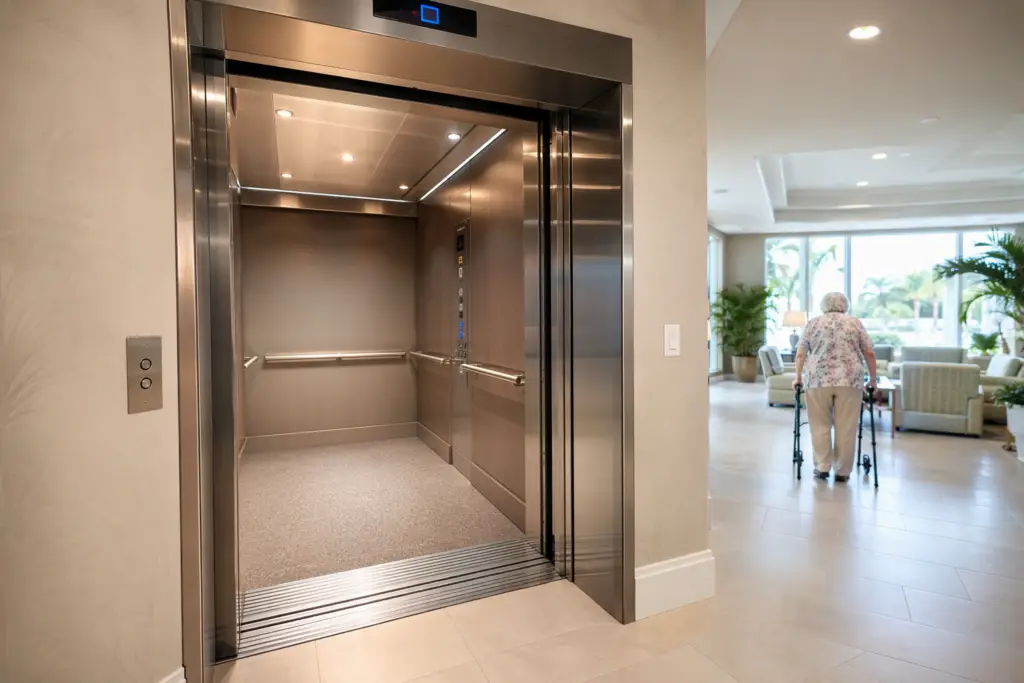
Senior living facilities — whether independent living communities, assisted living facilities (ALFs), memory care units, or skilled nursing centers — operate in one of the most demanding elevator environments in any industry. Residents may use mobility aids, wheelchairs, or walkers. Many have limited capacity to navigate stairs. A single elevator outage can isolate residents from meals, medical care, and emergency egress routes. Choosing the right elevator service partner in Florida is therefore a healthcare-grade decision, not a facilities-management afterthought.
This page outlines the specific safety codes, reliability benchmarks, compliance requirements, and vendor qualifications that Florida senior living operators should demand from any elevator service company they consider — including what state inspectors will look for during formal evaluations.
What Florida Codes Govern Elevators in Senior Living Facilities?
Florida adopts and enforces the ASME A17.1 Safety Code for Elevators and Escalators for new installations and the companion ASME A17.3 Safety Code for Existing Elevators and Escalators for equipment already in service. Both are administered through the Florida DBPR’s Bureau of Elevator Safety, which is the primary Authority Having Jurisdiction (AHJ) for elevator safety in the state.
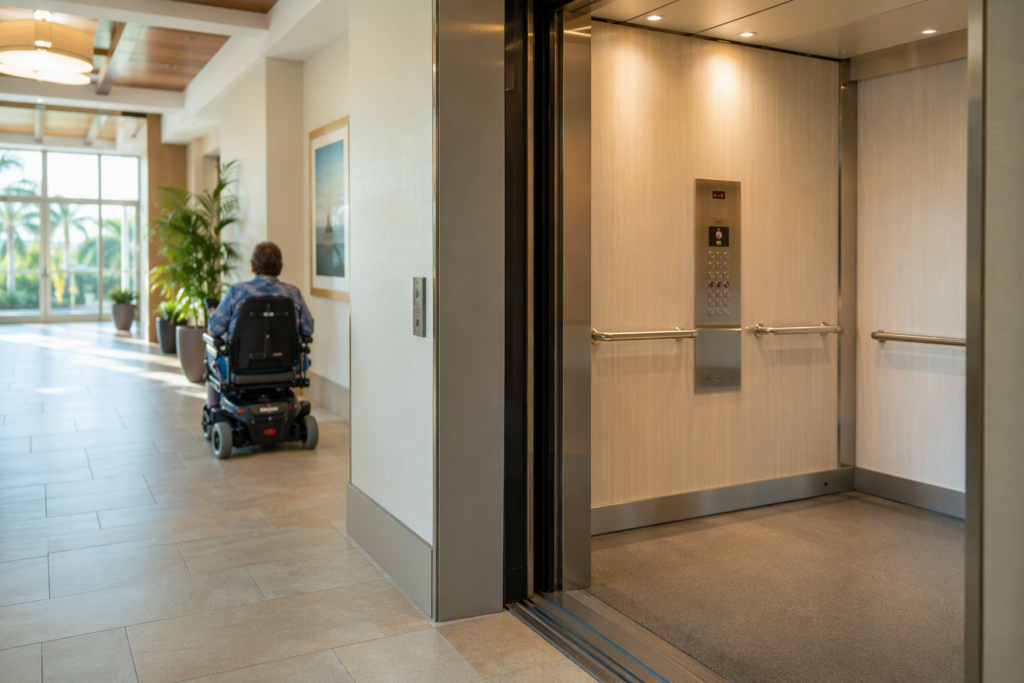
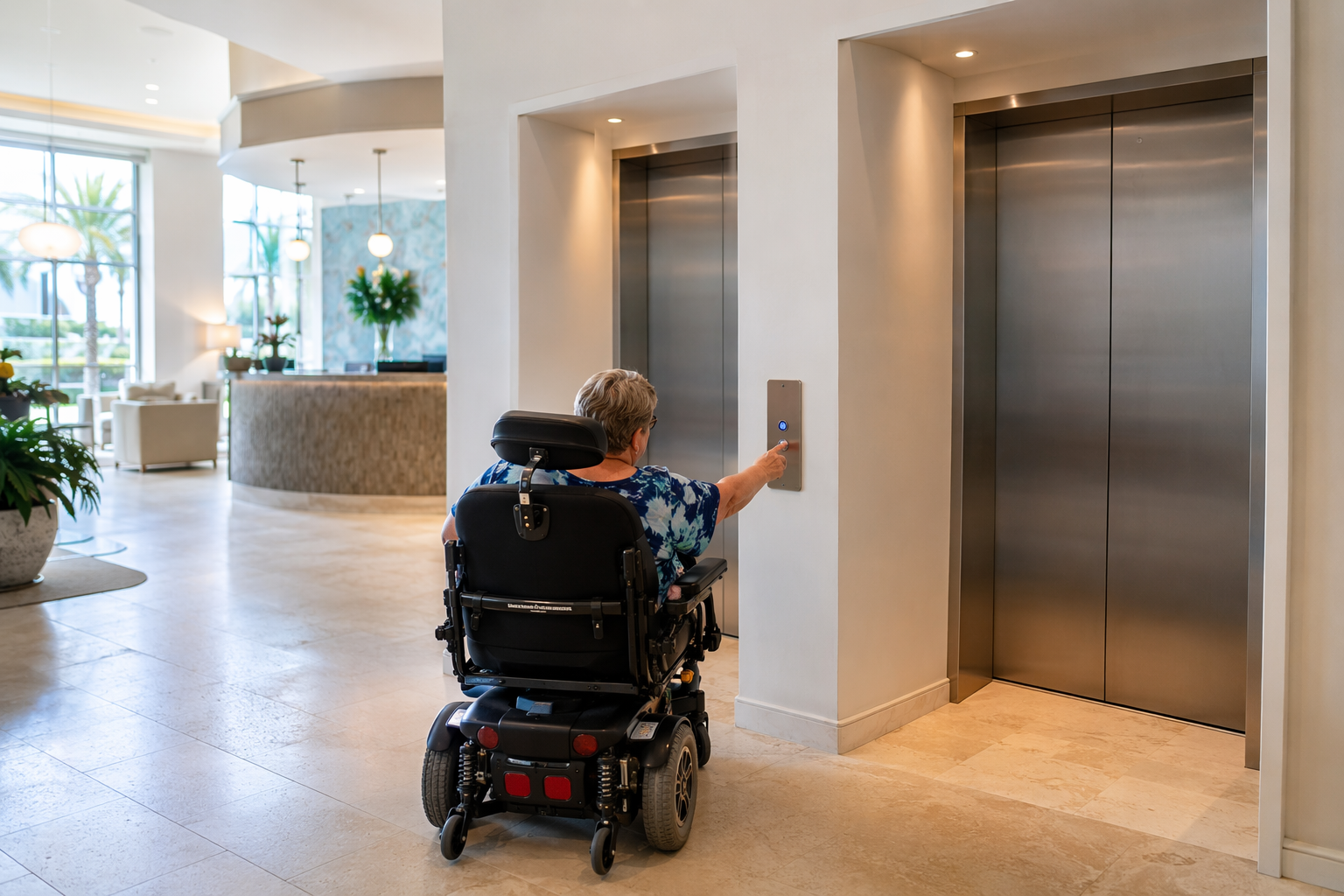
Senior living facilities must also meet ADA Title III accessibility requirements — covering cab dimensions, door timing, floor leveling tolerances, call button height, and auditory/visual signals — because residents with physical and cognitive impairments depend on those features daily. Facilities that accept Medicare or Medicaid funding carry additional federal oversight obligations, making elevator accessibility a compliance issue that extends beyond local inspections.
Florida law requires that all elevator work — including routine maintenance — be performed by licensed elevator contractors holding a valid DBPR Elevator Contractor Certificate of Competency. Senior living operators should verify this credential before signing any service agreement.
Why Is Elevator Reliability a Life-Safety Issue in Senior Living?

Unlike a commercial office building where an elevator outage is disruptive, a breakdown in a senior living facility can directly compromise resident health and safety. Residents on upper floors may be unable to reach dining rooms, therapy facilities, or medical staff. Emergency responders may face delayed access. Evacuation plans that assume elevator availability for residents with limited mobility require backup protocols that place additional burdens on already stretched staff.
Axxiom Elevator Florida works with senior living communities across Pompano Beach and Sarasota to build maintenance programs specifically structured around life-safety continuity — prioritizing documented inspection schedules, parts availability, and system monitoring that minimize the risk of unplanned outages in occupied healthcare environments.
What Should a Senior Living Facility Look for in a Preventive Maintenance Agreement?
A preventive maintenance (PM) agreement for a senior living facility should go beyond generic lubrication and visual checks. Facilities should require the following from any service vendor:
- Written PM schedules aligned with ASME A17.1 and ASME A17.3 maintenance requirements, with documentation available for state inspection.
- Component-level inspection logs covering safety devices, door operators, hydraulic systems or traction drives, buffers, and emergency communication systems.
- ADA compliance verification at each maintenance visit — including door dwell times, leveling accuracy, and auditory signal function.
- Parts inventory disclosure — the vendor should clarify lead times for critical components specific to installed equipment, as aging equipment in senior living facilities sometimes carries parts sourcing challenges.
- Emergency communication testing — Florida law requires that elevator cab emergency phones connect to a live monitoring service, and this function must be tested regularly.
- Hydraulic fluid and pit condition inspections for hydraulic units, including evidence of containment compliance under applicable environmental rules.
What ADA Requirements Apply Specifically to Elevators in Senior Living Facilities?
The ADA Standards for Accessible Design establish specific technical requirements for elevators serving facilities used by the public or residents with disabilities. Senior living operators should confirm that their elevator service company routinely checks and maintains:
- Floor leveling within ADA tolerances so that wheelchairs and walkers can enter and exit safely without a trip hazard.
- Door reopening devices that respond to obstructions during the full height of the door opening.
- Call button height and illumination standards accessible to residents who use wheelchairs.
- Audible and visual floor indicators inside the cab for residents with visual or hearing impairments.
- Adequate cab interior dimensions as specified under ADA for accessible elevators.
A maintenance provider that treats ADA compliance as a checkbox rather than an ongoing operational standard is a liability risk for senior living operators — particularly given the protected class of residents served.
How Often Should Elevators in Florida Senior Living Facilities Be Inspected?
The Florida DBPR Bureau of Elevator Safety mandates periodic inspections for all elevators operating in the state. In addition to state-mandated inspections, senior living facilities should require their elevator service company to conduct more frequent internal maintenance visits given the high daily use volumes and life-safety context. The ASME A17.3 code provides the technical framework for what must be examined during those evaluations.
Facilities should maintain a complete inspection and maintenance file — including all DBPR inspection certificates — readily available for review by state surveyors, CMS surveyors for Medicare/Medicaid-certified facilities, and insurance auditors.
What Should Facilities Ask During the Elevator Vendor Selection Process?
When evaluating elevator service companies, senior living facility managers and administrators should ask prospective vendors:
- Is your company licensed as an Elevator Contractor under Florida DBPR? Can you provide your Certificate of Competency number?
- Do your technicians hold ASME QEI (Qualified Elevator Inspector) credentials or work under a QEI-certified inspector for testing and inspection functions?
- How do you document preventive maintenance visits for state inspection review?
- What is your process when a critical safety device fails or a cab becomes inoperable?
- Do you have experience maintaining elevators in occupied senior living or healthcare environments specifically?
- How do you handle after-hours emergency calls for a senior living community?
- What is your policy for notifying facility staff and residents of planned maintenance outages?
Axxiom Elevator Florida serves senior living communities in the Pompano Beach and Sarasota markets and understands the operational sensitivity that healthcare environments require when scheduling maintenance or managing equipment issues.
What Is the Risk of Using an Unlicensed or Underqualified Elevator Company?
Using an unlicensed elevator contractor in Florida is a statutory violation and exposes the facility operator to significant legal and regulatory risk. Beyond licensing, underqualified vendors may:
- Perform maintenance that does not meet ASME A17.1 or A17.3 standards, creating latent safety defects.
- Miss ADA compliance drift — subtle leveling changes or door timing degradation that accumulates over time.
- Fail to maintain proper inspection documentation, creating citation risk during state surveys.
- Be unable to source parts or perform code-compliant modernization work if equipment requires upgrades.
Florida’s DBPR Bureau of Elevator Safety maintains public records of licensed elevator contractors. Facilities are encouraged to verify any prospective vendor’s standing before executing a service agreement.
How Does Equipment Age Affect Senior Living Elevator Safety?
Many senior living facilities in Florida operate buildings constructed decades ago with elevator equipment that may have original or partially modernized components. ASME A17.3 — the standard governing existing elevators — establishes retrofit and upgrade requirements that can apply as code editions are updated or when equipment is modified. Senior living operators should ask their service company:
- Is the current equipment maintaining compliance with ASME A17.3 as adopted in Florida?
- Are there pending code requirements that will require safety device upgrades or modernization?
- What is the condition of the door operator, which is statistically one of the most common sources of door-related incidents?
Proactive modernization planning is part of responsible senior living facility management — and a qualified Florida elevator service company should be able to provide a candid assessment of equipment condition and projected compliance needs.
What Role Does OSHA Play in Senior Living Elevator Maintenance?
While OSHA standards primarily govern worker safety, they are directly relevant when elevator technicians perform maintenance, repair, or testing work in the machine room, pit, or on top of the car. Senior living facility operators should confirm that any service company they retain follows applicable OSHA standards for elevator mechanic safety — both for the protection of technicians and to avoid facility liability in the event of a workplace incident on the property.
Questions Your Inspector Will Ask
When a Florida DBPR elevator inspector or a CMS/state health surveyor visits a senior living facility, the following questions and documentation requests are commonly part of the evaluation:
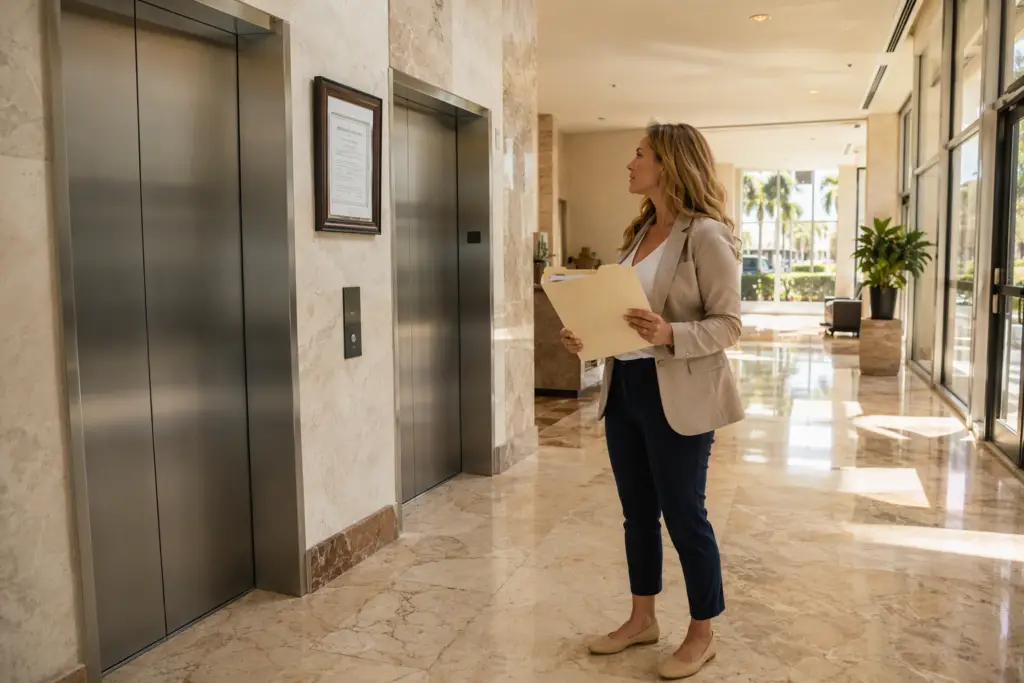
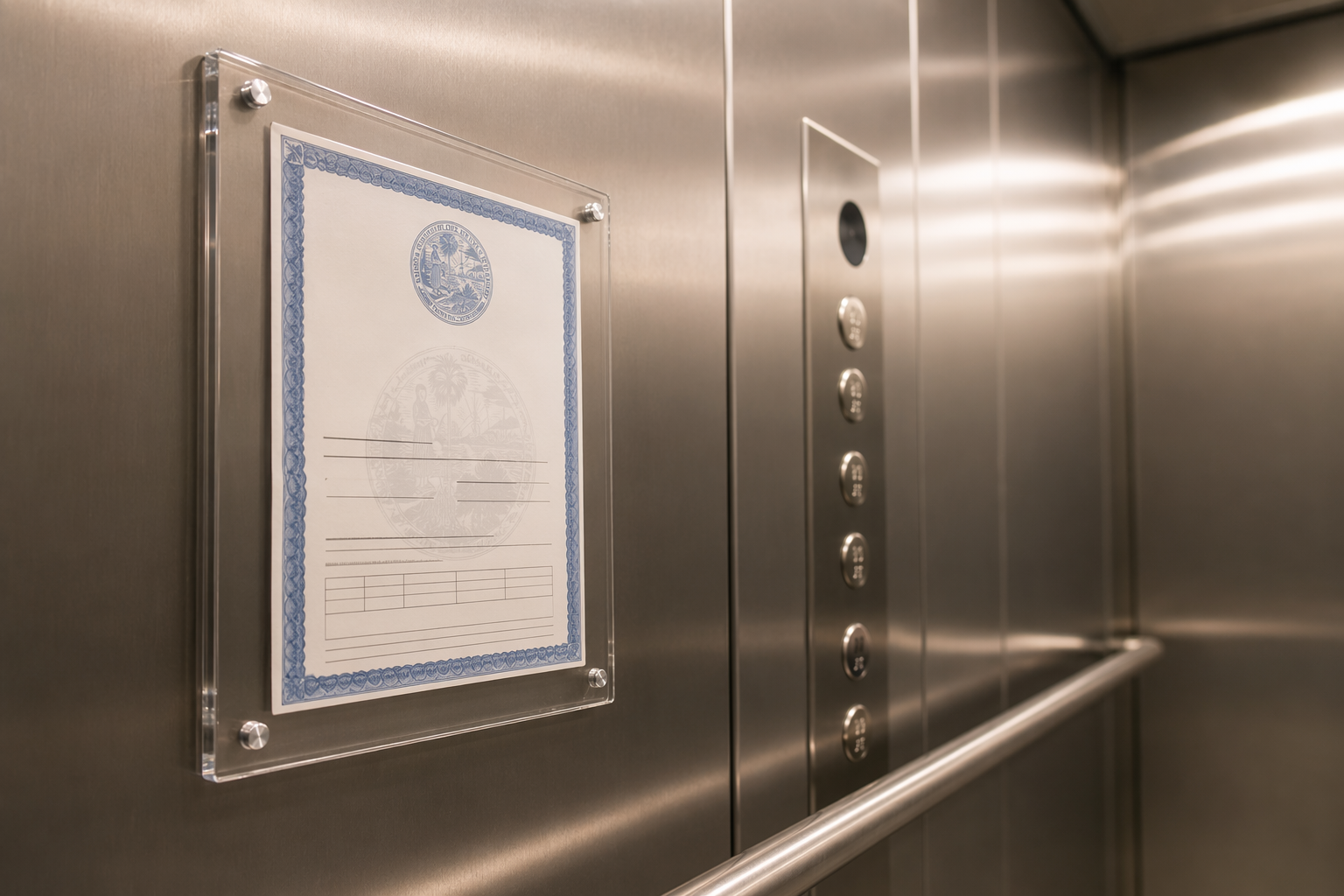
- Where is the current elevator operating certificate, and is it posted in the cab as required?
- Can you produce the maintenance log and inspection records for the past inspection cycle?
- When was the last full Category 1 and Category 5 periodic test performed, and are the results on file?
- Is the emergency communication system in the cab connected to a live answering service, and has it been tested?
- Are all safety devices — including governors, safeties, and buffers — documented as inspected and functional?
- Has the elevator pit been inspected for water intrusion, and is the pit lighting and stop switch functional?
- Is the machine room secured, properly lit, and clear of storage as required by code?
- Are there any outstanding correction orders or violation notices from the DBPR that have not been resolved?
- Has the elevator been modified or repaired since the last inspection, and if so, was a permit pulled?
Facilities that work with Axxiom Elevator Florida benefit from maintenance documentation practices designed to support — not scramble for — this kind of inspector scrutiny.
How Should a Senior Living Facility Respond When an Elevator Fails?
When an elevator becomes inoperable in a senior living environment, facility staff should follow a structured protocol to protect residents and manage the situation safely:
- Secure the elevator immediately. Place the unit out of service and post clear signage at all landings.
- Notify your elevator service company. Report the failure with as much detail as possible — symptoms, which cab, last known operation — to help the technician prepare appropriately.
- Activate your contingency plan. Senior living facilities should have documented protocols for resident meal delivery, medication access, and staff redeployment when vertical access is interrupted.
- Assess resident impact. Identify residents on affected floors who have scheduled medical appointments, therapy, or care needs, and coordinate alternative arrangements.
- Document the outage. Record the time of failure, reported symptoms, contact made with the service company, and resolution timeline for your compliance files.
- Do not allow unauthorized personnel to reset or operate the unit. Only licensed elevator technicians should return a unit to service after a safety-related shutdown.
- Confirm return-to-service documentation. When the technician restores the unit, obtain written confirmation of what was found and corrected, and add it to your maintenance file.
How Can Senior Living Operators in Pompano Beach and Sarasota Get Started?
Senior living administrators in the Pompano Beach and Sarasota areas can begin by requesting a comprehensive elevator assessment that evaluates current equipment condition, maintenance documentation completeness, ADA compliance status, and any open DBPR compliance items. This kind of structured review gives facility leadership an honest picture of where their elevator program stands — and what steps would bring it fully in line with Florida requirements and healthcare-grade reliability expectations.
Axxiom Elevator Florida provides this type of assessment for senior living facilities across its Florida service markets, helping operators understand their current risk profile before a state survey or a resident safety incident makes the conversation urgent.
Ready to Set a Higher Standard for Elevator Safety in Your Senior Living Community?
Contact Axxiom Elevator Florida for a free elevator assessment tailored to the life-safety and compliance needs of senior living facilities in Pompano Beach, Sarasota, and throughout Florida.
Call us today:
Need elevator service you can rely on? Axxiom Elevator Florida is ready to help.