Hydraulic Elevator Modernization for Florida Apartment Buildings: Options, Costs, and What Triggers an Upgrade
Hydraulic elevators have served Florida’s low- and mid-rise apartment buildings reliably for decades, but aging systems eventually reach a crossroads: continue repairing aging components or invest in a structured modernization program. This guide explains every upgrade path available, what Florida code compliance requires, and how building owners and property managers can make an informed decision.
What Triggers a Hydraulic Elevator Modernization in Florida?
Several distinct conditions can make modernization necessary or financially wise for Florida apartment buildings:
- Safety inspection deficiencies: Florida’s Division of Hotels and Restaurants enforces elevator safety under state law. Repeated inspection failures or outstanding violations create legal exposure for building owners.
- Code compliance gaps: ASME A17.3, the Safety Code for Existing Elevators and Escalators, sets minimum safety requirements for equipment already in service. When a hydraulic elevator’s installed components no longer meet the applicable edition of this code, upgrades become mandatory.
- Aging underground hydraulic cylinders: Single-bottom cylinders installed before industry improvements carried a risk of fluid leakage into soil, an environmental concern that Florida’s groundwater protection posture takes seriously. Replacement or lining of older cylinders is a common modernization driver.
- Rising maintenance costs: When repair frequency and parts costs for obsolete components escalate significantly, modernization often delivers a better return than continued patching.
- ADA access requirements: The Americans with Disabilities Act (ADA) and applicable accessibility standards may require cab updates, door timing adjustments, or control panel modifications that are most efficiently performed as part of a broader modernization scope.
- Obsolete controls or unavailable parts: When original relay-logic controllers become obsolete and replacement parts are no longer manufactured, a controls modernization is effectively unavoidable.
What Hydraulic Elevator Modernization Options Are Available?
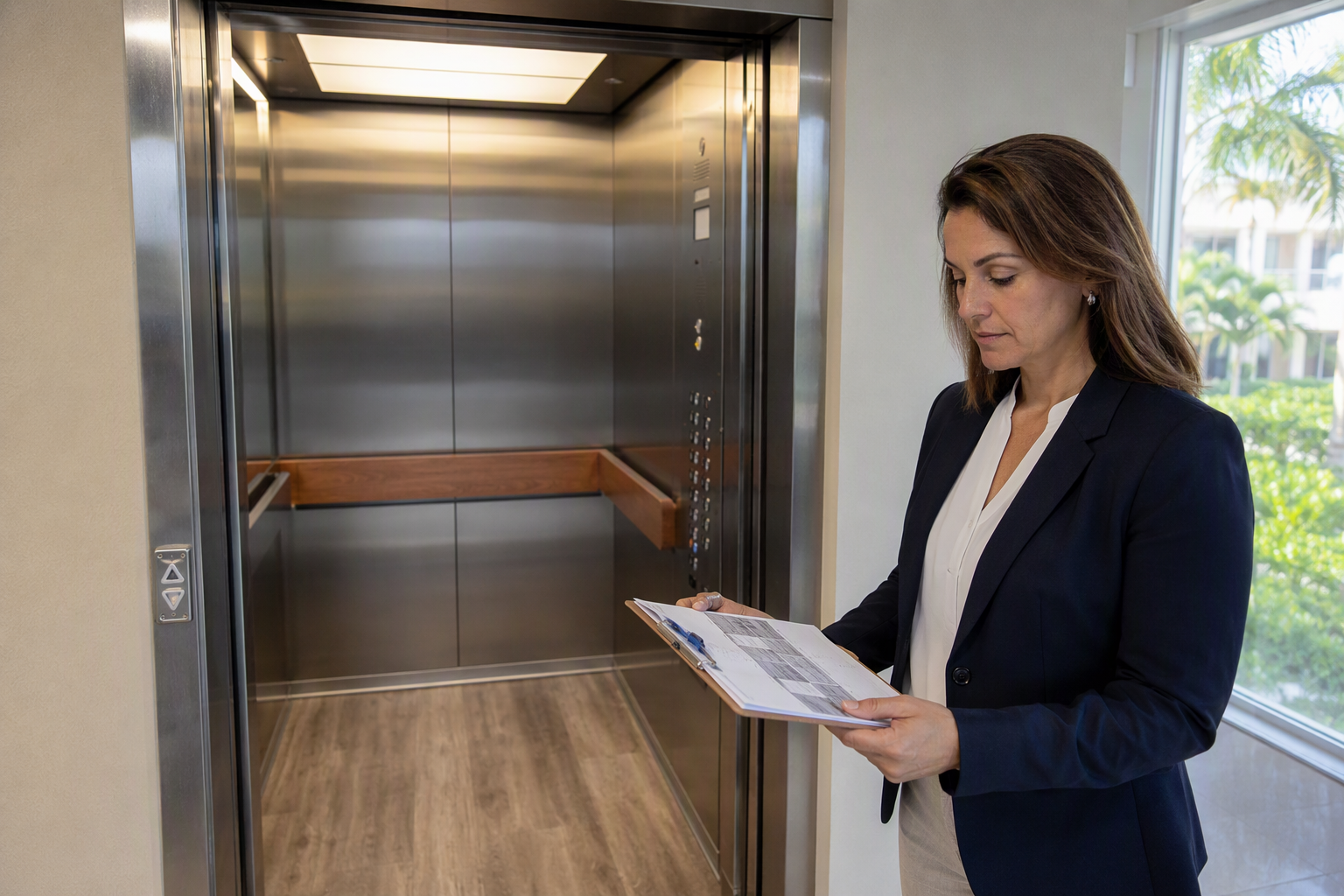
Modernization is not a single service — it is a spectrum of work scopes that can be performed individually or combined. The table below summarizes the primary options for hydraulic elevators in Florida apartment buildings.
| Modernization Scope | What Is Replaced or Updated | Typical Complexity | Downtime Estimate | Best For |
|---|---|---|---|---|
| Controls Modernization | Relay or solid-state controller replaced with modern microprocessor-based system; often includes new dispatching logic, door operator interface, and safety circuits | Moderate | Several days to 2 weeks | Buildings with obsolete controllers but a mechanically sound hydraulic unit |
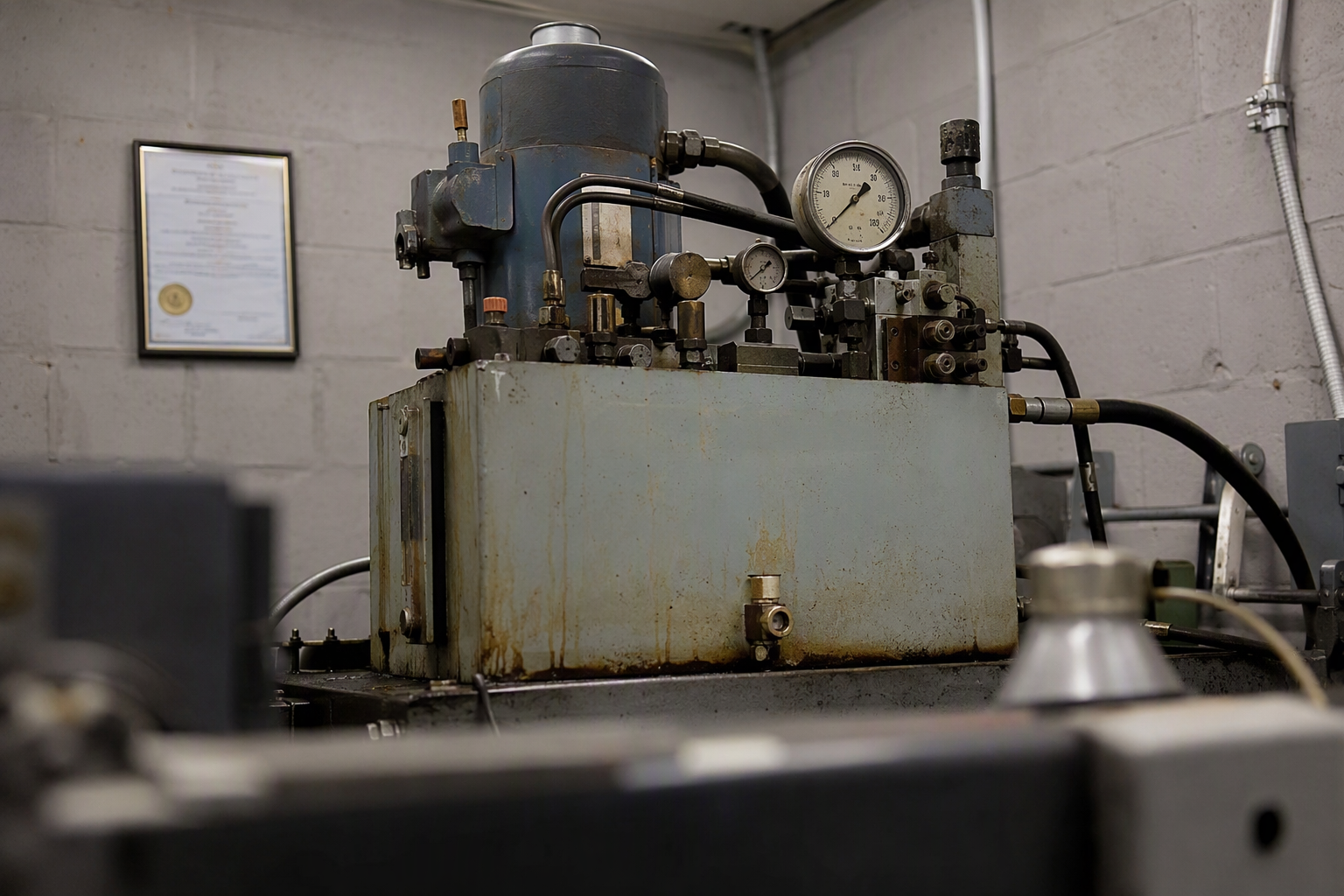
| Hydraulic Power Unit Replacement | Pump, motor, tank, and valve assembly replaced; biodegradable or low-volatility fluid may be used where required | Moderate | Several days to 1–2 weeks | Systems with aged or inefficient pump units that are otherwise code-compliant |
| Underground Cylinder Replacement or Lining | Older single-bottom cylinders replaced with PVC-lined or double-bottom cylinders; or existing cylinder lined in place | High | 2–4 weeks or more depending on excavation | Older in-ground hydraulic installations with environmental or leakage concerns |
| Door System Modernization | Door operators, hangers, tracks, closers, and safety edges replaced; may include full-load detection sensors | Low to Moderate | Days | Buildings with frequent door-related callbacks or ADA timing compliance gaps |
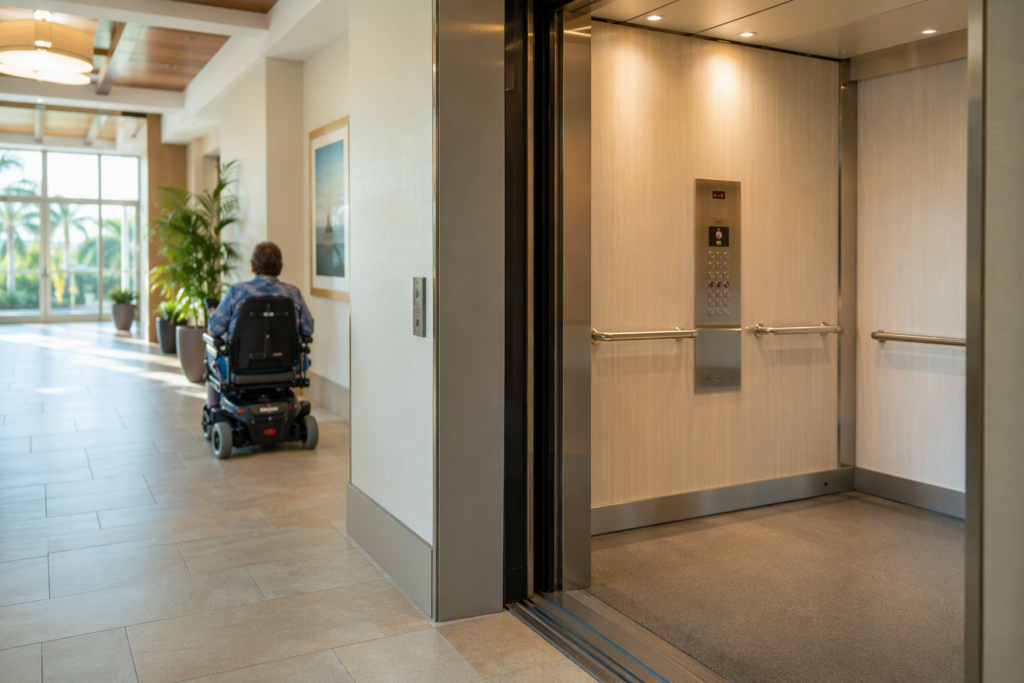
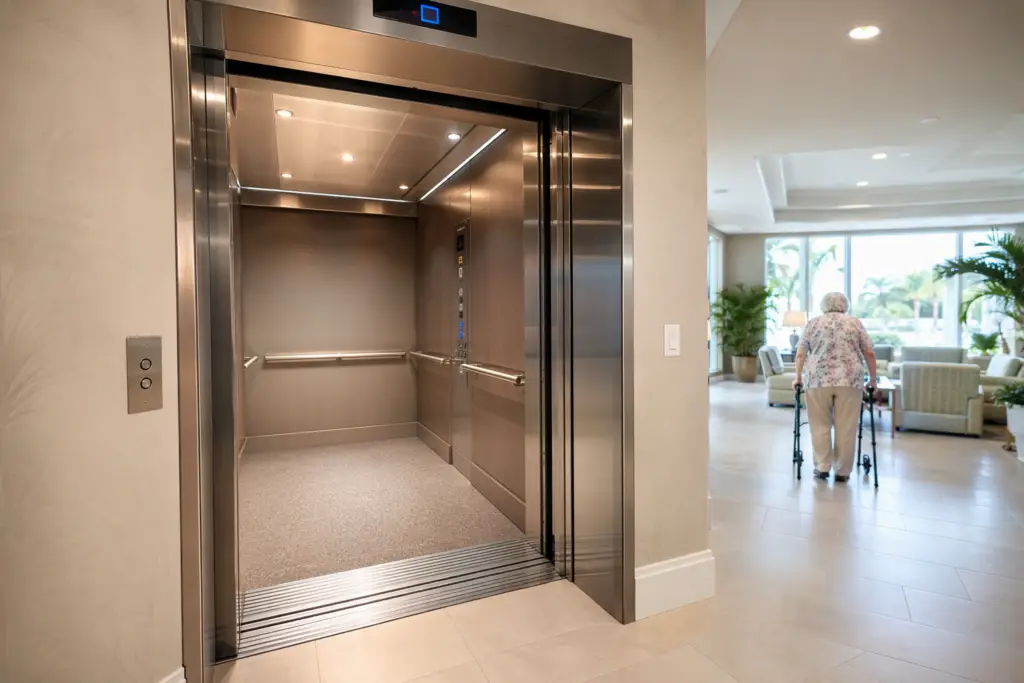
| Cab Interior Renovation | Wall panels, flooring, lighting, handrails, ceiling, and fixtures updated; ADA-compliant control panels and braille signage installed | Low to Moderate | Days to 1 week | Older buildings focused on resident experience and ADA compliance |
| Safety Device Upgrades | Pit stops, emergency lighting, phone systems, governor, and other safety components updated to current ASME standards | Low to Moderate | Days | Elevators with outstanding safety inspection violations |
| Full System Modernization | All of the above performed together; may include conversion to MRL (machine room-less) or roped hydraulic configuration depending on hoistway | Very High | 4–10 weeks or more | Systems 25+ years old with multiple failing components and code deficiencies |
How Much Does Hydraulic Elevator Modernization Cost in Florida?
Elevator modernization costs vary considerably based on the scope of work, equipment age, number of stops, hoistway conditions, and local permitting requirements. Because cost figures vary widely by project and no standardized public pricing database exists for Florida elevator modernization, cost ranges are best obtained through a site-specific assessment by a licensed elevator contractor.
What building owners can expect in terms of relative cost hierarchy:
- Cab interior renovations and safety device upgrades tend to represent the lower end of investment.
- Controls modernizations and power unit replacements fall in the mid-range.
- Underground cylinder replacement — particularly when excavation is involved — is typically among the most capital-intensive single-scope projects.
- Full system modernizations represent the highest upfront investment but often deliver the best long-term cost-per-year value by resetting the maintenance and compliance clock.
Florida building owners should also budget for associated costs beyond the equipment itself, including: permit fees paid to the Authority Having Jurisdiction (AHJ), state inspection fees, temporary accessibility accommodations for residents during downtime, and any asbestos or environmental remediation triggered during older machine room work.
Axxiom Elevator Florida provides free on-site assessments to help Florida apartment building owners understand what scope of work is required and what variables will drive cost on their specific project.
What Is the ROI and Payback Profile for Each Modernization Type?
| Modernization Type | Primary ROI Driver | Secondary Benefits | Risk if Deferred |
|---|---|---|---|
| Controls Modernization | Reduced emergency service calls; improved ride quality and leveling accuracy | Remote diagnostics capability; improved energy efficiency | Parts unavailability leads to extended outages |
| Power Unit Replacement | Lower energy consumption; reduced oil leak liability | Quieter operation; improved reliability scores | Hydraulic fluid spills; environmental cleanup costs |
| Cylinder Replacement | Elimination of environmental liability for groundwater contamination | Full hydraulic system integrity; potential insurance premium relief | Florida DEP soil/groundwater remediation orders; significant fines |
| Door System Modernization | Reduction in door-related service calls (typically the highest callback category) | ADA compliance; reduced injury liability | Entrapment incidents; ADA complaints; inspection failures |
| Cab Renovation | Resident satisfaction; property value and leasing appeal | ADA signage and control compliance | Dated appearance; ADA complaints |
| Full Modernization | Reset of equipment lifecycle; significantly lower 10-year maintenance spend | Full code compliance; best-in-class reliability; potential warranty coverage | Regulatory shutdown; liability exposure; emergency replacement at highest cost |
How Does Florida Law and ASME Code Apply to Hydraulic Elevator Upgrades?
Florida adopts and enforces elevator safety requirements through the Division of Hotels and Restaurants within the Department of Business and Professional Regulation (DBPR). All elevator work — including modernization — must be performed by licensed elevator contractors and is subject to permitting and inspection by the applicable AHJ.
ASME A17.1, the Safety Code for Elevators and Escalators, governs new elevator installations and significant alterations, while ASME A17.3, the Safety Code for Existing Elevators and Escalators, establishes the retrofit safety requirements that apply when existing equipment is altered or when periodic inspections reveal deficiencies.
When a modernization project is classified as an “alteration” under Florida’s adopted code, the altered components — and in some cases, interdependent systems — must be brought into compliance with the currently adopted edition of ASME A17.1. This is an important planning consideration: a controls modernization, for example, may trigger required upgrades to the door safety system or emergency lighting that were not part of the original project scope.
Accessibility requirements under the Americans with Disabilities Act (ADA) also apply to elevator alterations in multifamily residential buildings covered under the ADA. Owners undertaking cab renovations or controls work should verify that resulting configurations meet ADA Standards for Accessible Design, including requirements for control height, tactile characters, and audible signals.
What Is the Step-by-Step Modernization Process for a Florida Apartment Building?
- Schedule a professional assessment: A licensed elevator contractor evaluates the existing hydraulic system, documents deficiencies, and identifies code compliance gaps under the applicable ASME standard and Florida requirements.
- Define the modernization scope: Based on the assessment, the contractor recommends a targeted or comprehensive scope of work aligned with budget, compliance requirements, and equipment condition.
- Obtain permits: The licensed contractor submits permit applications to the AHJ (the Florida DBPR or the applicable local authority). Work cannot begin until permits are issued.
- Notify residents and plan for downtime: Florida apartment buildings are required to maintain accessible routes. Building management should communicate outage timelines and, where required, arrange temporary accessibility accommodations in accordance with ADA obligations.
- Complete modernization work: The licensed elevator contractor performs all work according to permit drawings, manufacturer specifications, and ASME code requirements.
- State inspection and approval: A Florida-licensed elevator inspector performs the acceptance inspection. The elevator cannot return to service until the inspection is passed and a certificate of operation is issued or renewed.
- Documentation and record retention: Maintain all permit documents, inspection reports, and equipment records. These are required for future inspections and support liability defense if an incident occurs.
- Resume regular maintenance contract: Modernized equipment should be placed under a maintenance agreement appropriate to the updated configuration, with inspection intervals per ASME A17.1 and Florida requirements.
Is It Better to Modernize or Replace a Hydraulic Elevator Entirely?
This is one of the most common questions Florida building owners face. The answer depends on several factors assessed together:
- Equipment age and condition: A hydraulic system with a structurally sound cylinder, intact hoistway, and serviceable cab may warrant targeted modernization. A system with a compromised underground cylinder, failed machine room structure, and obsolete controls across all subsystems may cost nearly as much to patch as to replace.
- Cumulative compliance gaps: If a full condition assessment reveals deficiencies across controls, doors, safety devices, and the cylinder, a comprehensive modernization or replacement may be more cost-effective than sequential repairs over several years.
- Building ownership horizon: Owners planning to hold the asset long-term often realize better value from comprehensive modernization. Those approaching a sale may weigh targeted compliance-focused upgrades against cost.
- Roped hydraulic or MRL conversion opportunity: In some hoistway configurations, older in-ground hydraulic systems can be converted to roped hydraulic or overhead-traction configurations, eliminating underground cylinder risk entirely. This is a significant capital investment but may be worth evaluating for older buildings.
What Are the Environmental Considerations for Older Hydraulic Elevators in Florida?
Florida’s geology — with a shallow water table and sensitive aquifer systems — makes hydraulic fluid leakage from older underground elevator cylinders a particularly serious concern. Petroleum-based hydraulic oil from a failed single-bottom cylinder can migrate into soil and groundwater, triggering involvement from the Florida Department of Environmental Protection (DEP).
Environmental considerations for Florida apartment building owners include:
- Assessing the age and type of underground cylinder currently installed.
- Understanding whether the existing cylinder is PVC-lined or single-wall construction.
- Evaluating whether current hydraulic fluid meets environmental standards or should be transitioned to biodegradable formulations.
- Recognizing that DEP-mandated remediation for a confirmed leak can far exceed the cost of proactive cylinder replacement.
How Long Does Hydraulic Elevator Modernization Take in Florida?
Timelines vary significantly by scope and site-specific conditions. General guidance:
- Targeted upgrades (controls only, door system only, safety devices only): typically several days to two weeks, depending on parts availability and permit timing.
- Power unit replacement: typically one to two weeks.
- Underground cylinder replacement with excavation: often two to four weeks or longer, influenced by soil conditions, depth, and coordination with environmental requirements.
- Full system modernization: commonly four to ten weeks or more, depending on scope and whether any structural or environmental remediation is involved.
Florida permit processing time is a significant variable. AHJ review timelines vary by jurisdiction and workload. Experienced elevator contractors familiar with Florida’s permitting process help minimize avoidable delays.
How Do Building Owners Choose the Right Elevator Modernization Contractor in Florida?
Florida law requires that elevator installation, alteration, and maintenance be performed by licensed elevator contractors. When evaluating contractors for a modernization project, building owners should consider:
- Florida licensure: Verify the contractor holds a valid Florida elevator contractor license issued through the DBPR.
- Independence: Independent elevator service companies — those not tied to a single equipment manufacturer — can typically offer a broader range of equipment options and more objective recommendations than manufacturer-captive service organizations.
- Scope experience: Hydraulic elevator modernization — particularly cylinder replacement — requires specific expertise. Confirm the contractor has documented experience with the specific work type needed.
- Permitting knowledge: Contractors experienced with Florida AHJs understand local permit requirements and can anticipate scope triggers that affect project timelines and costs.
- References: Request references from comparable Florida apartment building modernization projects.
Axxiom Elevator Florida is an independent, Florida-based elevator service and modernization company serving apartment and multifamily building owners across the state. As an independent provider, Axxiom Elevator Florida is not affiliated with a single equipment manufacturer, allowing the team to recommend modernization solutions based on each building’s specific conditions rather than brand constraints.
What Maintenance Should Follow a Hydraulic Elevator Modernization?
Modernization resets the equipment clock, but ongoing maintenance remains essential to protect the investment and sustain Florida code compliance. After modernization, building owners should:
- Enroll the updated system in a maintenance contract that reflects the modernized equipment configuration.
- Ensure that inspection intervals required under ASME A17.1 and Florida DBPR rules are met without lapse.
- Maintain complete records of all modernization work, permits, and inspection certificates on-site.
- Review the maintenance contract scope annually to confirm it aligns with the current equipment configuration.
Pros and Cons Summary: Key Modernization Options at a Glance
| Option | Key Advantages | Key Limitations |
|---|---|---|
| Controls Only | Fastest ROI; restores diagnostic capability; resolves obsolete parts problem | Does not address mechanical wear, cylinder integrity, or cab condition |
| Power Unit Only | Reduces energy use and environmental risk from fluid; quieter operation | Does not resolve controls obsolescence or cylinder age |
| Cylinder Replacement | Eliminates highest environmental liability; provides full hydraulic integrity | Highest single-scope cost; longest downtime; requires excavation planning |
| Door System | Addresses most common callback source; ADA compliance improvement | Standalone scope if other systems also aged may require follow-on work soon |
| Cab Renovation | High resident-facing impact; relatively short downtime | No mechanical benefit; may not satisfy inspector if mechanical issues exist |
| Full Modernization | Single mobilization cost; full compliance reset; longest useful life extension | Highest upfront investment; longest downtime; requires thorough planning |
Ready to Evaluate Your Hydraulic Elevator’s Modernization Options?
Florida apartment building owners and property managers can get a clear, no-obligation picture of what their hydraulic elevator needs, what Florida code requires, and what modernization options make sense for their building and budget.
Contact Axxiom Elevator Florida for a free elevator assessment — call today.
Axxiom Elevator Florida is an independent elevator service company serving multifamily and apartment buildings throughout Florida. Axxiom is not affiliated with any single equipment manufacturer, ensuring objective recommendations based on your building’s specific needs.
Need elevator service you can rely on? Axxiom Elevator Florida is ready to help.