Elevator Maintenance & Compliance Requirements for Senior Living and Assisted Living Facilities in Florida
Quick Answer: Senior living and assisted living facilities in Florida must comply with ASME A17.1 Safety Code for Elevators and Escalators, Florida-adopted building codes, ADA accessibility standards, and the Florida Department of Business and Professional Regulation (DBPR) elevator inspection and permitting rules — with mandatory periodic inspections, documented maintenance programs, and immediate reporting of safety-related deficiencies to protect a uniquely vulnerable resident population.
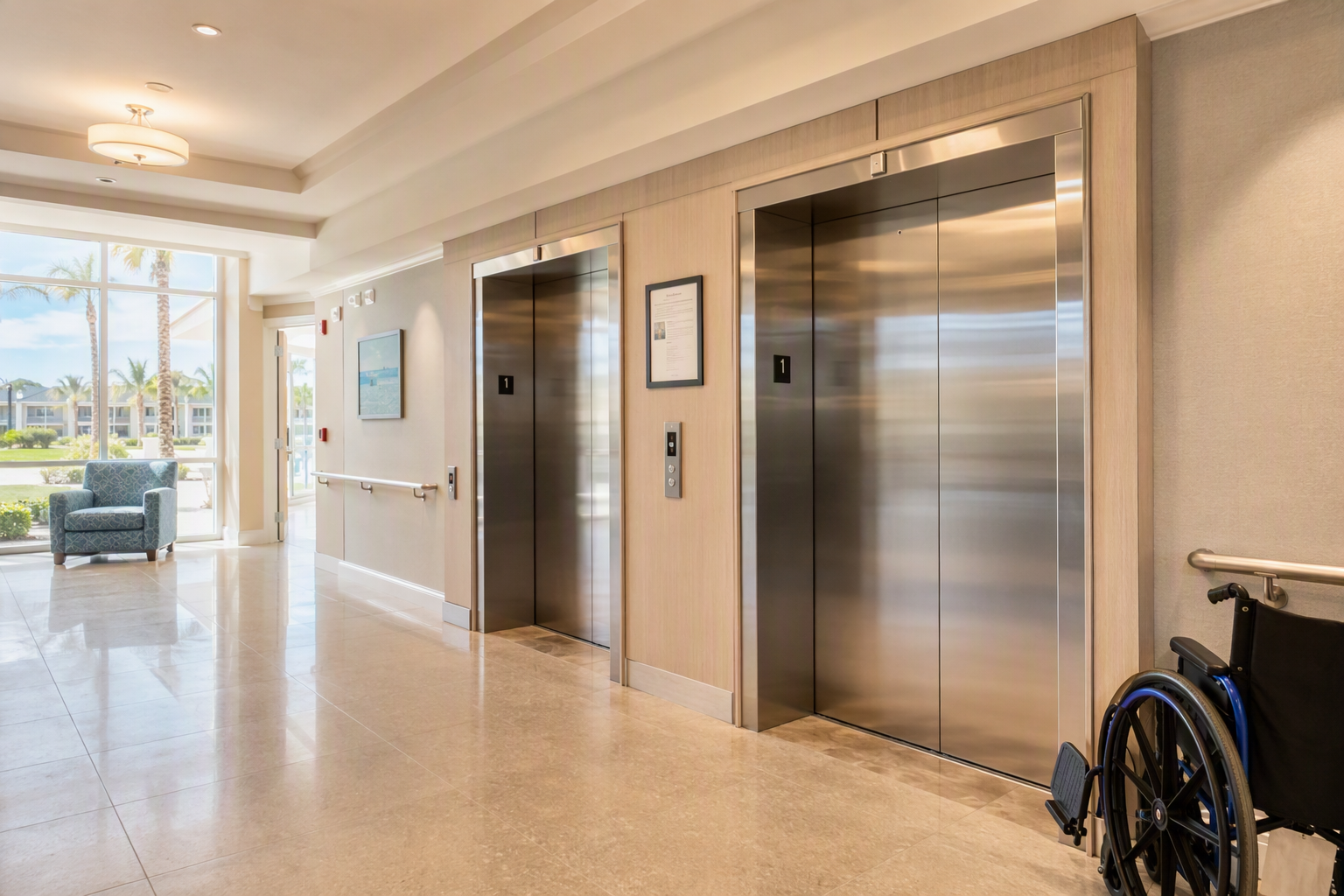
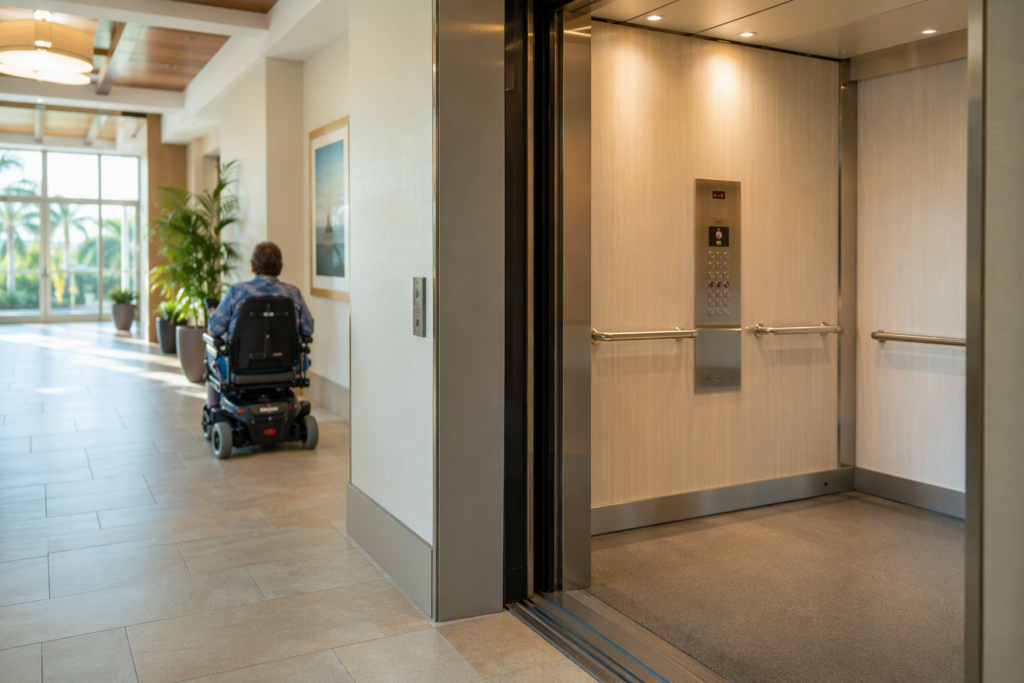
For senior living communities — from independent living campuses to memory care units — elevators are not a convenience. They are a lifeline. A resident using a walker, a wheelchair, or a mobility aid depends on every elevator in the building to perform safely, every single day. That reality raises the compliance stakes far beyond what is expected of a standard commercial property.
Florida has one of the largest senior living markets in the country, and state regulators, facility licensing boards, and federal accessibility agencies all maintain overlapping requirements that healthcare operators must satisfy. Understanding the full compliance picture is the first step toward protecting residents, staff, and the facility’s operating license.
Axxiom Elevator Florida partners with senior living and assisted living communities across Pompano Beach, Sarasota, and surrounding areas to keep vertical transportation systems code-compliant, reliably operational, and ready for inspection at any time.
What Is the Primary Code Governing Elevator Safety in Florida Senior Living Facilities?
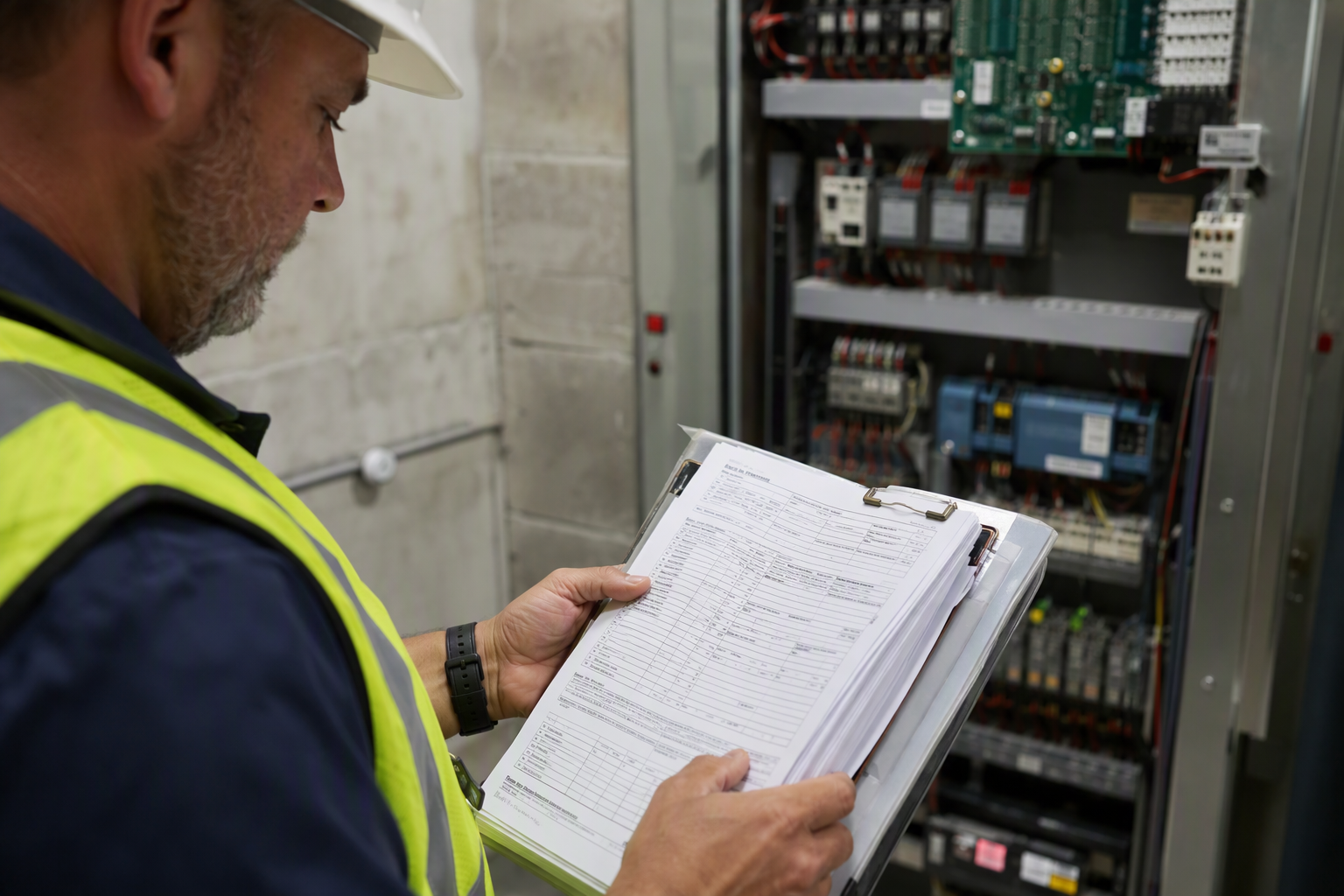
The foundational standard is the ASME A17.1 Safety Code for Elevators and Escalators, which Florida has adopted through its building code framework. ASME A17.1 establishes requirements for elevator design, installation, operation, testing, inspection, and maintenance. The companion standard, ASME A17.3, addresses safety requirements for existing elevators and escalators and is equally relevant for facilities operating older equipment.
For senior living facilities specifically, these codes must be read alongside:
- Florida Statutes Chapter 399, which governs elevator safety and DBPR oversight
- ADA Standards for Accessible Design, which set minimum dimensions, control heights, door timing, and signage requirements
- Florida Fire Prevention Code requirements that intersect with elevator emergency operations
- Agency for Health Care Administration (AHCA) licensing rules applicable to assisted living facilities (ALFs) in Florida
How Often Must Elevators Be Inspected in Florida Senior Living Facilities?
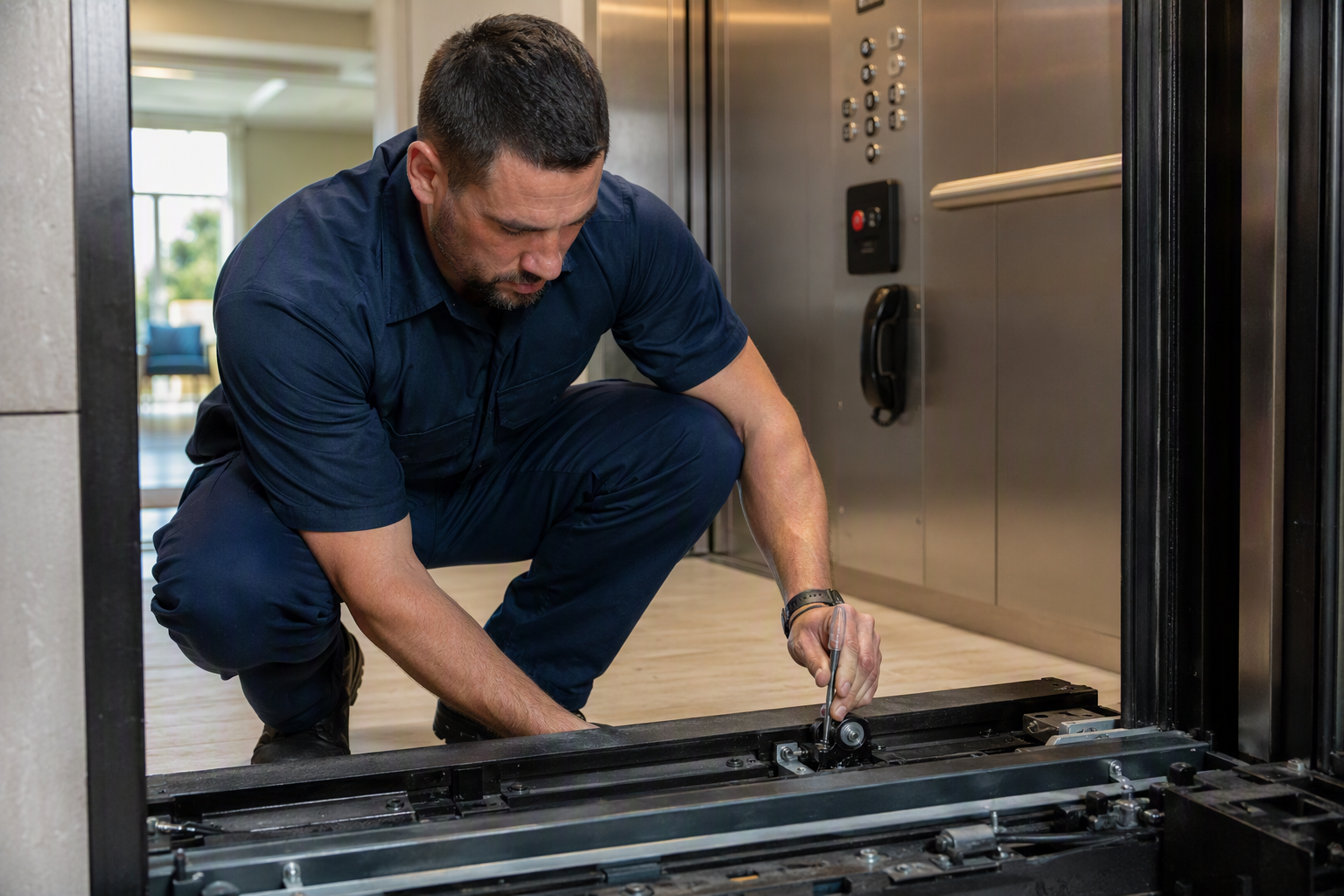
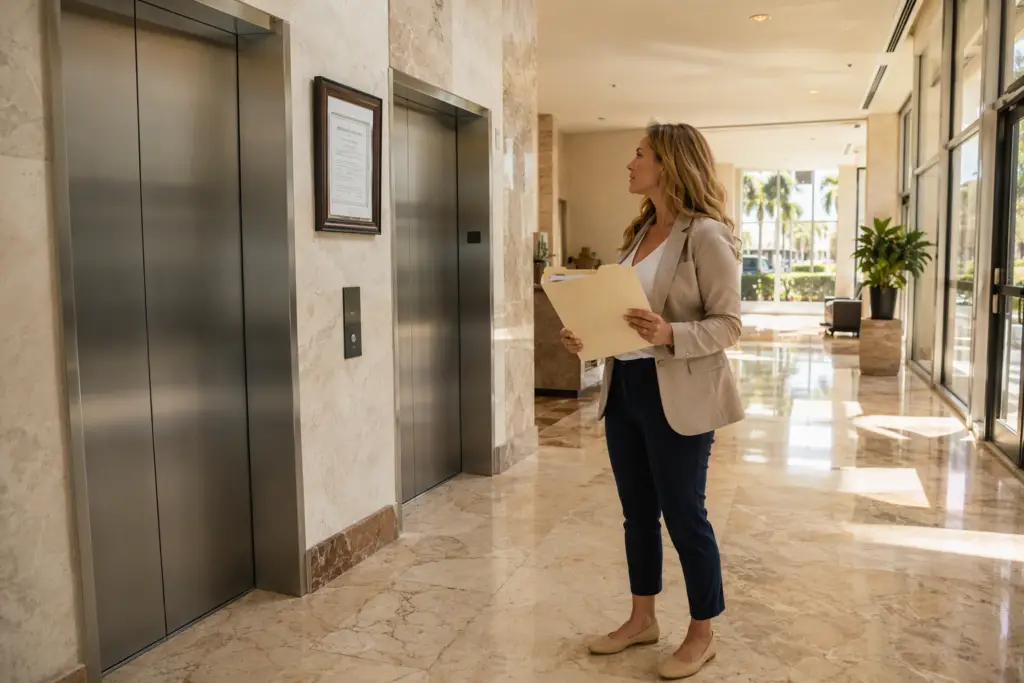
Florida requires periodic third-party inspections of all commercial elevators, including those in senior and assisted living facilities, conducted by a Florida-licensed elevator inspector. Under the DBPR framework, inspections are required at regular intervals established by the adopted code edition. Facilities must also maintain a current Certificate of Operation, which is posted in or near the elevator cab.
Beyond state-mandated inspections, ongoing preventive maintenance visits — typically performed monthly or quarterly depending on the elevator type and use intensity — are necessary to sustain code compliance and minimize breakdowns. A written maintenance log documenting every service visit, adjustment, part replacement, and test result is not optional; it is an audit-ready compliance record.
Senior living environments generate higher-than-average elevator use. Meal service, therapy transport, housekeeping, and medical equipment movement all compound wear on mechanical components. That usage profile makes proactive maintenance particularly critical in this vertical.
What ADA Requirements Apply Specifically to Elevators in Assisted Living Facilities?
The Americans with Disabilities Act imposes specific technical requirements on elevators serving the public in facilities covered by Title II or Title III, and most senior living communities fall within scope. Key ADA elevator requirements include:
- Car dimensions: Interior cab space must accommodate a wheelchair and a companion
- Door timing: Doors must remain open long enough for a person using a mobility device to enter and exit safely
- Control panel height: Call buttons and floor controls must be reachable from a seated position
- Accessible controls: Raised characters and Braille are required on elevator controls
- Audible and visual signals: Floor arrival indicators and audible announcements assist residents with visual or cognitive impairments
- Two-way communication: Emergency communication systems must be usable by people with hearing and speech impairments
In memory care and dementia-specific units, some facilities implement additional access controls to prevent resident elopement. Any such modification must still preserve ADA-compliant operability for authorized users and must be evaluated for compliance with the adopted safety code.
What Maintenance Records Must Senior Living Facilities Keep on File?
Florida’s elevator rules and ASME A17.1 both require that maintenance records be retained and available for review by inspectors. A compliant recordkeeping system for an assisted living or senior living facility should include:
- The current Certificate of Operation for each elevator
- Inspection reports from the most recent periodic and category tests
- A complete maintenance log with dates, technician identification, work performed, and parts replaced
- Records of any accidents, entrapments, or emergency responses involving the elevator
- Documentation of any alterations or repairs that required permits
- Contractor service agreements and verification that the servicing contractor holds a current Florida license
AHCA surveyors reviewing an ALF’s physical plant may request elevator maintenance records as part of a standard licensing inspection. Gaps in documentation can trigger deficiency citations even if the equipment itself is functioning correctly.
What Happens When an Elevator Deficiency Is Found in a Senior Living Facility?
When an inspection uncovers a code deficiency, the response protocol depends on the severity of the finding. Here is the step-by-step process that Florida senior living operators should follow:
- Receive the written inspection report identifying each deficiency, its code reference, and whether it is classified as a safety hazard requiring immediate action or a non-critical item with a correction deadline.
- Remove the elevator from service immediately if the deficiency is classified as an imminent safety hazard. Continuing to operate an out-of-compliance elevator with a safety-critical deficiency exposes the facility to significant regulatory and liability risk.
- Notify DBPR of the out-of-service status and the nature of the deficiency as required by Florida Statute Chapter 399.
- Engage a licensed elevator contractor to assess the deficiency, obtain any required permit for repairs or parts, and perform the corrective work.
- Document all repair activity including parts installed, labor performed, and the date the work was completed.
- Schedule a follow-up inspection or acceptance test as required by the DBPR to return the elevator to service with an updated Certificate of Operation.
- Notify residents and staff of the outage and provide accessible alternative accommodations, particularly for residents with mobility limitations, for the duration of the repair period.
Axxiom Elevator Florida works with facilities in Pompano Beach and Sarasota to move through this process efficiently, from deficiency assessment through permit coordination and final inspection readiness.
Are There Special Fire Service and Emergency Operation Requirements for Senior Living Elevators?
Yes. ASME A17.1 includes detailed requirements for Phase I Emergency Recall and Phase II Emergency In-Car Operation, which allow firefighters to assume control of elevators during an emergency. Compliance with these provisions is mandatory in Florida and is tested during periodic inspections.
For senior living and assisted living facilities, additional considerations include:
- Integration of the elevator recall system with the building’s fire alarm system
- Ensuring that elevator lobbies and machine rooms comply with fire separation requirements
- Maintaining the two-way emergency communication system in the cab in working order at all times — a requirement with heightened importance when many residents may be unable to call for help independently
What Should Facilities Know About Elevator Modernization and Code Compliance Upgrades?
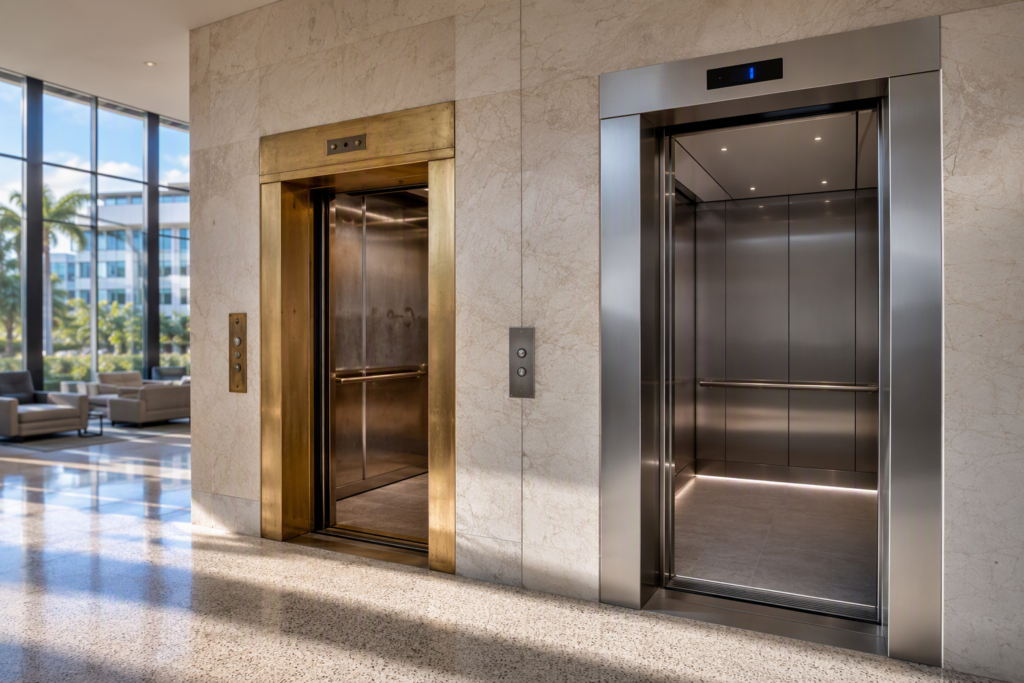
Older elevator equipment in legacy senior living facilities may not meet current code requirements without modernization. Florida adopts updated editions of ASME A17.1 and A17.3 on a defined cycle, and each new adoption may impose retroactive requirements on existing installations. Common modernization triggers in senior living facilities include:
- Outdated door reopening devices that do not meet current sensitivity requirements
- Older controls lacking ADA-compliant Braille and raised character signage
- Non-compliant cab lighting levels
- Hydraulic systems using environmentally regulated fluids requiring conversion
- Obsolete machine room equipment with discontinued parts availability
Modernization projects require permits through DBPR, engineering review in many cases, and a final acceptance test before the elevator is returned to service. Facilities planning capital improvement projects should factor elevator modernization timelines into their operational planning well in advance.
How Does Elevator Downtime Affect Assisted Living Facilities Differently Than Other Property Types?
In a standard commercial office building, elevator downtime is an inconvenience. In an assisted living or memory care community, it can constitute a safety emergency and a regulatory compliance event.
Residents who use wheelchairs or walkers and whose rooms are on upper floors may be unable to access dining, therapy, outdoor areas, or emergency exits. AHCA’s ALF licensing rules require that facilities maintain accessible means of egress and that residents have access to required services. A prolonged elevator outage that prevents a non-ambulatory resident from accessing their care environment may require the facility to document the accommodation plan it implemented — and could prompt a survey follow-up.
This is one reason why preventive maintenance contracts — rather than reactive repair calls — are the standard of care for senior living communities. Axxiom Elevator Florida provides scheduled maintenance programs designed to reduce unplanned downtime and keep compliance documentation current.
What Are the Consequences of Non-Compliance for a Florida ALF?
The consequences of elevator non-compliance in an assisted living context are layered across multiple agencies:
- DBPR: Can order an elevator removed from service, issue fines, and revoke a Certificate of Operation
- AHCA: Can cite an ALF for physical plant deficiencies, issue conditional licensing status, or require a corrective action plan
- ADA enforcement: Residents or their advocates can file complaints with the U.S. Department of Justice for accessibility violations
- Civil liability: An injury to a resident linked to a known elevator deficiency creates significant exposure in litigation
For senior living operators, elevator compliance is not a facilities management checkbox — it is a risk management imperative.
Questions Your Inspector Will Ask
When a DBPR elevator inspector or an AHCA surveyor reviews your senior living facility’s elevator program, these are the questions that determine whether your documentation holds up:
- Is the current Certificate of Operation posted in the elevator cab?
- When was the most recent periodic inspection conducted, and is the report on file?
- Has the required Category 1 or Category 5 test been performed within the required interval under the adopted ASME A17.1 edition?
- Is there a written preventive maintenance agreement with a Florida-licensed elevator contractor?
- Are maintenance logs current, complete, and available for review?
- Have any alterations been made to the elevator since the last inspection? Were permits obtained?
- Is the two-way emergency communication system in the cab operational?
- Are door reopening devices functioning correctly and meeting current sensitivity requirements?
- Are ADA-required cab controls, signage, and audible indicators intact and functioning?
- Has any entrapment or incident involving the elevator been reported as required, and is the report on file?
Facilities that can answer every one of these questions with documented evidence are in a defensible compliance position. Facilities that cannot should treat that gap as an urgent operational priority.
What Should Senior Living Facilities in Pompano Beach and Sarasota Look for in an Elevator Service Partner?
The right elevator service partner for a senior living or assisted living facility is not simply the closest contractor. Facilities should evaluate service providers based on:
- Active Florida elevator contractor license in good standing
- Demonstrated knowledge of ASME A17.1, A17.3, ADA requirements, and DBPR inspection processes
- Ability to produce and maintain compliant maintenance documentation
- Experience working in occupied healthcare and senior living environments where resident safety and discretion matter
- Capacity to support permit applications and coordinate with DBPR for inspections
Axxiom Elevator Florida serves communities throughout the Pompano Beach and Sarasota markets, providing maintenance, inspection preparation, repair, and compliance documentation support tailored to the specific demands of senior care environments.
Protect Your Residents. Protect Your License. Get a Free Elevator Assessment.
Elevator compliance in a senior living or assisted living facility is too consequential to leave to chance. Whether a facility is preparing for an AHCA survey, responding to an inspection deficiency, or simply trying to confirm that its current maintenance program meets Florida’s requirements, a professional assessment is the right starting point.
Contact Axxiom Elevator Florida for a free elevator assessment:
Need elevator service you can rely on? Axxiom Elevator Florida is ready to help.