Elevator Service in Pompano, FL | Axxiom Elevator Florida
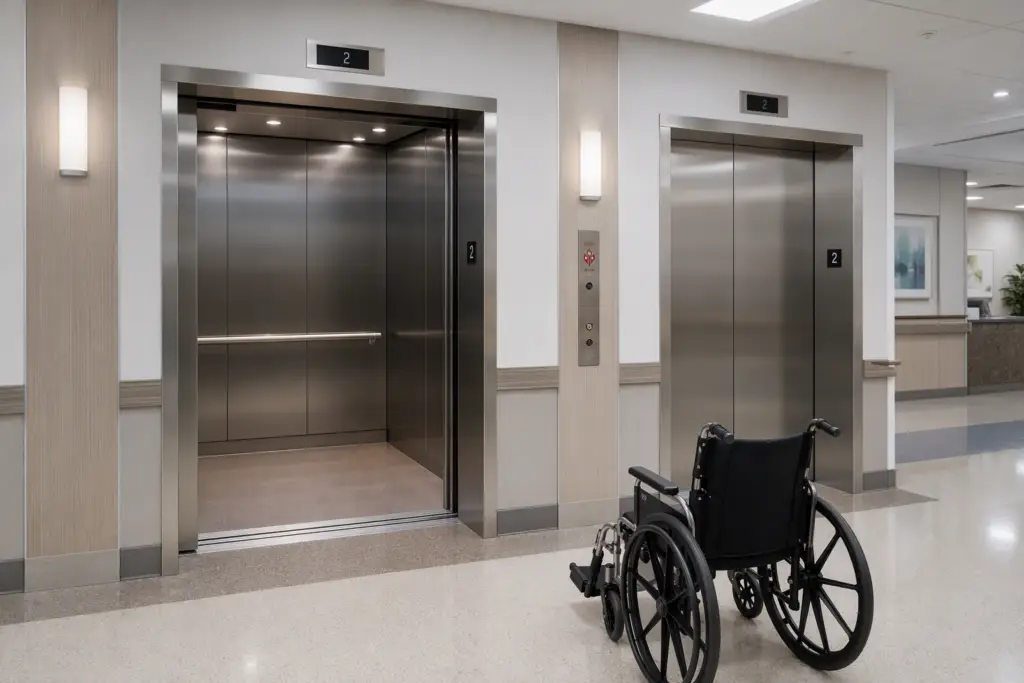
Elevator compliance in a hospital or healthcare facility is not a routine checkbox — it is a life-safety obligation. From patient transport to emergency evacuation, the elevators inside a healthcare building carry some of the most vulnerable occupants in any vertical-transportation environment. Axxiom Elevator Florida serves Pompano Beach and the surrounding South Florida region, providing certified elevator maintenance, inspection support, and modernization services specifically suited to the complex demands of healthcare environments.
—
What federal and Florida-specific codes govern hospital elevators?
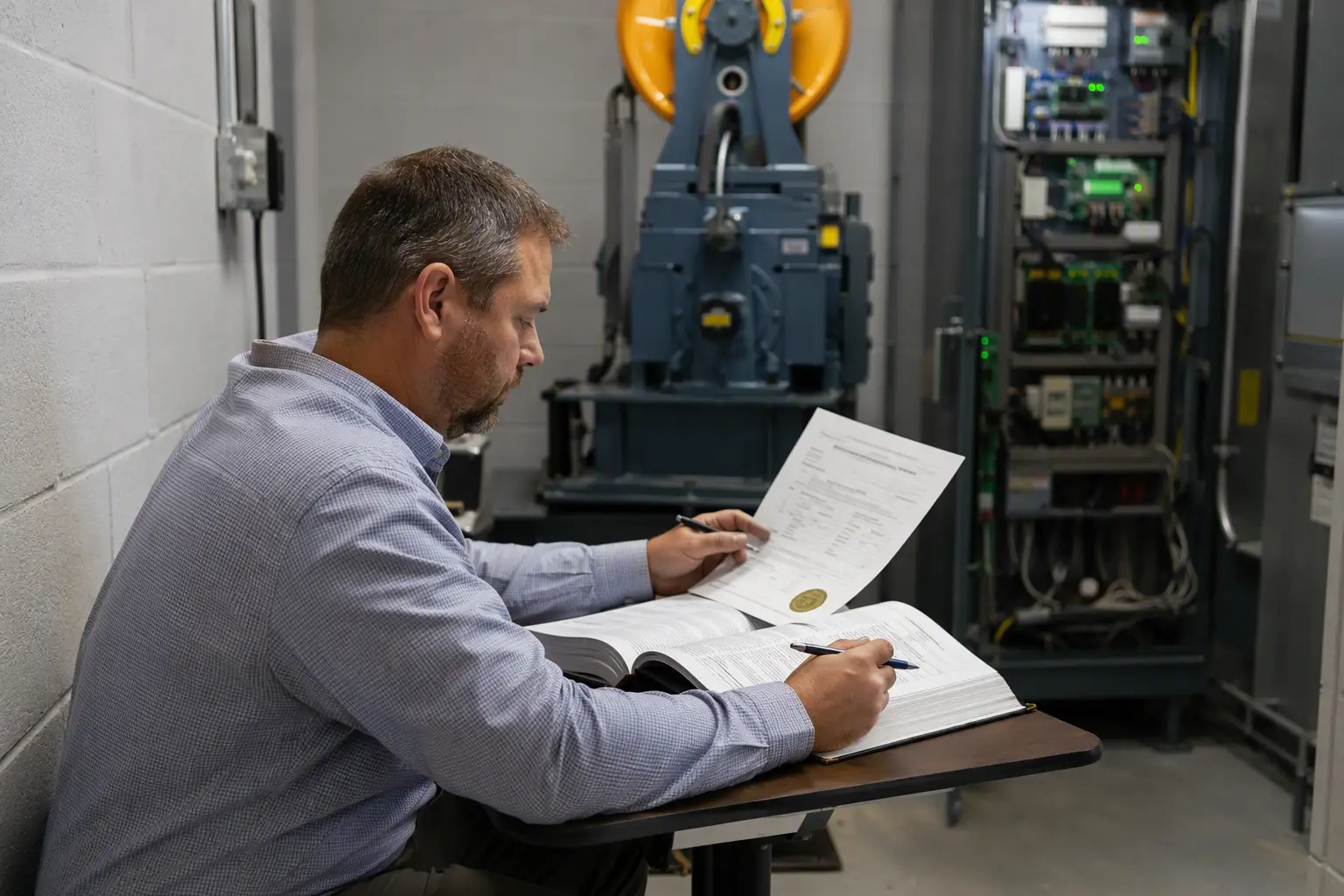
Healthcare facility elevators in Florida operate under a layered framework of requirements:
- ASME A17.1 Safety Code for Elevators and Escalators — the nationally adopted model code that establishes construction, installation, operation, and inspection standards for all vertical transportation equipment, including hospital-grade units.
- Florida Building Code (FBC), Chapter 30 — Florida adopts and amends ASME A17.1 at the state level; the Florida Department of Business and Professional Regulation (DBPR) enforces elevator safety statewide through its Bureau of Elevator Safety.
- Americans with Disabilities Act (ADA) — Title III and Title II accessibility requirements mandate minimum cab dimensions, door timing, floor indicators, tactile controls, and more for facilities serving the public.
- NFPA 101 Life Safety Code — governs how elevators integrate with fire egress and emergency recall systems inside healthcare occupancies.
- CMS Conditions of Participation — Medicare- and Medicaid-certified facilities must satisfy the Centers for Medicare & Medicaid Services environment-of-care standards, which include functional vertical transportation.
Because Florida enforces its own elevator safety bureau through the DBPR, all elevators in the state — including those inside hospitals — must carry a current Certificate of Operation issued after a passing periodic inspection. Operating without a valid certificate can result in mandatory shutdown of the unit.
—
What special elevator design requirements apply to hospitals and healthcare facilities?
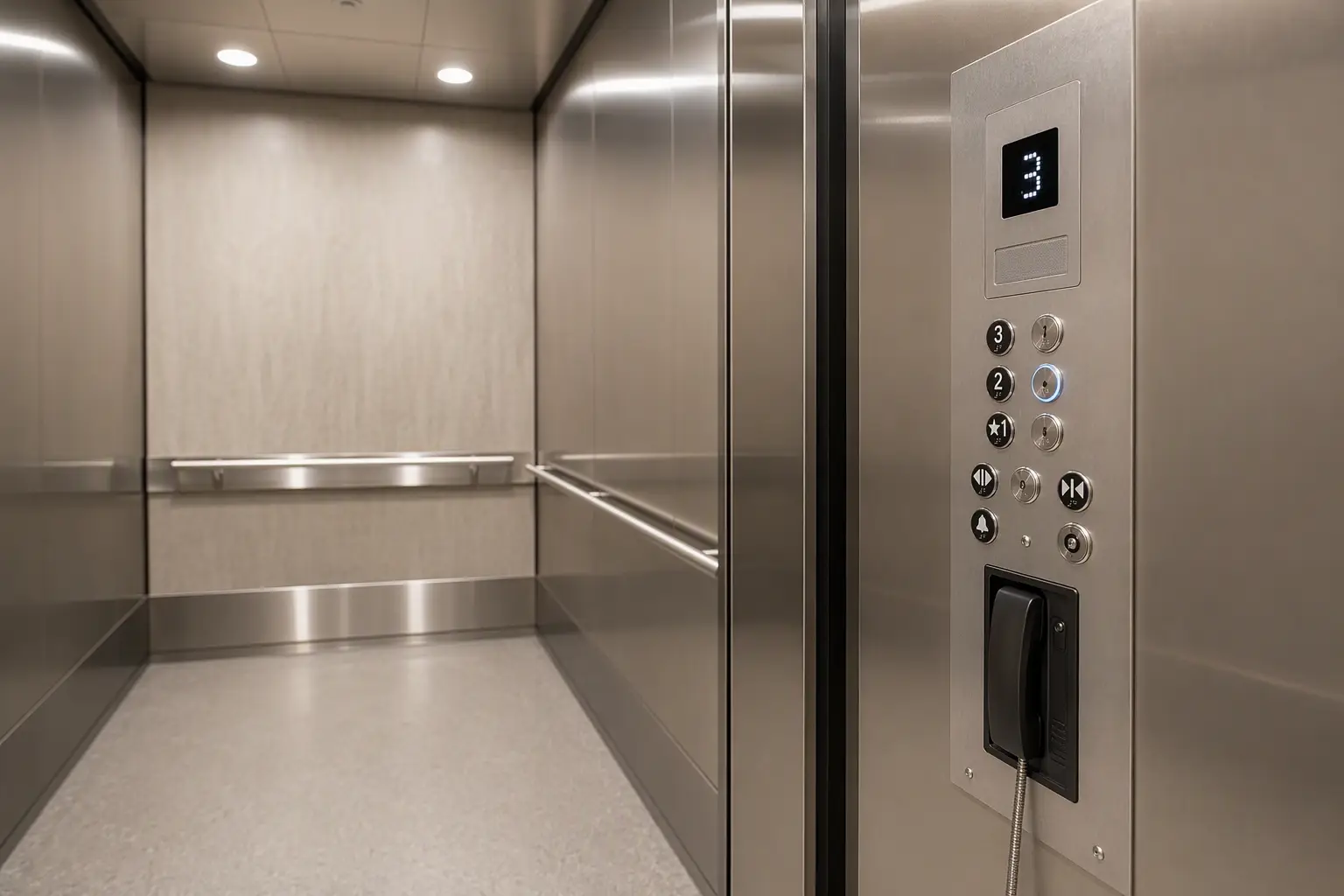
Healthcare elevators face demands that standard commercial units do not. The ASME A17.1 Safety Code for Elevators and Escalators and the Facilities Guidelines Institute (FGI) Guidelines for Design and Construction of Hospitals specify several healthcare-specific considerations:
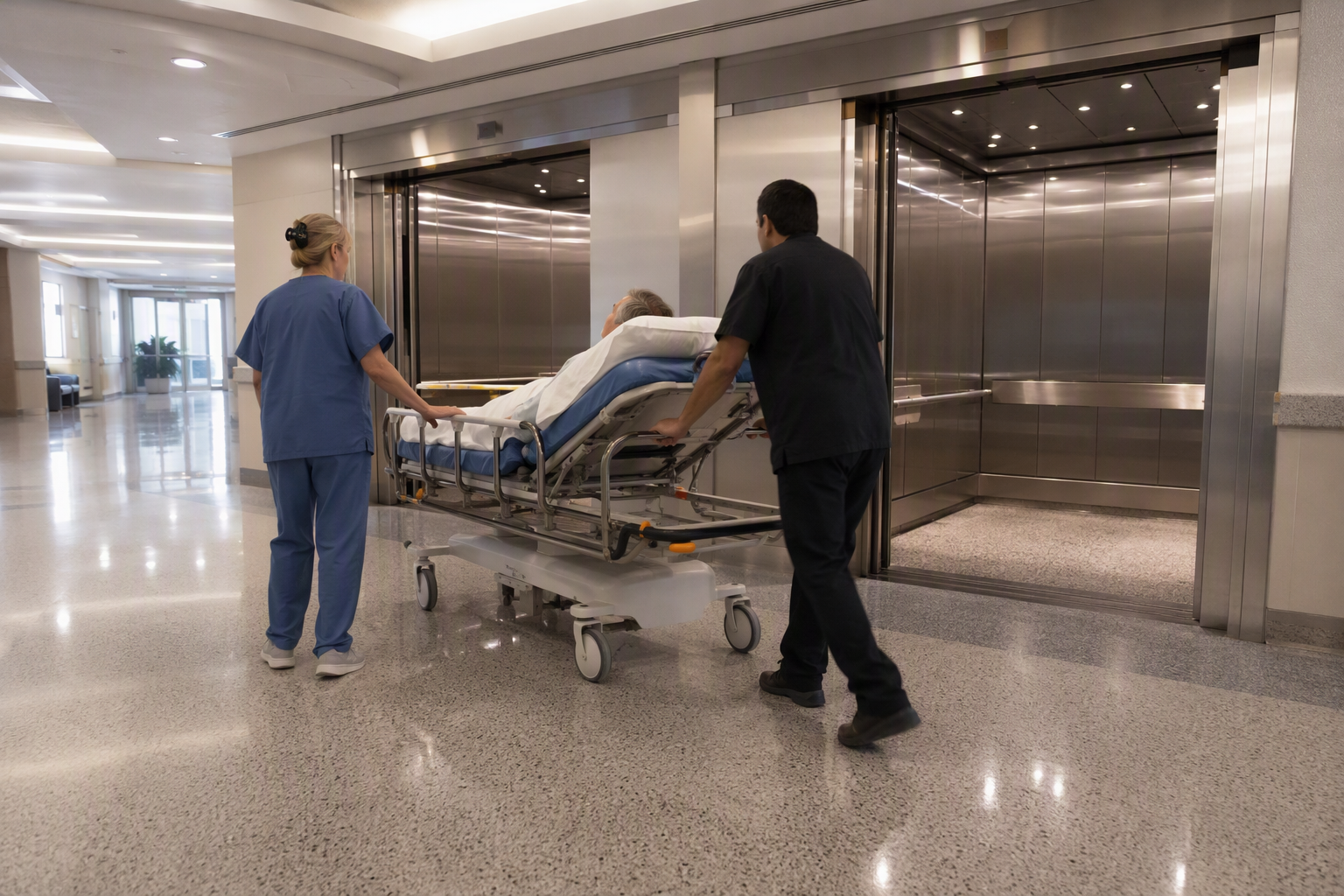
- Cab size: Hospital elevators must accommodate stretchers, hospital beds, and large medical equipment. Current FGI guidelines call for at least one elevator in a new hospital to meet minimum cab depth and width dimensions large enough for a fully extended gurney with attendants on both sides.
- Door timing: Slower, extended door-hold times protect patients being transported on beds or in wheelchairs from door-edge contact.
- Weight capacity: Bariatric care wings and surgical transport routes may require higher-capacity cars than standard commercial configurations.
- Smooth leveling: Accurate floor leveling — critical for rolling patients across the threshold without jarring — is required and inspected as part of Florida’s periodic safety audit.
- Emergency power: Florida Building Code and NFPA 110 require that designated hospital elevators connect to the facility’s emergency generator so they remain operational during power failures.
- Fire service recall (Phase I and Phase II): All hospital elevators must be equipped with ASME A17.1-compliant firefighters’ service features, enabling automatic recall and manual fire-service operation.
- Infection control materials: Interior finishes in healthcare elevators are typically specified to resist microbial growth and withstand frequent clinical-grade cleaning.
—
How often must hospital elevators be inspected in Florida?
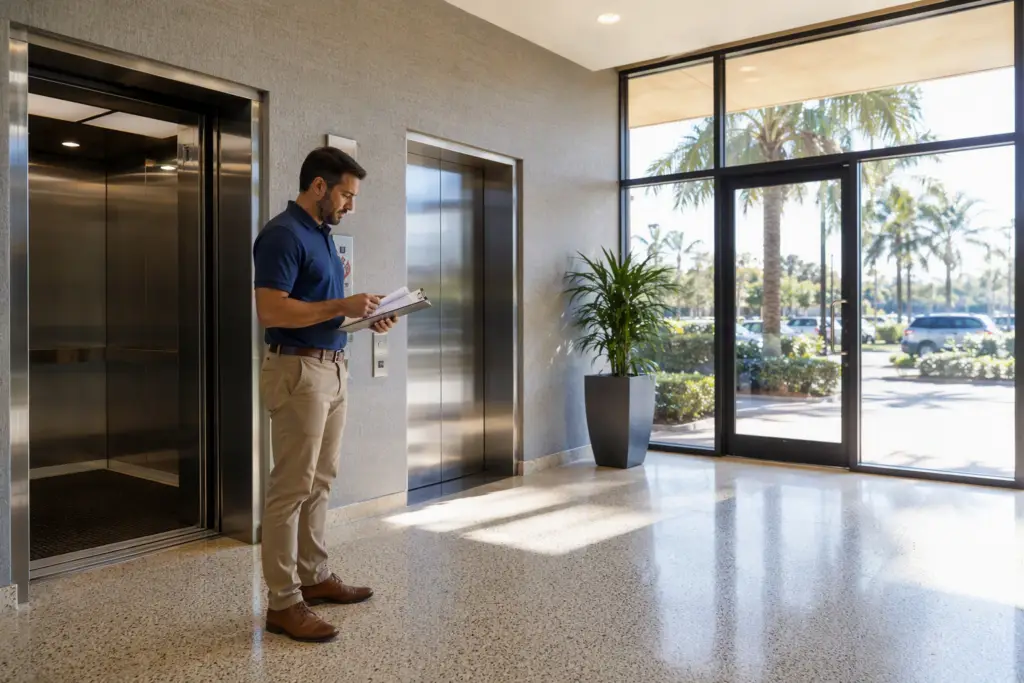
Under Florida Statutes Chapter 399 and the rules administered by the DBPR Bureau of Elevator Safety, all elevators in the state are subject to periodic inspections by a licensed elevator inspector. For most commercial and healthcare elevators, routine periodic inspections occur annually. Additionally, any major alteration, modernization, or repair triggers a separate acceptance inspection before the elevator is returned to service.
Hospitals should also maintain their own internal preventive maintenance logs. Accreditation bodies such as The Joint Commission review maintenance documentation as part of their Environment of Care surveys. Gaps in maintenance records — even when the elevator is physically functional — can result in accreditation findings.
—
What ADA accessibility requirements must healthcare facility elevators meet?
The ADA Standards for Accessible Design require that elevators serving multiple floors in a healthcare facility include:
- Call buttons of a minimum raised height for wheelchair users
- Visual and audible floor-arrival signals
- Braille and raised-character floor designations at each jamb
- Door-reopening devices that remain sensitive to obstructions throughout the door’s full travel
- Interior controls at accessible reach ranges
- Two-way emergency communication systems inside the cab
For existing facilities, the ADA requires removal of accessibility barriers when doing so is “readily achievable.” Renovation projects trigger stricter path-of-travel requirements that can mandate elevator upgrades even when the elevator itself is not the primary scope of work.
—
What happens if a hospital elevator fails inspection or goes out of service?
When a Florida elevator fails its periodic inspection or is placed out of service for a safety deficiency, the DBPR can require the unit be taken offline immediately. For a hospital, an out-of-service elevator is not simply an inconvenience — it can affect patient transport workflows, surgical scheduling, and emergency response routes.
Steps a healthcare facility should take immediately when an elevator is placed out of service:
- Notify the facility’s safety officer and department heads affected by the loss of the unit.
- Post clear signage at all affected floors to redirect staff, patients, and visitors.
- Contact a licensed Florida elevator contractor to assess the deficiency and provide a written scope of corrective work.
- Obtain any required permits from the DBPR Bureau of Elevator Safety before corrective work begins.
- Complete the repairs using a licensed elevator mechanic and arrange for a reinspection and re-issuance of the Certificate of Operation before returning the unit to service.
- Document all corrective actions for inclusion in the facility’s Environment of Care records.
—
How does elevator modernization help hospitals stay compliant and reduce risk?
Older hospital elevators may have been installed before current ASME, ADA, or Florida Building Code editions took effect. While existing installations are typically grandfathered under the code in place at the time of installation, major modernizations — controller replacements, drive system upgrades, or cab refurbishments — can trigger requirements to bring the unit into closer conformance with current standards.
Beyond strict compliance, modernization reduces maintenance costs, improves ride quality (directly impacting patient comfort and staff efficiency), and brings outdated emergency communication and fire service features up to current life-safety expectations. Facilities planning capital improvement projects should engage a licensed elevator contractor early in the design phase to understand what code upgrades may be triggered.
—
How does a preventive maintenance program reduce compliance risk for hospitals?
A documented, regularly scheduled preventive maintenance program is the most reliable way for healthcare facilities to avoid unplanned outages, failed inspections, and accreditation findings. A well-structured program should include:
- Lubrication, adjustment, and testing of all safety devices on a scheduled cycle aligned with manufacturer recommendations and ASME A17.1 intervals
- Testing of Phase I and Phase II fire service features
- Verification of door timing and leveling accuracy
- Emergency lighting and two-way communication testing
- Written records of every service visit — dates, technician credentials, work performed, and any deficiencies noted
Accreditation reviewers from The Joint Commission specifically look for maintenance records that demonstrate a consistent, proactive approach rather than reactive repair-only service.
—
Why do healthcare facilities in Pompano Beach and South Florida choose Axxiom Elevator Florida?
Axxiom Elevator Florida is a certified elevator service company serving Pompano Beach, Fort Lauderdale, Boca Raton, Miami, and communities throughout South Florida. The company works with healthcare facilities, medical office buildings, assisted living communities, and hospital campuses — environments where elevator reliability directly affects patient outcomes and regulatory standing.
Axxiom Elevator Florida supports healthcare clients with:
- Preventive maintenance contracts designed around healthcare operational schedules
- Compliance-oriented inspection preparation and documentation support
- Modernization planning aligned with Florida Building Code and ASME A17.1 current editions
- Emergency repair availability to help restore out-of-service units as quickly as possible
- Familiarity with Florida’s DBPR permitting and inspection processes
For hospitals, nursing facilities, and healthcare campuses across Broward and Palm Beach counties, keeping elevators safe, compliant, and operationally reliable is a continuous responsibility — not a one-time project. Axxiom Elevator Florida provides the local knowledge and technical capability to support that responsibility year-round.
—
Schedule a Free Consultation
Is your healthcare facility’s elevator program fully aligned with Florida’s 2026 code requirements and Joint Commission expectations? Axxiom Elevator Florida is ready to review your current maintenance, inspection, and compliance status.
Call Axxiom Elevator Florida today:
Serving Pompano Beach, Fort Lauderdale, Boca Raton, Miami, and all of South Florida.
Need elevator service you can rely on? Axxiom Elevator Florida is ready to help.