Elevator Maintenance ROI: A Complete Comparison and Decision Guide
Deciding how to manage elevator maintenance is one of the most financially significant choices a building owner or facility manager makes. The return on investment extends well beyond simple repair bills — it touches liability exposure, tenant satisfaction, code compliance, and the long-term value of vertical transportation equipment. This guide breaks down every factor that influences elevator maintenance ROI so decision-makers can make an informed, defensible choice.
What Factors Determine Elevator Maintenance ROI?
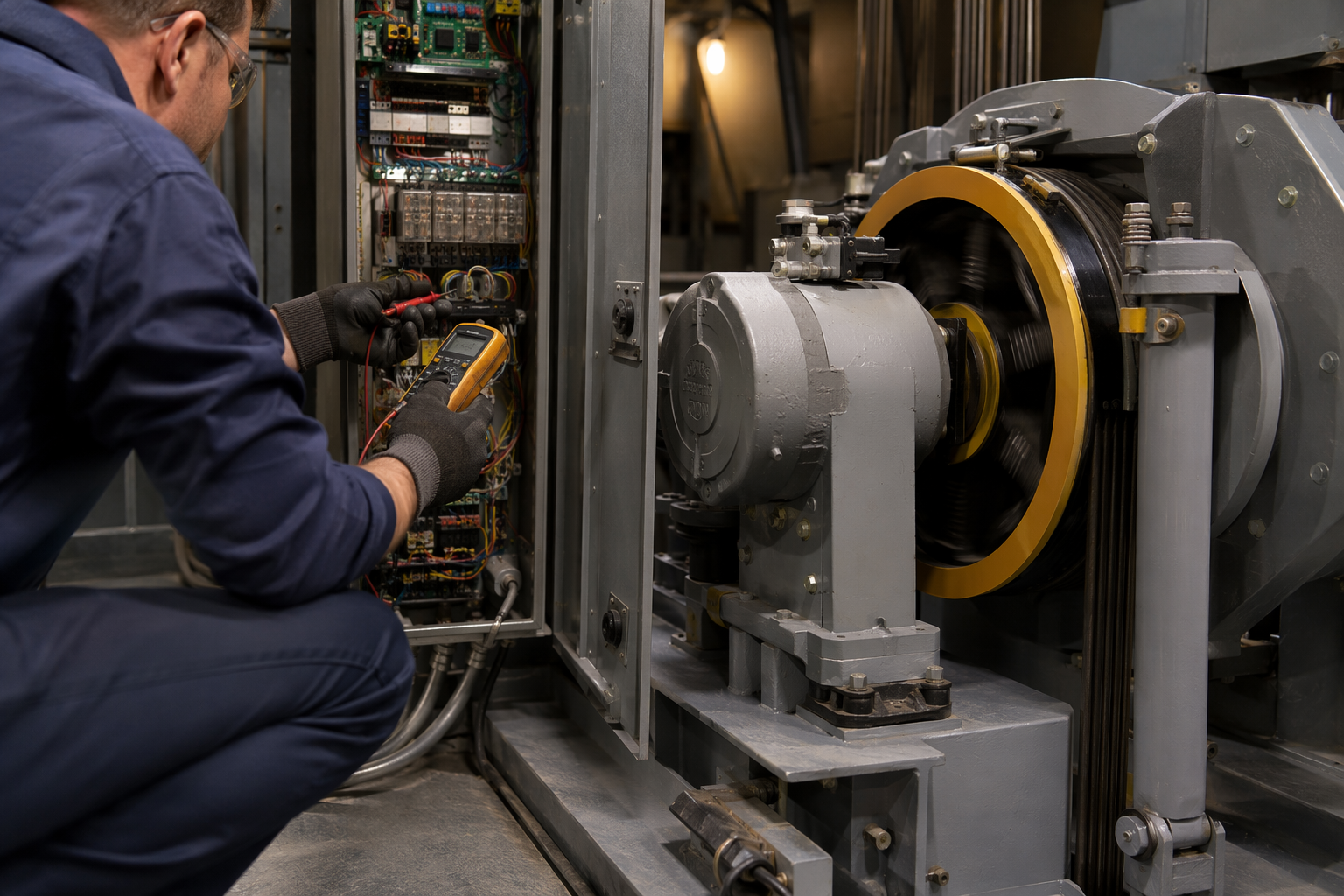
Elevator maintenance ROI is shaped by four core variables: the cost of the maintenance program itself, the frequency and severity of breakdowns avoided, the compliance risk mitigated, and the extension of equipment service life. Buildings that treat maintenance as a cost center rather than a risk management investment typically face significantly higher total expenditures over a five- to ten-year horizon.
Key ROI drivers include:
- Downtime reduction: Every hour an elevator is out of service creates productivity losses, tenant dissatisfaction, and potential ADA accessibility violations.
- Emergency repair avoidance: Unplanned repairs carry premium labor rates, expedited parts costs, and unpredictable scheduling disruptions.
- Compliance continuity: Elevators that remain in a state of good maintenance are far more likely to pass mandatory state inspections without costly correction orders.
- Equipment longevity: Consistent lubrication, adjustment, and component monitoring extend the usable life of mechanical and electrical systems.
- Liability risk reduction: Well-maintained elevators reduce exposure to personal injury claims and regulatory penalties.
Maintenance Strategy Comparison: Which Approach Delivers Better ROI?
Three primary maintenance strategies exist for elevator owners. Understanding how each performs on cost, risk, and return is essential before committing to a service agreement.
| Strategy | Description | Cost Profile | Downtime Risk | ROI Outlook | Best For |
|---|---|---|---|---|---|
| Reactive Maintenance | Repairs made only after a failure occurs | Low upfront; unpredictable spikes | High | Poor long-term | Very low-use, low-risk settings |
| Planned Preventive Maintenance | Scheduled inspections, lubrication, adjustments, and part replacements on a calendar basis | Predictable monthly or annual contract cost | Low to moderate | Strong | Most commercial and residential buildings |
| Predictive / Condition-Based Maintenance | Sensor data and remote monitoring trigger service only when indicators show degradation | Higher upfront investment in technology; lower reactive costs | Very low | Excellent for high-use facilities | High-traffic buildings, hospitals, airports |
Maintenance Contract Types: Pros, Cons, and ROI Impact
| Contract Type | What’s Included | Pros | Cons | ROI Consideration |
|---|---|---|---|---|
| Oil & Grease (Basic) | Lubrication and visual inspection only | Lowest monthly cost | Repairs billed separately at full rate; high exposure | Weak — repair costs frequently exceed contract savings |
| Examination & Adjustment | Lubrication, inspection, minor adjustments | Moderate protection | Parts and major labor not covered | Moderate — appropriate for newer equipment |
| Full Maintenance | All labor, parts, and adjustments included | Maximum cost predictability; broadest protection | Highest monthly premium | Strong — eliminates most surprise expenditures |
| Full Maintenance with Exclusions | Full maintenance minus specific high-cost components (e.g., controllers, motors) | Balanced cost and coverage | Hidden exposure on excluded items | Variable — read exclusions carefully before signing |
How Does Elevator Downtime Affect ROI?
Downtime is among the most underestimated components of elevator maintenance ROI analysis. For commercial office buildings, retail centers, and multi-family residential properties, an out-of-service elevator creates direct and indirect financial losses that compound quickly.
Direct costs of downtime include emergency technician call-out fees, expedited parts sourcing, and temporary accessibility workarounds. Indirect costs include tenant complaints, lease renewal leverage lost, potential Fair Housing Act or ADA compliance complaints from occupants with mobility limitations, and reputational damage to the property.
Buildings with a documented planned maintenance program can demonstrate due diligence to insurers, tenants, and regulators — a qualitative ROI benefit that does not appear on any invoice but materially affects asset value and liability posture.
What Are the Compliance Costs of Neglecting Elevator Maintenance?
Elevator maintenance in Florida is governed by state law and aligns with nationally recognized codes. The ASME A17.1 Safety Code for Elevators and Escalators establishes the baseline safety and maintenance requirements referenced by Florida’s Bureau of Elevator Safety. Elevators must pass periodic inspections; those that fail generate correction orders that mandate repairs within defined timeframes.
When maintenance is deferred, the likelihood of inspection failures rises. Failed inspections can result in:
- Mandatory shutdown orders that take the elevator out of service until deficiencies are corrected
- Administrative fines and re-inspection fees
- Emergency repair costs billed at unscheduled labor rates
- Accelerated component replacement rather than planned lifecycle replacement
- Potential personal injury liability if a maintenance-related failure causes harm
Workplace safety obligations for elevator-related hazards in facilities accessible to employees also fall under OSHA general duty clause requirements. Proactive maintenance is a documented risk control measure that supports OSHA compliance.
How Long Does It Take to See ROI from a Maintenance Program?
The timeline for realizing positive ROI from a planned elevator maintenance program depends on the starting condition of the equipment and the gap between the current maintenance spend and the cost of a properly structured contract.
| Equipment Condition at Program Start | Typical ROI Timeline | Key Driver |
|---|---|---|
| New or recently modernized elevator | Immediate — maintenance preserves warranty-adjacent protection | Prevention of premature wear |
| Mid-life elevator in good condition | Short term — within the first maintenance contract year | Avoidance of developing failures becoming major repairs |
| Aging elevator with deferred maintenance | Medium term — after initial remediation costs are absorbed | Stabilization of failure frequency after catch-up work |
| Severely neglected elevator | Longer term — ROI follows after modernization or major component replacement | Capital expenditure required before maintenance ROI can build |
Is an Independent Elevator Service Company a Better ROI Choice Than an OEM Provider?
Building owners often receive maintenance proposals from original equipment manufacturers (OEMs) and from independent certified service companies. The ROI comparison between these provider types is a frequently asked question — and the answer depends on several factors.
| Factor | OEM Provider | Independent Certified Provider |
|---|---|---|
| Contract flexibility | Often standardized, less negotiable | Typically more customizable to building needs |
| Parts sourcing | Proprietary parts at OEM pricing | Open-market sourcing can reduce parts cost |
| Responsiveness | Varies by regional coverage | Local independents often provide faster local response |
| Technical capability | Deep knowledge of own brand | Multi-brand expertise across equipment types |
| Long-term cost | Can escalate with OEM proprietary pricing | Competitive market pricing; easier to benchmark |
| Code compliance | Compliant when properly contracted | Compliant when properly certified |
Axxiom Elevator Florida is a certified independent elevator service company serving Florida building owners. As an independent provider, Axxiom Elevator Florida works across multiple equipment brands and tailors service agreements to the actual needs of each property — a structure that often delivers stronger maintenance ROI than rigid OEM contracts.
What Should Be Included in an Elevator Maintenance Contract to Maximize ROI?
Not all maintenance contracts are created equal. A contract that appears inexpensive on a monthly basis may generate poor ROI once exclusions are applied. The following elements, when clearly defined, support stronger return on maintenance investment:
- Defined scope of inspections: Frequency, components covered, and documentation provided after each visit
- Labor inclusion: Whether all labor for covered repairs is included or billed separately
- Parts coverage: A clear list of included and excluded components — controller boards, motor generators, and hydraulic cylinders are common exclusion targets
- Callback response commitment: How entrapment calls and service failures are handled
- Code compliance support: Whether the contractor assists with annual inspection scheduling and deficiency correction
- Modernization planning: Whether the provider offers lifecycle assessments and capital planning guidance
- Termination terms: Penalties and notice requirements — long lock-in terms with no performance standards reduce owner leverage
How Does Elevator Modernization Relate to Maintenance ROI?
At a certain point in an elevator’s lifecycle, the ROI calculation shifts from maintenance optimization to modernization planning. Aging components reach a threshold where the cost of ongoing maintenance and repair exceeds the cost of upgrading or replacing the system.
Indicators that modernization may deliver better ROI than continued maintenance on aging equipment include:
- Increasing frequency of callbacks and unplanned repairs
- Parts becoming obsolete or difficult to source
- Rising energy consumption from outdated drive systems
- Repeated failures to pass inspection without corrective orders
- Tenant complaints escalating due to ride quality or reliability
A qualified independent service provider such as Axxiom Elevator Florida can assess whether a building is approaching the maintenance-to-modernization transition point and help ownership develop a capital plan that optimizes the ROI decision at each stage.
What Steps Should a Building Owner Take to Evaluate Their Current Maintenance ROI?
- Gather all maintenance invoices and service records for the past three years, including emergency call charges, parts replacements, and inspection reports.
- Calculate total annual spend by combining contract fees, emergency repair invoices, and any regulatory fines or re-inspection fees paid.
- Document downtime incidents — number of outages, duration, and any tenant or occupant impact reported.
- Review your current contract scope and identify what is explicitly included versus what is billed separately.
- Obtain a competitive maintenance assessment from a certified independent elevator service provider to benchmark your current program against market alternatives.
- Assess equipment age and condition with input from a qualified technician to determine whether maintenance optimization or modernization planning is the higher-ROI path.
- Compare total cost of ownership under your current arrangement versus a full-coverage preventive maintenance contract over a five-year horizon.
- Make a documented decision that aligns maintenance investment with the building’s operational objectives, lease obligations, and compliance requirements.
Does ADA Compliance Factor Into Elevator Maintenance ROI?
Yes — and it is frequently overlooked in ROI calculations. The Americans with Disabilities Act requires that elevators serving as part of an accessible route in covered facilities remain operational. When a building’s only accessible elevator is out of service due to a preventable maintenance failure, the building owner faces potential ADA compliance exposure in addition to the direct repair cost.
For multi-tenant commercial buildings, healthcare facilities, hotels, and residential properties with elevators, ADA-related complaints or enforcement actions stemming from prolonged elevator outages represent a liability cost that should be incorporated into any full ROI analysis of maintenance investment.
How Does Florida’s Regulatory Environment Affect Elevator Maintenance ROI?
Florida’s Bureau of Elevator Safety administers elevator inspection and licensing requirements statewide. Elevators must be inspected periodically, and operating certificates can be revoked for non-compliant equipment. The compliance framework references ASME A17.1 Safety Code for Elevators and Escalators as the foundational technical standard.
In practical ROI terms, Florida’s active regulatory environment means that deferred maintenance creates a higher probability of inspection failures and associated costs than in states with less frequent oversight. Building owners in Florida who invest in consistent preventive maintenance programs are making a compliance-risk reduction investment — not just a mechanical one.
Is Predictive Maintenance Worth the Additional Investment?
Predictive or condition-based maintenance, which uses real-time sensor data and remote monitoring to identify component degradation before failure occurs, represents the highest-tier maintenance investment. The ROI case for predictive maintenance is strongest in high-traffic facilities where downtime carries the greatest operational and financial impact — hospitals, transit hubs, large office towers, and hotels.
For lower-traffic residential or small commercial buildings, a well-structured planned preventive maintenance contract typically delivers comparable risk reduction at a lower total cost than full predictive monitoring systems. The investment in predictive technology becomes proportionally more justifiable as elevator traffic volume, tenant sensitivity to downtime, and replacement part costs increase.
Why Choose Axxiom Elevator Florida for Maximizing Elevator Maintenance ROI?
Axxiom Elevator Florida is a certified independent elevator service company operating throughout Florida. As an independent provider, Axxiom Elevator Florida offers building owners flexibility in contract structuring, multi-brand technical service capability, and an objective perspective on maintenance versus modernization decisions — without the proprietary pricing constraints that often accompany OEM service agreements.
Florida property owners seeking to evaluate their current elevator maintenance program and understand where genuine ROI improvements are available benefit from an independent assessment that examines actual service records, equipment condition, and contract terms without a predetermined outcome. Axxiom Elevator Florida provides that objective starting point.
Need elevator service you can rely on? Axxiom Elevator Florida is ready to help.