ASME A17.1 Elevator Code Explained: What Building Owners and Facility Managers Need to Know
The ASME A17.1 Safety Code for Elevators and Escalators is not optional guidance — it is the technical backbone of elevator safety law across the United States and Canada. Whether a building owner is installing a new traction elevator in a Miami high-rise, modernizing a hydraulic lift in an Orlando office complex, or simply scheduling an annual inspection, ASME A17.1 defines what must be done, how it must be done, and who bears responsibility when it is not done correctly. This page explains the code in plain language, answers the most common questions facility managers ask, and identifies where compliance gaps most frequently occur in Florida properties.
—
What Is ASME A17.1 and Why Does It Exist?
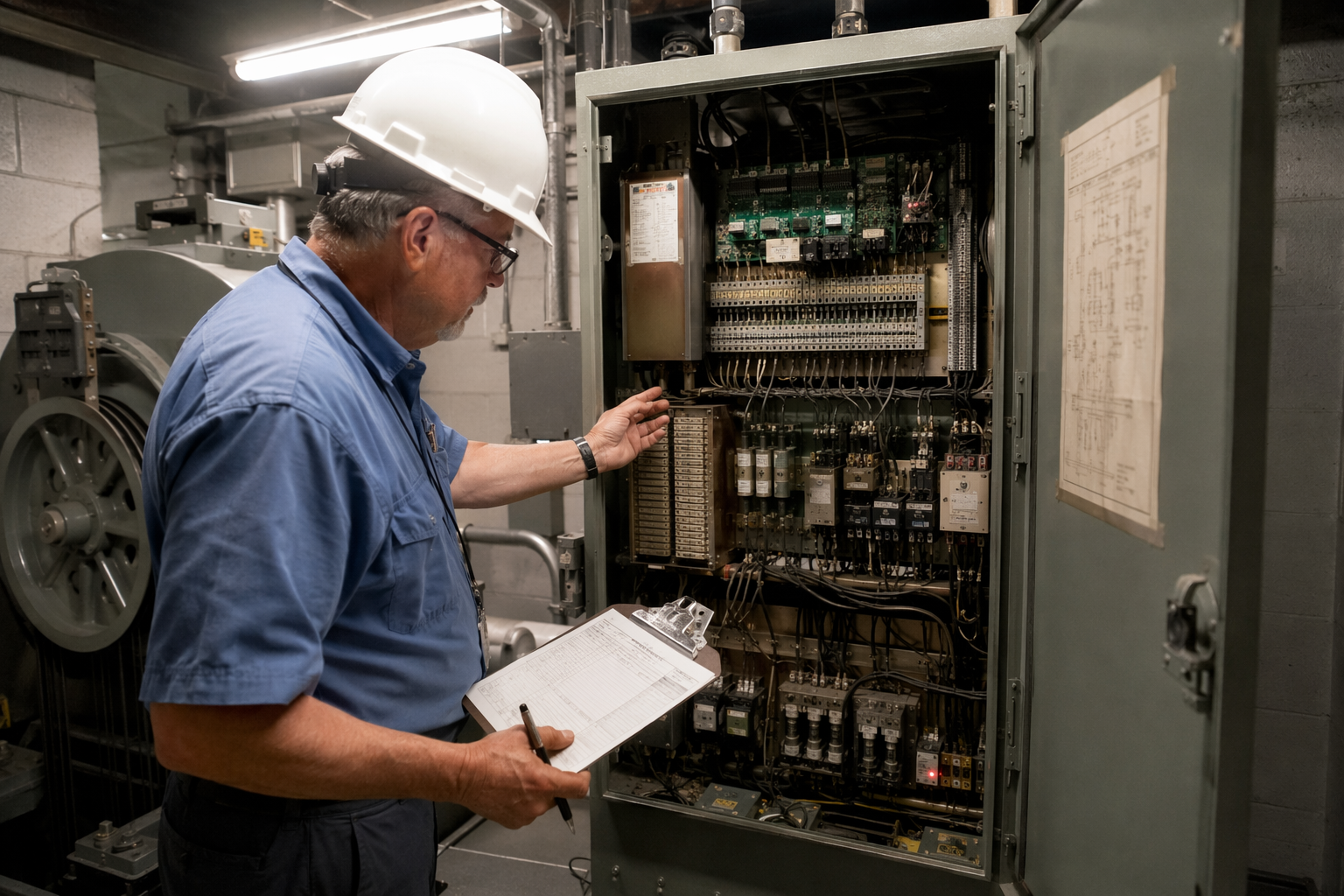
The American Society of Mechanical Engineers (ASME) first published the A17.1 Safety Code for Elevators and Escalators in 1921. The standard exists because elevator systems — combining high-voltage electrical systems, heavy mechanical components, and human occupancy in a confined, vertically moving cab — present serious life-safety risks when improperly designed, installed, or maintained.
The code is developed collaboratively by engineers, manufacturers, inspectors, code enforcement officials, and building industry representatives. It is revised on a regular cycle, and jurisdictions adopt specific editions into law. As of 2026, many U.S. jurisdictions reference recent editions of the ASME A17.1 Safety Code for Elevators and Escalators, though the specific edition in force varies by state and local authority having jurisdiction (AHJ).
Florida’s elevator safety program is administered at the state level, and the Florida Building Code references ASME A17.1 as the governing technical standard for elevator installations and alterations. This means non-compliance is not merely a best-practice failure — it is a statutory violation that can result in equipment shutdowns, fines, and civil liability.
—
What Does ASME A17.1 Actually Cover?
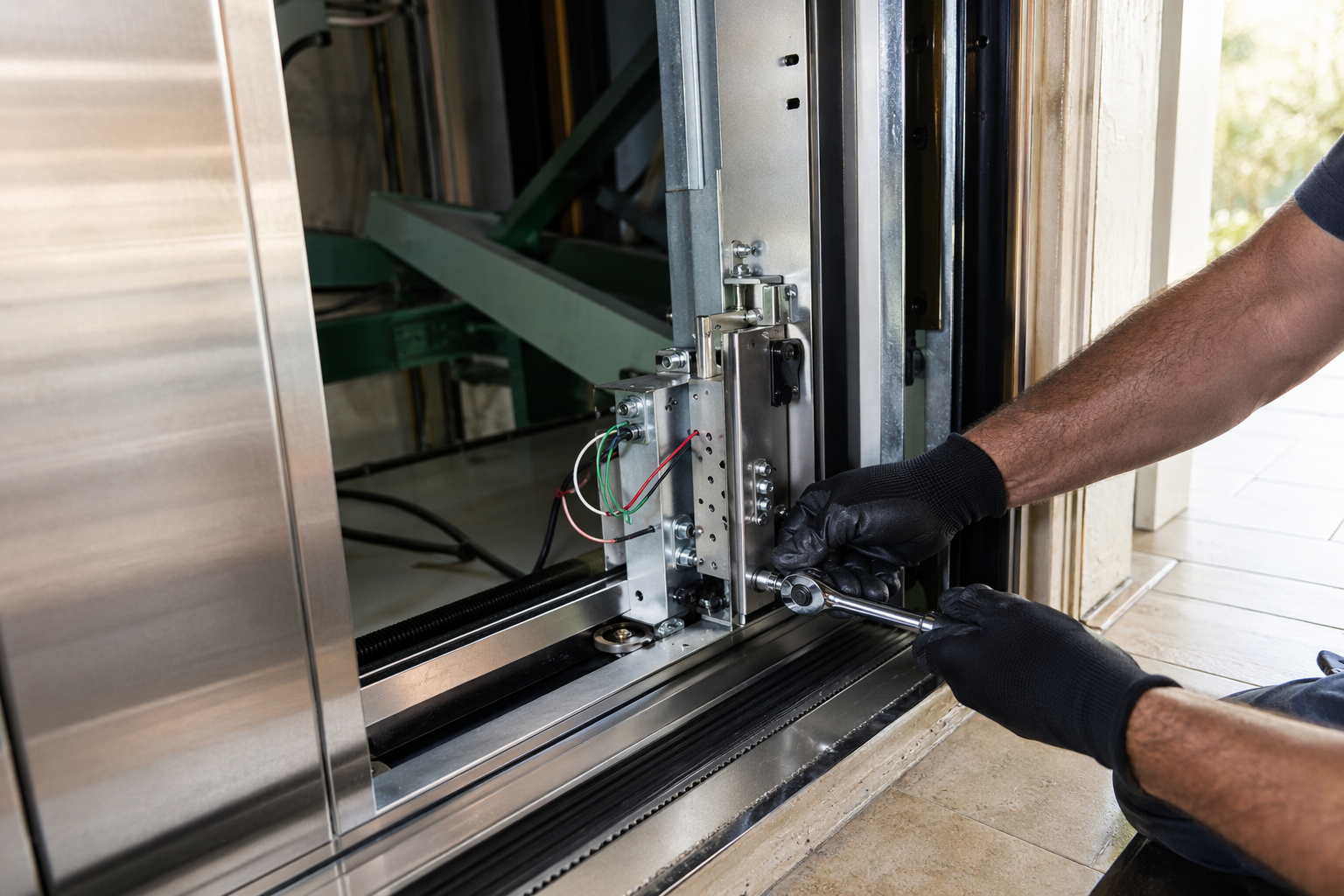
The code is comprehensive in scope. Its major subject areas include:
- Electric elevators — traction and winding drum types, including geared and gearless machines
- Hydraulic elevators — direct-plunger, in-ground, and roped-hydraulic configurations
- Escalators and moving walks
- Dumbwaiters and material lifts
- Platform lifts and stairway chairlifts
- Inspection and testing requirements — periodic, acceptance, and witnessing protocols
- Alterations — what triggers full code compliance when a system is modified
- Emergency operations — firefighters’ emergency operation, Phase I recall, Phase II in-car operation
- Seismic requirements — applicable in designated seismic zones
- Electrical equipment and wiring — in conjunction with the National Electrical Code
- Accessibility — the code works in conjunction with ADA Standards for Accessible Design for dimensional and operational requirements
Each of these areas contains prescriptive requirements — specific measurements, load ratings, clearances, speeds, and material specifications — that leave little room for interpretation when applied correctly.
—
How Does ASME A17.1 Apply to Florida Elevator Owners?
In Florida, the Department of Business and Professional Regulation (DBPR) oversees elevator safety through its Elevator Safety Unit. That unit enforces requirements derived from the Florida Building Code, which incorporates ASME A17.1 by reference. Every conveyance — the legal term Florida uses for elevators, escalators, and related equipment — must be registered, inspected, and certified to operate legally.
Building owners bear primary legal responsibility for maintaining their conveyances in compliance with the adopted edition of ASME A17.1. This responsibility does not transfer to the elevator service contractor, though contractors play a critical role in achieving and maintaining that compliance.
Axxiom Elevator Florida works with building owners, property managers, and facility directors across the state to interpret how ASME A17.1 requirements apply to their specific equipment and jurisdiction, helping close compliance gaps before an inspection identifies them as violations.
—
What Are the Key Inspection and Testing Requirements Under ASME A17.1?
The ASME A17.1 Safety Code for Elevators and Escalators establishes two primary categories of inspection and testing:
Periodic Inspections
Periodic inspections are routine examinations conducted at intervals established by the AHJ — typically annually for most elevator types in Florida. These inspections assess general condition, safety device function, and code compliance without necessarily requiring a full load test.
Periodic Tests
Periodic tests involve operational testing of safety systems under load conditions. The code specifies different test types and intervals depending on elevator classification. For example, hydraulic elevators require testing of relief valves and pressure vessels, while traction elevators require governor and safety device tests. Some tests must be witnessed by a licensed inspector; others require a licensed elevator mechanic to perform and certify the work.
Acceptance Inspections and Tests
Before any new installation or major alteration can be placed into service, it must pass an acceptance inspection and test. This process verifies that the installation conforms to the code edition adopted by the jurisdiction and to the approved construction documents.
Florida law requires that inspections be performed by licensed elevator inspectors, and test results must be documented and retained. Building owners who cannot produce current inspection certificates on demand are operating out of compliance.
—
What Is an “Alteration” Under ASME A17.1 and Why Does It Matter?
This is one of the most misunderstood aspects of the code. Under ASME A17.1, an alteration is defined as any change to equipment, installation, or occupancy classification beyond ordinary maintenance and repair. When an alteration occurs, the affected components — and in some cases the entire system — must be brought into compliance with the currently adopted edition of the code.
This is critically important because many Florida buildings contain elevator equipment installed decades ago under earlier code editions. As long as the equipment remains in its original configuration and passes periodic inspections, it may legally operate under a grandfather provision. But the moment an alteration is made — even replacing a controller with a newer model — the code can require upgrades that go well beyond the scope of the original repair intent.
Common alterations that trigger compliance reviews include:
- Controller replacement or modernization
- Drive system upgrades (from relay logic to solid-state drives)
- Door operator replacements
- Safety device modernization
- Changes to speed or rated load
- Addition of new hoistway equipment
Facility managers planning any upgrade should consult with a qualified elevator contractor — such as Axxiom Elevator Florida — to understand the full compliance implications before work begins.
—
How Does ASME A17.1 Interact With the ADA?
The ASME A17.1 Safety Code and the Americans with Disabilities Act address different but overlapping concerns. ASME A17.1 governs the mechanical safety and operational standards of elevator equipment. The ADA governs accessibility — ensuring that elevator systems are usable by people with disabilities.
For elevators, the ADA Standards for Accessible Design specify requirements including:
- Minimum car dimensions
- Door width and timing
- Control panel height and button size
- Audible and visual floor indicators
- Braille and raised character signage
- Leveling accuracy (the elevator must stop within a defined tolerance of the floor level)
A building can be fully ASME A17.1 compliant and still violate the ADA, or vice versa. Both sets of requirements must be satisfied simultaneously. Buildings undergoing renovations should treat ADA elevator compliance as a separate checklist item from ASME A17.1 code compliance.
—
What Happens When an Elevator Fails an Inspection?
Step-by-Step: What to Do When an Elevator Fails Inspection in Florida
- Receive and review the violation notice. The inspector will issue a written report identifying specific code violations, referenced by code section. Read each citation carefully and note any distinction between immediate shutdown violations and corrective-action violations.
- Take the elevator out of service if required. Certain violations — particularly those affecting safety devices, door systems, or structural integrity — require immediate shutdown. Operating a condemned elevator in Florida is a statutory violation and a serious liability risk.
- Post required notices. Florida law requires that out-of-service notices be posted at elevator entrances when a conveyance is taken out of service.
- Contact a licensed elevator contractor immediately. The corrections must be made by licensed personnel. Document the scope of work needed against each specific citation.
- Obtain necessary permits for alterations. If the corrections constitute an alteration under ASME A17.1, permits must be pulled before work begins.
- Complete corrections and request re-inspection. After licensed technicians complete the corrective work, contact the AHJ to schedule a re-inspection or acceptance test as appropriate.
- Receive and retain the new certificate of operation. Once the elevator passes re-inspection, ensure the new certificate is posted in the elevator cab as required by Florida law.
- Review maintenance program to prevent recurrence. Work with your elevator contractor to identify whether the violation reflects a maintenance gap that needs to be addressed systematically.
—
What Are the Most Common ASME A17.1 Violations Found in Florida Buildings?
While specific violation frequency data varies by jurisdiction and is not uniformly published, elevator inspection professionals consistently identify the following categories as recurring compliance issues in Florida commercial and residential buildings:
- Door system deficiencies — door reopening devices that are worn, misaligned, or fail to meet response requirements; retiring cam issues on older automatic door operators
- Emergency lighting and communication failures — battery backup systems that have degraded and no longer provide adequate illumination; two-way communication systems that are inoperative or do not connect to a monitored location
- Firefighters’ emergency operation non-compliance — Phase I and Phase II requirements that were not present on older equipment and were never retrofitted
- Pit conditions — water intrusion, inadequate lighting, missing or non-functional pit stop switches, and ladder deficiencies
- Governor and safety device testing gaps — required periodic tests that were not performed or not documented within the required interval
- Machine room conditions — unauthorized storage, inadequate temperature control, or missing required signage and equipment
- Leveling accuracy — hydraulic elevators in particular can develop leveling drift as cylinders age or fluid viscosity changes with Florida’s climate
—
How Does ASME A17.1 Address Elevator Modernization?
Modernization — the partial or complete replacement of elevator components to update an existing installation — is one of the most code-intensive activities in the elevator industry. The ASME A17.1 Safety Code for Elevators and Escalators contains specific provisions addressing what must be upgraded when modernization work is performed.
Modernization projects typically affect:
- Controllers and relay logic replacement with programmable solid-state systems
- Door operators and related safety devices
- Drive systems (AC variable frequency drives replacing older motor-generator sets)
- Cab interiors — note that cab interior replacement alone may not trigger mechanical code upgrades, but must still comply with ADA accessibility standards
- Hydraulic power units and cylinders
The code requires that modernized systems meet current code requirements for the components replaced and, in many cases, for the systems those components interface with. A thorough pre-modernization code analysis — performed by or in coordination with a licensed elevator contractor — is essential to accurately scope and budget modernization projects.
Axxiom Elevator Florida supports building owners through code analysis, project scoping, permit coordination, and post-modernization acceptance testing support as part of its data-driven approach to elevator compliance.
—
What Are the Workplace Safety Obligations Under OSHA Related to Elevator Work?
While ASME A17.1 governs elevator equipment itself, OSHA — the Occupational Safety and Health Administration — governs the safety of workers performing elevator construction, inspection, maintenance, and repair. OSHA’s General Industry and Construction standards both apply depending on the nature of the work.
Key OSHA considerations for elevator work environments include lockout/tagout procedures when working on elevator machinery, fall protection in elevator pits and on top of cabs, confined space protocols for pit entry, and electrical safety standards for work in machine rooms and control panels.
Building owners and facility managers should verify that any elevator contractor working on their property has documented safety programs aligned with applicable OSHA requirements. This is both a legal obligation and a liability risk management consideration.
—
What Industry Trends Are Shaping ASME A17.1 Compliance in 2025–2026?
The elevator industry is navigating several converging trends that directly affect how ASME A17.1 compliance is approached in Florida and nationally:
Remote monitoring and predictive maintenance — Building automation systems increasingly integrate elevator performance data, allowing condition-based maintenance approaches. While ASME A17.1 still requires periodic inspections and tests on prescribed schedules, remote monitoring can help identify developing issues between inspection cycles, reducing the likelihood of code-violating failures.
IoT-enabled safety systems — Newer elevator controllers incorporate connected safety systems that log operational data, door cycle counts, and safety device activations. This data creates a more complete compliance record and may influence how future code editions address documentation requirements.
Aging equipment in Florida’s building stock — A significant portion of Florida’s commercial and multi-family residential elevator fleet includes equipment installed during the construction booms of the 1970s through 1990s. As this equipment ages, the gap between original installation standards and current ASME A17.1 requirements widens, creating mounting compliance and modernization pressure.
Code edition harmonization — The elevator industry continues to work toward greater alignment between ASME A17.1 and its Canadian counterpart standard (CSA B44), as well as with international standards, particularly as building systems become more globally sourced.
Sustainability and energy efficiency — While not yet fully codified in ASME A17.1, energy efficiency considerations are increasingly influencing modernization decisions, particularly the replacement of hydraulic systems with machine-room-less (MRL) traction systems and the adoption of regenerative drive technology.
—
How Much Does ASME A17.1 Compliance Cost?
There is no single cost figure that applies to ASME A17.1 compliance because the expenses depend entirely on the current state of the equipment, the edition of the code in force in the jurisdiction, the scope of any alterations or modernizations needed, and the type and age of the equipment involved.
Qualitatively, the primary cost drivers include: the volume of deferred maintenance that has accumulated, whether violations require immediate shutdown or can be addressed on a corrective timeline, whether identified deficiencies constitute alterations triggering broader code compliance, the availability and cost of parts for older equipment, and permit and re-inspection fees charged by the AHJ.
Building owners often find that proactive, ongoing maintenance programs produce lower total compliance costs over time compared to reactive approaches that allow deficiencies to accumulate until inspection. Axxiom Elevator Florida provides detailed assessment reporting that helps building owners and property managers understand the specific scope of work required for their equipment and plan for compliance costs on a structured basis.
—
Who Is Responsible for ASME A17.1 Compliance — the Building Owner or the Elevator Contractor?
Under Florida law and the framework established by ASME A17.1 itself, the building owner — or the property owner’s designated representative — is ultimately responsible for ensuring that conveyances under their control are maintained in compliance with the adopted code. The elevator service contractor is responsible for performing work correctly and in accordance with the code, but the legal obligation for compliance rests with the owner.
This distinction matters in enforcement contexts. If an elevator fails inspection, the citation is issued to the owner, not the contractor. Contracts with elevator service companies should clearly define what maintenance scope is covered, what inspection support is provided, and how code violations identified during inspections are handled and communicated.
—
How Can Building Owners Prepare for an Elevator Inspection Under ASME A17.1?
- Confirm your current certificate of operation is valid and posted. In Florida, an expired or missing certificate is itself a violation.
- Review your maintenance records. Inspectors may request documentation of maintenance performed, tests completed, and callbacks addressed. Gaps in records can raise questions even when the equipment itself is functional.
- Conduct a pre-inspection walk-through with your elevator contractor. A qualified technician can identify visible deficiencies — pit conditions, lighting, signage, cab interior — that are straightforward to correct before the formal inspection.
- Verify that emergency systems are operational. Test the emergency lighting, two-way communication, and firefighters’ operation controls and confirm they function correctly.
- Confirm machine room compliance. Machine rooms should be free of unauthorized storage, at appropriate temperature, properly lit, and clearly signed.
- Review any outstanding work orders or callback reports. Recurring issues that appear in service records but have not been resolved may indicate systemic problems that an inspector will identify.
- Know your equipment’s code history. Understand which edition of ASME A17.1 was in force when your equipment was installed, what alterations have been made, and what, if any, variance or exemptions apply.
—
Why Choose Axxiom Elevator Florida for ASME A17.1 Compliance Support?
Axxiom Elevator Florida operates as a data-driven elevator service provider serving Florida building owners, property managers, facility directors, and real estate professionals. The company’s approach to elevator compliance centers on thorough equipment assessment, accurate documentation, and clear communication about what ASME A17.1 requires for each specific installation.
Rather than offering generalized service, Axxiom Elevator Florida focuses on helping clients understand the specific compliance status of their equipment, the regulatory obligations they face under Florida law and the adopted edition of the ASME A17.1 Safety Code for Elevators and Escalators, and the practical steps — and realistic scope — required to achieve and maintain compliance.
For building owners facing modernization decisions, inspection preparation, violation corrections, or simply seeking a clearer picture of their elevator compliance posture, Axxiom Elevator Florida provides the technical grounding and code knowledge needed to make informed decisions.
—
Get a Free Elevator Assessment from Axxiom Elevator Florida
Compliance with the ASME A17.1 Safety Code for Elevators and Escalators is not a one-time event — it is an ongoing obligation that requires accurate knowledge of your equipment, your jurisdiction’s adopted code edition, and the current state of your maintenance program.
Contact Axxiom Elevator Florida for a free elevator assessment and get a clear, documented picture of your compliance status, your risk exposure, and the steps required to keep your conveyances safe, legal, and operational.
📞 Call us today:
Need elevator service you can rely on? Axxiom Elevator Florida is ready to help.