Elevator Safety Code Compliance: Complete Comparison and Decision Guide
Elevator safety code compliance is one of the most consequential responsibilities a building owner or facilities manager carries. Non-compliance can result in failed inspections, elevator shutdowns, liability exposure, and harm to the people who rely on vertical transportation every day. This guide breaks down every key decision factor — comparing compliance pathways, costs, timelines, and vendor types — so building owners across Florida can make confident, informed choices.
What Does Elevator Safety Code Compliance Actually Mean?

Elevator safety code compliance means that an elevator installation, modernization, maintenance program, and inspection record all satisfy the requirements of the governing code adopted by the applicable jurisdiction. In Florida, the primary reference standard is the ASME A17.1 Safety Code for Elevators and Escalators, which is updated on a regular cycle and adopted — sometimes with amendments — at the state or local level.
Compliance is not a one-time event. It is an ongoing obligation that encompasses:
- Periodic inspections by licensed elevator inspectors
- Timely correction of all cited deficiencies
- Accurate maintenance and service recordkeeping
- Accessibility compliance under the Americans with Disabilities Act (ADA)
- Worker safety obligations as outlined by OSHA for any service or construction activity
Compliance Pathways: How Do the Main Options Compare?
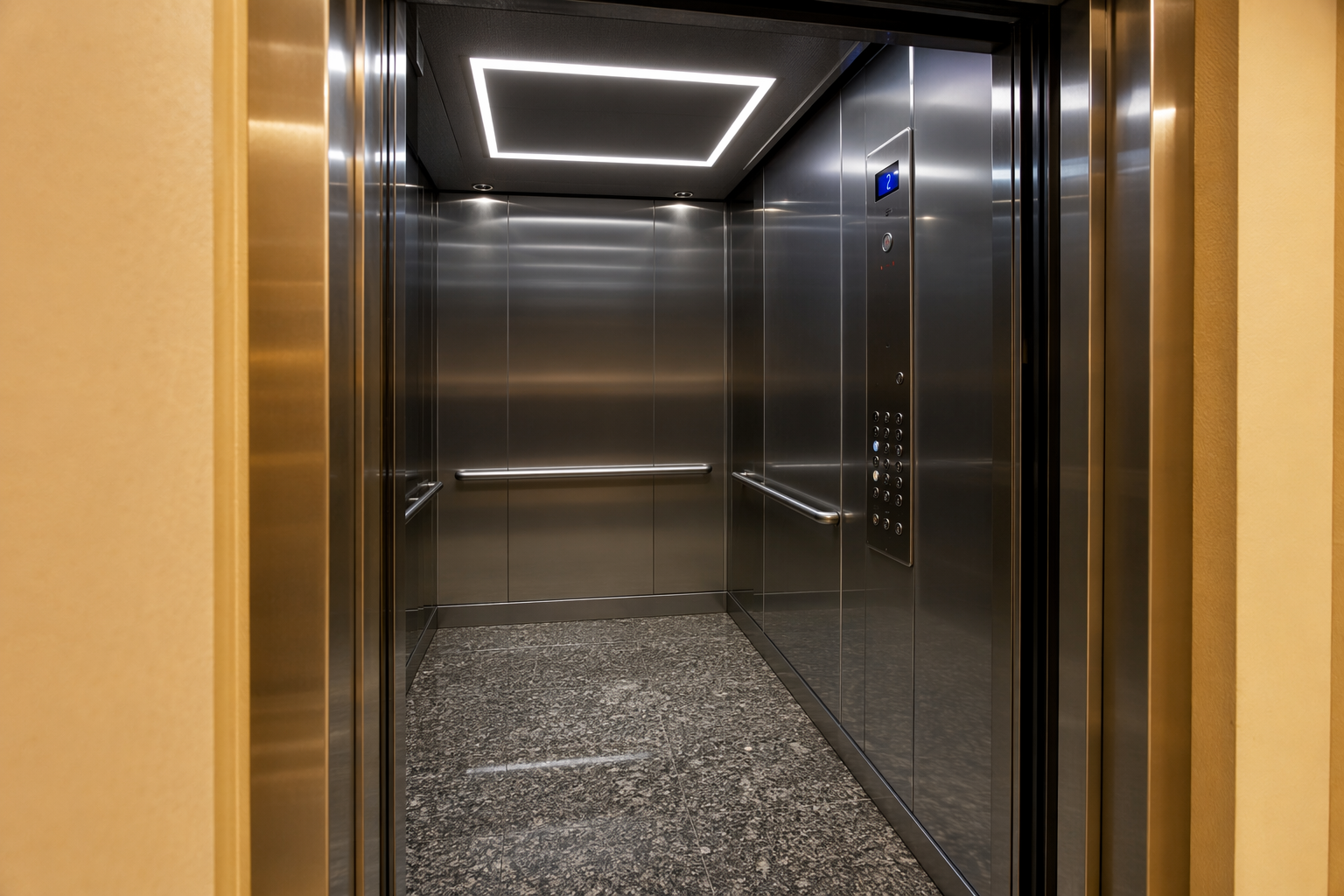
Building owners typically face three distinct compliance pathways. Understanding the differences — in scope, cost, disruption, and long-term value — is essential before making any decision.
| Pathway | Best For | Relative Cost | Typical Timeline | Compliance Coverage | Disruption Level |
|---|---|---|---|---|---|
| Proactive Maintenance Program | Elevators in good condition, within current code cycle | Low–Moderate (ongoing) | Continuous | Maintains existing compliance; prevents violations | Minimal |
| Targeted Code Upgrades | Elevators with specific cited violations or aging components | Moderate | Days to weeks per upgrade scope | Addresses cited deficiencies; brings specific systems to current standard | Low–Moderate |
| Full Modernization | Aging elevators, multiple violations, or obsolete control systems | High (one-time capital expense) | Weeks to several months | Brings entire installation to current code; maximizes longevity | Significant (out-of-service period required) |
Pros and Cons Comparison
| Pathway | Pros | Cons |
|---|---|---|
| Proactive Maintenance | Prevents costly violations; extends equipment life; predictable budgeting; minimal downtime | Does not address structural code gaps; insufficient alone for aging equipment |
| Targeted Upgrades | Cost-efficient for specific issues; faster than full modernization; resolves inspection failures | May not address underlying system obsolescence; piecemeal approach can accumulate costs over time |
| Full Modernization | Comprehensive code compliance; improved reliability and energy efficiency; resets inspection clock; enhanced passenger experience | Highest upfront investment; significant downtime; requires detailed project planning and permits |
What Are the Key Elevator Safety Codes and Standards in Florida?
Florida elevator compliance is governed by a layered framework of national standards and state-level rules:
- ASME A17.1 Safety Code for Elevators and Escalators: The foundational national standard covering design, construction, operation, inspection, testing, maintenance, alteration, and repair of elevators and escalators. Florida adopts this standard with amendments.
- ASME A17.3 Safety Code for Existing Elevators and Escalators: Applies specifically to elevators already in service, establishing retroactive safety requirements for aging installations.
- Americans with Disabilities Act (ADA): Mandates accessible elevator features including button heights, door timing, audible signals, and Braille markings for covered buildings.
- OSHA Standards: Governs safe work practices for elevator mechanics and technicians performing maintenance, repair, or modernization work.
- Florida Department of Business and Professional Regulation (DBPR): Administers elevator licensing, inspection, and enforcement in Florida. Jurisdictions may also have local amendments.
As of 2026, building owners should verify which edition of ASME A17.1 their jurisdiction has currently adopted, as code adoption cycles vary and local amendments can affect specific requirements.
What Happens During a Florida Elevator Inspection?
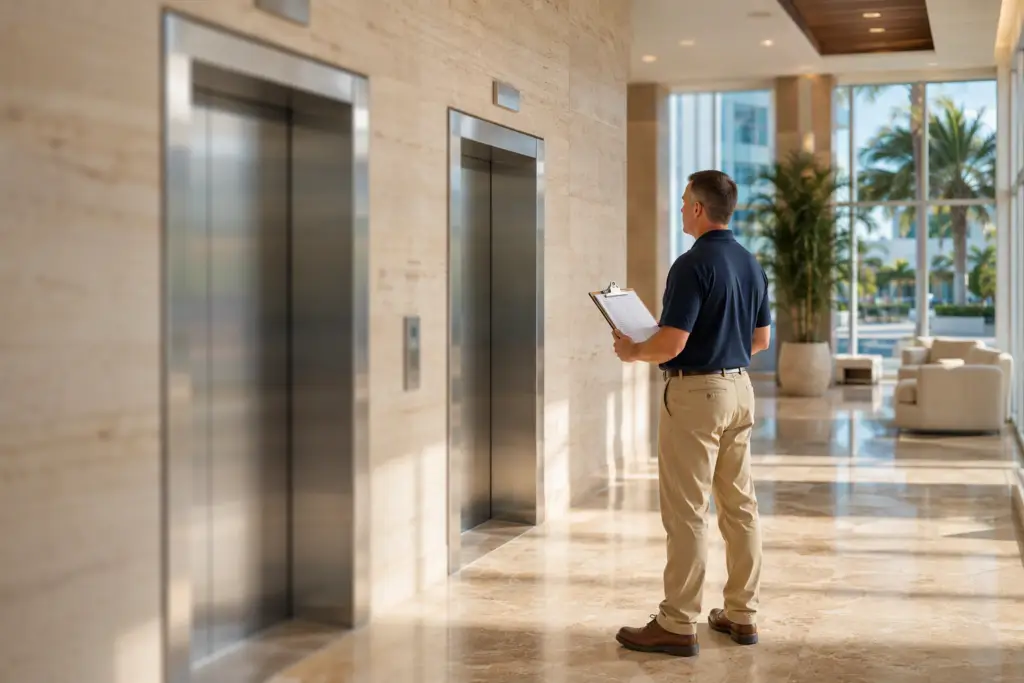
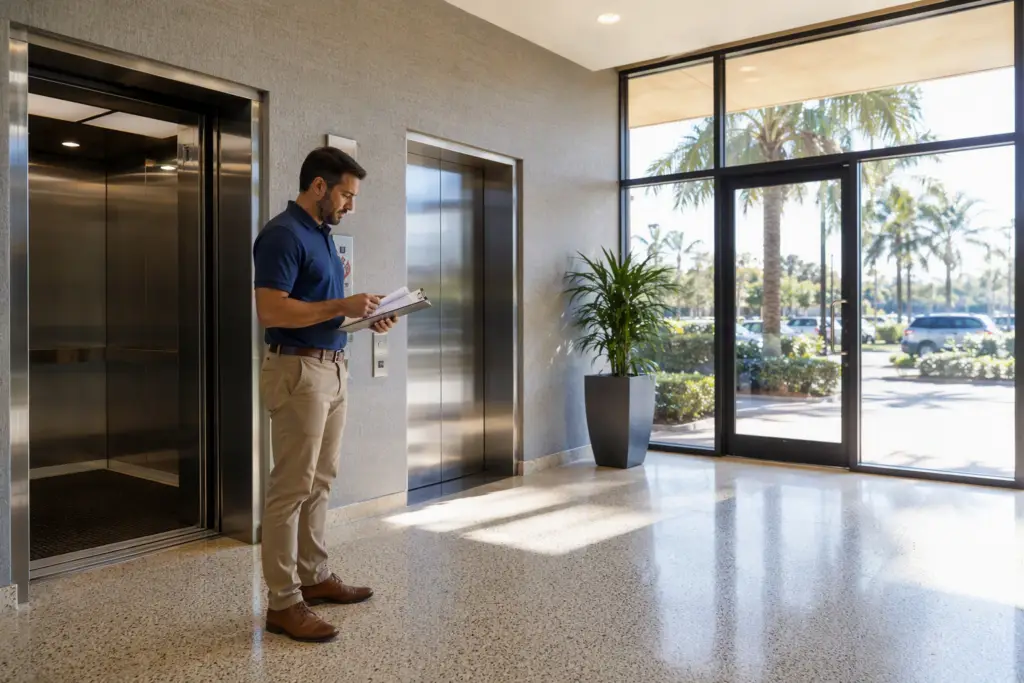
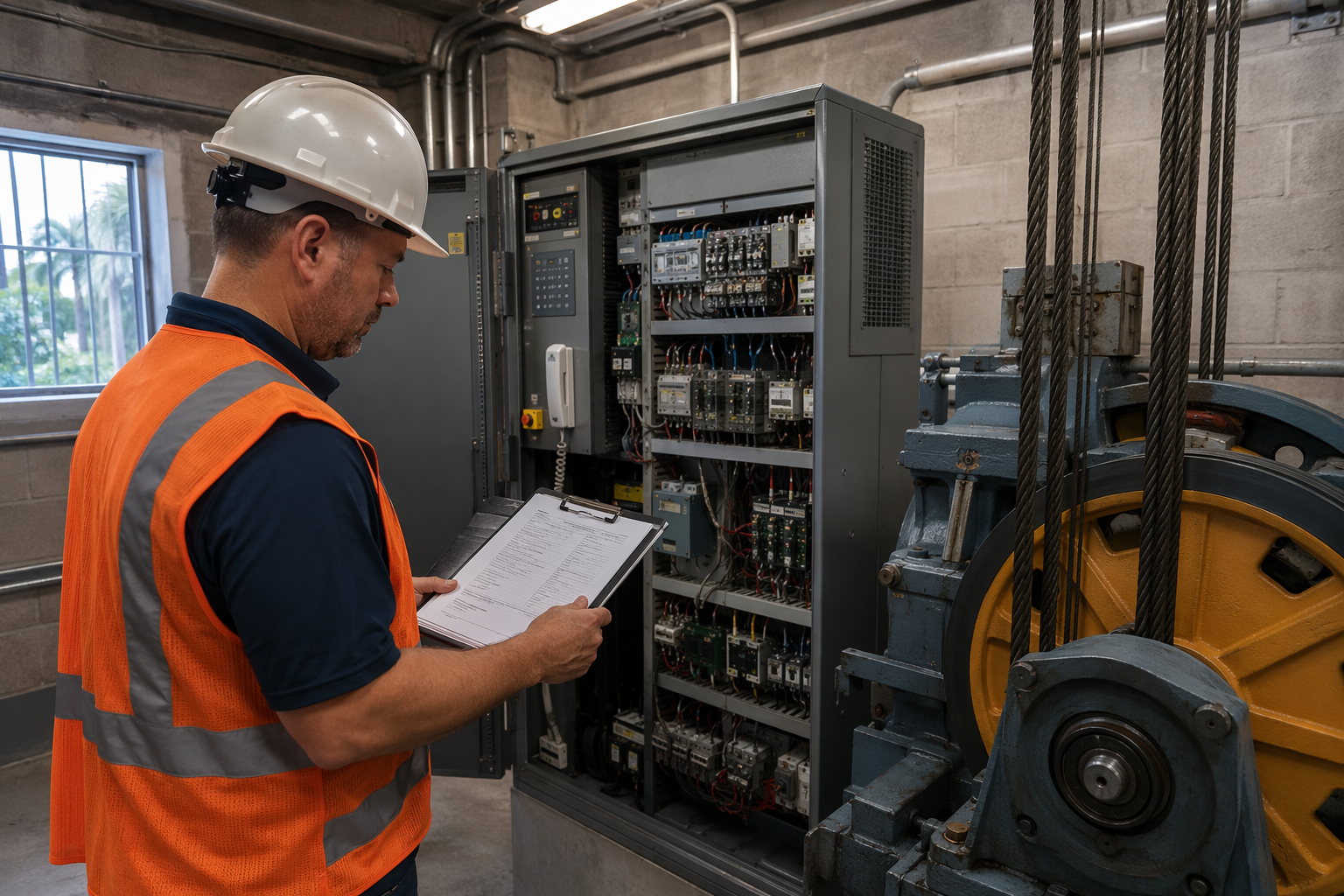
Florida law requires periodic inspections of elevators by a licensed elevator inspector. Inspections evaluate mechanical components, safety devices, electrical systems, emergency operations, and documentation. The inspector issues a certificate of operation upon satisfactory results, or a notice of violation requiring corrective action within a specified timeframe.
Key elements reviewed during an inspection typically include:
- Safety device functionality (governor, safeties, buffers)
- Door operation and interlock systems
- Emergency lighting and communication systems
- Load capacity and data plate accuracy
- Pit and machine room conditions
- Maintenance log currency and completeness
- ADA feature compliance
What Is the Step-by-Step Process for Achieving Compliance After a Failed Inspection?
- Obtain the violation report in writing. Request a detailed copy of all cited deficiencies from the inspector or the issuing authority.
- Prioritize safety-critical violations. Identify which items require immediate shutdown or pose an imminent hazard — these must be addressed before the elevator returns to service.
- Engage a licensed elevator service provider. Contact a qualified, state-licensed elevator company to assess the scope of corrective work needed.
- Obtain necessary permits. Many corrective upgrades and modernization scopes require permits from the Florida DBPR or local jurisdiction before work begins.
- Complete all required repairs or upgrades. Document every repair with service records, parts data, and technician sign-off.
- Schedule a re-inspection. Coordinate with the licensed inspector to verify that all cited violations have been corrected.
- Receive updated certificate of operation. Once the elevator passes re-inspection, the updated certificate should be posted in the elevator as required by law.
- Implement a proactive maintenance plan. Establish an ongoing service schedule to prevent future violations and sustain compliance.
How Does ADA Compliance Relate to Elevator Safety Code Requirements?
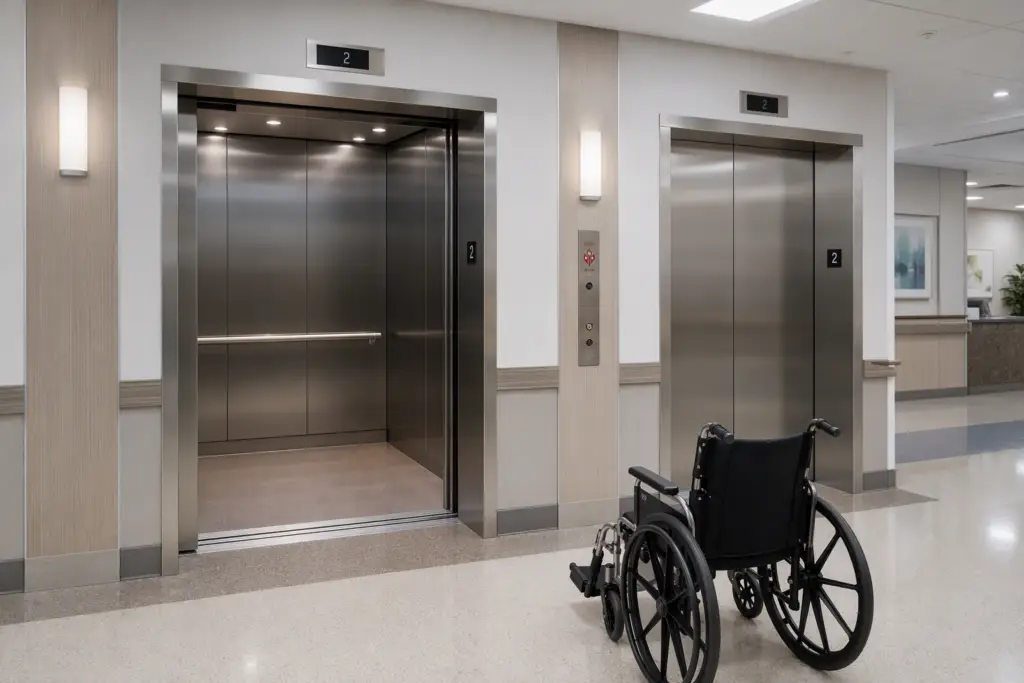
The ADA and the ASME A17.1 code address overlapping but distinct aspects of elevator compliance. ASME A17.1 governs mechanical safety and operational integrity. The ADA governs accessibility for people with disabilities and applies to facilities covered under Title II (public entities) and Title III (places of public accommodation and commercial facilities).
ADA elevator requirements commonly include:
- Minimum cab dimensions and door clear width
- Raised and Braille floor designations on call and car operating panels
- Door reopening devices sensitive to obstructions
- Audible and visible floor indicators
- Accessible two-way emergency communication
Failing ADA requirements does not automatically mean failing an ASME inspection, but both must be satisfied for full legal compliance. A comprehensive compliance assessment should evaluate both frameworks simultaneously.
Independent Service Provider vs. OEM Service Provider: Which Is Better for Compliance?
| Factor | Independent Service Provider | OEM / Manufacturer Service Provider |
|---|---|---|
| Equipment Brand Flexibility | Services multiple brands and equipment types | Primarily focused on proprietary brand equipment |
| Parts Sourcing | Access to multiple parts suppliers; often faster sourcing for older equipment | Proprietary parts; may have longer lead times for legacy systems |
| Cost Structure | Generally more competitive for multi-brand buildings | May carry premium pricing tied to proprietary contracts |
| Contract Terms | Typically more flexible; easier to exit or renegotiate | Often includes long-term exclusivity clauses |
| Code Knowledge | Must be current with all applicable codes regardless of brand | Code knowledge tied to their proprietary equipment ecosystem |
| Accountability | Local relationships; direct accountability to building owner | Accountability may be diluted through national service structures |
For multi-brand buildings, older equipment, or building owners seeking transparent contract terms, an independent, Florida-licensed elevator service company like Axxiom Elevator Florida is often the most practical and cost-effective choice for maintaining continuous safety code compliance.
What Are the Risks of Non-Compliance?
Elevator safety code non-compliance carries consequences that extend well beyond a failed inspection sticker:
- Mandatory shutdown: Authorities having jurisdiction (AHJs) can order an elevator out of service immediately if safety-critical violations are found.
- Liability exposure: A documented violation on record at the time of a passenger injury or incident significantly increases legal and financial risk for the building owner.
- Fines and penalties: Florida and local jurisdictions may impose monetary penalties for operating an elevator without a valid certificate of operation.
- Insurance implications: Some property and liability insurers may deny claims or increase premiums if non-compliance is demonstrated.
- ADA enforcement actions: Complaints filed under the ADA can result in Department of Justice investigations or private litigation.
How Often Must Florida Elevators Be Inspected?
Florida law mandates periodic inspections for elevators operating in the state. The ASME A17.1 Safety Code for Elevators and Escalators establishes inspection and test intervals as part of its maintenance and inspection requirements. Building owners should confirm the specific inspection frequency applicable to their equipment category and jurisdiction with their licensed elevator service provider and the Florida DBPR, as intervals can vary by elevator type, use, and local amendments.
In general, routine periodic inspections are required at least annually, with specific safety tests (such as full-load safety tests) required on defined multi-year cycles per the governing code edition adopted in their jurisdiction.
What Should Building Owners Look for When Choosing an Elevator Compliance Partner?
Selecting the right elevator service provider is a compliance decision in itself. Key criteria include:
- Florida state licensure: Verify that the company and its technicians hold all licenses required by the Florida DBPR.
- Multi-brand capability: The provider should demonstrate the ability to service the specific equipment installed in your building regardless of manufacturer.
- Code currency: Ask directly which edition of ASME A17.1 the provider’s technicians are trained to, and how they stay current with Florida amendments.
- Transparent recordkeeping: A compliant maintenance program requires thorough, date-stamped service logs. Confirm the provider delivers these as standard practice.
- No long-term lock-in clauses: Avoid proprietary parts lock-ins that limit your ability to work with other service providers in the future.
- Inspection coordination: The provider should have established relationships with licensed elevator inspectors and understand local AHJ requirements.
Axxiom Elevator Florida is an independent, Florida-based elevator service company providing compliance-focused maintenance, inspection support, targeted upgrades, and modernization services across the state. As an independent provider, Axxiom Elevator Florida services multiple equipment brands and works directly with building owners to navigate Florida’s regulatory environment without proprietary lock-in.
What Is the ROI of Investing in Proactive Elevator Compliance?
| Investment Type | Primary Risk Mitigated | Secondary Benefit | Time to Value |
|---|---|---|---|
| Proactive Maintenance Contract | Prevents inspection violations and emergency breakdowns | Extends equipment lifespan; reduces reactive repair costs | Immediate and ongoing |
| Code Upgrade (targeted) | Clears specific violations; restores certificate of operation | Reduces liability exposure; defers full modernization cost | Upon project completion |
| Full Modernization | Eliminates accumulated code gaps; resets compliance baseline | Energy efficiency; improved reliability; tenant satisfaction; property value | Medium-term (post-project) |
| ADA Accessibility Upgrades | Reduces ADA complaint and litigation risk | Broader building accessibility; compliance with federal law | Upon project completion |
The consistent finding across the elevator industry is that reactive compliance — waiting for an inspection failure before taking action — costs significantly more in aggregate than proactive investment. Emergency parts sourcing, expedited labor, fines, and operational downtime all carry costs that a structured maintenance program avoids.
Does Elevator Compliance Differ for Residential vs. Commercial Buildings?
Yes. The ASME A17.1 Safety Code for Elevators and Escalators contains specific requirements that vary by elevator type and use, including distinctions relevant to residential applications. Additionally, ADA requirements under the Americans with Disabilities Act apply differently to private residences versus commercial or public facilities.
In Florida, both commercial and residential elevators are subject to periodic state inspections. However, the specific code requirements, applicable editions, and local amendments can differ. Building owners of all property types — office buildings, multifamily residential, retail, hospitality, healthcare, and mixed-use — should have their specific compliance requirements reviewed by a licensed elevator service provider familiar with their jurisdiction.
How Do OSHA Requirements Apply to Elevator Work?
OSHA standards govern workplace safety for elevator mechanics and technicians performing maintenance, repair, construction, and modernization work. Relevant OSHA standards address lockout/tagout procedures, confined space entry (for pit work), electrical safety, and fall protection.
Building owners who contract elevator work have an indirect stake in OSHA compliance. Engaging a service provider whose technicians are trained and equipped to meet OSHA standards protects workers, limits building owner liability, and ensures that compliance work is performed safely and correctly.
Summary: Key Decision Factors for Elevator Safety Code Compliance
| Decision Factor | What to Consider |
|---|---|
| Equipment Age | Older equipment is more likely to have accumulated code gaps requiring targeted upgrades or modernization under ASME A17.3 |
| Current Inspection Status | Valid certificate of operation in place vs. open violations changes urgency and approach |
| Jurisdiction & Adopted Code Edition | Florida DBPR adoption and local amendments determine exactly which requirements apply |
| ADA Obligations | Building type and use determine which ADA accessibility standards must be met |
| Budget and Capital Planning | Proactive maintenance fits operating budgets; modernization is a capital project requiring advance planning |
| Service Provider Independence | Independent providers offer multi-brand capability and flexible contracts; critical for mixed-brand buildings |
| Risk Tolerance | Liability, insurance, and shutdown risk all increase with deferred compliance |
Ready to Confirm Your Elevator’s Compliance Status?
Elevator safety code compliance in Florida is complex, jurisdiction-specific, and consequential. Whether a building needs a compliance review, help resolving inspection violations, accessibility upgrades, or a full modernization assessment, working with an experienced, independent Florida elevator service provider is the right first step.
Contact Axxiom Elevator Florida for a free elevator assessment.
Call us today at to schedule your complimentary compliance review with a qualified elevator professional.
Need elevator service you can rely on? Axxiom Elevator Florida is ready to help.