Elevator Service Provider Comparison for Healthcare Facilities in Florida
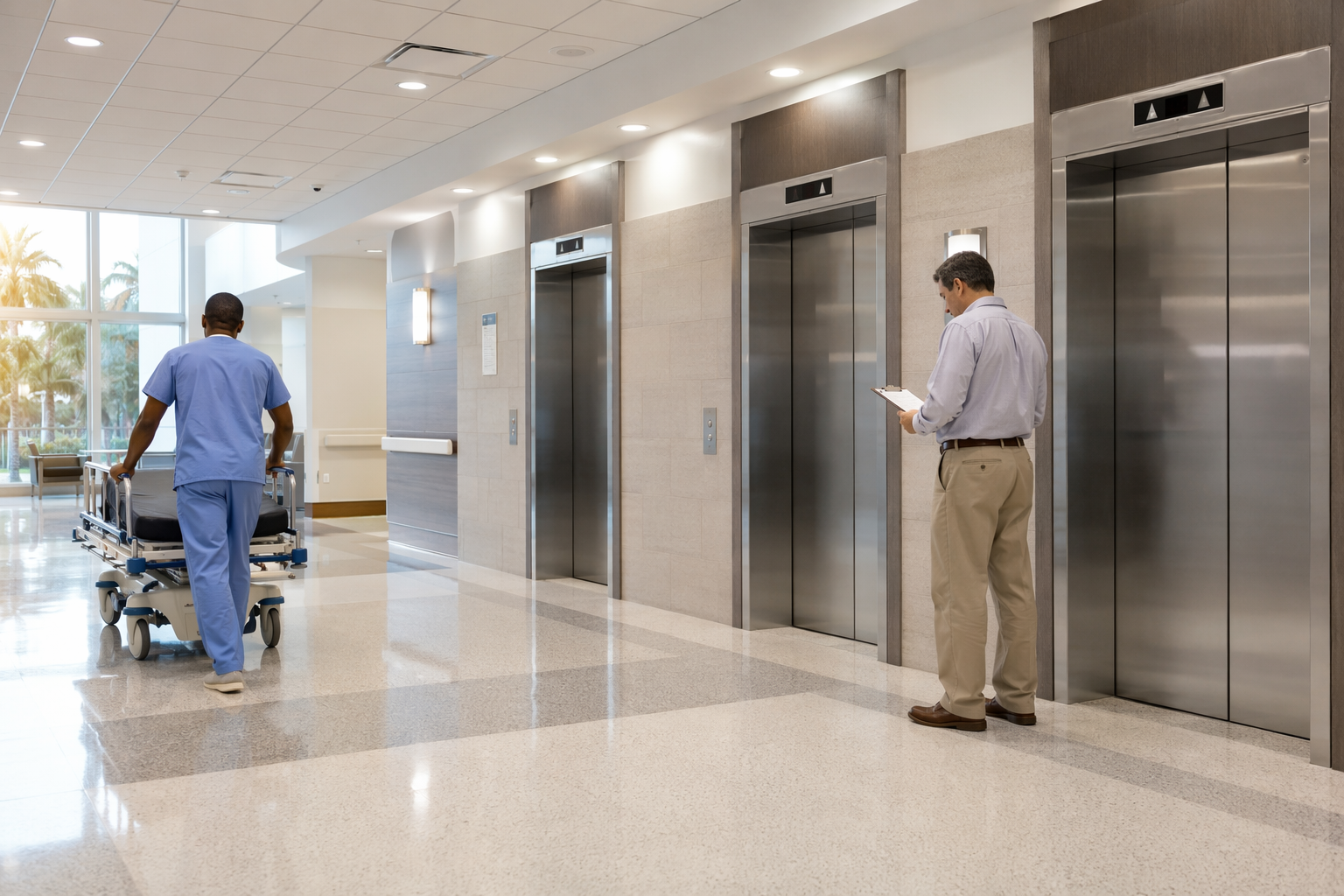
Healthcare facilities operate in one of the most demanding elevator environments imaginable. Patient transport, medical equipment movement, emergency evacuation, and the continuous flow of clinical staff all depend on elevators that perform without interruption. Choosing the wrong service provider can mean more than an inconvenience — it can compromise patient safety, trigger regulatory citations, and expose a facility to significant liability. This guide helps healthcare facility managers in Pompano Beach FL, Sarasota FL, and throughout Florida make an informed, side-by-side evaluation of elevator service providers.
What Makes Healthcare Elevator Service Different From Standard Commercial Service?
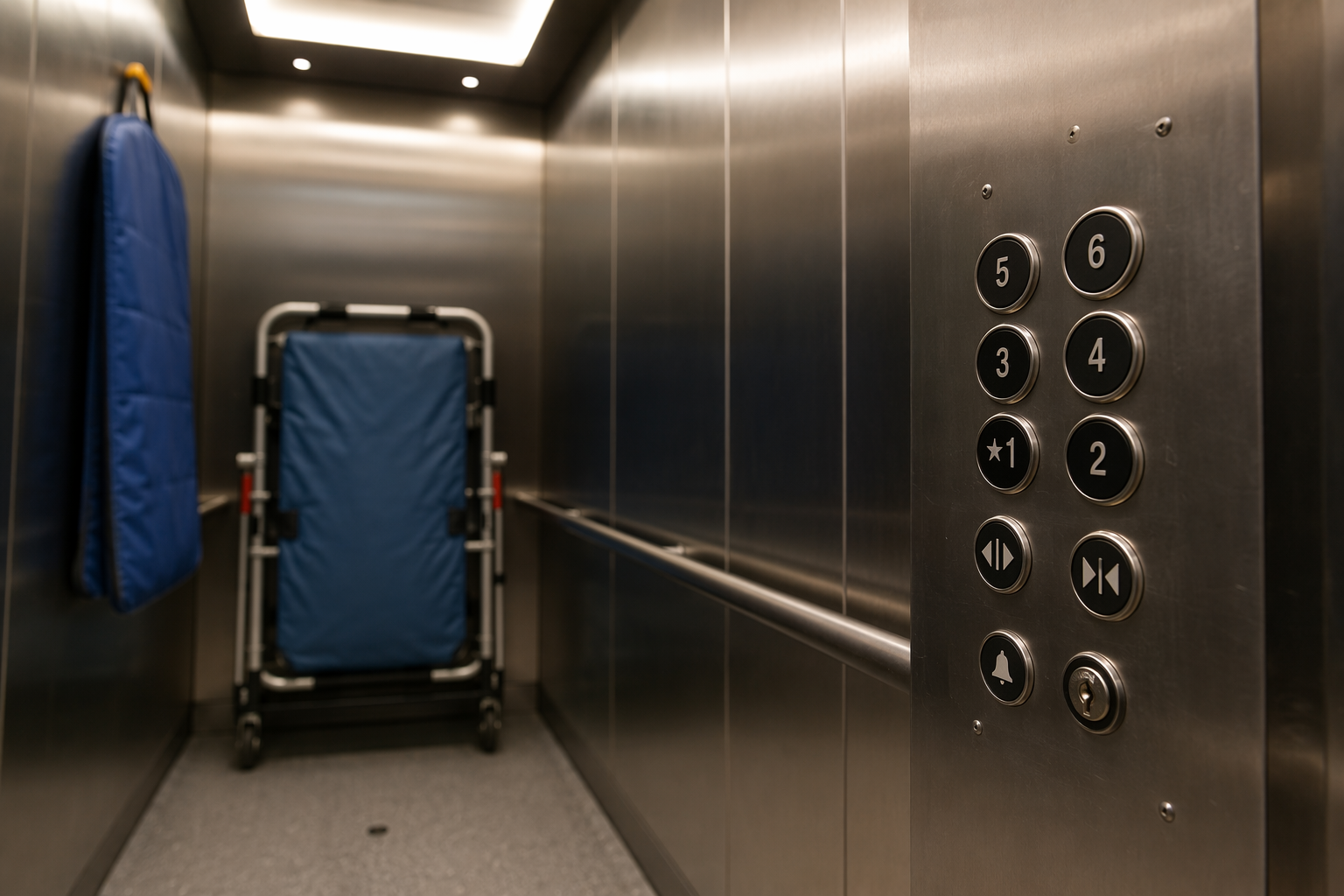
Healthcare elevators are subject to a layered compliance environment that goes well beyond what most commercial buildings face. Providers who primarily serve office buildings or retail centers may lack the specialized knowledge needed to keep hospital elevators operating safely and within code.
Key distinctions include:
- Continuous operational demand: Hospitals and assisted living facilities often require elevators to be available around the clock, every day of the year. Unplanned downtime in a clinical setting carries consequences that do not exist in typical commercial environments.
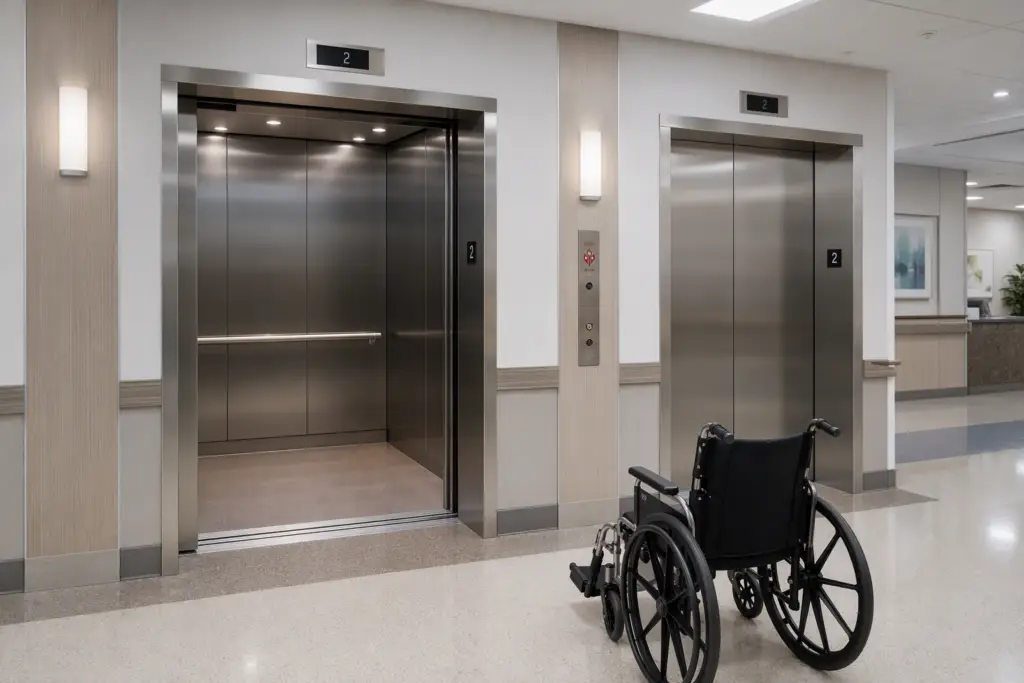
- Heavier load cycles: Hospital elevators transport stretchers, wheelchairs, supply carts, and large medical equipment, creating wear patterns that differ significantly from standard passenger traffic.
- Infection control requirements: Service technicians working in healthcare settings must follow facility-specific infection control protocols, including the use of personal protective equipment and compliance with sterile zone procedures.
- Emergency management integration: Healthcare elevators must coordinate with fire alarm systems, emergency power systems, and evacuation plans in ways that require a higher level of technical integration than typical installations.
Axxiom Elevator Florida serves healthcare clients in both Pompano Beach and Sarasota, providing elevator maintenance and inspection services calibrated to the unique demands of clinical environments.
Which Compliance Standards Apply to Healthcare Elevators in Florida?
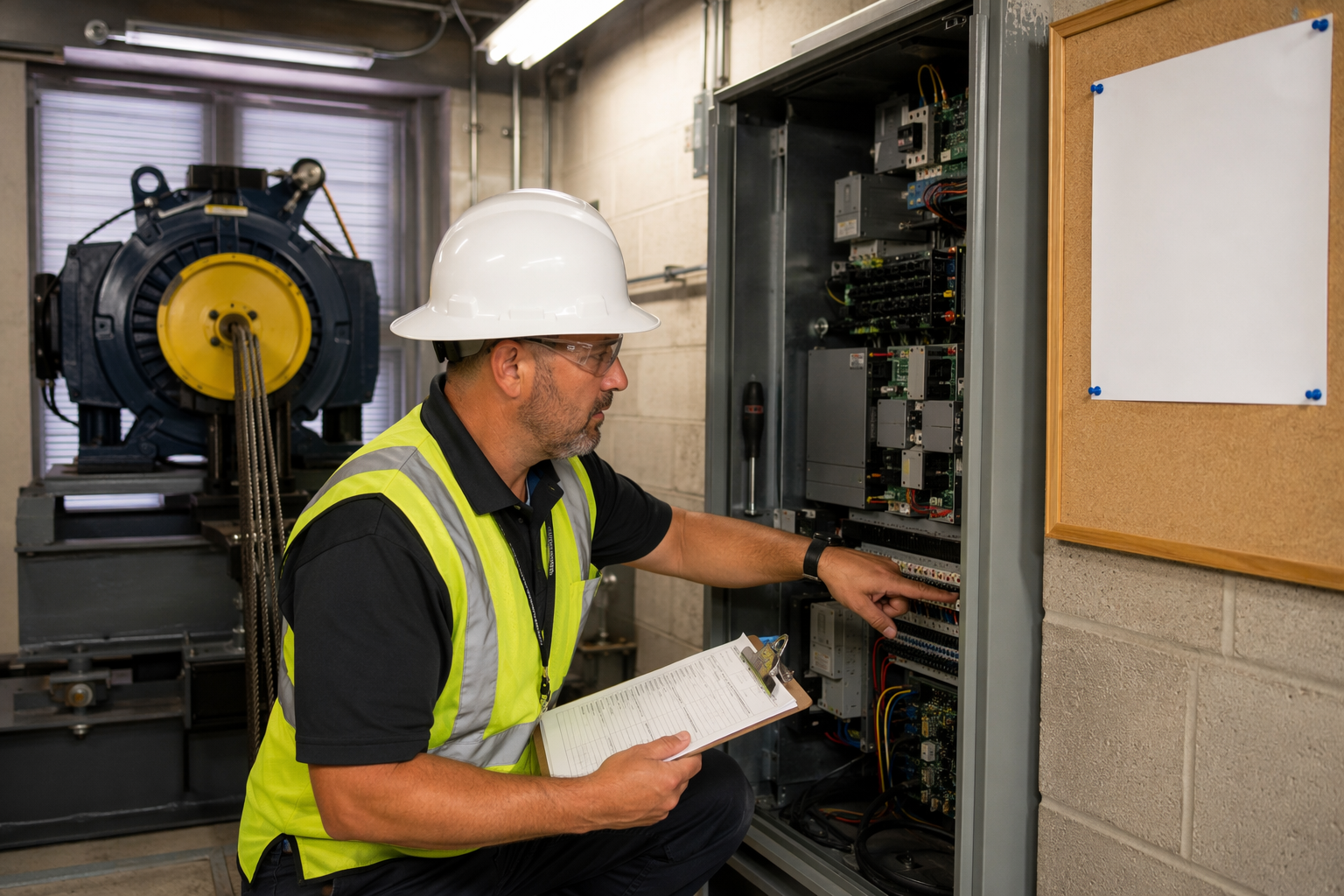
Healthcare facilities in Florida must navigate multiple overlapping regulatory frameworks. Any elevator service provider being evaluated should demonstrate clear familiarity with all of the following:
- ASME A17.1 Safety Code for Elevators and Escalators: This is the foundational national standard governing elevator design, installation, inspection, and maintenance. Florida enforces ASME A17.1 requirements through the Florida Department of Business and Professional Regulation (DBPR). Healthcare facilities should verify that any prospective provider performs maintenance and inspections in alignment with the current ASME A17.1 edition applicable in 2026.
- Americans with Disabilities Act (ADA): Healthcare facilities serve patients, visitors, and staff with a wide range of physical abilities. ADA compliance for elevators covers cab dimensions, door timing, floor leveling accuracy, audible and visual signals, and control panel specifications. Non-compliant elevators in a healthcare setting create both a legal and ethical risk.
- Florida Building Code — Mechanical: Florida’s adopted building code incorporates elevator-specific requirements that providers must understand alongside federal standards.
- Joint Commission Standards: For facilities seeking or maintaining Joint Commission accreditation, elevator equipment and service records may be reviewed as part of the Environment of Care standards. Providers must be able to supply complete, organized maintenance documentation on request.
- CMS Conditions of Participation: Facilities participating in Medicare and Medicaid programs operate under Centers for Medicare & Medicaid Services (CMS) requirements that include physical plant safety. Elevator maintenance records may be subject to CMS survey review.
- OSHA General Industry Standards: Technicians working in healthcare facilities must operate in compliance with OSHA safety requirements, and service providers should carry appropriate safety programs for their personnel working in clinical settings.
What Should a Healthcare Facility Look for When Comparing Elevator Service Providers?
A structured comparison should evaluate providers across several dimensions beyond price:
- Review documentation practices. Ask each provider to produce a sample maintenance log and inspection report. Healthcare surveyors expect organized, date-stamped records. Providers who cannot demonstrate clean documentation habits before a contract is signed are unlikely to improve afterward.
- Assess equipment-specific expertise. Identify the make, model, and age of every elevator unit in the facility, then ask prospective providers to describe their experience servicing that specific equipment. Generic answers are a warning sign.
- Evaluate code compliance knowledge. Ask each provider to walk through how they ensure ongoing alignment with the ASME A17.1 Safety Code for Elevators and Escalators and ADA requirements for healthcare environments specifically.
- Request references from healthcare clients. A provider with a verifiable history of serving hospitals, surgical centers, skilled nursing facilities, or medical office buildings is better positioned to understand your operational environment.
- Examine their parts sourcing and inventory approach. Healthcare elevators cannot wait weeks for parts. Ask providers how they source components and handle situations where a critical part is needed quickly.
- Clarify infection control compliance. Confirm that the provider’s technicians can and will comply with your facility’s infection control policies, including badging, escort requirements, and PPE use.
- Compare contract terms carefully. Service agreements vary widely. Look closely at what is included in preventive maintenance visits, what triggers additional billing, and how code-mandated inspections are handled.
How Often Must Healthcare Elevators Be Inspected in Florida?
Florida requires periodic inspections of elevators by state-licensed inspectors, with intervals established under the Florida statutes that adopt and reference ASME A17.1 standards. In a healthcare setting, the consequences of a failed inspection — or an unannounced survey finding an out-of-service elevator — are severe. Facility managers should ensure their service provider maintains a proactive inspection calendar and does not leave scheduling to chance.
Regular preventive maintenance visits, conducted per the ASME A17.1-referenced maintenance control program, are what keep elevators ready to pass inspections without emergency remediation.
What Are the Most Common Elevator Compliance Failures Found in Healthcare Facilities?
Healthcare facility managers comparing service providers should ask candidates how they address these frequently cited issues:
- Door timing that does not allow sufficient time for wheelchair or stretcher passage, creating an ADA compliance gap
- Floor leveling inaccuracies that create a tripping hazard for patients being transported or staff pushing medical carts
- Missing or illegible inspection certificates in the cab
- Non-functional or mis-calibrated emergency lighting and communication systems
- Failure to maintain a complete maintenance control program as required under ASME A17.1
- Outdated or missing emergency recall testing documentation
What Questions Should a Healthcare Facility Ask Every Elevator Provider During the Evaluation Process?
Use these questions as a consistent scoring rubric across all providers being evaluated:
- How do you document maintenance activities, and in what format are records provided to facility managers?
- How do your technicians handle infection control requirements when working in patient care areas?
- What is your process for managing a situation where a critical part is unavailable locally?
- How do you coordinate with our facilities engineering team during planned maintenance windows?
- What is your process for keeping our facility informed of any ASME A17.1 or ADA code updates that affect our equipment?
- Have you worked with facilities undergoing Joint Commission or CMS surveys, and can you provide documentation support?
- What happens if an elevator fails inspection and requires remediation — how is that handled within the service agreement?
Questions Your Inspector Will Ask
Whether the inspection is conducted by a Florida state elevator inspector or as part of a Joint Commission Environment of Care review, facility managers should be prepared to answer the following:
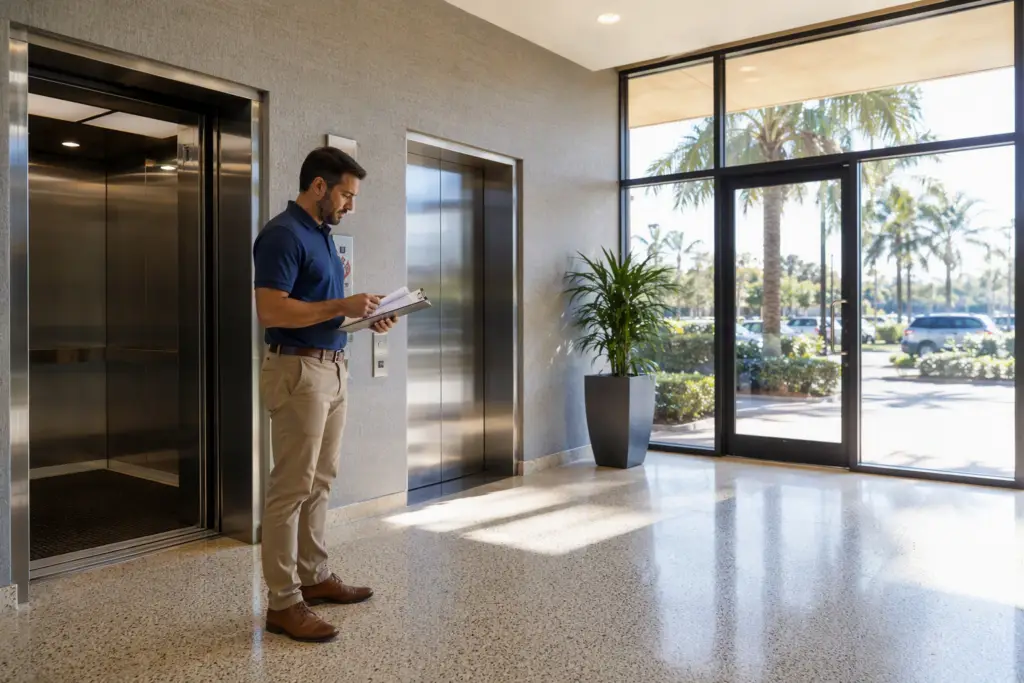
- Can you produce the current maintenance control program for each elevator unit? ASME A17.1 requires a written maintenance control program. Your service provider should supply and maintain this document.
- Are inspection certificates current and displayed in each elevator cab? Florida law requires current inspection certificates to be posted and visible.
- Is there a complete log of all maintenance visits, repairs, and parts replacements for each unit? Surveyors may request records going back multiple years.
- Has emergency recall mode been tested and documented within the required interval? Fire service recall is a life-safety function and is among the first items inspectors verify.
- Are cab dimensions, door timing, and floor leveling within ADA tolerances? This is especially scrutinized in healthcare settings where accessibility is directly tied to patient care.
- Is there documentation of any outstanding deficiencies and the corrective action plan? Inspectors look for evidence that the facility and its service provider actively track and resolve identified issues.
- Who is the responsible elevator service provider, and are they licensed in the state of Florida?
How Does Geographic Coverage Affect Service Quality for Florida Healthcare Facilities?
For healthcare facilities in Pompano Beach and Sarasota, local provider presence matters. A company with technicians already positioned in South and Southwest Florida is better able to support facilities without the delays that come when a provider must dispatch from a distant location. Axxiom Elevator Florida maintains a focus on Florida communities, which is a practical advantage for healthcare clients in both markets.
When evaluating out-of-state or nationally headquartered providers, ask specifically where their nearest technicians are based and how local dispatching decisions are made.
What Role Does Preventive Maintenance Play in Healthcare Elevator Reliability?
A reactive service model — waiting for something to break — is not compatible with healthcare operations. A well-structured preventive maintenance program, built around the maintenance control program required by ASME A17.1, identifies wear, misalignment, and component degradation before these conditions cause a failure or a failed inspection.
Healthcare facility managers comparing providers should request a sample preventive maintenance schedule and confirm that it covers all components included in the ASME maintenance control program for each unit type in the facility. A provider who offers a one-size-fits-all PM checklist regardless of equipment type may not be performing meaningful maintenance.
How Should a Healthcare Facility Evaluate Service Contract Terms?
Service agreements are not uniform across the elevator industry. Healthcare facilities should pay particular attention to:
- Scope inclusions and exclusions: Understand exactly which components and procedures are covered under the base contract versus billed separately.
- Inspection coordination: Confirm whether the provider coordinates and facilitates state-required inspections or whether that responsibility falls to the facility.
- Documentation delivery: Specify the format, frequency, and delivery method for maintenance records and inspection reports.
- Code update response: Define how the provider will communicate and address changes to applicable codes, including updates to ASME A17.1 editions adopted in Florida.
- Escalation procedures: Establish a clear escalation path for situations where an elevator is out of service and patient care is affected.
Axxiom Elevator Florida works with healthcare facility managers in Pompano Beach and Sarasota to develop service agreements that reflect the actual operational and compliance requirements of clinical environments, not generic commercial terms adapted after the fact.
What Should Healthcare Facilities in Pompano Beach and Sarasota Know About Local Code Enforcement?
Florida’s elevator inspection program is administered at the state level through the DBPR, but local jurisdictions may have additional requirements or inspection processes. Healthcare facilities in Pompano Beach operate within Broward County, and those in Sarasota operate within Sarasota County — each with its own permitting and inspection coordination environment. A service provider familiar with both markets reduces the administrative burden on facility managers by understanding local processes without requiring the facility to educate the provider.
Why Does the Choice of Elevator Service Provider Matter More in Healthcare Than in Other Sectors?
In retail or office environments, elevator downtime is an operational inconvenience. In healthcare, it can interrupt patient transport, delay medication delivery, impede staff movement in emergencies, and trigger findings during regulatory surveys. The provider evaluation process deserves the same level of rigor that healthcare organizations apply to selecting any other mission-critical vendor.
Axxiom Elevator Florida understands that healthcare clients are evaluating more than a maintenance contract — they are evaluating a partner who must perform reliably within a regulated, patient-centered environment. That distinction shapes how Axxiom Elevator Florida approaches service planning, documentation, and compliance support for healthcare accounts across Florida.
Take the Next Step: Get a Free Elevator Assessment for Your Healthcare Facility
Whether your facility is located in Pompano Beach, Sarasota, or elsewhere in Florida, a thorough elevator assessment is the right starting point for any service provider comparison. An assessment documents the current condition of your equipment, identifies any open compliance gaps, and gives you a clear baseline for evaluating what any provider — including your current one — is actually delivering.
Contact Axxiom Elevator Florida for a free elevator assessment:
Need elevator service you can rely on? Axxiom Elevator Florida is ready to help.