How to Switch Elevator Maintenance Companies: A Complete Guide
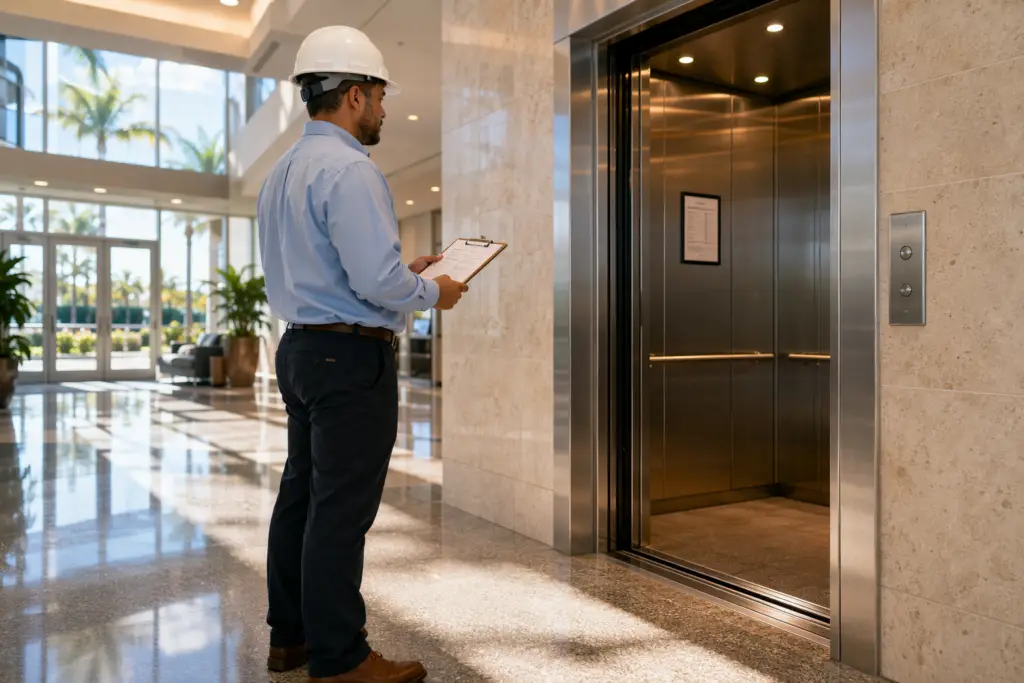
Switching elevator maintenance companies is a straightforward process when building owners and facility managers understand the contractual, regulatory, and logistical steps involved. Whether the motivation is poor response quality, rising costs, or a change in building management, this guide covers every aspect of a compliant, disruption-free transition — specifically for property owners in Pompano Beach, FL and Sarasota, FL.
What Are the First Steps to Take When Switching Elevator Maintenance Companies?
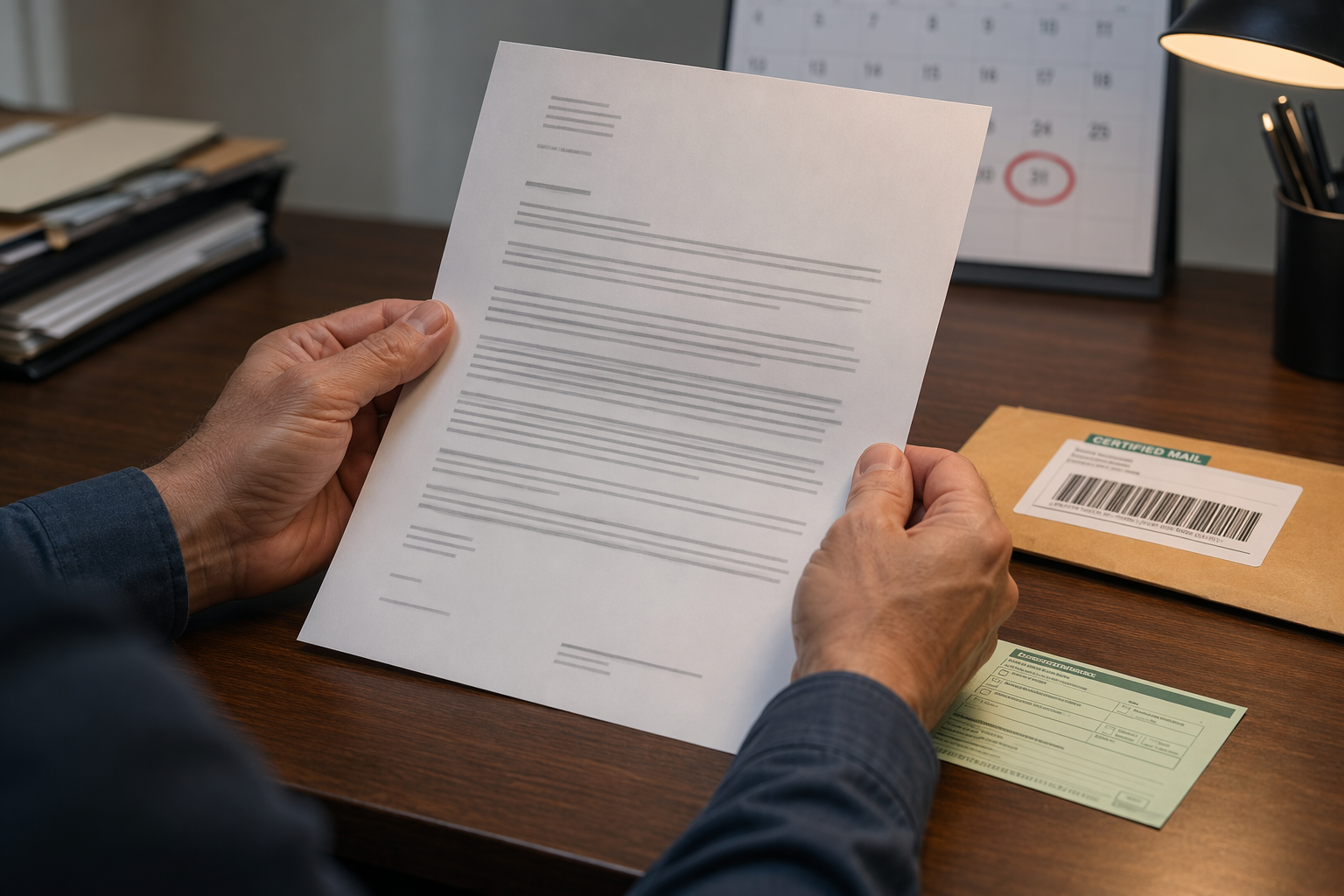
The first steps are to review your existing maintenance contract for termination terms, give proper written notice, and secure all equipment documentation before your current contract expires.
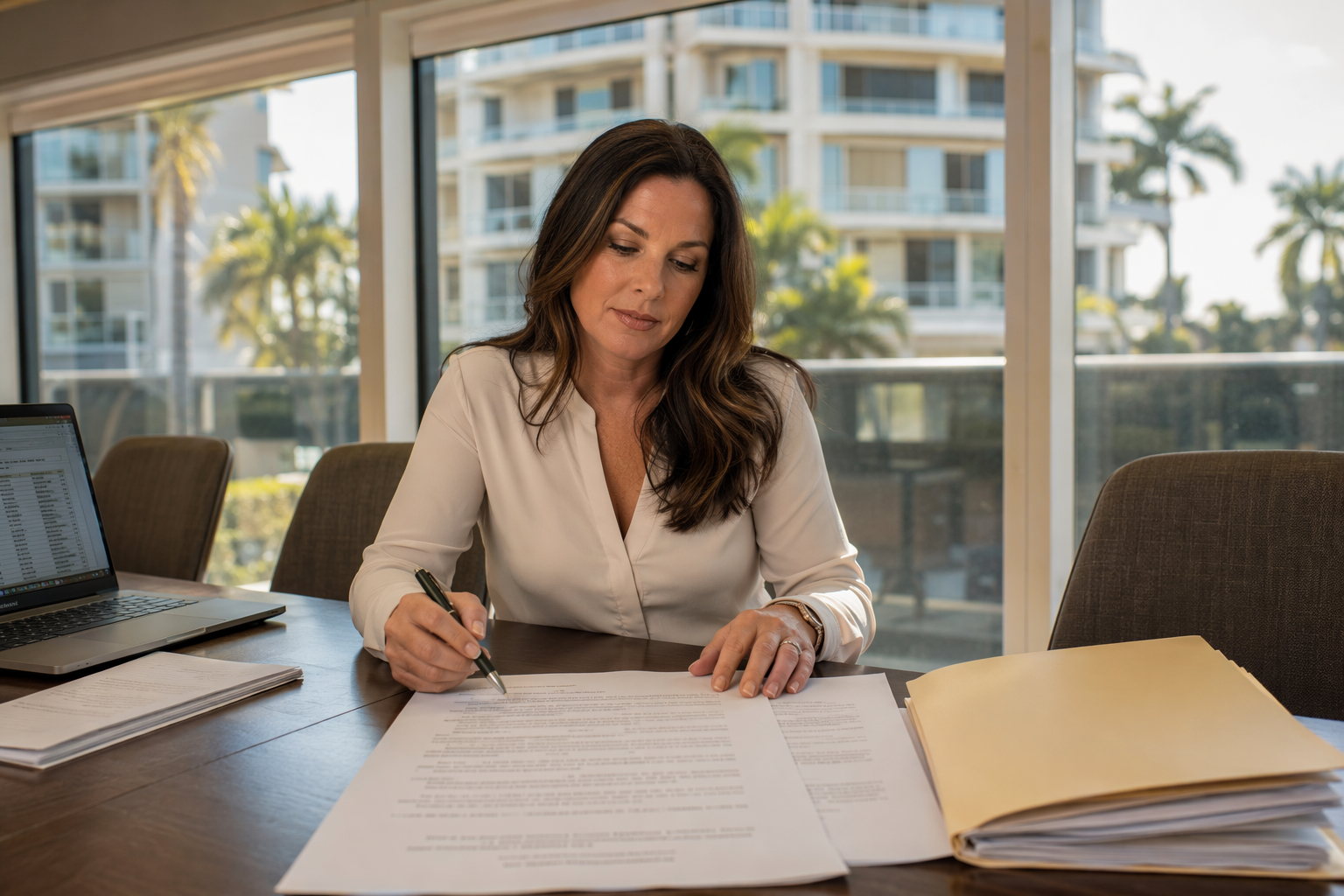
Before initiating any vendor change, facility managers should locate the original service agreement and read it carefully. Most elevator maintenance contracts include auto-renewal clauses, specific notice periods (commonly 30 to 90 days), and sometimes early termination penalties. Ignoring these provisions can result in financial liability or service gaps.
Once the contractual obligations are understood, the property owner or manager should send a formal written termination notice — certified mail is recommended — and request confirmation of receipt. Simultaneously, request a complete package of equipment records including maintenance logs, inspection certificates, violation histories, and any open work orders. These documents belong to the building owner and must be provided upon request.
How Much Notice Is Required to Cancel an Elevator Service Contract?
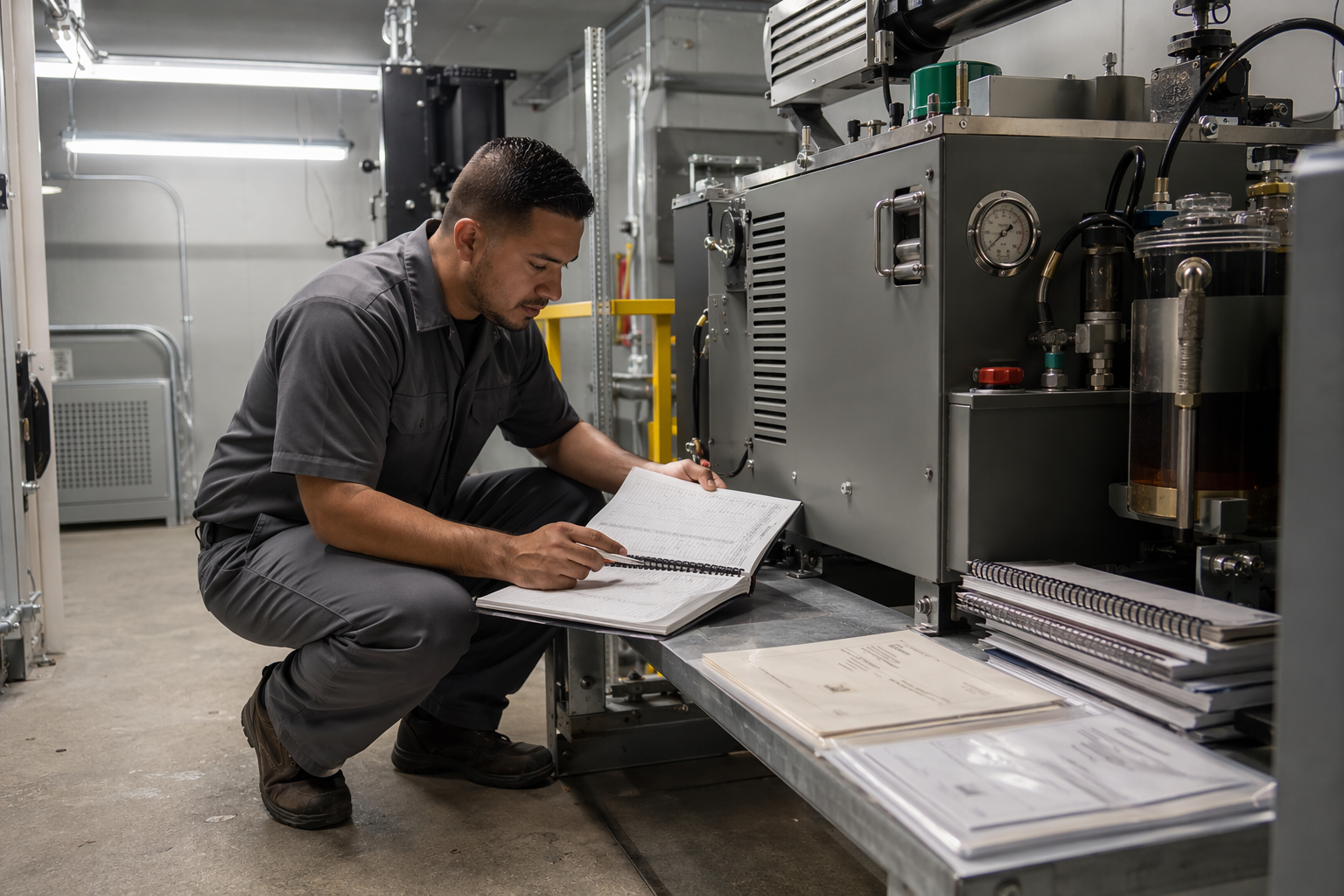
Most elevator service contracts require between 30 and 90 days’ written notice to cancel, though some agreements specify longer periods, so property owners must read their contract language precisely.
Notice period requirements vary widely among elevator service providers. Some national carriers include evergreen clauses that automatically renew the contract for another full term if notice is not provided within a strict window — sometimes 60 to 90 days before the renewal date. Missing this window can lock a building into another year or more of service.
When reviewing contract language, pay close attention to:
- The length of the notice period (days required)
- How notice must be delivered (written, certified mail, email confirmation)
- Whether early termination triggers a buyout clause or fee
- Automatic renewal provisions and their opt-out deadlines
If the contract language is ambiguous, consulting a commercial real estate attorney before sending notice is advisable.
What Documents Should a Building Owner Request From the Outgoing Elevator Company?
Building owners should request maintenance logs, inspection certificates, violation notices, wiring diagrams, equipment manuals, and a list of any pending repairs from the outgoing elevator service company.
These records are critical for a seamless transition. A new maintenance provider needs complete visibility into the equipment’s history to assess its current condition accurately and continue compliant service without gaps. The following documentation is essential:
- All state-required inspection certificates (Florida Department of Business and Professional Regulation filings)
- Maintenance logs showing dates of service, work performed, and parts replaced
- Any open or unresolved violation notices from the authority having jurisdiction (AHJ)
- Wiring diagrams, hydraulic schematics, and original equipment manufacturer (OEM) manuals
- Records of any modernization or major repair work performed
- Warranty documentation on recently replaced components
If the outgoing company refuses to provide these records, the building owner may need to contact the local AHJ or the Florida Department of Business and Professional Regulation to obtain copies of filed inspection reports.
How Do You Evaluate a New Elevator Maintenance Company Before Signing a Contract?
Evaluate a new elevator maintenance company by verifying state licensure, reviewing references, confirming technician training credentials, and comparing contract terms — including response commitments, parts sourcing, and compliance capabilities.
The selection process deserves as much rigor as any major vendor decision. Key evaluation criteria include:
- State Licensure: In Florida, elevator contractors must be licensed by the Florida Department of Business and Professional Regulation. Verify the prospective company’s license status before proceeding.
- Code Compliance Knowledge: The provider should demonstrate current knowledge of the ASME A17.1 Safety Code for Elevators and Escalators as well as applicable Florida state amendments.
- ADA Familiarity: Providers should understand Americans with Disabilities Act (ADA) requirements as they apply to elevator accessibility features.
- References and Local Experience: Ask for references from comparable properties in the same market — particularly in Pompano Beach or Sarasota if that is where the property is located.
- Contract Transparency: Look for clear, plain-language contracts with defined service scopes, parts and labor inclusions, and fair termination terms.
Axxiom Elevator Florida serves both the Pompano Beach and Sarasota markets and offers property owners a thorough pre-contract assessment of their elevator equipment prior to signing any service agreement.
What Does Florida Law Require for Elevator Maintenance and Inspections?
Florida law requires elevators to be inspected annually by a licensed elevator inspector, with maintenance performed by a licensed elevator contractor, in accordance with state statute and applicable editions of the ASME A17.1 Safety Code.
Florida Statute Chapter 399 governs the installation, operation, and maintenance of elevators and related conveyances. Under this framework:
- Elevators must be inspected at least annually by a licensed elevator inspector or an authorized third-party inspection agency.
- All maintenance, repair, and alteration work must be performed by or under the supervision of a licensed elevator contractor.
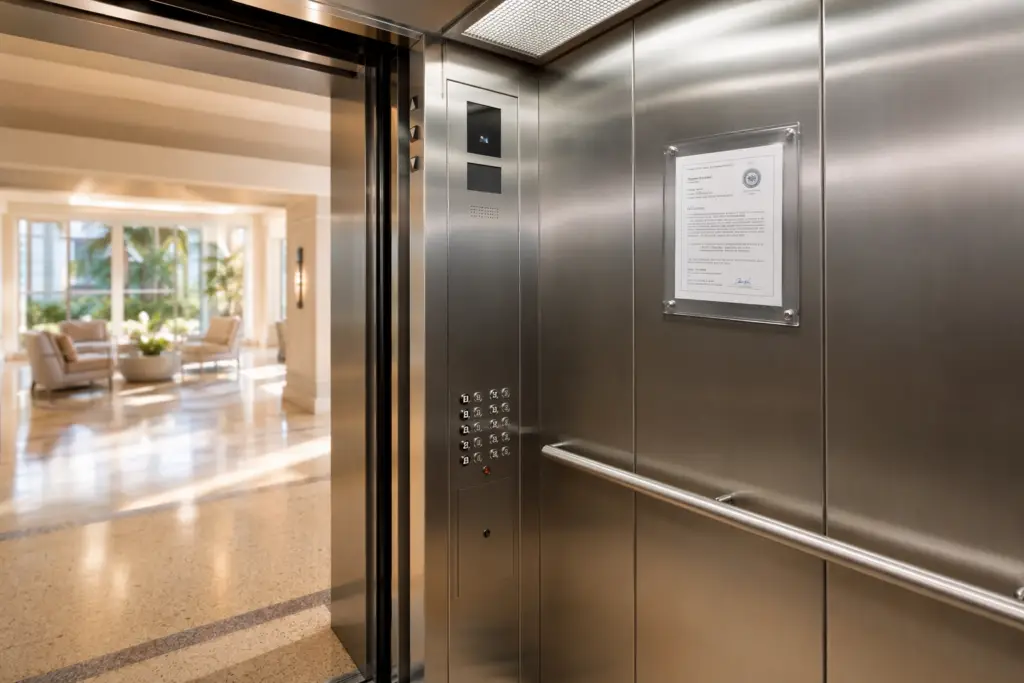
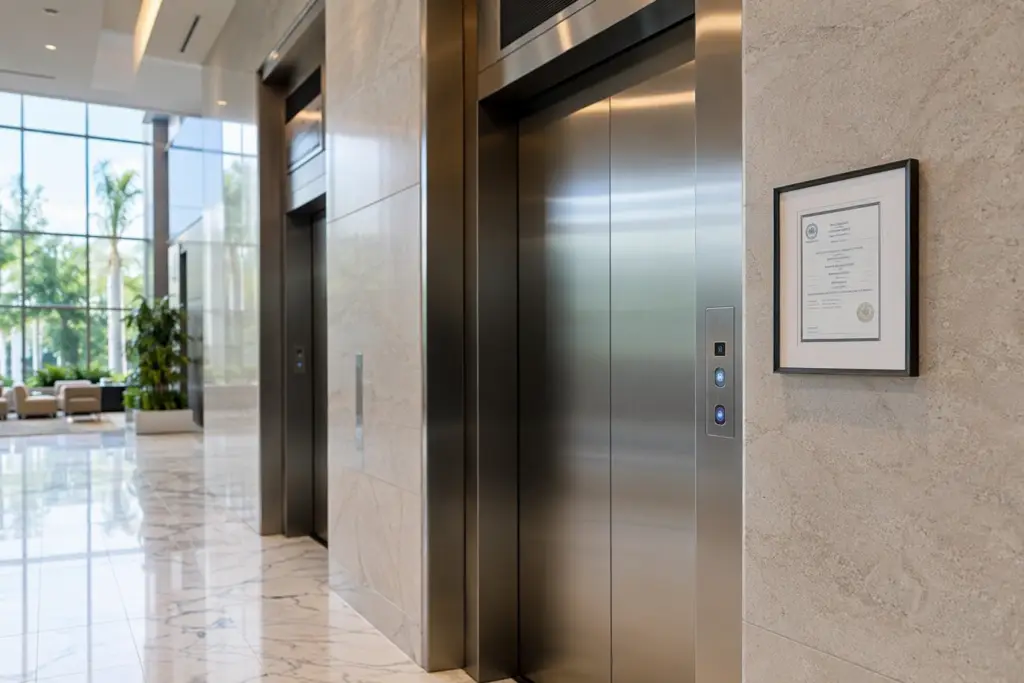
- Current inspection certificates must be posted in or near the elevator at all times.
- Owners are responsible for ensuring their equipment remains in safe operating condition between inspections.
When switching providers, there must be no gap in licensed maintenance coverage. A new contract should be executed and active before the outgoing provider’s agreement terminates to avoid any period of non-compliant operation.
What Is ASME A17.1 and How Does It Affect Elevator Maintenance Contracts?
ASME A17.1 is the nationally recognized safety code for elevators and escalators that defines maintenance, testing, and inspection requirements — and any qualified elevator maintenance company must perform its work in full conformance with this standard.
The ASME A17.1 Safety Code for Elevators and Escalators is adopted by reference in Florida and most U.S. jurisdictions. It specifies required maintenance tasks, intervals, testing protocols for safety devices, and documentation standards. When vetting a new provider, building owners should confirm that the company’s maintenance program aligns with the applicable edition of ASME A17.1 as adopted by the state of Florida in 2026.
Key ASME A17.1 maintenance requirements relevant to vendor transitions include:
- Periodic examinations and tests of safety devices including governors, safeties, and buffers
- Documented maintenance logs kept for the life of the equipment
- Proper testing of hydraulic elevator pressure-relief valves and lowering systems
- Routine lubrication, adjustment, and cleaning per manufacturer specifications
How Long Does It Take to Switch Elevator Maintenance Companies?
A typical elevator maintenance company transition takes between 30 and 90 days from initial notice to the outgoing provider to the new contract being fully active, depending on contractual notice periods and the complexity of the equipment.
The timeline is primarily driven by the termination notice period in the existing contract. Once notice is served, the transition process runs in parallel:
- Serve written termination notice to the outgoing provider.
- Request and compile all equipment documentation from the outgoing company.
- Issue an RFP or request proposals from qualified replacement vendors.
- Conduct site walk-throughs with shortlisted candidates.
- Review and negotiate the new service agreement.
- Execute the new contract with start date aligned to outgoing contract end date.
- Schedule a transition inspection with the incoming provider before or on day one of service.
Properties with older or non-proprietary equipment typically transition more smoothly, since multiple service providers can access parts and technical documentation without dependency on a single manufacturer’s proprietary systems.
What Is a Transition Inspection and Why Is It Important?
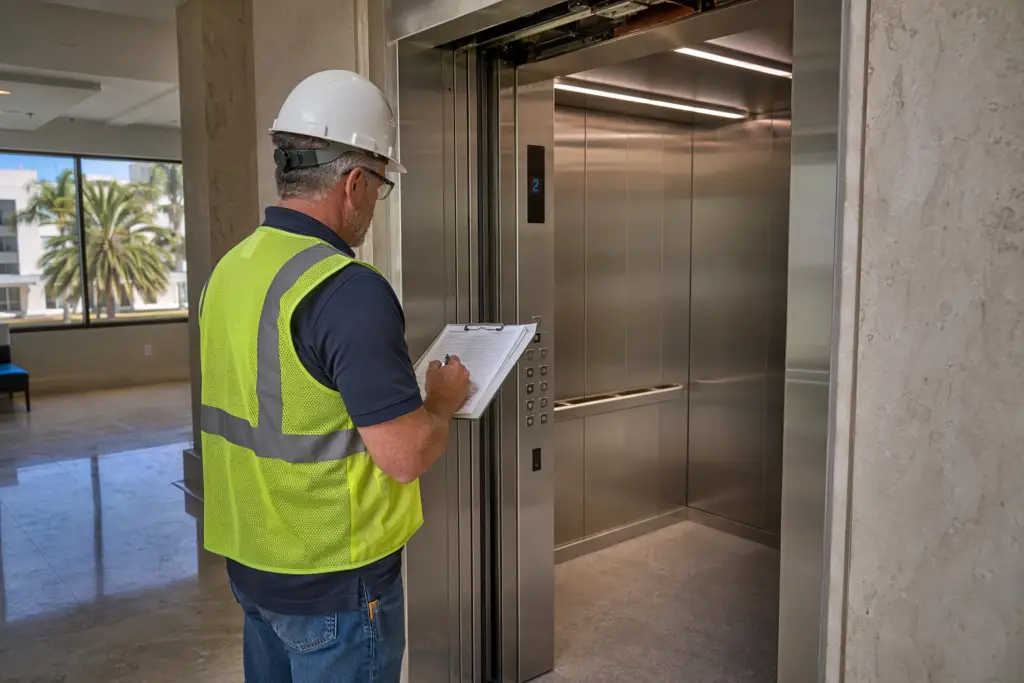
A transition inspection is a thorough mechanical and compliance review of elevator equipment conducted by the incoming maintenance company before assuming service responsibility, establishing a documented baseline of the elevator’s current condition.
A transition inspection protects both the building owner and the incoming service provider. Without it, the new company inherits liability for conditions it never assessed. The inspection should cover:
- All mechanical and electrical components relevant to safe operation
- Current compliance status against the applicable ASME A17.1 edition
- Condition of the cab interior, door operators, and landing fixtures
- Hydraulic system integrity (for hydraulic elevators)
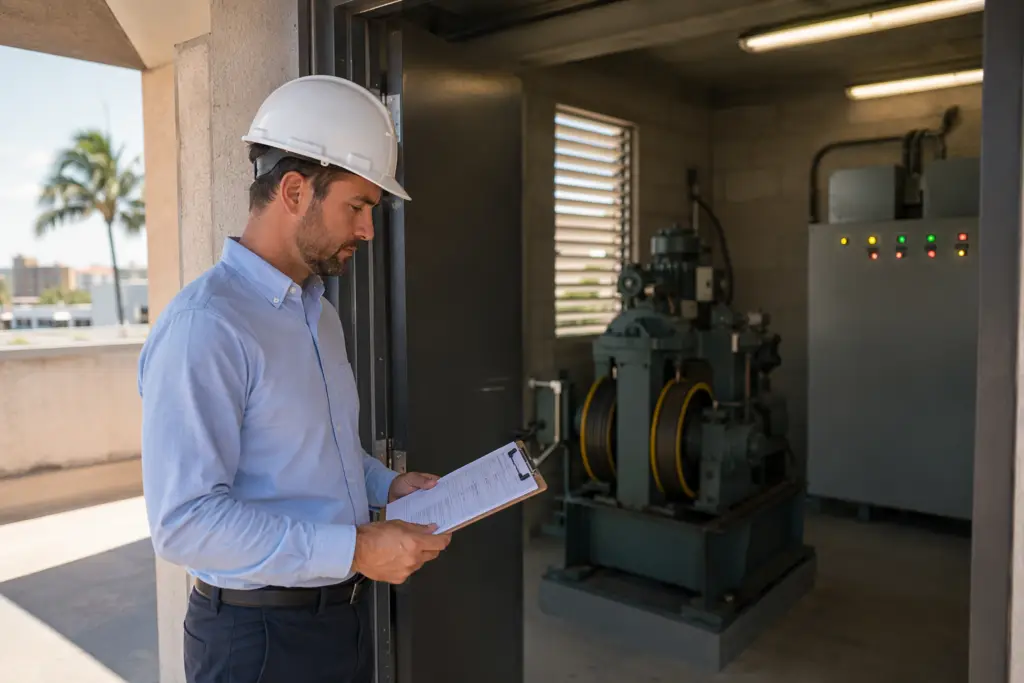
- Machine room and pit conditions including lighting, drainage, and housekeeping
- Any outstanding violations or deferred maintenance items
Axxiom Elevator Florida conducts detailed transition assessments for properties in Pompano Beach and Sarasota as part of the onboarding process, providing building owners with a written condition report before service begins.
Can a Building Owner Switch Elevator Companies Mid-Contract?
A building owner can switch elevator companies mid-contract, but doing so without following proper termination procedures may trigger early termination fees or legal disputes — making it essential to review contract terms before acting.
There are circumstances in which immediate termination may be justified regardless of contract terms, such as when the current provider creates an ongoing safety hazard, fails to maintain required licensure, or materially breaches the service agreement. In these cases, building owners should document the breach in writing, notify the provider formally, and consult legal counsel if the provider disputes the termination.
If the motivation for switching is dissatisfaction rather than a clear breach, negotiating a mutual early release is often the most efficient path. Many providers will negotiate an early exit rather than enforce penalty clauses against an unwilling client.
What Are Proprietary vs. Non-Proprietary Elevator Systems and Why Does It Matter When Switching?
Proprietary elevator systems use manufacturer-specific controls or components that only the OEM or authorized dealers can service, while non-proprietary systems can be serviced by any qualified licensed contractor — a critical distinction when evaluating your ability to switch providers freely.
Some major elevator manufacturers design their control systems so that diagnostic tools, replacement parts, or software access is restricted to their own service network. This proprietary lock-in can significantly limit a building owner’s ability to switch providers or negotiate favorable contract terms.
| Factor | Proprietary Systems | Non-Proprietary Systems |
|---|---|---|
| Parts Availability | Restricted to OEM or authorized distributors | Open market; multiple suppliers |
| Diagnostic Tool Access | Often requires manufacturer-specific tools | Standard tools usable by any licensed contractor |
| Number of Qualified Vendors | Limited — often only the OEM | Broad — any licensed elevator contractor |
| Negotiating Leverage | Low — few alternatives | High — competitive market |
| Transition Complexity | Higher — may require controller modernization | Lower — straightforward handoff |
| Long-Term Flexibility | Reduced | Maximum |
When considering a proprietary system switch, building owners may need to invest in a controller modernization to convert the system to non-proprietary components before a competitive service market becomes accessible.
What Questions Should You Ask a Prospective Elevator Maintenance Company?
Building owners should ask prospective elevator companies about their Florida licensure, technician training standards, ASME A17.1 compliance protocols, parts sourcing, and specific experience with the elevator brand and model installed in the building.
A rigorous vendor interview process protects building owners from underqualified providers. Recommended questions include:
- Is your company currently licensed as an elevator contractor in the state of Florida?
- How do your technicians stay current with ASME A17.1 code updates?
- Do you have experience servicing this specific elevator manufacturer and model?
- What is included in your standard maintenance agreement versus billed as extras?
- How do you handle emergency service calls and code-required testing?
- Can you provide references from comparable properties in Pompano Beach or Sarasota?
- What is your process for documenting maintenance and providing compliance reports to building owners?
- What are your contract termination terms?
How Does Switching Elevator Companies Affect ADA Compliance?
Switching elevator companies does not alter ADA compliance obligations, but a transition inspection is an opportunity to identify and remediate any accessibility deficiencies that may have been deferred by the previous provider.
The Americans with Disabilities Act (ADA) requires that elevators serving multiple floors in public accommodations and commercial facilities meet specific accessibility standards, including requirements for cab dimensions, control panel heights, audible and visual signals, and Braille markings. These obligations belong to the property owner regardless of which maintenance company is under contract.
A transition is a natural point to conduct an ADA compliance audit. If the previous provider deferred accessibility-related maintenance or repairs, the new contract should include a remediation plan with documented timelines.
What Happens to Inspection Certificates When You Switch Elevator Companies?
Inspection certificates are issued by licensed inspectors or the authority having jurisdiction and remain valid regardless of which maintenance company is providing service — but the new provider must be prepared to maintain compliance for the next scheduled inspection.
In Florida, the certificate of inspection is tied to the equipment and the building, not to the maintenance contractor. When switching providers, the existing certificate remains posted and valid until its expiration date. However, the incoming maintenance company should review the inspection record to understand:
- When the next annual inspection is due
- Whether any violations from the last inspection remain open
- What testing is scheduled (e.g., five-year full-load safety tests required under ASME A17.1)
Coordination between the outgoing provider, incoming provider, and the local AHJ ensures no compliance deadlines are missed during the transition period.
Are There OSHA Requirements That Apply to Elevator Maintenance Technicians?
Yes, OSHA regulations govern the safety of elevator maintenance technicians, including requirements for lockout/tagout procedures, fall protection, and confined space entry — all of which should be reflected in the service protocols of any qualified elevator maintenance company.
The Occupational Safety and Health Administration (OSHA) sets worker safety standards that apply to elevator mechanics performing maintenance, repair, and testing. When evaluating a new elevator company, building owners should confirm that the provider maintains documented safety programs covering:
- Lockout/tagout (LOTO) procedures to control hazardous energy during maintenance
- Proper pit and machine room access safety
- Fall hazard controls when working above hoistway entrances
- Confined space protocols where applicable
A vendor whose technicians do not follow OSHA-compliant safety procedures exposes the building owner to potential co-employer liability in addition to safety risks.
How Do Elevator Maintenance Contract Types Differ and Which Is Best for Your Property?
Elevator service contracts typically fall into four categories — oil and grease, examination, parts and labor, and full maintenance — with the appropriate choice depending on equipment age, budget, and risk tolerance.
Understanding contract structures helps building owners negotiate more effectively with both outgoing and incoming providers:
- Oil and Grease (O&G): The most basic coverage — routine lubrication and adjustments only. All parts and repair labor billed separately. Suitable for newer equipment under warranty.
- Examination Only: The contractor performs periodic inspections and identifies needed work, but all corrective work is billed as extras. Often the lowest upfront cost but highest unpredictability.
- Parts and Labor: Covers most replacement parts and associated labor, with exclusions for major components or modernization. A common mid-tier option.
- Full Maintenance: Comprehensive coverage including parts, labor, and often emergency service, with limited exclusions. Provides the most budget predictability for older equipment or high-use installations.
When transitioning to a new provider, it is advisable to match or upgrade the previous contract tier to ensure no service scope is lost during the handoff.
What Red Flags Should Alert a Building Owner That It Is Time to Switch Elevator Companies?
Key warning signs that it is time to switch include persistent equipment failures, delayed or inadequate responses to service calls, missed inspection deadlines, unresolved violations, and a lack of transparent maintenance documentation.
Building owners in Pompano Beach and Sarasota who experience any of the following should begin evaluating alternative providers:
- Repeat callbacks for the same mechanical issue without root-cause resolution
- Technicians who appear unfamiliar with the specific equipment model being serviced
- Failure to provide maintenance logs or documentation upon request
- Outstanding inspection violations that remain unresolved for extended periods
- Unexpected billing for work that should be covered under the contract
- Poor communication or no dedicated point of contact for service issues
- Contract auto-renewals with no advance notice to the property owner
How Should Building Owners Handle the Handoff of Elevator Keys and Access Codes?
On the transition date, building owners should collect all machine room keys, pit keys, and access codes from the outgoing provider and formally transfer them to the incoming maintenance company — documenting the handoff in writing.
Physical security of elevator infrastructure is a building management responsibility. Machine room and pit access must be controlled to prevent unauthorized entry, which is both a safety requirement under ASME A17.1 and a building security concern. The key and access code transfer should occur on a specific agreed date, ideally with representatives of both the outgoing and incoming companies and the building manager present.
Change machine room lock cores if there is any uncertainty about whether all copies of keys have been recovered from the outgoing provider.
What Should Be Included in a New Elevator Maintenance Contract to Protect the Building Owner?
A well-structured elevator maintenance contract should clearly define the scope of covered services, parts and labor inclusions, documentation requirements, termination terms, and insurance obligations.
Building owners entering a new service agreement should ensure the contract includes:
- A detailed list of covered maintenance tasks and their frequency
- Explicit identification of what is and is not included in the base contract price
- Requirement for written maintenance reports after each service visit
- Insurance and indemnification provisions protecting the building owner
- Fair and reasonable termination and renewal terms — avoid contracts that auto-renew for more than one year without advance notice
- Requirement that all work be performed by licensed contractors in compliance with applicable codes
- A clause requiring the contractor to keep all equipment records and make them available to the building owner at any time
How Does Switching Elevator Companies Affect Multi-Unit or High-Rise Residential Buildings?
Multi-unit and high-rise residential buildings face heightened complexity during elevator company transitions because continuous elevator service is essential for resident safety and accessibility, requiring careful scheduling to maintain at least partial elevator availability throughout the transition.
In high-rise or multi-elevator residential properties, building managers should:
- Stagger contract termination and start dates to ensure at least one elevator is always in service
- Notify residents in writing of the incoming provider change and any scheduled service windows
- Confirm that the new provider is familiar with the specific high-rise equipment type (e.g., geared or gearless traction, machine-room-less systems)
- Ensure the new contract includes provisions for elevator availability during tenant move-ins and move-outs
Condominium and HOA boards should confirm that the switch is authorized under governing documents and obtain any required board approval before executing a new service agreement.
Why Should Pompano Beach and Sarasota Property Owners Consider Axxiom Elevator Florida for Their Maintenance Needs?
Axxiom Elevator Florida is a certified elevator service company with direct operational presence in both Pompano Beach and Sarasota, providing property owners in these markets with locally available, code-compliant elevator maintenance tailored to Florida’s regulatory environment.
Property owners transitioning away from a current provider benefit from working with a company that understands Florida-specific compliance requirements, the local authority having jurisdiction processes, and the practical demands of Florida’s climate on elevator equipment — including humidity effects on electrical components and hydraulic systems.
Axxiom Elevator Florida provides transition assessments, transparent service agreements, and ongoing maintenance programs structured around ASME A17.1 compliance and Florida statute requirements, serving commercial, residential, and mixed-use properties across the Pompano Beach and Sarasota markets.
What Is the Step-by-Step Process for Switching Elevator Maintenance Companies?
The complete process for switching elevator maintenance companies involves eight sequential steps from contract review through the first maintenance visit by the new provider.
- Review the existing contract: Identify the notice period, auto-renewal provisions, and any early termination clauses before taking any action.
- Serve written notice: Deliver a formal termination notice to the outgoing company in the method required by the contract — certified mail is recommended — and retain proof of delivery.
- Request all equipment records: Formally request maintenance logs, inspection certificates, violation history, wiring diagrams, OEM manuals, and warranty documents in writing.
- Evaluate prospective providers: Issue requests for proposals to qualified licensed elevator contractors in your market, conduct site visits, and check references.
- Negotiate and execute a new contract: Review new agreement terms carefully, ensure fair termination provisions, and execute with a start date that aligns to the outgoing contract end date.
- Schedule a transition inspection: Arrange for the incoming provider to perform a comprehensive condition assessment of all elevator equipment before or on the first day of service.
- Transfer keys and access credentials: Formally hand over machine room keys, pit keys, and any access codes on a documented date.
- Confirm compliance continuity: Verify that active inspection certificates are posted, no violations are outstanding, and the next inspection date is on the new provider’s calendar.
Ready to Switch to a Trusted, Licensed Elevator Maintenance Company?
Property owners and facility managers in Pompano Beach and Sarasota deserve a maintenance partner that is transparent, code-compliant, and genuinely invested in the long-term reliability of their elevator equipment. Axxiom Elevator Florida offers a no-obligation transition assessment to evaluate your current equipment condition, review your existing contract situation, and outline a clear path to compliant, worry-free service.
Contact Axxiom Elevator Florida for a free elevator assessment:
Serving Pompano Beach, FL and Sarasota, FL — Florida-licensed elevator contractor.