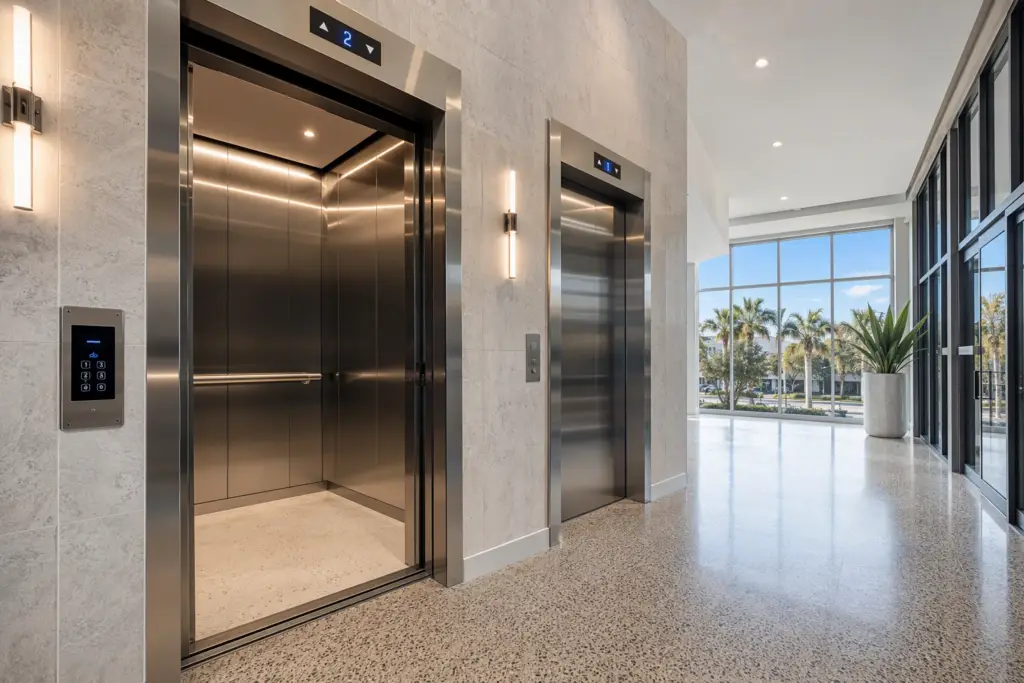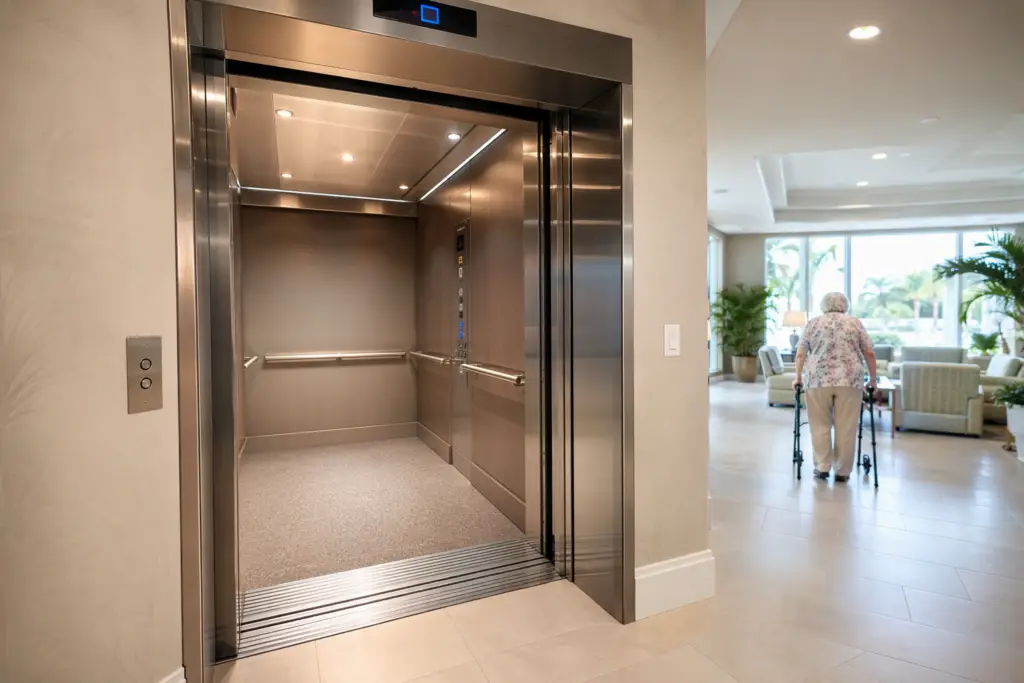
Bottom line: For most Florida retail and mixed-use buildings, modernizing an existing elevator costs significantly less than full replacement — but the right answer depends on the age and condition of the equipment, the scope of required code upgrades under ASME A17.1/CSA B44 and ADA, and the Florida permitting requirements imposed by the DBPR Bureau of Elevator Safety under Chapter 399, Florida Statutes.
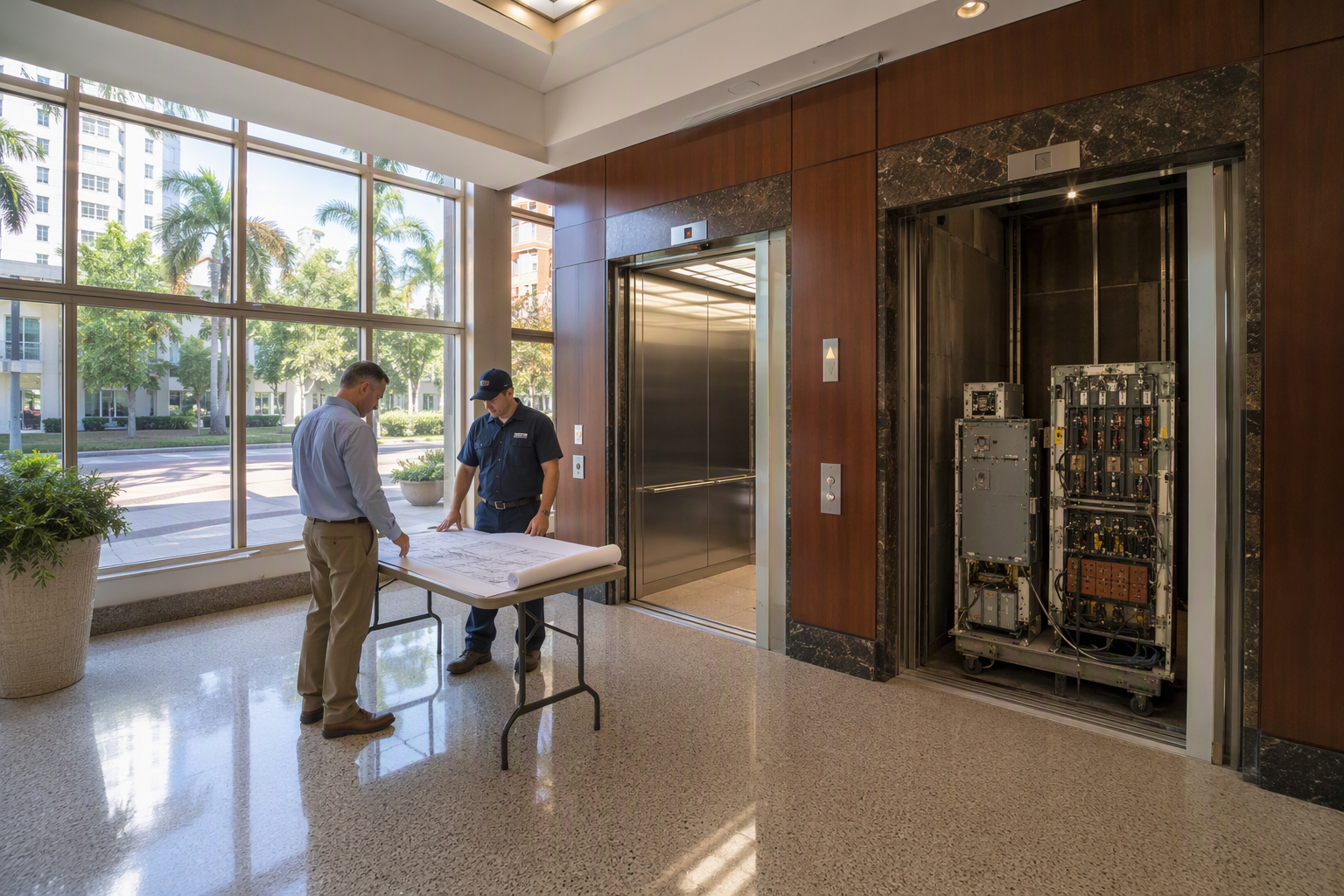
Elevator Modernization vs. New Installation in Florida Retail & Mixed-Use Buildings: Complete FAQ
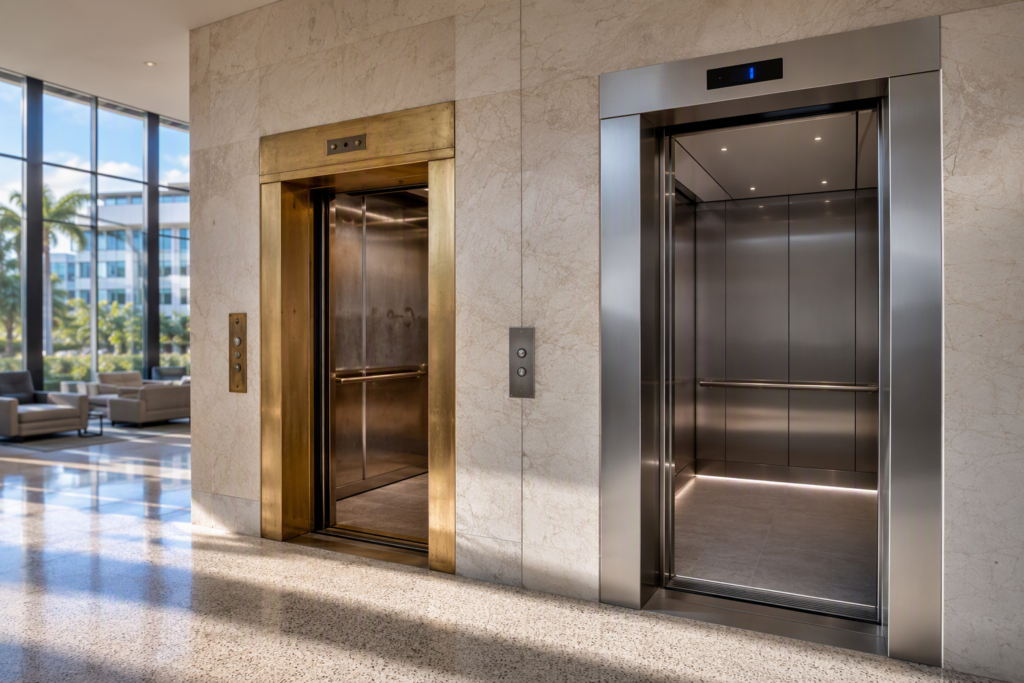
In most Florida retail and mixed-use renovation projects, modernizing an existing elevator is the more cost-effective path — provided the hoistway, structure, and pit are in serviceable condition. Full replacement becomes the better investment when equipment is beyond its useful life, the hoistway requires structural rebuilding, or the renovation scope demands a capacity, speed, or footprint the existing shaft cannot accommodate. The sections below walk through every factor building owners, developers, and property managers in Pompano Beach and Sarasota need to evaluate before committing to either approach.
Is elevator modernization generally cheaper than installing a new elevator in Florida?
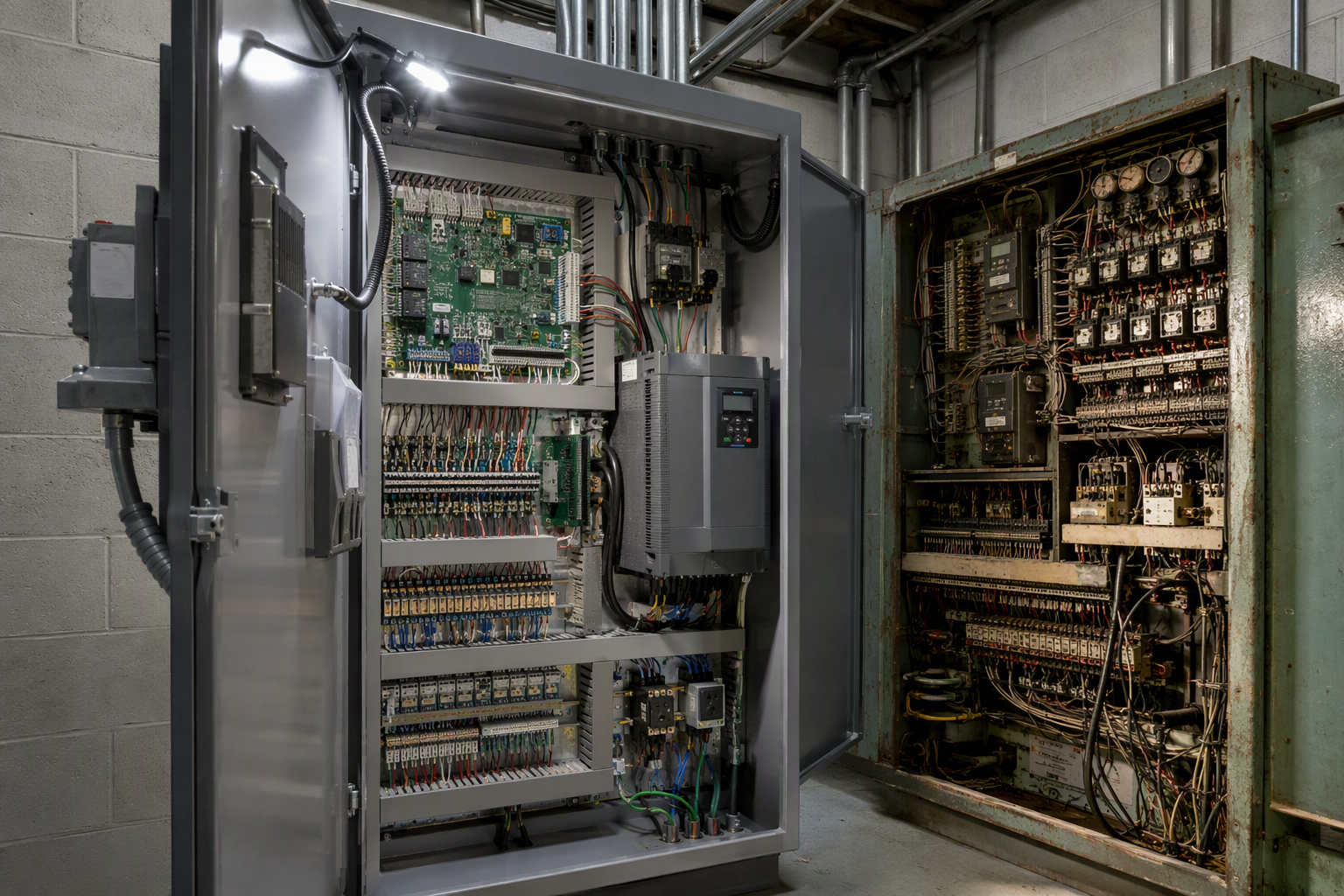
Yes — modernization typically costs less than full replacement because it reuses the hoistway, pit, and structural overhead while replacing only the mechanical, electrical, and control components that are worn or non-compliant.
A new elevator installation requires excavating or constructing a code-compliant pit, erecting or verifying the hoistway structure, installing a machine room or machine-room-less (MRL) drive system from scratch, and running entirely new electrical feeds — all before a single component is set. Modernization skips most of that structural work. The savings depend heavily on equipment age: a hydraulic unit installed in the 1980s will require more extensive modernization scope than a traction unit from the early 2000s.
That said, modernization costs are not trivial. Replacing a controller, drive, fixtures, door operators, and safety devices on a mid-rise commercial elevator is a substantial capital project. Owners should obtain a written scope-of-work from a registered Florida elevator company before comparing bids.
What does a typical elevator modernization project include?
A full modernization replaces the controller and logic system, drive unit, door operators, cab interior fixtures, safety devices, and often the hydraulic power unit or traction machine, while retaining the hoistway, guide rails, and structural sill.
Common modernization components include:
- Microprocessor-based controller replacing relay-logic panels
- Variable-voltage variable-frequency (VVVF) drive for traction units, or a submersible pump unit for hydraulics
- New door operators, hanger assemblies, and interlocks
- Updated hall and car fixtures (buttons, indicators, keypads)
- Emergency lighting, phone, and communication upgrades
- Safety devices: governor, safeties, buffers, oil buffers as required
- Modernized cab finishes to match the renovation aesthetic
A partial modernization — replacing only the controller and drive — is sometimes called a “controls-only” upgrade. While less expensive upfront, it may leave aging mechanical components that generate callbacks and trigger follow-on costs within a few years.
What does full elevator replacement include that modernization does not?
New installation includes complete structural hoistway work, a new pit and overhead, new guide rails, a new machine room or MRL enclosure, entirely new wiring from the disconnect down, and a fresh certificate of operation from Florida DBPR.
Because the hoistway is being built or fully rebuilt, the project must comply with ASME A17.1-2019 — the edition adopted by Florida under Chapter 61C-5, Florida Administrative Code — in its entirety for new installations. Modernization projects trigger specific alteration requirements under ASME A17.3 (the Safety Code for Existing Elevators) as adopted into the Florida rules, but not necessarily every new-installation provision.
Full replacement also means a longer construction timeline, a larger temporary disruption to building operations, and a more complex permitting file. For a functioning retail or mixed-use property, that operational downtime carries a real cost that owners should factor into the total comparison.
What Florida permits and regulatory steps apply to both modernization and new installation?
Both paths require a state permit applied for by a registered Florida elevator company before any work begins, a post-completion inspection by a certified elevator inspector with no conflict of interest, and a valid Florida certificate of operation before the elevator is used.
Under Chapter 399, Florida Statutes, a state permit is required before a conveyance is installed or altered. That permit must be applied for by a company registered with the Florida Department of Business and Professional Regulation (DBPR), Division of Hotels and Restaurants, Bureau of Elevator Safety. All construction and alteration work must be performed by Florida-certified elevator technicians who hold a current elevator certificate of competency — renewed annually with proof of eight hours of continuing education.
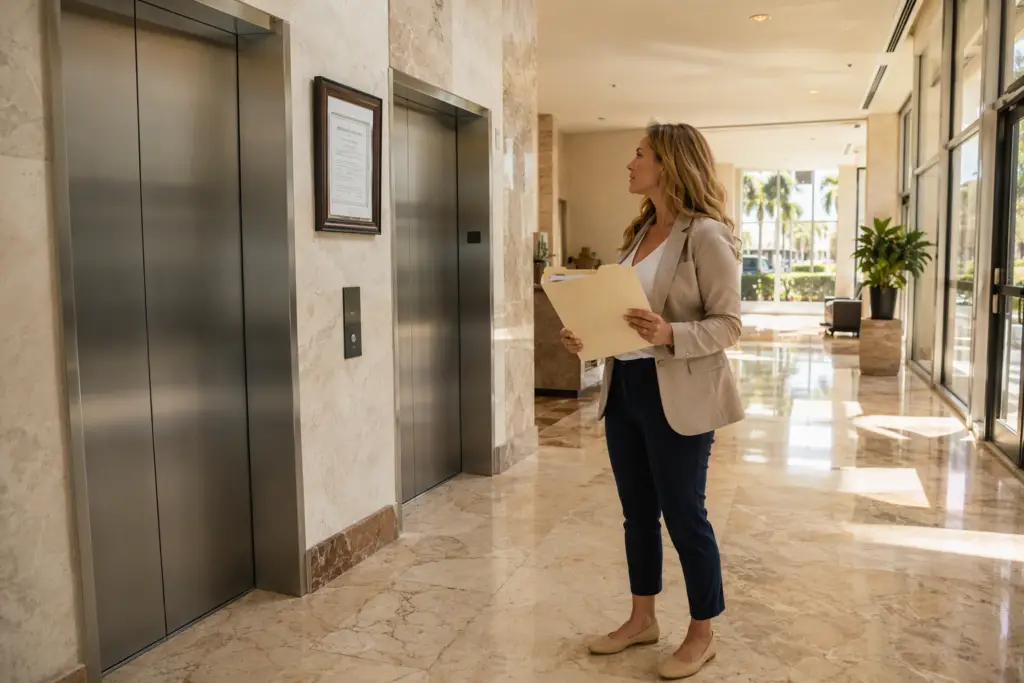
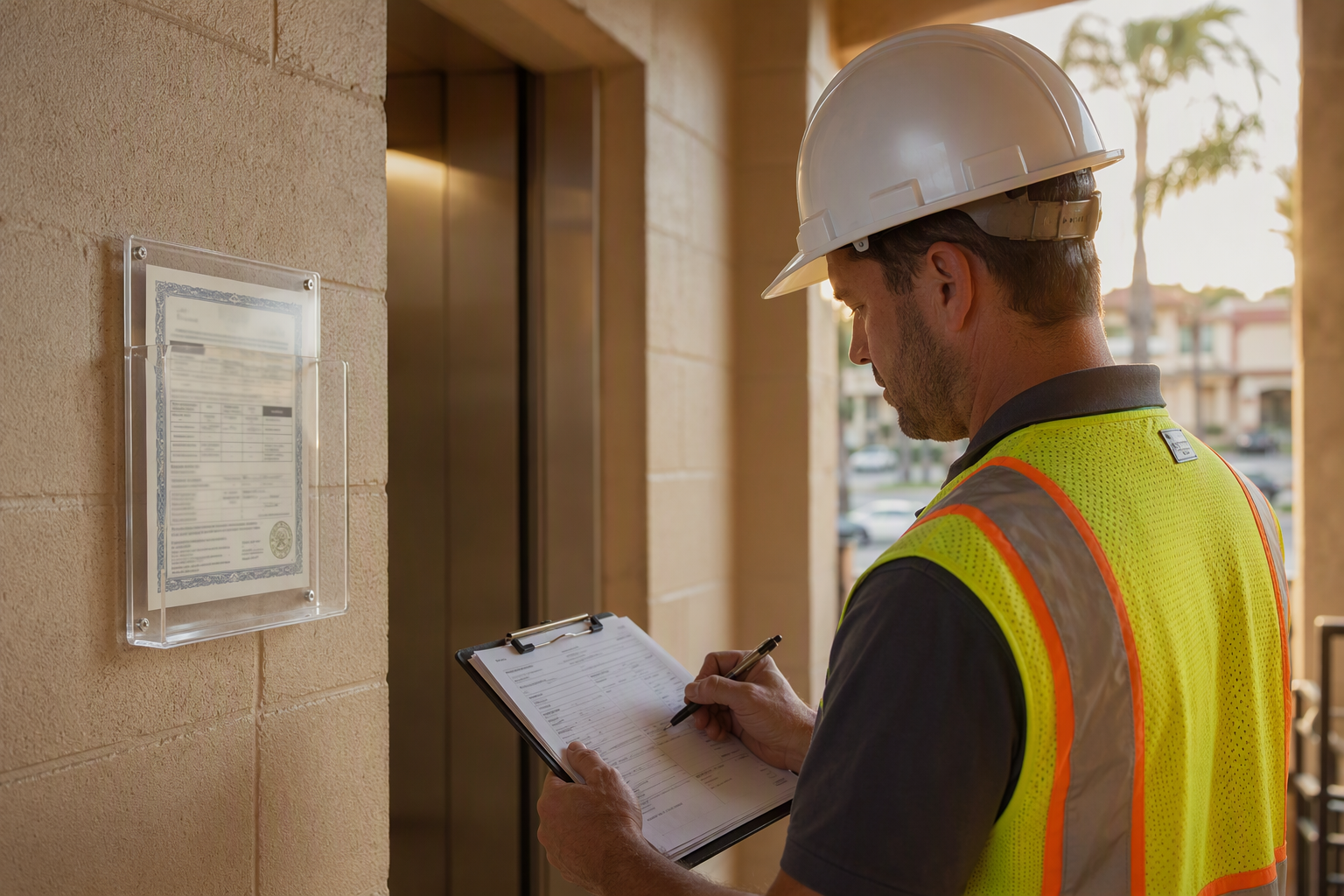
In Pompano Beach, elevator enforcement falls under the Broward County Building Code Division, which enforces Chapter 399 through its own certified elevator inspectors. In Sarasota, owners should confirm the applicable local authority having jurisdiction (AHJ) before filing permit documents. After work is complete, an independent certified elevator inspector — one with no employment or financial relationship to the permitee or owner — must inspect before the elevator can be placed in service. The certificate of operation must then be posted in the elevator cab in a frame with a transparent cover, and it is valid for no more than two years.
How do ADA requirements affect the modernization vs. new-installation decision?
A renovation that triggers ADA path-of-travel obligations may require bringing the elevator fully into compliance with ADA Standards for Accessible Design, which can significantly expand modernization scope — sometimes to the point where a new installation becomes comparably priced.
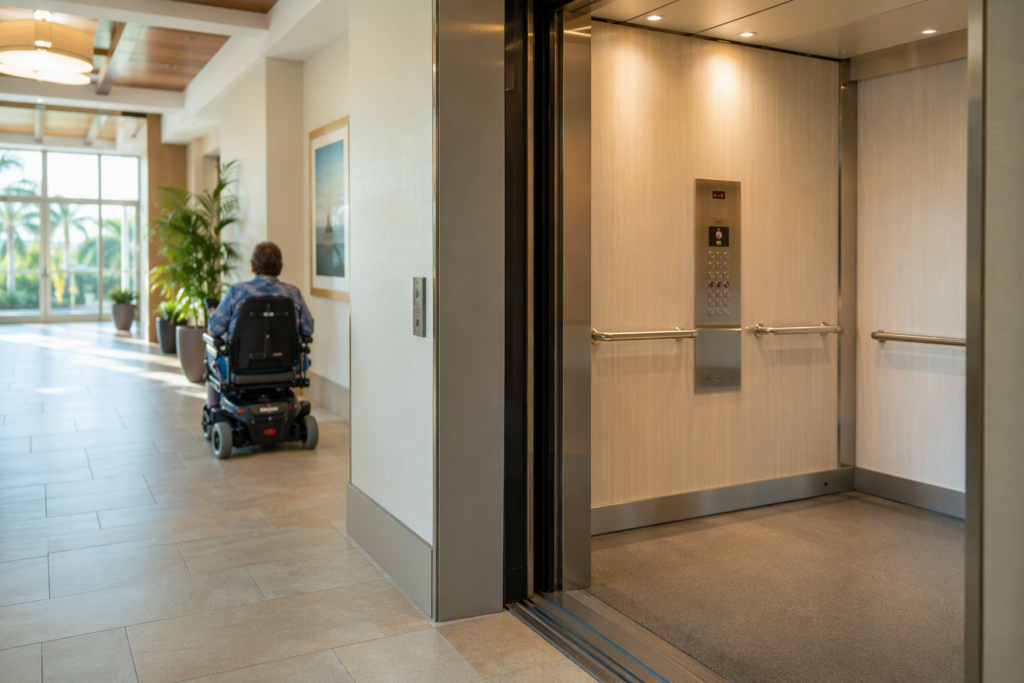
The ADA requires that when a building’s primary function area is renovated, the path of travel to that area — including the elevator — must be made accessible to the maximum extent feasible without disproportionate cost. For a retail or mixed-use building where the elevator is the primary accessible route between floors, this can mean:
- Minimum cab dimensions (minimum 68 inches deep by 54 inches wide for a center-opening door, under ADA Section 4.10)
- Door reopening devices sensitive to obstruction
- Tactile and Braille floor designations
- Audible and visual floor indicators
- Accessible call button height and reach ranges
- Emergency communication meeting ADA two-way communication standards
If the existing cab is dimensionally too small to meet ADA minimums, modernization alone cannot solve the problem — hoistway enlargement or full replacement becomes necessary. Axxiom Elevator Florida evaluates cab dimensions and ADA compliance gaps as part of its assessment process for renovation projects in Pompano Beach and Sarasota.
What ASME code edition applies in Florida in 2026?
Florida adopted ASME A17.1/CSA B44, 2019 edition (effective December 31, 2023) as its mandatory elevator safety code under Chapter 61C-5, Florida Administrative Code, and that edition remains in force in 2026.
The ASME A17.1 Safety Code for Elevators and Escalators governs new installations, while ASME A17.3 addresses existing elevators and alterations. Florida’s adoption of the 2019 edition means that any alteration — including a modernization — triggers review against the adopted code’s alteration requirements. Components that are replaced must meet the current edition’s specifications; components that are not part of the alteration scope may remain under prior-code status unless they present an immediate hazard.
Understanding which components fall under the “altered” definition and which are grandfathered is a nuanced determination that a registered elevator company must make on a project-by-project basis. Getting this wrong can result in failed inspections and certificate-of-operation delays — both costly outcomes during a retail renovation.
How old does an elevator need to be before modernization stops making financial sense?
There is no universal age cutoff, but elevators with original relay-logic controls, aging hydraulic cylinders (especially single-bottom cylinders), or corroded structural components generally present modernization costs that approach or exceed new-installation pricing.
Key indicators that full replacement may be more economical include:
- Single-bottom hydraulic cylinders that may require excavation to inspect or replace
- Hoistway wiring that is degraded and requires full rewiring in any case
- Guide rails or brackets that are corroded beyond acceptable tolerances
- Pit conditions that do not meet current code minimums for depth or drainage
- Overhead clearance that is insufficient for the required safety space under ASME A17.1-2019
- A cab that is dimensionally incompatible with ADA minimums
When a modernization scope expands to include rails, pit work, overhead modifications, and full rewiring, the retained value of the existing installation diminishes rapidly. A comprehensive condition assessment — not just a visual inspection — is the only reliable way to determine the crossover point.
What is the typical timeline difference between modernization and new installation?
Modernization projects are generally completed faster than new installations because structural hoistway work is eliminated, but both paths require state permitting before work begins, which adds lead time in Florida.
A controls-and-fixtures modernization on a single commercial elevator may take a matter of weeks once materials are on-site and the permit is in hand. A full modernization involving machine replacement, door systems, and cab work will take longer. New installations — particularly those requiring pit excavation, machine room construction, or structural hoistway work — extend the project timeline considerably and may require coordination with the general contractor managing the broader renovation.
Florida’s requirement that a certified elevator inspector with no conflict of interest perform the final inspection before the elevator is used means that post-construction scheduling must account for inspector availability. Owners planning renovations in Pompano Beach or Sarasota should begin the permit and inspection coordination process well before the target completion date.
How does building type — retail vs. mixed-use — affect the decision?
Mixed-use buildings with residential floors above retail typically require elevators that meet both commercial and residential accessibility standards, and the increased duty cycle and capacity demands may favor a new, higher-capacity installation over modernizing a unit originally sized for light commercial use.
A single-tenant retail building may have an elevator designed primarily for freight or light passenger use. When that building is converted to mixed-use with residential units above, occupant volume increases, duty cycle expectations change, and ADA path-of-travel requirements for residential tenants apply alongside commercial standards. An existing elevator’s rated capacity and speed may no longer be appropriate, and those parameters cannot always be changed within the existing hoistway without structural modifications that approach the cost of new installation.
Mixed-use projects should also consider emergency recall and firefighters’ service requirements under ASME A17.1-2019, which may require updated fire service key switches and Phase I/Phase II emergency recall systems that an older modernization has not addressed.
What is a comparative cost breakdown of modernization vs. new installation?
The table below provides a general framework for comparing cost categories — not a price quote — because actual costs vary by equipment type, building conditions, and scope determined after a professional assessment.
| Cost Category | Modernization (Existing Elevator) | New Installation |
|---|---|---|
| Hoistway / structural work | Minimal to none (if structure is sound) | Significant — pit excavation, overhead, framing |
| Guide rails | Often retained if within tolerance | Full new rail and bracket installation |
| Machine / drive unit | Replaced as part of modernization scope | New unit selected for design requirements |
| Controller & wiring | Replaced; existing conduit may be reused | All new from disconnect through cab |
| Door systems | Replaced or refurbished | All new |
| Cab interior | Refurbished or fully replaced | New — can be custom-specified |
| ADA compliance upgrades | Required if triggered by renovation scope | Built to current ADA standard from outset |
| Florida state permit | Required before work begins | Required before work begins |
| Post-work inspection | Required — independent certified inspector | Required — independent certified inspector |
| Certificate of operation | Renewed or reissued after inspection | New certificate issued after inspection |
| Operational downtime | Shorter — weeks, depending on scope | Longer — months, depending on scope |
| Long-term maintenance cost | Reduced after full modernization | Lowest — all components at start of life |
Note: This table reflects general scope categories, not specific pricing. Axxiom Elevator Florida provides written assessments for projects in Pompano Beach and Sarasota that identify actual scope and allow accurate cost comparisons between paths.
Does modernization require the same Florida state permit as a new installation?
Yes — under Chapter 399, Florida Statutes, any alteration to a conveyance requires a state permit applied for by a registered Florida elevator company before work begins, just as a new installation does.
The permitting obligation applies regardless of whether the project is a controls-only upgrade or a comprehensive modernization. Registered elevator companies — those that maintain annual registration with DBPR and carry required general liability insurance — are the only entities authorized to apply for these permits. Work performed without the required permit violates state law and can result in a certificate of operation being withheld after inspection, leaving the elevator out of service during a critical period of a building’s renovation and relaunch.
How does the Florida certificate of operation process work after modernization?
After a modernization is complete, the elevator must be inspected by a certified elevator inspector with no conflict of interest with the permitee or owner, and a satisfactory inspection result is required before a certificate of operation can be issued or renewed.
Florida certificates of operation are valid for no more than two years. Operating an elevator on an expired certificate violates state law. The certificate must be posted in the cab in a frame with a transparent cover — a requirement that applies to the modernized elevator just as it did to the original installation. If a satisfactory inspection cannot be obtained because of code deficiencies, the owner is responsible for correcting those deficiencies before the certificate is issued. This underscores why proper pre-modernization planning — identifying all code gaps before construction begins — is essential to avoiding post-completion surprises.
What energy efficiency benefits does modernization offer compared to keeping the existing elevator?
Replacing an aging hydraulic power unit or a DC traction drive with a modern VVVF drive and regenerative technology materially reduces elevator energy consumption, which lowers operating costs over the certificate-of-operation life of the equipment.
Older hydraulic units run constant-speed pumps and dissipate excess energy as heat. Modern submersible pump units with variable-speed drives consume power proportional to the actual load demand. Traction elevators equipped with regenerative drives return energy to the building’s electrical system during descents with heavy loads or ascents with light loads. In a retail or mixed-use building where the elevator runs throughout business hours, these efficiency gains accumulate meaningfully over time and can be factored into the return-on-investment comparison between modernization and new installation.
How does emergency communication compliance factor into the modernization scope?
Both ADA and ASME A17.1-2019 require a two-way means of communication in elevator cabs, and a modernization provides the opportunity — and in many cases the obligation — to upgrade legacy phone systems that no longer meet current standards.
Many commercial elevators installed before the widespread adoption of VoIP and cellular systems rely on analog phone lines that are being retired by telecommunications carriers. A modernization project should address emergency communication by installing a compliant, carrier-independent system — whether cellular, IP-based, or a monitored dedicated line. Failing to address this during a modernization can result in a non-compliant elevator that cannot obtain a satisfactory inspection.
What questions should a building owner ask when soliciting bids for modernization vs. new installation?
Owners should require written scope-of-work documents that clearly identify which components are being replaced, which codes govern the alteration, how ADA compliance will be addressed, and what the permitting and inspection timeline looks like under Florida Chapter 399.
Specific questions to ask each bidder:
- Is your company registered with Florida DBPR as a registered elevator company?
- Are the technicians performing this work Florida-certified elevator technicians with current certificates of competency?
- Will you apply for the required state permit before work begins?
- Which components does your modernization scope replace, and which are being retained?
- Which ASME A17.1-2019 provisions apply to the altered components, and how will you document compliance?
- How does your scope address ADA dimensional and operational requirements?
- Who will perform the post-completion independent inspection, and how will you coordinate that scheduling?
- What is the expected certificate-of-operation outcome, and what deficiencies might delay it?
- What is your written warranty on replaced components?
- What ongoing maintenance agreement, if any, do you recommend after completion?
How should building owners evaluate the condition of an existing elevator before deciding?
A qualified, independent elevator assessment — not a sales consultation — should document the mechanical condition, code compliance gaps, hoistway and pit status, cab dimensions, and the remaining useful life of each major component before any modernization vs. replacement decision is made.
The assessment should include:
- Review of the existing certificate of operation and most recent inspection report
- Physical inspection of the machine room or MRL drive space, including motor, controller, and wiring condition
- Pit inspection for water intrusion, sump pump functionality, pit lighting, and buffer condition
- Hoistway inspection for rail alignment, bracket corrosion, and clearance compliance
- Cab dimensional verification against ADA minimums
- Door operator and interlock functional testing
- Emergency lighting, phone, and communication system check
- Review of outstanding violations or open permits with the AHJ
Axxiom Elevator Florida conducts assessments for retail and mixed-use building owners in Pompano Beach and Sarasota to provide the objective data needed to make an informed capital decision. Engaging Axxiom Elevator Florida before issuing a renovation RFP allows owners to build a realistic scope and budget into the project from the outset.
What happens if a Florida elevator is out of service during a renovation and the certificate of operation expires?
Operating an elevator on an expired Florida certificate of operation violates Chapter 399, Florida Statutes, and a certificate can be renewed only when a current satisfactory inspection is on record — making proactive compliance management essential during any renovation project.
If a modernization or replacement project extends past the certificate expiration date, the elevator cannot legally return to service until a satisfactory post-work inspection is completed and a new certificate is issued. Owners should map the certificate expiration date against the construction schedule at the outset of planning. If the expiration date falls during the construction window, coordinating the permit, construction, and inspection sequence to align with the expiration is critical. Axxiom Elevator Florida helps clients in Pompano Beach and Sarasota manage this timeline to avoid certificate gaps that could delay a building’s reopening.
Are there any Florida elevator exemptions that might affect a retail or mixed-use renovation decision?
Florida’s annual inspection requirement has a limited exemption for elevators that serve only two adjacent floors and are covered by a service maintenance contract, but most retail and mixed-use building elevators serve three or more floors and do not qualify.
The exemption under Chapter 399 is narrow: an elevator that is not an escalator or dumbwaiter, serves only two adjacent floors, and is covered by a qualifying service maintenance contract is exempt from the annual inspection requirement while the contract remains in effect. This exemption would typically apply to a small two-floor commercial building — not to a multi-story retail or mixed-use development. Building owners should not assume this exemption applies without confirming the specific facts of their installation with a registered elevator company and the applicable AHJ.
How do service maintenance contracts factor into the long-term cost comparison?
Both modernized and newly installed elevators benefit from structured maintenance agreements that reduce unexpected repair costs, extend component life, and support the ongoing inspection and certificate-of-operation renewal cycle required by Florida DBPR.
Florida places the ongoing responsibility for safe operation, maintenance, and correction of code deficiencies on the certificate-of-operation holder — the elevator owner. A service maintenance agreement with a registered Florida elevator company ensures that certified technicians perform scheduled lubrication, adjustment, and safety device testing on a regular basis. For a modernized elevator, a maintenance agreement is particularly important in the years immediately following modernization, when newly installed components are breaking in and any latent issues are most likely to surface. Axxiom Elevator Florida serves retail and mixed-use building owners in Pompano Beach and Sarasota with ongoing maintenance programs designed to keep elevators operating within Florida code requirements and to support smooth certificate renewals.
What role does the local authority having jurisdiction play in Pompano Beach and Sarasota?
In Pompano Beach, the Broward County Building Code Division enforces Chapter 399 through its own certified elevator inspectors; in Sarasota, building owners should confirm the applicable local AHJ before filing permit documents, as inspection and certificate coordination runs through that office.
Florida’s elevator law delegates enforcement authority to counties and municipalities that maintain certified elevator inspectors under contract with the state. In Broward County — which includes Pompano Beach — the Broward County Building Code Division is the AHJ and conducts inspections under Chapter 399. For Sarasota projects, the local AHJ determination should be confirmed with the registered elevator company at the outset of permitting. The AHJ coordinates the post-construction inspection, receives accident reports that must be submitted within five working days of any elevator accident, and enforces certificate-of-operation posting requirements. Understanding the AHJ’s process and timelines in each market is an operational necessity for renovation projects, and Axxiom Elevator Florida’s familiarity with both markets helps streamline that coordination.
Need elevator service you can rely on? Axxiom Elevator Florida is ready to help.