How Do I Get a Maintenance Service Proposal for a Building I Manage? A Complete FAQ for Florida Property Managers
To get a maintenance service proposal for a building you manage, reach out to a Florida-registered elevator company, share your equipment inventory, and schedule a no-cost site assessment. The contractor will review code compliance under Chapter 399, Florida Statutes (the Elevator Safety Act), inspect current conditions, and deliver a written proposal tailored to your building’s specific units, usage load, and regulatory obligations.
What information should a property manager gather before requesting a maintenance proposal?
Before calling an elevator contractor, gather a complete equipment inventory that includes unit type, approximate installation year, current certificate of operation status, and any outstanding violation notices.
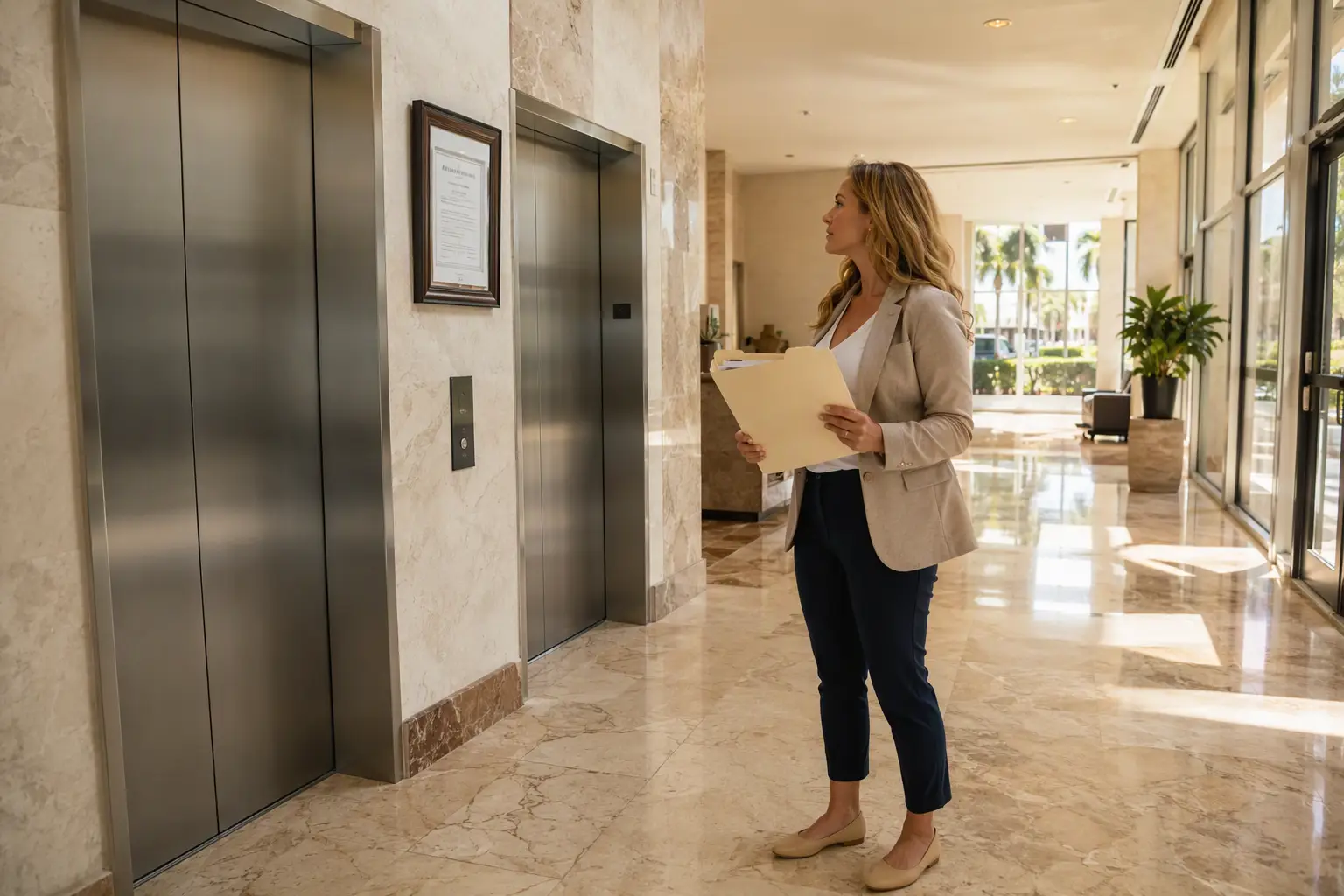
Specifically, prepare the following: the number of elevators, escalators, wheelchair lifts, or other conveyances on the property; the make and model of each unit if available; the most recent inspection report; copies of current certificates of operation; and any service history records or maintenance logs. In Florida, the certificate of operation must be posted conspicuously inside the elevator in a frame with a transparent cover, so retrieving a copy is straightforward. Having this documentation ready reduces back-and-forth and allows the contractor to prepare a more accurate proposal faster.
Also note whether the building is located in Broward County (which includes Pompano Beach) or another jurisdiction with a delegated local authority, since inspections and permit processing may run through a local office rather than the state Bureau of Elevator Safety directly.
Why does a Florida elevator contractor need to visit the property before writing a proposal?
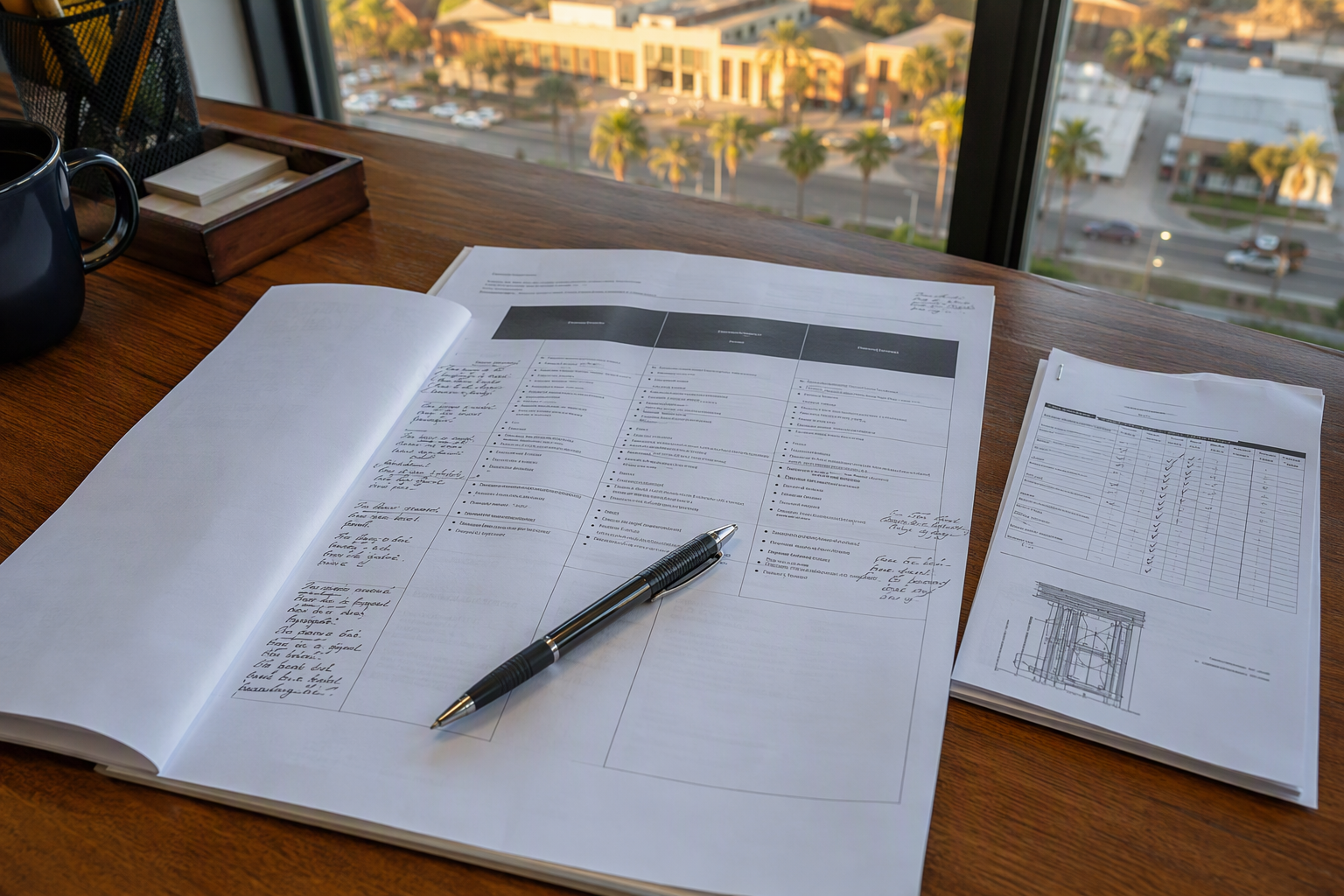
A site visit is essential because maintenance scope, inspection frequency, and compliance obligations depend on equipment condition, usage intensity, and local authority requirements that cannot be fully evaluated remotely.
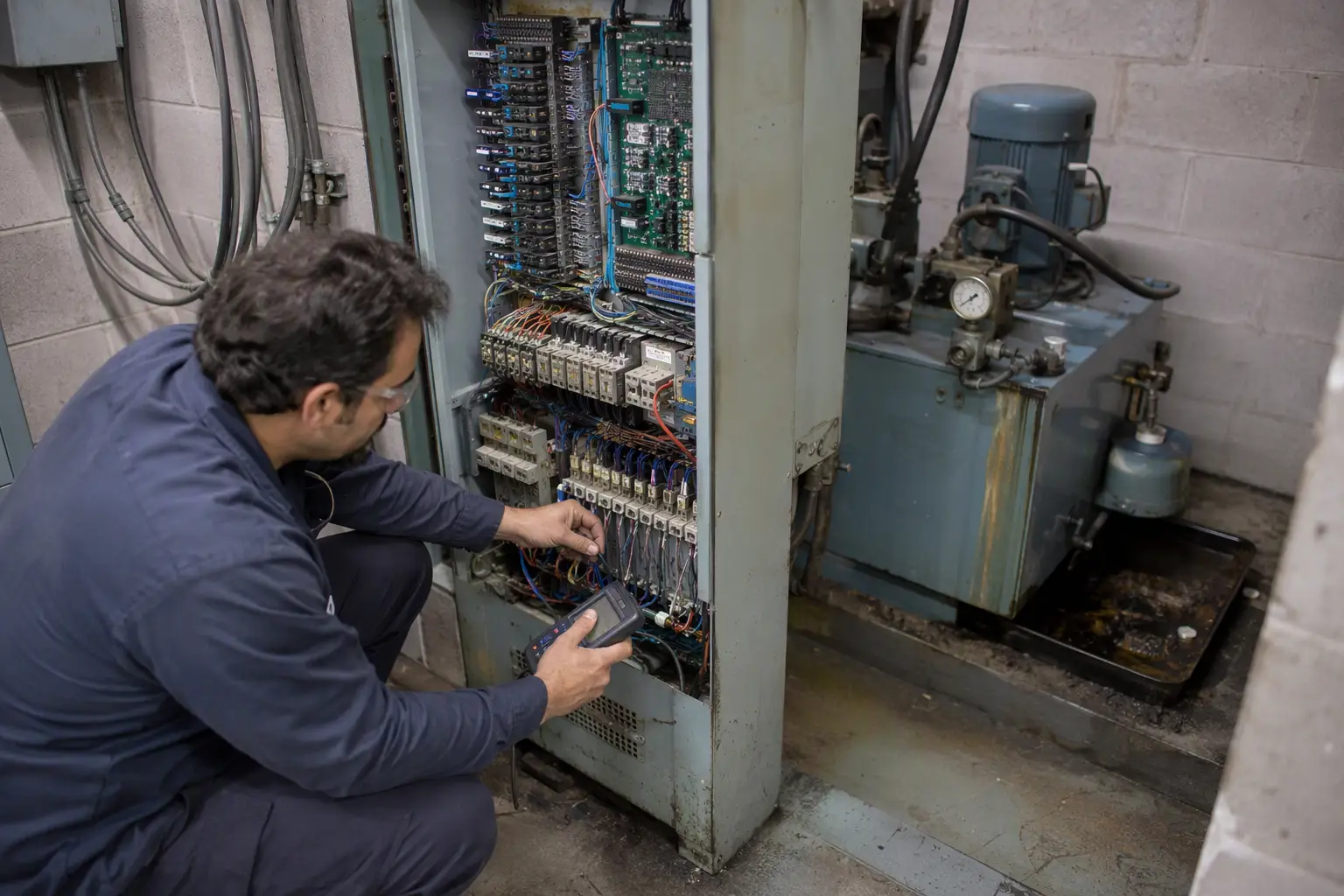
During a walkthrough, a qualified technician will assess the machine room condition, pit condition, hoistway, cab interior, door operation, safety devices, and control systems. These factors directly determine the labor hours and parts cost needed to keep the equipment in compliance with ASME A17.1/CSA B44 Safety Code for Elevators and Escalators, which Florida adopted in its 2019 edition effective December 31, 2023, under Chapter 61C-5, Florida Administrative Code. A unit that has deferred maintenance will require a different service tier than a recently modernized unit under the same roof.
Axxiom Elevator Florida offers complimentary site assessments for building managers in Pompano Beach and Sarasota, allowing the team to document actual equipment conditions before proposing a maintenance plan.
What types of elevator maintenance contracts are typically offered?
Elevator maintenance contracts generally fall into three tiers: oil-and-grease (basic lubrication and adjustment), full maintenance (parts and labor included), and comprehensive full maintenance with callback coverage.
| Contract Tier | What Is Typically Included | Best Suited For | Florida Compliance Benefit |
|---|---|---|---|
| Oil & Grease (Basic) | Routine lubrication, minor adjustments, visual inspection | Low-traffic, newer equipment | Meets minimum maintenance standard; annual inspection still required |
| Full Maintenance | Parts and labor for covered components, scheduled service visits | Mid-rise commercial, multifamily | Supports certificate of operation renewal; documented service record |
| Comprehensive Full Maintenance | All parts, labor, callbacks, modernization planning | High-traffic commercial, hospitality | Strongest compliance posture; supports potential inspection-exemption eligibility |
| Inspection-Only / Consulting | Periodic inspections, code review, violation correction consulting | Self-maintained buildings, small portfolios | Ensures certified inspection before certificate renewal |
Under Chapter 399, Florida Statutes, an elevator that is not an escalator or dumbwaiter, serves only two adjacent floors, and is covered by a service maintenance contract is exempt from the annual inspection requirement while the contract remains in effect. This statutory benefit makes a qualifying maintenance contract more than a convenience — it is a direct compliance tool for eligible buildings.
How does Florida’s annual inspection requirement affect the maintenance proposal?
Florida requires every covered elevator to be inspected annually by a certified elevator inspector, which means the maintenance proposal must account for inspection scheduling, violation correction, and certificate of operation renewal timelines.
A Florida certificate of operation is valid for no more than two years, and renewal requires a current satisfactory inspection. Operating on an expired certificate violates state law. Because of this, a well-structured maintenance proposal will not only schedule routine service visits but will also coordinate certified inspections in advance of certificate expiration dates. When Axxiom Elevator Florida prepares a maintenance proposal, the team cross-references each unit’s certificate expiration against the proposed service schedule so renewals never lapse.
In Pompano Beach, inspections are conducted or overseen by the Broward County Building Code Division, which enforces Chapter 399 through its own elevator inspectors. Property managers in that area should confirm whether inspection coordination runs through the county office or the state Bureau of Elevator Safety.
What qualifications should a Florida elevator maintenance contractor hold?
In Florida, an elevator maintenance company must be registered with the Florida Department of Business and Professional Regulation (DBPR), Division of Hotels and Restaurants, Bureau of Elevator Safety, and must maintain general liability insurance.
Florida registered elevator companies must renew that registration annually. The technicians performing maintenance must hold a Florida elevator certificate of competency issued by the state, which expires after one year and is renewed with proof of eight hours of continuing education. Before signing any maintenance agreement, property managers should request proof of current state registration and confirm that the assigned technicians hold valid certificates of competency. Hiring an unregistered company exposes the building owner to liability and potential code violations.
Axxiom Elevator Florida is a registered elevator company serving Pompano Beach and Sarasota, and its technicians maintain current Florida certificates of competency as required by the Bureau of Elevator Safety.
What is the step-by-step process for obtaining a maintenance proposal in Florida?
The process from initial contact to a signed maintenance agreement typically follows a structured sequence that protects both the property manager and the service contractor.
- Compile your equipment inventory: list every conveyance on the property, including unit type, location, approximate age, and certificate of operation status.
- Pull the most recent inspection report and identify any outstanding violations or code deficiencies noted by the inspector.
- Contact a Florida-registered elevator company and request a complimentary site assessment.
- Schedule and complete the site walkthrough, during which the contractor documents equipment conditions, reviews machine room access, and notes any ADA compliance gaps under the Americans with Disabilities Act.
- Receive the written proposal, which should specify service visit frequency, included components, response protocols, excluded items, and contract term length.
- Compare proposals from at least two registered contractors using consistent criteria (see the comparison section below).
- Clarify any exclusions, escalation clauses, or cancellation terms before signing.
- Execute the agreement and provide the contractor with all current certificate documentation so they can coordinate upcoming inspections.
- Confirm that the contractor will file any required permits with the Bureau of Elevator Safety or the applicable local authority before performing any alteration work.
How long does it take to receive a maintenance proposal?
After a completed site visit, most Florida elevator contractors deliver a written maintenance proposal within a few business days, though complexity and portfolio size can extend that timeline.
A building with a single traction elevator in good condition will generate a straightforward proposal. A multi-building portfolio with mixed equipment types — traction elevators, hydraulic elevators, escalators, and wheelchair lifts — requires more detailed scoping and may take longer to price accurately. Property managers who supply complete documentation upfront (inspection reports, equipment lists, current certificates) consistently receive faster and more accurate proposals. Axxiom Elevator Florida structures its assessment process to minimize the back-and-forth that delays proposal delivery.
What should a maintenance proposal document include?
A complete Florida elevator maintenance proposal should include a clearly defined scope of work, service visit schedule, parts coverage terms, inspection coordination language, emergency callback provisions, and the contractor’s current state registration details.
Specifically, review the proposal for the following elements:
- Itemized list of conveyances covered, with unit identifiers matching the certificate of operation
- Number and frequency of scheduled maintenance visits per year
- List of included versus excluded parts and components
- Explicit statement of which party coordinates and pays for the certified annual inspection
- Certificate of operation renewal assistance language
- Violation correction responsibility and cost allocation
- Modernization or major repair exclusions spelled out clearly
- Contract term, renewal terms, and cancellation notice period
- Proof of general liability insurance and state registration number
- ADA compliance review notation, referencing ADA accessibility standards applicable to the equipment
Proposals that omit inspection coordination language can leave a building manager exposed to lapsed certificates and state law violations.
How does ADA compliance factor into a maintenance proposal?
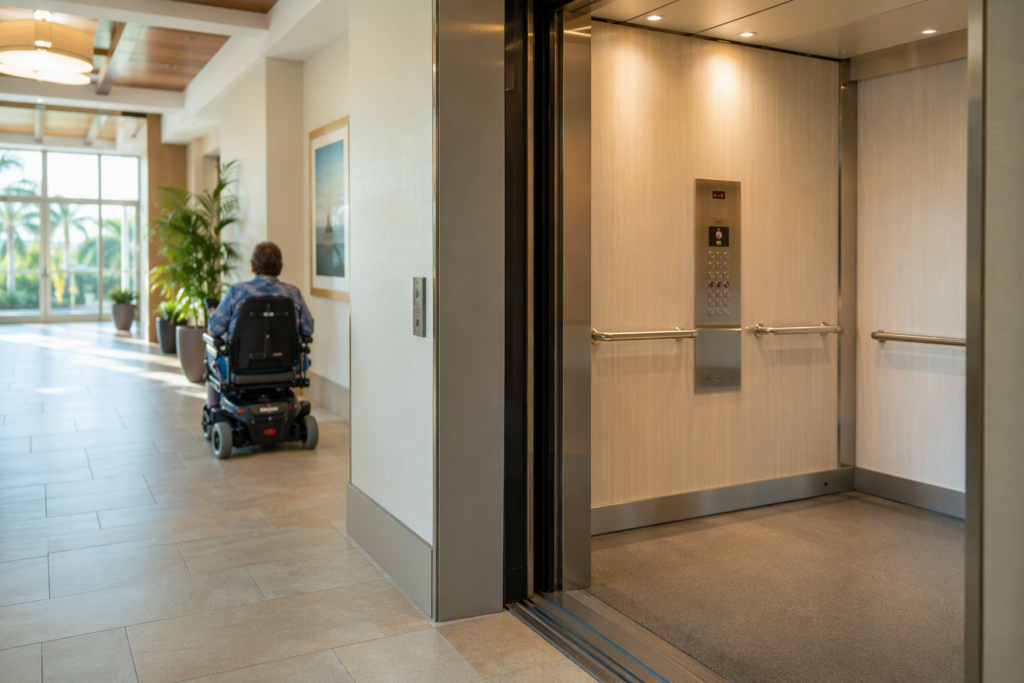
ADA requirements under the Americans with Disabilities Act apply to elevator cab dimensions, control panel height, audible and visual signals, and door operation timing, all of which must be evaluated during a maintenance assessment for commercial properties.
A thorough maintenance proposal for a commercial building should note whether any units have ADA deficiencies — such as improperly positioned control buttons, non-functioning floor-arrival signals, or door timing that does not accommodate passengers using mobility devices. Identifying these issues at the proposal stage allows the property manager to budget for corrections separately from routine maintenance and avoid complaints or enforcement actions. ADA compliance is a federal obligation independent of Florida state elevator law, meaning both sets of requirements run concurrently.
What does it cost to maintain an elevator in Florida?
Maintenance costs vary significantly based on equipment type, age, traffic volume, contract tier, and local market conditions, so no published flat rate applies universally across Florida properties.
Rather than relying on a generic figure, property managers are better served by obtaining itemized written proposals from registered contractors. Key cost drivers include: the type of drive system (hydraulic units typically differ from traction units in their maintenance requirements), the age of the equipment and whether it has been modernized to current code, the number of service visits per year included in the contract, and whether the proposal bundles inspection coordination. Axxiom Elevator Florida provides itemized proposals that clearly separate routine maintenance costs from inspection fees, violation correction work, and major component replacements so building managers can budget accurately.
Who is legally responsible for elevator maintenance in Florida?
Under Chapter 399, Florida Statutes, once a certificate of operation is issued, the elevator owner is legally responsible for safe operation, proper maintenance, inspection, and correction of code deficiencies.
This means a property management company acting as an agent of the building owner must ensure that maintenance contracts, inspection scheduling, violation corrections, and certificate renewals are handled on time. Delegating those tasks to a registered elevator company through a maintenance agreement does not transfer the owner’s legal liability — it provides a structured, documented mechanism for meeting it. In the event of an elevator accident, the certificate of operation holder must report it to the state within five working days. Proper maintenance documentation is a critical part of the owner’s defense in any liability investigation.
How often should scheduled maintenance visits occur?
Maintenance visit frequency should be matched to the equipment’s usage intensity, age, and drive type, with high-traffic commercial elevators generally requiring more frequent scheduled service than low-traffic residential units.
While ASME A17.1/CSA B44 provides inspection and testing intervals for various safety tests, maintenance visit frequency is determined by the service agreement rather than a single universal code interval. A hydraulic elevator in a low-rise multifamily building serving moderate traffic will have different maintenance needs than a geared traction elevator in a high-rise office building running continuous traffic through a business day. Contractors should be able to justify their recommended visit schedule based on manufacturer recommendations, equipment condition findings from the site assessment, and industry best practice — not simply offer a one-size-fits-all annual visit.
What is the difference between a maintenance contract and an inspection?
A maintenance contract governs ongoing servicing, lubrication, adjustment, and repair of the elevator by a registered elevator company, while an inspection is a formal compliance evaluation conducted by a certified elevator inspector who must have no conflict of interest with the permit holder or owner.
In Florida, these are distinct functions performed by distinct parties. The maintenance contractor keeps the equipment running safely between inspections. The certified elevator inspector evaluates whether the equipment meets the requirements of ASME A17.1-2019 as adopted by Florida and issues findings that feed into the certificate of operation. A maintenance contract does not replace the required inspection — it prepares the equipment to pass it and, for eligible two-floor elevators under Chapter 399, may qualify the unit for an inspection exemption while the contract is active. Property managers should ensure their maintenance proposal explicitly addresses how inspection coordination is handled.
Can a building manager in Sarasota or Pompano Beach use the same contractor?
Yes, a Florida-registered elevator company can serve both Sarasota and Pompano Beach under a single registration, though property managers should confirm the contractor’s active service presence in both markets and understand local authority differences.
Pompano Beach falls within Broward County, where the Broward County Building Code Division enforces Chapter 399 through its own elevator inspectors. Sarasota falls under the jurisdiction of the state Bureau of Elevator Safety absent a delegated local authority arrangement. These jurisdictional differences affect how permits are pulled, how inspections are scheduled, and which office issues or renews certificates of operation. Axxiom Elevator Florida actively serves both Pompano Beach and Sarasota, and the team coordinates with the appropriate local or state authority for each market.
What happens if an elevator’s certificate of operation is expired when I request a proposal?
An elevator operating on an expired certificate of operation violates Chapter 399, Florida Statutes, and the property manager should prioritize bringing the unit into compliance as part of the first phase of any new maintenance agreement.
When an elevator has an expired certificate, the first step is scheduling a certified inspection by a qualified elevator inspector with no conflict of interest with the owner. If the unit passes, the certificate can be renewed. If violations are found, they must be corrected by a registered elevator company before the certificate is issued. A new maintenance agreement can and should be executed in parallel with this process — it demonstrates to the Bureau of Elevator Safety and to local authorities that the owner is actively maintaining the equipment. Property managers who discover an expired certificate should document the discovery date, notify the building owner immediately, and contact a registered contractor the same day.
Are there any elevator types in Florida that do not require a certificate of operation?
Yes — elevators, stairway chairlifts, and wheelchair lifts located in private residences are exempt from Florida’s certificate of operation requirement under Chapter 399, Florida Statutes.
This exemption applies specifically to private residential use and does not extend to common-area or shared-use equipment in multifamily residential buildings. A condominium building elevator, for example, is not a private residence elevator and remains subject to the full requirements of Chapter 399 and Chapter 61C-5, Florida Administrative Code. Property managers overseeing multifamily communities should not assume the residential exemption applies to their elevator inventory without confirming the specific unit type and use classification with the Bureau of Elevator Safety or a registered contractor.
What role does ASME A17.1 play in a Florida maintenance proposal?
ASME A17.1/CSA B44 is the foundational technical standard that defines maintenance, inspection, and testing requirements for elevators and escalators, and Florida’s adoption of the 2019 edition sets the technical baseline against which all equipment in scope is evaluated.
Under ASME A17.1 Safety Code for Elevators and Escalators, specific tests — including governor and safeties tests, pressure relief valve tests for hydraulic elevators, and door safety device tests — must be performed at defined intervals. A competent maintenance proposal will reference these test intervals and assign responsibility for completing, documenting, and filing the results. When reviewing a proposal, property managers should ask which ASME A17.1-2019 periodic tests are included in the contract and which are billed separately as additional work. Tests omitted from the contract can create compliance gaps that appear only when the certified inspector arrives.
How should a property manager compare competing maintenance proposals?
Competing proposals should be evaluated on a consistent framework that goes beyond the headline annual price to examine scope completeness, parts coverage, inspection coordination, and contractor compliance standing.
Use the following comparison criteria when reviewing multiple bids:
- State registration status: confirm each contractor is currently registered with the Florida DBPR Bureau of Elevator Safety
- Technician credentials: verify technicians hold current Florida elevator certificates of competency
- Scope completeness: compare included versus excluded components line by line across proposals
- Inspection handling: determine whether the inspection fee and coordination are included or extra
- ASME A17.1-2019 periodic test coverage: confirm which mandatory tests are included
- Violation correction policy: understand who bears cost for corrections identified at inspection
- Contract term and exit provisions: evaluate cancellation notice periods and auto-renewal clauses
- Insurance documentation: request current certificates of general liability insurance from each bidder
- Local market presence: confirm active service capability in your specific county or city
A lower annual price that excludes inspection coordination, mandatory periodic tests, or violation correction work frequently results in higher total cost over the contract term.
What permit requirements apply when a maintenance contractor performs repairs or alterations in Florida?
In Florida, a state permit applied for by a registered elevator company is required before a conveyance is installed or altered, meaning certain repair and upgrade work during a maintenance contract may trigger a permit obligation.
Routine maintenance — lubrication, adjustment, and replacement of like-for-like components — generally does not constitute an alteration under Chapter 399, Florida Statutes. However, changes to control systems, drive systems, safety components, or structural elements of the hoistway typically require a permit. Property managers should ask their contractor to clearly distinguish between maintenance activities and alteration work in the proposal, and to confirm which party is responsible for applying for any required state or local permits. Performing alterations without a permit violates state law and can result in the certificate of operation being suspended.
How can a property manager in Florida stay proactive about elevator compliance between inspections?
Between annual inspections, property managers can stay proactive by maintaining a unit-level compliance calendar, conducting routine visual checks, logging all service visits, and acting promptly on any deficiency notices from the maintenance contractor or authority having jurisdiction.
Practical steps include: maintaining a dedicated file for each conveyance containing the current certificate of operation, most recent inspection report, and all maintenance visit records; verifying that the certificate of operation is posted conspicuously inside the cab as required by Florida law; training building staff to recognize and report unusual sounds, door malfunctions, or leveling issues; and reviewing the maintenance contractor’s visit reports within a reasonable time after each service call to confirm deficiencies are being tracked to closure. Axxiom Elevator Florida provides building managers in Sarasota and Pompano Beach with documented service reports after each visit so the compliance file stays current without extra administrative effort.
Contact Axxiom Elevator Florida for a free elevator assessment at 954-970-0020.
Need elevator service you can rely on? Axxiom Elevator Florida is ready to help.