Elevator Service in Pompano, FL | Axxiom Elevator Florida
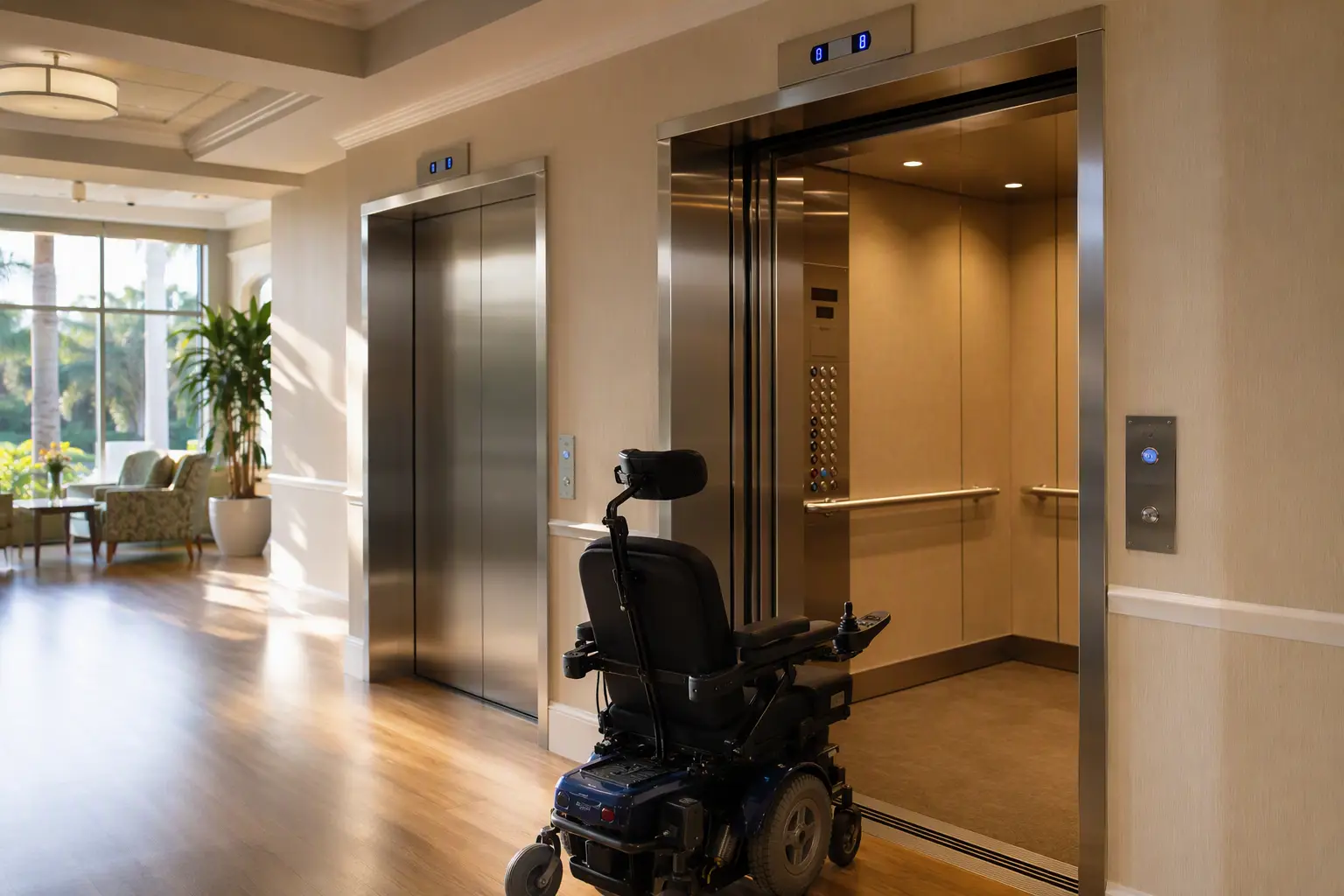
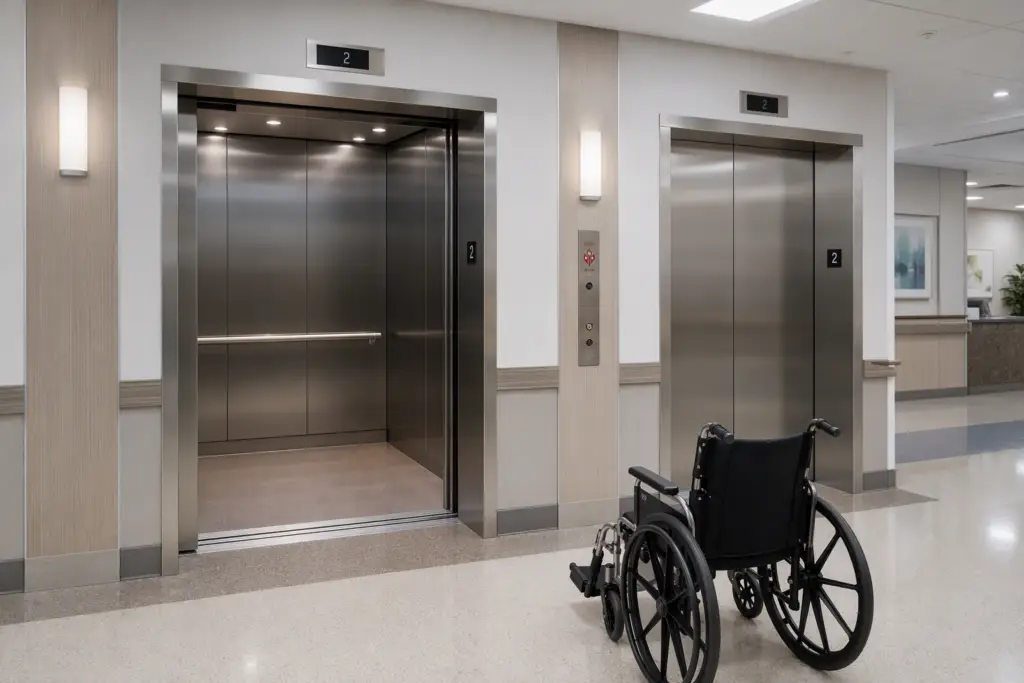
Senior living and assisted living facilities in Pompano, FL face a unique set of elevator compliance obligations. Residents may depend on wheelchairs, walkers, or other mobility aids, making elevator reliability and accessibility a direct matter of resident safety and regulatory standing. Axxiom Elevator Florida works with senior care operators across South Florida to navigate code requirements, plan upgrades, and maintain the continuous availability that these environments demand.
—
What Elevator Codes Apply to Senior Living Facilities in Florida?
Florida enforces elevator safety through the Florida Department of Business and Professional Regulation (DBPR), Bureau of Elevator Safety. This agency adopts and enforces ASME A17.1 Safety Code for Elevators and Escalators for new installations and ASME A17.3 Safety Code for Existing Elevators and Escalators for units already in service. The Florida Building Code incorporates these standards and adds state-specific administrative requirements for permits, inspections, and certificates of operation.
For assisted living facilities specifically, the Florida Agency for Health Care Administration (AHCA) also sets licensure standards that include physical plant requirements — meaning elevator operability and accessibility can be reviewed during AHCA inspections, not just DBPR inspections. Facilities found with out-of-service or non-compliant elevators risk citations that affect their operating license.
Federal Americans with Disabilities Act (ADA) standards also apply wherever public accommodations or commercial facilities serve people with disabilities — a category that clearly encompasses senior living communities. ADA Standards for Accessible Design govern cab dimensions, door clear width, control button height, and other specifications that directly affect mobility-dependent residents.
—
What ADA Accessibility Requirements Apply to Elevators in Senior Care Settings?
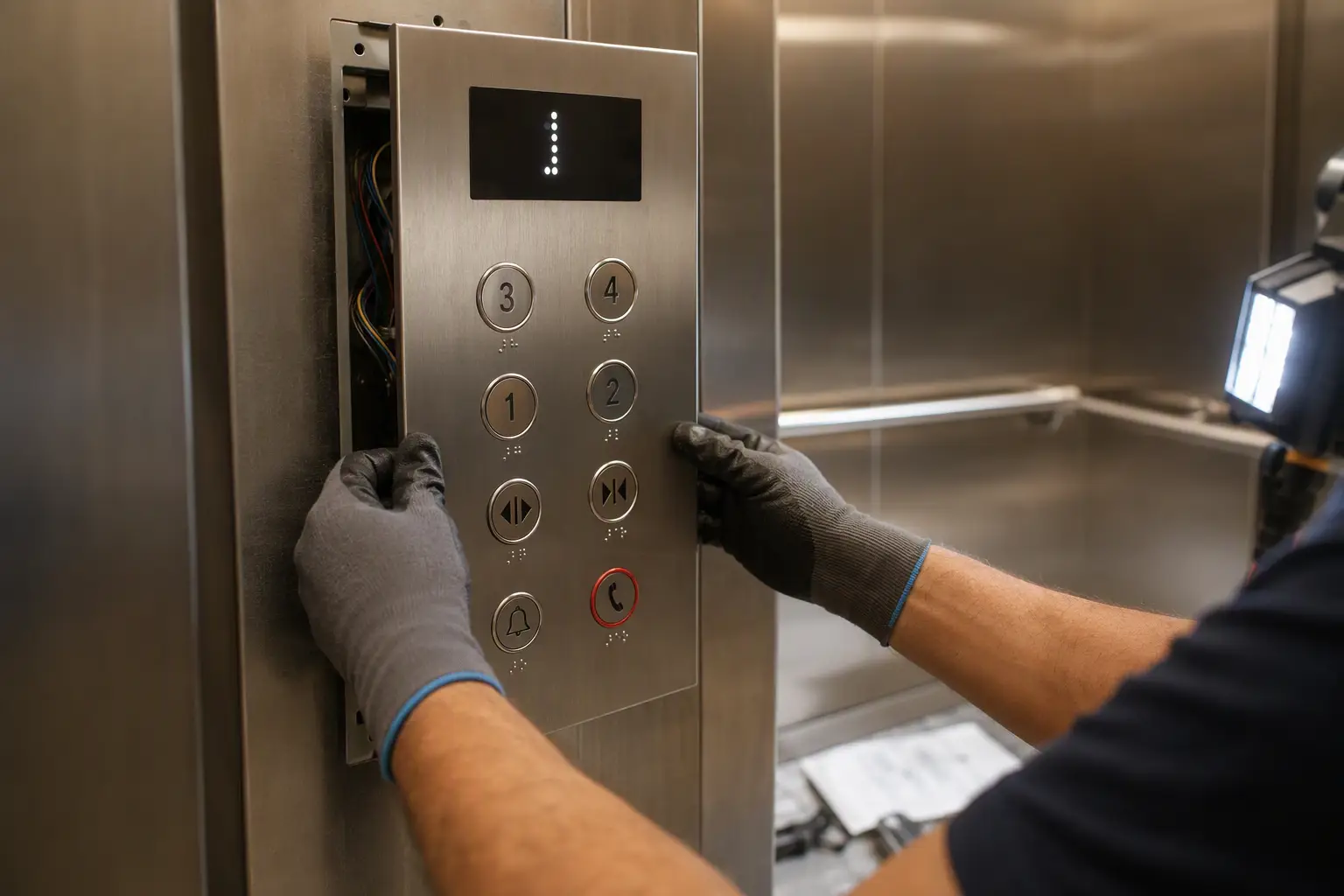
Under ADA standards, elevators serving senior living facilities must meet specific accessibility criteria. Key requirements include:
- Door clear width: Elevator doors must provide adequate clear opening width to accommodate wheelchairs and mobility devices.
- Call button placement: Hall call buttons must be positioned at accessible heights usable from a seated position.
- Car control panel: Inside controls must be reachable from a wheelchair, with raised and Braille characters on buttons.
- Door timing: Doors must remain open long enough to allow residents with mobility limitations to enter and exit safely — this is especially important in senior care environments.
- Leveling accuracy: Cars must level precisely with landings so that walkers, canes, and wheelchair wheels do not catch on a gap or threshold.
- Audible and visual signals: Position indicators and floor announcements assist residents with visual or hearing impairments.
Many older assisted living buildings in the Pompano area were constructed before current ADA editions took effect. When substantial alterations are made to an existing facility, the path of travel — including elevators — must be brought into compliance to the maximum extent feasible.
—
What Elevator Upgrades Are Most Commonly Required at Assisted Living Facilities in Florida?
Based on code requirements and the nature of existing elevator stock in older South Florida buildings, senior care operators most frequently address the following upgrade categories:
- Door reopening devices: Older units may lack compliant infrared or light-curtain door reversal systems. ASME standards require reliable reopening protection.
- Emergency telephone systems: Florida law requires a code-compliant two-way emergency communication system in every elevator cab. Analog phone line connections are being replaced with cellular or VoIP-compatible units as traditional phone infrastructure is retired.
- Cab interior modernization: Handrails, slip-resistant flooring, and cab lighting improvements support resident safety and may be required as part of broader renovation projects.
- Control system modernization: Aging relay-logic controls may no longer meet current safety standards and are often replaced with solid-state microprocessor controllers that offer better leveling accuracy and diagnostic capability.
- Firefighters’ Emergency Operation (FEO): Under ASME A17.3, existing elevators must be retrofitted with Phase I and Phase II firefighters’ emergency operation — a critical life-safety feature in residential care buildings.
- Machine room and pit safety: OSHA general industry standards apply to maintenance personnel working in elevator pits and machine rooms, driving lighting, guardrail, and housekeeping requirements.
—
How Often Must Elevators in Florida Senior Living Facilities Be Inspected?
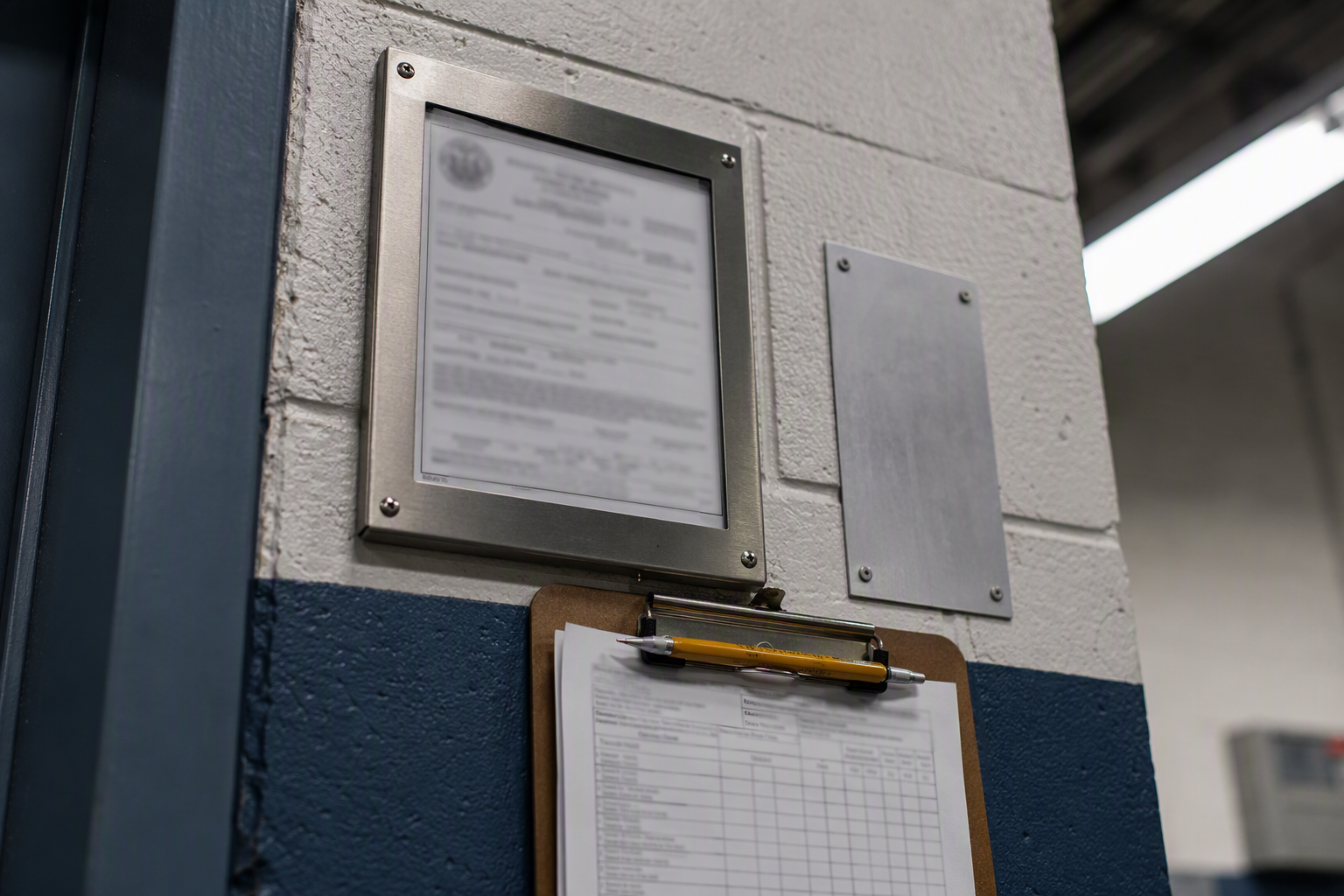
The Florida DBPR Bureau of Elevator Safety requires periodic inspections and issues certificates of operation for compliant elevators. Inspections are conducted by state-licensed inspectors, and the resulting certificate must be posted in or near the elevator. Operating an elevator without a valid certificate of operation is a violation under Florida Statutes.
Beyond state inspections, ASME A17.1 and A17.3 call for routine maintenance and periodic testing by qualified elevator mechanics. For senior living facilities, where elevator downtime directly affects resident mobility and safety, a proactive maintenance agreement — rather than reactive repair scheduling — is strongly advisable.
—
What Is the Process for Planning an Elevator Upgrade at a Senior Living Facility?
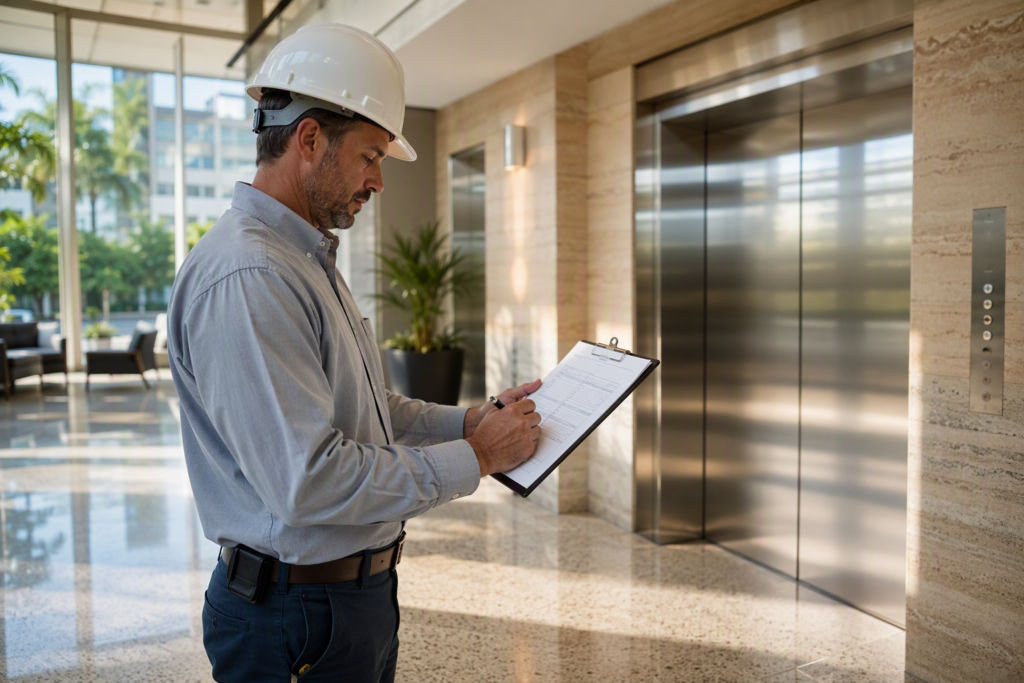
- Conduct a compliance audit. A qualified elevator contractor evaluates the existing equipment against current ASME A17.3, ADA, and Florida Building Code requirements and documents gaps.
- Prioritize by risk and regulatory exposure. Life-safety items — emergency communications, firefighters’ operation, door safety — are addressed first. Accessibility and comfort upgrades are sequenced to minimize resident disruption.
- Obtain permits from the Florida DBPR. All elevator work in Florida requires permits through the Bureau of Elevator Safety before work begins. Working without a permit exposes the facility operator to fines and liability.
- Schedule work to maintain access. Multi-elevator facilities can stagger unit downtime. Single-elevator buildings require careful coordination with facility management and, where required, temporary accessible accommodations for affected residents.
- Complete required testing. After modernization, acceptance testing is performed and a state-licensed inspector must approve the work before the elevator returns to service.
- Update maintenance protocols. Post-upgrade, maintenance schedules, emergency call procedures, and staff training should be reviewed to reflect new equipment capabilities.
—
Does Florida Require Emergency Power for Elevators in Assisted Living Facilities?
Florida Building Code and state-specific assisted living facility regulations address emergency power. In multi-story assisted living facilities, at least one elevator is typically required to operate on emergency power so that non-ambulatory residents can be evacuated or sheltered in place during power outages — a particularly relevant concern in South Florida’s hurricane environment. Facilities should verify their specific emergency power obligations with their AHCA surveyor and a licensed Florida elevator contractor familiar with local authority having jurisdiction (AHJ) interpretations.
—
How Does Axxiom Elevator Florida Support Senior Living Facilities in Pompano?
Axxiom Elevator Florida is a certified elevator service company serving the Pompano, FL area and the broader South Florida region, including Broward County, Palm Beach County, and Miami-Dade County. The company specializes in the full range of elevator services that senior living operators require: code compliance evaluations, modernization planning and execution, preventive maintenance programs, and coordination with state inspectors for permitting and acceptance testing.
Axxiom Elevator Florida understands that in a senior care environment, an elevator is not simply a convenience — it is part of the care infrastructure. Service planning accounts for the operational realities of these facilities, including resident mobility needs, AHCA inspection schedules, and the South Florida climate’s effects on equipment longevity. When issues arise, the company maintains availability for urgent service needs, recognizing that an out-of-service elevator at a senior living community requires prompt attention.
—
What Should Facility Administrators Ask When Evaluating an Elevator Service Provider?
Senior living administrators evaluating elevator contractors in Florida should ask prospective vendors:
- Are your mechanics licensed under Florida Statutes as required by the DBPR Bureau of Elevator Safety?
- Do you have experience with AHCA-regulated facilities and familiarity with how elevator compliance intersects with facility licensure?
- Can you manage the full permit-to-inspection workflow through the Florida DBPR?
- Do you offer preventive maintenance agreements structured around the continuous-availability needs of a senior care setting?
- How do you handle emergency service requests for facilities where elevator access is critical to resident welfare?
Choosing a contractor with demonstrated Florida-specific code knowledge — not a generalist unfamiliar with DBPR processes — reduces compliance risk and project delays.
—
Schedule a Free Consultation
Axxiom Elevator Florida helps senior living and assisted living operators in Pompano, FL and throughout South Florida meet their elevator code obligations, plan cost-effective upgrades, and maintain the reliable access their residents depend on. Contact the team today to schedule a no-obligation consultation and compliance review.
Call Axxiom Elevator Florida:
Need elevator service you can rely on? Axxiom Elevator Florida is ready to help.