Elevator Out of Service: What to Do — Complete Guide for Building Owners & Managers
An elevator outage can disrupt a building’s daily operations, create liability exposure, and — in multi-story properties — leave mobility-impaired residents or visitors without required accessible access. Whether the outage is caused by a minor fault code, a mechanical failure, or a failed inspection, every building owner and property manager needs a clear, step-by-step response plan. This guide covers everything from the immediate actions required in the first minutes to long-term compliance strategies, and is written with the technical depth needed to satisfy Florida’s elevator safety requirements in 2026.
What Should You Do Immediately When an Elevator Goes Out of Service?
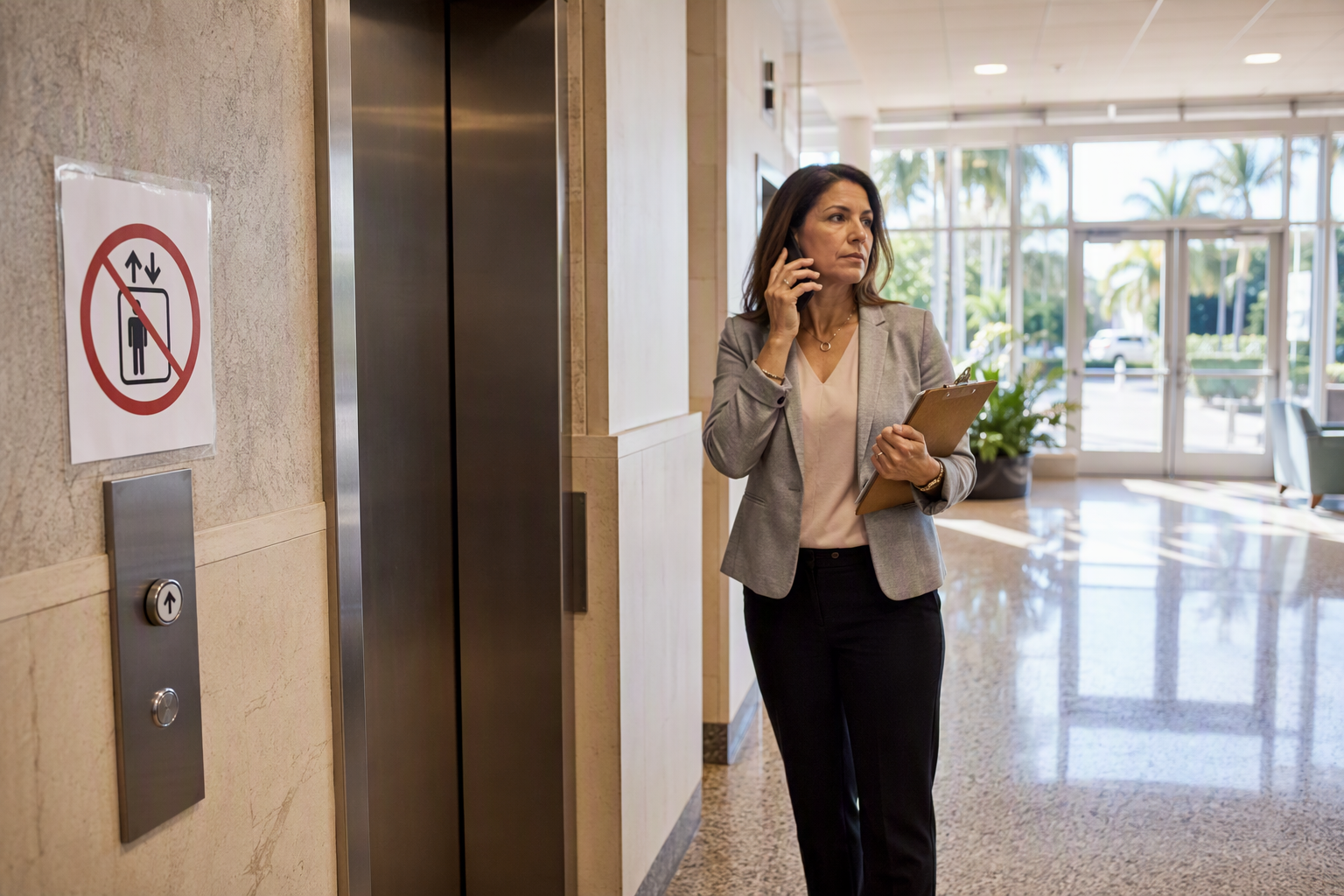
The first priority is passenger safety: confirm no one is trapped inside the cab, post out-of-order signage at every landing, and contact a certified elevator contractor to assess the unit as quickly as possible.
A structured immediate-response protocol limits liability, protects building occupants, and keeps the property on the right side of Florida elevator statutes. The following ordered steps represent best-practice emergency response for commercial and residential building managers:
- Check for Trapped Passengers: Immediately call out to the elevator cab and, if your building has a two-way communication system inside the car (required under ASME A17.1 Safety Code for Elevators and Escalators), use it to confirm occupant status. If anyone is trapped, call 911 — do not attempt a DIY rescue.
- Secure the Elevator: Use the building’s main disconnect or machine room key switch to take the elevator out of normal operation. This prevents further calls to the car and potential secondary incidents.
- Post Signage at Every Landing: Place clearly visible “Elevator Out of Service” notices at all floor call buttons, not just the lobby. This prevents additional passengers from waiting indefinitely.
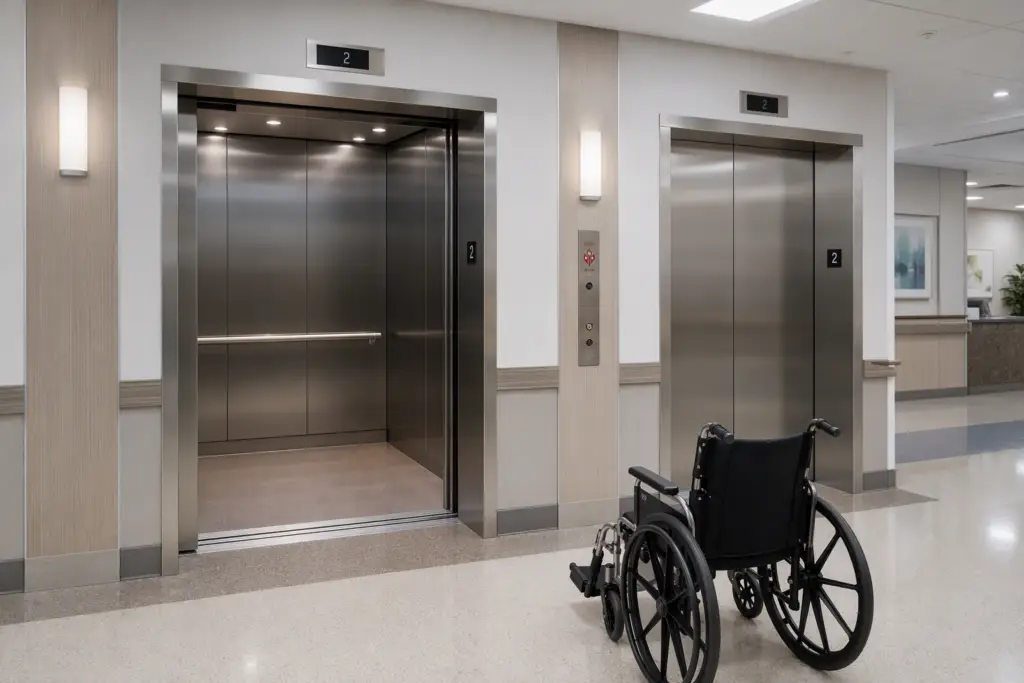
- Identify an Accessible Alternative: Immediately activate any ADA-compliant evacuation plan for mobility-impaired occupants. Under ADA requirements, building managers have an obligation to provide equivalent accessible access or a documented emergency plan when a primary accessible route is unavailable.
- Document the Time and Observable Symptoms: Note the exact time the elevator stopped, any fault codes displayed on the controller, abnormal sounds, or odors. This information is critical for the service technician and for your incident log.
- Contact a Certified Elevator Service Company: Call a licensed Florida elevator contractor — such as Axxiom Elevator Florida, serving Pompano Beach and Sarasota — to dispatch a qualified mechanic for diagnosis and repair.
- Notify Your Insurance Carrier (if warranted): If the outage was caused by a significant mechanical failure, water intrusion, or a safety incident, notify your property insurer per your policy terms.
- Log the Incident in Your Maintenance Records: Florida’s elevator inspection requirements expect complete maintenance histories. Document every outage, its apparent cause, and resolution.
Is a Building Owner Legally Required to Fix an Out-of-Service Elevator Quickly?
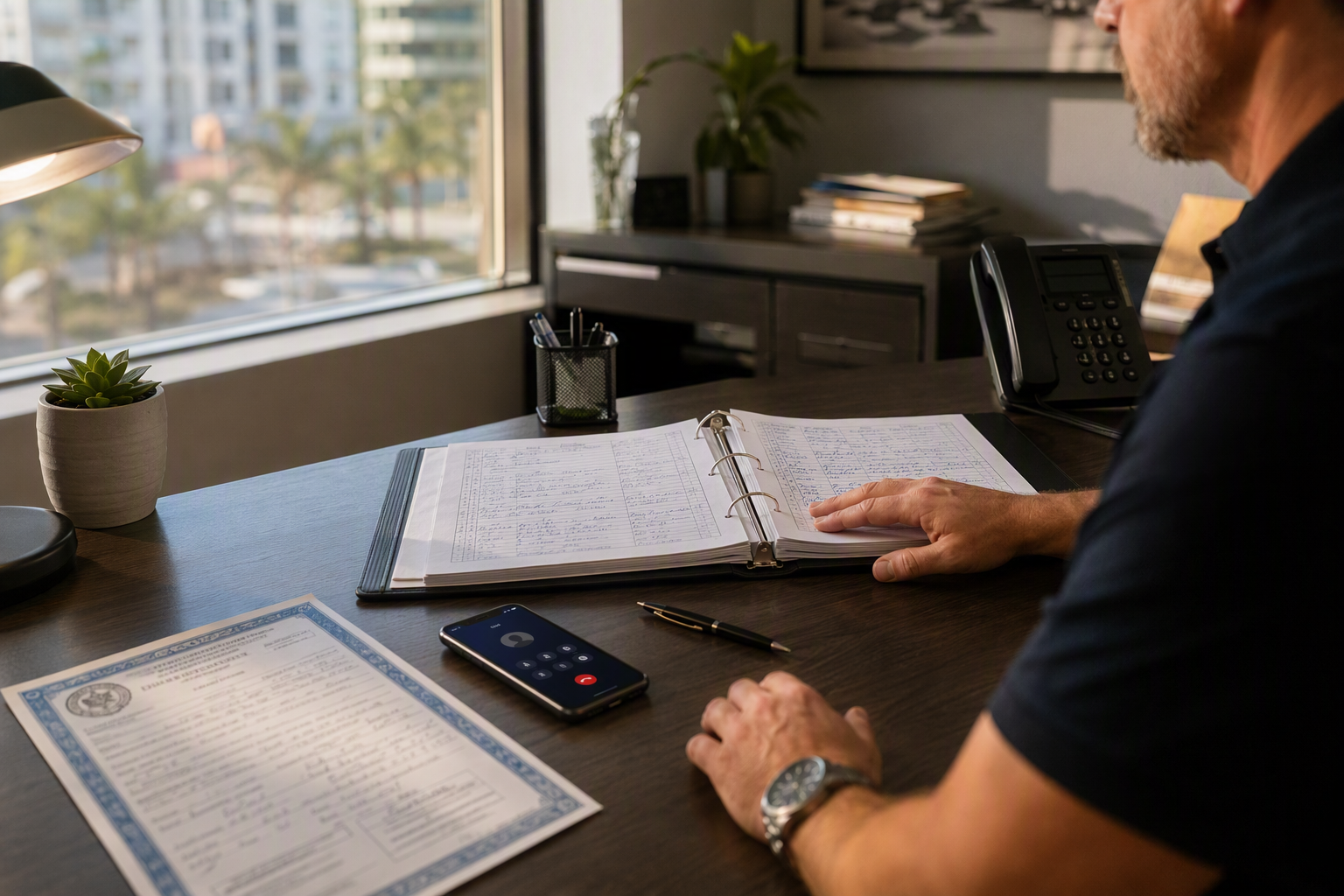
Yes — Florida law and federal ADA obligations create real urgency, particularly when the elevator is the only accessible route in a building required to comply with accessibility standards.
Florida’s elevator safety program is administered under Chapter 399 of the Florida Statutes. Elevator owners are responsible for keeping their equipment in safe operating condition and must have a valid Certificate of Operation on file. Operating an elevator with a known safety defect is a violation. While the statute does not prescribe a specific maximum number of hours a unit may remain out of service before penalties apply, allowing a known unsafe condition to persist without remediation creates direct liability exposure.
Under the ADA, buildings covered by Title II (state and local government) and Title III (places of public accommodation) must maintain accessible features in operable condition. The ADA expressly states that isolated or temporary interruptions in accessibility due to maintenance or repairs are permissible, but owners are expected to restore access promptly and to have a plan in place for the interim period. Prolonged outages without mitigation steps can trigger ADA complaints.
What Are the Most Common Reasons an Elevator Goes Out of Service?
The most common causes include door system malfunctions, worn or damaged safety components, electrical faults, hydraulic fluid issues (for hydraulic units), and failures triggered by the elevator’s built-in safety circuits.
Understanding the root cause helps prioritize repair urgency and cost. Door system problems — including misaligned door operators, worn rollers, or faulty door sensors — are among the most frequently cited causes of unplanned outages. Safety circuit trips, which can be triggered by overloads, leveling errors, or buffer contact, are designed by the ASME A17.1 code to halt the elevator before an unsafe condition develops. These trips are a feature, not a flaw — but they require a qualified mechanic to diagnose the underlying trigger and reset the system safely.
Hydraulic elevator outages often involve seal degradation, low fluid levels, or valve malfunctions. Traction elevator outages may involve brake wear, rope issues, or drive controller faults. In Florida’s coastal climate, humidity and salt air accelerate corrosion in electrical components — a particularly relevant factor for properties in Pompano Beach and Sarasota.
What Is the Difference Between a Minor Fault Reset and a Full Repair?
A minor fault reset clears a temporary safety-circuit trip and restores normal operation without replacing parts; a full repair addresses the underlying mechanical, electrical, or hydraulic component that caused the fault or failure.
Some outages are caused by nuisance trips — for example, a door that was held open too long triggers a door dwell timer fault. In these cases, a qualified technician can inspect the unit, confirm no underlying damage exists, and reset the controller. However, many fault codes indicate a genuine component failure that requires parts replacement. Performing a reset without investigating the root cause is unsafe and may violate ASME A17.1 maintenance requirements. A certified elevator contractor will distinguish between a safe reset and a situation that requires parts before restoring service.
Can a Building Manager or Maintenance Staff Reset an Elevator Themselves?
In most cases, no — resetting an elevator following an unplanned shutdown should only be performed by a licensed elevator mechanic who can verify the safety of the equipment before returning it to service.
Florida requires that elevator work — including maintenance, repair, and testing — be performed by individuals holding the appropriate license under Chapter 399. Untrained personnel attempting to reset or bypass safety systems can inadvertently mask a dangerous condition. There is one limited exception: some modern elevator controllers include a building manager reset function for specific low-level fault codes (such as a door obstruction timeout), which the manufacturer and elevator contractor may authorize and document in the maintenance agreement. This authorization must be explicit and should never extend to bypassing any safety device.
How Long Does It Typically Take to Repair an Out-of-Service Elevator?
Repair time depends on the root cause: simple resets or door adjustments may be resolved within hours, while component replacements requiring specialty parts can take days to weeks depending on parts availability.
The following table provides a general benchmark framework for common repair categories. These ranges are based on typical industry practices and parts lead times; actual timelines will vary by elevator type, age, and parts availability.
| Repair Category | Typical Scope | General Time Estimate | Parts Lead Time Factor |
|---|---|---|---|
| Safety Circuit Reset / Fault Code Clearance | Inspection + controller reset | Same day (hours) | No parts required |
| Door System Adjustment or Sensor Replacement | Door operator, rollers, sensors | Same day to 1–2 days | Most parts commonly stocked |
| Hydraulic Seal or Valve Repair | Cylinder seal, valve pack, fluid | 1–3 days | Moderate — some specialty valves |
| Traction Drive Controller Repair | Drive board, IGBT modules | 3–10 days | High — often special order |
| Hoist Rope Replacement | Full rope set, sheave inspection | 1–3 days (labor intensive) | Moderate — custom cut lengths |
| Major Modernization (aged components) | Controller, motor, cab interior | Weeks to months | High — full project scope |
Does an Out-of-Service Elevator Need to Pass Inspection Before Returning to Service?
After certain types of repairs — particularly those involving safety devices, structural components, or alterations — Florida requires a state inspection and, in some cases, re-issuance of the Certificate of Operation before the elevator may be returned to public use.
Under Florida Statute Chapter 399 and the ASME A17.1 Safety Code for Elevators and Escalators, alterations and major repairs trigger a mandatory inspection by a Qualified Elevator Inspector (QEI). Routine maintenance repairs and minor adjustments typically do not require a new inspection, but the elevator contractor must complete and retain proper documentation. Building owners should confirm with their service contractor exactly which repairs trigger an inspection requirement, as placing an elevator back in service without a required inspection is a statutory violation in Florida.
What Are the ADA Obligations When an Elevator Is Out of Service in a Multi-Story Building?
Under the ADA, when an elevator that serves as the primary accessible route is out of service, building operators must take reasonable steps to provide equivalent access and should communicate the outage and alternatives to building users.
For buildings with a single elevator serving mobility-impaired occupants, a prolonged outage creates a significant accessibility gap. The ADA’s maintenance-of-accessible-features obligation (28 CFR §36.211 for Title III entities) requires that covered entities keep accessibility features operational and address outages promptly. Best practices include: posting multilingual notices at all entrances directing users to staff who can assist, activating any documented emergency evacuation plan that accounts for mobility-impaired individuals, and coordinating with the elevator service contractor to prioritize restoration of service. In residential multi-family settings covered under the Fair Housing Act, similar obligations apply.
Should You Contact Your Elevator Service Company or the State When an Elevator Goes Out of Service?
Contact your certified elevator service company first to diagnose and repair the unit; the state elevator safety office becomes involved when required inspections or permit filings are triggered by the nature of the repair.
Florida’s Division of Hotels and Restaurants (under the Department of Business and Professional Regulation) oversees elevator safety. Building owners are not generally required to call the state every time a unit goes out of service for routine repairs, but they are required to maintain inspection records and comply with the Certificate of Operation requirements. If a significant safety event occurs — such as an uncontrolled descent, entrapment, or injury — OSHA recordkeeping and reporting obligations may also apply in workplace settings. An experienced Florida elevator contractor will guide building owners through the appropriate notifications for each situation.
How Can Regular Preventive Maintenance Reduce Elevator Outages?
Scheduled preventive maintenance — performed at code-compliant intervals by a licensed elevator contractor — is the most effective way to identify worn components before they cause an unplanned outage.
The ASME A17.1 Safety Code for Elevators and Escalators establishes requirements for periodic tests and inspections including annual safety tests, five-year hydraulic pressure tests, and other interval-based checks. A well-structured preventive maintenance program goes beyond minimum code compliance by including lubrication schedules, door system adjustments, controller diagnostic reviews, and rope or belt condition assessments. For Florida properties — particularly in high-humidity coastal areas like Pompano Beach and Sarasota — corrosion checks on electrical terminals and guide rail lubrication schedules are especially important. Axxiom Elevator Florida provides preventive maintenance programs tailored to the specific equipment and environmental conditions of properties it serves throughout South Florida and the Gulf Coast.
What Should You Look for in an Elevator Service Contract When Equipment Goes Down?
A strong elevator service contract should clearly define the scope of maintenance coverage, response procedures for outages, parts coverage terms, and the contractor’s licensing and insurance credentials.
When evaluating elevator service agreements in Florida, building managers should look for the following key provisions: confirmation that all field work will be performed by Florida-licensed elevator mechanics; clarity on which repairs are included versus billed separately; provisions for emergency response procedures; documentation and record-keeping commitments; and language specifying compliance with ASME A17.1 and Florida Chapter 399. Vague “full maintenance” contracts that don’t specify parts coverage can leave building owners exposed to large repair invoices when major components fail. Reviewing the contract terms with a knowledgeable elevator contractor before signing is strongly recommended.
What Is an Elevator Certificate of Operation and What Happens if It Lapses?
Florida’s Certificate of Operation (CO) is the state-issued permit that authorizes a specific elevator unit to operate; if it lapses or is suspended, operating the elevator is illegal and creates significant liability.
Under Florida Statute §399.061, every elevator must have a valid Certificate of Operation posted inside or adjacent to the elevator. The CO is issued following a satisfactory safety inspection by a state-approved QEI. If an elevator is placed out of service due to a failed inspection or a safety violation, it cannot legally be returned to service until the deficiencies are corrected and a new inspection confirms compliance. Building owners who allow operation of an elevator with a lapsed or suspended CO are subject to civil penalties. Axxiom Elevator Florida assists building owners throughout the inspection, deficiency correction, and re-certification process to restore lawful operation as efficiently as possible.
What Is a Modernization and When Does an Out-of-Service Elevator Warrant One?
An elevator modernization is a comprehensive upgrade of one or more major systems (controller, drive, doors, cab) and is warranted when the cost or frequency of repairs on aging equipment makes continued maintenance economically impractical or when components are no longer available.
When an elevator experiences its third or fourth significant unplanned outage within a short period, or when a repair requires obsolete components that must be custom-manufactured or sourced from salvage, modernization becomes a serious consideration. Beyond economics, aging equipment may also fall short of current ASME A17.1 safety requirements as codes are updated. Florida adopts new editions of ASME A17.1 on a regulatory cycle, and modernization projects may trigger code-compliance upgrades that bring the unit to current standards. A certified elevator contractor can perform a condition assessment that objectively compares the total cost of ownership of continued repairs versus modernization investment.
How Do You Handle Elevator Entrapment — When a Passenger Is Stuck Inside?
Passenger entrapment is an emergency: call 911 immediately, maintain communication with the trapped passenger through the in-cab emergency phone, and do not attempt to force open doors or move the car without trained personnel.
The ASME A17.1 Safety Code for Elevators and Escalators requires a two-way means of communication inside every elevator car, precisely because entrapment is a foreseeable event. When entrapment occurs, building staff should: call 911; use the emergency intercom or phone to reassure the passenger and instruct them to stay calm and away from the doors; prevent bystanders from attempting to pry doors open (which can create a fall hazard if the car is between floors); and await arrival of the fire department and/or a licensed elevator mechanic qualified to perform an emergency retrieval. After any entrapment event, a thorough inspection of the elevator should be completed before it is returned to service, and the incident should be documented in the building’s maintenance records.
Are There Special Considerations for Hydraulic Elevators That Go Out of Service?
Yes — hydraulic elevators carry additional environmental and safety considerations, including the requirement for a hydraulic fluid containment system and mandatory periodic pressure testing of the hydraulic cylinder.
Florida’s coastal and subtropical environment creates specific challenges for hydraulic elevator systems. Hydraulic fluid leaks represent both a mechanical failure and an environmental hazard, particularly in jurisdictions with groundwater sensitivity. The ASME A17.1 code requires that hydraulic elevators have a means to contain oil in the event of a leak. Additionally, Florida requires a five-year hydraulic pressure test to verify cylinder integrity — a critical safety check given that aging single-bottom cylinders in older installations can be prone to corrosion. When a hydraulic elevator goes out of service, the technician should assess for fluid loss, valve condition, and whether the cylinder integrity test schedule is current.
What Records Should a Building Owner Keep Related to Elevator Outages and Repairs?
Building owners should maintain a complete written maintenance log that includes every outage, the date and symptoms, the contractor’s diagnosis, all parts replaced, repair completion date, and any inspection reports or certificates issued.
Florida law and ASME A17.1 maintenance requirements both support comprehensive record-keeping as a cornerstone of safe elevator operation. In the event of a personal injury claim, a detailed maintenance history is the building owner’s primary evidence that the equipment was properly maintained. Records to retain include: all service invoices and work orders; QEI inspection reports; Certificates of Operation; annual test certifications; and documentation of any safety device tests. These records should be readily accessible to Florida state inspectors upon request. Electronic record-keeping systems — some of which are offered by elevator contractors as part of service agreements — make this process more reliable than paper-only logs.
How Does Elevator Age Affect the Likelihood and Severity of Outages?
Older elevators — particularly those beyond 20 to 25 years of age — experience increasing outage frequency as mechanical wear accumulates, components become harder to source, and the original equipment design may no longer meet current safety code requirements.
Aging equipment does not automatically become unsafe, but the risk profile changes meaningfully. Controllers from older generations may use relay logic or early solid-state technology for which replacement boards are no longer manufactured. Drive systems, rope or belt assemblies, and door operators all have finite service lives that are affected by usage cycles and environmental conditions. In Florida’s humid coastal climate, accelerated corrosion of electrical components and guide rail systems can compress the effective service life of elevator components compared to drier climates. A proactive condition assessment — rather than a reactive repair-after-failure approach — is the professional standard for managing aging elevator assets.
What Should a Building Owner Expect During a Service Visit for an Out-of-Service Elevator?
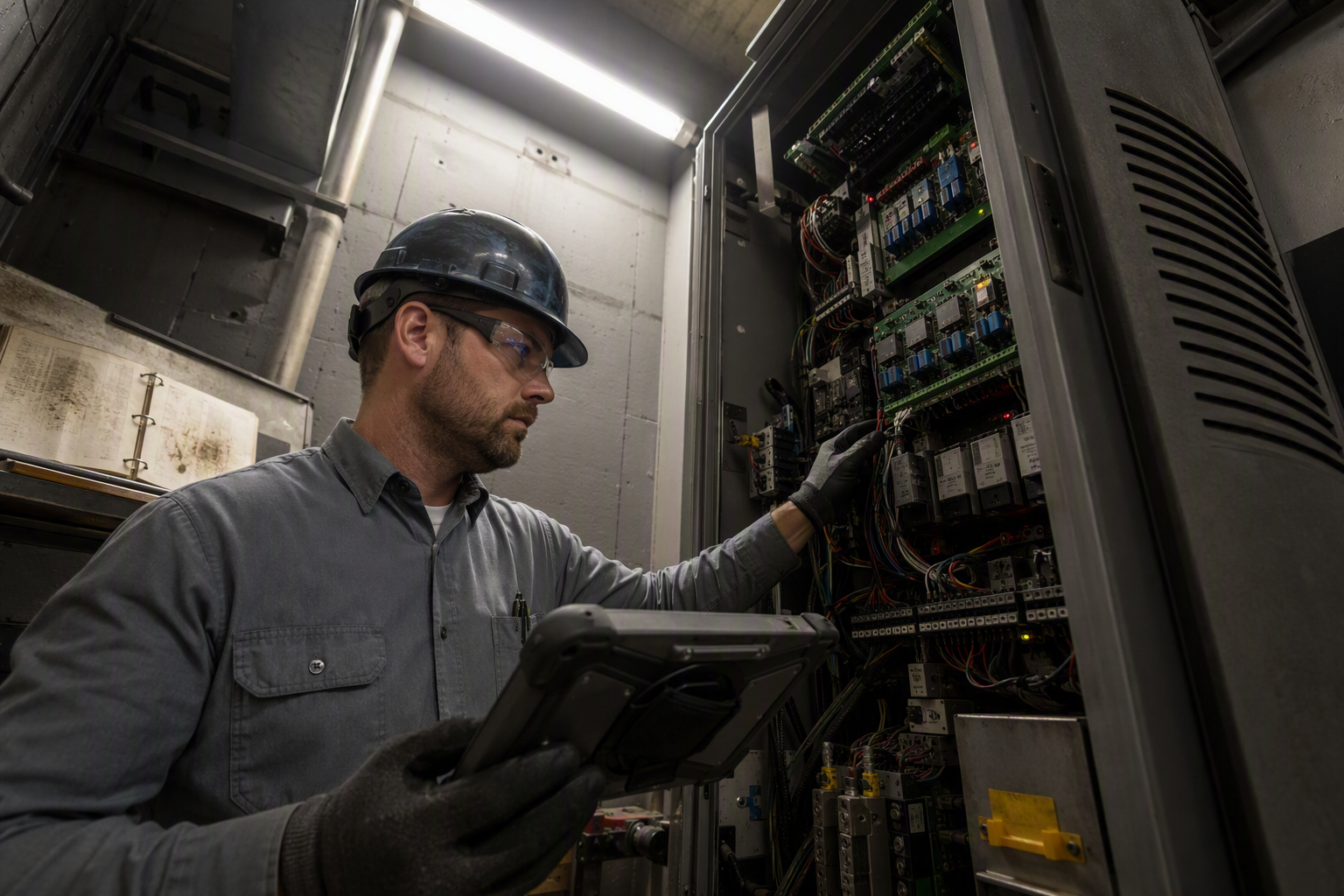
During a service visit, a licensed elevator mechanic will conduct a systematic diagnostic inspection, identify the root cause of the outage, provide a written assessment of findings and required repairs, and — where it is safe to do so — restore service or clearly explain the conditions required before restoration.
A professional service visit for an unplanned outage follows a logical sequence: the technician will review any fault codes stored in the controller, physically inspect the machine room, car top, pit, and landing door interlocks, and test safety devices as appropriate. The technician should provide clear, documented communication of findings — not just a reset with no explanation. Building owners should ask for written documentation of every service visit, including what was found, what was done, and any recommended follow-up items. This documentation supports the maintenance record requirements under Florida law and ASME A17.1.
Why Should Florida Building Owners in Pompano Beach and Sarasota Choose a Local Certified Elevator Contractor?
A local certified elevator contractor brings knowledge of Florida-specific code requirements, familiarity with the environmental conditions affecting equipment in South Florida and the Gulf Coast, and the logistical ability to respond to outages without the delays associated with out-of-area contractors.
Florida elevator regulations under Chapter 399 require that elevator work be performed by properly licensed contractors familiar with the state’s inspection and permitting processes. A contractor who regularly works with Florida’s Division of Hotels and Restaurants understands the Certificate of Operation renewal process, the state’s adopted edition of ASME A17.1, and the specific inspection protocols used by Florida QEIs. For properties in Pompano Beach and Sarasota — both markets served by Axxiom Elevator Florida — proximity means faster diagnostic response, better parts logistics, and a service relationship built on ongoing knowledge of the specific equipment in those buildings. Choosing a contractor without demonstrated Florida-specific expertise can result in code compliance gaps or delays in returning equipment to lawful service.
What Is the Risk of Attempting to Use a Partially Functioning Elevator to “Get By” Until Repairs Are Scheduled?
Using an elevator that is malfunctioning — even partially — creates serious personal injury liability, may void insurance coverage for related claims, and constitutes operation of unsafe equipment in violation of Florida statutes and ASME A17.1 safety requirements.
When an elevator displays a fault, is leveling improperly, is making unusual sounds, or has had any safety device triggered, operating it in that condition bypasses the very protection that the safety code is designed to provide. Florida Statute Chapter 399 places the responsibility for safe equipment squarely on the elevator owner. OSHA standards for workplace settings similarly require that defective equipment be taken out of service until repaired. The short-term inconvenience of an out-of-service elevator is always preferable to the liability, injury, and legal consequences of a safety incident on a known-defective unit. When building management is unsure whether an elevator can safely remain in operation, the correct action is to take it out of service and contact a licensed elevator contractor for an immediate assessment.
Get Your Elevator Back in Service — Contact Axxiom Elevator Florida
When an elevator goes out of service, every hour of downtime matters — for your building’s operations, your tenants’ safety, and your compliance standing under Florida law and the ADA. Axxiom Elevator Florida is a certified elevator service company serving commercial and residential properties throughout Pompano Beach, FL and Sarasota, FL. From emergency outage diagnosis to preventive maintenance programs, full repairs, and modernization assessments, Axxiom Elevator Florida provides the licensed, documented service that Florida building owners require.
Contact Axxiom Elevator Florida for a free elevator assessment: