Elevator Maintenance and Safety Requirements for Senior Living and Assisted Living Facilities in Florida
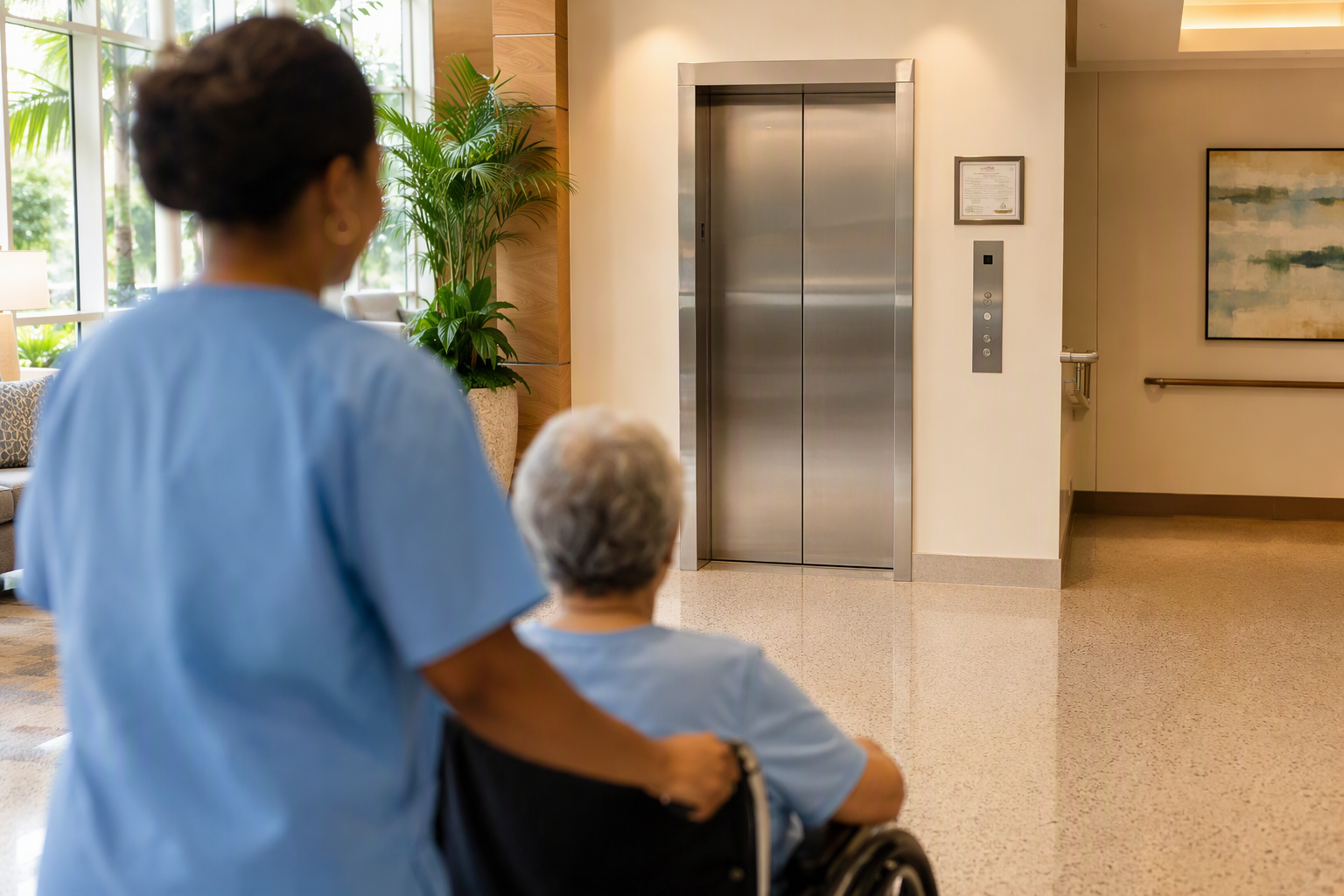
For senior living and assisted living communities in Pompano Beach, Sarasota, and throughout Florida, elevator reliability is not simply a convenience — it is a life-safety obligation. Residents may depend on elevators for every daily movement, making compliance with Florida’s elevator laws and federal accessibility standards a critical operational priority for facility administrators and ownership groups.
This guide covers every layer of compliance that applies to healthcare and senior housing elevators in Florida, from state statute to federal accessibility law, and explains what facility managers should expect during inspection and how Axxiom Elevator Florida supports facilities in maintaining full compliance year-round.
What Florida Law Governs Elevators in Senior Living Facilities?
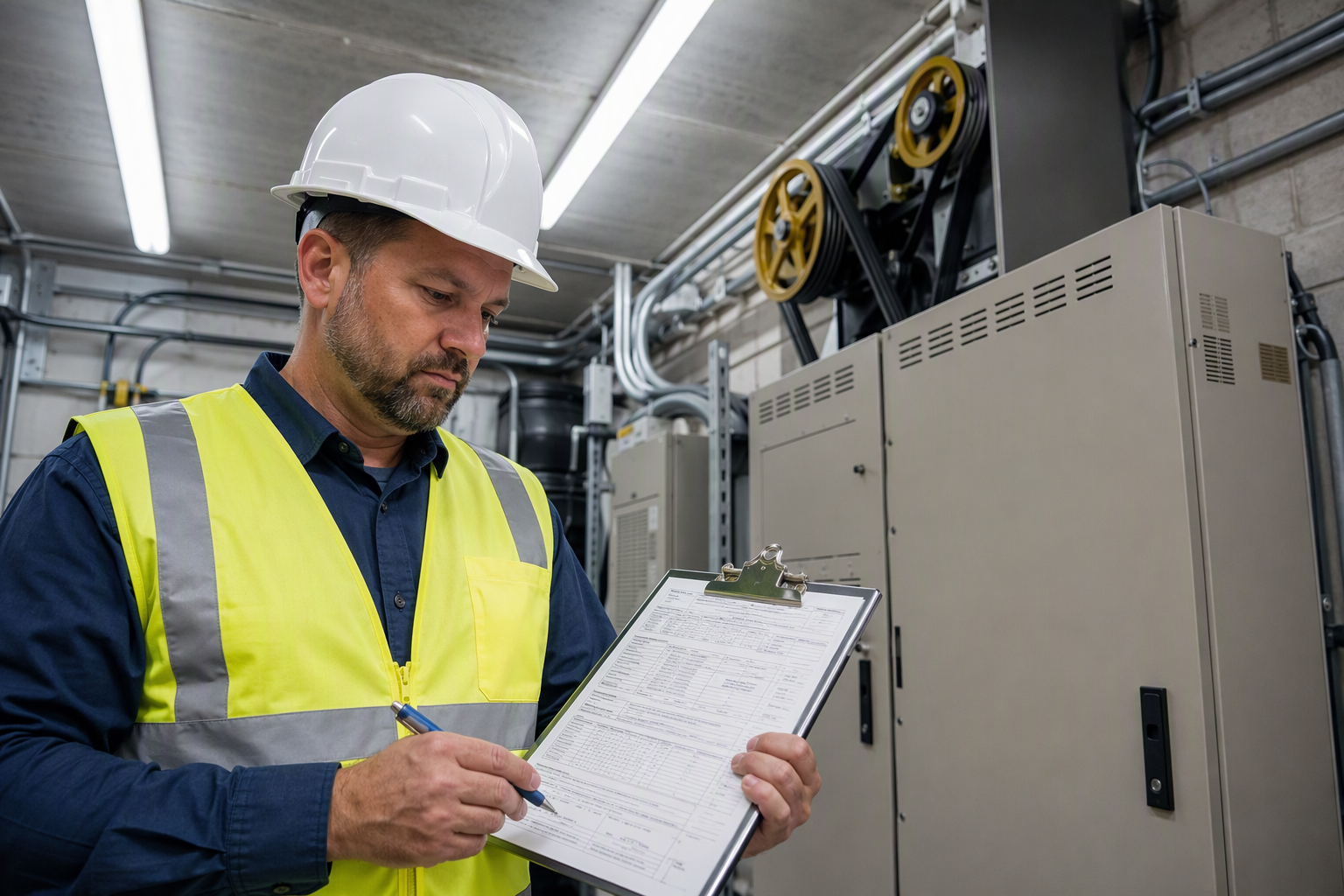
The primary legal framework is Chapter 399, Florida Statutes — the Elevator Safety Act, administered by the Florida Department of Business and Professional Regulation (DBPR), Division of Hotels and Restaurants, Bureau of Elevator Safety. Implementing rules appear in Chapter 61C-5, Florida Administrative Code.
Florida has adopted the ASME A17.1/CSA B44, 2019 edition (ASME A17.1-2019) Safety Code for Elevators and Escalators as the technical standard, with the 2019 edition effective in Florida as of December 31, 2023. This edition governs equipment design, safety devices, load ratings, and maintenance requirements for virtually all commercial conveyances, including those inside senior living and assisted living communities.
Once a certificate of operation is issued, Florida law places the responsibility for safe operation, proper maintenance, regular inspection, and correction of any code deficiencies squarely on the elevator owner — in many cases, the facility operator or property management company.
How Often Must Elevators in Assisted Living Facilities Be Inspected in Florida?
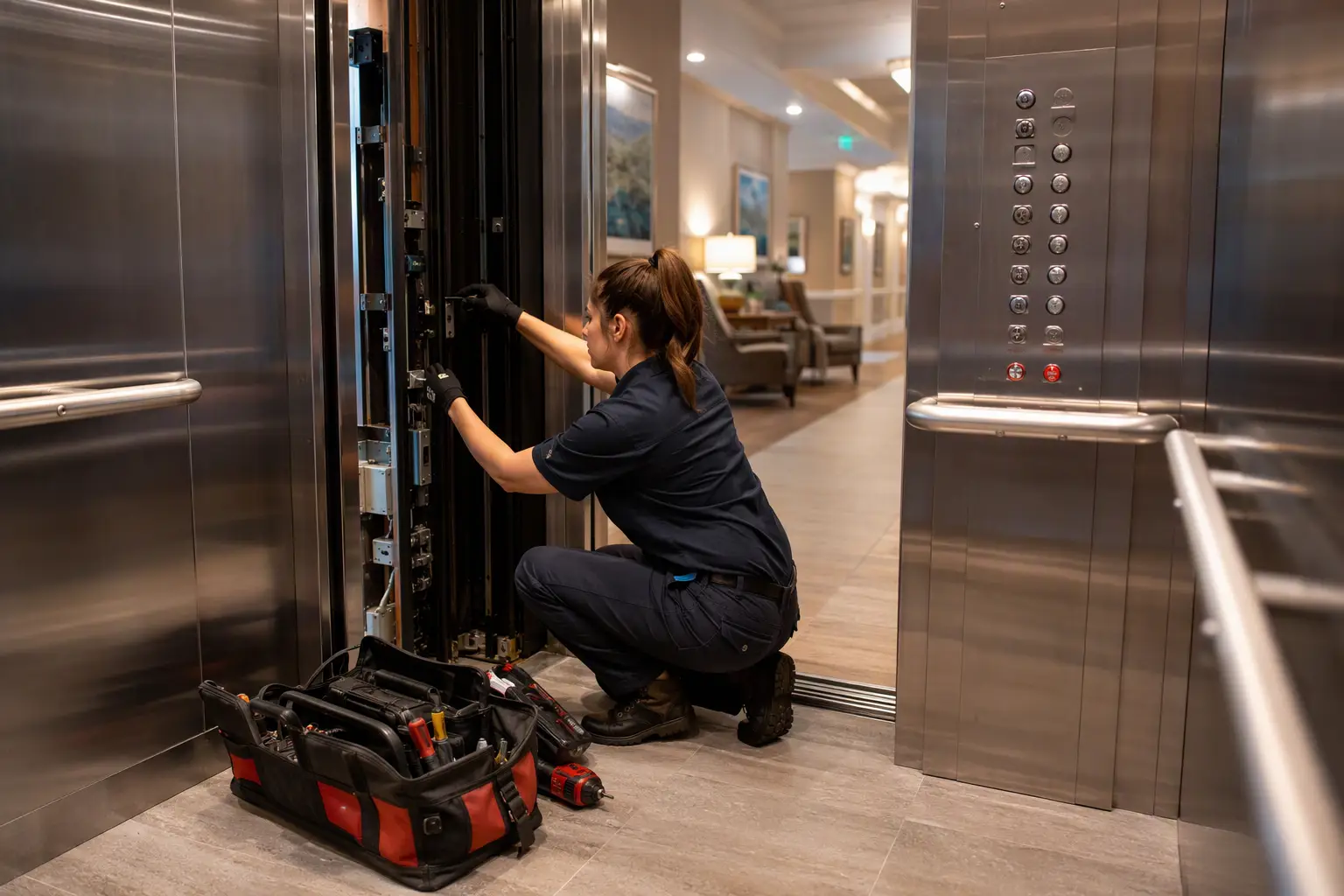
Florida requires every elevator covered by Chapter 399 to be inspected annually by a certified elevator inspector. The inspector must hold a current qualified elevator inspector credential and must register with the state each year, demonstrating eight hours of continuing education.
A Florida certificate of operation is valid for no more than two years. Renewal is only possible for a conveyance that has received a current satisfactory inspection. Operating on an expired certificate of operation is a violation of Florida law — a risk no senior living operator can afford, given the potential for regulatory action, liability exposure, and harm to residents who depend on elevator access.
In Pompano Beach, elevator inspections within Broward County are enforced through the Broward County Building Code Division, which enforces Florida’s elevator law under Chapter 399 using its own certified elevator inspectors. In Sarasota, facilities fall under the statewide DBPR framework administered directly at the state level. Axxiom Elevator Florida works within both local enforcement environments to help facilities stay ahead of inspection deadlines.
What Must Be Posted Inside the Elevator at a Senior Living Facility?
Florida law is specific: the certificate of operation must be posted in a conspicuous location inside the elevator cab, displayed in a frame with a transparent cover. For assisted living and senior living facilities — where residents, family members, state surveyors, and DBPR inspectors all regularly ride the elevator — an improperly displayed or expired certificate is immediately visible and subject to citation.
Facility managers should verify that every cab contains a valid, clearly legible certificate at all times. Axxiom Elevator Florida advises clients to build certificate expiration tracking into their facility compliance calendar to prevent lapses.
Which Federal Standards Apply to Elevators in Senior Living Communities?
Two federal frameworks overlay Florida’s state requirements for senior housing facilities:
- Americans with Disabilities Act (ADA): Assisted living and senior living facilities that qualify as places of public accommodation or multi-tenant residential facilities subject to ADA must provide accessible vertical transportation. ADA standards govern cab dimensions, door clear widths, control panel height, call button height and design, tactile markings, and audible floor announcements. Facilities built or significantly renovated after ADA’s effective dates must meet current ADA Standards for Accessible Design. Even facilities not newly constructed have ongoing obligations when barrier removal is readily achievable.
- ASME A17.3 Safety Code for Existing Elevators and Escalators: For existing installations that predate the current ASME A17.1-2019 edition, ASME A17.3 provides the retroactive safety standard. Florida’s adoption of ASME A17.1-2019 for new installations and alterations does not eliminate the ongoing obligation to maintain existing equipment to applicable safety standards.
- OSHA: Maintenance personnel and elevator technicians working on facility elevators are subject to OSHA general industry and construction standards for lockout/tagout, confined space entry, and fall protection. Facilities that allow unregistered or uncertified technicians to perform elevator work may face OSHA exposure in addition to DBPR violations.
Who Is Authorized to Maintain or Repair Elevators at a Florida Assisted Living Facility?
Florida law is unambiguous: all elevator maintenance, installation, and repair must be performed by a Florida-registered elevator company. The technicians performing the work must hold a Florida elevator certificate of competency issued by the state. That certificate expires annually and is renewed only with proof of eight hours of continuing education — ensuring technicians remain current with code changes, including the 2019 ASME A17.1 edition now in effect.
Florida-registered elevator companies must register with the state every year and carry general liability insurance. Facility operators who hire unregistered contractors — even inadvertently — expose themselves to regulatory penalties and potential liability if an incident occurs.
Axxiom Elevator Florida is a Florida-registered elevator company serving senior living and assisted living facilities in Pompano Beach, Sarasota, and surrounding communities, with technicians holding current Florida certificates of competency.
What Happens If a Resident Is Injured in an Elevator at a Senior Living Facility?
Under Chapter 399, Florida Statutes, the certificate of operation holder must report any elevator accident to the state within five working days. For senior living facilities, this reporting obligation applies regardless of the apparent severity of the incident.
Beyond the reporting requirement, an incident typically triggers an investigation by the Bureau of Elevator Safety or the applicable local authority having jurisdiction (AHJ). Facilities with documented, up-to-date maintenance records are far better positioned to demonstrate due diligence.
The recommended steps following an elevator-related incident at a senior living facility are:
- Immediately take the affected elevator out of service and prevent further use.
- Secure the scene and contact emergency services if anyone requires medical attention.
- Notify the Florida Department of Business and Professional Regulation (DBPR), Bureau of Elevator Safety, of the accident within five working days as required by Chapter 399.
- Notify the local AHJ (e.g., Broward County Building Code Division for Pompano Beach facilities).
- Contact your registered elevator company — such as Axxiom Elevator Florida — to perform a documented inspection before returning the elevator to service.
- Preserve all maintenance logs, inspection records, and work orders for the investigation.
- Consult legal counsel regarding incident documentation and liability considerations.
Does ADA Require Specific Elevator Features for Residents with Mobility Impairments?
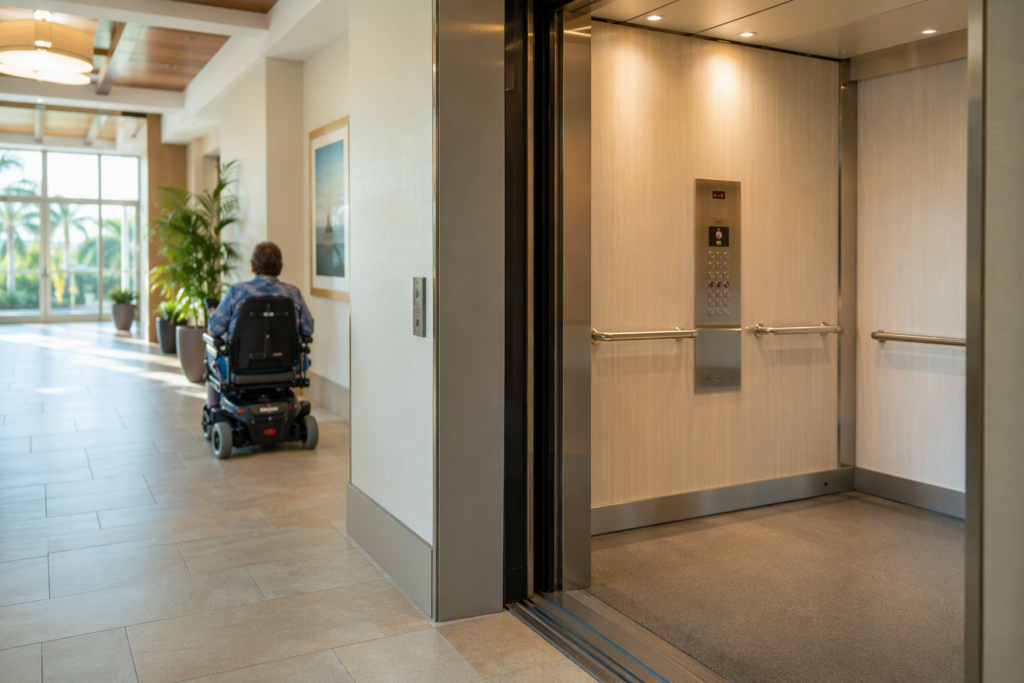
Yes. The ADA Standards for Accessible Design specify detailed requirements for elevators serving facilities that fall under ADA jurisdiction, including:
- Minimum cab interior dimensions to accommodate wheelchairs and mobility devices
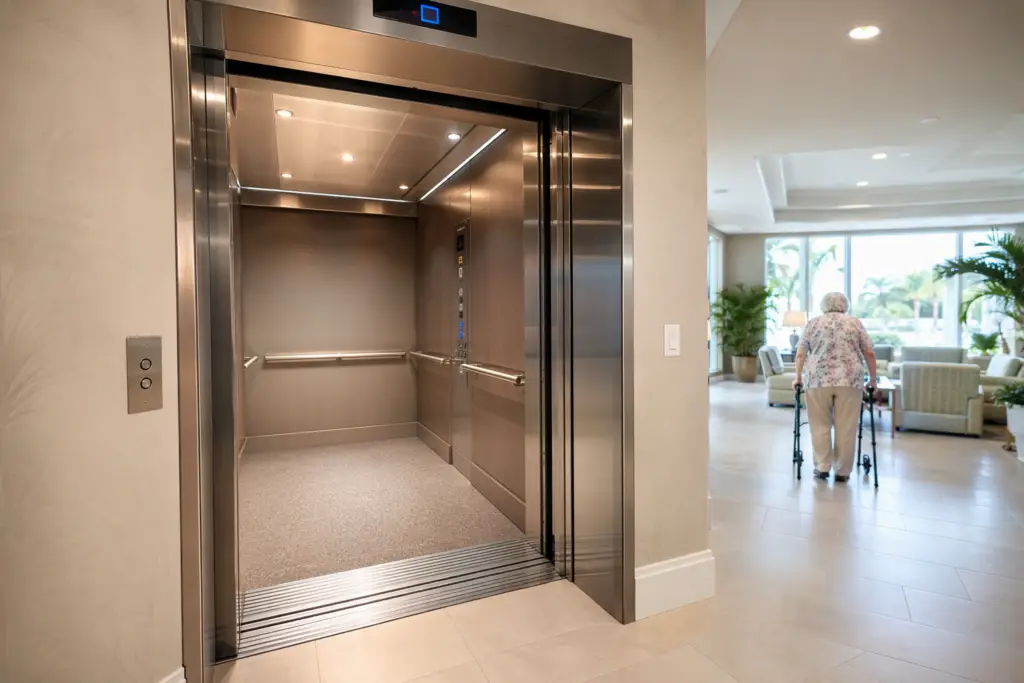
- Door clear width and timing requirements that allow residents using walkers, wheelchairs, or scooters to enter and exit safely
- Call buttons and control panels at heights accessible to wheelchair users
- Tactile and Braille designations at hoistway entrances and on cab controls
- Audible and visual floor indicators to assist residents with vision or hearing impairments
- Leveling accuracy so that cab floors align with landings to prevent tripping hazards for residents with limited mobility
Leveling performance and door timing are also addressed within the ASME A17.1-2019 technical requirements, reinforcing the overlap between accessibility compliance and mechanical maintenance standards.
What Permits Are Required Before Altering an Elevator at a Senior Living Facility in Florida?
A state permit is required before any conveyance is installed or altered in Florida. The permit must be applied for by a Florida-registered elevator company prior to beginning work. Before a new or altered conveyance is placed in service, it must be inspected by a certified elevator inspector who has no employment relationship, association, or conflict of interest with the permit holder or the owner. This independence requirement protects facility residents and the integrity of the inspection process.
For senior living facilities planning capital improvements — such as modernizations to improve ADA compliance, energy efficiency, or reliability — coordinating the permit process early with a registered company like Axxiom Elevator Florida prevents construction delays and ensures the facility does not operate a conveyance without a valid certificate of operation following the alteration.
What Is a Preventive Maintenance Contract and Why Does It Matter for Senior Living Facilities?
A comprehensive service maintenance contract with a Florida-registered elevator company is one of the most important tools a senior living facility can use to manage compliance risk. Under Chapter 399, Florida Statutes, an elevator (other than an escalator or dumbwaiter) that serves only two adjacent floors and is covered by a qualifying service maintenance contract is exempt from the standard annual inspection requirement while the contract remains in effect.
Beyond the specific statutory exemption, a documented preventive maintenance program demonstrates to DBPR inspectors, state surveyors reviewing assisted living facility licensure, and risk managers that the facility is fulfilling its owner obligations under Florida law. Maintenance logs also provide critical documentation if an incident or complaint is investigated.
Axxiom Elevator Florida provides ongoing maintenance programs structured to meet the requirements of Chapter 399 and the technical standards of ASME A17.1-2019, helping senior living communities in Sarasota, Pompano Beach, and across Florida maintain continuous compliance.
Questions Your Inspector Will Ask
When a certified elevator inspector or DBPR representative arrives at a senior living or assisted living facility, facility managers should be prepared to address the following:
- Is the current certificate of operation posted in each cab in a transparent-covered frame? An expired or missing certificate is an immediate violation under Chapter 399.
- When was the most recent full inspection, and who performed it? The inspector will verify the credential and independence of the prior inspector.
- Who holds the maintenance contract for this conveyance, and is that company Florida-registered? Inspectors may request proof of current registration and insurance.
- Are maintenance logs current and available for review? Logs should document all service visits, repairs, and parts replacements, with technician certification numbers recorded.
- Have any alterations been made since the last certificate of operation was issued, and were they permitted? Unpermitted alterations are a code violation and may void the certificate of operation.
- Have there been any incidents or entrapments since the last inspection, and were they reported to DBPR within five working days? Unreported accidents are a statutory violation.
- Are the hoistway, machine room, and pit clean, properly lit, and free of storage? ASME A17.1-2019 addresses machine room and pit conditions as part of safe equipment operation.
- Do all emergency communication systems in each cab function correctly? This is a critical life-safety requirement under ASME A17.1-2019, particularly important in a senior living environment where a resident could be trapped and need assistance.
- Are door reopening devices, leveling, and speed performance within code tolerances? These directly affect resident safety, particularly for those using mobility aids.
How Should a Senior Living Facility Choose an Elevator Service Company in Florida?
Facility administrators should verify the following before selecting an elevator maintenance provider:
- The company must be registered with the Florida DBPR, Bureau of Elevator Safety, for the current year
- The company must carry current general liability insurance as required by Florida law
- Technicians assigned to the facility must hold valid Florida elevator certificates of competency — renewed annually with continuing education
- The company should have documented experience servicing healthcare and senior housing environments, where resident safety demands above-average attention to accessibility and reliability
- The company should be familiar with the ASME A17.1-2019 edition currently adopted in Florida and any local requirements applicable to the facility’s jurisdiction (e.g., Broward County Building Code Division for Pompano Beach)
Axxiom Elevator Florida serves senior living and assisted living communities across Florida as a state-registered elevator company, with certified technicians equipped to perform maintenance, repair, and compliance documentation under Florida’s current regulatory framework.
Ready to Protect Your Residents and Your Facility?
Elevator compliance in senior living is not a once-a-year checkbox — it is a continuous obligation that affects resident safety, facility licensure, and legal liability every day. Whether a facility is located in Pompano Beach, Sarasota, or elsewhere in Florida, the requirements of Chapter 399, ASME A17.1-2019, and the ADA apply without exception.
Contact Axxiom Elevator Florida for a free elevator assessment at 954-970-0020. A Florida-registered team will review the compliance status of every conveyance at the facility, identify any gaps, and provide a clear plan to achieve and maintain full compliance under Florida law.
Need elevator service you can rely on? Axxiom Elevator Florida is ready to help.