What Is the First Step in Evaluating Your Current Elevator Service Vendor?
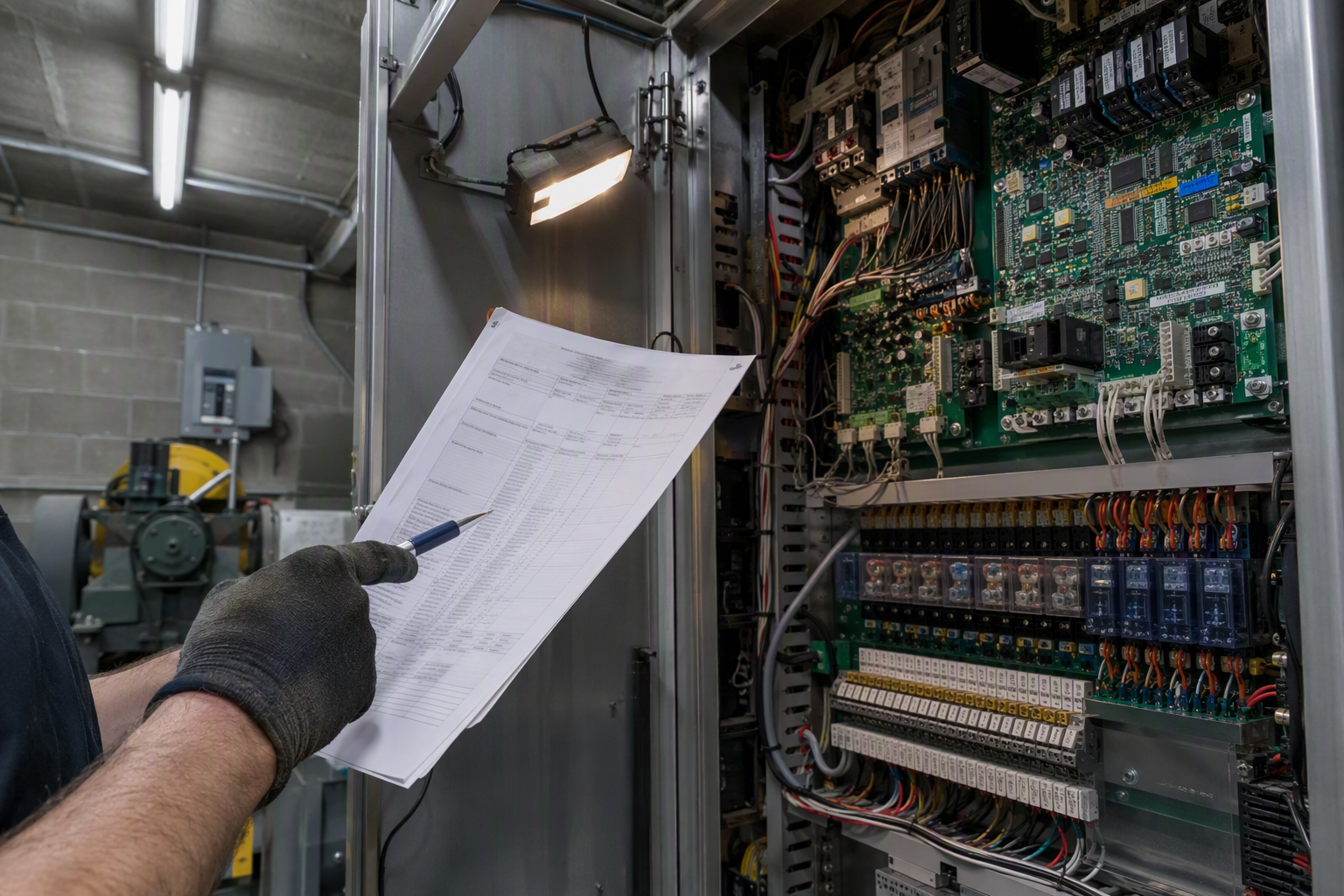
The first step is a structured performance audit that compares your vendor’s documented service record against the minimum standards required by ASME A17.1 Safety Code for Elevators and Escalators and Florida-specific inspection requirements.
Pull every service ticket, inspection certificate, and callback log from the past 24 months. Organize the data into three buckets: scheduled preventive maintenance visits, unscheduled repair calls, and failed or deferred inspection items. A vendor performing well will show completed PM visits on schedule, a declining trend in unscheduled callbacks, and zero outstanding inspection violations. A vendor performing poorly will show skipped visits, recurring repairs on the same components, and open citations from the Florida Department of Business and Professional Regulation (DBPR).
This audit creates an objective baseline before you begin comparing competitor proposals, ensuring that emotion or a single bad experience does not drive a decision that costs more in the long run.
What Contract Clauses Should You Review Before Switching Elevator Service Vendors?
Before initiating any vendor change, review the termination notice period, automatic renewal language, and any “proprietary parts” clauses that may restrict your equipment options after the contract ends.
Many full-service elevator maintenance agreements include automatic renewal clauses that trigger 60 to 90 days before the contract anniversary. Missing that window can lock a building owner into another full year with an underperforming vendor. The termination notice requirement is equally important; some contracts require written notice delivered by certified mail, not email, and failing to follow the exact procedure can void the termination.
Proprietary parts or “closed” agreements deserve special scrutiny. Some vendors program elevator controllers with proprietary software that restricts access to diagnostic menus, making it technically difficult or more expensive for a successor vendor to service the unit. Identifying this issue before switching allows the incoming vendor to plan accordingly and include any additional costs in their proposal.
Finally, confirm what happens to your inspection records and equipment documentation. The outgoing vendor is obligated to provide these, but the obligation should be spelled out. If it is not, add a written records-transfer request to your termination letter.
How Do You Benchmark Elevator Service Vendor Performance?
Benchmark vendor performance across four measurable dimensions: PM completion rate, callback frequency, inspection pass rate, and documentation quality — then compare your results against industry-standard expectations for each category.
| Performance Metric | Strong Performance | Acceptable Performance | Warning Sign |
|---|---|---|---|
| Scheduled PM Completion Rate | All visits completed on schedule | Occasional rescheduling with notice | Visits skipped or unlogged |
| Unscheduled Callback Frequency | Declining trend year-over-year | Stable, no recurring fault codes | Recurring callbacks on same unit/component |
| Annual Inspection Pass Rate | Pass on first inspection | Minor items corrected promptly | Open violations from prior inspection cycle |
| Documentation Quality | Digital records, timestamped, complete | Paper logs available and organized | Missing logs, vague work descriptions |
| Compliance with ASME A17.1 | All code items current for 2026 edition | Known items on active remediation plan | No awareness of applicable code edition |
| ADA Accessibility Compliance | All fixtures meet ADA requirements | Plan in place for non-conforming items | No documentation reviewed |
Use this table to score your current vendor and each competing proposal on the same scale. A vendor who cannot explain how they track PM completion rates or who does not reference ASME A17.1 Safety Code for Elevators and Escalators during the proposal process is likely not the right replacement.
What Qualifications Should a Replacement Elevator Service Vendor Have in Florida?
In Florida, elevator service companies must hold a valid Elevator Certificate of Competency issued by the Florida Department of Business and Professional Regulation (DBPR), and their technicians must be licensed under Chapter 399 of the Florida Statutes.
When requesting proposals, ask each candidate to provide their DBPR license number, proof of general liability insurance, and documentation of current technician certifications. Verify the license status independently on the DBPR online portal before executing any agreement — a license that appears valid in a sales conversation may have an open complaint or suspension that only the portal reveals.
Beyond state licensing, look for familiarity with the specific equipment in your building. Elevator systems vary significantly by manufacturer, drive type (hydraulic, traction, MRL), and age. A vendor with demonstrated experience servicing your exact equipment type is far less likely to cause avoidable delays due to unfamiliarity.
Companies like Axxiom Elevator Florida, serving Pompano Beach and Sarasota, operate within this regulated framework and provide building owners with the compliance documentation needed to satisfy both state inspectors and liability underwriters.
How Do You Request and Compare Elevator Service Proposals?
Issue a structured Request for Proposal (RFP) that defines your equipment inventory, service history, compliance requirements, and evaluation criteria so every bidder responds to the same scope and comparison is straightforward.
A well-constructed elevator service RFP should include the following elements:
- Complete equipment list: make, model, year installed, drive type, and current condition notes
- Current inspection certificates and any open violation notices
- Monthly PM frequency requirement and expected visit duration
- Emergency response expectations and preferred communication channels
- Documentation and reporting requirements (format, frequency, portal access)
- Contract term preference and desired termination provisions
- Proof of insurance minimums required by your property manager or insurer
Ask each vendor to respond with a line-item breakdown of what is included in the base contract versus what is billed separately as time-and-materials. The most common source of surprise charges involves major component replacements, after-hours labor rates, and travel time for locations outside a vendor’s primary service area. Building owners in Pompano Beach and Sarasota should confirm that any vendor they consider maintains a local presence capable of serving both markets without significant travel surcharges.
What Red Flags Should You Watch for When Evaluating a New Elevator Service Vendor?
The most significant red flags include vague contract language around parts coverage, an inability to provide current DBPR license documentation, and proposals that make no reference to ASME A17.1 or Florida Chapter 399 compliance standards.
Additional warning signs worth noting:
- Proposals that do not specify which components are covered versus excluded
- Vendors who cannot explain their subcontracting arrangements for specialized work
- No defined escalation path when a standard technician cannot resolve a fault
- Pressure to sign quickly without adequate time to review the full contract
- References who cannot speak specifically to the vendor’s compliance documentation practices
- No explanation of how proprietary controller access will be managed during transition
A reputable vendor welcomes detailed questions because thorough vetting protects both parties. Any reluctance to provide insurance certificates, license numbers, or sample service reports during the proposal phase should be treated as disqualifying.
How Long Does It Take to Switch Elevator Service Vendors?
A properly planned vendor transition typically takes between 30 and 90 days from the decision to switch to the new vendor’s first completed maintenance visit, depending on contract notice periods and the complexity of the equipment involved.
The timeline generally breaks down as follows:
- Issue formal written termination notice to the outgoing vendor, honoring any required notice period (commonly 30, 60, or 90 days depending on contract terms).
- Complete the proposal process and select a new vendor during the notice period to avoid any service gap.
- Execute the new service agreement, including documentation of all equipment covered.
- Schedule a joint or independent site walk with the incoming vendor to inspect all equipment and document current condition.
- Request all records from the outgoing vendor in writing: inspection certificates, service logs, equipment manuals, controller access codes, and any outstanding violation notices.
- Confirm the new vendor’s first scheduled PM date and verify that all relevant records have been received and reviewed before that date.
- Notify building occupants and management staff of the new contact information for service requests.
Attempting to compress this process significantly increases the risk of a compliance gap, a missed inspection, or lost equipment history. Buildings in Florida with active DBPR oversight have little tolerance for gaps in documented service continuity.
What Documentation Should You Transfer When Switching Elevator Service Vendors?
Every document that establishes the legal compliance history and operational condition of the equipment must transfer to the incoming vendor before the first service date.
The complete records transfer package should include:
- Current Florida DBPR elevator operating permit
- Most recent state inspection certificate and any open violation or correction orders
- Complete service log history for the prior 24 to 36 months
- Equipment manuals and as-built wiring diagrams
- Controller software version documentation and access credentials
- Log of any major component replacements including parts, labor dates, and warranty status
- Any ADA modification records or accessibility compliance assessments
- Evidence of any OSHA-related incidents or near-miss reports associated with the equipment
If the outgoing vendor delays or refuses to provide records, building owners should escalate the request in writing and, if necessary, contact the DBPR directly, as inspection records are regulatory documents tied to the equipment permit, not the service company’s proprietary property.
How Do Elevator Maintenance Contracts Differ and Which Type Is Best for Your Building?
Elevator maintenance contracts range from oil-and-grease agreements that cover only lubrication and adjustment, to full-maintenance agreements that cover virtually all parts and labor — and the right type depends on your equipment age, budget structure, and risk tolerance.
| Contract Type | What Is Covered | Best Suited For | Key Limitation |
|---|---|---|---|
| Oil & Grease | Lubrication, minor adjustments only | New equipment under manufacturer warranty | All parts and most labor billed separately |
| Examination & Lubrication | Lubrication plus visual inspection and minor parts | Low-use residential elevators | Major repairs remain time-and-materials |
| Partial Maintenance | Labor included; parts to a defined dollar cap | Mid-age equipment in moderate-use buildings | Cap limits can be reached quickly on older units |
| Full Maintenance | All labor and covered parts included | High-traffic commercial, healthcare, or multi-unit residential | Higher monthly cost; exclusions still apply (vandalism, modernization) |
When switching vendors, building owners sometimes discover their prior contract was a partial maintenance agreement marketed with full-maintenance language. Reviewing line-item exclusions carefully before signing with any new provider prevents this common and costly misunderstanding.
What Role Does ASME A17.1 Compliance Play in Vendor Selection?
ASME A17.1 is the foundational safety standard governing elevator design, installation, inspection, testing, and maintenance in North America, and any vendor who cannot demonstrate specific familiarity with its current requirements should be disqualified from consideration.
The ASME A17.1 Safety Code for Elevators and Escalators is updated on a regular cycle, and Florida adopts updated editions through its building code process. In 2026, building owners should ask prospective vendors specifically which edition of ASME A17.1 their maintenance procedures reference and how they track mandatory periodic tests — such as the five-year full-load safety test for traction elevators and the five-year pressure test for hydraulic systems.
A vendor who cannot answer these questions precisely is not equipped to protect you from the regulatory and liability consequences of a failed inspection or, more critically, a safety incident. Compliance is not a checkbox — it is an ongoing operational practice that a qualified vendor integrates into every PM visit and service report.
How Does ADA Compliance Factor Into Elevator Vendor Evaluation?
Elevator accessibility compliance under the Americans with Disabilities Act is a legal requirement for covered facilities, and a competent service vendor should proactively identify and document any non-conforming fixtures or features during routine maintenance visits.
Common ADA-related elevator items include door timing and pressure settings, Braille and raised character signage on control panels, audible floor annunciators, leveling accuracy (the elevator must stop within a defined tolerance of the floor level), and emergency communication systems. Many buildings carry undocumented ADA exposure simply because no vendor has ever walked through the elevator against the ADA Standards for Accessible Design during a service visit.
When evaluating vendors, ask specifically whether their technicians are trained to flag ADA non-conformance items during PM visits and whether their service reports include an accessibility checklist. A vendor who treats ADA as a separate specialty rather than a standard component of elevator maintenance is missing a significant portion of the service obligation.
What Questions Should You Ask an Elevator Service Vendor’s References?
The most revealing reference questions focus on how the vendor behaves when things go wrong — not how they perform under normal conditions — because stress events are where vendor quality truly separates.
Effective reference questions include:
- How did the vendor communicate during a major repair or extended outage?
- Were inspection certificates and service logs always current and available on request?
- Did the vendor proactively identify problems before they caused a breakdown, or were they primarily reactive?
- When a repair required parts not commonly stocked, how was the delay managed?
- How did the vendor handle a failed inspection — did they own the remediation or shift responsibility?
- Would you renew this contract, and if not, why?
Request at least three references from buildings with similar elevator types and usage levels to your own. A vendor who excels at servicing low-rise residential hydraulic elevators may not have the supply chain relationships needed to support a high-rise commercial traction installation, and references will reveal that gap faster than any proposal document.
How Should You Handle the Transition Period to Prevent a Compliance Gap?
Prevent compliance gaps by overlapping the outgoing and incoming vendor’s responsibilities only on paper — not in the field — and by scheduling the new vendor’s first PM visit within the same calendar month that the outgoing contract terminates.
Florida DBPR requires that operating permits remain current and that inspection documentation is continuously available. A break in service records — even one where no actual safety event occurred — can trigger questions during the next state inspection and may create liability exposure if an incident occurs during the undocumented period.
Specifically during the transition:
- Confirm the outgoing vendor will remain actively responsible for emergency response through the precise contract end date.
- Ensure the incoming vendor has received and reviewed all records before performing any work on the equipment.
- Have the incoming vendor complete a documented condition assessment on their first visit to establish a clear baseline.
- File any updated vendor contact information with your building’s emergency response plan and property management team.
- Verify the operating permit reflects the current service company of record if required by your local jurisdiction.
What Are the Most Common Reasons Building Owners Switch Elevator Service Vendors?
The most frequently cited reasons for switching elevator service vendors are persistent equipment downtime, missed or poorly documented PM visits, unresponsive communication, and surprise billing on items the owner believed were covered under the contract.
In multi-unit residential buildings, elevator downtime directly affects resident satisfaction and can trigger fair housing complaints if disabled residents lose access to their floor. In commercial properties, elevator outages affect tenant satisfaction, lease renewals, and in healthcare settings, can create patient safety issues. These stakes make vendor performance a property management priority rather than a back-office procurement decision.
Billing disputes are equally common and often trace back to the contract type mismatch described earlier — an owner paying for what they believe is a full-maintenance agreement who discovers that the component that just failed is listed in a two-page exclusion schedule buried in the appendix. The solution is not simply finding a new vendor; it is reading the new contract more carefully than the last one.
How Does Elevator Equipment Age Affect Vendor Selection?
Older elevator equipment — generally units more than 20 to 25 years from original installation — requires a vendor with either a robust parts inventory for legacy components or strong relationships with parts brokers, because standard distributor channels may no longer stock obsolete parts.
Equipment age also affects the modernization conversation. A qualified vendor will not simply maintain aging equipment indefinitely; they will provide building owners with a documented assessment of when the cost-benefit of continued maintenance tips toward modernization. This is not a sales tactic — it is a fiduciary obligation. Continued investment in equipment that is approaching the end of its reliable service life without a modernization plan creates increasing liability exposure and degrading user experience.
In Florida’s coastal markets like Pompano Beach and Sarasota, environmental factors including humidity, salt air, and storm-related power fluctuations can accelerate wear on hydraulic seals, motor contactors, and electronic control boards. A vendor familiar with these regional conditions will build those factors into their maintenance intervals and inspection checklists rather than applying a generic national protocol.
What Is the Role of OSHA in Elevator Maintenance and Vendor Accountability?
While OSHA does not regulate elevator safety for the general public (that jurisdiction belongs to state elevator inspection agencies), OSHA standards do apply to the working conditions of elevator technicians performing maintenance and repair work, and a service vendor’s OSHA compliance record is a legitimate indicator of their overall operational discipline.
Specifically, OSHA regulations govern lockout/tagout procedures when technicians service equipment with stored energy, fall protection when working in elevator pits or on top of cars, and confined space entry protocols for pit work. Ask prospective vendors for their OSHA recordable incident rate and their written lockout/tagout program. A vendor with a documented safety culture for their own employees is more likely to maintain that discipline in how they handle your equipment and your building’s occupants.
How Do You Evaluate an Elevator Vendor’s Emergency Response Capability?
Evaluate emergency response capability by asking specifically how after-hours calls are dispatched, how escalation to a senior technician is handled when a standard dispatch cannot resolve the issue, and what the process is for a passenger entrapment situation.
In Florida, passenger entrapment response is not only a service quality issue — it is a life safety obligation. Technicians responding to entrapments must follow specific protocols under ASME A17.1 and Florida Chapter 399 to avoid injuring a trapped passenger during extraction. Confirm that any prospective vendor’s technicians are trained in current entrapment response procedures, not merely in mechanical repair.
Emergency response capability is also a function of geographic coverage. A vendor headquartered far from your building will consistently struggle to meet reasonable response expectations. Axxiom Elevator Florida’s operations in Pompano Beach and Sarasota are specifically structured to serve those local markets, which matters when a response to an occupied building cannot be delayed.
What Should the New Vendor’s First Site Visit Include?
The incoming vendor’s first site visit should function as a comprehensive condition assessment — not just a routine PM — producing a written baseline report that documents the current state of every system component, any existing code deficiencies, and a prioritized remediation plan if issues are identified.
A thorough first-visit assessment covers:
- Machine room inspection: oil levels, motor and drive condition, heat and ventilation adequacy, code compliance of lighting and fire suppression
- Pit inspection: water intrusion, pit lighting, stop switch, ladder condition, buffer condition
- Car and hoistway: car leveling accuracy, door operation and safety edges, cab lighting and emergency lighting, intercom and alarm function
- Control system: fault log review, software version documentation, relay and contactor condition
- Safety devices: governor, safeties, buffers — verification that all five-year tests are current per ASME A17.1
- ADA compliance walkthrough: door timing, leveling, signage, emergency communication
- Documentation review: confirm all state permits and inspection certificates are current and on file
This baseline becomes the foundation of the service relationship and protects both parties by clearly establishing what condition the equipment was in at handoff.
How Does Local Market Knowledge Affect Elevator Service Quality?
Local market knowledge affects elevator service quality in measurable ways — including familiarity with the local DBPR inspector’s documentation expectations, knowledge of regional parts suppliers who can reduce downtime, and understanding of Florida-specific environmental conditions that influence maintenance intervals.
A national vendor managing accounts remotely through a centralized dispatch model may technically fulfill contractual obligations while consistently missing the nuanced local knowledge that keeps equipment running reliably. Property managers in Pompano Beach and Sarasota have found that vendors with a genuine local presence — not just a regional office that covers multiple states — deliver more consistent service outcomes and better inspector relationships.
Axxiom Elevator Florida focuses specifically on the Pompano Beach and Sarasota markets, giving building owners in those areas a service provider whose attention is not divided across dozens of distant markets and whose team understands the specific regulatory environment and environmental conditions relevant to Florida elevator operations.
What Should a Final Vendor Evaluation Checklist Include Before Signing a New Contract?
Before signing any new elevator service agreement, complete a structured checklist that covers licensing, contract terms, scope of work, compliance capabilities, and transition logistics to ensure nothing critical is overlooked under the pressure of a pending change.
Final pre-signature checklist:
- Florida DBPR license verified independently (not just on the vendor’s letterhead)
- Current certificate of insurance received and reviewed by your risk manager or attorney
- Contract type confirmed (oil-and-grease, partial, or full maintenance) with all exclusions identified and understood
- Termination notice requirements and automatic renewal clauses identified and calendared
- PM frequency and visit duration defined in writing
- After-hours emergency response process documented
- Parts coverage and billing rate for excluded items confirmed in writing
- ASME A17.1 and Florida Chapter 399 compliance approach explained by the vendor’s technical representative
- Records transfer plan from outgoing vendor confirmed
- First-visit condition assessment scheduled and included in the agreement
- ADA compliance documentation commitment included in scope
- References checked with specific questions about compliance documentation and emergency response
Building owners who work through this checklist systematically before signing routinely avoid the contract disputes, surprise charges, and compliance gaps that make elevator vendor relationships adversarial rather than collaborative.
Ready to Evaluate Your Current Elevator Service Provider?
Axxiom Elevator Florida provides certified elevator service to building owners and property managers in Pompano Beach, FL and Sarasota, FL. Whether you are auditing a current vendor, managing a contract transition, or establishing service on a newly acquired property, the team at Axxiom Elevator Florida delivers the compliance documentation, local knowledge, and technical capability your building requires.
Contact Axxiom Elevator Florida for a free elevator assessment: