Top Rated Elevator Maintenance Company Pompano Beach: Complete FAQ Guide
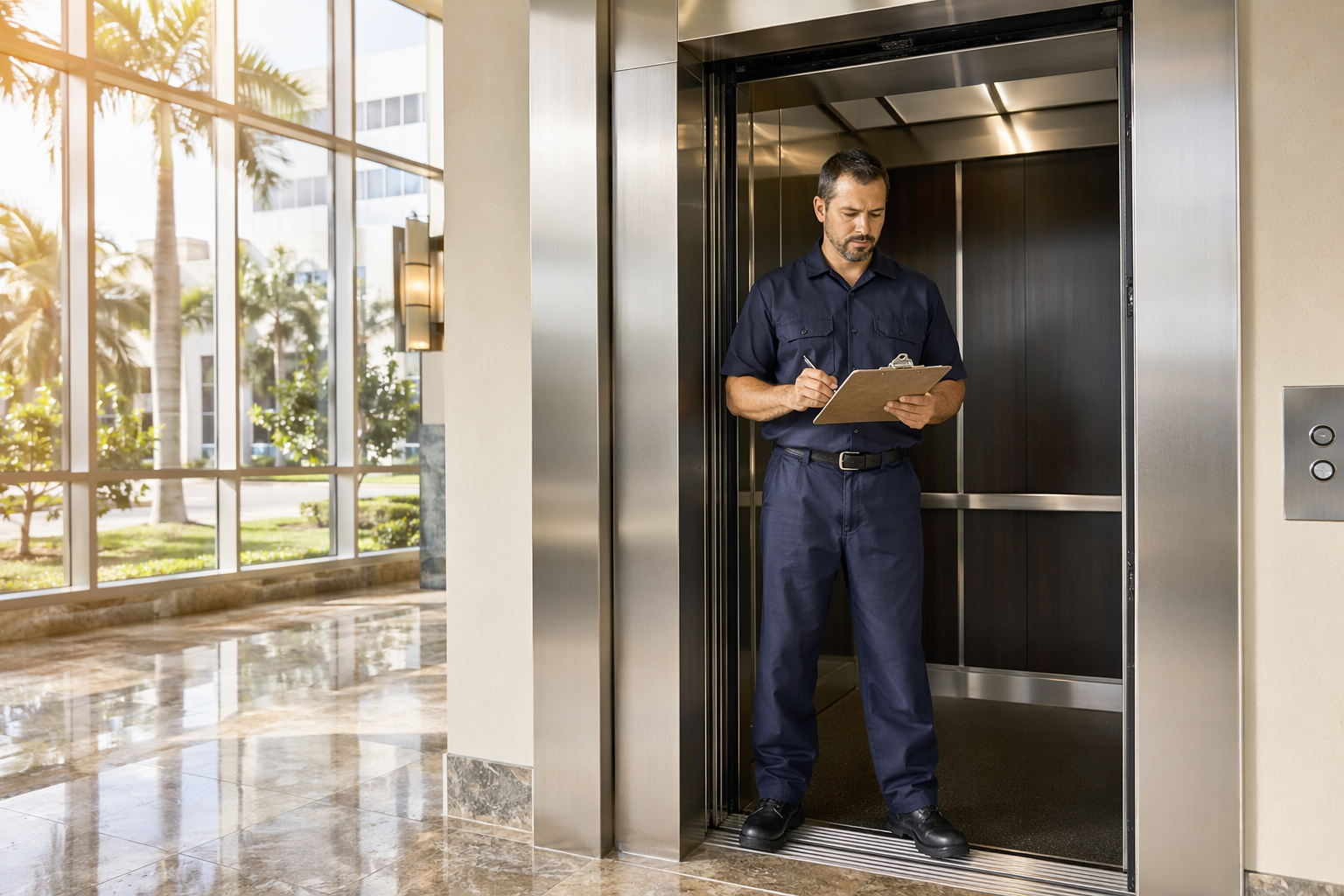
After 15+ years working on hydraulic, traction, and MRL elevator systems across South Florida, I’ve seen firsthand what separates a truly reliable maintenance provider from one that just shows up when things break. This FAQ hub covers every question building owners, property managers, and HOA boards typically ask before choosing an elevator maintenance partner in Pompano Beach. I’ll give you straight answers based on code requirements, real inspection data, and what actually keeps elevators running safely year after year.
What makes a top rated elevator maintenance company in Pompano Beach?
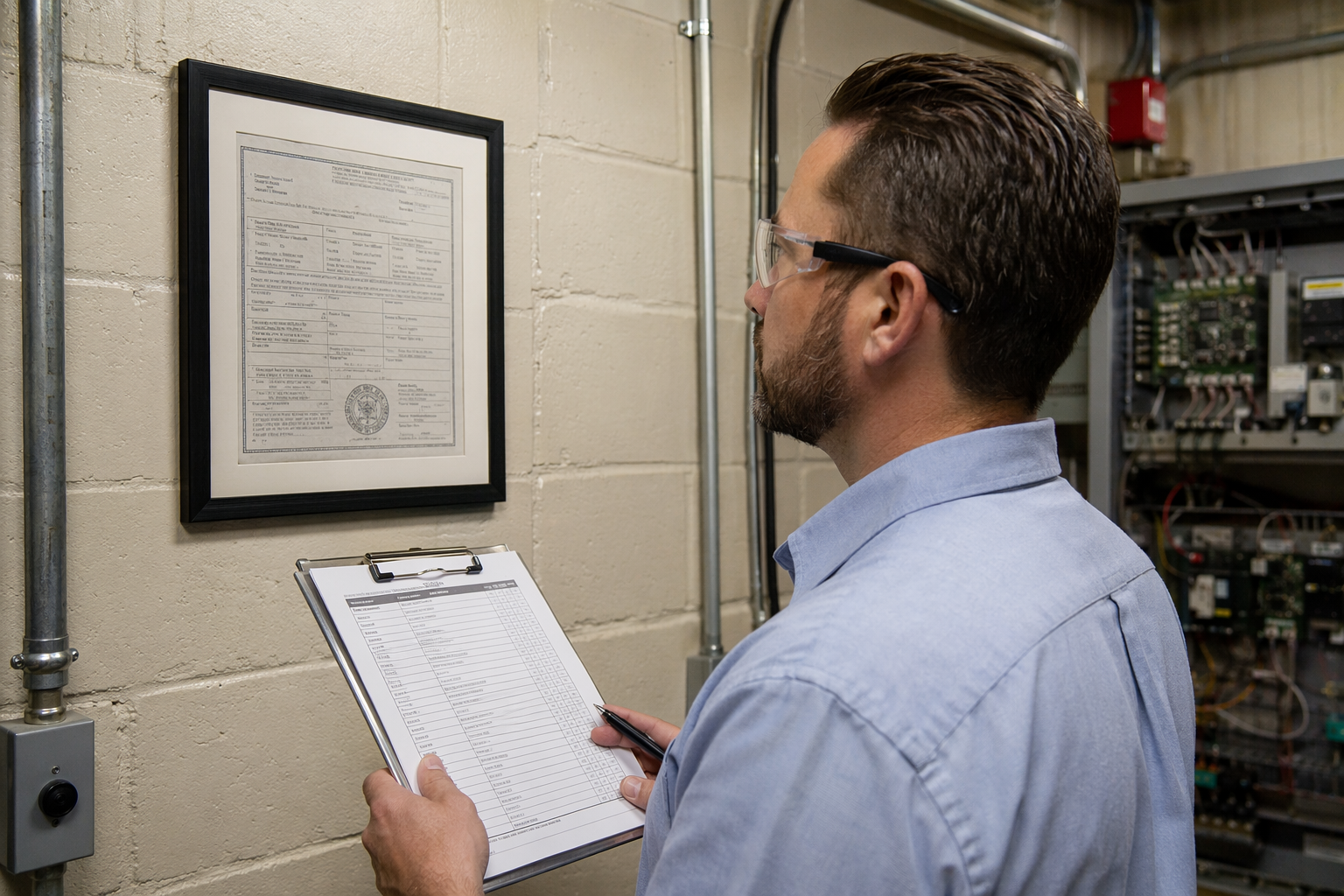
A top rated elevator maintenance company in Pompano Beach holds active Florida state licenses, employs IUEC-certified technicians, maintains strict ASME A17.1 compliance, and responds to emergency calls within a guaranteed timeframe — not days, but hours.
In practice, “top rated” means more than good reviews. It means the company carries a QEI (Qualified Elevator Inspector) certification on staff, files all required paperwork with the Florida Department of Business & Professional Regulation (DBPR), and maintains a documented maintenance log for every unit they service. In Broward County, elevator companies must also hold a local contractor license and carry minimum liability insurance thresholds set by the county.
When evaluating any elevator maintenance provider in Pompano Beach, ask for proof of the following before signing a contract: Florida Elevator Specialty Contractor license (issued by DBPR), IUEC union certification or equivalent third-party credential, verifiable references from commercial properties in Broward County, and written response time guarantees in the service agreement.
Axxiom Elevator Florida meets and exceeds every one of these benchmarks, with a dedicated dispatch team serving the Pompano Beach corridor seven days a week.
How often should elevators be inspected in Florida?
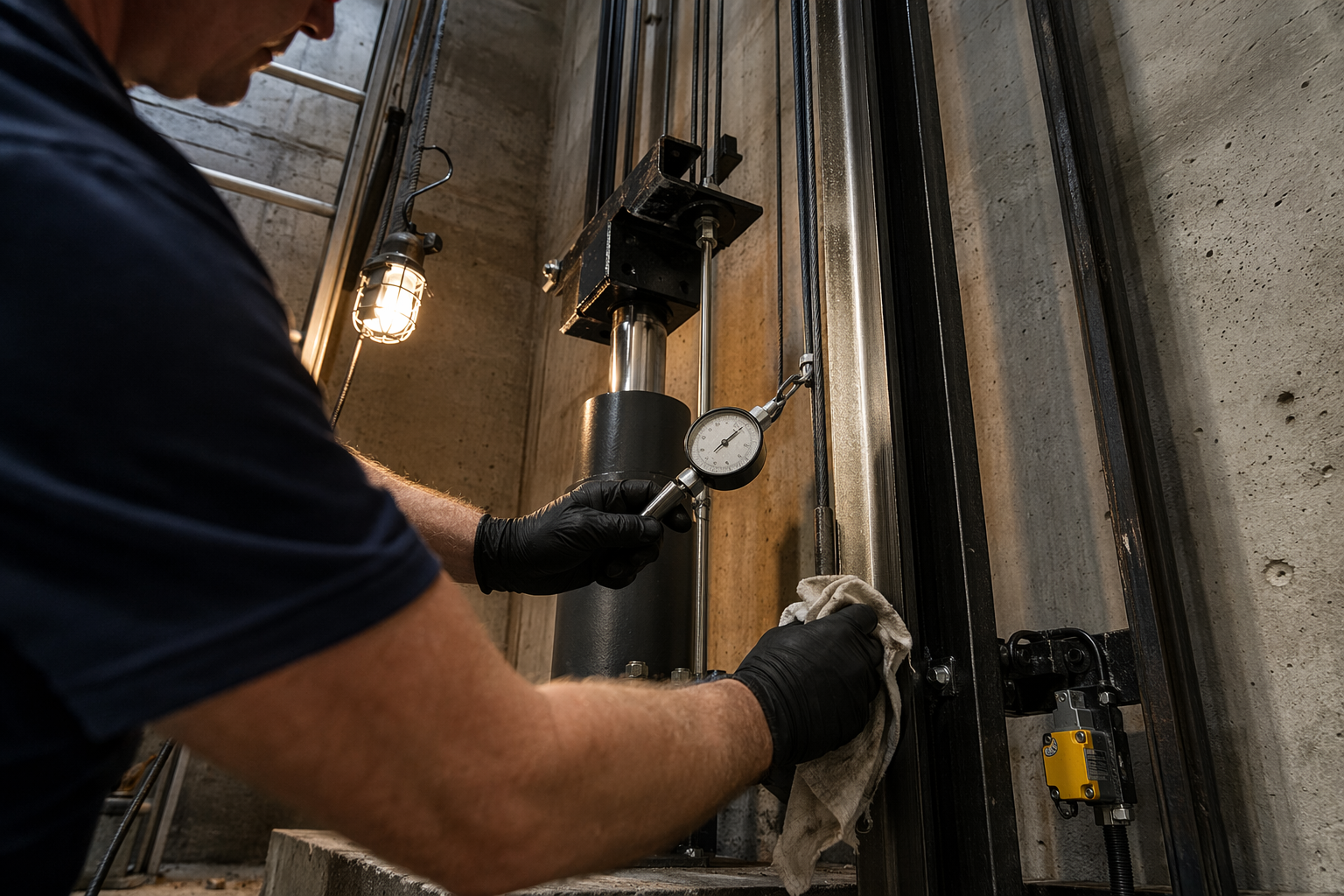
Florida law requires all elevators to undergo a periodic inspection at least once every 12 months, with witnessing by a licensed QEI inspector, per Florida Statute 399 and ASME A17.1/CSA B44.
The annual inspection is just the legal floor, not the ceiling. In 2026, the Florida DBPR continues to enforce these minimums under Florida Administrative Code Rule 61C-5. High-traffic commercial elevators — such as those in Pompano Beach office towers, hotels, or senior living facilities — should also receive a monthly maintenance visit and a quarterly functional safety test to catch wear issues before they become code violations or personal injury liabilities.
Beyond the annual state inspection, ASME A17.1 Part 8 requires a full Category 1 (no-load safety test) every 12 months and a Category 5 (full-load, full-speed safety test) every 5 years for traction elevators. Hydraulic elevators have their own test cycles under ASME A17.1 Rule 8.6. Missing these deadlines can result in a Notice of Violation from the DBPR and, in worst cases, a forced shutdown order.
What does elevator preventive maintenance include?
A comprehensive preventive maintenance (PM) visit covers mechanical lubrication, controller diagnostics, door operator adjustment, leveling checks, safety device testing, and documentation — typically taking 2–4 hours per unit depending on elevator type and age.
Here is a breakdown of what a thorough PM visit should include under ASME A17.1 maintenance code requirements:
- Inspection and lubrication of guide rails, rollers, and sheaves
- Door operator timing, clutch, and safety edge verification
- Motor controller diagnostics and fault code review
- Pit inspection: sump pump, oil contamination check, lighting, and stop switch
- Machine room temperature, humidity, and cleanliness assessment
- Emergency lowering device and ARD (Automatic Rescue Device) test
- Cab leveling accuracy (ASME A17.1 tolerance: ±½ inch at landing)
- Emergency lighting and communication system test
- Hydraulic fluid level and hose integrity check (hydraulic units)
- Governor and safety gear inspection (traction units)
Every Axxiom Elevator Florida maintenance visit generates a detailed digital report with timestamped photos, so property managers always have documentation ready for state inspections or insurance audits.
How much does elevator maintenance cost in Pompano Beach in 2026?
Elevator maintenance contracts in Pompano Beach typically range from $2,400 to $9,600 per year per unit, depending on elevator type, building traffic, contract scope, and included parts coverage.
| Elevator Type | Annual PM Contract (Basic) | Annual PM Contract (Full Coverage) | Typical Service Visits/Year |
|---|---|---|---|
| Hydraulic (Low-Rise, 1–4 stops) | $2,400 – $3,600 | $4,800 – $6,000 | 4–6 |
| Traction (MRL, Mid-Rise) | $3,600 – $5,400 | $6,000 – $8,400 | 6–12 |
| Geared Traction (High-Rise) | $4,800 – $7,200 | $7,200 – $9,600 | 12 |
| Residential / Home Elevator | $1,800 – $2,800 | $3,200 – $4,500 | 2–4 |
| Stairlift / Platform Lift | $800 – $1,500 | $1,800 – $2,800 | 1–2 |
These figures reflect 2026 South Florida market rates. The difference between “basic” and “full coverage” contracts typically comes down to parts and component replacement. A full-coverage agreement covers door operator parts, controller boards, and motor components — reducing surprise expenses. Basic contracts cover labor and consumables (lubricants, minor adjustments) only.
Keep in mind that deferred maintenance always costs more. A $300 door restrictor repair ignored for six months frequently becomes a $4,200 door operator replacement. The math on proactive maintenance is always favorable.
Is elevator maintenance required by law in Florida?
Yes — Florida Statute Chapter 399 mandates that all conveyances (elevators, escalators, and related equipment) be maintained in safe operating condition, with violations subject to fines, shutdown orders, and civil liability.
Florida’s elevator law is enforced by the DBPR’s Elevator Safety Section. Building owners are the legally responsible party — not tenants, not HOA management companies. If an elevator is found in violation during a state inspection, the DBPR issues a Notice of Unsafe Condition, and the building owner typically has 30 days to remedy the deficiency. Repeat violations or immediate safety hazards (broken safety devices, inoperative emergency communications) can trigger an immediate out-of-service order.
Beyond state law, ADA compliance under the Americans with Disabilities Act requires that elevators in multi-story commercial buildings remain operational and accessible. An elevator that is chronically out of service due to poor maintenance may expose building owners to ADA discrimination complaints, in addition to DBPR violations.
What is ASME A17.1 and why does it matter for my building?
ASME A17.1 is the Safety Code for Elevators and Escalators, the national standard adopted by Florida and most U.S. states as the technical basis for elevator construction, installation, inspection, testing, and maintenance.
When I reference ASME A17.1 during a maintenance visit, I’m referring to the specific rules that govern everything from how fast a door must close (Rule 2.13.4: no greater than 0.5 ft/lb kinetic energy at contact) to how precisely a cab must level at each floor (Rule 2.15.2: ±½ inch tolerance). These aren’t suggestions — they’re enforceable code requirements.
For building owners in Pompano Beach, the practical implication is straightforward: if your maintenance provider doesn’t know ASME A17.1 cover to cover, they cannot reliably keep your elevator in compliance. Florida adopted the 2019 edition of ASME A17.1/CSA B44, and the 2025 update is currently in the adoption pipeline. A knowledgeable maintenance company stays ahead of these updates so your equipment doesn’t fall out of compliance when new editions take effect.
How quickly should a Pompano Beach elevator company respond to emergency calls?
Emergency response for a passenger entrapment should occur within 60 minutes or less — this is an industry benchmark endorsed by ASME A17.1 and the National Association of Elevator Contractors (NAEC), and many Florida municipalities now include response time requirements in their building codes.
Response time is one of the most important — and most overlooked — factors when choosing an elevator maintenance company. An elevator entrapment is a medical emergency for passengers with heat sensitivity, claustrophobia, cardiac conditions, or mobility limitations. A 4-hour response window is simply unacceptable and, depending on circumstances, can create significant liability for both the maintenance company and the building owner.
When reviewing maintenance contracts, require a written emergency response time guarantee. Understand what “emergency” means in their contract language — some companies define emergency narrowly to exclude evenings, weekends, or certain equipment types. Axxiom Elevator Florida provides a guaranteed 60-minute emergency dispatch response for Pompano Beach service area clients, 365 days a year.
What is the difference between a full-service and a lubrication-only elevator contract?
A full-service contract covers all labor, adjustments, inspections, and most parts replacements; a lubrication-only (or “oil and grease”) contract covers only basic lubrication and minor adjustments — leaving all repair costs as additional billable items.
The elevator maintenance industry has historically used several contract tiers to serve different budget points. Here’s what each typically includes:
- Lubrication/Examination Only: Technician lubricates moving parts, performs a visual safety check. No repair work included. Best for very low-use residential elevators with newer equipment.
- Parts and Labor (Basic): Covers labor for adjustments and repairs; some parts covered, others billed separately. Review the exclusion list carefully.
- Full Maintenance (Comprehensive): Covers all labor, adjustments, and most parts. Typically excludes cab refurbishment, major modernization components, and vandalism damage.
- Full Maintenance with Callback: Comprehensive coverage plus 24/7 emergency callback service — the highest tier and recommended for commercial properties, hotels, and senior living facilities.
My recommendation for any commercial property in Pompano Beach with moderate-to-high passenger traffic: don’t accept anything below a Parts and Labor contract. The liability exposure from deferred repairs on a lubrication-only contract far outweighs the modest premium of a more inclusive agreement.
What ADA requirements apply to elevators in Pompano Beach commercial buildings?
Under the 2010 ADA Standards for Accessible Design, elevators in multi-story commercial buildings must meet specific requirements for cab size, door width, control button height, Braille signage, audible signals, and leveling accuracy.
Key ADA elevator requirements that maintenance professionals must monitor include:
- Cab interior minimum dimensions: 68 inches wide × 51 inches deep (or per local ADAAG exception)
- Door clear opening width: minimum 36 inches
- Floor leveling: must stop within ½ inch of landing — directly tied to ASME A17.1 Rule 2.15.2
- Call button height: 15–48 inches AFF (above finished floor)
- Visible and audible signals at each landing
- Emergency two-way communication system compliant with ADA Section 407.4.9
ADA violations discovered during a DBPR inspection can trigger both state enforcement action and federal civil rights complaints. Maintenance companies that don’t actively check ADA compliance parameters during PM visits are leaving their clients exposed.
How do I know if my elevator needs modernization versus maintenance?
If your elevator requires three or more major repairs in a 12-month period, experiences chronic door problems, uses relay logic controls (pre-1990s), or fails to meet current ADA and ASME A17.1 standards, modernization is likely more cost-effective than continued repair.
Modernization decisions hinge on a cost-benefit analysis comparing cumulative repair costs against the investment in updated components. A useful rule of thumb from the industry: when annual repair costs exceed 30–40% of the cost of modernization, modernization is the financially sound choice within a 5-year window.
Common modernization projects in Pompano Beach properties include controller upgrades (relay to microprocessor), door operator replacement, hydraulic power unit modernization, cab interior refurbishment, and full traction machine replacement. Axxiom Elevator Florida provides written modernization assessments that quantify remaining useful life, projected repair costs, and modernization ROI — giving building owners the data they need to make informed capital planning decisions.
What are the most common elevator code violations found in Pompano Beach buildings?
The five most common elevator code violations found during Pompano Beach inspections in 2025–2026 are inoperative emergency lighting, door safety edge failures, improper pit conditions, expired Category 1/5 test certificates, and non-compliant emergency telephone systems.
- Inoperative emergency lighting: ASME A17.1 Rule 2.16.3 requires cab emergency lighting that activates automatically on power failure. Dead batteries are the #1 violation I see.
- Door safety edge failures: Mechanical safety edges worn past tolerance or electronic door sensors with slow response times. ASME A17.1 Rule 2.13.4 sets specific kinetic energy limits.
- Pit non-compliance: Standing water, improper lighting (minimum 100 lux per ASME A17.1 Rule 2.2.2), missing stop switch, or pit access ladder issues.
- Expired test certificates: Category 1 tests required annually; Category 5 every 5 years. Missing documentation is treated as a violation even if the equipment is mechanically sound.
- Non-compliant emergency telephone: Must be a two-way communication device that connects to a monitored location — cell-only systems that rely on in-cab cellular coverage fail this requirement regularly.
How should I compare elevator maintenance companies before signing a contract?
Compare elevator maintenance companies on six criteria: licensing and certification, technician-to-unit ratio, emergency response time guarantee, contract scope and exclusions, local references, and transparency of maintenance records.
Use this checklist when interviewing elevator maintenance companies in Pompano Beach:
- ✅ Florida DBPR Elevator Specialty Contractor license — verify at myfloridalicense.com
- ✅ IUEC or QEI certification on staff for inspections
- ✅ Written emergency response time guarantee (60 minutes or less)
- ✅ Digital maintenance records accessible to building owner/manager
- ✅ References from comparable properties in Broward County
- ✅ Clear contract exclusions — know exactly what is NOT covered
- ✅ Liability insurance certificate: minimum $1M per occurrence commercial general liability
- ✅ Parts sourcing transparency — OEM or approved equivalent parts, not gray-market components
Avoid any company that cannot provide immediate proof of licensure, refuses to give written response time guarantees, or uses high-pressure tactics to push multi-year contracts without a service trial period.
Does Axxiom Elevator Florida service both Pompano Beach and Sarasota?
Yes — Axxiom Elevator Florida maintains active operations and licensed technician teams in both Pompano Beach (Broward County) and Sarasota (Sarasota County), covering commercial, residential, and institutional elevator systems throughout both service areas.
Operating in two distinct Florida markets means Axxiom Elevator Florida maintains familiarity with both Broward County and Sarasota County local authority having jurisdiction (AHJ) requirements, permit processes, and inspection scheduling protocols. Local knowledge matters more than most building owners realize — knowing a county inspector’s specific interpretation of ambiguous code language, or understanding local permit lead times, directly affects how quickly maintenance violations get resolved.
What types of elevators does a full-service maintenance company in Pompano Beach work on?
A full-service elevator maintenance company in Pompano Beach should be qualified to work on hydraulic elevators, electric traction (geared and gearless), MRL (machine room-less) systems, residential platform lifts, stairlifts, and escalators — covering all ASME A17.1 and A17.3 conveyance categories.
Pompano Beach’s building stock includes everything from 1970s-era hydraulic units in garden apartment communities to modern MRL traction systems in newer mixed-use developments along the waterfront corridor. A maintenance company that only services one equipment type will inevitably refer out work — creating coordination gaps and accountability problems for building managers.
Common elevator brands serviced in the Pompano Beach market include Otis, KONE, Schindler, ThyssenKrupp (now TK Elevator), Mitsubishi, Hydraulic Unit Corporation (HUC), Motion Control Engineering (MCE), and GAL Manufacturing components. Proprietary diagnostic tools for some brands require manufacturer-authorized access — ask any prospective maintenance company explicitly whether they have access to OEM diagnostic software for your specific equipment.
What should I expect during a Florida elevator state inspection?
A Florida DBPR state elevator inspection covers the machine room, hoistway, pit, cab, landing controls, safety devices, and all test documentation — typically lasting 1.5 to 3 hours, with a written inspection report issued within 30 days.
As a certified technician, I always recommend that the building’s maintenance provider be present during the state inspection. Not because you need to “manage” the inspector, but because on-the-spot clarifications about recent repairs, parts replaced, or test dates can prevent misunderstandings that result in documented violations. A good maintenance company treats the annual inspection as a collaborative process, not an adversarial one.
Before any state inspection, your maintenance company should complete a pre-inspection checklist covering: current maintenance log review, emergency lighting battery test, door operation verification, pit condition inspection, and confirmation that all Category 1/5 test records are on file and dated within the required windows.
How long does elevator maintenance take, and will it disrupt my tenants?
A standard preventive maintenance visit for a single elevator unit takes 2–4 hours, during which the elevator is typically out of service — scheduling during low-traffic windows (early morning or evening) minimizes tenant disruption.
For multi-elevator buildings, experienced maintenance teams can stagger service so at least one cab remains operational throughout the maintenance window. In properties with a single elevator — particularly senior living communities or medical office buildings where ADA access is critical — advance notice to tenants of at least 48–72 hours is standard practice, along with a posted service advisory in the lobby.
Major repairs or modernization work may require extended outages ranging from 2 days to 6 weeks depending on scope. Any reputable maintenance company should provide a detailed outage schedule in writing before commencing work, with daily progress updates.
What questions should I ask when reviewing an elevator maintenance contract?
Before signing any elevator maintenance contract, ask specifically about: response time guarantees, parts coverage exclusions, contract cancellation terms, technician certification requirements, record-keeping access, and price escalation clauses.
The five contract clauses that building managers most commonly regret not reviewing carefully:
- Evergreen/auto-renewal clauses: Some contracts auto-renew for 1–3 years with 90-day cancellation notice requirements. Miss the window and you’re locked in.
- Proprietary parts lock-in: Some OEM-affiliated companies install proprietary components that only they can service or replace — effectively capturing future business.
- CPI escalation clauses: Annual price increases tied to CPI are standard, but make sure the cap is defined (typically 3–5% maximum).
- Callback limitations: Does “24/7 callback” include weekends and holidays, or is there a premium charge for after-hours service?
- Scope of “major components”: Get a written list of what is explicitly excluded from parts coverage — motor controllers, hydraulic power units, and machine replacements are often excluded even from “full coverage” contracts.
Are there specific elevator code requirements for senior living or assisted living facilities in Florida?
Yes — Florida’s Agency for Health Care Administration (AHCA) imposes additional elevator reliability requirements on ALFs (Assisted Living Facilities) and SNFs (Skilled Nursing Facilities) beyond standard DBPR rules, including backup power requirements and maximum allowable downtime.
Senior living facilities in Pompano Beach face a compounded regulatory environment: DBPR elevator code, ADA accessibility standards, AHCA facility licensing rules, and NFPA 101 Life Safety Code requirements all intersect. Elevators in these facilities must maintain ADA accessibility at all times for residents with mobility limitations, and extended outages may trigger AHCA compliance reviews.
For ALF and memory care facilities specifically, elevator emergency communication systems must connect to a continuously monitored station — a standard phone answering service does not meet this requirement. Backup power (generator or ARD system) is effectively mandatory given Florida’s hurricane season outage risk, and AHCA surveyors have cited facilities for inadequate elevator backup power planning.
How does elevator maintenance affect property insurance in Florida?
Florida property insurers increasingly require documented elevator maintenance logs and current state inspection certificates as a condition of coverage — gaps in maintenance documentation can result in denied claims or policy cancellation.
In 2025–2026, Florida’s property insurance market has tightened considerably. Several major carriers now include elevator-specific underwriting questions and require submission of the most recent DBPR inspection report and a current maintenance contract as part of the annual policy renewal. A lapse in documented maintenance — even if the elevator is mechanically sound — can give an insurer grounds to deny a liability claim arising from an elevator incident.
The practical implication: your elevator maintenance provider’s record-keeping is as important as their technical skill. Require digital maintenance reports with timestamps, technician signatures, and specific notation of any deficiencies found and corrected. This documentation is your evidence file if a claim ever arises.
Why should I choose Axxiom Elevator Florida over a national elevator company?
Axxiom Elevator Florida combines the technical capability of a large elevator company with the local accountability, response speed, and owner-direct communication that national chains structurally cannot provide — particularly important in Pompano Beach’s competitive commercial real estate market.
National elevator companies — while technically capable — are often structured around regional dispatch centers, standardized service protocols, and account management layers that slow response times and reduce the ability to customize service to a specific building’s needs. When your elevator goes down at 7 PM on a Friday, you want to reach a decision-maker who knows your equipment, not navigate a national call center routing system.
Axxiom Elevator Florida maintains direct technician-to-client relationships. The technician who performs your PM visit is the same technician dispatched for your emergency callback — meaning zero learning curve, faster diagnostics, and significantly better continuity of care for your equipment. That operational model is a deliberate advantage over franchise and national chain competitors.
Ready to Work with a Top Rated Elevator Maintenance Company in Pompano Beach?
Don’t wait for a failed inspection, a tenant entrapment, or a surprise repair bill to evaluate your elevator maintenance program. Axxiom Elevator Florida offers a no-obligation elevator assessment for commercial and residential properties throughout Pompano Beach and the greater Broward County area. Our IUEC-certified technicians will review your current maintenance records, assess equipment condition against 2026 ASME A17.1 and ADA standards, and provide a written findings report — at no cost to you.
Contact Axxiom Elevator Florida for a free elevator assessment:
📞
Serving Pompano Beach, Sarasota, and surrounding communities throughout Florida.
Sources & References: ASME A17.1/CSA B44 Safety Code for Elevators and Escalators | ADA 2010 Standards for Accessible Design — Section 407: Elevators | Florida Statute Chapter 399 (Elevator Safety Act) | Florida Administrative Code Rule 61C-5 | DBPR Elevator Safety Section | National Association of Elevator Contractors (NAEC) 2026 Industry Benchmarks