Elevator Service in Pompano, FL | Axxiom Elevator Florida
Pompano Beach sits directly on the Atlantic coast, placing every elevator in the city inside a marine-influenced environment. Salt-laden air penetrates mechanical rooms, hoistways, and pit areas, while year-round high humidity amplifies the pace at which metal components oxidize and electrical systems degrade. Building owners and property managers who understand these coastal-specific risks can act before a minor corrosion issue becomes a code violation or an unplanned shutdown. Axxiom Elevator Florida provides certified elevator maintenance and repair throughout Pompano Beach and the surrounding Broward County area, with service approaches calibrated to Florida’s demanding coastal conditions.
What Elevator Problems Does Coastal Humidity Cause Most Often in Pompano Beach?
Salt air and persistent humidity create a predictable cluster of failure points that elevator technicians encounter regularly in Pompano Beach buildings:
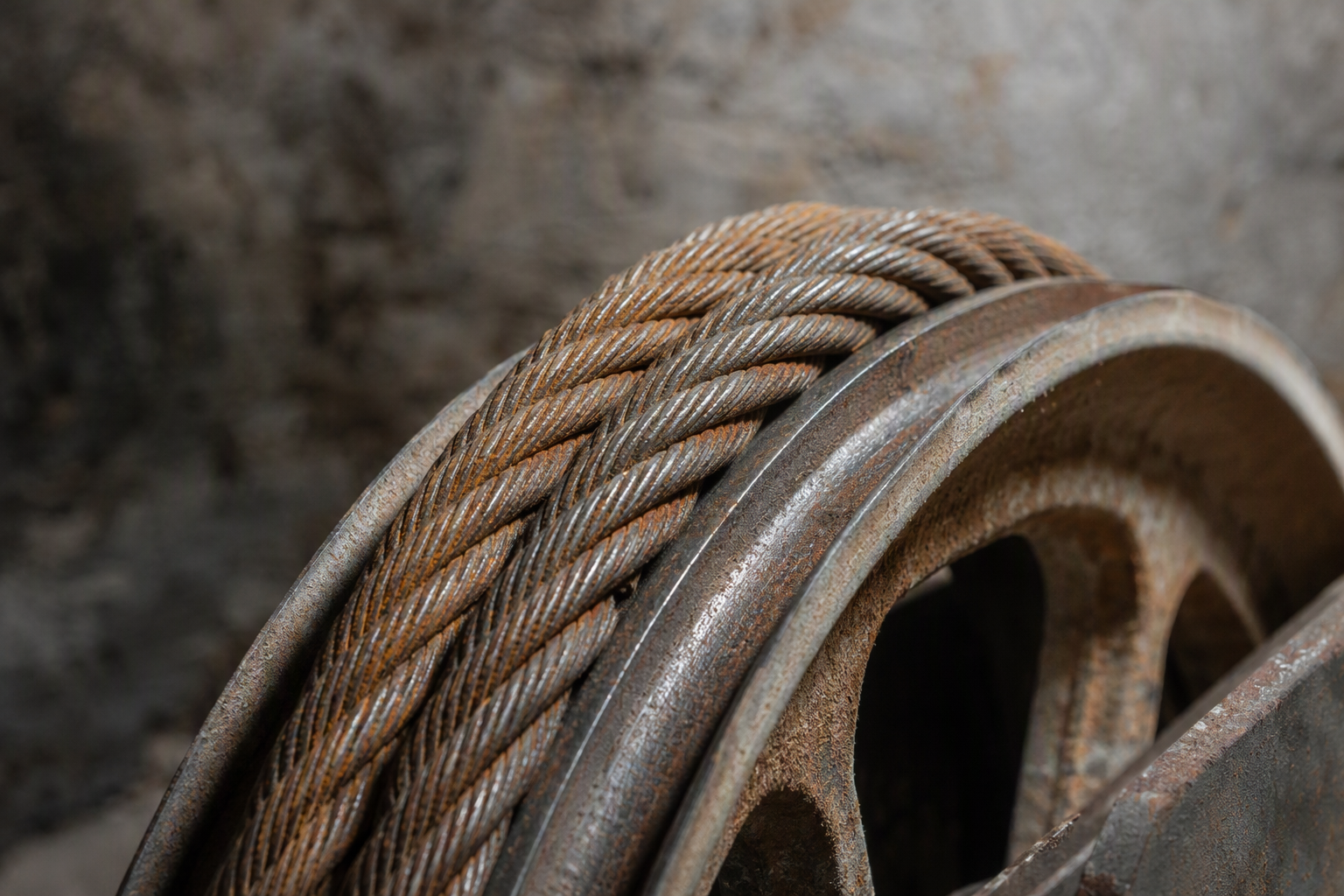
- Hoist cable and sheave corrosion: Wire rope exposed to salt-laden air develops surface rust that reduces tensile strength and accelerates wear at sheave grooves. Sheaves themselves pit and groove unevenly, shortening rope life significantly.
- Hydraulic system degradation: In hydraulic elevators, cylinder exteriors buried in salt-affected soil or exposed to humid pit environments corrode, while hydraulic fluid absorbs moisture over time, lowering flash point and reducing system efficiency. Seals deteriorate faster in high-humidity conditions, leading to oil seepage.
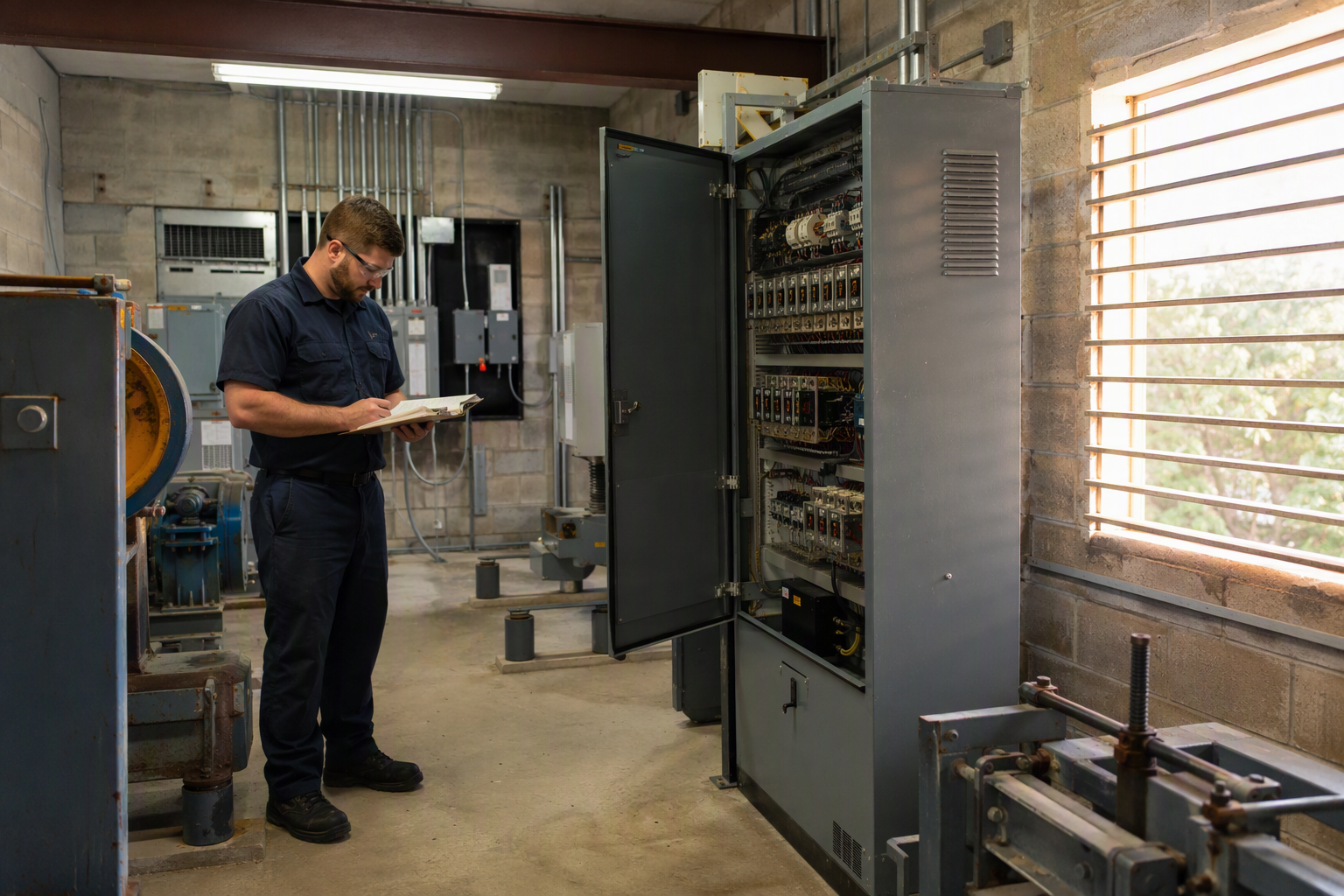
- Control panel and electrical contact corrosion: Relay contacts, terminal strips, and printed circuit boards in machine rooms develop oxidation that causes intermittent faults, nuisance trips, and complete controller failures — problems that are especially costly in modern microprocessor-based systems.
- Door operator and sill corrosion: Sills, gibs, and door tracks exposed to salt air corrode and collect salt deposits, causing sluggish door operation, door reversal faults, and accelerated wear on rollers and hangers.
- Pit flooding and moisture intrusion: Coastal water tables are high in Pompano Beach, and heavy rain events can allow groundwater to seep into elevator pits, corroding buffers, governor tensioning sheaves, pit lighting, and safety electrical components.
- Brake lining and drum corrosion: Traction elevator brakes exposed to humid environments develop surface rust on drum or disc surfaces during periods of low use, leading to grabbing or inconsistent stopping.
- Selector tape and position encoder failures: Magnetic tapes and optical encoders used in position reference systems are sensitive to the fine salt particulate that infiltrates hoistways near the coast.
Why Does Salt Air Affect Elevators in Pompano Beach More Than Inland Florida Buildings?
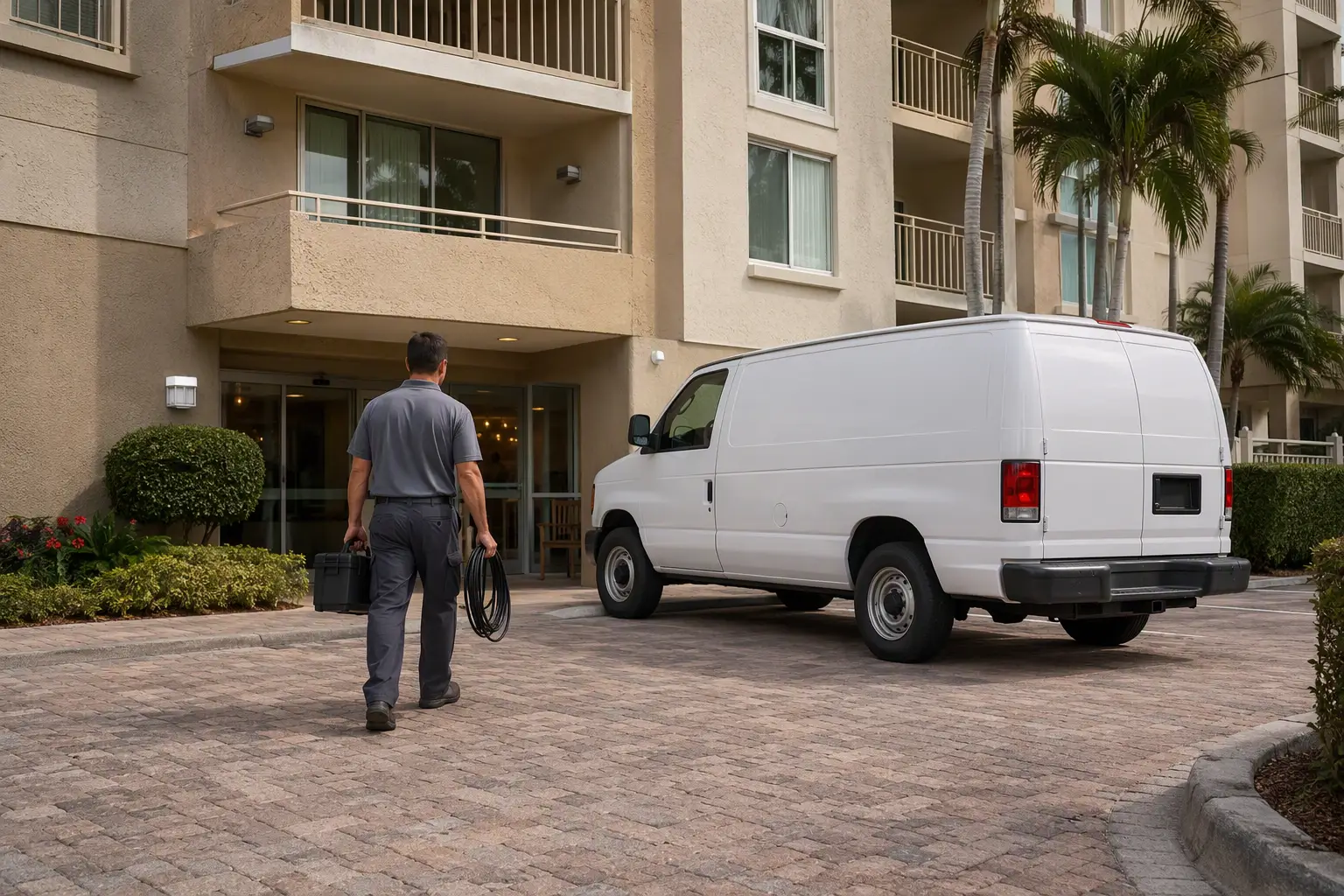
Buildings within several miles of the Atlantic shoreline — which describes virtually all of Pompano Beach — experience measurably higher chloride ion concentrations in the air compared with inland locations. Chloride ions are electrochemically aggressive: they disrupt the passive oxide layer that normally protects steel, initiating pitting corrosion that spreads beneath the surface without visible warning. In elevator environments where components operate under repeated stress cycles, pitting accelerates fatigue cracking in ways that visual inspections alone may not catch early enough. High relative humidity — common year-round in South Florida — provides the electrolytic bridge chlorides need to drive corrosion reactions continuously, even when equipment is not running. The combination of heat, humidity, and salt is more corrosive than any single factor alone.
How Does Florida Law Require Elevators in Pompano Beach to Be Maintained and Inspected?
Under Chapter 399, Florida Statutes (the Elevator Safety Act), every elevator covered by the statute must be inspected annually by a certified elevator inspector. In Pompano Beach, which falls within Broward County, the Broward County Building Code Division enforces Florida’s elevator law through its own certified elevator inspectors under a delegation of authority from the state. The regulatory authority at the state level is the Florida Department of Business and Professional Regulation (DBPR), Division of Hotels and Restaurants, Bureau of Elevator Safety.
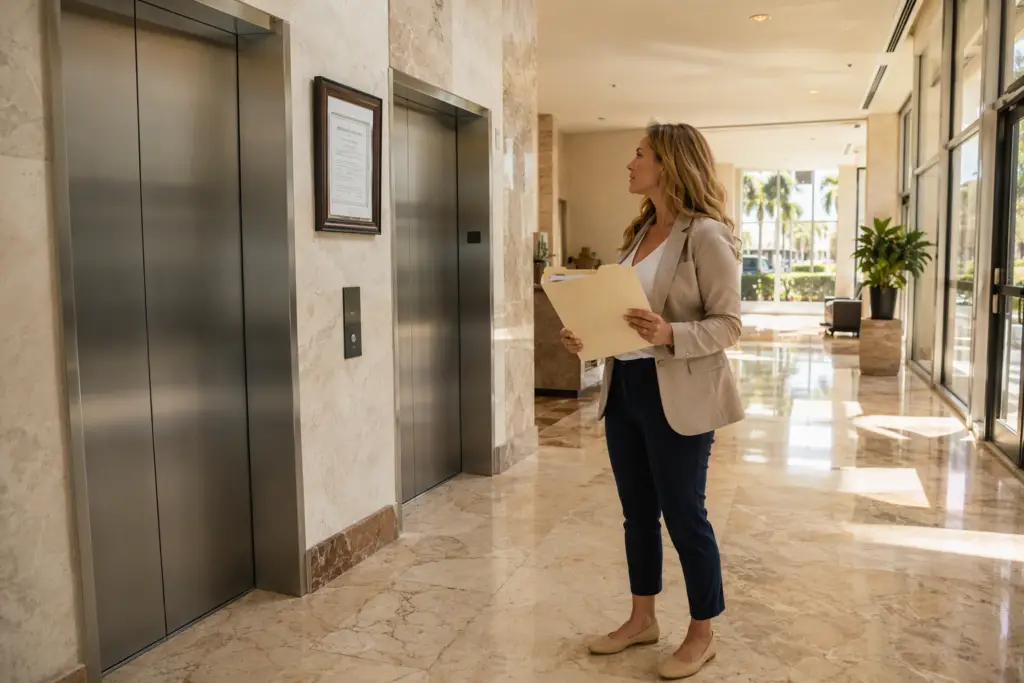
Florida issues a certificate of operation that is valid for no more than two years. That certificate may only be renewed following a current satisfactory inspection. Operating on an expired certificate of operation is a violation of state law. The certificate must be posted in a conspicuous location inside the elevator in a frame with a transparent cover — something building managers in Pompano Beach should verify regularly. When a corrosion-related deficiency is cited at inspection, the elevator owner is responsible under state law for correcting code deficiencies and maintaining safe operation.
Florida’s adopted elevator code is the ASME A17.1/CSA B44 Safety Code for Elevators and Escalators, 2019 edition, which became effective in Florida on December 31, 2023. Maintenance and repair work must be performed by a Florida-registered elevator company using certified elevator technicians who hold a current state elevator certificate of competency. That certificate expires annually and requires eight hours of continuing education for renewal. Axxiom Elevator Florida operates as a registered elevator company in compliance with these requirements.
What Should Building Owners Do Immediately If a Coastal Corrosion Problem Is Discovered?
- Take the elevator out of service if any safety-critical component — hoist rope, brake, safety device, or hydraulic cylinder — shows active corrosion damage or structural compromise. Do not allow passenger use until a certified elevator technician evaluates the condition.
- Document the condition with photographs before any cleaning or temporary remediation, so the technician and, if required, the inspector can assess the original state of the deficiency.
- Contact a Florida-registered elevator company such as Axxiom Elevator Florida to dispatch a certified elevator technician for an on-site evaluation.
- Report any accident to the state within five working days if a corrosion-related failure results in an injury or incident — this is a statutory obligation under Chapter 399 for the certificate of operation holder.
- Coordinate with the Broward County Building Code Division if an inspection is required before returning the elevator to service following a significant repair or alteration, as a state permit must be applied for by a registered elevator company before alterations begin.
- Review the certificate of operation to confirm it is current and posted correctly before resuming normal service.
What Preventive Maintenance Practices Are Most Effective Against Salt Air Damage?
Coast-aware preventive maintenance differs meaningfully from standard inland programs. Effective practices for Pompano Beach elevators include more frequent lubrication intervals using marine-grade or corrosion-inhibiting lubricants on wire rope, sheaves, and guide rail surfaces. Control panel enclosures benefit from sealed or filtered ventilation to reduce chloride ingress, and electrical contacts may be treated with protective contact solutions during each maintenance visit. Hydraulic fluid sampling and moisture content testing help catch water contamination early, before seal failure or cylinder corrosion advances. Pit sump pumps must be tested and maintained consistently given the elevated water table and storm surge risk in coastal Broward County. Door sills and gibs require more frequent cleaning and inspection for salt buildup than is typical in inland buildings. Annual or semi-annual corrosion surveys of wire rope — using hands-on tactile inspection as well as visual examination — are advisable where coastal exposure is significant.
Does ADA Compliance Intersect With Coastal Maintenance Issues in Pompano Beach?
Yes. Under the Americans with Disabilities Act (ADA), elevators in public accommodations and commercial facilities must remain accessible and operational. Corrosion-related failures that cause extended elevator outages in buildings where the elevator is the only accessible means of vertical travel can create ADA compliance exposure for property owners, independent of state elevator law requirements. Door operator failures — one of the most common coastal corrosion outcomes — directly affect accessibility, since slow, erratic, or non-reversing doors are both a safety hazard and an accessibility barrier. Keeping coastal elevators in reliable service is therefore not only a safety and licensing matter but also an accessibility obligation.
How Does Axxiom Elevator Florida Serve the Pompano Beach Market?
Axxiom Elevator Florida provides maintenance, repair, modernization, and code compliance services for elevators and other conveyances throughout Pompano Beach and Broward County. The company works with residential high-rises, condominium associations, commercial office buildings, retail centers, healthcare facilities, and hospitality properties — all of which face the same coastal corrosion pressures that characterize the Pompano Beach environment. Service offerings include preventive maintenance contracts, emergency repair response, modernization of aging hydraulic and traction systems, and assistance navigating Florida’s inspection and certificate of operation requirements with the Broward County Building Code Division. All work is performed by certified elevator technicians under the registration requirements of Chapter 399 and Chapter 61C-5, Florida Administrative Code.
When Should a Coastal Elevator in Pompano Beach Be Considered for Modernization Rather Than Repair?
Repeated corrosion-driven repairs on an aging elevator can accumulate costs that approach or exceed the investment in modernization. Modernization becomes worth evaluating when hydraulic cylinders show active pitting or seepage that requires repeated resealing, when control systems are no longer supported by parts availability, when traction machine components exhibit recurrent rust-related failures, or when the cumulative cost of annual repairs trends significantly upward year over year. Modern controllers use sealed, climate-hardened electronics better suited to humid coastal environments than older relay logic or early-generation microprocessor systems. Hydraulic units with above-ground or environmentally protected cylinders reduce the corrosion and leak risk associated with in-ground cylinders in coastal soil. A Florida-registered elevator company can assess whether a modernization scope would qualify as an alteration requiring a state permit, and can manage that process on the building owner’s behalf.
Schedule a free consultation with Axxiom Elevator Florida at 954-970-0020.
Need elevator service you can rely on? Axxiom Elevator Florida is ready to help.