Elevator Inspection Requirements by State: Complete 2025–2026 Data & Compliance Guide
Every building owner, property manager, and facility director operating vertical transportation equipment needs to understand their state’s elevator inspection requirements. Non-compliance carries serious financial and legal consequences — fines range from $500 to $25,000 per violation depending on jurisdiction. This authority guide consolidates inspection frequency mandates, certificate timelines, cost benchmarks, and regulatory trends for 2025–2026 across all 50 states.
National Elevator Inspection Overview: Key Statistics at a Glance
| Metric | Data Point | Source |
|---|---|---|
| Total elevators in U.S. service | ~900,000+ | National Association of Elevator Contractors (NAEC), 2025 |
| States with state-level elevator inspection authority | 38 states + D.C. | NAEC, 2025 |
| States delegating to local jurisdictions | 12 states | NAEC, 2025 |
| States requiring annual inspections for commercial elevators | 46 states | ASME, 2026 |
| Average annual elevator inspection cost (commercial) | $300–$1,200 per unit | Axxiom Elevator Florida internal service data, 2025–2026 |
| Average fine for operating without a valid inspection certificate | $1,500–$10,000 | NAEC, 2025 |
| Elevator-related injuries annually (U.S.) | ~17,000 | U.S. Consumer Product Safety Commission (CPSC), 2024 |
| Percentage of violations found during routine inspections | 62% | Axxiom Elevator Florida internal service data, 2025–2026 |
What Is the Primary Regulatory Standard Governing Elevator Inspections?
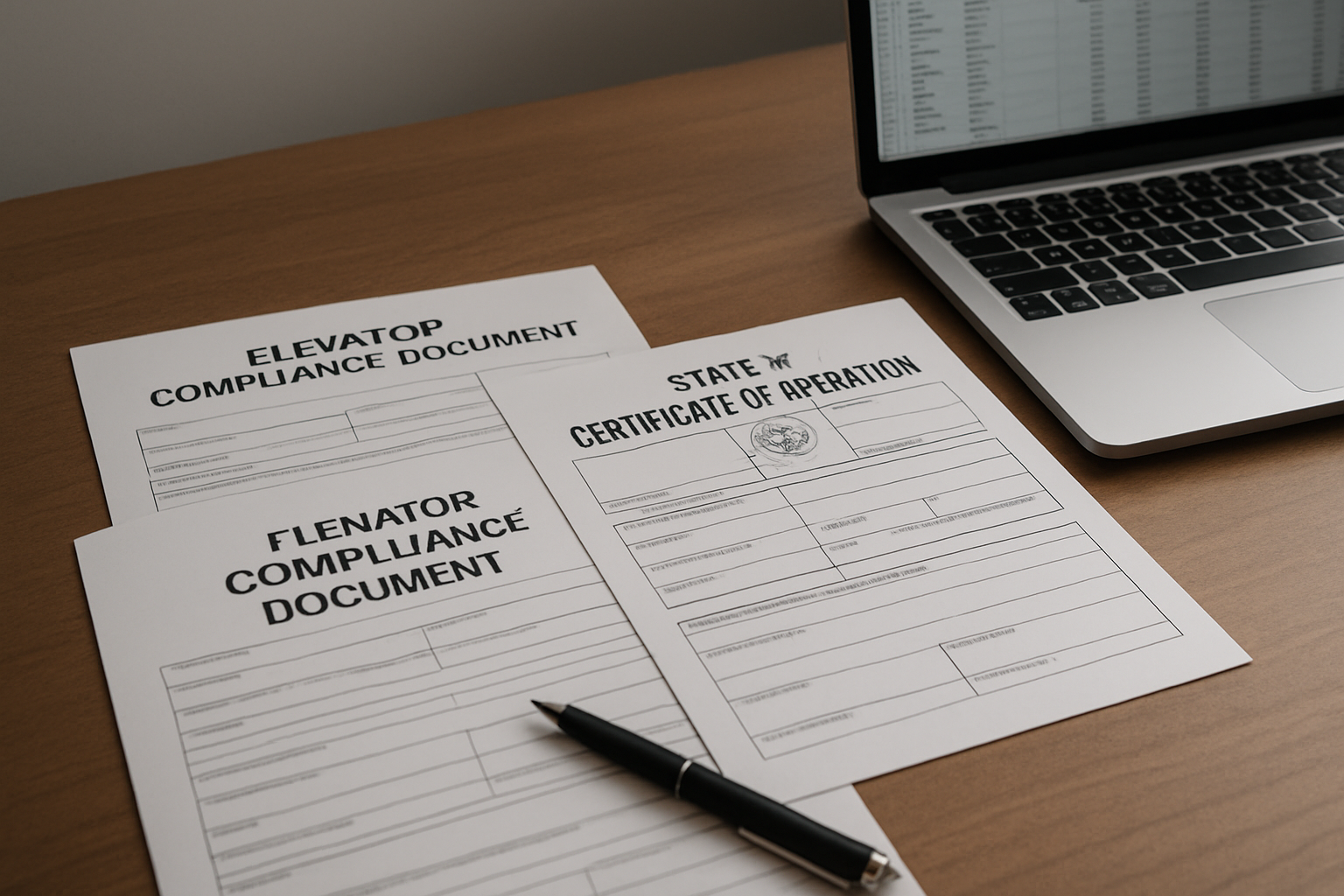
The ASME A17.1/CSA B44 Safety Code for Elevators and Escalators is the foundational regulatory document adopted in whole or in part by virtually every U.S. state. The most current edition states are actively enforcing is the 2022 edition, with several states in the process of adopting the 2025 revision cycle during 2026.
Key ASME A17.1 provisions affecting inspections:
- Section 8.6: Periodic inspection and testing requirements
- Section 8.10: Periodic safety test intervals — typically annual for routine tests and every five years for full-load tests
- Section 8.11: Maintenance, repair, and replacement recordkeeping obligations
- Section 8.6.4.1: Certificate of inspection posting requirements inside the elevator cab
States that do not independently adopt ASME A17.1 by statute still require compliance through local building codes or fire marshal regulations, making this code the de facto national standard for elevator safety compliance in 2026.
State-by-State Elevator Inspection Frequency: 2025–2026 Summary
The table below reflects inspection frequency requirements as reported by state labor departments and elevator safety divisions. Always verify directly with your Authority Having Jurisdiction (AHJ) for the most current enforcement posture, as several states updated their adoption cycles in 2025–2026.
| State | Inspection Frequency (Commercial) | Governing Authority | Code Adopted |
|---|---|---|---|
| Florida | Annual | Florida Department of Business & Professional Regulation (DBPR) | ASME A17.1-2019 (2026 update in review) |
| Annual | Division of Occupational Safety & Health (Cal/OSHA) | Elevator Safety Construction Code (Title 8) | |
| New York | Annual | NYC Department of Buildings / NYS Department of Labor | ASME A17.1-2022 |
| Annual | Department of Insurance (TDI) | ASME A17.1-2019 | |
| Illinois | Annual | Illinois Department of Labor | ASME A17.1-2019 |
| Pennsylvania | Annual | Pennsylvania Department of Labor & Industry | ASME A17.1-2022 |
| Ohio | Annual | Ohio Department of Commerce | ASME A17.1-2019 |
| Georgia | Annual | Georgia Department of Labor | ASME A17.1-2019 |
| North Carolina | Annual | NC Department of Labor | ASME A17.1-2019 |
| Michigan | Annual | Michigan Department of Labor & Economic Opportunity | ASME A17.1-2019 |
| Colorado | Annual | Colorado Division of Oil & Public Safety | ASME A17.1-2019 |
| Washington | Annual | Washington State Department of Labor & Industries | ASME A17.1-2019 |
| Local jurisdiction | City/County AHJ | Varies by municipality | |
| Montana | Local jurisdiction | City/County AHJ | Varies by municipality |
| Wyoming | Local jurisdiction | City/County AHJ | Varies by municipality |
Note: States listed as “local jurisdiction” do not have a statewide elevator inspection program. Building owners in those states must contact their county or municipal AHJ to determine applicable inspection intervals and applicable code editions. All other states follow annual inspection cycles for commercial passenger elevators unless otherwise noted by the AHJ.
How Much Does a State-Mandated Elevator Inspection Cost in 2026?
Elevator inspection costs in 2026 depend on three primary variables: the state’s fee structure, whether the inspector is a state employee or a licensed third-party contractor, and the elevator type being inspected. The following breakdown reflects verified cost ranges from Axxiom Elevator Florida’s 2025–2026 service data and publicly available state fee schedules.
| Inspection Type | Typical Cost Range | Notes |
|---|---|---|
| Routine annual inspection (hydraulic elevator) | $300–$600 | Most common elevator type in low-rise commercial buildings |
| Routine annual inspection (traction elevator) | $500–$1,200 | Higher complexity; additional safety test components |
| Five-year full-load safety test | $800–$2,500 | Required under ASME A17.1 Section 8.10; labor-intensive |
| Category 1 periodic test | $400–$900 | Annual; includes safety device functionality verification |
| Category 5 periodic test | $1,200–$3,000 | Every 5 years; full governor and safety system test under load |
| Re-inspection after failed initial inspection | $200–$600 | Re-inspection fees vary significantly by state |
In states where the state performs the inspection directly — such as Florida through DBPR — a state permit fee is charged separately from any third-party maintenance contract. In Florida, the annual elevator operating permit fee ranges from approximately $85 to $185 per unit depending on elevator type and use classification, per the Florida DBPR fee schedule.
Building owners should budget separately for any corrective repairs identified during inspection. Axxiom Elevator Florida data from 2025–2026 indicates that 62% of routine inspections uncover at least one violation, with average repair costs ranging from $400 to $3,800 per incident depending on the component involved.
What Happens If Your Elevator Fails a State Inspection?
A failed elevator inspection triggers a defined compliance timeline that varies by state but typically follows a consistent enforcement pattern. Understanding this sequence helps building owners avoid escalating penalties and unplanned service interruptions.
Typical Post-Failure Enforcement Sequence
- Violation notice issued: The inspector documents specific deficiencies referencing the applicable ASME A17.1 section. A notice of violation (NOV) is posted on or near the elevator.
- Correction period assigned: Most states allow 30 to 90 days for corrective action depending on the severity of the violation. Imminent hazard violations — such as a failed governor or broken safety brake — require immediate shutdown.
- Elevator placed out of service: In cases of critical safety failures, the AHJ can issue an out-of-service order, physically sealing or locking the elevator until repairs are verified.
- Re-inspection required: After corrections are made, a re-inspection must be scheduled and passed before the elevator can return to service. A new certificate of operation is then issued.
- Fines for non-compliance: Operating an elevator under a valid out-of-service order or without a current certificate subjects the building owner to fines. Per NAEC 2025 data, average fines range from $1,500 to $10,000 per violation, with repeat violations or willful non-compliance escalating to $25,000 or more in high-enforcement states such as New York and.
Axxiom Elevator Florida recommends scheduling a voluntary pre-inspection maintenance visit 60 to 90 days before the annual inspection due date. This proactive approach reduces the likelihood of a failed inspection and allows corrective work to be completed before an official violation is recorded.
How Long Does It Take to Get an Elevator Inspection Certificate After a Passed Inspection?
Certificate issuance timelines differ substantially between states that use in-house state inspectors and those that rely on licensed third-party inspection agencies. The following timelines reflect 2025–2026 data from state agency websites and Axxiom Elevator Florida operational experience.
| Inspection Model | Typical Certificate Issuance Timeline | Example States |
|---|---|---|
| State-employed inspector, digital certificate system | Same day to 5 business days | Florida, Ohio, Pennsylvania |
| State-employed inspector, paper-based system | 2 to 6 weeks | Some rural jurisdictions in Southern states |
| Licensed third-party inspector files with state | 5 to 21 business days (dependent on state processing queue) | , Colorado, Washington |
| Local jurisdiction (municipality-based) | Varies widely — 1 day to 45 days | , Montana, Wyoming |
In Florida, the DBPR Elevator Safety Program issues electronic certificates of operation following a passed inspection report submission. Building owners should retain copies of the certificate digitally and post the physical certificate inside the elevator cab as required under Florida Statute 399.02.
For multi-state building portfolios, Axxiom Elevator Florida advises maintaining a centralized compliance calendar that tracks each unit’s certificate expiration date, inspection due window, and AHJ contact information by location.
How Do You Choose a Qualified Elevator Inspection Contractor for State Compliance?
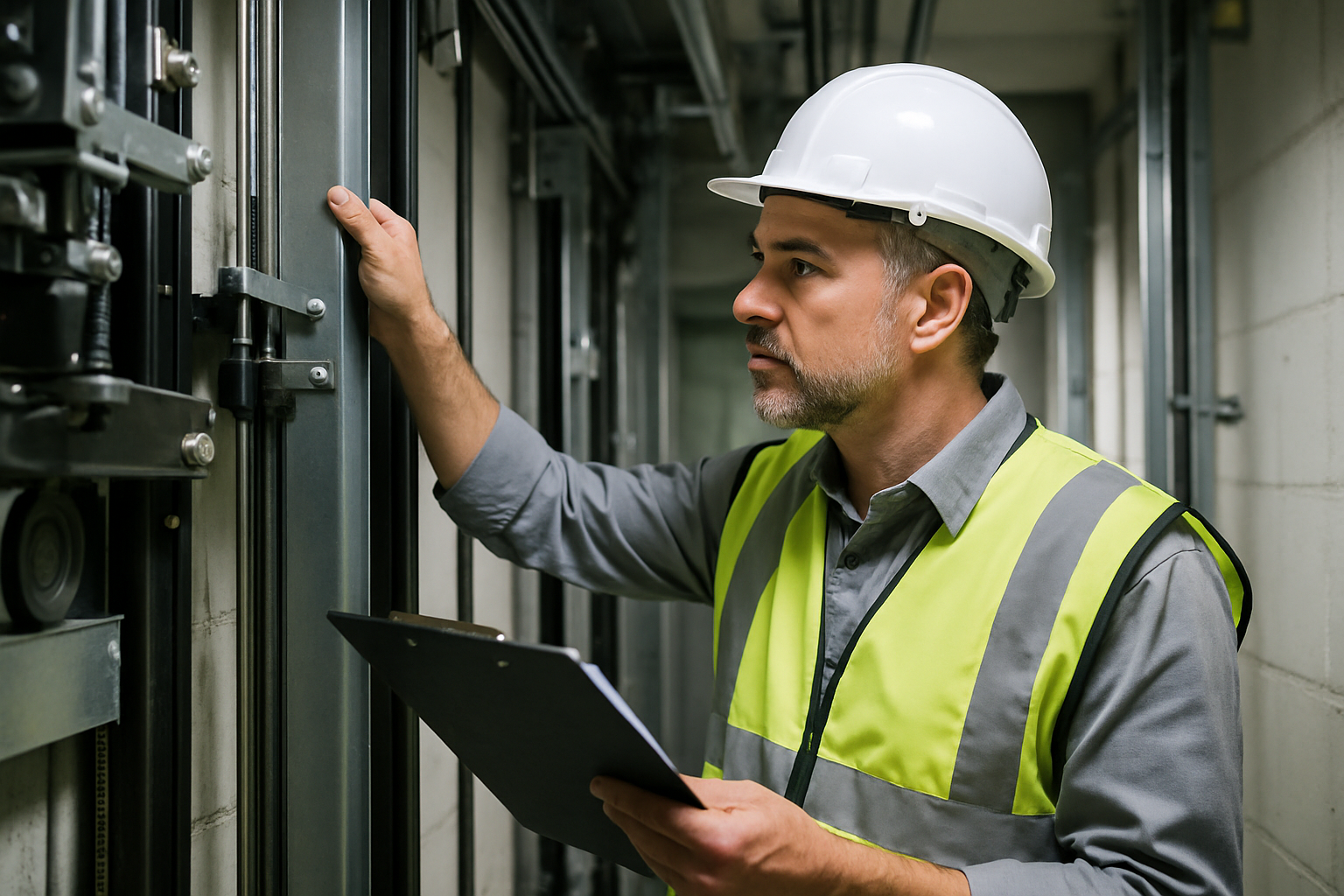
Not every elevator service company is authorized to perform state-mandated inspections. In most states, the inspector must hold a specific license or certification separate from a general elevator mechanic’s license. When evaluating inspection vendors, building owners should verify the following credentials and service factors.
Key Qualifications to Verify Before Hiring an Elevator Inspection Contractor
- QEI Certification: The Qualified Elevator Inspector (QEI) credential, administered by NAEC and the National Elevator Industry Educational Program (NEIEP), is the industry-standard certification recognized in 38 states as a prerequisite for performing third-party inspections. Verify QEI status through the NAEC registry before signing any inspection contract.
- State-specific inspector license: States including Florida, New York, and require inspectors to hold a state-issued license in addition to QEI certification. Request the license number and verify it with the state agency directly.
- ASME A17.1 edition knowledge: Confirm the inspector is current on the edition your state has adopted — as of 2026, this is either the 2019 or 2022 edition depending on jurisdiction.
- Errors and omissions insurance: Any third-party inspection firm should carry E&O coverage. Confirm the policy is active and covers the inspection scope.
- Turnaround time for report and certificate filing: Ask specifically how long it takes the contractor to file inspection results with the state after the inspection date. Delays in filing can push your certificate issuance date back by weeks.
- Experience with your elevator type: Hydraulic, traction, MRL, and limited-use/limited-application (LULA) elevators each have distinct inspection protocols. Verify the inspector has documented experience with your specific equipment category.
Axxiom Elevator Florida’s inspection team holds QEI certification and Florida DBPR-issued inspector licenses, with experience across all commercial elevator types operating in Florida’s regulatory environment. Contact our compliance team for a pre-inspection assessment tailored to your building’s equipment profile.
Florida-Specific Elevator Inspection Requirements: 2025–2026 Update
Florida building owners operating under the jurisdiction of the Florida DBPR Elevator Safety Program must comply with the following requirements as of 2026:
- Inspection frequency: Annual inspections required for all commercial passenger elevators, freight elevators, dumbwaiters, escalators, and moving walks under Florida Statute Chapter 399.
- Code reference: Florida currently enforces ASME A17.1-2019 with Florida-specific amendments. The 2022 edition is under legislative review for adoption in the 2026–2027 cycle.
- Inspector qualification: Inspections must be performed by a Florida-licensed elevator inspector holding a current QEI certification.
- Certificate posting: The certificate of operation must be posted inside the elevator cab at all times and is valid for 12 months from the date of the passed inspection.
- Permit fees: Annual operating permit fees are paid to DBPR and vary by elevator type. Fees are subject to legislative revision; verify the current fee schedule at myfloridalicense.com.
- New installation inspections: All newly installed elevators require a construction inspection and a final acceptance inspection before a certificate of operation is issued for the first time.
- Alteration inspections: Any alteration to an existing elevator — including controller replacements, door upgrades, or cab modifications — requires a separate inspection before the altered equipment is returned to service.
Frequently Asked Questions: Elevator Inspection Requirements by State
Are residential elevators subject to the same inspection requirements as commercial elevators?
No. Residential elevators — defined as elevators installed in single-family homes or private residences — are generally exempt from mandatory periodic inspection requirements in most states. However, condominiums, apartment buildings, and multi-family residential properties with elevators accessible to the general public are classified as commercial use and subject to full annual inspection mandates. ASME A17.1 Section 5.3 governs private residence elevators and applies different safety criteria than those applied to commercial equipment. Always confirm the use classification with your state AHJ, as definitions vary. In Florida, any elevator in a building with three or more units and shared access falls under the DBPR commercial inspection program.
Can a building owner self-inspect their elevator to satisfy state requirements?
No. In all 50 states, state-mandated periodic inspections must be performed by either a state-employed licensed elevator inspector or a licensed third-party inspector holding the applicable state credentials and, in most states, a current QEI certification. Building owners and in-house maintenance staff do not qualify to perform or certify compliance inspections. Building owners are, however, responsible for ensuring routine maintenance is performed by a licensed elevator mechanic between inspection cycles — a requirement under ASME A17.1 Section 8.11 and most state statutes. Failure to maintain maintenance logs can itself constitute a violation during an annual inspection.
What is the difference between a Category 1 and a Category 5 elevator test?
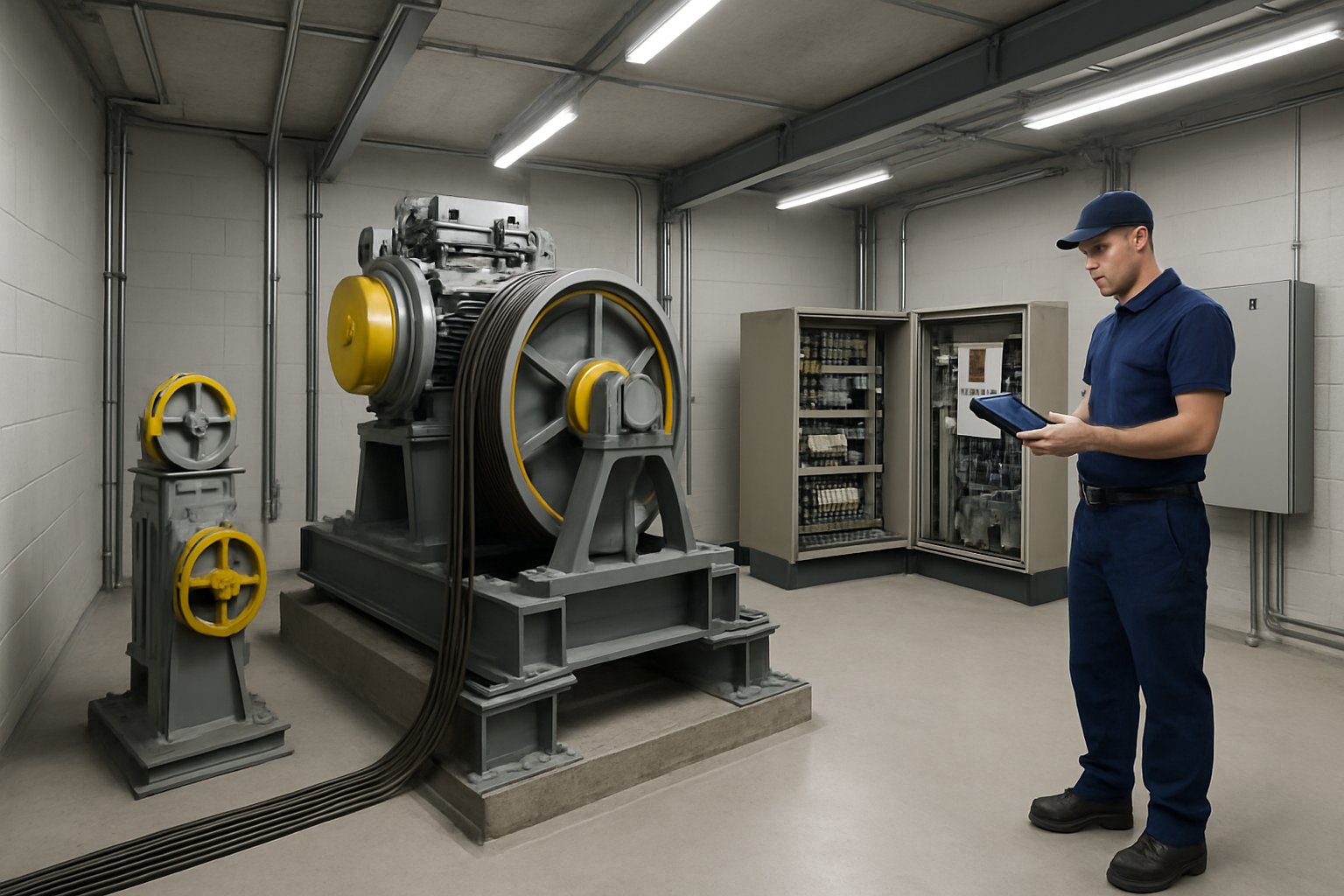
ASME A17.1 Section 8.10 defines five categories of periodic tests for elevators, each with different intervals and scope. Category 1 (annual) tests verify the operation of the elevator’s safety devices — including the governor, safeties, and buffers — without applying a full load. This is the standard annual inspection test performed in most states. Category 5 (every five years) tests require the full rated load to be applied while the governor and safety system are activated at full speed, verifying the system can stop and hold the car under real operating conditions. Category 5 tests are significantly more labor-intensive and expensive, typically costing $1,200 to $3,000 depending on elevator type and jurisdiction. Both test types must be performed and documented by a licensed inspector, and both generate separate entries in the elevator’s inspection record. States enforce Category 5 testing cycles independently, so confirm your AHJ’s scheduling expectations with your inspection contractor.
Need a licensed elevator inspection in Florida? Axxiom Elevator Florida serves commercial building owners, property managers, and facility teams across the state with DBPR-compliant annual inspections, Category 5 safety tests, and pre-inspection maintenance programs designed to reduce violation rates. Contact Axxiom Elevator Florida to schedule your 2026 compliance inspection.
Need elevator service you can rely on? Axxiom Elevator Florida is ready to help.